



Fast Delivery
Quick, reliable shipping to any location.

Free & easy returns
Return this item by mail or in store within 90 days for a full refund.
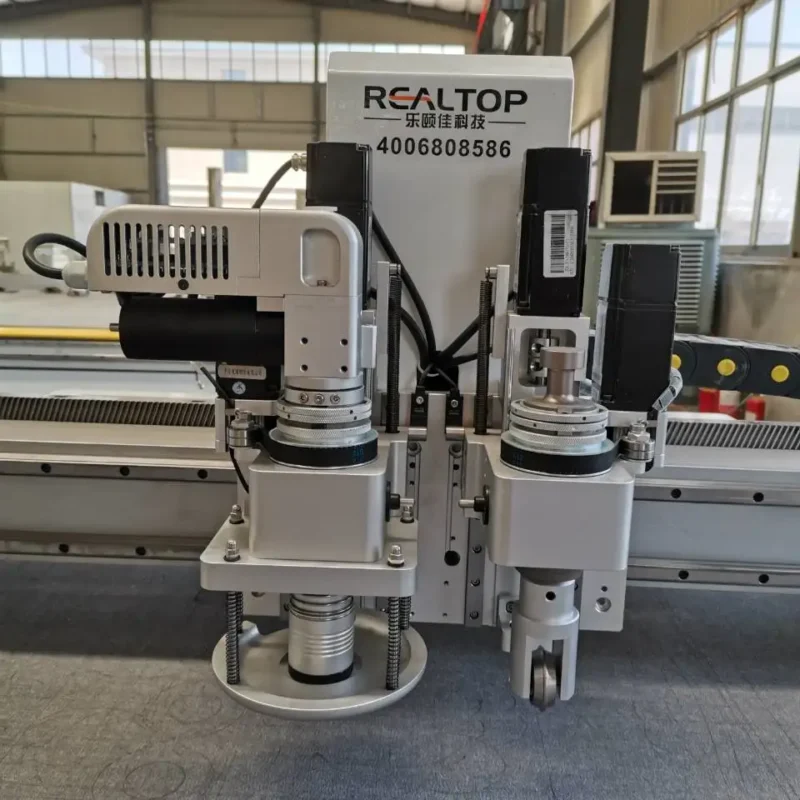
Tool Head Configuration Per Material — we match the oscillating knife, drag knife, creasing wheel or laser to your specific stock before confirming the order, rather than shipping a default setup and hoping it works on arrival.
Technical Specifications
| Parameter | Value |
|---|---|
| Model | RT-D2516/RT-S2516 |
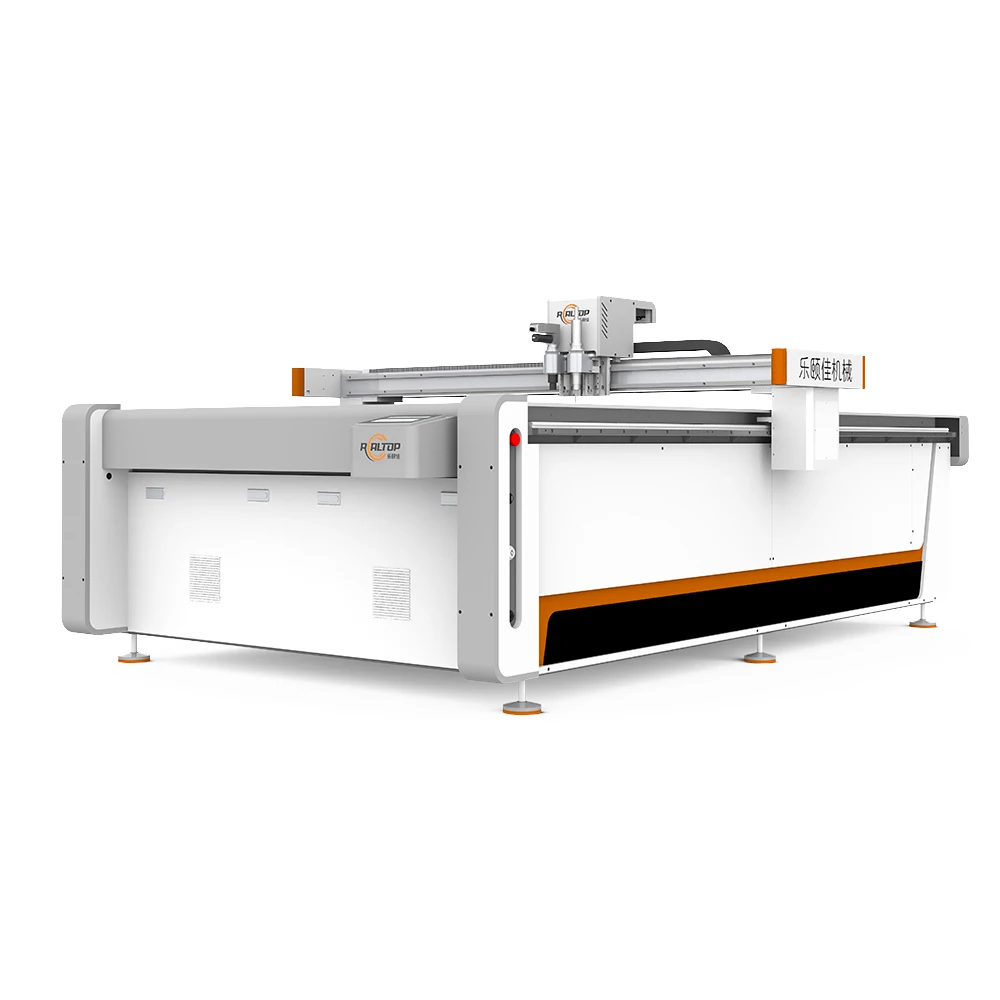
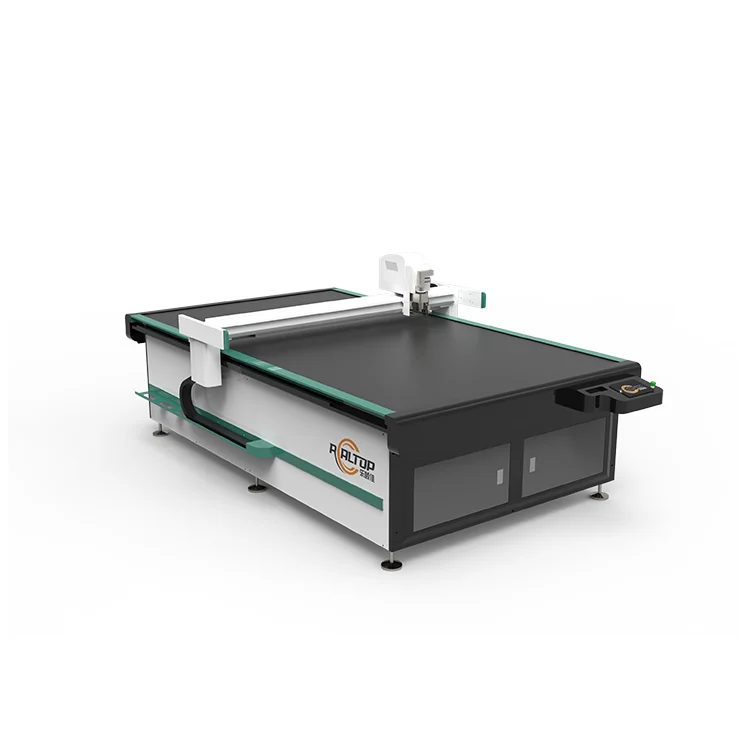
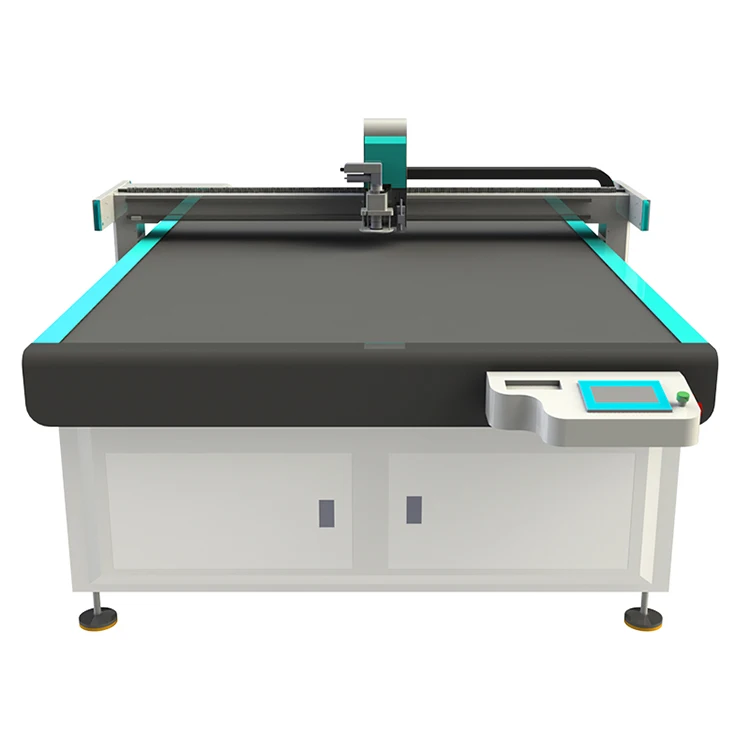
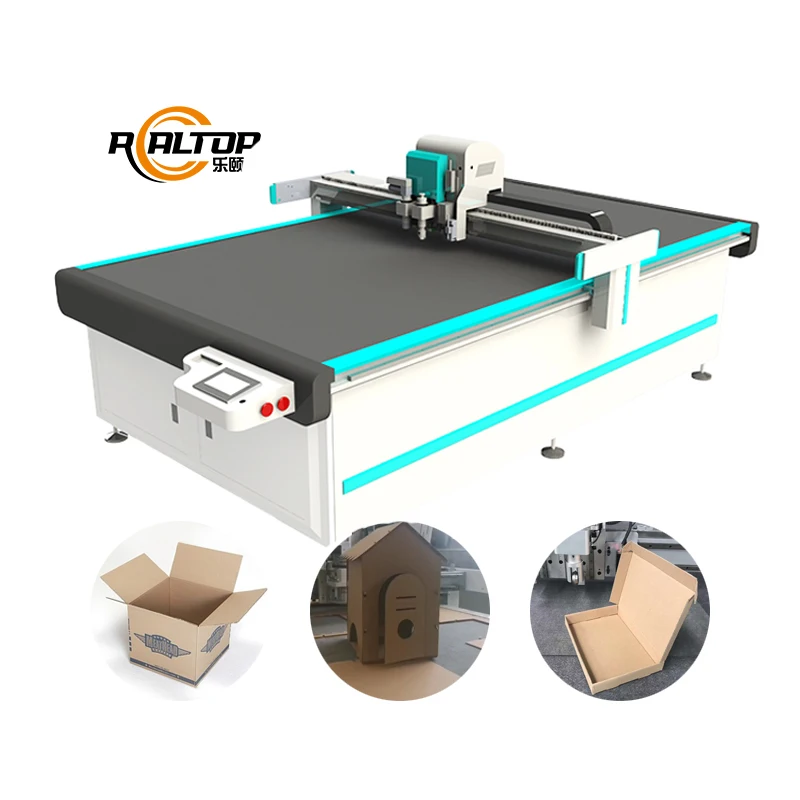
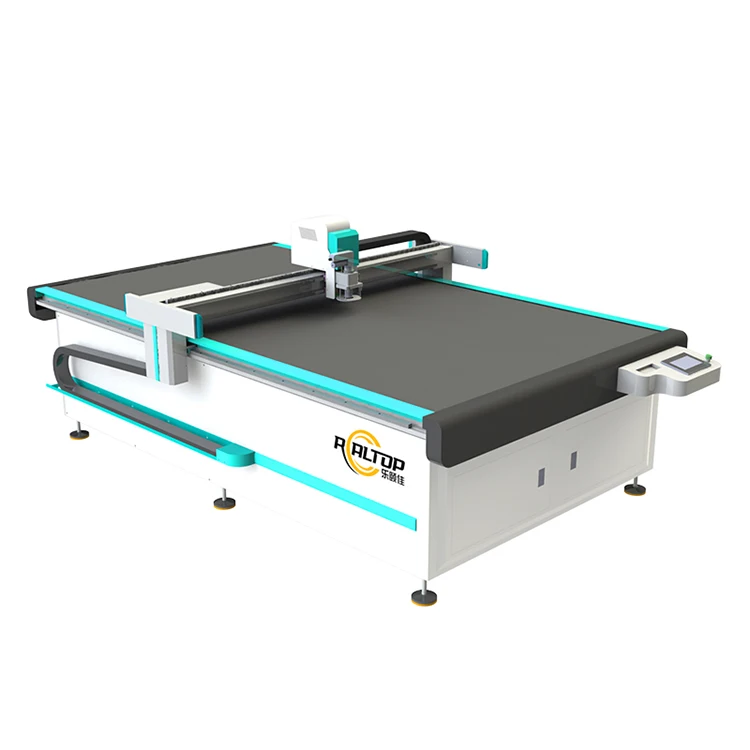
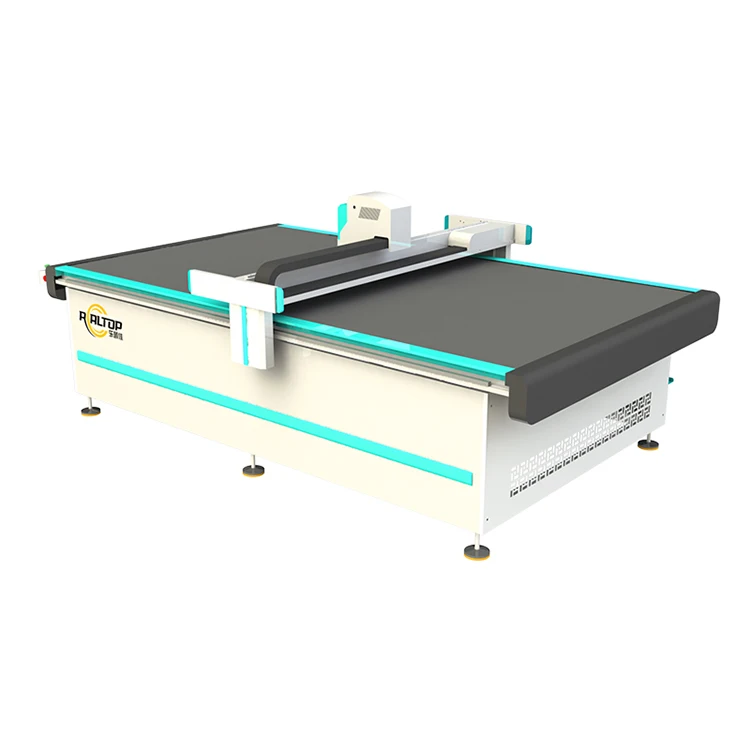
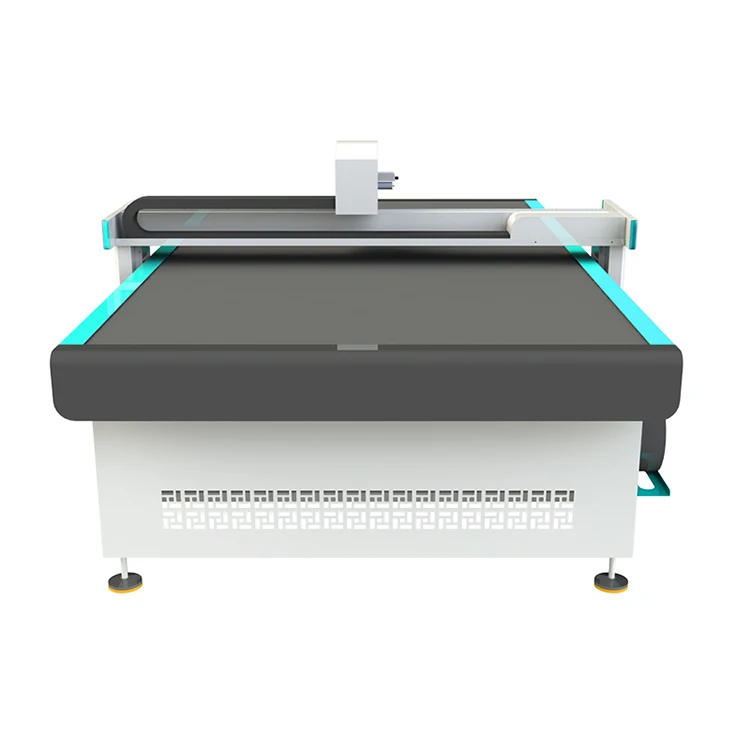
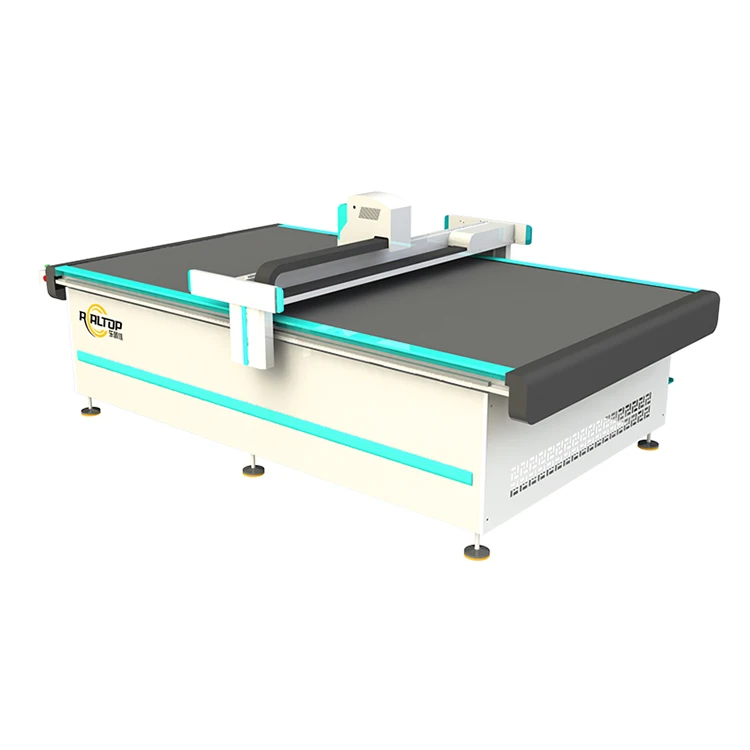
| Product Type | CNC Oscillating Knife Cutting Machine |
| Working Area | 1600 × 2500 mm |
| Machine Size | 3450 × 2300 × 1250 mm |
| Rated Power | 9 kW |
| Table Type | Flat working table with vacuum hold-down |
| Tool Head | Swiss imported knife (vibration full cutting, vibration half cutting, cursor location) |
| Safety Device | Infrared sensors |
| Translational Velocity | 800–2000 mm/s |
| Cutting Speed | 200–800 mm/s (according to different cutting materials) |
| Repeated Accuracy | ≤0.1 mm |
| Transmission System | Digital servo motor, linear guide, synchronous belt, ball screw |
| Instruction System | HP-GL compatible format |
| Voltage | 380V ±10% |
| Servo Motor | Delta servo motor |
| Vacuum Pump | 7.5 kW |
| Guide Rail | Taiwan Hiwin rail |
| Conveyor Belt | Germany imported |
| Software | Professional carton nested software (free, language customizable) |
Application Suitability
| Application | Material or Output |
|---|---|
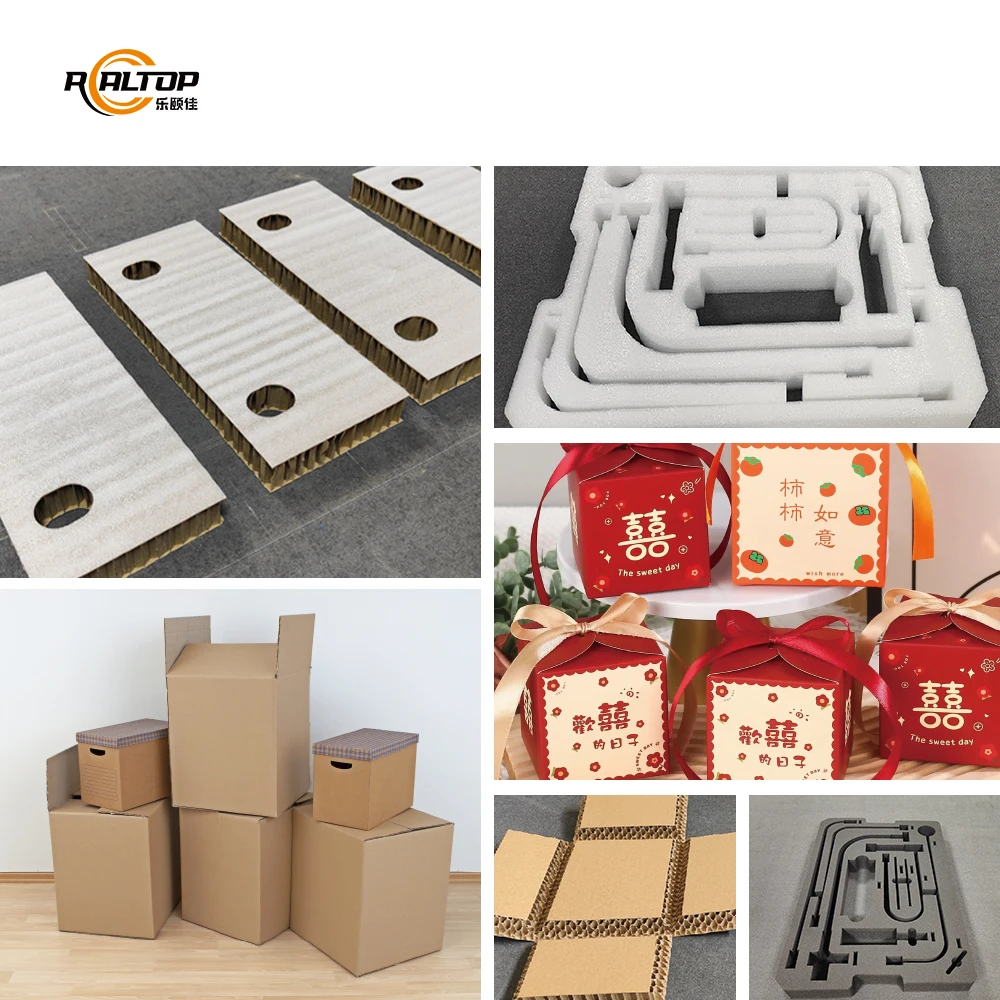
| Cardboard box and carton packaging production | Single, double and triple-wall corrugated board, greyboard, folding box board |
| Packaging sample making and short-run prototyping | Card stock, kraft liner, coated and uncoated carton stock |
| Sticker and label contour cutting | Self-adhesive vinyl, paper labels, reflective film |
| Signage and billboard production | Foam board, honeycomb board, corrugated plastic, PVC sheet |
| Business card and tag cutting | Coated card stock, laminated paper, synthetic tag material |
Why the Material Sample Must Arrive Before the Machine Does
A CNC oscillating knife cutting machine manufacturer can quote a working area and motor spec in minutes, but cutting performance on high-GSM corrugated board with heavy adhesive content cannot be confirmed from a data sheet alone.
I have watched a machine run perfectly on standard three-layer flute during the factory test, then struggle with blade slippage and ragged edges when the buyer put five-layer double-wall stock with high glue content on the same table. Every parameter had to be torn down and rebuilt from scratch on site. That experience changed how I handle every inquiry: the buyer’s own material ships to us first, we run it on the exact tool head and vacuum configuration being quoted, and the sample report goes back with the quotation. [NEED_CITE: material variability in corrugated board density and adhesive content]
Matching the Knife to the Board Grade
Oscillating knife cutting works by vibrating the blade at high frequency to slice through fibrous and layered materials without crushing the flute structure. For corrugated packaging, this means the cut edge stays clean and the board retains its stacking strength. The Swiss imported knife head on this unit supports full cutting, half cutting for crease-and-fold applications, and cursor location for manual alignment. Selecting between these modes depends on whether the job is a full carton blank, a perforated tear strip or a registered cut around printed graphics.
Vacuum Zoning and Small-Part Stability
A 7.5 kW vacuum pump pulls air through the flat working table to hold the sheet in place during cutting. When the job involves small carton inserts, divider pieces or narrow label strips, the suction must be concentrated in the active zone rather than spread across the full 1600 × 2500 mm area. Without adjustable zoning, lightweight offcuts lift under the knife head and produce dimensional drift or jam the tool path. [NEED_CITE: vacuum table zoning requirements for small-format die-less cutting]
Reading the Specs That Actually Matter on the Floor
The Delta servo motors and Taiwan Hiwin linear guides work together to hold repeated accuracy within ≤0.1 mm across the full travel. In carton sample making, this tolerance determines whether a fold line lands exactly on the crease or misses by enough to crack the liner during forming. The cutting speed range of 200–800 mm/s reflects the spread between dense multi-wall board and thin card stock — running a heavy double-wall sheet at the upper end will overload the oscillation motor and produce delamination, while running thin stock at the lower end wastes cycle time. The 9 kW rated power covers the spindle, vacuum assist and conveyor drive simultaneously, so the electrical supply must support continuous draw at that level without voltage sag. The HP-GL compatible instruction system and bundled carton nesting software accept standard DXF and PLT files, eliminating the need for a separate CAM license before the first job runs.
What a Wrong Tool Head Costs After Shipment
Choosing a drag knife for thick corrugated board produces crushed flutes and torn liners because the blade drags rather than oscillates through the material. Switching to an oscillating head later requires a new mount, recalibration and often a different vacuum pressure setting — expenses that appear after the machine is already on the floor and the production schedule is waiting. Buyers who skip the sample test frequently discover this mismatch during their first real order, not during the factory demo on lighter stock. [NEED_CITE: tooling mismatch as a primary cause of post-installation rework]
Why Source This Range Through Our Setup
In-house design covers both oscillating knife and flatbed digital cutting, so the recommendation is based on material behavior rather than pushing a single platform. The tool head, vacuum zone map and conveyor belt are specified per production job, not left as default factory settings. CCD camera positioning is available for printed contour work where registration marks must be tracked at cutting speed. Software compatibility — file format, nesting logic and language — is confirmed against the buyer’s existing workflow before the order is finalized. Sample cutting on the buyer’s own corrugated, card stock or vinyl runs before commitment, with a written report documenting edge quality, dimensional accuracy and cycle time.
Documentation & Verification
- Machine specification sheet listing the exact tool head and table configuration for your board grade
- Electrical schematic with 380V ±10% circuit diagram and recommended breaker sizing
- Sample cutting report on your corrugated or card stock before order confirmation
- Software license and file format compatibility note covering DXF, PLT and HP-GL
- Factory test record with dimensional check on your sample geometry
- CE declaration and packing photographs for customs and freight insurance
Installation, Commissioning & Support
- Floor space of approximately 3450 × 2300 mm plus operator clearance on three sides for the RT-D2516/RT-S2516
- Dedicated 380V ±10% circuit with capacity for 9 kW continuous draw plus the 7.5 kW vacuum pump on a separate breaker
- Machine ships as a single skid; the flat working table and gantry are leveled and calibrated on site
- First-run commissioning includes vacuum zone mapping and oscillation frequency tuning for your primary board grade
- Operator training covers tool head changeover, nesting software setup and daily guide rail inspection
- Spare parts list focuses on oscillating knife blades, vacuum seals and conveyor belt segments
What We Need to Quote the Right Configuration
Send the material type, flute profile or GSM weight, maximum sheet size and the daily volume you plan to cut. Confirm your local voltage and frequency, the language required for the control interface and whether your design files originate from ArtiosCAD, AutoCAD or another platform. If the job involves printed contour cutting, let us know the registration mark size and contrast so we can confirm CCD tracking before building the machine.
Frequently Asked Questions
Q: How do I decide between oscillating knife and laser for corrugated packaging?
A: Oscillating knife cuts without burning the liner or producing fumes, which keeps the edge clean on uncoated board and preserves stacking strength. Laser is preferred when the job demands sealed edges on coated or synthetic materials. We run both methods on your sample stock so the comparison is based on actual edge quality and cycle time, not a general recommendation.
Q: What working area and vacuum zone layout should I specify?
A: The 1600 × 2500 mm table handles most carton blank sizes, but the vacuum zoning matters more than overall dimensions for small inserts and divider pieces. Tell us the smallest part in your typical nest so we can configure the zone map to hold those sections without lift during the cut path.
Q: When is CCD camera contour recognition necessary?
A: CCD positioning is required when cutting around pre-printed graphics where the cut path must follow the print rather than a fixed coordinate. If your work is plain carton blanks from CAD files, standard registration is sufficient. We confirm mark size, contrast and production speed before including CCD in the build.
Q: What software formats does the nesting program accept?
A: The bundled carton nesting software accepts DXF, PLT and HP-GL compatible formats and supports multiple interface languages. If your design team works in a specific CAD platform, share a sample file before order so we verify import, nesting logic and output without requiring a third-party converter.
Tool Head Configuration Per Material — we match the oscillating knife, drag knife, creasing wheel or laser to your specific stock before confirming the order, rather than shipping a default setup and hoping it works on arrival.
Technical Specifications
| Parameter | Value |
|---|---|
| Model | RT-D2516/RT-S2516 |
| Product Type | CNC Oscillating Knife Cutting Machine |
| Working Area | 1600 × 2500 mm |
| Machine Size | 3450 × 2300 × 1250 mm |
| Rated Power | 9 kW |
| Table Type | Flat working table with vacuum hold-down |
| Tool Head | Swiss imported knife (vibration full cutting, vibration half cutting, cursor location) |
| Safety Device | Infrared sensors |
| Translational Velocity | 800–2000 mm/s |
| Cutting Speed | 200–800 mm/s (according to different cutting materials) |
| Repeated Accuracy | ≤0.1 mm |
| Transmission System | Digital servo motor, linear guide, synchronous belt, ball screw |
| Instruction System | HP-GL compatible format |
| Voltage | 380V ±10% |
| Servo Motor | Delta servo motor |
| Vacuum Pump | 7.5 kW |
| Guide Rail | Taiwan Hiwin rail |
| Conveyor Belt | Germany imported |
| Software | Professional carton nested software (free, language customizable) |
Application Suitability
| Application | Material or Output |
|---|---|
| Cardboard box and carton packaging production | Single, double and triple-wall corrugated board, greyboard, folding box board |
| Packaging sample making and short-run prototyping | Card stock, kraft liner, coated and uncoated carton stock |
| Sticker and label contour cutting | Self-adhesive vinyl, paper labels, reflective film |
| Signage and billboard production | Foam board, honeycomb board, corrugated plastic, PVC sheet |
| Business card and tag cutting | Coated card stock, laminated paper, synthetic tag material |
Why the Material Sample Must Arrive Before the Machine Does
A CNC oscillating knife cutting machine manufacturer can quote a working area and motor spec in minutes, but cutting performance on high-GSM corrugated board with heavy adhesive content cannot be confirmed from a data sheet alone.
I have watched a machine run perfectly on standard three-layer flute during the factory test, then struggle with blade slippage and ragged edges when the buyer put five-layer double-wall stock with high glue content on the same table. Every parameter had to be torn down and rebuilt from scratch on site. That experience changed how I handle every inquiry: the buyer’s own material ships to us first, we run it on the exact tool head and vacuum configuration being quoted, and the sample report goes back with the quotation. [NEED_CITE: material variability in corrugated board density and adhesive content]
Matching the Knife to the Board Grade
Oscillating knife cutting works by vibrating the blade at high frequency to slice through fibrous and layered materials without crushing the flute structure. For corrugated packaging, this means the cut edge stays clean and the board retains its stacking strength. The Swiss imported knife head on this unit supports full cutting, half cutting for crease-and-fold applications, and cursor location for manual alignment. Selecting between these modes depends on whether the job is a full carton blank, a perforated tear strip or a registered cut around printed graphics.
Vacuum Zoning and Small-Part Stability
A 7.5 kW vacuum pump pulls air through the flat working table to hold the sheet in place during cutting. When the job involves small carton inserts, divider pieces or narrow label strips, the suction must be concentrated in the active zone rather than spread across the full 1600 × 2500 mm area. Without adjustable zoning, lightweight offcuts lift under the knife head and produce dimensional drift or jam the tool path. [NEED_CITE: vacuum table zoning requirements for small-format die-less cutting]
Reading the Specs That Actually Matter on the Floor
The Delta servo motors and Taiwan Hiwin linear guides work together to hold repeated accuracy within ≤0.1 mm across the full travel. In carton sample making, this tolerance determines whether a fold line lands exactly on the crease or misses by enough to crack the liner during forming. The cutting speed range of 200–800 mm/s reflects the spread between dense multi-wall board and thin card stock — running a heavy double-wall sheet at the upper end will overload the oscillation motor and produce delamination, while running thin stock at the lower end wastes cycle time. The 9 kW rated power covers the spindle, vacuum assist and conveyor drive simultaneously, so the electrical supply must support continuous draw at that level without voltage sag. The HP-GL compatible instruction system and bundled carton nesting software accept standard DXF and PLT files, eliminating the need for a separate CAM license before the first job runs.
What a Wrong Tool Head Costs After Shipment
Choosing a drag knife for thick corrugated board produces crushed flutes and torn liners because the blade drags rather than oscillates through the material. Switching to an oscillating head later requires a new mount, recalibration and often a different vacuum pressure setting — expenses that appear after the machine is already on the floor and the production schedule is waiting. Buyers who skip the sample test frequently discover this mismatch during their first real order, not during the factory demo on lighter stock. [NEED_CITE: tooling mismatch as a primary cause of post-installation rework]
Why Source This Range Through Our Setup
In-house design covers both oscillating knife and flatbed digital cutting, so the recommendation is based on material behavior rather than pushing a single platform. The tool head, vacuum zone map and conveyor belt are specified per production job, not left as default factory settings. CCD camera positioning is available for printed contour work where registration marks must be tracked at cutting speed. Software compatibility — file format, nesting logic and language — is confirmed against the buyer’s existing workflow before the order is finalized. Sample cutting on the buyer’s own corrugated, card stock or vinyl runs before commitment, with a written report documenting edge quality, dimensional accuracy and cycle time.
Documentation & Verification
- Machine specification sheet listing the exact tool head and table configuration for your board grade
- Electrical schematic with 380V ±10% circuit diagram and recommended breaker sizing
- Sample cutting report on your corrugated or card stock before order confirmation
- Software license and file format compatibility note covering DXF, PLT and HP-GL
- Factory test record with dimensional check on your sample geometry
- CE declaration and packing photographs for customs and freight insurance
Installation, Commissioning & Support
- Floor space of approximately 3450 × 2300 mm plus operator clearance on three sides for the RT-D2516/RT-S2516
- Dedicated 380V ±10% circuit with capacity for 9 kW continuous draw plus the 7.5 kW vacuum pump on a separate breaker
- Machine ships as a single skid; the flat working table and gantry are leveled and calibrated on site
- First-run commissioning includes vacuum zone mapping and oscillation frequency tuning for your primary board grade
- Operator training covers tool head changeover, nesting software setup and daily guide rail inspection
- Spare parts list focuses on oscillating knife blades, vacuum seals and conveyor belt segments
What We Need to Quote the Right Configuration
Send the material type, flute profile or GSM weight, maximum sheet size and the daily volume you plan to cut. Confirm your local voltage and frequency, the language required for the control interface and whether your design files originate from ArtiosCAD, AutoCAD or another platform. If the job involves printed contour cutting, let us know the registration mark size and contrast so we can confirm CCD tracking before building the machine.
Frequently Asked Questions
Q: How do I decide between oscillating knife and laser for corrugated packaging?
A: Oscillating knife cuts without burning the liner or producing fumes, which keeps the edge clean on uncoated board and preserves stacking strength. Laser is preferred when the job demands sealed edges on coated or synthetic materials. We run both methods on your sample stock so the comparison is based on actual edge quality and cycle time, not a general recommendation.
Q: What working area and vacuum zone layout should I specify?
A: The 1600 × 2500 mm table handles most carton blank sizes, but the vacuum zoning matters more than overall dimensions for small inserts and divider pieces. Tell us the smallest part in your typical nest so we can configure the zone map to hold those sections without lift during the cut path.
Q: When is CCD camera contour recognition necessary?
A: CCD positioning is required when cutting around pre-printed graphics where the cut path must follow the print rather than a fixed coordinate. If your work is plain carton blanks from CAD files, standard registration is sufficient. We confirm mark size, contrast and production speed before including CCD in the build.
Q: What software formats does the nesting program accept?
A: The bundled carton nesting software accepts DXF, PLT and HP-GL compatible formats and supports multiple interface languages. If your design team works in a specific CAD platform, share a sample file before order so we verify import, nesting logic and output without requiring a third-party converter.
商品评价
There are no reviews yet.