

Fast Delivery
Quick, reliable shipping to any location.

Free & easy returns
Return this item by mail or in store within 90 days for a full refund.
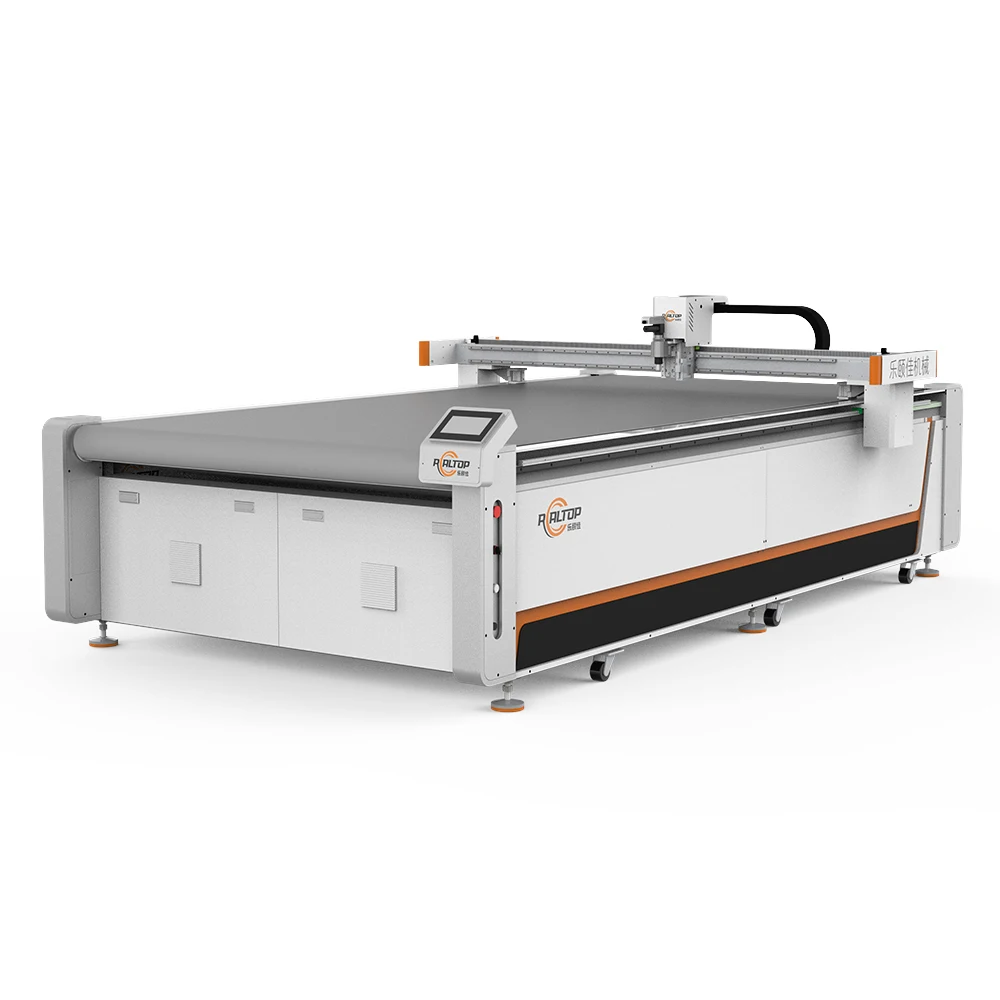
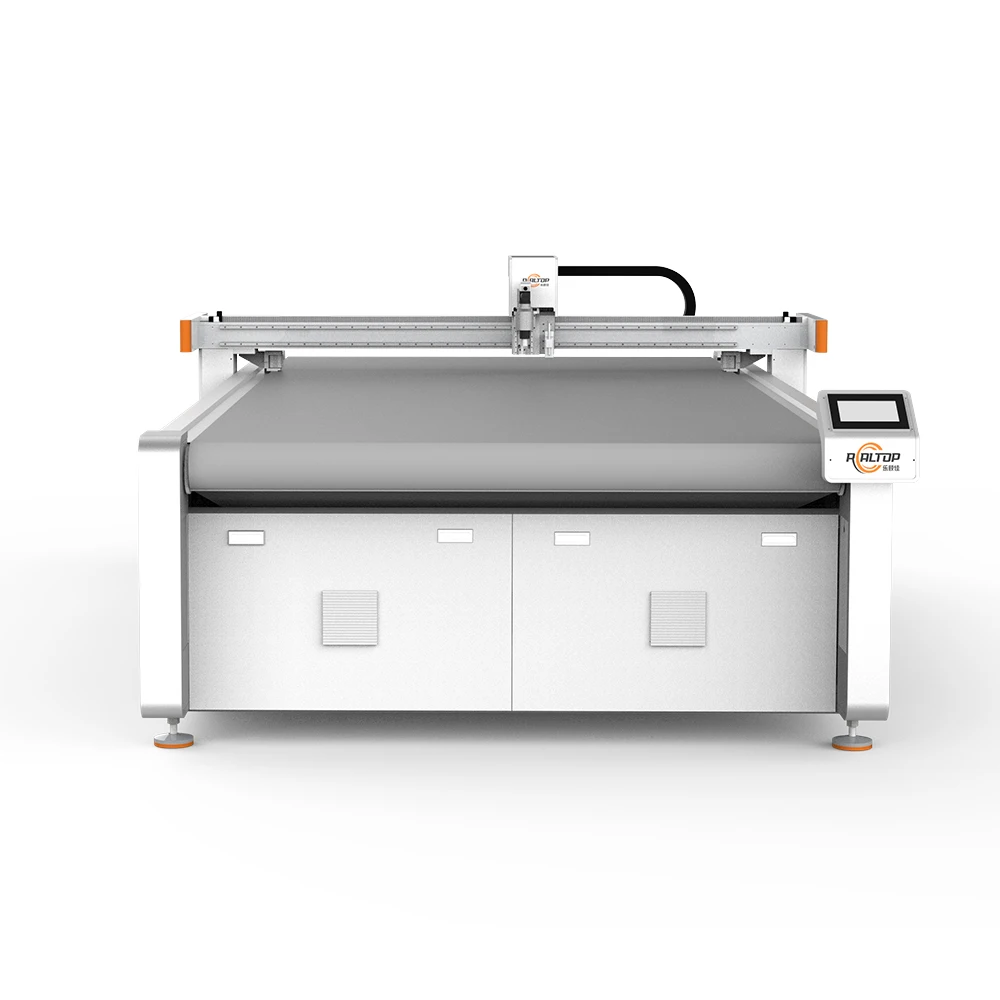
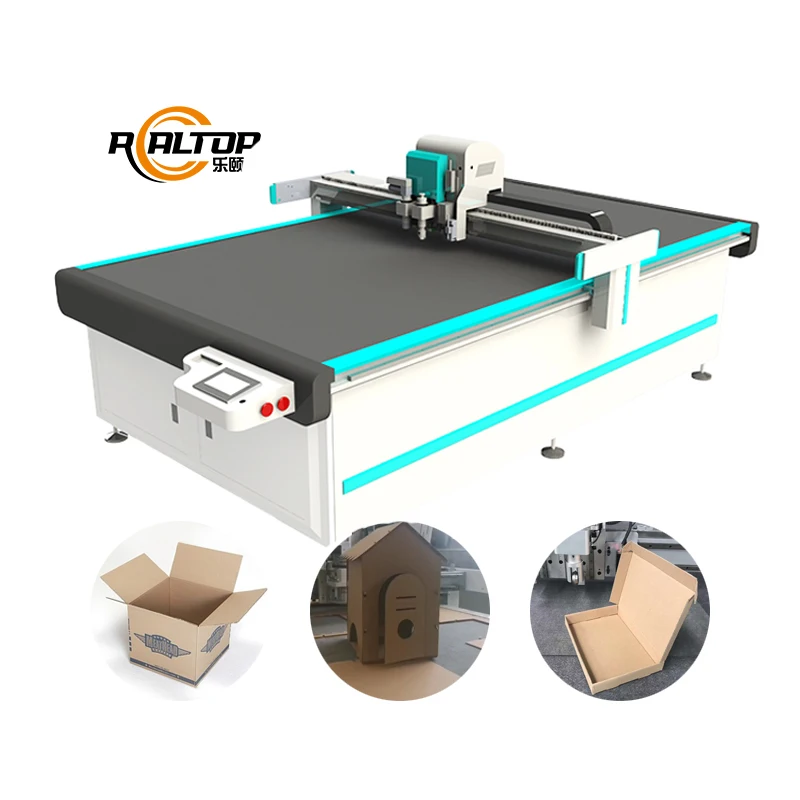
Tool Head Versatility — REALTOP matches oscillating, driven rotary, and pneumatic knife options to your specific leather weight rather than defaulting to a single cutting method.
Technical Specifications
| Parameter | Value |
|---|---|
| Model | 1625(Standard) |
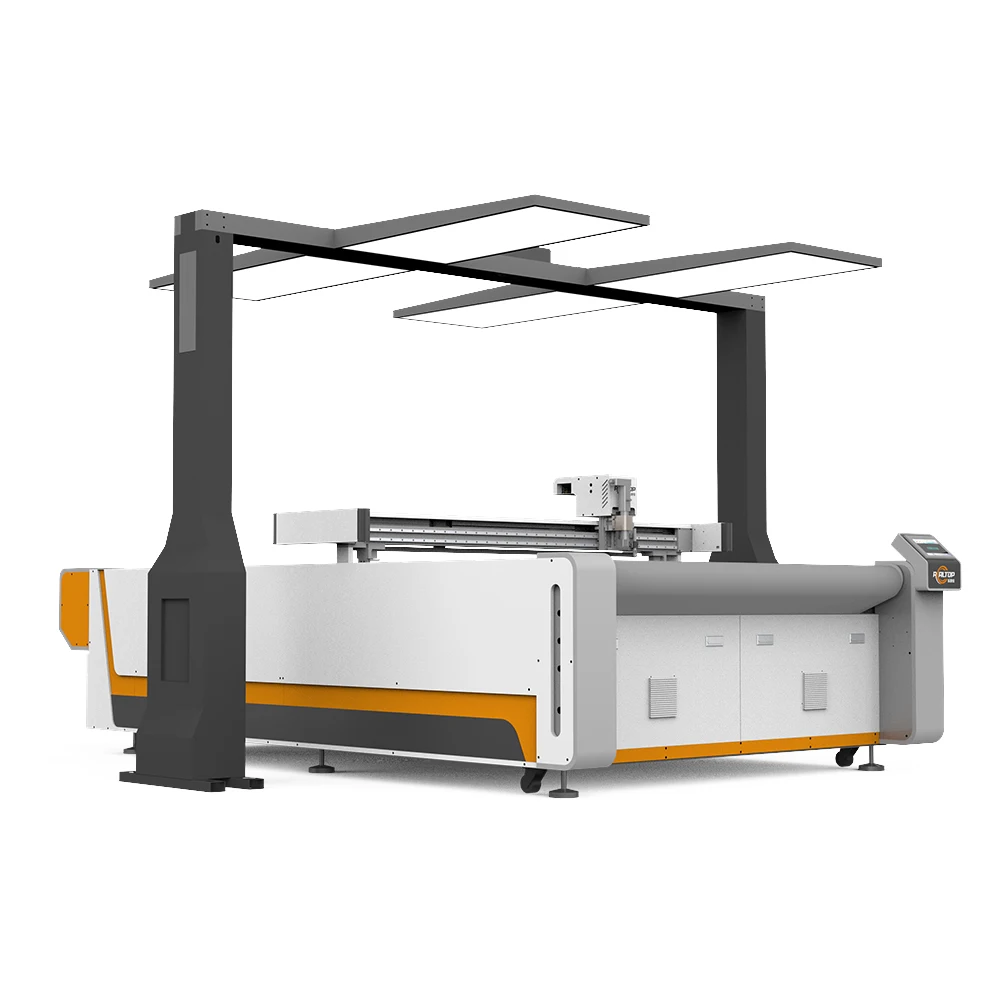
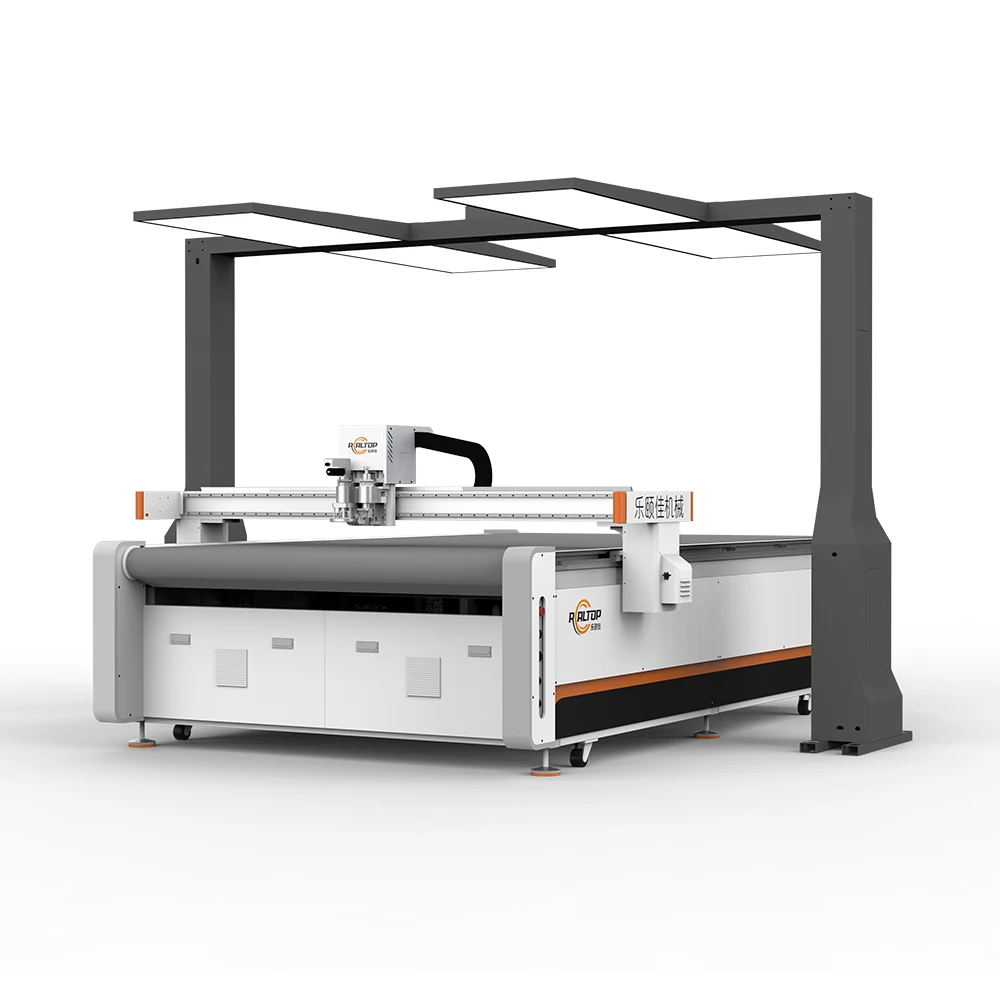
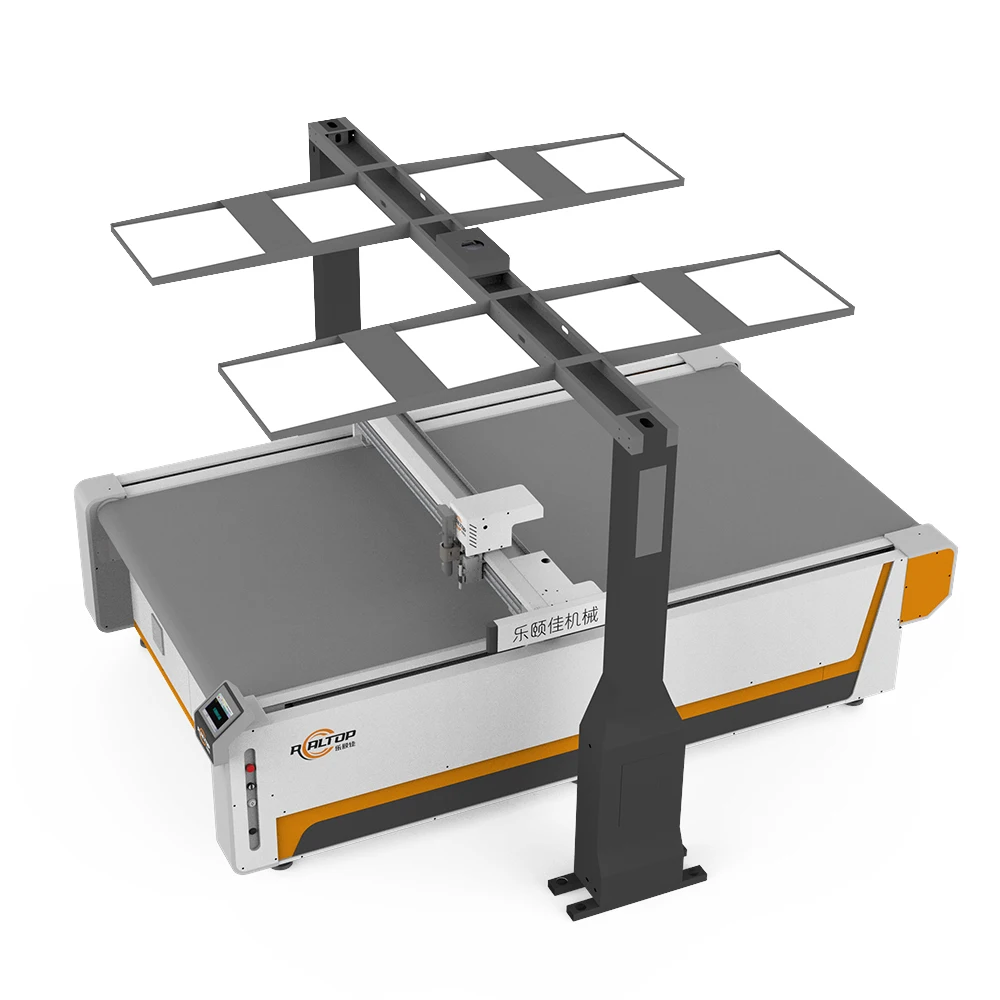
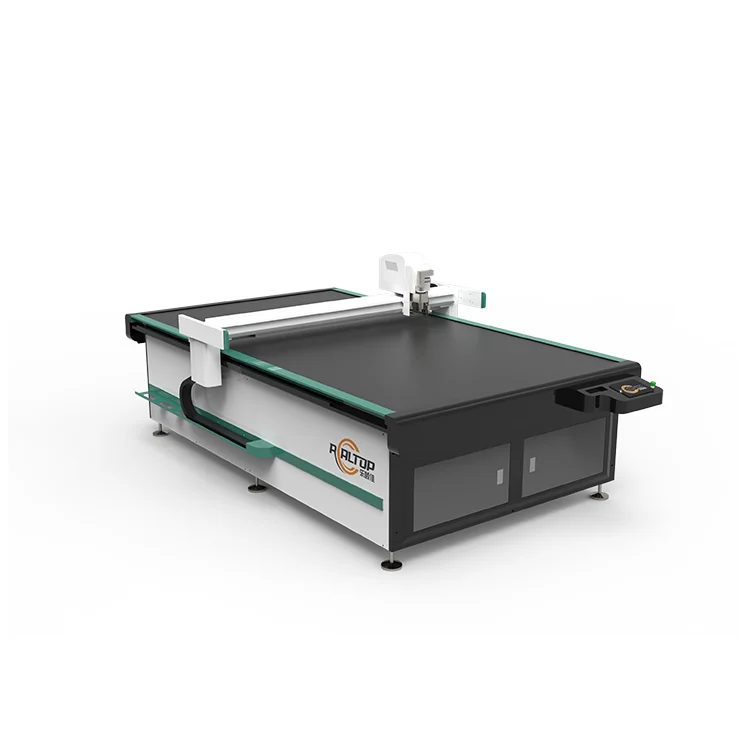
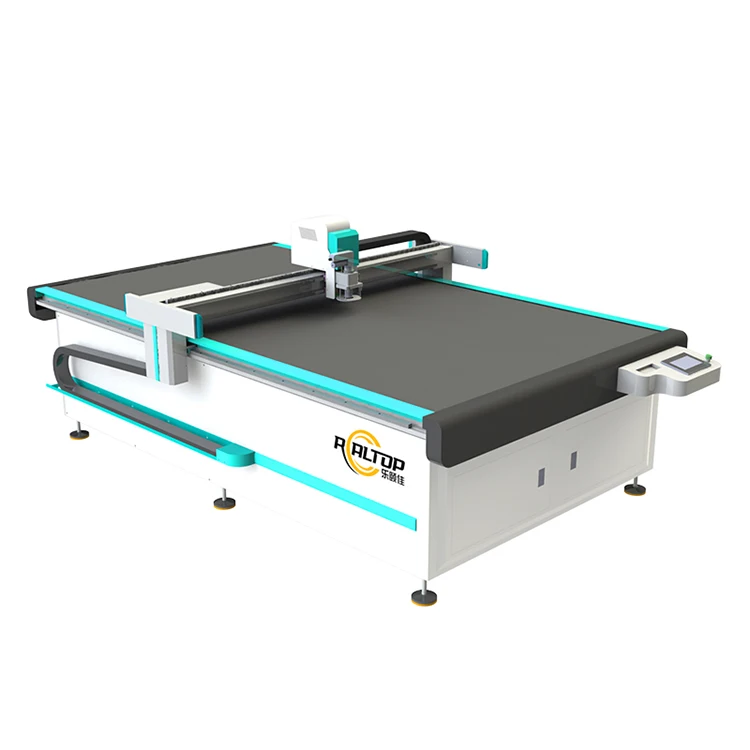
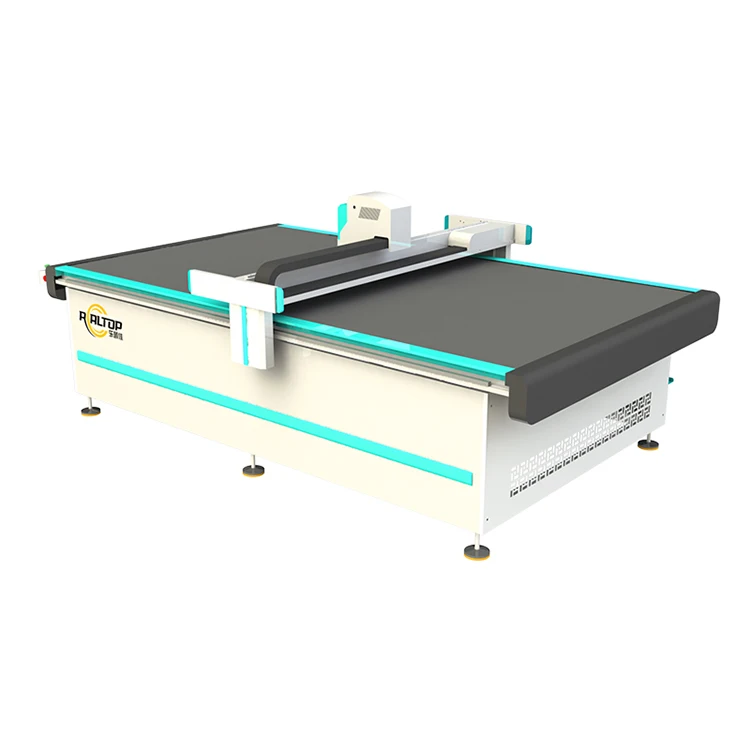
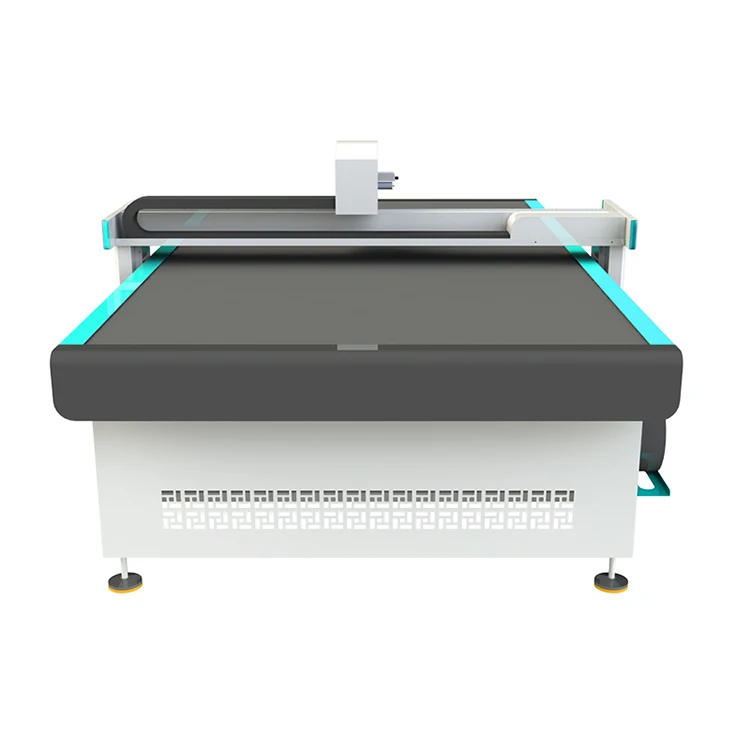
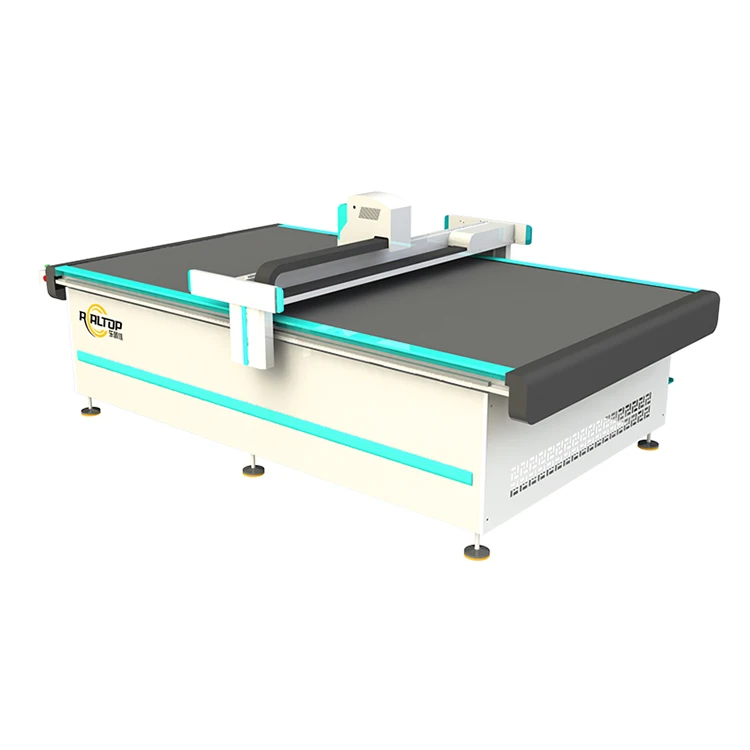
| Product Type | CNC Oscillating Knife Cutting Machine |
| Working Area | 1600×2500 mm |
| Cutting Speed | 0-2000 mm/s |
| Cutting Thickness | ≤ 30 mm (basis not stated in source — confirm material type and density) |
| Cutting Accuracy | ±0.1 mm |
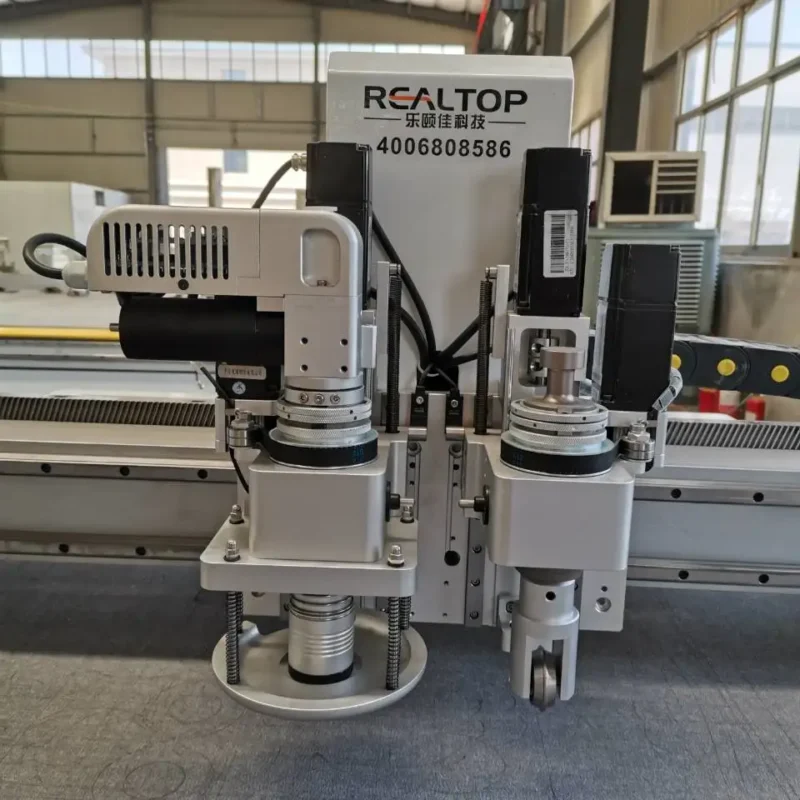
| Available Tool Heads | Oscillating knife, Driven rotary knife, Creasing wheel, Kiss cutting tool, Pneumatic knife, Milling tool, V groove knife |
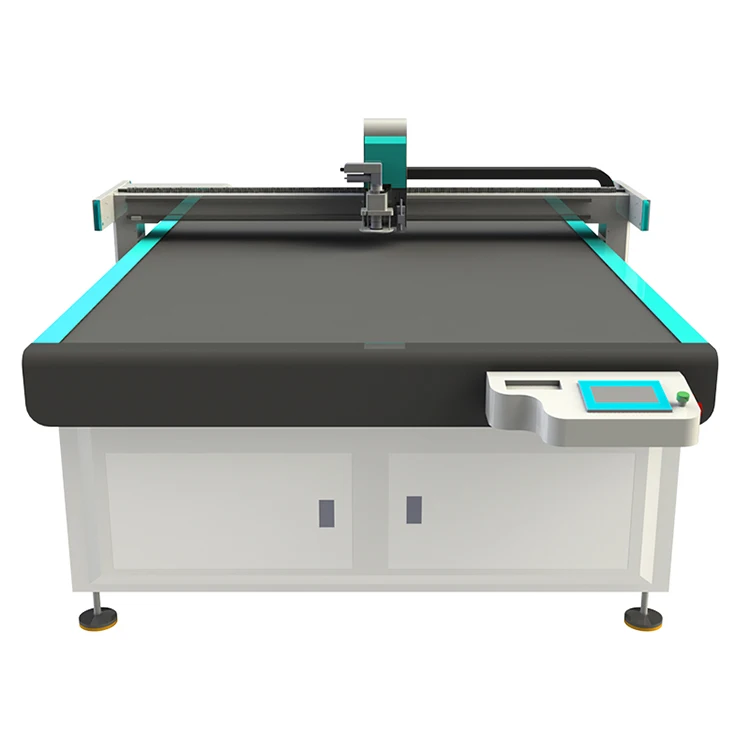
| Vacuum Table | Aluminum bellows vacuum table |
| Vacuum Pump Power | 9 kW |
| Control System | PLC control panel |
| Servo Motor Options | Panasonic, Delta, Dorna |
| Voltage Options | 110V, 220V, 380V |
| Supported File Formats | PLT, DXF, AI, PDF |
| CCD Camera | Available (contour recognition and positioning) |
| Software Language Options | English, Russian, Italian, Chinese (custom languages available) |
| Safety Devices | Infrared sensor device, Emergency stop device |
| Machine Dimensions (L×W×H) | 3300×2100×1350 mm |
| Certification | CE |
Application Suitability
| Application | Material or Output |
|---|---|
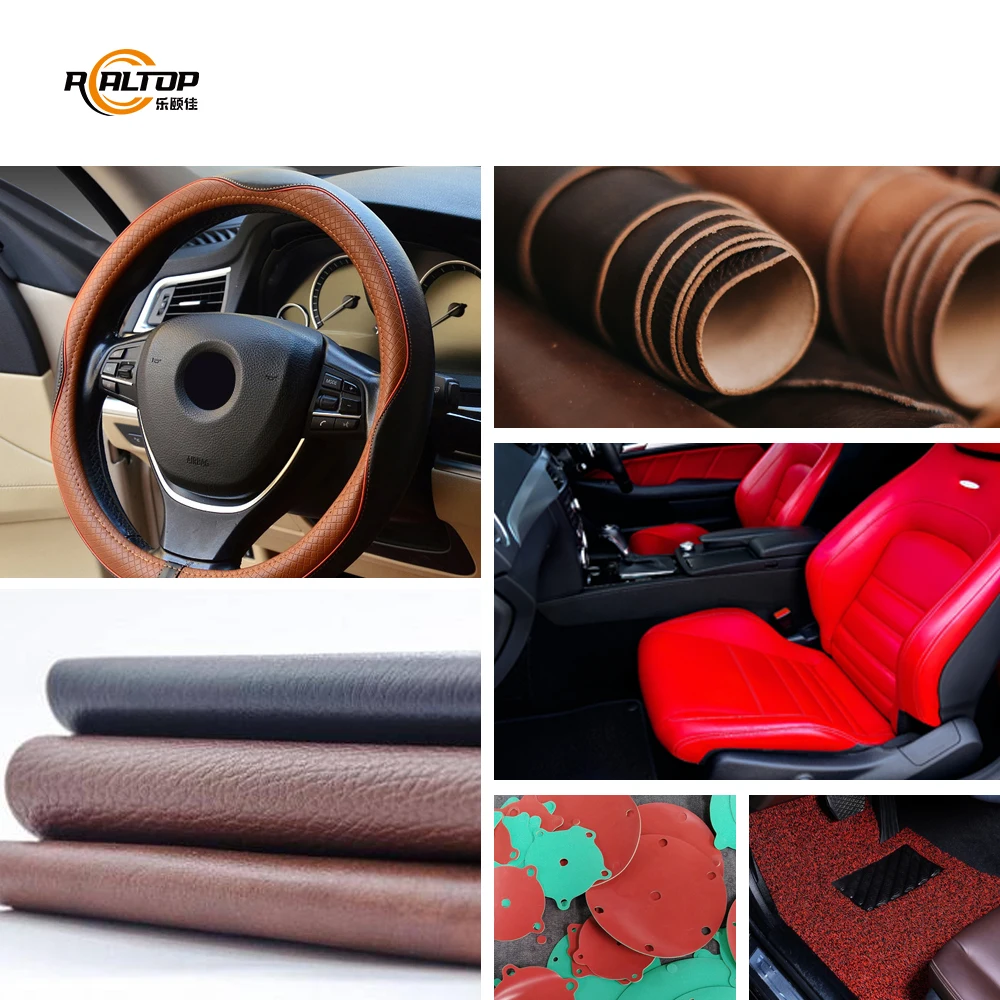
| Footwear upper cutting | Natural leather, PU leather, bonded leather hides up to working area format |
| Bag and leather goods production | Full-grain, split, and synthetic leather panels for handbags, belts, wallets |
| Automotive seat cover cutting | Leather, PVC, and composite upholstery materials for vehicle interiors |
| Sofa and upholstery panel cutting | Thick leather and fabric layers for soft furnishing components |
| Patterned roll processing | Printed leather and textile rolls with CCD camera contour tracking |
Why the "Standard Leather" Sample Is Not Enough Before You Commit
Real production stock determines the tool head and feed rate, not a generic sample run.
A machine specified only on working area and advertised cutting speed often behaves differently once your actual bonded leather, recycled-fiber-backed hide, or multi-layer composite reaches the table. I have watched a buyer burn through weeks of blade life because the oscillation frequency and knife pressure dialed in on a standard PU sample could not handle the density variation in their production bonded stock. The vacuum hold-down that grips a flat, uniform hide may release at the edges of a stiff, uneven natural leather piece, causing lift and ragged cuts at production speed [NEED_CITE: material density variation effects on vacuum hold-down performance]. A CNC oscillating knife cutting machine manufacturer who skips testing on your exact material is asking you to absorb the setup cost.
Matching Tool Heads to Leather Weight and Cut Profile
The 1625 supports seven interchangeable tool heads, and selecting the right one depends on both the leather type and the geometry of the parts you cut. Oscillating knife handles most mid-weight natural and synthetic leather cleanly, while a driven rotary knife suits thicker hides where a dragging blade would deflect. For shoe upper patterns with tight curves and internal cutouts, the oscillating knife combined with a creasing wheel lets you score fold lines in the same pass. A CNC oscillating knife cutting machine manufacturer should specify which head runs your material before the order is placed, not leave it as a field adjustment.
Vacuum Zoning and Hold-Down for Irregular Leather Pieces
The aluminum bellows vacuum table on this system provides full-surface suction, but zoning matters when you cut small components like strap pieces or bag hardware panels from a larger hide. Without proper zone segmentation, small parts lose suction as surrounding material is cut away and can shift mid-cycle. The 9 kW vacuum pump delivers the necessary suction for dense leather, yet the table must be configured so that active zones match your typical nesting layout. Buyers cutting mixed small and large parts from the same hide should confirm zone mapping before production [NEED_CITE: vacuum table zoning strategies for small-part nesting].
Reading the Specs That Actually Affect Your Leather Output
The ±0.1 mm cutting accuracy applies across the 1600×2500 mm working area when the servo system and vacuum hold-down are both functioning correctly — in practice, this means your shoe upper patterns and bag panels stay true to the DXF or PLT file you send. The PLC control panel supports multi-language interfaces, which reduces setup errors when operators switch between job files in English, Russian, Italian, or Chinese. The CCD camera option reads printed registration marks on patterned leather rolls, letting the system align cuts to pre-printed designs rather than relying on manual positioning. Servo motor selection across Panasonic, Delta, and Dorna allows buyers to match local service availability, ensuring replacement parts do not become a bottleneck in your region.
What Happens When the Configuration Guess Is Wrong
Choosing a tool head based on material category alone — "leather" — without accounting for your specific backing layer, coating thickness, or bonding adhesive leads to crushed edges, delamination, or premature blade wear. I once supported a buyer whose recycled-fiber-backed leather required a completely different knife pressure profile than the standard PU sample we had tested. Two weeks of production ran before the blade consumption rate pointed anyone toward the real problem. Incorrect vacuum zone setup causes small leather parts to lift and produce oversized or miss-cut pieces that pass visual inspection but fail downstream assembly [NEED_CITE: common causes of dimensional drift in dieless leather cutting].
Why Buyers Source This Machine Through REALTOP
An in-house design team covers both oscillating knife and laser cutting technologies, so you match the process to your leather rather than forcing one method across every material. Tool head and table configuration are specified per your material sample and production volume, not selected from a fixed catalog. CCD camera positioning is confirmed on your printed leather before the machine ships. Software compatibility with your existing DXF, PLT, AI, or PDF nesting workflow is verified during the pre-order phase. Voltage, plug type, and control panel language are locked in before production begins, avoiding on-site electrical rework.
Documentation & Verification
- Machine specification sheet listing your confirmed tool head and table configuration
- Electrical schematic with voltage and frequency matching your destination market
- Sample cutting report produced on your own leather stock before order commitment
- Factory test record documenting cutting accuracy across the full working area
- Software licence and file format compatibility confirmation for your nesting workflow
- Spare parts list identifying blades, vacuum seals, and servo-specific consumables
Installation, Commissioning & Support
- Foundation must support 3300×2100 mm footprint with level tolerance for the aluminum bellows vacuum table
- Dedicated circuit required matching your confirmed 110V, 220V, or 380V supply with correct plug type
- Machine ships partially assembled; vacuum table and gantry require on-site alignment
- First-run parameter tuning uses your leather stock to set knife pressure and oscillation frequency
- Operator training covers PLC control panel navigation in your specified language
- Blade replacement schedule calibrated to your confirmed leather density and daily cutting volume
What to Share Before Requesting a Quote
Provide your leather type, thickness range, and whether the stock is natural, bonded, or coated synthetic. Share your typical sheet or roll dimensions and the daily volume of parts you need to cut. Confirm your workshop voltage, frequency, and preferred control language so the electrical and software configuration can be specified accurately.
Frequently Asked Questions
Q: How do I decide between knife and laser cutting for my leather material?
A: Knife cutting produces clean edges on natural and bonded leather without the burn marks or odor that CO2 laser cutting can leave on organic hides. Laser suits synthetic leather where edge sealing is beneficial. We test both methods on your actual stock and recommend based on edge quality and throughput.
Q: What working area and tool head setup fits my daily leather cutting volume?
A: The 1600×2500 mm working area handles full hides and roll-fed material. Tool head selection — oscillating, driven rotary, or pneumatic — depends on your leather thickness and part geometry. We confirm the configuration after running your material sample.
Q: Can the machine handle my specific leather thickness and backing type?
A: The system cuts up to 30 mm depending on material density, which must be verified on your stock. Bonded leather with recycled fiber backing, for example, requires different knife pressure than solid PU. We run a sample cutting report on your exact material before locking in specifications.
Q: What file formats does the system accept from my existing design workflow?
A: The control system imports PLT, DXF, AI, and PDF files directly. We verify compatibility with your nesting software during the pre-order phase to ensure your existing workflow transfers without file conversion issues.
Q: Is voltage, plug type, and control language configurable for my market?
A: Voltage is selectable across 110V, 220V, and 380V. Plug type and control panel language — available in English, Russian, Italian, Chinese, or custom options — are confirmed before production to match your local electrical standards and operator requirements.
Tool Head Versatility — REALTOP matches oscillating, driven rotary, and pneumatic knife options to your specific leather weight rather than defaulting to a single cutting method.
Technical Specifications
| Parameter | Value |
|---|---|
| Model | 1625(Standard) |
| Product Type | CNC Oscillating Knife Cutting Machine |
| Working Area | 1600×2500 mm |
| Cutting Speed | 0-2000 mm/s |
| Cutting Thickness | ≤ 30 mm (basis not stated in source — confirm material type and density) |
| Cutting Accuracy | ±0.1 mm |
| Available Tool Heads | Oscillating knife, Driven rotary knife, Creasing wheel, Kiss cutting tool, Pneumatic knife, Milling tool, V groove knife |
| Vacuum Table | Aluminum bellows vacuum table |
| Vacuum Pump Power | 9 kW |
| Control System | PLC control panel |
| Servo Motor Options | Panasonic, Delta, Dorna |
| Voltage Options | 110V, 220V, 380V |
| Supported File Formats | PLT, DXF, AI, PDF |
| CCD Camera | Available (contour recognition and positioning) |
| Software Language Options | English, Russian, Italian, Chinese (custom languages available) |
| Safety Devices | Infrared sensor device, Emergency stop device |
| Machine Dimensions (L×W×H) | 3300×2100×1350 mm |
| Certification | CE |
Application Suitability
| Application | Material or Output |
|---|---|
| Footwear upper cutting | Natural leather, PU leather, bonded leather hides up to working area format |
| Bag and leather goods production | Full-grain, split, and synthetic leather panels for handbags, belts, wallets |
| Automotive seat cover cutting | Leather, PVC, and composite upholstery materials for vehicle interiors |
| Sofa and upholstery panel cutting | Thick leather and fabric layers for soft furnishing components |
| Patterned roll processing | Printed leather and textile rolls with CCD camera contour tracking |
Why the "Standard Leather" Sample Is Not Enough Before You Commit
Real production stock determines the tool head and feed rate, not a generic sample run.
A machine specified only on working area and advertised cutting speed often behaves differently once your actual bonded leather, recycled-fiber-backed hide, or multi-layer composite reaches the table. I have watched a buyer burn through weeks of blade life because the oscillation frequency and knife pressure dialed in on a standard PU sample could not handle the density variation in their production bonded stock. The vacuum hold-down that grips a flat, uniform hide may release at the edges of a stiff, uneven natural leather piece, causing lift and ragged cuts at production speed [NEED_CITE: material density variation effects on vacuum hold-down performance]. A CNC oscillating knife cutting machine manufacturer who skips testing on your exact material is asking you to absorb the setup cost.
Matching Tool Heads to Leather Weight and Cut Profile
The 1625 supports seven interchangeable tool heads, and selecting the right one depends on both the leather type and the geometry of the parts you cut. Oscillating knife handles most mid-weight natural and synthetic leather cleanly, while a driven rotary knife suits thicker hides where a dragging blade would deflect. For shoe upper patterns with tight curves and internal cutouts, the oscillating knife combined with a creasing wheel lets you score fold lines in the same pass. A CNC oscillating knife cutting machine manufacturer should specify which head runs your material before the order is placed, not leave it as a field adjustment.
Vacuum Zoning and Hold-Down for Irregular Leather Pieces
The aluminum bellows vacuum table on this system provides full-surface suction, but zoning matters when you cut small components like strap pieces or bag hardware panels from a larger hide. Without proper zone segmentation, small parts lose suction as surrounding material is cut away and can shift mid-cycle. The 9 kW vacuum pump delivers the necessary suction for dense leather, yet the table must be configured so that active zones match your typical nesting layout. Buyers cutting mixed small and large parts from the same hide should confirm zone mapping before production [NEED_CITE: vacuum table zoning strategies for small-part nesting].
Reading the Specs That Actually Affect Your Leather Output
The ±0.1 mm cutting accuracy applies across the 1600×2500 mm working area when the servo system and vacuum hold-down are both functioning correctly — in practice, this means your shoe upper patterns and bag panels stay true to the DXF or PLT file you send. The PLC control panel supports multi-language interfaces, which reduces setup errors when operators switch between job files in English, Russian, Italian, or Chinese. The CCD camera option reads printed registration marks on patterned leather rolls, letting the system align cuts to pre-printed designs rather than relying on manual positioning. Servo motor selection across Panasonic, Delta, and Dorna allows buyers to match local service availability, ensuring replacement parts do not become a bottleneck in your region.
What Happens When the Configuration Guess Is Wrong
Choosing a tool head based on material category alone — "leather" — without accounting for your specific backing layer, coating thickness, or bonding adhesive leads to crushed edges, delamination, or premature blade wear. I once supported a buyer whose recycled-fiber-backed leather required a completely different knife pressure profile than the standard PU sample we had tested. Two weeks of production ran before the blade consumption rate pointed anyone toward the real problem. Incorrect vacuum zone setup causes small leather parts to lift and produce oversized or miss-cut pieces that pass visual inspection but fail downstream assembly [NEED_CITE: common causes of dimensional drift in dieless leather cutting].
Why Buyers Source This Machine Through REALTOP
An in-house design team covers both oscillating knife and laser cutting technologies, so you match the process to your leather rather than forcing one method across every material. Tool head and table configuration are specified per your material sample and production volume, not selected from a fixed catalog. CCD camera positioning is confirmed on your printed leather before the machine ships. Software compatibility with your existing DXF, PLT, AI, or PDF nesting workflow is verified during the pre-order phase. Voltage, plug type, and control panel language are locked in before production begins, avoiding on-site electrical rework.
Documentation & Verification
- Machine specification sheet listing your confirmed tool head and table configuration
- Electrical schematic with voltage and frequency matching your destination market
- Sample cutting report produced on your own leather stock before order commitment
- Factory test record documenting cutting accuracy across the full working area
- Software licence and file format compatibility confirmation for your nesting workflow
- Spare parts list identifying blades, vacuum seals, and servo-specific consumables
Installation, Commissioning & Support
- Foundation must support 3300×2100 mm footprint with level tolerance for the aluminum bellows vacuum table
- Dedicated circuit required matching your confirmed 110V, 220V, or 380V supply with correct plug type
- Machine ships partially assembled; vacuum table and gantry require on-site alignment
- First-run parameter tuning uses your leather stock to set knife pressure and oscillation frequency
- Operator training covers PLC control panel navigation in your specified language
- Blade replacement schedule calibrated to your confirmed leather density and daily cutting volume
What to Share Before Requesting a Quote
Provide your leather type, thickness range, and whether the stock is natural, bonded, or coated synthetic. Share your typical sheet or roll dimensions and the daily volume of parts you need to cut. Confirm your workshop voltage, frequency, and preferred control language so the electrical and software configuration can be specified accurately.
Frequently Asked Questions
Q: How do I decide between knife and laser cutting for my leather material?
A: Knife cutting produces clean edges on natural and bonded leather without the burn marks or odor that CO2 laser cutting can leave on organic hides. Laser suits synthetic leather where edge sealing is beneficial. We test both methods on your actual stock and recommend based on edge quality and throughput.
Q: What working area and tool head setup fits my daily leather cutting volume?
A: The 1600×2500 mm working area handles full hides and roll-fed material. Tool head selection — oscillating, driven rotary, or pneumatic — depends on your leather thickness and part geometry. We confirm the configuration after running your material sample.
Q: Can the machine handle my specific leather thickness and backing type?
A: The system cuts up to 30 mm depending on material density, which must be verified on your stock. Bonded leather with recycled fiber backing, for example, requires different knife pressure than solid PU. We run a sample cutting report on your exact material before locking in specifications.
Q: What file formats does the system accept from my existing design workflow?
A: The control system imports PLT, DXF, AI, and PDF files directly. We verify compatibility with your nesting software during the pre-order phase to ensure your existing workflow transfers without file conversion issues.
Q: Is voltage, plug type, and control language configurable for my market?
A: Voltage is selectable across 110V, 220V, and 380V. Plug type and control panel language — available in English, Russian, Italian, Chinese, or custom options — are confirmed before production to match your local electrical standards and operator requirements.
商品评价
There are no reviews yet.