


Fast Delivery
Quick, reliable shipping to any location.

Free & easy returns
Return this item by mail or in store within 90 days for a full refund.
Cutting Method Matched to Material — One builder covering both knife and laser platforms lets you assign the right cutting process to each fabric, leather or composite job instead of forcing a single toolpath across every order.
Technical Specifications
| Parameter | Value |
|---|---|
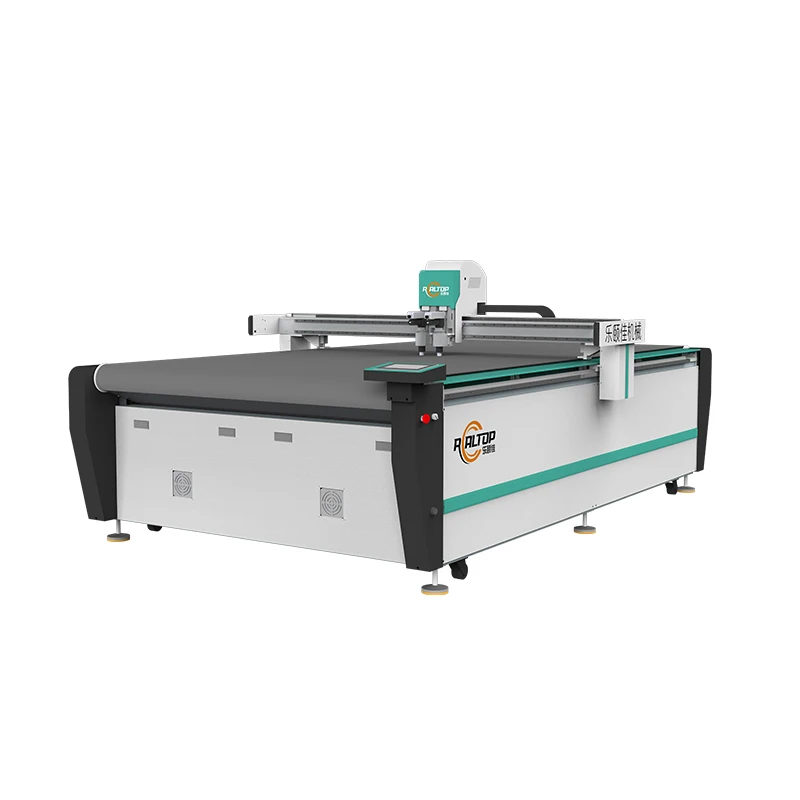
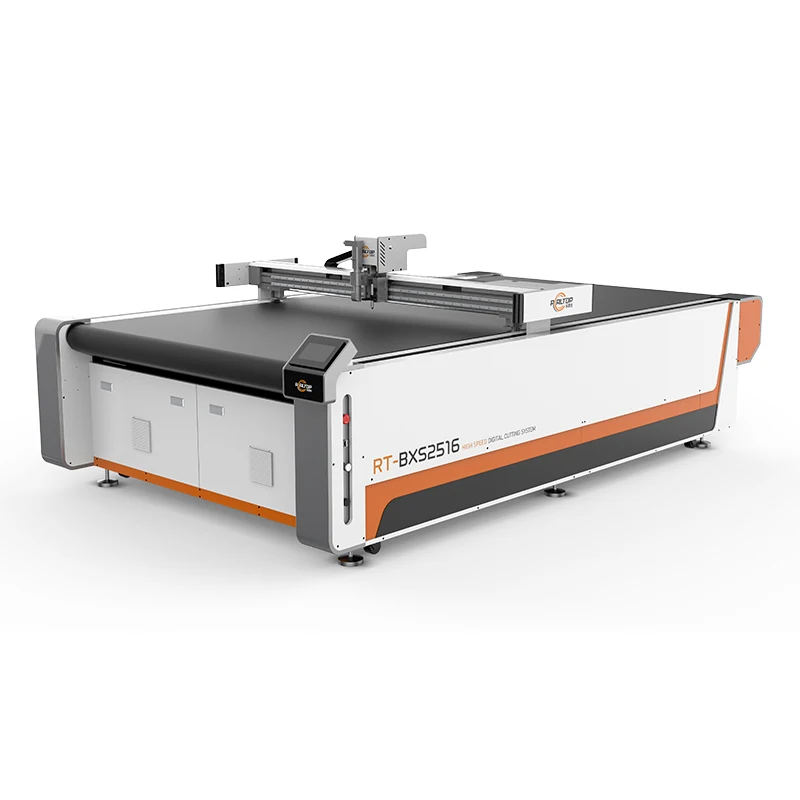
| Model | RT-D2516/RT-S2516 |
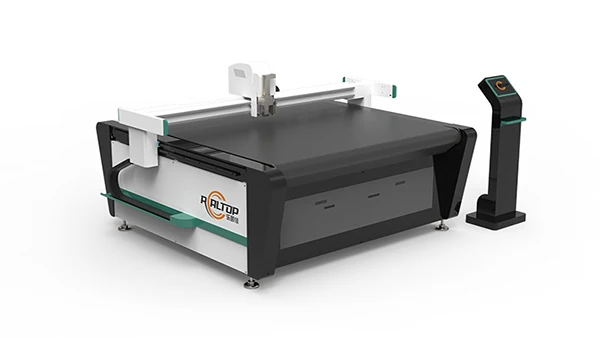
| Product Type | CNC Oscillating Knife Cutting Machine |
| Working Area | 1600×2500 mm |
| Overall Dimensions | 3450×2300×1250 mm |
| Rated Power | 9 kW |
| Voltage | 380V±10% |
| Table Type | Flat working table or auto feeding table (configurable) |
| Tool Head Options | Swiss imported oscillating knife, pneumatic knife, high-power vibrating knife, circular knife, V cutting knife, drag knife, creasing wheel, dotted line knife, punching, brush |
| Visual Positioning | Small CCD camera mark point positioning, panoramic camera recognition, projection positioning (options) |
| Translational Velocity | 800–2000 mm/s |
| Cutting Speed | 200–800 mm/s (basis not stated in source — confirm material type, thickness and layer count) |
| Cutting Thickness | ≤100 mm (varies by material density and tool head selection) |
| Repeated Accuracy | ≤0.1 mm |
| Transmission System | Digital servo motor, linear guide, synchronous belt, ball screw |
| Servo Motor Option | Delta (China) or Panasonic/Japanese brand (optional) |
| Vacuum Table | Magnesium-aluminum alloy with PVDF fluorocarbon coating, anodic oxidation, hard oxidation |
| Vacuum Pump | 7.5 kW integrated aviation aluminum shell pump with built-in silencer sponge |
| Safety Devices | Infrared induction blocking, anti-collision sensors on both sides of beam, emergency stop with in-situ resume |
| Control Panel | Touch screen, multi-language supported |
| Instruction System | HP-GL compatible format |
| Software | Auto typesetting/nesting; supports PLT, DXF, AI and other file formats |
| Conveyor Belt | Germany imported |
| Linear Guide | Taiwan Hiwin rail |
| Language Options | English, Russian, Italian, Chinese (special languages customizable) |
| Key Features | Fully assembled before shipment, split box platform supported for transport, 1-year warranty |
Application Suitability
| Application | Material or Output |
|---|---|
| Multi-layer garment cutting | Woven fabric, knit, non-woven fabric stacked for high-volume apparel production |
| Automotive interior trimming | Leather, PU, EVA, soundproofing felt, carpet and floor mat composites |
| Footwear and luggage uppers | Shoe material, luggage material, synthetic leather, textile panels |
| Packaging sample making | Cardboard, corrugated cardboard, plastic box, foam board |
| Gasket and seal fabrication | PTFE, ETFE, rubber, silicone, soft glass, composite gasket material |
| Soft furnishings | Carpet, sponge, PU foam, XPE for home textile and upholstery shops |
| Graphic and signage | Sticker, film, PVC, PE, PP sheets for advertising production |
Why Buyers Discover the Wrong Tool Head Only After Delivery
A CNC cutting machine manufacturer quote that lists only working area and voltage leaves out the single most consequential decision on the line: which tool head actually touches your material. The RT-D2516/RT-S2516 carries a full menu of heads — oscillating knife, drag knife, circular knife, creasing wheel, punching — and each one behaves differently on the same sheet. Specifying the tool head after the material is in the room, not after the crate is open, is the only way to avoid a stalled cutting line.
I have watched fabric shops order an oscillating knife machine for thin woven cotton, then try to run dense multi-layer automotive felt on the same head. The standard knife stalls, chews the stack, and the entire shift goes to waste [NEED_CITE: CNC oscillating knife cutting machine for sale buyers reporting material mismatch]. That mistake never lives in the quotation — it lives on the shop floor at 7 AM the Monday after delivery.
Knife Versus Laser: Where Each Process Belongs
A CNC cutting machine manufacturer that builds both platforms can answer a question most single-technology vendors cannot: does this material need a knife or a beam? Knife cutting leaves no burnt edge on natural fabric, no sealed perimeter on synthetics, and no fume extraction requirement — but it cannot engrave or weld seams. Laser seals synthetic edges and cuts intricate contours in thin film, but it melts foam and discolours leather. Matching the process to the job is what separates a machine that runs every day from one that sits idle while operators route jobs to a subcontractor.
Tool Head Configuration Dictates Edge Quality
The Swiss imported oscillating knife handles vibration full cutting, half cutting and cursor location on the RT-D2516/RT-S2516, and the additional head slots accept a pneumatic knife for thick foam stacks, a circular knife for continuous rolls, a V cutting knife for chamfered gasket profiles, or a creasing wheel for carton sample folding lines. Each swap changes the edge finish and the throughput. A buyer running shoe uppers in genuine leather needs the drag knife for clean contour work, while the same buyer cutting EVA midsole inserts needs the high-power vibrating knife to punch through dense foam without delaminating the skin [NEED_CITE: tool head selection by material type in CNC flatbed cutting].
Reading the Spec Sheet Against Your Actual Production
The 1600×2500 mm working area fits most garment layups and automotive interior panels, but the real constraint is cutting thickness relative to material density. The ≤100 mm maximum is measured on low-density foam; dense multi-layer felt or stacked leather compresses under the vacuum and reduces effective depth. The 7.5 kW vacuum pump with zoned magnesium-aluminum alloy table holds large panels flat, but small gasket parts near the edge of the vacuum zone can lift during high-speed contour cuts if the zoning is not matched to the nest layout. The Taiwan Hiwin linear guide and ≤0.1 mm repeated accuracy keep contour deviation inside tolerance, provided the servo tuning matches the actual head mass — a heavier pneumatic knife changes the dynamic load compared with the standard oscillating head. The 380V±10% supply must be confirmed against the buyer’s local grid before the servo drives are commissioned, because undervoltage trips the Panasonic or Delta servos mid-cut and corrupts the HP-GL job buffer.
The Hidden Cost of Skipping the Sample Cut
Buyers who approve a CNC oscillating knife cutting machine for sale based on a brochure photo often discover on delivery day that the vacuum zoning does not cover their smallest nested part, the CCD camera cannot track their print mark contrast at production speed, or the nesting software refuses their existing DXF workflow. Each of these problems is solvable — but only before the machine ships [NEED_CITE: post-delivery CNC cutting configuration disputes]. Running the buyer’s thickest, most abrasive composite through the vacuum table before the purchase order is signed turns a configuration guess into a confirmed setup.
What This Manufacturer Does Differently
Realtop builds both knife and laser platforms under one roof, so a buyer cutting fabric on Monday and acrylic on Tuesday can source both machines from the same engineering team and keep the control language, software interface and spare parts supply consistent. The in-house design team configures tool head and table layout per material sample rather than defaulting to a catalogue standard. CCD camera positioning, voltage and control language are locked in the specification sheet before production starts, not discovered during packing. Every machine ships with a factory test record run on the buyer’s own material, so edge quality and cutting speed are documented before the crate closes. The 1-year warranty covers parts, and on-site engineer dispatch is available with the buyer covering travel.
Documentation & Verification
- Machine specification sheet listing every tool head and vacuum zone configuration confirmed against your material sample
- Electrical schematic and 380V±10% voltage confirmation matched to your local grid frequency before servo commissioning
- Sample cutting report documenting edge quality and speed on your fabric, leather or composite stack
- Software licence with file format compatibility note for your existing PLT, DXF or AI nesting workflow
- Factory test record showing repeated accuracy and CCD mark tracking at production speed before dispatch
- Spare parts list covering oscillating knife blades, vacuum seals and CCD camera replacement components
Installation, Commissioning & Support
- Flat concrete floor required for the 3450×2300×1250 mm footprint with clearance for the 7.5 kW vacuum pump exhaust
- Dedicated 380V±10% circuit with independent breaker for the 9 kW rated power and servo motor startup surge
- Split box platform option allows transport through narrow warehouse doors before final on-site assembly
- Touch screen commissioning includes servo tuning for the specific tool head mass and Hiwin rail preload check
- Operator training covers nesting software file import, CCD mark registration and vacuum zone assignment per nest layout
- Consumable blade and vacuum seal kit shipped with the machine to cover the first production cycle
Before You Request a Quote
Tell us the material type, thickness, sheet size and the number of layers you cut per shift. Confirm your local voltage and frequency, your preferred control language, and whether your nesting workflow uses PLT, DXF or AI files. If you want the sample cut run before commitment, send a roll or sheet of your actual production material so the tool head and vacuum zoning can be verified against your daily output.
Frequently Asked Questions
Q: How do I decide between an oscillating knife and a laser for my fabric line?
A: Knife cutting produces no burnt edge on natural fibres and handles thick multi-layer stacks that a laser cannot penetrate. Laser cutting seals synthetic edges and handles intricate contours in thin film. If your daily mix includes both, sourcing from a manufacturer that builds both platforms lets you assign each job to the right process instead of compromising.
Q: What does the CCD camera actually track at production speed?
A: The small CCD camera reads printed mark points, while the panoramic option recognises full printed contours. Both require sufficient contrast between the mark and the substrate. We confirm tracking reliability on your printed material during the sample cut, not after the machine is installed.
Q: My parts are small gaskets — will the vacuum table hold them?
A: The magnesium-aluminum alloy table supports zoned adsorption, and the 7.5 kW pump provides the suction needed. The zone layout must match your nest pattern so that small parts sit inside an active vacuum region during the cut. We configure the zones after reviewing your actual nesting file.
Q: What must be confirmed before the machine ships?
A: Voltage and frequency at your facility, control panel language, software file format compatibility with your nesting workflow, and tool head selection for your material. Each of these is locked in the specification sheet before production begins to avoid on-site rework.
Q: How does the sample cutting process work?
A: You send a sample of your production material. We run it through the RT-D2516/RT-S2516 with the proposed tool head and vacuum configuration, document edge quality, cutting speed and accuracy, and share the report before you commit to the order.
Cutting Method Matched to Material — One builder covering both knife and laser platforms lets you assign the right cutting process to each fabric, leather or composite job instead of forcing a single toolpath across every order.
Technical Specifications
| Parameter | Value |
|---|---|
| Model | RT-D2516/RT-S2516 |
| Product Type | CNC Oscillating Knife Cutting Machine |
| Working Area | 1600×2500 mm |
| Overall Dimensions | 3450×2300×1250 mm |
| Rated Power | 9 kW |
| Voltage | 380V±10% |
| Table Type | Flat working table or auto feeding table (configurable) |
| Tool Head Options | Swiss imported oscillating knife, pneumatic knife, high-power vibrating knife, circular knife, V cutting knife, drag knife, creasing wheel, dotted line knife, punching, brush |
| Visual Positioning | Small CCD camera mark point positioning, panoramic camera recognition, projection positioning (options) |
| Translational Velocity | 800–2000 mm/s |
| Cutting Speed | 200–800 mm/s (basis not stated in source — confirm material type, thickness and layer count) |
| Cutting Thickness | ≤100 mm (varies by material density and tool head selection) |
| Repeated Accuracy | ≤0.1 mm |
| Transmission System | Digital servo motor, linear guide, synchronous belt, ball screw |
| Servo Motor Option | Delta (China) or Panasonic/Japanese brand (optional) |
| Vacuum Table | Magnesium-aluminum alloy with PVDF fluorocarbon coating, anodic oxidation, hard oxidation |
| Vacuum Pump | 7.5 kW integrated aviation aluminum shell pump with built-in silencer sponge |
| Safety Devices | Infrared induction blocking, anti-collision sensors on both sides of beam, emergency stop with in-situ resume |
| Control Panel | Touch screen, multi-language supported |
| Instruction System | HP-GL compatible format |
| Software | Auto typesetting/nesting; supports PLT, DXF, AI and other file formats |
| Conveyor Belt | Germany imported |
| Linear Guide | Taiwan Hiwin rail |
| Language Options | English, Russian, Italian, Chinese (special languages customizable) |
| Key Features | Fully assembled before shipment, split box platform supported for transport, 1-year warranty |
Application Suitability
| Application | Material or Output |
|---|---|
| Multi-layer garment cutting | Woven fabric, knit, non-woven fabric stacked for high-volume apparel production |
| Automotive interior trimming | Leather, PU, EVA, soundproofing felt, carpet and floor mat composites |
| Footwear and luggage uppers | Shoe material, luggage material, synthetic leather, textile panels |
| Packaging sample making | Cardboard, corrugated cardboard, plastic box, foam board |
| Gasket and seal fabrication | PTFE, ETFE, rubber, silicone, soft glass, composite gasket material |
| Soft furnishings | Carpet, sponge, PU foam, XPE for home textile and upholstery shops |
| Graphic and signage | Sticker, film, PVC, PE, PP sheets for advertising production |
Why Buyers Discover the Wrong Tool Head Only After Delivery
A CNC cutting machine manufacturer quote that lists only working area and voltage leaves out the single most consequential decision on the line: which tool head actually touches your material. The RT-D2516/RT-S2516 carries a full menu of heads — oscillating knife, drag knife, circular knife, creasing wheel, punching — and each one behaves differently on the same sheet. Specifying the tool head after the material is in the room, not after the crate is open, is the only way to avoid a stalled cutting line.
I have watched fabric shops order an oscillating knife machine for thin woven cotton, then try to run dense multi-layer automotive felt on the same head. The standard knife stalls, chews the stack, and the entire shift goes to waste [NEED_CITE: CNC oscillating knife cutting machine for sale buyers reporting material mismatch]. That mistake never lives in the quotation — it lives on the shop floor at 7 AM the Monday after delivery.
Knife Versus Laser: Where Each Process Belongs
A CNC cutting machine manufacturer that builds both platforms can answer a question most single-technology vendors cannot: does this material need a knife or a beam? Knife cutting leaves no burnt edge on natural fabric, no sealed perimeter on synthetics, and no fume extraction requirement — but it cannot engrave or weld seams. Laser seals synthetic edges and cuts intricate contours in thin film, but it melts foam and discolours leather. Matching the process to the job is what separates a machine that runs every day from one that sits idle while operators route jobs to a subcontractor.
Tool Head Configuration Dictates Edge Quality
The Swiss imported oscillating knife handles vibration full cutting, half cutting and cursor location on the RT-D2516/RT-S2516, and the additional head slots accept a pneumatic knife for thick foam stacks, a circular knife for continuous rolls, a V cutting knife for chamfered gasket profiles, or a creasing wheel for carton sample folding lines. Each swap changes the edge finish and the throughput. A buyer running shoe uppers in genuine leather needs the drag knife for clean contour work, while the same buyer cutting EVA midsole inserts needs the high-power vibrating knife to punch through dense foam without delaminating the skin [NEED_CITE: tool head selection by material type in CNC flatbed cutting].
Reading the Spec Sheet Against Your Actual Production
The 1600×2500 mm working area fits most garment layups and automotive interior panels, but the real constraint is cutting thickness relative to material density. The ≤100 mm maximum is measured on low-density foam; dense multi-layer felt or stacked leather compresses under the vacuum and reduces effective depth. The 7.5 kW vacuum pump with zoned magnesium-aluminum alloy table holds large panels flat, but small gasket parts near the edge of the vacuum zone can lift during high-speed contour cuts if the zoning is not matched to the nest layout. The Taiwan Hiwin linear guide and ≤0.1 mm repeated accuracy keep contour deviation inside tolerance, provided the servo tuning matches the actual head mass — a heavier pneumatic knife changes the dynamic load compared with the standard oscillating head. The 380V±10% supply must be confirmed against the buyer’s local grid before the servo drives are commissioned, because undervoltage trips the Panasonic or Delta servos mid-cut and corrupts the HP-GL job buffer.
The Hidden Cost of Skipping the Sample Cut
Buyers who approve a CNC oscillating knife cutting machine for sale based on a brochure photo often discover on delivery day that the vacuum zoning does not cover their smallest nested part, the CCD camera cannot track their print mark contrast at production speed, or the nesting software refuses their existing DXF workflow. Each of these problems is solvable — but only before the machine ships [NEED_CITE: post-delivery CNC cutting configuration disputes]. Running the buyer’s thickest, most abrasive composite through the vacuum table before the purchase order is signed turns a configuration guess into a confirmed setup.
What This Manufacturer Does Differently
Realtop builds both knife and laser platforms under one roof, so a buyer cutting fabric on Monday and acrylic on Tuesday can source both machines from the same engineering team and keep the control language, software interface and spare parts supply consistent. The in-house design team configures tool head and table layout per material sample rather than defaulting to a catalogue standard. CCD camera positioning, voltage and control language are locked in the specification sheet before production starts, not discovered during packing. Every machine ships with a factory test record run on the buyer’s own material, so edge quality and cutting speed are documented before the crate closes. The 1-year warranty covers parts, and on-site engineer dispatch is available with the buyer covering travel.
Documentation & Verification
- Machine specification sheet listing every tool head and vacuum zone configuration confirmed against your material sample
- Electrical schematic and 380V±10% voltage confirmation matched to your local grid frequency before servo commissioning
- Sample cutting report documenting edge quality and speed on your fabric, leather or composite stack
- Software licence with file format compatibility note for your existing PLT, DXF or AI nesting workflow
- Factory test record showing repeated accuracy and CCD mark tracking at production speed before dispatch
- Spare parts list covering oscillating knife blades, vacuum seals and CCD camera replacement components
Installation, Commissioning & Support
- Flat concrete floor required for the 3450×2300×1250 mm footprint with clearance for the 7.5 kW vacuum pump exhaust
- Dedicated 380V±10% circuit with independent breaker for the 9 kW rated power and servo motor startup surge
- Split box platform option allows transport through narrow warehouse doors before final on-site assembly
- Touch screen commissioning includes servo tuning for the specific tool head mass and Hiwin rail preload check
- Operator training covers nesting software file import, CCD mark registration and vacuum zone assignment per nest layout
- Consumable blade and vacuum seal kit shipped with the machine to cover the first production cycle
Before You Request a Quote
Tell us the material type, thickness, sheet size and the number of layers you cut per shift. Confirm your local voltage and frequency, your preferred control language, and whether your nesting workflow uses PLT, DXF or AI files. If you want the sample cut run before commitment, send a roll or sheet of your actual production material so the tool head and vacuum zoning can be verified against your daily output.
Frequently Asked Questions
Q: How do I decide between an oscillating knife and a laser for my fabric line?
A: Knife cutting produces no burnt edge on natural fibres and handles thick multi-layer stacks that a laser cannot penetrate. Laser cutting seals synthetic edges and handles intricate contours in thin film. If your daily mix includes both, sourcing from a manufacturer that builds both platforms lets you assign each job to the right process instead of compromising.
Q: What does the CCD camera actually track at production speed?
A: The small CCD camera reads printed mark points, while the panoramic option recognises full printed contours. Both require sufficient contrast between the mark and the substrate. We confirm tracking reliability on your printed material during the sample cut, not after the machine is installed.
Q: My parts are small gaskets — will the vacuum table hold them?
A: The magnesium-aluminum alloy table supports zoned adsorption, and the 7.5 kW pump provides the suction needed. The zone layout must match your nest pattern so that small parts sit inside an active vacuum region during the cut. We configure the zones after reviewing your actual nesting file.
Q: What must be confirmed before the machine ships?
A: Voltage and frequency at your facility, control panel language, software file format compatibility with your nesting workflow, and tool head selection for your material. Each of these is locked in the specification sheet before production begins to avoid on-site rework.
Q: How does the sample cutting process work?
A: You send a sample of your production material. We run it through the RT-D2516/RT-S2516 with the proposed tool head and vacuum configuration, document edge quality, cutting speed and accuracy, and share the report before you commit to the order.










商品评价
There are no reviews yet.