

Fast Delivery
Quick, reliable shipping to any location.

Free & easy returns
Return this item by mail or in store within 90 days for a full refund.
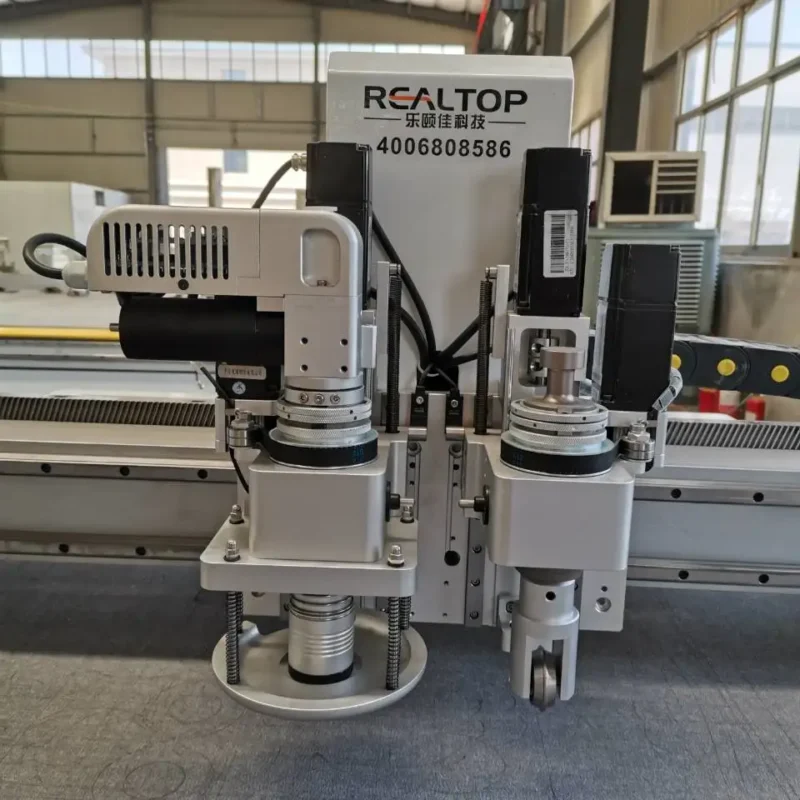
Tool Head Matching — oscillating, pneumatic, circular and drag knife options specified per fabric type and thickness before order confirmation.
Technical Specifications
| Parameter | Value |
|---|---|
| Model | RT-D2516 / RT-S2516 |
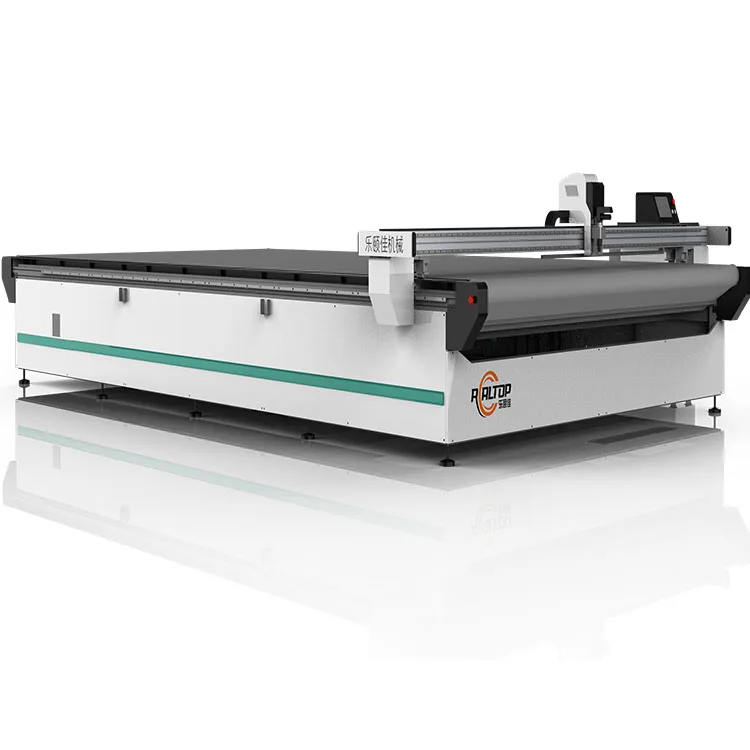
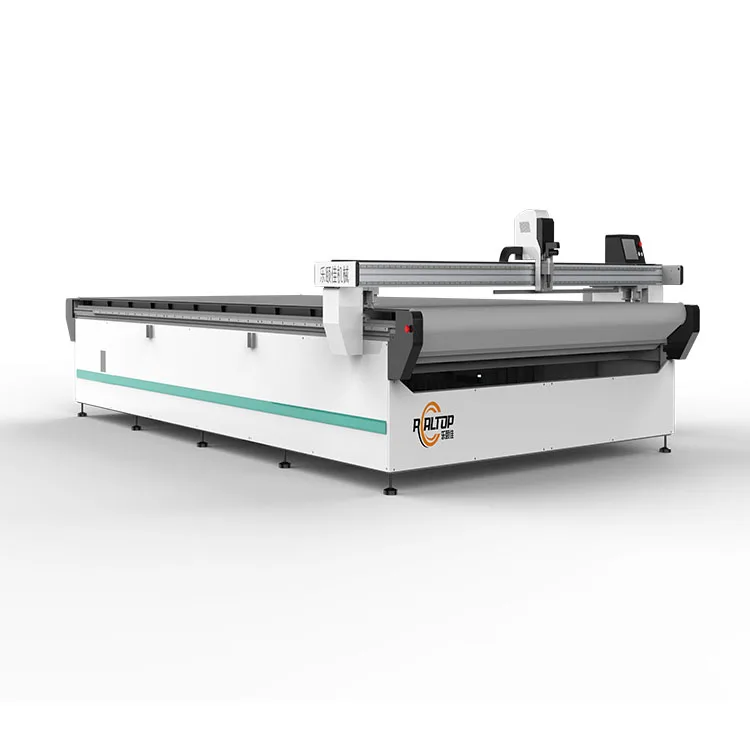
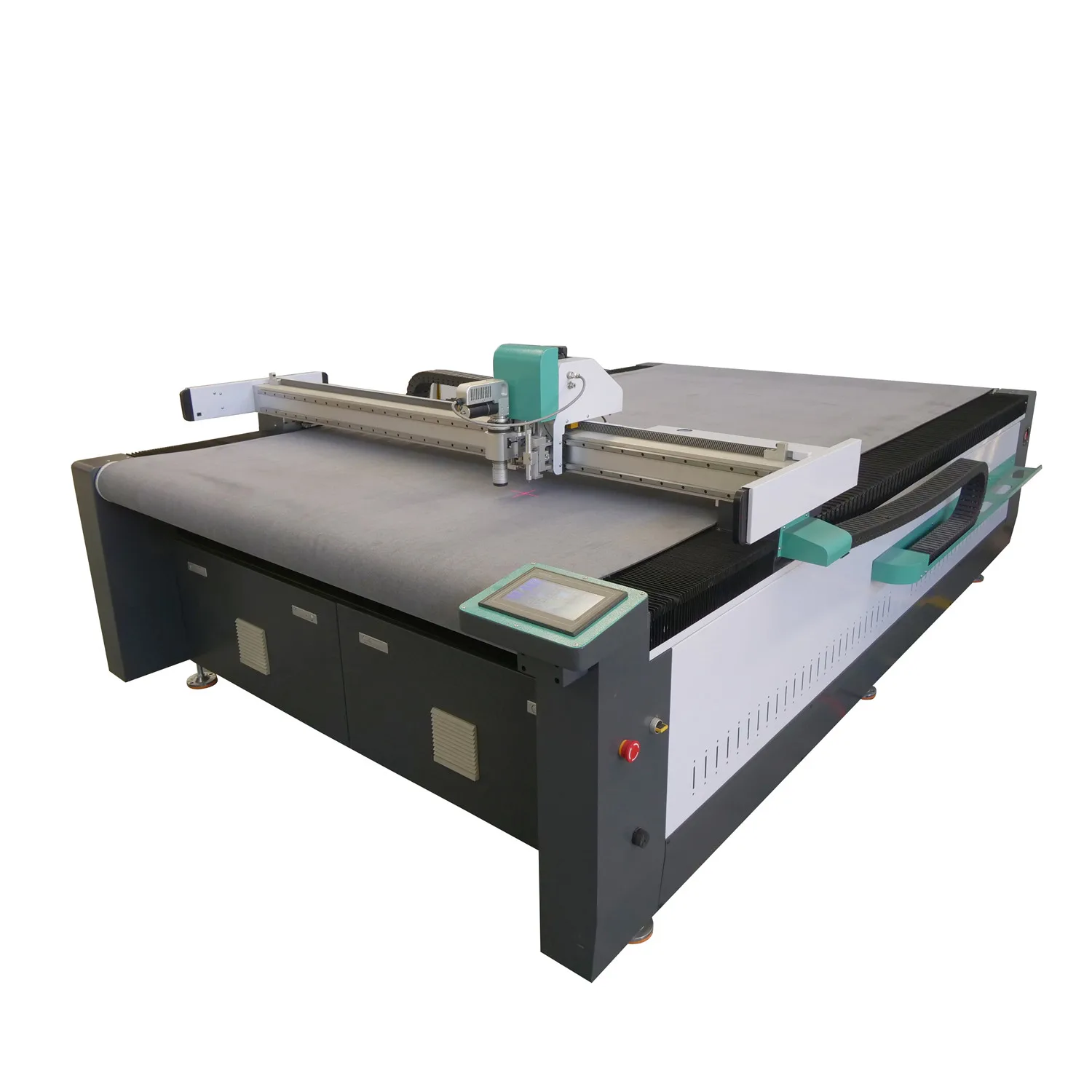
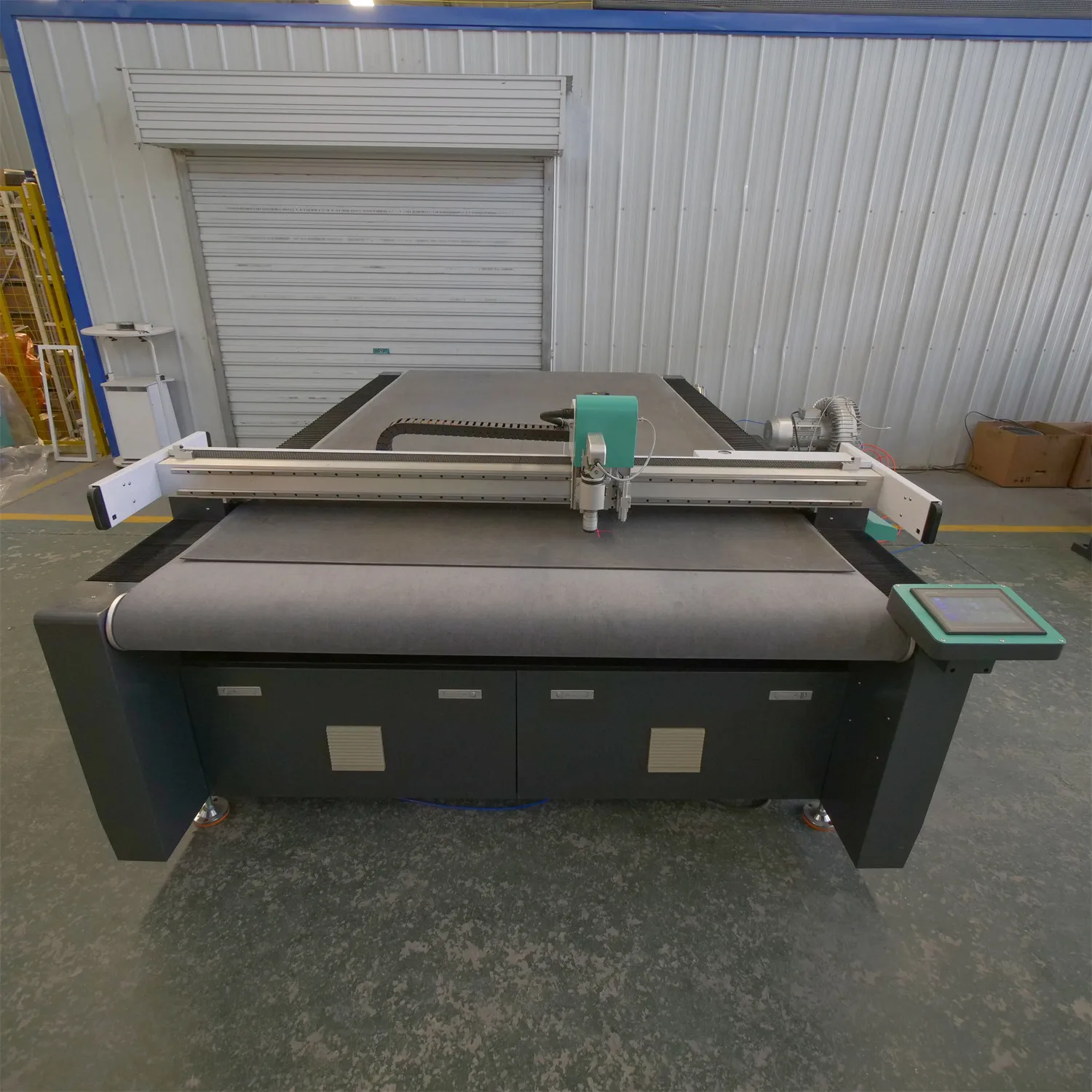
| Product Type | CNC Oscillating Knife Cutting Machine |
| Working Area | 1600 × 2500 mm |
| Machine Size | 3450 × 2300 × 1250 mm |
| Rated Power | 9 kW |
| Voltage | 380V ±10% |
| Translational Velocity | 800–2000 mm/s |
| Cutting Speed | 200–800 mm/s (varies with material type and density) |
| Repeatability | ≤0.1 mm |
| Cutting Thickness | ≤100 mm (basis not stated in source — confirm material type and density) |
| Table Configuration | Flat working table or auto-feeding conveyor table |
| Tool Head Options | Oscillating knife, pneumatic knife, high-power vibrating knife, circular knife, V-cutting knife, drag knife, creasing wheel, dotted line knife, punching, brush |
| Multifunctional Head | Swiss imported knife (vibration full cutting, vibration half cutting, cursor location) |
| Visual Positioning | Small CCD camera mark point positioning, panoramic camera recognition, projection positioning |
| Servo Motor | Delta or Panasonic (optional), IP67 waterproof |
| Transmission System | Digital servo motor, linear guide, synchronous belt, ball screw |
| Linear Rail | Taiwan Hiwin |
| Vacuum Table Surface | Magnesium-aluminum alloy, fluorocarbon PVDF powder spraying, anodic oxidation |
| Vacuum Pump | 7.5 kW, aviation aluminum shell, built-in silencer sponge |
| Conveyor Belt | Germany imported |
| Control Panel | Touch screen, multiple languages supported |
| Instruction System | HP-GL compatible format |
| Software | Automatic nesting and typesetting; supports PLT, DXF, AI file formats |
| Safety Device | Infrared sensors, anti-collision, emergency stop |
| Language Options | English, Russian, Italian, Chinese (special languages customizable) |
| Standards | CE declared |
Application Suitability
| Application | Material or Output |
|---|---|
| Garment and footwear production | Woven fabric, knit fabric, denim, canvas, technical textiles, shoe uppers |
| Automotive interior trimming | Seat fabric, headliner material, carpet, floor mats, acoustic insulation foam |
| Sofa and soft furnishings | Upholstery fabric, velvet, chenille, leather and synthetic leather |
| Luggage and bag manufacturing | Nylon, polyester, PVC-coated fabric, reinforced textile panels |
| Packaging sample making | Cardboard, corrugated board, folding carton stock, sticker vinyl |
| Gasket and sealing production | PTFE, ETFE, rubber sheet, cork composite, non-asbestos fiber |
| Advertising and signage | Self-adhesive film, PVC board, reflective sheeting, printed contour graphics |
Why Working Area Alone Is Never Enough to Specify a CNC Cutting Machine
The cutting depth rating means nothing unless it is matched to your exact material density, ply count and tool head selection.
I have watched buyers choose a CNC oscillating knife cutting machine based purely on bed size, only to find that their 30-layer knit lay cannot be held flat at the edges, or that their foam gasket compresses under the knife and springs back ragged. The 1600 × 2500 mm working area on the RT-D2516 and RT-S2516 covers standard textile roll widths, but the real question is whether the vacuum zoning and knife oscillation frequency can handle your specific lay height and material behaviour at production speed. [NEED_CITE: vacuum hold-down requirements for multi-layer fabric cutting]
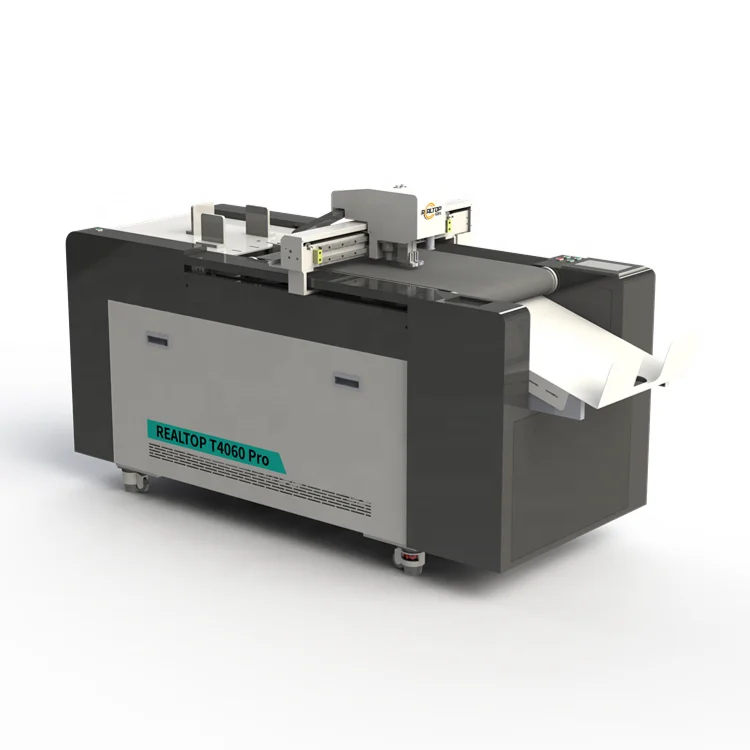
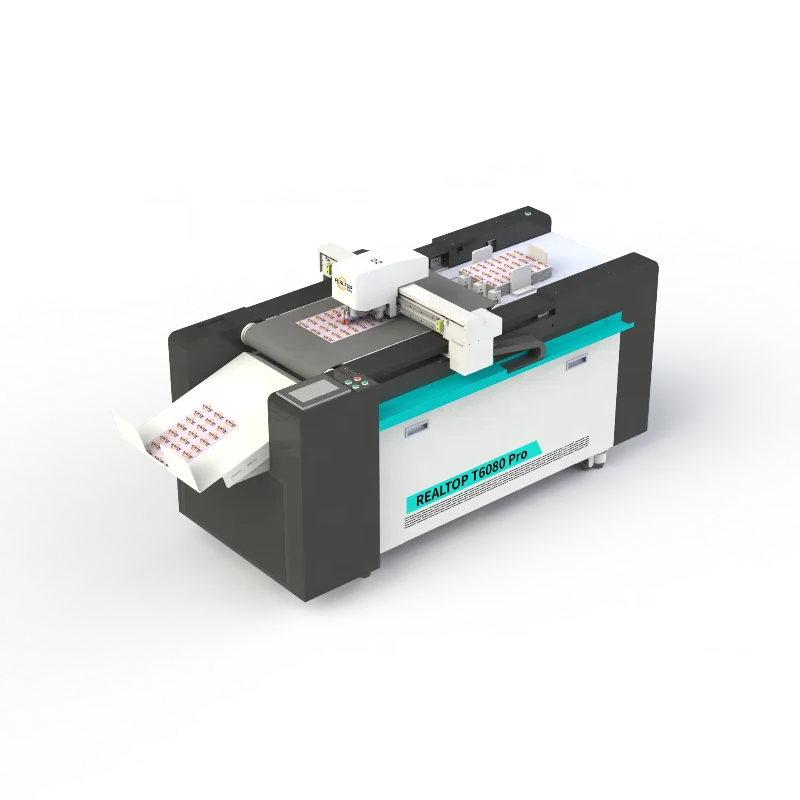
Machine Families Across the REALTOP Catalogue
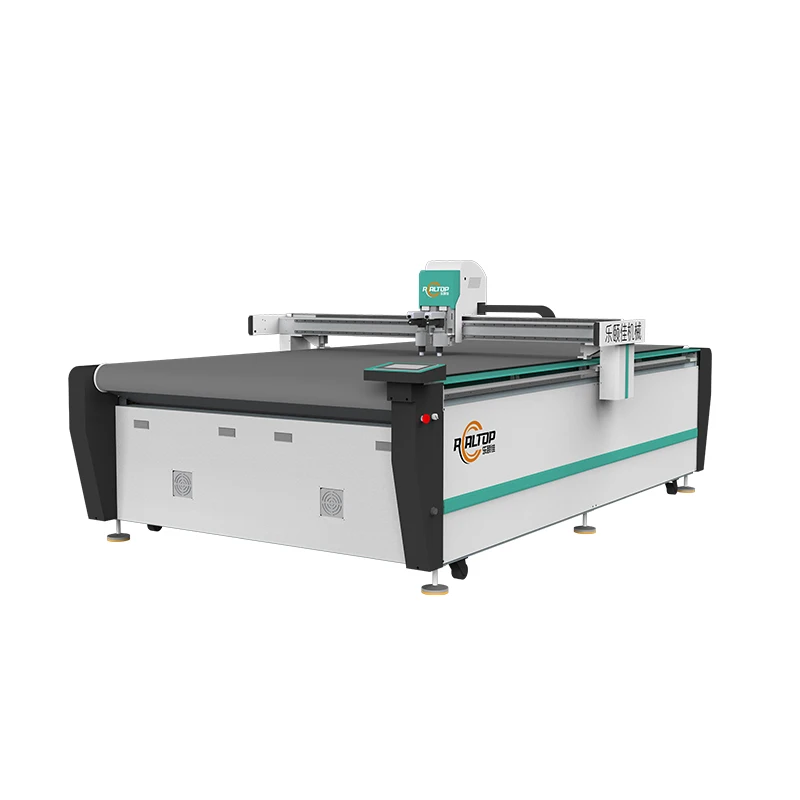
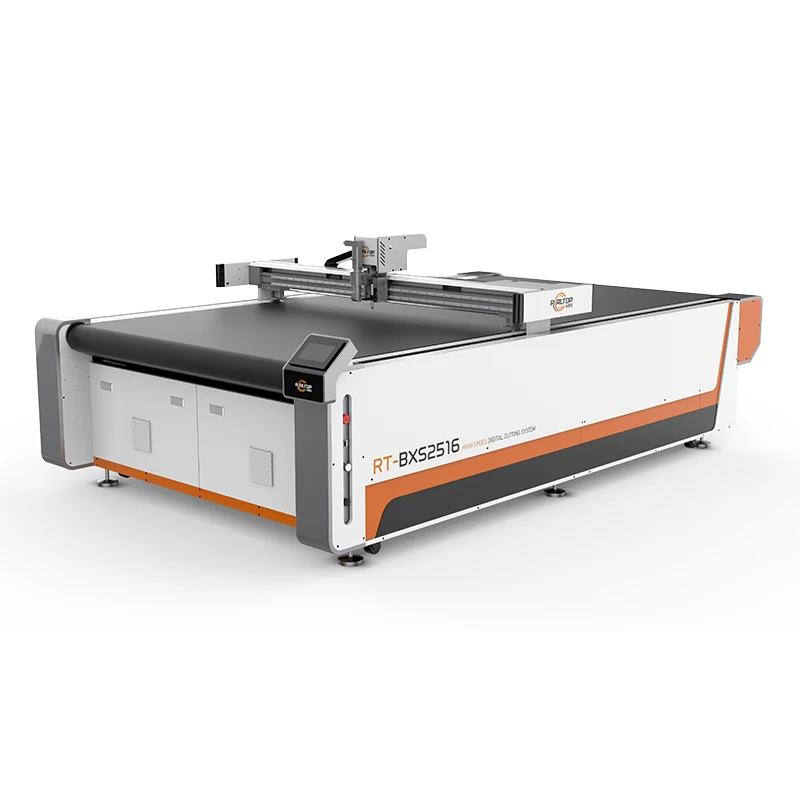
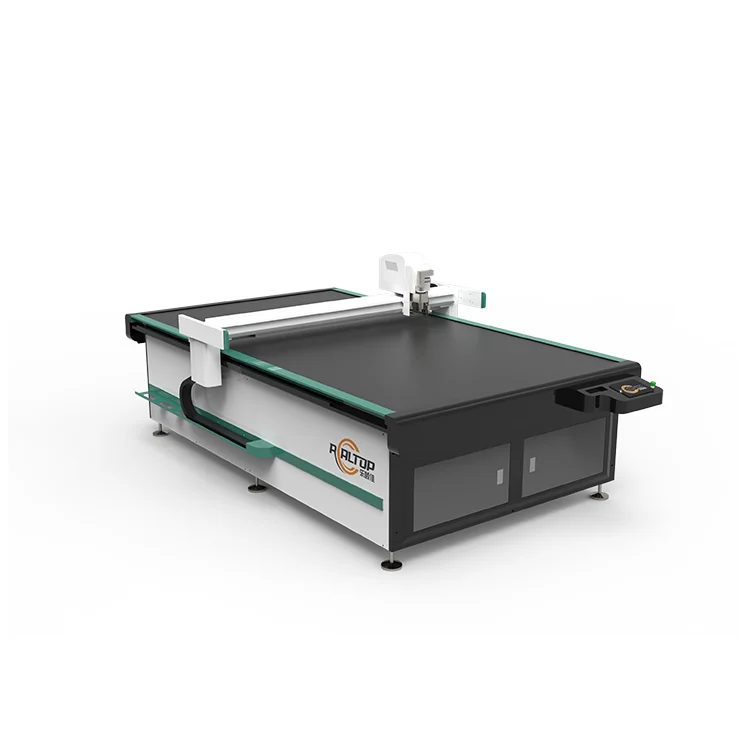
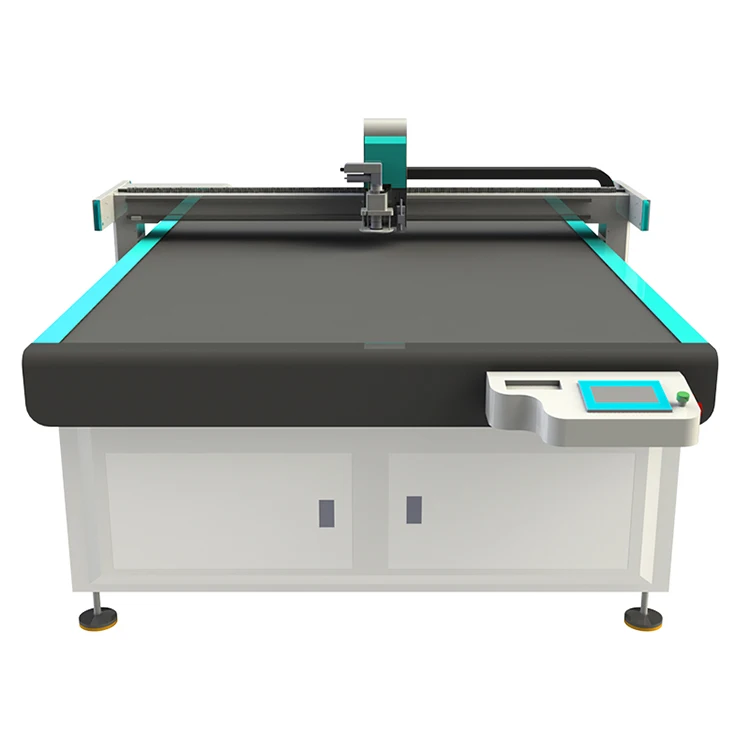
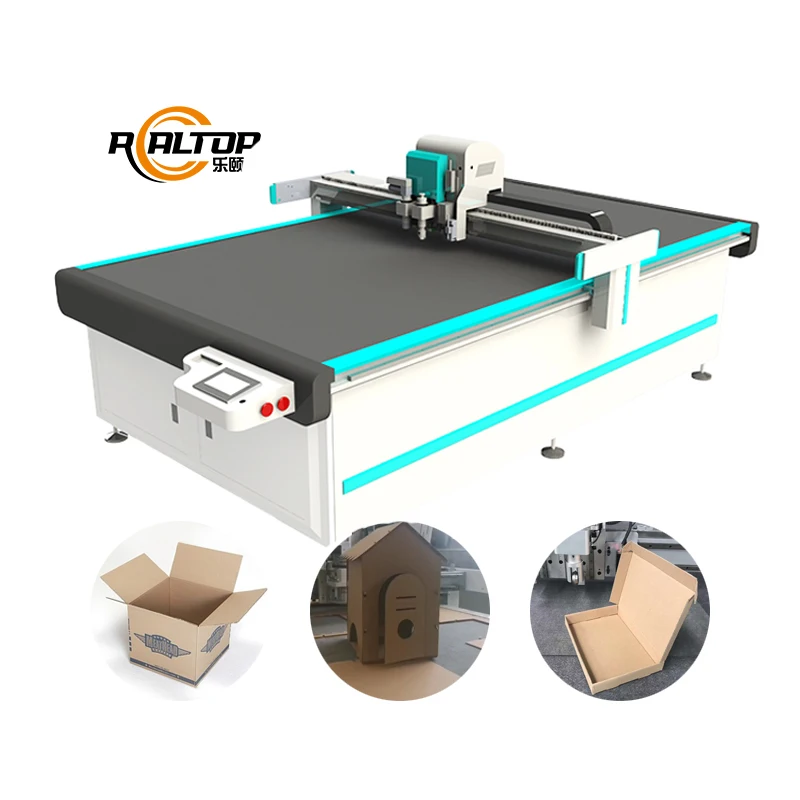
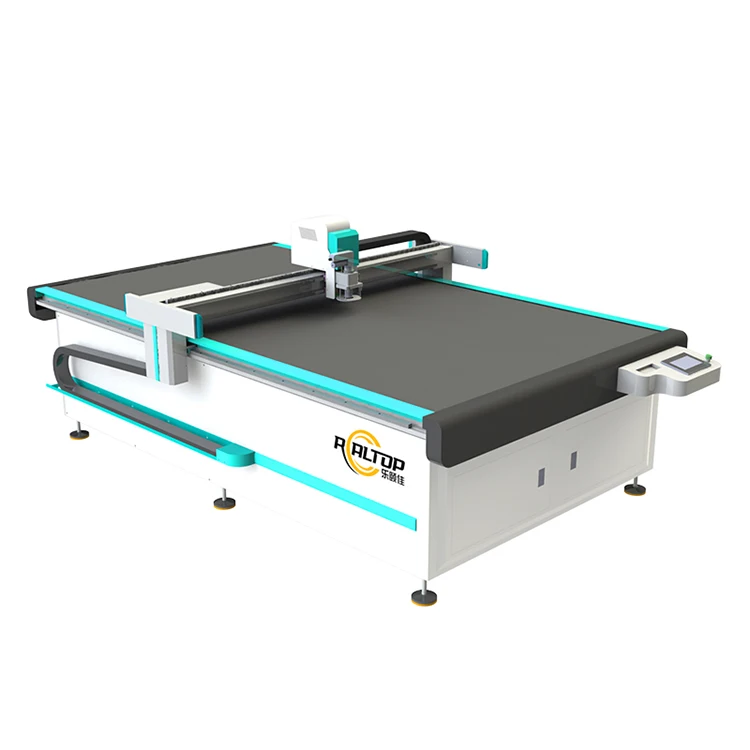
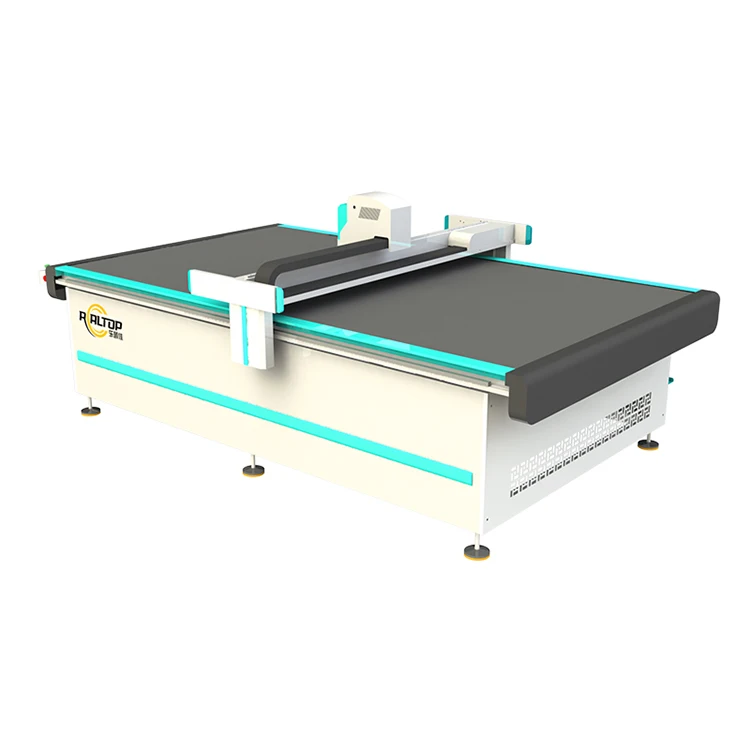
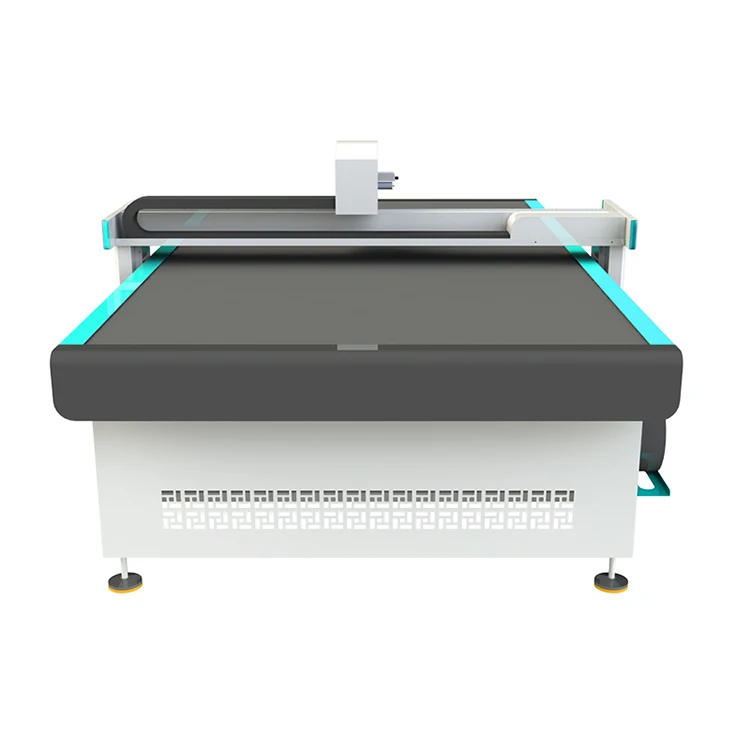
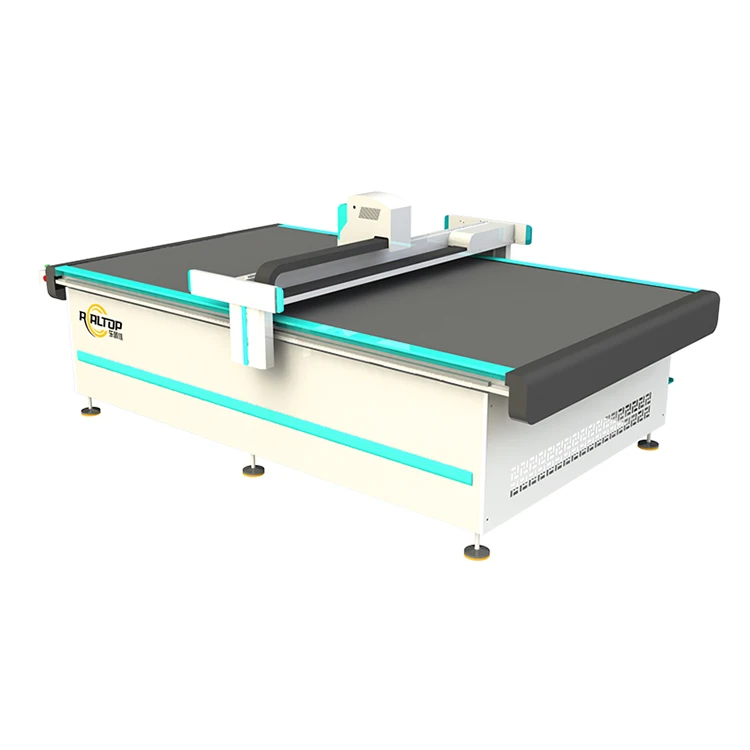
This CNC cutting machine manufacturer offers both flat-table and auto-feeding configurations within the same machine family. The flat-table RT-D2516 suits short-run sample rooms and single-ply contour work where an operator loads each sheet by hand, while the auto-feeding RT-S2516 pairs a continuous conveyor belt with a roll-unwind stand for uninterrupted multi-layer garment panel cutting. Buyers comparing knife cutting against laser options can evaluate both methods from the same catalogue before committing to one production line.
Choosing Knife Over Laser by Material and Edge Requirement
Synthetic fabrics like polyester and nylon melt and seal under a CO₂ laser beam, which is useful for fray-prone edges. However, natural fibres, leather, multi-layer knit lays and foam composites demand a clean blade cut without thermal discolouration or odour. The RT-D2516 and RT-S2516 support oscillating, pneumatic, circular and drag knife heads, so the cutting method can be matched to whether the buyer needs a sealed edge or a cold-cut edge. [NEED_CITE: thermal versus mechanical cutting effects on natural and synthetic fibres]
What the Specification Sheet Actually Means on the Shop Floor
The 7.5 kW vacuum pump with aviation aluminum housing and built-in silencer sponge addresses a common complaint in textile cutting rooms: small pattern pieces lifting off the table mid-cut. A powerful pump alone is not enough; the magnesium-aluminum alloy table surface with PVDF powder coating provides a flat, low-friction plane that lets cut panels slide off without snagging while maintaining suction across the full 1600 × 2500 mm area. Taiwan Hiwin linear rails paired with Delta or Panasonic IP67-rated servo motors deliver ≤0.1 mm repeatability, which matters when nesting software places pattern pieces with only millimetre gaps between them. The CCD camera mark point positioning and panoramic recognition options allow the machine to read printed registration marks on pre-printed fabric and adjust the cut path in real time, reducing waste from fabric stretch distortion.
The Cost of Skipping a Sample Cut Before Commitment
A buyer once sent me a roll of four-way stretch spandex after their previous machine left curled edges on every panel. The root cause was not the machine brand but the wrong knife frequency and hold-down pressure for that specific knit structure. When a CNC oscillating knife cutting machine for sale is quoted without a sample test on the buyer’s actual roll, the risk of edge distortion, ply shifting or incomplete cuts in multi-layer lays goes unnoticed until the machine is on the factory floor and material is already wasted. [NEED_CITE: fabric behaviour variability in automated cutting operations]
Why Source This Machine Family From REALTOP
In-house design covers both knife and laser cutting technologies within one engineering team, so a buyer evaluating the RT-D2516 against a laser alternative gets an honest comparison based on material behaviour rather than a single-technology push. Tool head and table configurations are specified per material sample, not per catalogue page. CCD camera positioning for printed contour work is verified on the buyer’s actual printed fabric before order confirmation. Software compatibility — PLT, DXF, AI file formats and nesting workflows — is checked against the buyer’s existing design system. Voltage, control panel language and plug type are confirmed against the buyer’s local electrical supply before the machine enters production.
Documentation & Verification
- Machine specification sheet listing tool head and table configuration selected for your material
- Sample cutting report run on your actual fabric roll with measured edge quality and ply alignment
- Electrical schematic confirming voltage, frequency and plug type for your facility supply
- Software licence and file format compatibility note covering PLT, DXF and AI import
- Factory test record documenting repeatability measurement and vacuum hold-down performance
- Operation and maintenance manual in your chosen control language
Installation, Commissioning & Support
- Dedicated 380V ±10% circuit required; confirm local frequency matches the servo and vacuum pump ratings
- Machine footprint 3450 × 2300 mm plus operator clearance and material feed path for auto-feeding layout
- First-run commissioning includes vacuum zoning calibration and knife frequency tuning on your sample material
- Operator training covers nesting software workflow, CCD mark-point setup and tool head changeover
- Spare parts list covers knife blades, conveyor belt segments and vacuum pump silencer sponge
How to Prepare Your Enquiry
To match the correct machine family and configuration, send your material type, thickness, maximum sheet or roll width and the daily volume of panels or parts you need to cut. Confirm your workshop voltage and frequency, the control language your operators prefer, and whether you need flat-table loading or continuous conveyor feeding. If your fabric carries printed registration marks, supply a sample of the printed repeat so CCD positioning can be validated before quotation.
Frequently Asked Questions
Q: How do I choose between knife cutting and laser cutting for my material?
A: Natural fibres, leather and multi-layer lays generally need a cold blade cut to avoid thermal damage. Synthetics like polyester may benefit from laser edge sealing. REALTOP builds both knife and laser systems, so the choice is based on your material behaviour, not on a single-technology catalogue. A sample cut on your actual roll confirms which method produces the correct edge.
Q: Which tool head is correct for my material type and thickness?
A: Oscillating knives suit woven fabric and thin foam, pneumatic knives handle thicker compressible materials, and circular knives work for single-ply textile at speed. The correct choice depends on your material density, ply count and edge quality requirement, which is why a sample cutting test on your own roll is part of the specification process.
Q: How do I verify the working area fits my standard sheet or roll dimensions?
A: The 1600 × 2500 mm bed covers most garment and textile roll widths. For wider automotive carpet or industrial fabric, check the full machine family for larger format options. Measure your largest panel pattern and allow nesting clearance before confirming table size.
Q: What voltage, plug and control language options are confirmed before shipment?
A: Standard voltage is 380V ±10% with 50 or 60 Hz frequency, configurable for your local supply. Plug type and control panel language — English, Russian, Italian, Chinese or a custom language — are documented on the electrical schematic and confirmed before the machine enters production.
Q: Can I see the full machine family to compare configurations by material and daily volume?
A: The REALTOP catalogue includes flat-table and auto-feeding CNC knife cutting machines, CO₂ laser cutters and fiber laser systems. Comparing configurations side by side helps buyers match the cutting method and throughput to their specific material and production schedule before committing to one line.
Tool Head Matching — oscillating, pneumatic, circular and drag knife options specified per fabric type and thickness before order confirmation.
Technical Specifications
| Parameter | Value |
|---|---|
| Model | RT-D2516 / RT-S2516 |
| Product Type | CNC Oscillating Knife Cutting Machine |
| Working Area | 1600 × 2500 mm |
| Machine Size | 3450 × 2300 × 1250 mm |
| Rated Power | 9 kW |
| Voltage | 380V ±10% |
| Translational Velocity | 800–2000 mm/s |
| Cutting Speed | 200–800 mm/s (varies with material type and density) |
| Repeatability | ≤0.1 mm |
| Cutting Thickness | ≤100 mm (basis not stated in source — confirm material type and density) |
| Table Configuration | Flat working table or auto-feeding conveyor table |
| Tool Head Options | Oscillating knife, pneumatic knife, high-power vibrating knife, circular knife, V-cutting knife, drag knife, creasing wheel, dotted line knife, punching, brush |
| Multifunctional Head | Swiss imported knife (vibration full cutting, vibration half cutting, cursor location) |
| Visual Positioning | Small CCD camera mark point positioning, panoramic camera recognition, projection positioning |
| Servo Motor | Delta or Panasonic (optional), IP67 waterproof |
| Transmission System | Digital servo motor, linear guide, synchronous belt, ball screw |
| Linear Rail | Taiwan Hiwin |
| Vacuum Table Surface | Magnesium-aluminum alloy, fluorocarbon PVDF powder spraying, anodic oxidation |
| Vacuum Pump | 7.5 kW, aviation aluminum shell, built-in silencer sponge |
| Conveyor Belt | Germany imported |
| Control Panel | Touch screen, multiple languages supported |
| Instruction System | HP-GL compatible format |
| Software | Automatic nesting and typesetting; supports PLT, DXF, AI file formats |
| Safety Device | Infrared sensors, anti-collision, emergency stop |
| Language Options | English, Russian, Italian, Chinese (special languages customizable) |
| Standards | CE declared |
Application Suitability
| Application | Material or Output |
|---|---|
| Garment and footwear production | Woven fabric, knit fabric, denim, canvas, technical textiles, shoe uppers |
| Automotive interior trimming | Seat fabric, headliner material, carpet, floor mats, acoustic insulation foam |
| Sofa and soft furnishings | Upholstery fabric, velvet, chenille, leather and synthetic leather |
| Luggage and bag manufacturing | Nylon, polyester, PVC-coated fabric, reinforced textile panels |
| Packaging sample making | Cardboard, corrugated board, folding carton stock, sticker vinyl |
| Gasket and sealing production | PTFE, ETFE, rubber sheet, cork composite, non-asbestos fiber |
| Advertising and signage | Self-adhesive film, PVC board, reflective sheeting, printed contour graphics |
Why Working Area Alone Is Never Enough to Specify a CNC Cutting Machine
The cutting depth rating means nothing unless it is matched to your exact material density, ply count and tool head selection.
I have watched buyers choose a CNC oscillating knife cutting machine based purely on bed size, only to find that their 30-layer knit lay cannot be held flat at the edges, or that their foam gasket compresses under the knife and springs back ragged. The 1600 × 2500 mm working area on the RT-D2516 and RT-S2516 covers standard textile roll widths, but the real question is whether the vacuum zoning and knife oscillation frequency can handle your specific lay height and material behaviour at production speed. [NEED_CITE: vacuum hold-down requirements for multi-layer fabric cutting]
Machine Families Across the REALTOP Catalogue
This CNC cutting machine manufacturer offers both flat-table and auto-feeding configurations within the same machine family. The flat-table RT-D2516 suits short-run sample rooms and single-ply contour work where an operator loads each sheet by hand, while the auto-feeding RT-S2516 pairs a continuous conveyor belt with a roll-unwind stand for uninterrupted multi-layer garment panel cutting. Buyers comparing knife cutting against laser options can evaluate both methods from the same catalogue before committing to one production line.
Choosing Knife Over Laser by Material and Edge Requirement
Synthetic fabrics like polyester and nylon melt and seal under a CO₂ laser beam, which is useful for fray-prone edges. However, natural fibres, leather, multi-layer knit lays and foam composites demand a clean blade cut without thermal discolouration or odour. The RT-D2516 and RT-S2516 support oscillating, pneumatic, circular and drag knife heads, so the cutting method can be matched to whether the buyer needs a sealed edge or a cold-cut edge. [NEED_CITE: thermal versus mechanical cutting effects on natural and synthetic fibres]
What the Specification Sheet Actually Means on the Shop Floor
The 7.5 kW vacuum pump with aviation aluminum housing and built-in silencer sponge addresses a common complaint in textile cutting rooms: small pattern pieces lifting off the table mid-cut. A powerful pump alone is not enough; the magnesium-aluminum alloy table surface with PVDF powder coating provides a flat, low-friction plane that lets cut panels slide off without snagging while maintaining suction across the full 1600 × 2500 mm area. Taiwan Hiwin linear rails paired with Delta or Panasonic IP67-rated servo motors deliver ≤0.1 mm repeatability, which matters when nesting software places pattern pieces with only millimetre gaps between them. The CCD camera mark point positioning and panoramic recognition options allow the machine to read printed registration marks on pre-printed fabric and adjust the cut path in real time, reducing waste from fabric stretch distortion.
The Cost of Skipping a Sample Cut Before Commitment
A buyer once sent me a roll of four-way stretch spandex after their previous machine left curled edges on every panel. The root cause was not the machine brand but the wrong knife frequency and hold-down pressure for that specific knit structure. When a CNC oscillating knife cutting machine for sale is quoted without a sample test on the buyer’s actual roll, the risk of edge distortion, ply shifting or incomplete cuts in multi-layer lays goes unnoticed until the machine is on the factory floor and material is already wasted. [NEED_CITE: fabric behaviour variability in automated cutting operations]
Why Source This Machine Family From REALTOP
In-house design covers both knife and laser cutting technologies within one engineering team, so a buyer evaluating the RT-D2516 against a laser alternative gets an honest comparison based on material behaviour rather than a single-technology push. Tool head and table configurations are specified per material sample, not per catalogue page. CCD camera positioning for printed contour work is verified on the buyer’s actual printed fabric before order confirmation. Software compatibility — PLT, DXF, AI file formats and nesting workflows — is checked against the buyer’s existing design system. Voltage, control panel language and plug type are confirmed against the buyer’s local electrical supply before the machine enters production.
Documentation & Verification
- Machine specification sheet listing tool head and table configuration selected for your material
- Sample cutting report run on your actual fabric roll with measured edge quality and ply alignment
- Electrical schematic confirming voltage, frequency and plug type for your facility supply
- Software licence and file format compatibility note covering PLT, DXF and AI import
- Factory test record documenting repeatability measurement and vacuum hold-down performance
- Operation and maintenance manual in your chosen control language
Installation, Commissioning & Support
- Dedicated 380V ±10% circuit required; confirm local frequency matches the servo and vacuum pump ratings
- Machine footprint 3450 × 2300 mm plus operator clearance and material feed path for auto-feeding layout
- First-run commissioning includes vacuum zoning calibration and knife frequency tuning on your sample material
- Operator training covers nesting software workflow, CCD mark-point setup and tool head changeover
- Spare parts list covers knife blades, conveyor belt segments and vacuum pump silencer sponge
How to Prepare Your Enquiry
To match the correct machine family and configuration, send your material type, thickness, maximum sheet or roll width and the daily volume of panels or parts you need to cut. Confirm your workshop voltage and frequency, the control language your operators prefer, and whether you need flat-table loading or continuous conveyor feeding. If your fabric carries printed registration marks, supply a sample of the printed repeat so CCD positioning can be validated before quotation.
Frequently Asked Questions
Q: How do I choose between knife cutting and laser cutting for my material?
A: Natural fibres, leather and multi-layer lays generally need a cold blade cut to avoid thermal damage. Synthetics like polyester may benefit from laser edge sealing. REALTOP builds both knife and laser systems, so the choice is based on your material behaviour, not on a single-technology catalogue. A sample cut on your actual roll confirms which method produces the correct edge.
Q: Which tool head is correct for my material type and thickness?
A: Oscillating knives suit woven fabric and thin foam, pneumatic knives handle thicker compressible materials, and circular knives work for single-ply textile at speed. The correct choice depends on your material density, ply count and edge quality requirement, which is why a sample cutting test on your own roll is part of the specification process.
Q: How do I verify the working area fits my standard sheet or roll dimensions?
A: The 1600 × 2500 mm bed covers most garment and textile roll widths. For wider automotive carpet or industrial fabric, check the full machine family for larger format options. Measure your largest panel pattern and allow nesting clearance before confirming table size.
Q: What voltage, plug and control language options are confirmed before shipment?
A: Standard voltage is 380V ±10% with 50 or 60 Hz frequency, configurable for your local supply. Plug type and control panel language — English, Russian, Italian, Chinese or a custom language — are documented on the electrical schematic and confirmed before the machine enters production.
Q: Can I see the full machine family to compare configurations by material and daily volume?
A: The REALTOP catalogue includes flat-table and auto-feeding CNC knife cutting machines, CO₂ laser cutters and fiber laser systems. Comparing configurations side by side helps buyers match the cutting method and throughput to their specific material and production schedule before committing to one line.
商品评价
There are no reviews yet.