




Fast Delivery
Quick, reliable shipping to any location.

Free & easy returns
Return this item by mail or in store within 90 days for a full refund.
Integrated knife and laser sourcing under one roof — the RT-D2516/RT-S2516 sits within a complete catalogue where cutting method is matched to material rather than forced, letting buyers compare flatbed knife and laser options before narrowing down.
Technical Specifications
| Parameter | Value |
|---|---|
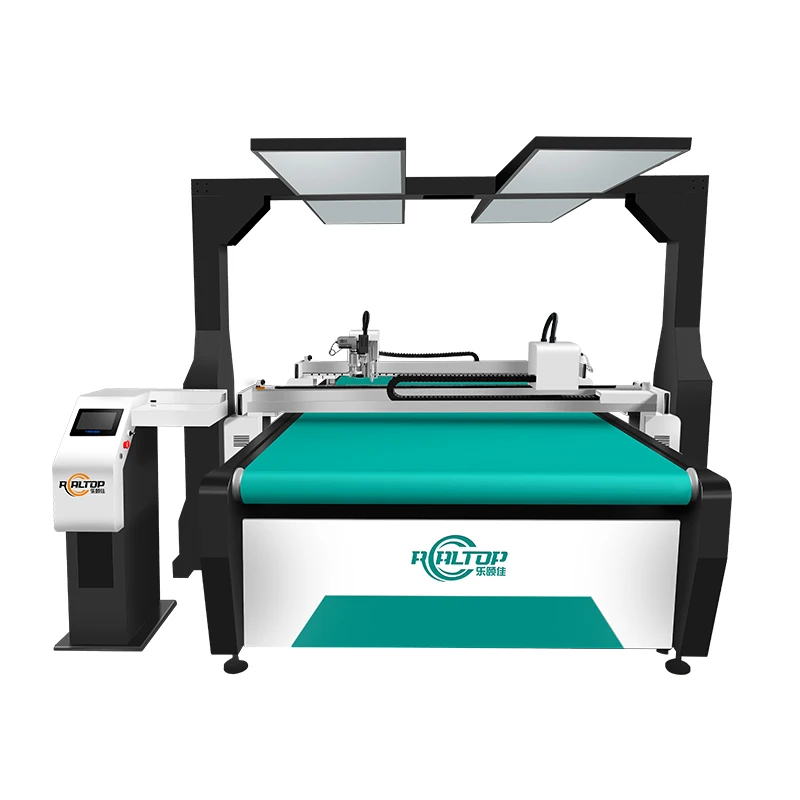
| Model | RT-D2516/RT-S2516 |
| Product Type | CNC Oscillating Knife Cutting Machine |
| Working Area | 1600×2500 mm |
| Machine Size (L×W×H) | 3450×2300×1250 mm |
| Rated Power | 9 kW |
| Voltage | 380V ±10% (frequency 50/60 Hz to be confirmed) |
| Control System | CNC with self-developed software |
| Tool Head Options | Swiss imported oscillating knife, pneumatic knife, high-power vibrating knife, circular knife, V-cutting knife, drag knife, creasing wheel, dotted line knife, punching, brush |
| Visual Positioning | Small CCD camera mark-point, panoramic camera recognition, projection positioning (optional) |
| Transmission System | Delta servo motor, Taiwan Hiwin linear guide rail, synchronous belt, ball screw, gear rack |
| Repeated Positioning Accuracy | ≤0.1 mm |
| Translational Velocity | 800–1200 mm/s |
| Cutting Thickness | 20–80 mm (basis not stated in source — confirm material type and density) |
| Cutting Materials | Leather, clothing flexible materials, sponge composite leather, PVC, soft glass, silicon, rubber |
| Working Table | Flatbed vacuum table (aluminum alloy vacuum adsorption) with Germany imported conveyor belt and auto-feeding |
| Vacuum Pump | 7.5 kW |
| Safety Device | Infrared sensors |
| Instruction System Format | HP-GL compatible |
| Language Options | English, Russian, Italian, Chinese; special languages customizable |
| Key Features | Automatic nesting, projection preview, irregular contour extraction, flaw identification, fully assembled delivery |
Application Suitability
| Application | Material or Output |
|---|---|
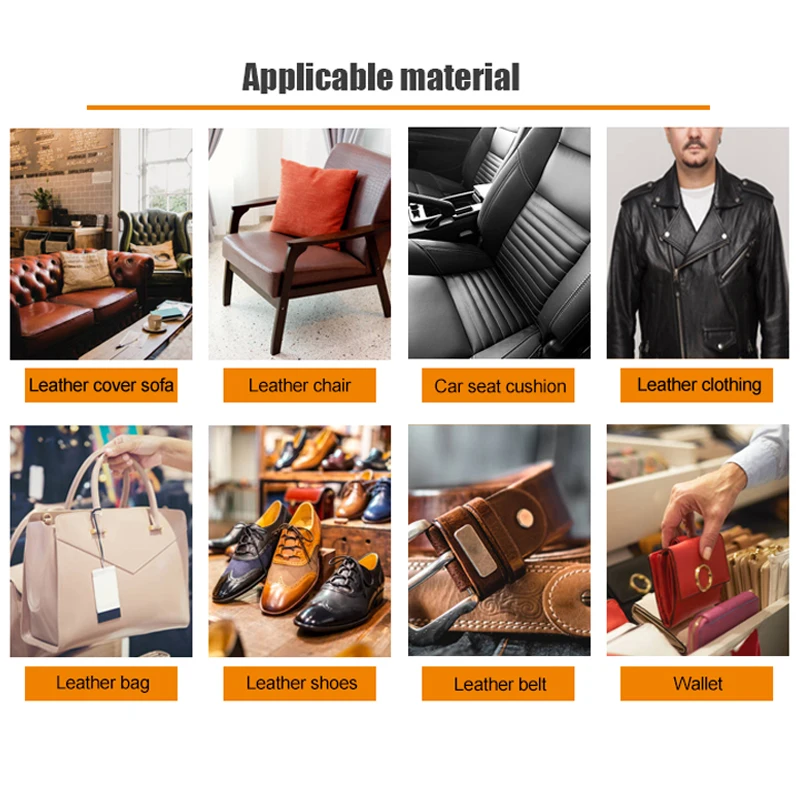
| Footwear and leather goods | Full-grain and split leather, synthetic PU/PVC leather, irregular hide nesting with flaw identification |
| Garment and shoe material cutting | Woven fabric, non-woven textile, multi-layer clothing cloth on auto-feeding conveyor |
| Automotive interior trimming | Sponge composite leather, soft furnishings, door panel covers, seat upholstery |
| Flexible packaging and carton | Corrugated cardboard, plastic box stock, folding carton sample making |
| Gasket and sealing fabrication | Rubber sheet, silicon, PTFE, ETFE for industrial seals and flange gaskets |
| Foam and soft board | EVA, XPE, PU, PVC, PP, PE foam board for packaging inserts and padding |
| Advertising and graphic finishing | Vinyl, sticker film, printed graphic contour cutting with CCD recognition |
Why "Working Area First" Specifying Destroys Edge Quality on Thick Hides
Matching the tool head to the material prevents crushed edges and incomplete cuts that no software patch can fix.
I remember a tannery buyer who specified a flatbed based solely on the 1600×2500 mm working area, then sent a 5 mm automotive seat hide. The standard oscillating knife setup handled thin garment leather at production speed but left ragged, fibrous edges on the denser hide. The vacuum zoning also allowed small pattern pieces to lift mid-cut. A CNC oscillating knife cutting machine for sale must be configured around the thickest material the buyer actually runs, not just the sheet dimensions [NEED_CITE: vacuum table zoning requirements for small part cutting]. When the wrong tool head meets a material beyond its depth range, the result is wasted stock and rejected batches.
Panoramic Vision and Mark-Point Positioning Across the Range
The RT-D2516/RT-S2516 offers three visual positioning paths: small CCD mark-point placement for sticker and film contour jobs, panoramic camera recognition for irregular leather hide nesting, and optional projection preview for manual alignment checks. This range of options means a signage producer cutting printed vinyl can use mark-point tracking while a shoe factory nesting full hides switches to panoramic recognition with flaw identification, keeping both workflows on the same platform.
Tool Head Selection from the Full Catalogue Menu
Swiss imported oscillating knife heads handle vibration full cutting and half cutting across leather and foam, while drag knives score carton stock and creasing wheels fold packaging samples. A single multifunction carriage accepts circular knives for continuous textile rolls and punching tools for gasket holes, so buyers can review the complete catalogue and configure the head stack to match their material mix rather than buying separate machines for each task [NEED_CITE: oscillating knife versus drag knife cutting mechanics by material density].
Translational Velocity and Vacuum Hold-Down in Practice
The Delta servo motor and Taiwan Hiwin linear guide rail deliver translational velocity between 800 and 1200 mm/s, but actual cutting speed depends on material density and the chosen tool head. The 7.5 kW vacuum pump drives the aluminum alloy vacuum adsorption table to hold flexible sheets flat during high-speed passes. For thin vinyl and sticker film, full velocity is achievable; for 50 mm EVA foam, the oscillating knife must slow to maintain edge perpendicularity and prevent delamination.
The Cost of Skipping Material Sample Testing
When a buyer commits to a configuration without testing their actual stock, the hidden cost surfaces weeks after delivery. Ragged edges on thick leather force secondary trimming by hand. Small cardboard parts lift off poorly zoned vacuum tables and get destroyed by the knife. CCD contour recognition that worked on the factory sample fails to track faint printed marks at full production speed [NEED_CITE: CCD mark recognition limitations on low-contrast printed registration marks]. These are not software bugs but specification mismatches that could have been caught during sample cutting.
Sourcing Knife and Laser from One Manufacturer
Realtop builds both knife and laser cutting systems in-house, so a buyer evaluating the RT-D2516/RT-S2516 can compare knife edge quality against CO₂ laser sealed edges for synthetic textiles before deciding. The tool head and table configuration is specified per material and production volume rather than sold as a fixed package. CCD camera positioning for printed contour work is tested against the buyer’s own graphic files. Software compatibility with HP-GL formats and nesting workflows is confirmed before order placement. Voltage, control language, and plug type are locked in during specification, avoiding shipment surprises. Sample cutting on the buyer’s own material runs before commitment, producing a report on edge quality, thickness handling, and cycle speed.
Documentation & Verification
- Machine specification sheet listing exact tool head and table configuration for your material
- Electrical schematic with voltage, frequency, and plug type confirmed per destination market
- Sample cutting report documenting edge quality on your supplied leather or foam stock
- Software licence note confirming HP-GL compatibility and nesting workflow file import
- Factory test record with positioning accuracy verified before crating
- CE declaration referenced for applicable export market requirements
Installation, Commissioning & Support
- 3450×2300×1250 mm machine footprint requires level concrete floor with clearance for conveyor feeding
- 380V ±10% supply with dedicated circuit for 9 kW rated power plus 7.5 kW vacuum pump
- Fully assembled delivery means no structural rebuild on site, only conveyor and camera calibration
- Delta servo and Hiwin guide rail zero-point calibration during first commissioning run
- Operator training on self-developed nesting software and language-specific control interface
- Spare oscillating knife blades, drag knife tips, and vacuum belt segments included at dispatch
Requesting a Quotation That Matches Your Production
Provide the thickest material type and density you plan to cut, along with typical sheet or roll dimensions, so the tool head and vacuum table zoning can be specified correctly. Confirm your workshop voltage, frequency, and preferred control language before the quotation stage. If your existing design files use a format beyond HP-GL, send a sample file so software compatibility is verified before order. For buyers running printed contour work, share a print sample to confirm CCD or panoramic camera recognition on your registration marks.
Frequently Asked Questions
Q: How does oscillating knife cutting compare to laser across the Realtop catalogue?
A: Oscillating knife cutting produces no heat-affected zone, making it suitable for leather, foam, and composite materials where sealed laser edges or burn marks are unacceptable. Laser cutting in the same catalogue handles acrylic, wood, and textile edge-sealing jobs. Buyers can compare both methods on their own material before selecting.
Q: Which tool head should I specify for my material and thickness?
A: Swiss oscillating knives handle leather and foam up to the confirmed cutting depth, drag knives score corrugated carton, and circular knives cut continuous textile rolls. Creasing wheels fold packaging samples, while punching tools create gasket holes. The correct head depends on your material density and part geometry.
Q: What vision options are available and which jobs suit each?
A: Small CCD mark-point positioning tracks printed registration marks for sticker and vinyl contour cutting. Panoramic camera recognition identifies irregular leather hide outlines and flaws for nesting. Projection preview overlays the cut path on the material for manual alignment checks before production runs begin.
Q: How do working area sizes map to sheet and roll formats in the range?
A: The 1600×2500 mm working area on the RT-D2516/RT-S2516 accommodates standard leather hides and fabric rolls. Compact flatbeds suit carton sample making, while large-format tables handle multi-layer textile spreading. The catalogue covers sizes from compact to large so buyers match the table to their actual stock format.
Q: What voltage, language, and software configurations are confirmed before order?
A: Voltage at 380V ±10% with frequency confirmed for your market, control language selected from English, Russian, Italian, Chinese, or custom options, and software file format compatibility verified against your HP-GL or other design files. All three are locked in the specification sheet before production begins.
Integrated knife and laser sourcing under one roof — the RT-D2516/RT-S2516 sits within a complete catalogue where cutting method is matched to material rather than forced, letting buyers compare flatbed knife and laser options before narrowing down.
Technical Specifications
| Parameter | Value |
|---|---|
| Model | RT-D2516/RT-S2516 |
| Product Type | CNC Oscillating Knife Cutting Machine |
| Working Area | 1600×2500 mm |
| Machine Size (L×W×H) | 3450×2300×1250 mm |
| Rated Power | 9 kW |
| Voltage | 380V ±10% (frequency 50/60 Hz to be confirmed) |
| Control System | CNC with self-developed software |
| Tool Head Options | Swiss imported oscillating knife, pneumatic knife, high-power vibrating knife, circular knife, V-cutting knife, drag knife, creasing wheel, dotted line knife, punching, brush |
| Visual Positioning | Small CCD camera mark-point, panoramic camera recognition, projection positioning (optional) |
| Transmission System | Delta servo motor, Taiwan Hiwin linear guide rail, synchronous belt, ball screw, gear rack |
| Repeated Positioning Accuracy | ≤0.1 mm |
| Translational Velocity | 800–1200 mm/s |
| Cutting Thickness | 20–80 mm (basis not stated in source — confirm material type and density) |
| Cutting Materials | Leather, clothing flexible materials, sponge composite leather, PVC, soft glass, silicon, rubber |
| Working Table | Flatbed vacuum table (aluminum alloy vacuum adsorption) with Germany imported conveyor belt and auto-feeding |
| Vacuum Pump | 7.5 kW |
| Safety Device | Infrared sensors |
| Instruction System Format | HP-GL compatible |
| Language Options | English, Russian, Italian, Chinese; special languages customizable |
| Key Features | Automatic nesting, projection preview, irregular contour extraction, flaw identification, fully assembled delivery |
Application Suitability
| Application | Material or Output |
|---|---|
| Footwear and leather goods | Full-grain and split leather, synthetic PU/PVC leather, irregular hide nesting with flaw identification |
| Garment and shoe material cutting | Woven fabric, non-woven textile, multi-layer clothing cloth on auto-feeding conveyor |
| Automotive interior trimming | Sponge composite leather, soft furnishings, door panel covers, seat upholstery |
| Flexible packaging and carton | Corrugated cardboard, plastic box stock, folding carton sample making |
| Gasket and sealing fabrication | Rubber sheet, silicon, PTFE, ETFE for industrial seals and flange gaskets |
| Foam and soft board | EVA, XPE, PU, PVC, PP, PE foam board for packaging inserts and padding |
| Advertising and graphic finishing | Vinyl, sticker film, printed graphic contour cutting with CCD recognition |
Why "Working Area First" Specifying Destroys Edge Quality on Thick Hides
Matching the tool head to the material prevents crushed edges and incomplete cuts that no software patch can fix.
I remember a tannery buyer who specified a flatbed based solely on the 1600×2500 mm working area, then sent a 5 mm automotive seat hide. The standard oscillating knife setup handled thin garment leather at production speed but left ragged, fibrous edges on the denser hide. The vacuum zoning also allowed small pattern pieces to lift mid-cut. A CNC oscillating knife cutting machine for sale must be configured around the thickest material the buyer actually runs, not just the sheet dimensions [NEED_CITE: vacuum table zoning requirements for small part cutting]. When the wrong tool head meets a material beyond its depth range, the result is wasted stock and rejected batches.
Panoramic Vision and Mark-Point Positioning Across the Range
The RT-D2516/RT-S2516 offers three visual positioning paths: small CCD mark-point placement for sticker and film contour jobs, panoramic camera recognition for irregular leather hide nesting, and optional projection preview for manual alignment checks. This range of options means a signage producer cutting printed vinyl can use mark-point tracking while a shoe factory nesting full hides switches to panoramic recognition with flaw identification, keeping both workflows on the same platform.
Tool Head Selection from the Full Catalogue Menu
Swiss imported oscillating knife heads handle vibration full cutting and half cutting across leather and foam, while drag knives score carton stock and creasing wheels fold packaging samples. A single multifunction carriage accepts circular knives for continuous textile rolls and punching tools for gasket holes, so buyers can review the complete catalogue and configure the head stack to match their material mix rather than buying separate machines for each task [NEED_CITE: oscillating knife versus drag knife cutting mechanics by material density].
Translational Velocity and Vacuum Hold-Down in Practice
The Delta servo motor and Taiwan Hiwin linear guide rail deliver translational velocity between 800 and 1200 mm/s, but actual cutting speed depends on material density and the chosen tool head. The 7.5 kW vacuum pump drives the aluminum alloy vacuum adsorption table to hold flexible sheets flat during high-speed passes. For thin vinyl and sticker film, full velocity is achievable; for 50 mm EVA foam, the oscillating knife must slow to maintain edge perpendicularity and prevent delamination.
The Cost of Skipping Material Sample Testing
When a buyer commits to a configuration without testing their actual stock, the hidden cost surfaces weeks after delivery. Ragged edges on thick leather force secondary trimming by hand. Small cardboard parts lift off poorly zoned vacuum tables and get destroyed by the knife. CCD contour recognition that worked on the factory sample fails to track faint printed marks at full production speed [NEED_CITE: CCD mark recognition limitations on low-contrast printed registration marks]. These are not software bugs but specification mismatches that could have been caught during sample cutting.
Sourcing Knife and Laser from One Manufacturer
Realtop builds both knife and laser cutting systems in-house, so a buyer evaluating the RT-D2516/RT-S2516 can compare knife edge quality against CO₂ laser sealed edges for synthetic textiles before deciding. The tool head and table configuration is specified per material and production volume rather than sold as a fixed package. CCD camera positioning for printed contour work is tested against the buyer’s own graphic files. Software compatibility with HP-GL formats and nesting workflows is confirmed before order placement. Voltage, control language, and plug type are locked in during specification, avoiding shipment surprises. Sample cutting on the buyer’s own material runs before commitment, producing a report on edge quality, thickness handling, and cycle speed.
Documentation & Verification
- Machine specification sheet listing exact tool head and table configuration for your material
- Electrical schematic with voltage, frequency, and plug type confirmed per destination market
- Sample cutting report documenting edge quality on your supplied leather or foam stock
- Software licence note confirming HP-GL compatibility and nesting workflow file import
- Factory test record with positioning accuracy verified before crating
- CE declaration referenced for applicable export market requirements
Installation, Commissioning & Support
- 3450×2300×1250 mm machine footprint requires level concrete floor with clearance for conveyor feeding
- 380V ±10% supply with dedicated circuit for 9 kW rated power plus 7.5 kW vacuum pump
- Fully assembled delivery means no structural rebuild on site, only conveyor and camera calibration
- Delta servo and Hiwin guide rail zero-point calibration during first commissioning run
- Operator training on self-developed nesting software and language-specific control interface
- Spare oscillating knife blades, drag knife tips, and vacuum belt segments included at dispatch
Requesting a Quotation That Matches Your Production
Provide the thickest material type and density you plan to cut, along with typical sheet or roll dimensions, so the tool head and vacuum table zoning can be specified correctly. Confirm your workshop voltage, frequency, and preferred control language before the quotation stage. If your existing design files use a format beyond HP-GL, send a sample file so software compatibility is verified before order. For buyers running printed contour work, share a print sample to confirm CCD or panoramic camera recognition on your registration marks.
Frequently Asked Questions
Q: How does oscillating knife cutting compare to laser across the Realtop catalogue?
A: Oscillating knife cutting produces no heat-affected zone, making it suitable for leather, foam, and composite materials where sealed laser edges or burn marks are unacceptable. Laser cutting in the same catalogue handles acrylic, wood, and textile edge-sealing jobs. Buyers can compare both methods on their own material before selecting.
Q: Which tool head should I specify for my material and thickness?
A: Swiss oscillating knives handle leather and foam up to the confirmed cutting depth, drag knives score corrugated carton, and circular knives cut continuous textile rolls. Creasing wheels fold packaging samples, while punching tools create gasket holes. The correct head depends on your material density and part geometry.
Q: What vision options are available and which jobs suit each?
A: Small CCD mark-point positioning tracks printed registration marks for sticker and vinyl contour cutting. Panoramic camera recognition identifies irregular leather hide outlines and flaws for nesting. Projection preview overlays the cut path on the material for manual alignment checks before production runs begin.
Q: How do working area sizes map to sheet and roll formats in the range?
A: The 1600×2500 mm working area on the RT-D2516/RT-S2516 accommodates standard leather hides and fabric rolls. Compact flatbeds suit carton sample making, while large-format tables handle multi-layer textile spreading. The catalogue covers sizes from compact to large so buyers match the table to their actual stock format.
Q: What voltage, language, and software configurations are confirmed before order?
A: Voltage at 380V ±10% with frequency confirmed for your market, control language selected from English, Russian, Italian, Chinese, or custom options, and software file format compatibility verified against your HP-GL or other design files. All three are locked in the specification sheet before production begins.










商品评价
There are no reviews yet.