

Fast Delivery
Quick, reliable shipping to any location.

Free & easy returns
Return this item by mail or in store within 90 days for a full refund.
Precision-Matched Cutting Configurations — In-house design across both knife and laser platforms lets buyers select the exact cutting method for their fabric, foam or composite material rather than adapting the process to a single machine type.
Technical Specifications
| Parameter | Value |
|---|---|
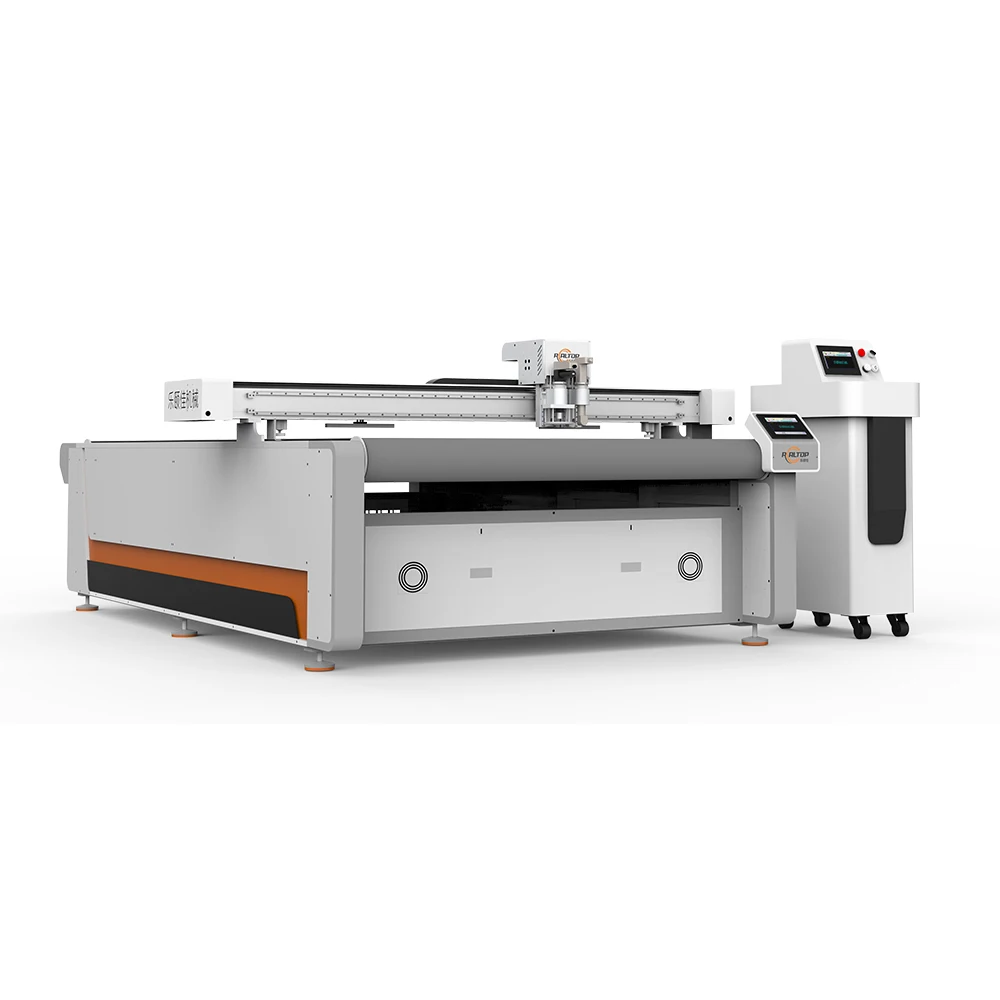
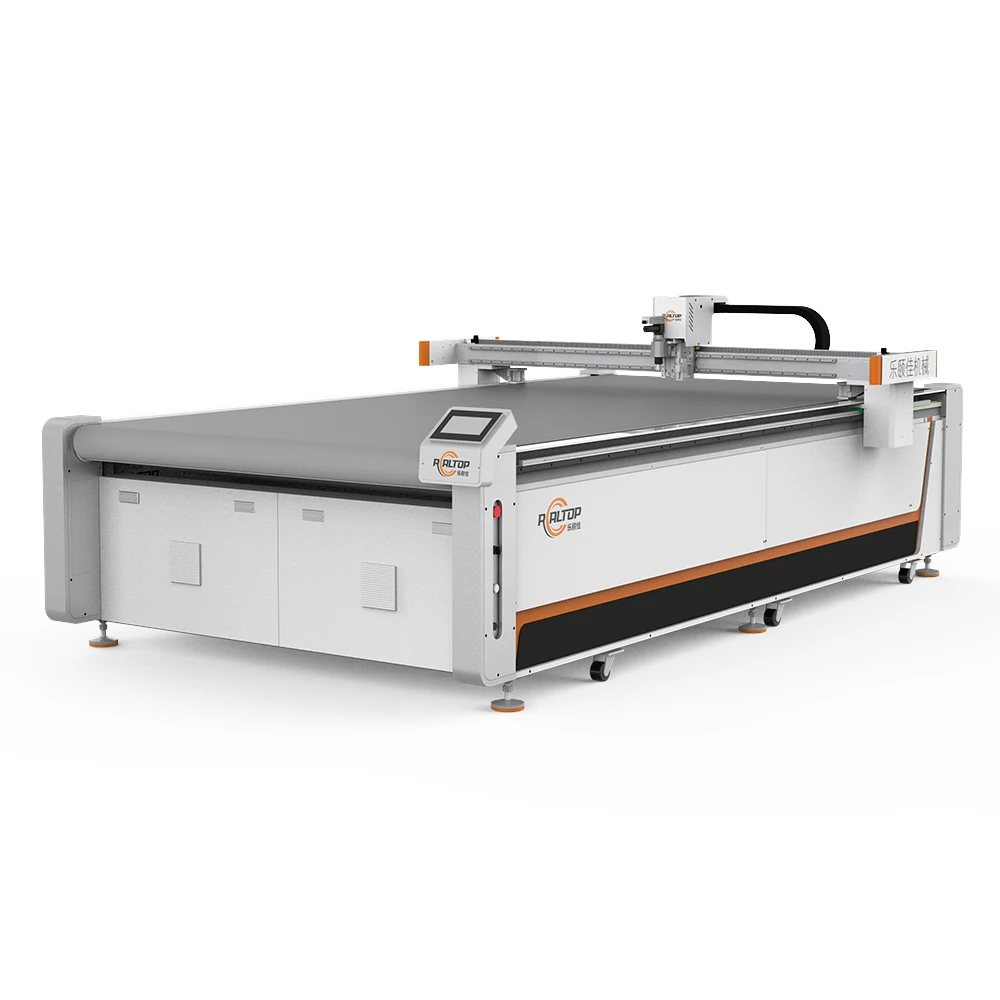
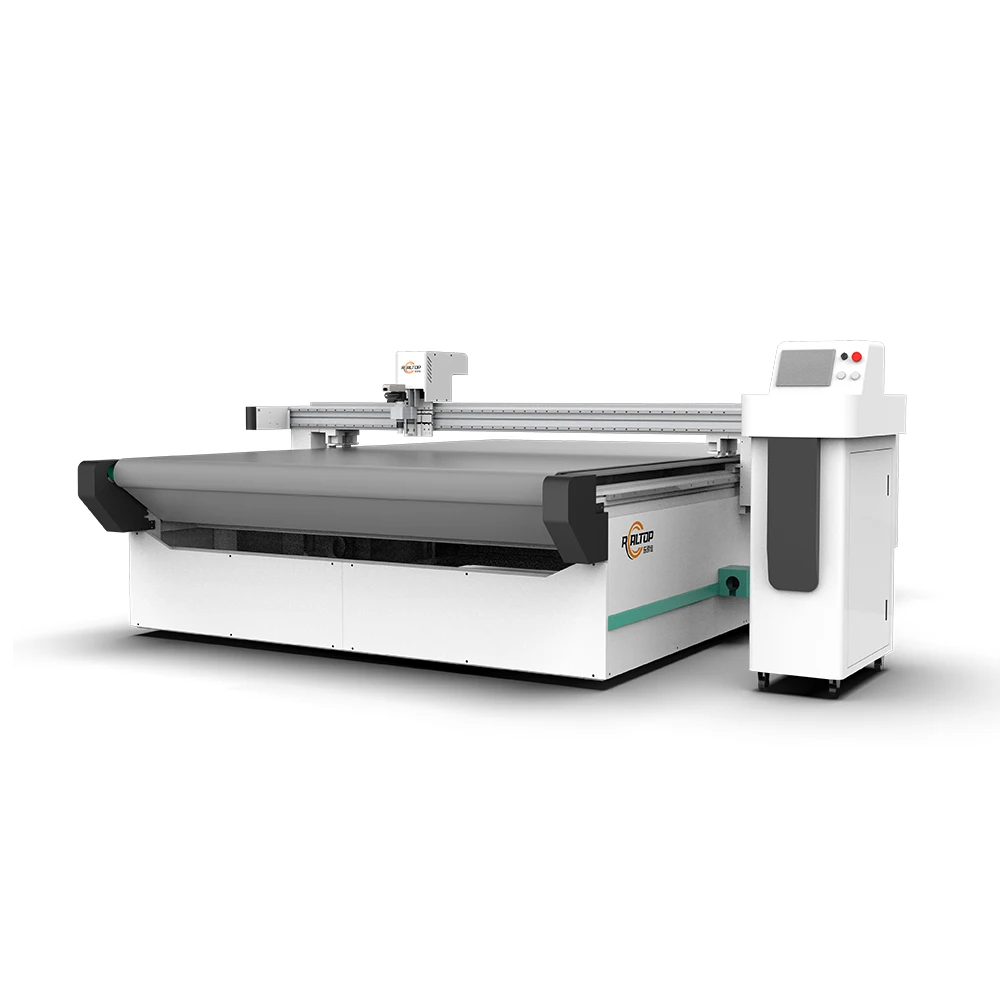
| Product Type | CNC Oscillating Knife Cutting Machine |
| Working Area | 1600 × 2500 mm |
| Machine Size | 3450 × 2300 × 1250 mm |
| Rated Power | 9 kW |
| Vacuum Pump | 7.5 kW |
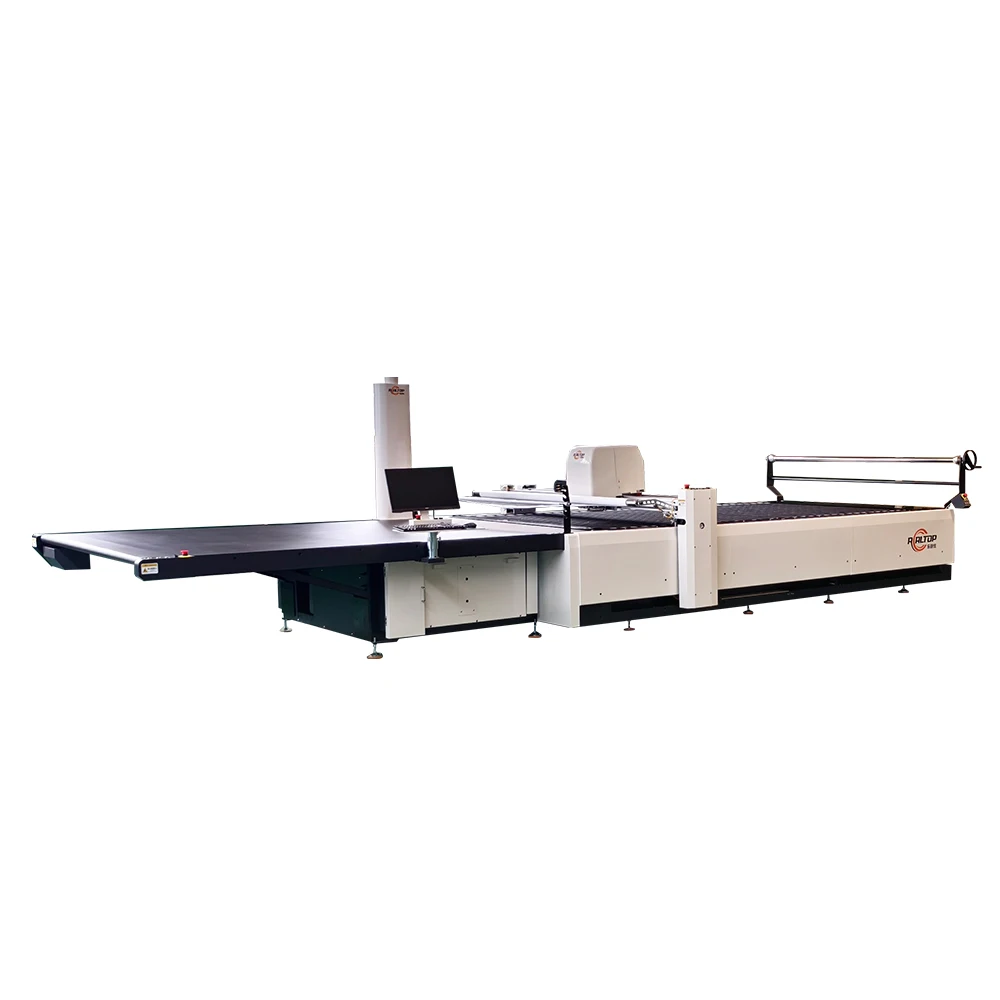
| Table Type | Flat working table; auto feeding table (optional) |
| Multifunctional Head | Swiss imported knife — vibration full cutting, half cutting, cursor location |
| Translational Velocity | 800–2000 mm/s |
| Cutting Speed | 200–800 mm/s (basis not stated in source) |
| Repeated Accuracy | ≤ 0.1 mm |
| Transmission System | Digital servo motor, linear guide, synchronous belt, ball screw |
| Servo Motor | Delta (Panasonic optional) |
| Rail | Taiwan Hiwin |
| Conveyor Belt | Germany imported |
| Safety Device | Infrared anti-collision sensors, emergency stop |
| Instruction System | HP-GL compatible format |
| Software File Formats | PLT, DXF, AI |
| Control Panel | Touch screen, multiple language support |
| Voltage | 380V ± 10% |
| Language Options | English, Russian, Italian, Chinese (customizable) |
Application Suitability
| Application | Material or Output |
|---|---|
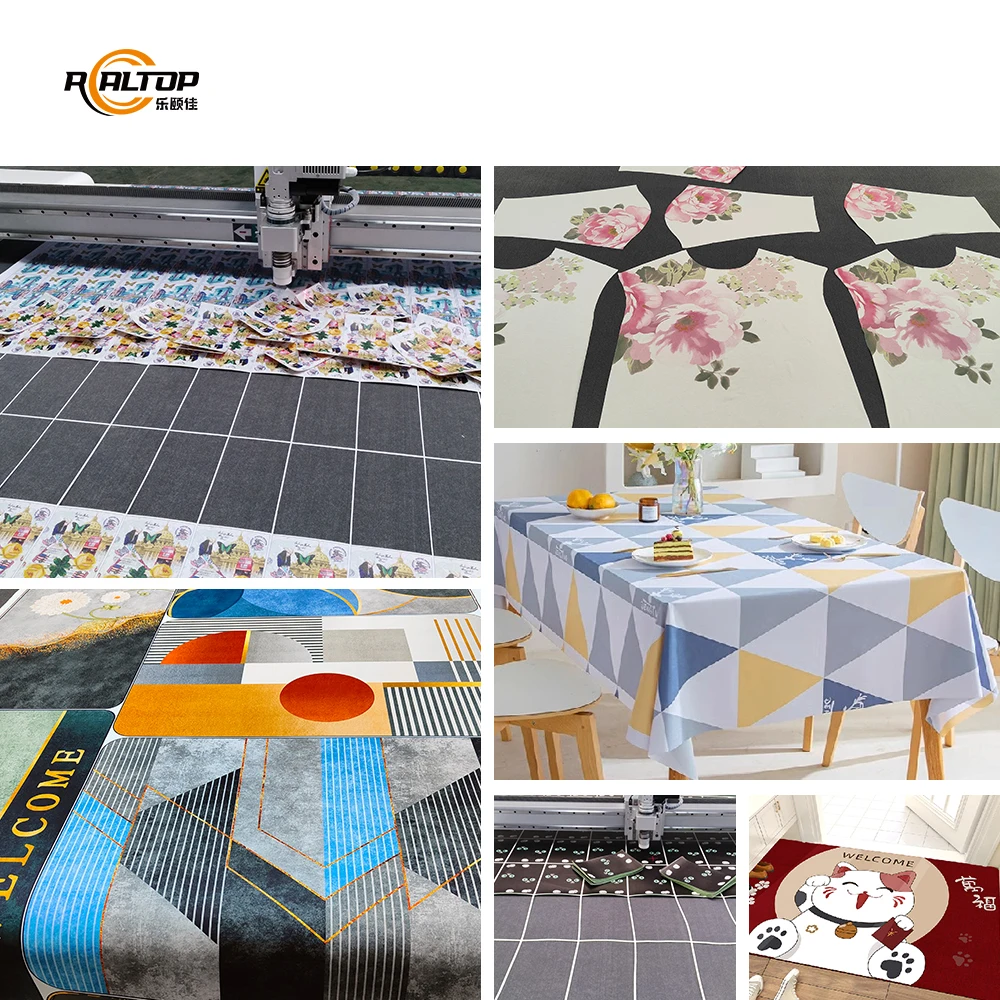
| Automotive interior trimming | Leather, synthetic fabric, composite laminates for seat covers and headliners |
| Soft home furnishings | Upholstery fabric, velvet, linen, curtain textiles, multi-layer padding |
| Garment and footwear production | Clothing cloth, shoe material, non-woven fabric, PU, EVA |
| Carpet and floor mat cutting | Carpet rolls, sponge, rubber-backed flooring, XPE foam |
| Packaging sample making | Cardboard, corrugated cardboard, plastic box material, sticker, film |
| Sports and outdoor goods | Luggage material, nylon webbing, PVC tarpaulin, composite panels |
| Gasket and sealing fabrication | PTFE, ETFE, rubber, fiberglass, gasket composite sheets |
| Graphic advertising | Vinyl, self-adhesive film, foam board, PP, PE signage substrates |
When the Wrong Vacuum Zoning Destroys Your Cut Quality
Material lift on small parts is almost always a table configuration problem, not a machine capability problem.
I have watched buyers compare two machines purely on working area size and motor power, then discover during their first production week that small fabric pieces drift off position mid-cut. The vacuum table zoning did not match their typical part geometry. A 1600 × 2500 mm bed divided into only two or three zones means suction concentrates over large areas while small cutouts receive almost no hold-down force. At translational velocities approaching 2000 mm/s, even a slight lift produces ragged edges that force the operator into manual rework. [NEED_CITE: vacuum zoning standards for flatbed digital cutting tables]
Evaluating the Complete Machine Family Before Committing to a Method
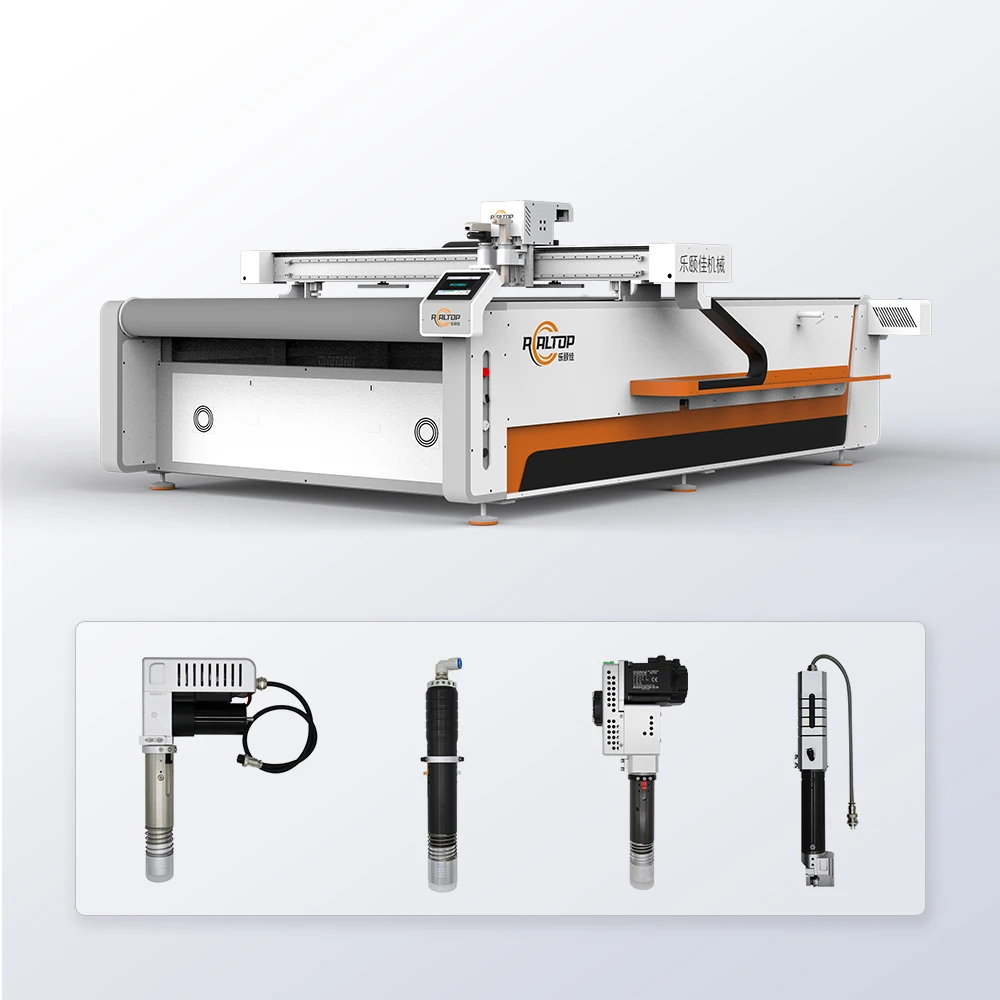
Choosing between an oscillating knife, a drag knife, a circular blade or a V-cutting tool is not an academic exercise. Each tool head engages the material differently, and a buyer surveying options for the first time needs to see where a CNC oscillating knife cutting machine manufacturer positions each configuration. The Swiss imported multifunctional head on the RT-D2516/RT-S2516 delivers vibration full cutting, half cutting and cursor location in one unit, handling everything from single-ply garment fabric to dense EVA foam without swapping hardware between jobs.
Matching Tool Head Selection to Your Production Mix
A garment factory cutting multi-layer polyester and nylon composite needs a high-power vibrating knife with sufficient stroke to penetrate the full stack cleanly. An automotive interior shop trimming leather for seat panels benefits more from a precision oscillating knife with fine edge control. When your production mix spans both ends of that spectrum, the availability of pneumatic knife, drag knife, creasing wheel and circular knife options on a single platform means one machine can cover multiple departments. [NEED_CITE: tool head selection criteria for oscillating knife cutting of layered textiles]
Reading the Specifications That Actually Matter on the Shop Floor
The Delta servo motor (with Panasonic as an alternative) paired with Taiwan Hiwin linear rails and ball screws is what holds the repeated accuracy to ≤ 0.1 mm. That tolerance figure matters most when you are cutting interlocking pattern pieces where a 0.3 mm drift accumulates across a 2500 mm travel and causes misalignment in downstream stitching or welding. The 7.5 kW vacuum pump working behind a flat or auto feeding table must generate enough negative pressure across each active zone to keep thin films and lightweight non-woven fabric flat during the full cutting pass. Software compatibility with PLT, DXF and AI formats determines whether your existing nesting workflow transfers without file conversion, which is a frequent bottleneck when a new machine arrives and the operator cannot open the files the design department already uses daily.
The Hidden Cost of Specifying by Working Area Alone
Buyers who choose a machine only by bed size often discover weeks after delivery that the configuration cannot handle their actual material thickness or part geometry. A cutting speed value without a stated material and thickness basis tells you nothing about real throughput on your specific stock. When vacuum zones are too broad for small gasket pieces or shoe upper patterns, every cut edge shows micro-lift damage, and your daily yield drops below what the quotation promised. [NEED_CITE: common specification gaps in CNC cutting equipment procurement]
Why Buyers Source This Equipment Here
The design team covers both knife and laser cutting technologies under one roof, so a buyer comparing methods for a borderline material like PU-coated textile gets a direct recommendation rather than a forced fit into whichever machine the supplier happens to manufacture. Tool head and table configurations are specified against the buyer’s material type, thickness and daily volume before the order is confirmed, not guessed from a standard brochure. Sample cutting runs on the buyer’s actual material produce a cutting report that documents edge quality, speed parameters and tool head selection before any contract signature. Voltage, frequency, plug type and control panel language are locked in during the specification phase, preventing shipment of a 380V machine to a 220V workshop. The auto feeding table option on the RT-D2516/RT-S2516 supports continuous roll-fed production for fabric and non-woven operations that cannot afford to stop between sheets.
Documentation & Verification
- Machine specification sheet with full electrical schematic confirming 380V ± 10% supply requirements
- Tool head and vacuum table configuration list matched to your material type and thickness range
- Sample cutting report on your actual fabric, foam or composite stock before order confirmation
- Factory test record documenting repeated accuracy and cutting performance before dispatch
- Software licence note confirming PLT, DXF and AI file format compatibility with your nesting workflow
- Operation and maintenance manual with multi-language control panel instructions
Installation, Commissioning & Support
- 3450 × 2300 mm footprint requires level concrete floor with clearance for 2500 mm travel plus operator access
- 9 kW rated power plus 7.5 kW vacuum pump demand a dedicated three-phase 380V circuit with correct breaker sizing
- Auto feeding table and conveyor belt arrive partially assembled and require on-site alignment to the cutting bed
- First-run commissioning includes vacuum zone mapping and servo calibration for your specific material stack
- Touch screen control panel configured to your chosen language before arrival with on-site operator training
- Swiss imported knife assemblies and Hiwin rail carriages covered in the spare parts list for routine replacement
Preparing Your Inquiry
To get a configuration that fits your production reality, share the material types you cut most frequently, the typical thickness range and whether you run single-ply or multi-layer stacks. Confirm your local voltage and frequency standard, your preferred control language, and whether your workflow relies on PLT, DXF or AI files. If your parts include small geometries under 50 mm, note that so vacuum zone layout can be discussed before quotation.
Frequently Asked Questions
Q: How do I decide between oscillating knife and laser cutting for my fabric and composite materials?
A: Laser cutting seals synthetic edges and works well for thin textiles, while oscillating knife handles thicker multi-layer stacks, foam and composite materials without thermal distortion. Share your material list and thickness range so the cutting method is matched to your actual production mix rather than guessed.
Q: What vacuum table zoning do I need for cutting small garment pattern pieces?
A: Small parts require finer vacuum zones to prevent material lift during high-speed cutting passes. A standard two-zone layout often leaves insufficient hold-down on pieces under 100 mm. Specify your typical smallest part dimension so the table zoning can be configured before production.
Q: Which tool head types are available for mixed fabric, leather and foam cutting?
A: The RT-D2516/RT-S2516 platform supports oscillating knife, pneumatic knife, high-power vibrating knife, circular knife, V-cutting knife, drag knife and creasing wheel. The right choice depends on your material density, cutting depth and edge quality requirements for each application.
Q: Will the machine accept my existing PLT and DXF nesting files without conversion?
A: The control system natively imports PLT, DXF and AI file formats through HP-GL compatible instruction processing. Before order confirmation, a file format compatibility check ensures your current nesting software output works directly without intermediate conversion steps that could introduce geometry errors.
Q: What voltage and language customization is confirmed before the machine ships?
A: The standard 380V ± 10% supply is verified against your local electrical standard, and the touch screen control panel is set to your preferred language from English, Russian, Italian or Chinese options. Additional languages can be configured during the specification phase before production begins.










商品评价
There are no reviews yet.