



Fast Delivery
Quick, reliable shipping to any location.

Free & easy returns
Return this item by mail or in store within 90 days for a full refund.
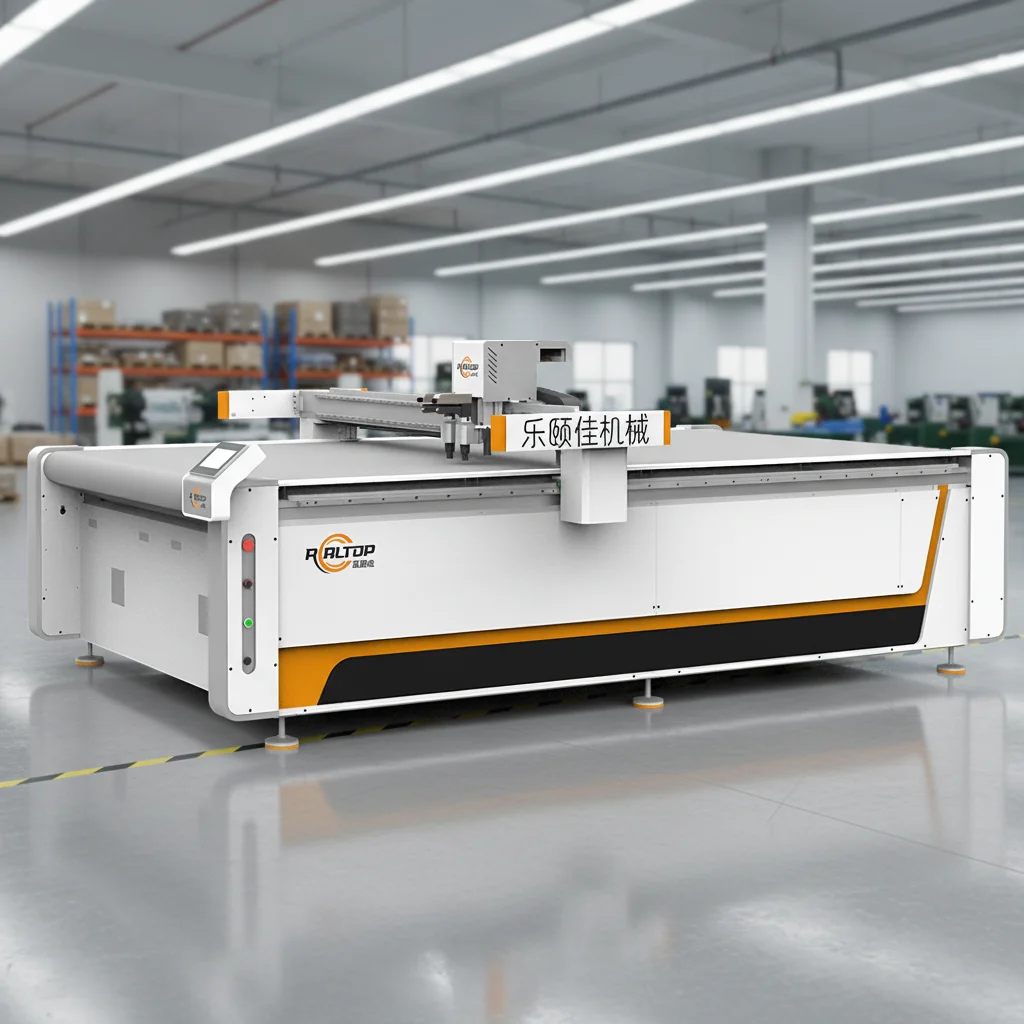
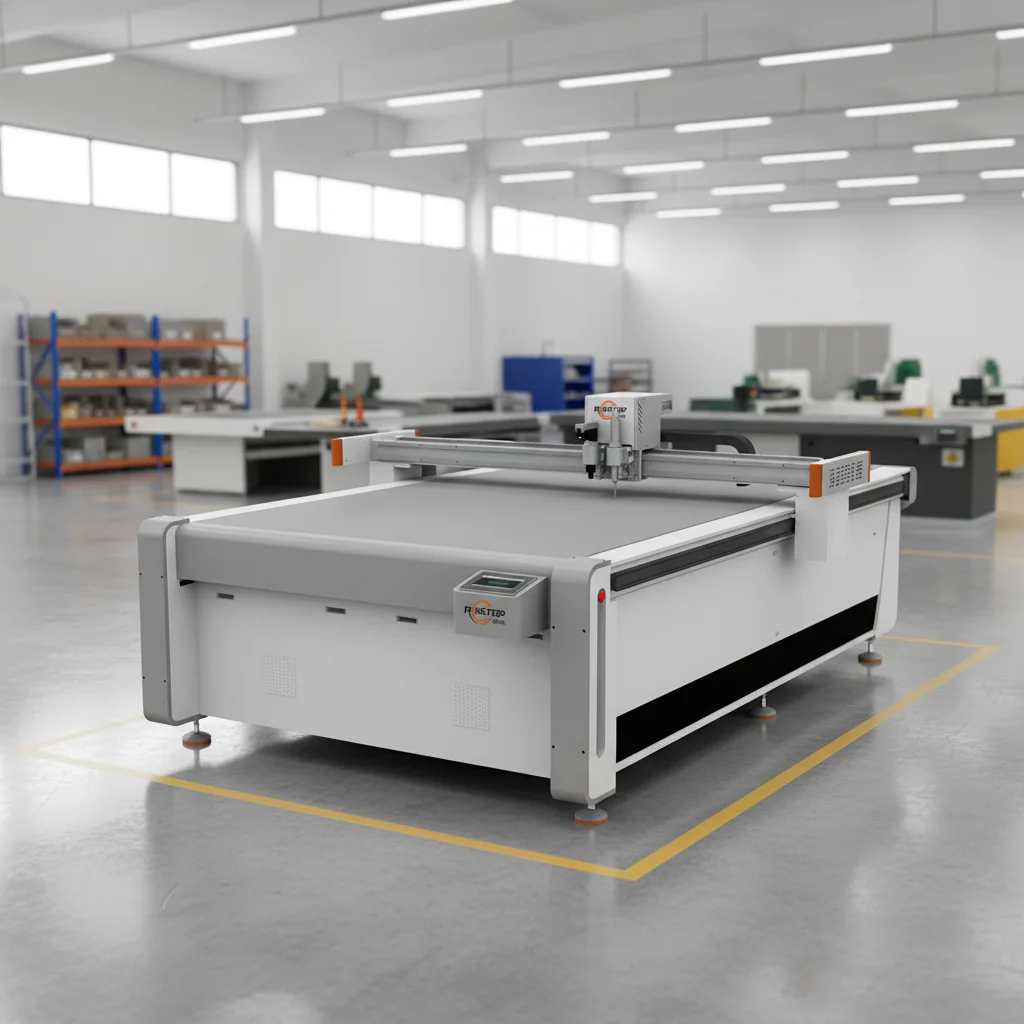
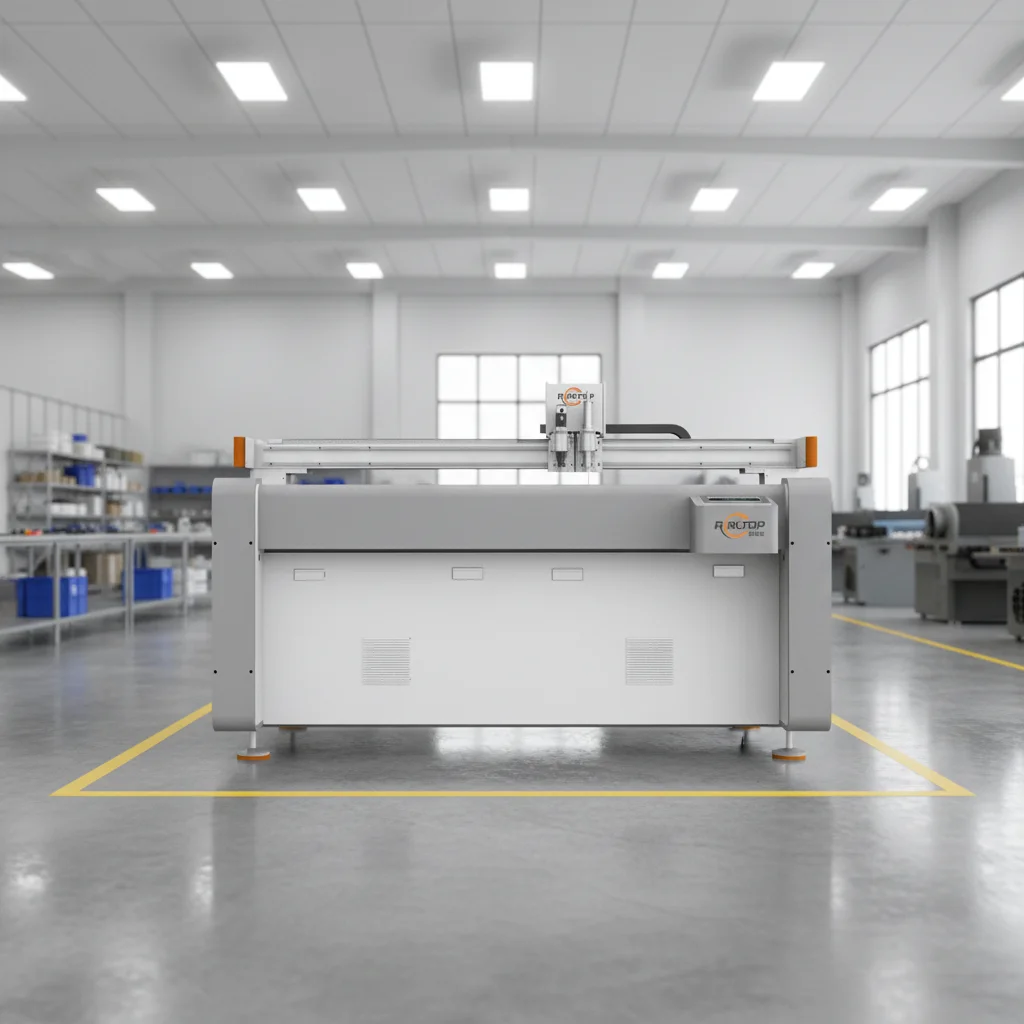
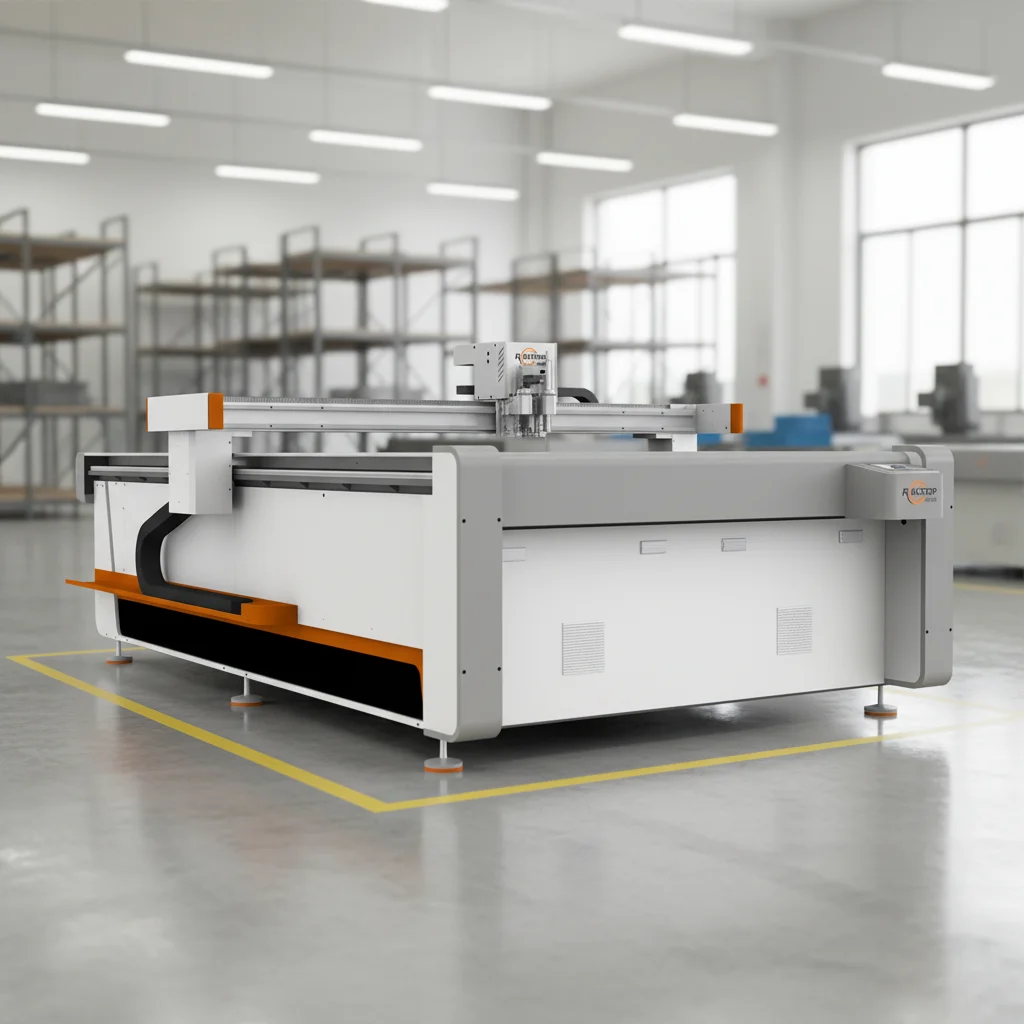
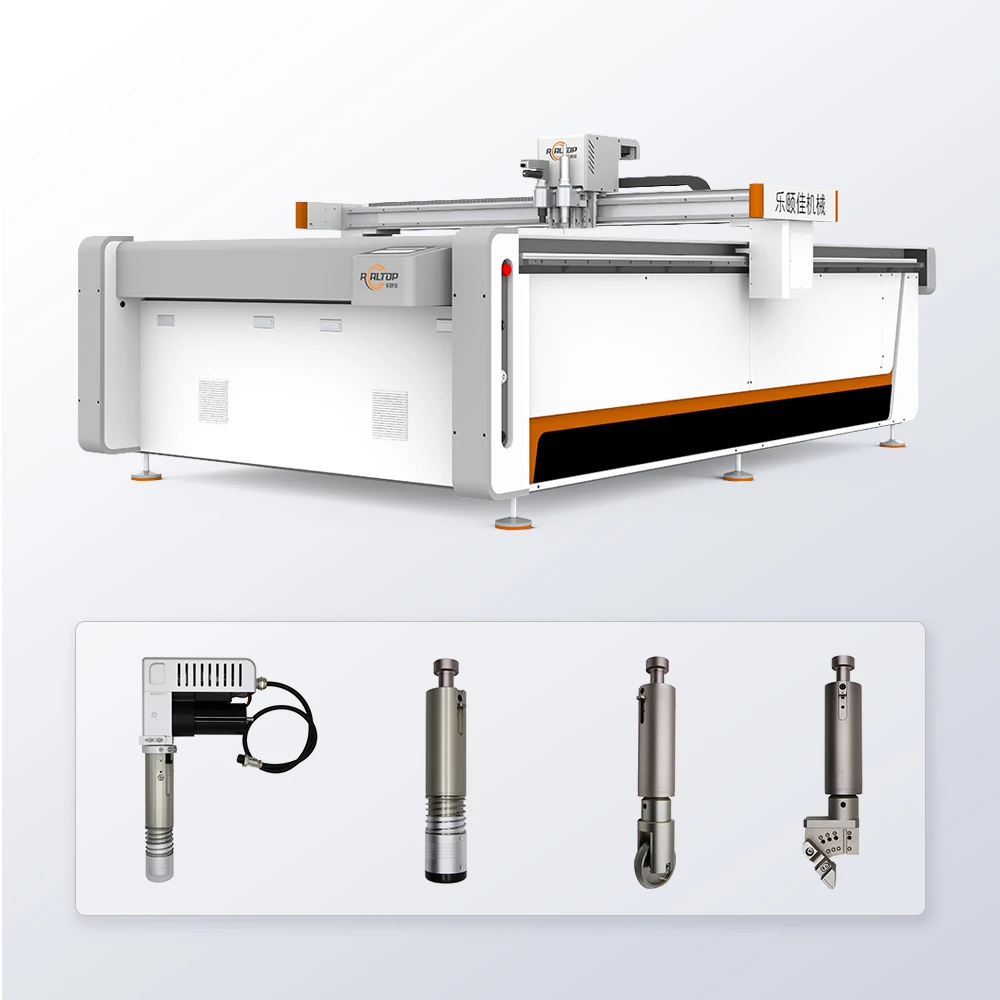
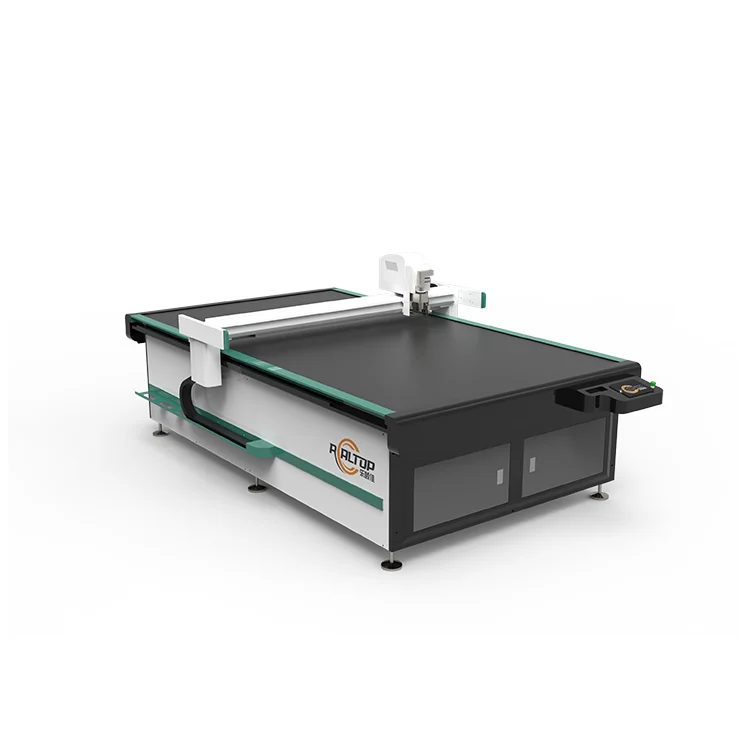
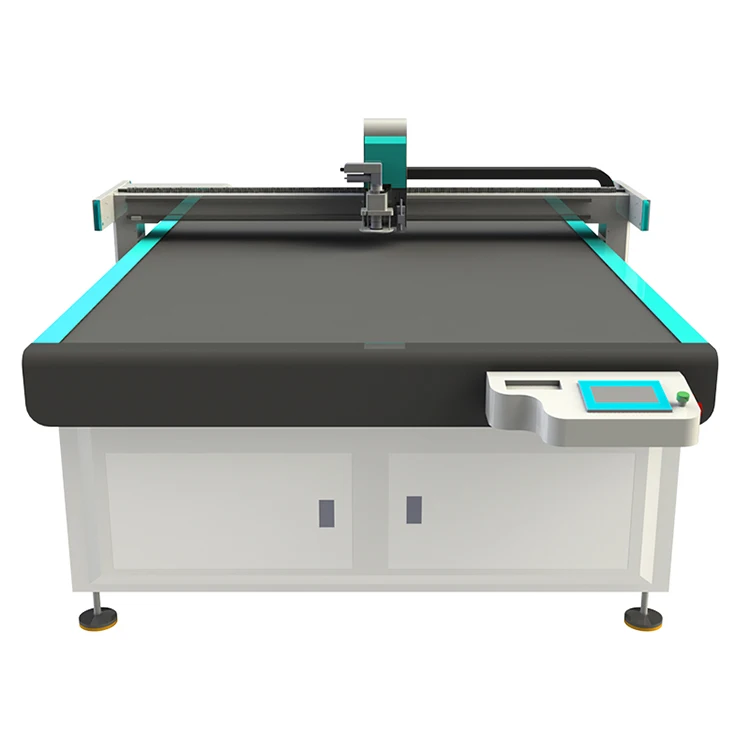
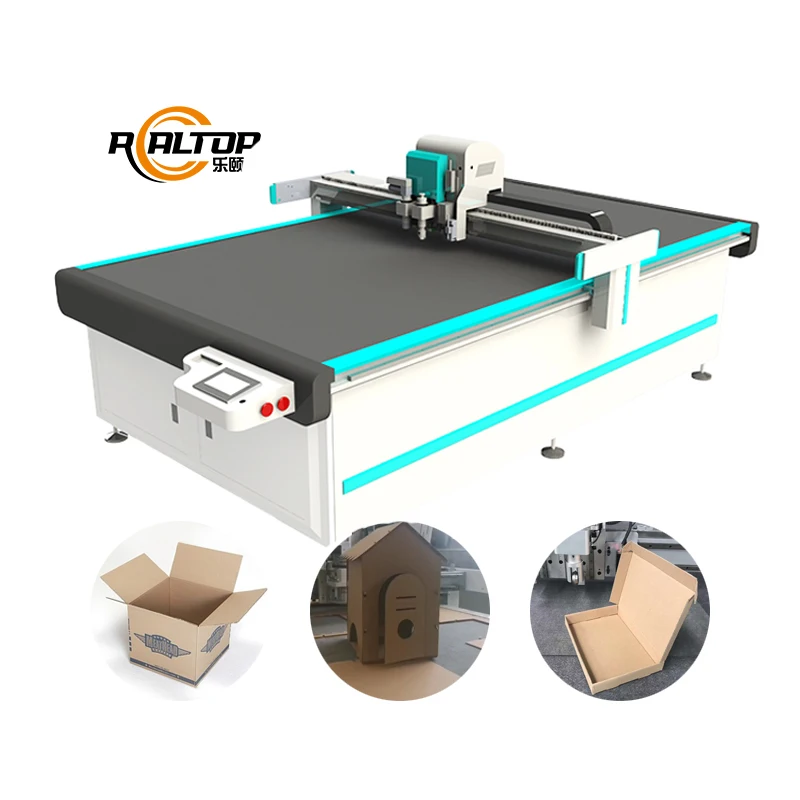
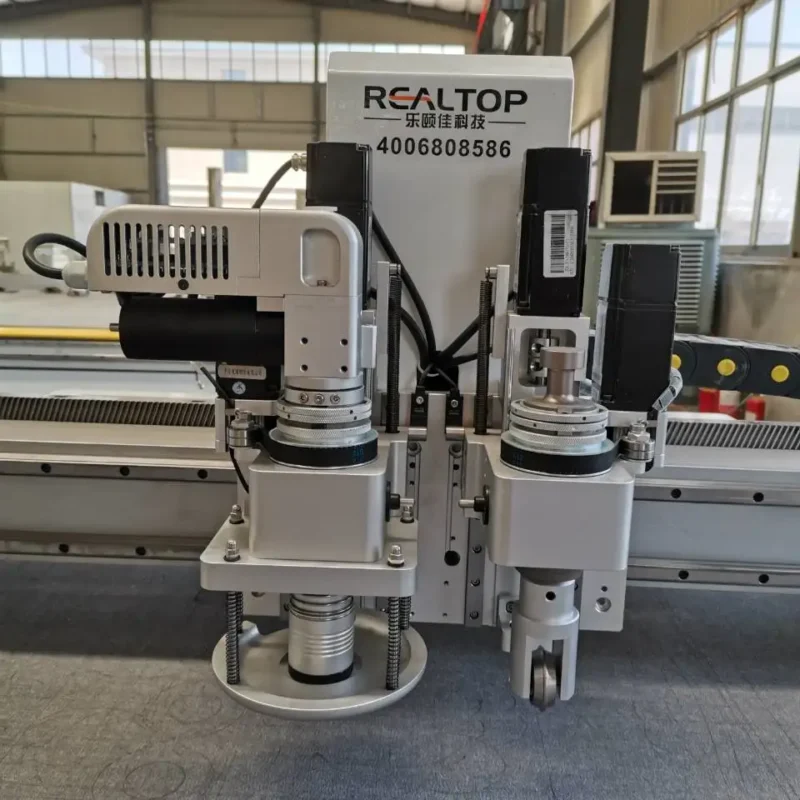
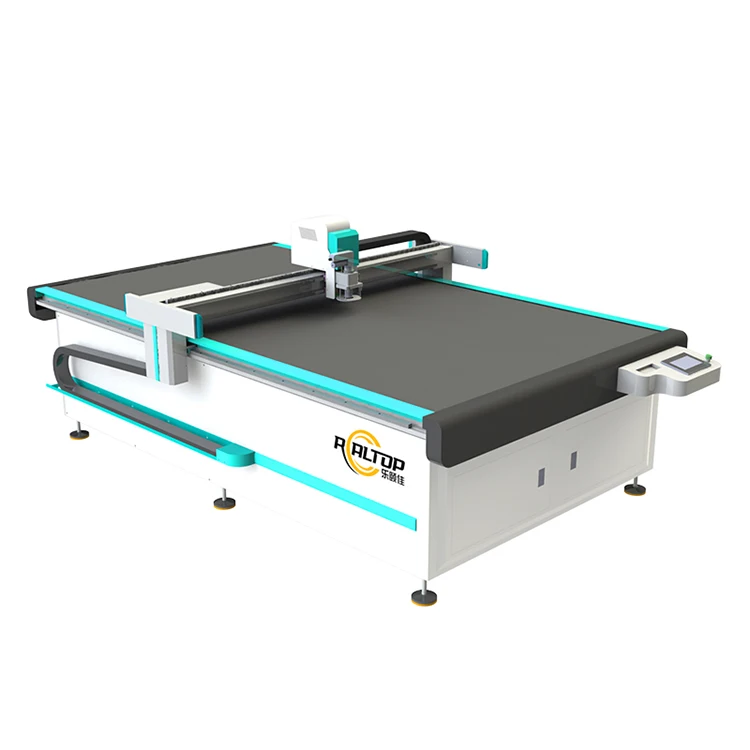
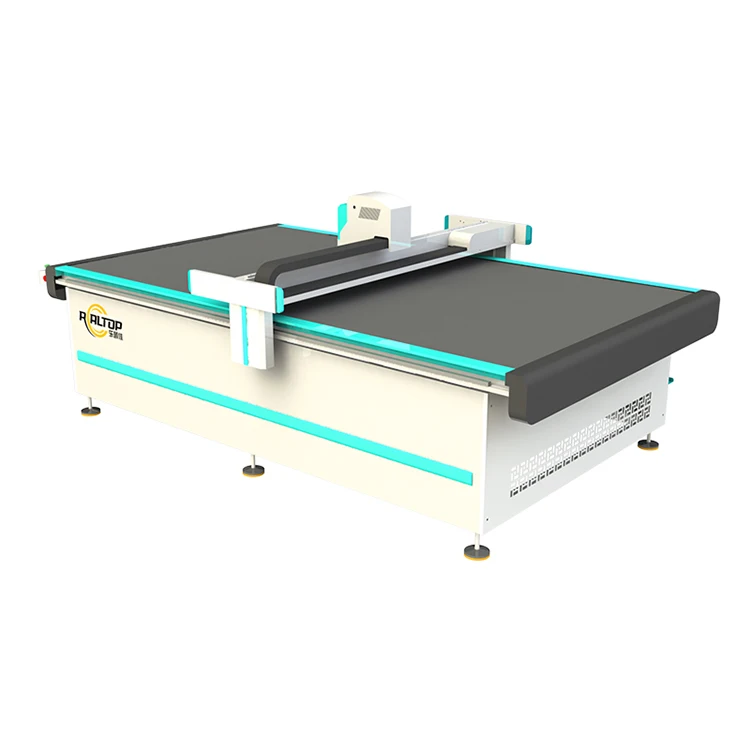
Tool Head Matched to Material — The 1625 CNC oscillating knife cutting machine with CCD camera platform lets packaging buyers swap between oscillating knife, creasing wheel, and drag knife on the same table, eliminating the need to force one cutting method across every substrate.
Technical Specifications
| Parameter | Value |
|---|---|
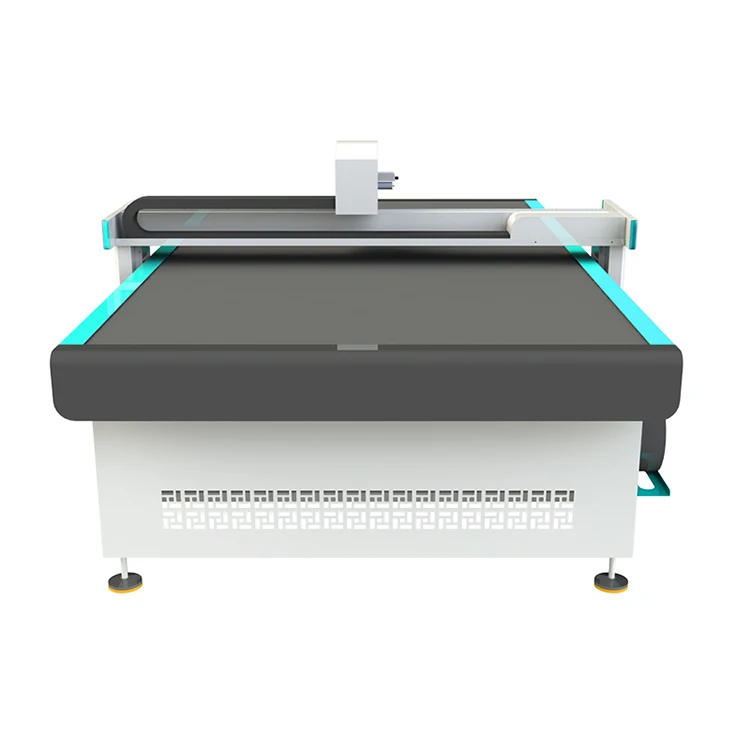
| Product Type | CNC Oscillating Knife Cutting Machine with CCD Camera |
| Working Area | 1600×2500 mm |
| Cutting Speed | 0–1500 mm/s |
| Cutting Thickness | ≤ 40mm (basis not stated in source — confirm material type and density) |
| Positioning Accuracy | ±0.1 mm |
| Tool Head Options | Oscillating knife, Driven rotary knife, Creasing wheel, Kiss cutting tool, Pneumatic knife, Milling tool, V groove knife |
| CCD Camera | Included for contour recognition |
| Vacuum Table | Aluminum bellows type, full-surface adsorption |
| Vacuum Pump | 9 kW, aerospace-grade aluminum casting |
| Servo Drive Options | Panasonic, Delta, Dorna |
| Control System | PLC control panel |
| File Format Compatibility | PLT, DXF, AI, PDF |
| Voltage Options | 110V / 220V / 380V |
| Machine Dimensions (L×W×H) | 3300×2100×1350 mm |
| Safety Devices | Infrared sensor, emergency stop |
| Packaging Software | Dedicated box structure design software included |
| Language Options | English, Russian, Italian, Chinese; customizable |
| Standards | CE |
Application Suitability
| Application | Material or Output |
|---|---|
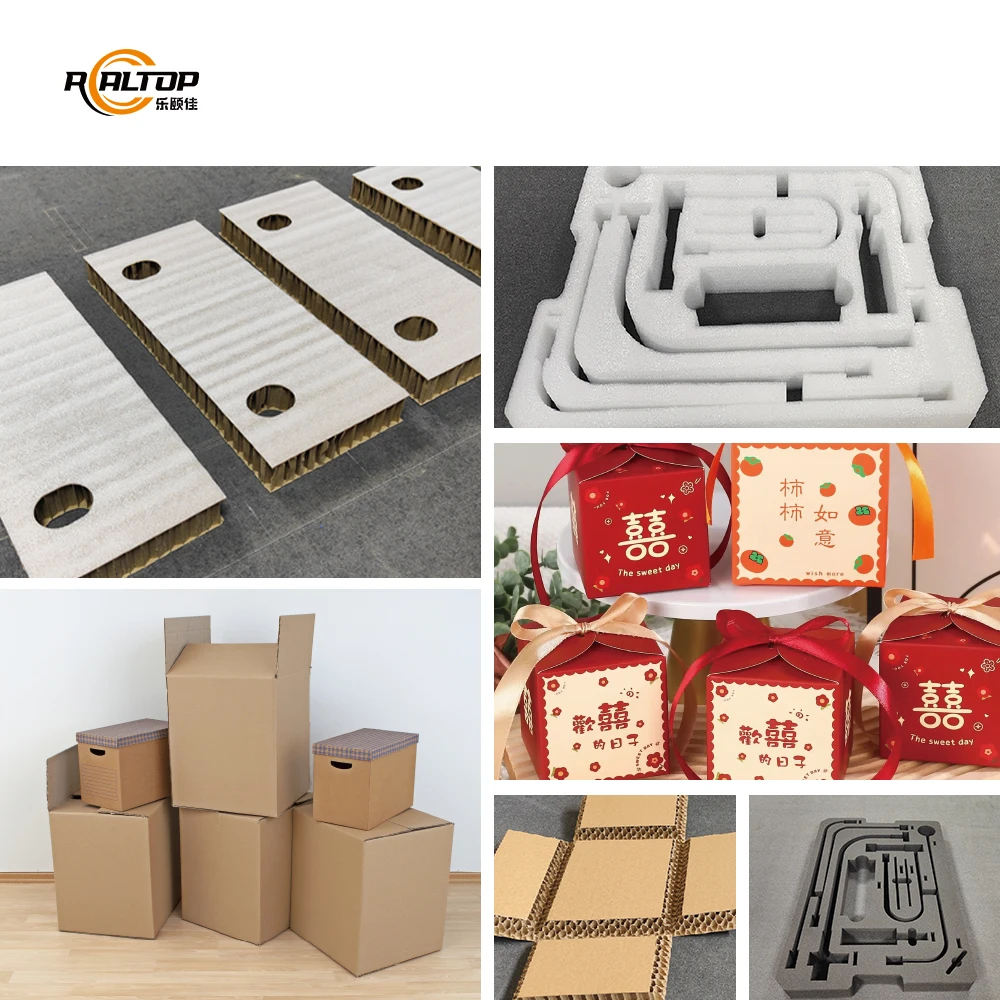
| Packaging Sample Making | Corrugated cardboard (E/B/BC-flute), greyboard, cardstock, art paper |
| Foam Packaging Fabrication | EVA, EPE, PU foam inserts and protective corners |
| Gasket and Seal Production | Rubber, PTFE, compressed fiber sheets |
| Textile and Leather | Fabric, velvet, fleece, non-woven, synthetic leather |
| Signage and Display | PVC foam board, PET, thin plastic sheets, acrylic |
Why Specified Thickness Rarely Matches Actual Cutting Depth
A 40mm rating means nothing without the material density and tool head attached to it.
I once shipped an oscillating knife cutter to a packaging plant where the sample test ran perfectly on standard EVA foam. When their actual production stock arrived — a denser composite with adhesive backing — the first two batches came out with crushed edges. The machine had the travel, but the oscillation frequency and knife pressure needed dialing in for that specific substrate. This is why the cutting thickness figure on any spec sheet should always trigger a conversation about what material you actually run, not what the brochure shows. [NEED_CITE: oscillating knife cutting machine manufacturer material testing protocols]
Mapping the Full Range Before Committing to One Method
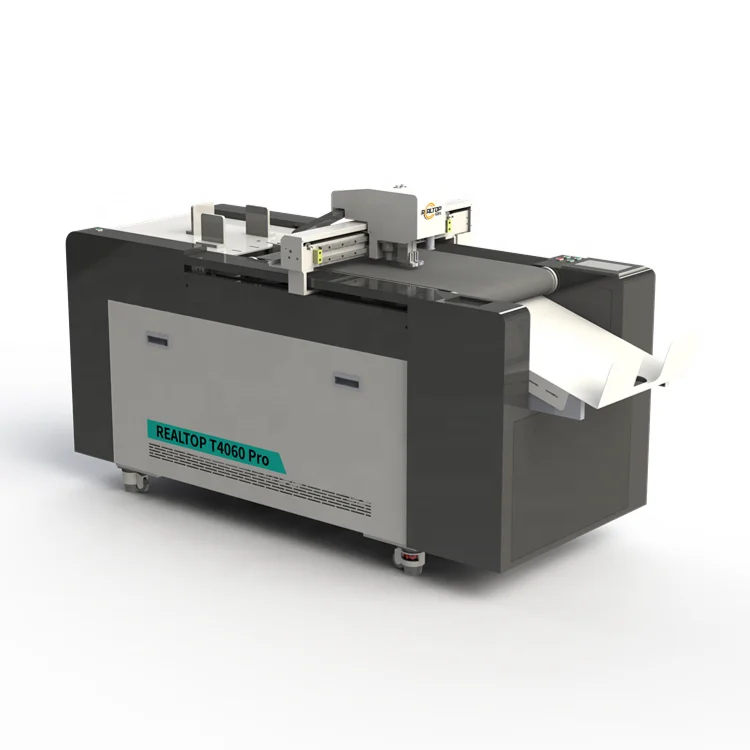
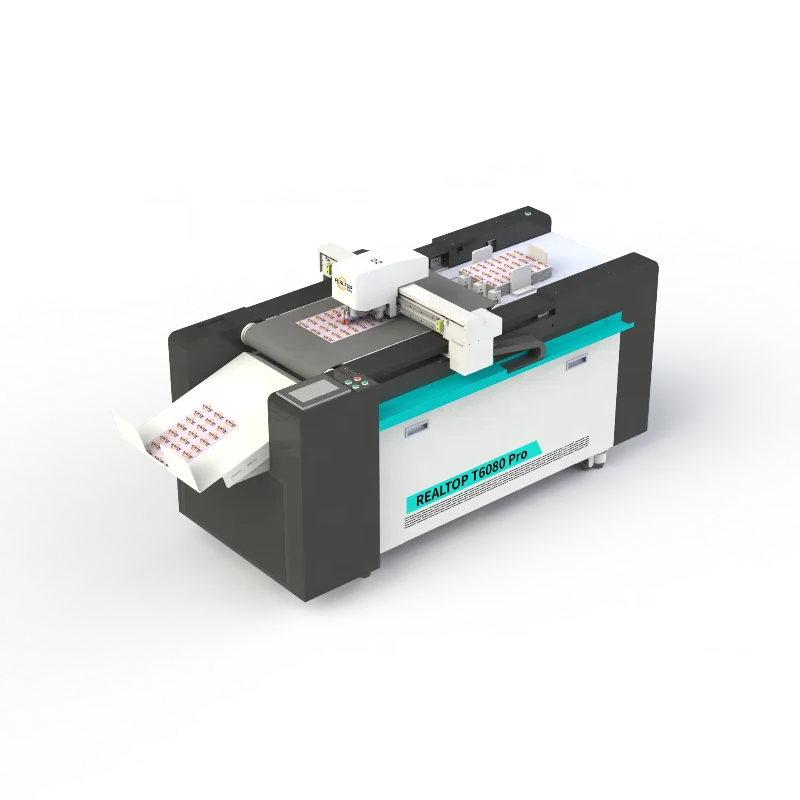
The 1625 sits within a broader catalogue that spans compact tables for sample rooms up to large-format systems for continuous production. Buyers surveying the complete cutting equipment range can compare knife versus laser methods side by side. The CNC oscillating knife cutting machine manufacturer approach here is to match the cutting technology to the material and daily volume rather than pushing a single platform across every application. Fabric and gasket work typically stay on knife, while acrylic and thin wood move to laser.
CCD Contour Recognition at Production Speed
Printed packaging artwork demands that the camera tracks registration marks reliably as the head moves across the sheet. The included CCD system on this 1625 model handles contour recognition for die-line alignment, but performance depends on mark contrast, print quality, and the speed at which you run. A camera that tracks perfectly at half speed can lose marks during full production runs, which is why sample cutting on your own printed stock matters before signing off on configuration. [NEED_CITE: CCD contour recognition accuracy at varying cutting speeds]
What the Spec Sheet Means on the Shop Floor
The 1600×2500 mm working area accommodates most standard packaging sheet sizes, placing this model in the mid-range of the catalogue. The 9 kW vacuum pump paired with an aluminum bellows table provides full-surface adsorption, though smaller cut parts may still require strategic zoning to prevent lift during high-speed passes. Tool head interchangeability — oscillating knife for foam contouring, creasing wheel for carton fold lines, V-groove knife for rigid board — means one platform handles multiple packaging operations. File compatibility across PLT, DXF, AI, and PDF formats allows integration with existing box design software and nesting workflows without reformatting. Servo drive options from Panasonic, Delta, and Dorna let buyers align with local service availability.
What Happens When Zoning and Material Don’t Align
A vacuum table without adequate zoning lets small cut pieces lift off the surface mid-pass, producing ragged edges or throwing the part entirely. On foam and corrugated work, this often shows up only after the first nesting layout runs, when tiny gasket blanks or packaging corners break free from suction. The cost is not just scrapped material — it is production time lost recalculating tool paths and adjusting hold-down strategies for each new sheet layout. [NEED_CITE: vacuum table zoning requirements for small-part cutting]
Why Buyers Source This Range Here
In-house design covers both knife and laser technologies, so the 1625 configuration is specified against your actual material rather than a default package. Tool head and table setups are confirmed per substrate and production volume before the order goes to the floor. CCD camera positioning for printed contour work is tested on your artwork, not generic test patterns. Software compatibility — file formats and nesting workflows — is verified before shipment to avoid integration delays on arrival. Voltage, control language, and plug type are locked to your market specifications during the confirmation stage. Sample cutting on the buyer’s own material happens before commitment, not after delivery.
Documentation & Verification
- Machine specification sheet confirming tool head and table setup for your material type
- Sample cutting report on your actual packaging stock verifying edge quality and CCD tracking
- Electrical schematic with voltage and frequency matched to your facility supply
- Software licence and file format compatibility note for your existing design workflow
- Factory test record documenting positioning accuracy across the full working area
- Packing photographs showing crated machine and accessory inventory before dispatch
Installation, Commissioning & Support
- Requires a level concrete floor with clearance around the 3300×2100 mm footprint for material loading
- Dedicated circuit matching confirmed voltage option (110V/220V/380V) with appropriate breaker rating
- Assembly of table sections and gantry on site with alignment verification against the 1600×2500 mm working area
- First-run parameter tuning for oscillation frequency and knife pressure on your specific material stock
- Operator training on PLC control panel including tool head changeover and CCD mark registration
- Spare parts list covering blades, vacuum seals, and drive components with local sourcing notes
What to Include in Your Inquiry
Specify the material types and thicknesses you cut daily, along with typical sheet dimensions and whether your stock is printed for CCD work. Include your target daily volume so the table size and tool head configuration can be matched appropriately. Confirm your local voltage and frequency, preferred control language, and whether your existing CAD software outputs in PLT, DXF, AI, or PDF format. If possible, send material samples for cutting tests before configuration is finalized.
Frequently Asked Questions
Q: How do I decide between knife and laser cutting for my packaging materials?
A: Knife cutting suits corrugated, foam, fabric, and gasket materials where edge compression or thermal sealing is undesirable. Laser works for acrylic, thin wood, and certain textiles where sealed edges are preferred. The full catalogue lets you compare both methods against your specific material and daily volume before selecting a configuration.
Q: Where does the 1625 model fit within the available table sizes?
A: This 1600×2500 mm platform sits in the mid-range, handling standard packaging sheet sizes and moderate production volumes. Compact models serve sample rooms with lower throughput, while large-format tables address continuous high-volume fabrication with extended material lengths.
Q: Which tool heads handle different packaging materials?
A: Oscillating knife cuts foam and soft composites. Creasing wheel scores fold lines on corrugated and cardstock. V-groove knife profiles rigid boards. Kiss cutting tools handle adhesive-backed labels and thin films. Each head swaps on the same platform based on your material mix.
Q: Will my existing CAD and nesting files work with this system?
A: The control system accepts PLT, DXF, AI, and PDF formats. Compatibility with your specific nesting software and workflow is confirmed during the pre-order stage. If your software outputs in a proprietary format, conversion requirements are identified before the machine ships.
Tool Head Matched to Material — The 1625 CNC oscillating knife cutting machine with CCD camera platform lets packaging buyers swap between oscillating knife, creasing wheel, and drag knife on the same table, eliminating the need to force one cutting method across every substrate.
Technical Specifications
| Parameter | Value |
|---|---|
| Product Type | CNC Oscillating Knife Cutting Machine with CCD Camera |
| Working Area | 1600×2500 mm |
| Cutting Speed | 0–1500 mm/s |
| Cutting Thickness | ≤ 40mm (basis not stated in source — confirm material type and density) |
| Positioning Accuracy | ±0.1 mm |
| Tool Head Options | Oscillating knife, Driven rotary knife, Creasing wheel, Kiss cutting tool, Pneumatic knife, Milling tool, V groove knife |
| CCD Camera | Included for contour recognition |
| Vacuum Table | Aluminum bellows type, full-surface adsorption |
| Vacuum Pump | 9 kW, aerospace-grade aluminum casting |
| Servo Drive Options | Panasonic, Delta, Dorna |
| Control System | PLC control panel |
| File Format Compatibility | PLT, DXF, AI, PDF |
| Voltage Options | 110V / 220V / 380V |
| Machine Dimensions (L×W×H) | 3300×2100×1350 mm |
| Safety Devices | Infrared sensor, emergency stop |
| Packaging Software | Dedicated box structure design software included |
| Language Options | English, Russian, Italian, Chinese; customizable |
| Standards | CE |
Application Suitability
| Application | Material or Output |
|---|---|
| Packaging Sample Making | Corrugated cardboard (E/B/BC-flute), greyboard, cardstock, art paper |
| Foam Packaging Fabrication | EVA, EPE, PU foam inserts and protective corners |
| Gasket and Seal Production | Rubber, PTFE, compressed fiber sheets |
| Textile and Leather | Fabric, velvet, fleece, non-woven, synthetic leather |
| Signage and Display | PVC foam board, PET, thin plastic sheets, acrylic |
Why Specified Thickness Rarely Matches Actual Cutting Depth
A 40mm rating means nothing without the material density and tool head attached to it.
I once shipped an oscillating knife cutter to a packaging plant where the sample test ran perfectly on standard EVA foam. When their actual production stock arrived — a denser composite with adhesive backing — the first two batches came out with crushed edges. The machine had the travel, but the oscillation frequency and knife pressure needed dialing in for that specific substrate. This is why the cutting thickness figure on any spec sheet should always trigger a conversation about what material you actually run, not what the brochure shows. [NEED_CITE: oscillating knife cutting machine manufacturer material testing protocols]
Mapping the Full Range Before Committing to One Method
The 1625 sits within a broader catalogue that spans compact tables for sample rooms up to large-format systems for continuous production. Buyers surveying the complete cutting equipment range can compare knife versus laser methods side by side. The CNC oscillating knife cutting machine manufacturer approach here is to match the cutting technology to the material and daily volume rather than pushing a single platform across every application. Fabric and gasket work typically stay on knife, while acrylic and thin wood move to laser.
CCD Contour Recognition at Production Speed
Printed packaging artwork demands that the camera tracks registration marks reliably as the head moves across the sheet. The included CCD system on this 1625 model handles contour recognition for die-line alignment, but performance depends on mark contrast, print quality, and the speed at which you run. A camera that tracks perfectly at half speed can lose marks during full production runs, which is why sample cutting on your own printed stock matters before signing off on configuration. [NEED_CITE: CCD contour recognition accuracy at varying cutting speeds]
What the Spec Sheet Means on the Shop Floor
The 1600×2500 mm working area accommodates most standard packaging sheet sizes, placing this model in the mid-range of the catalogue. The 9 kW vacuum pump paired with an aluminum bellows table provides full-surface adsorption, though smaller cut parts may still require strategic zoning to prevent lift during high-speed passes. Tool head interchangeability — oscillating knife for foam contouring, creasing wheel for carton fold lines, V-groove knife for rigid board — means one platform handles multiple packaging operations. File compatibility across PLT, DXF, AI, and PDF formats allows integration with existing box design software and nesting workflows without reformatting. Servo drive options from Panasonic, Delta, and Dorna let buyers align with local service availability.
What Happens When Zoning and Material Don’t Align
A vacuum table without adequate zoning lets small cut pieces lift off the surface mid-pass, producing ragged edges or throwing the part entirely. On foam and corrugated work, this often shows up only after the first nesting layout runs, when tiny gasket blanks or packaging corners break free from suction. The cost is not just scrapped material — it is production time lost recalculating tool paths and adjusting hold-down strategies for each new sheet layout. [NEED_CITE: vacuum table zoning requirements for small-part cutting]
Why Buyers Source This Range Here
In-house design covers both knife and laser technologies, so the 1625 configuration is specified against your actual material rather than a default package. Tool head and table setups are confirmed per substrate and production volume before the order goes to the floor. CCD camera positioning for printed contour work is tested on your artwork, not generic test patterns. Software compatibility — file formats and nesting workflows — is verified before shipment to avoid integration delays on arrival. Voltage, control language, and plug type are locked to your market specifications during the confirmation stage. Sample cutting on the buyer’s own material happens before commitment, not after delivery.
Documentation & Verification
- Machine specification sheet confirming tool head and table setup for your material type
- Sample cutting report on your actual packaging stock verifying edge quality and CCD tracking
- Electrical schematic with voltage and frequency matched to your facility supply
- Software licence and file format compatibility note for your existing design workflow
- Factory test record documenting positioning accuracy across the full working area
- Packing photographs showing crated machine and accessory inventory before dispatch
Installation, Commissioning & Support
- Requires a level concrete floor with clearance around the 3300×2100 mm footprint for material loading
- Dedicated circuit matching confirmed voltage option (110V/220V/380V) with appropriate breaker rating
- Assembly of table sections and gantry on site with alignment verification against the 1600×2500 mm working area
- First-run parameter tuning for oscillation frequency and knife pressure on your specific material stock
- Operator training on PLC control panel including tool head changeover and CCD mark registration
- Spare parts list covering blades, vacuum seals, and drive components with local sourcing notes
What to Include in Your Inquiry
Specify the material types and thicknesses you cut daily, along with typical sheet dimensions and whether your stock is printed for CCD work. Include your target daily volume so the table size and tool head configuration can be matched appropriately. Confirm your local voltage and frequency, preferred control language, and whether your existing CAD software outputs in PLT, DXF, AI, or PDF format. If possible, send material samples for cutting tests before configuration is finalized.
Frequently Asked Questions
Q: How do I decide between knife and laser cutting for my packaging materials?
A: Knife cutting suits corrugated, foam, fabric, and gasket materials where edge compression or thermal sealing is undesirable. Laser works for acrylic, thin wood, and certain textiles where sealed edges are preferred. The full catalogue lets you compare both methods against your specific material and daily volume before selecting a configuration.
Q: Where does the 1625 model fit within the available table sizes?
A: This 1600×2500 mm platform sits in the mid-range, handling standard packaging sheet sizes and moderate production volumes. Compact models serve sample rooms with lower throughput, while large-format tables address continuous high-volume fabrication with extended material lengths.
Q: Which tool heads handle different packaging materials?
A: Oscillating knife cuts foam and soft composites. Creasing wheel scores fold lines on corrugated and cardstock. V-groove knife profiles rigid boards. Kiss cutting tools handle adhesive-backed labels and thin films. Each head swaps on the same platform based on your material mix.
Q: Will my existing CAD and nesting files work with this system?
A: The control system accepts PLT, DXF, AI, and PDF formats. Compatibility with your specific nesting software and workflow is confirmed during the pre-order stage. If your software outputs in a proprietary format, conversion requirements are identified before the machine ships.
商品评价
There are no reviews yet.