


Fast Delivery
Quick, reliable shipping to any location.

Free & easy returns
Return this item by mail or in store within 90 days for a full refund.
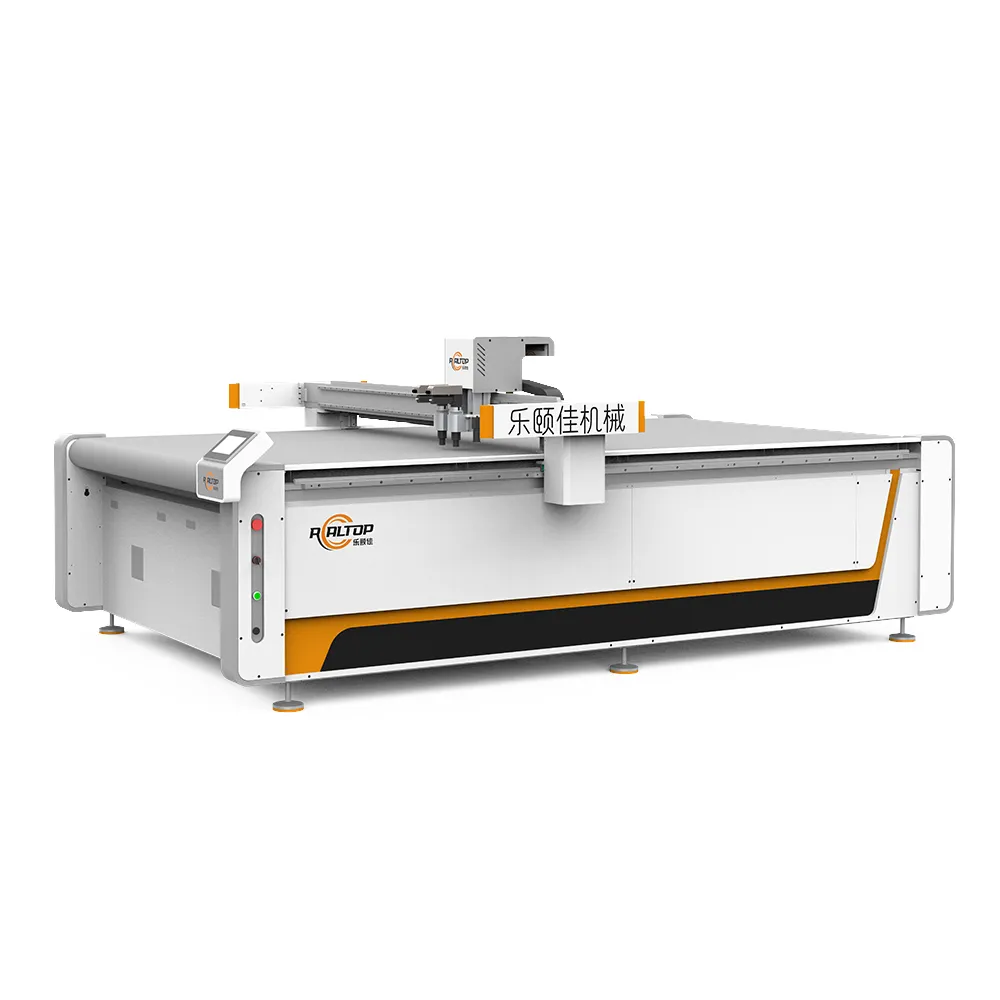
Quenched Bed with Stress Elimination — A cutting table that holds ±0.1mm repeatability only when the frame resists deflection under vacuum and tool load over years of continuous use.
Technical Specifications
| Parameter | Value |
|---|---|
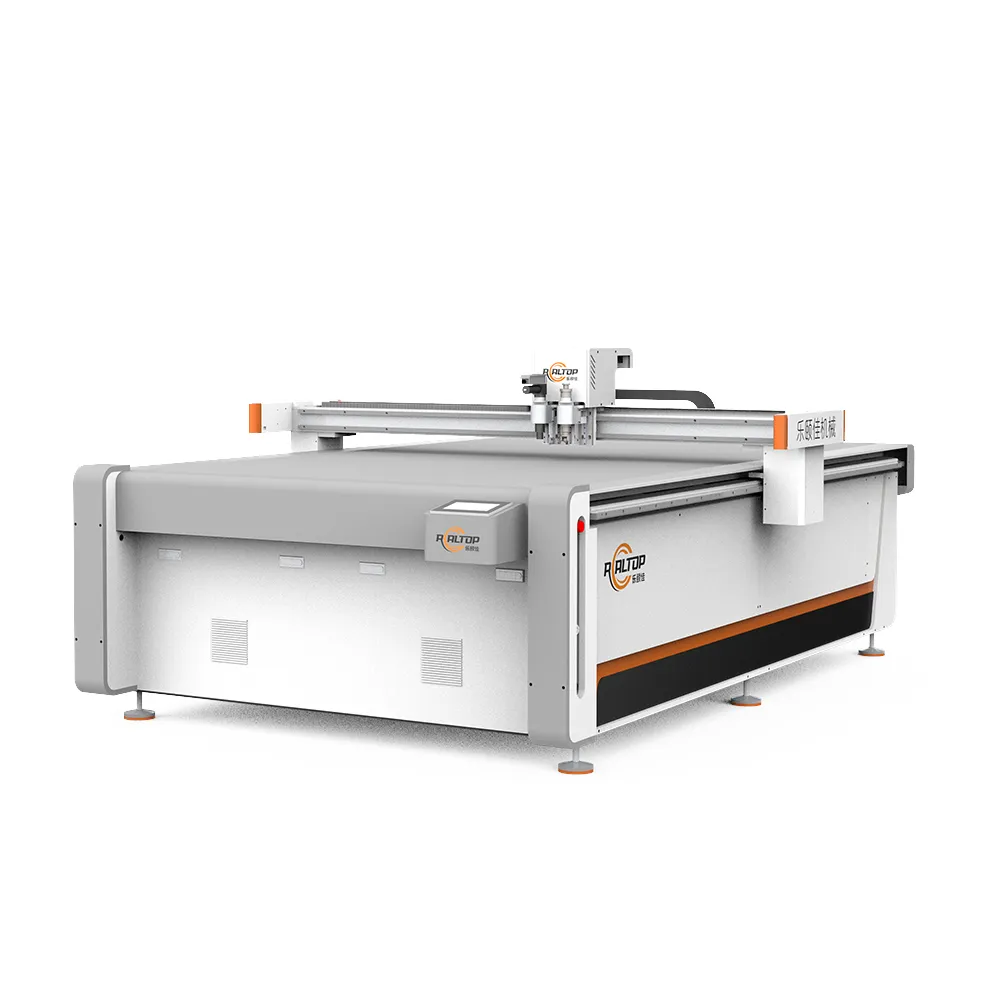
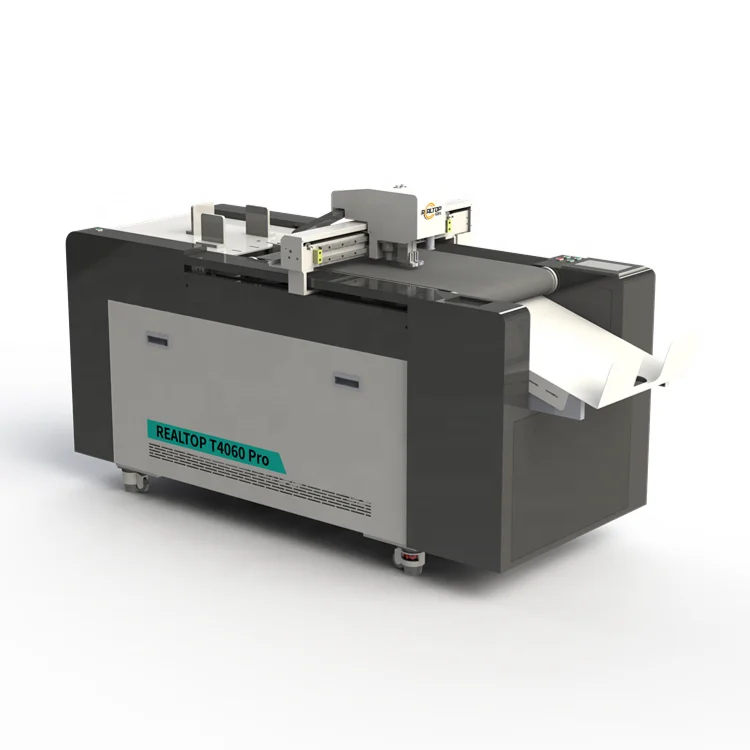
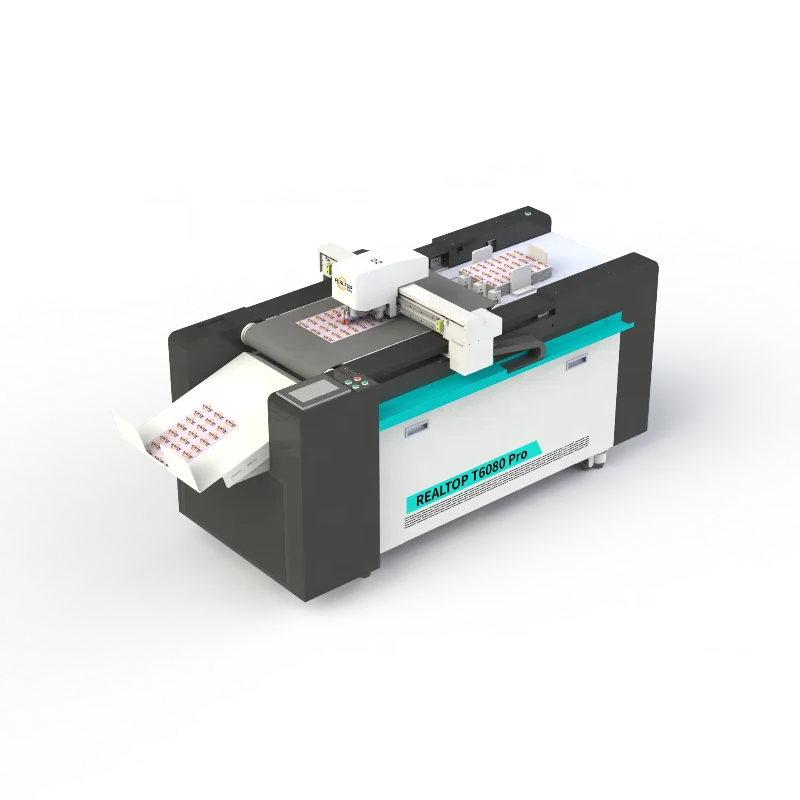
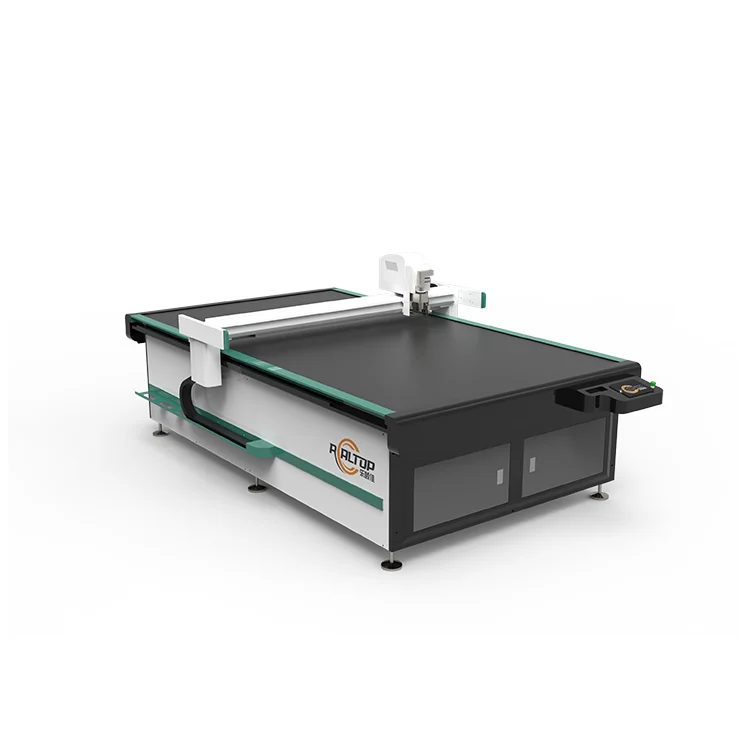
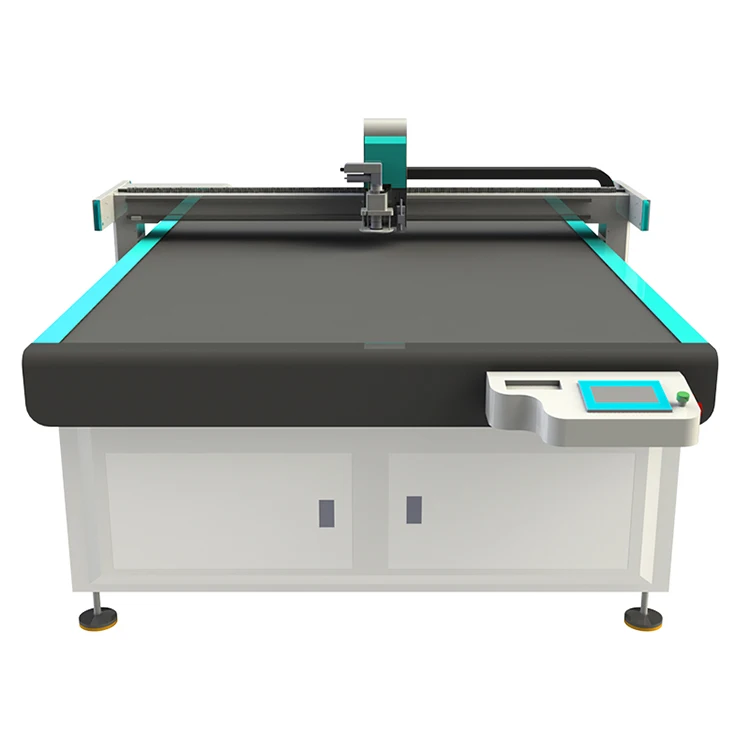
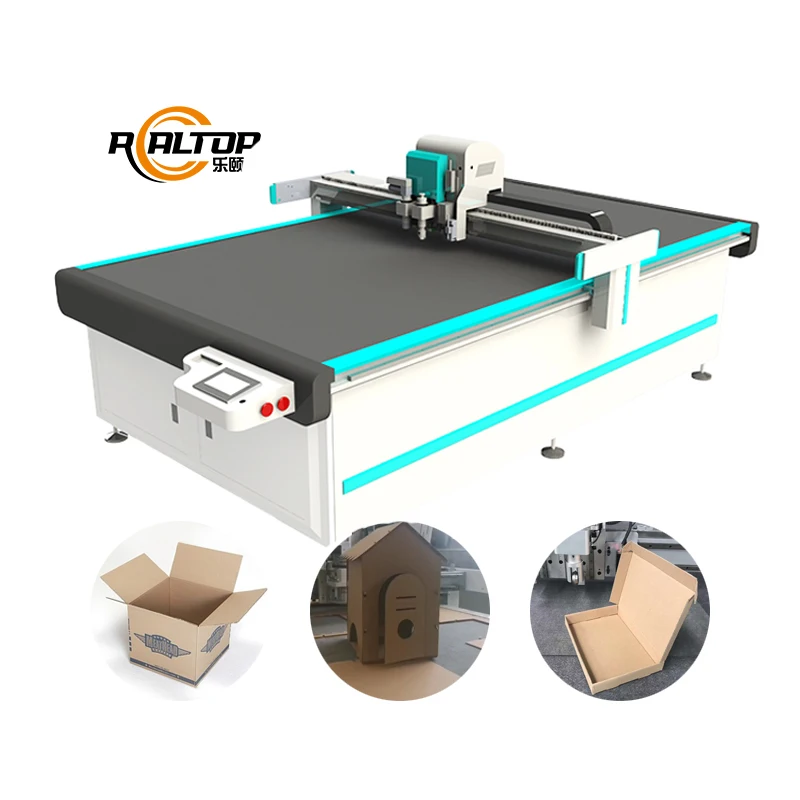
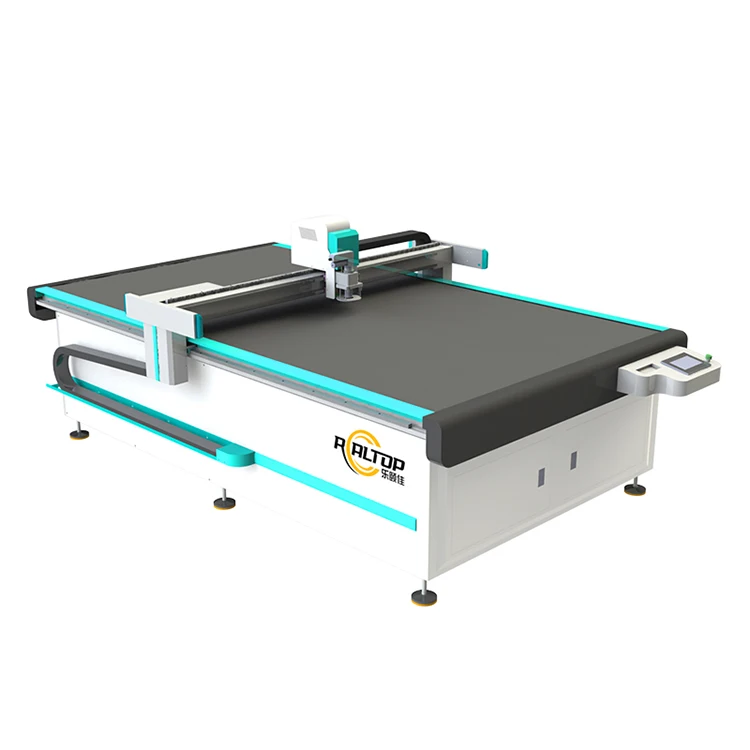
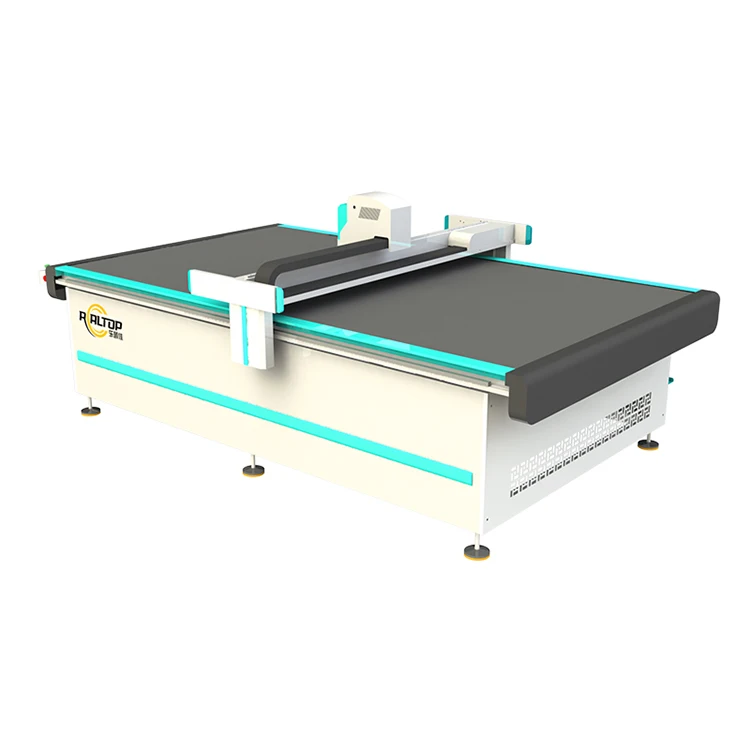
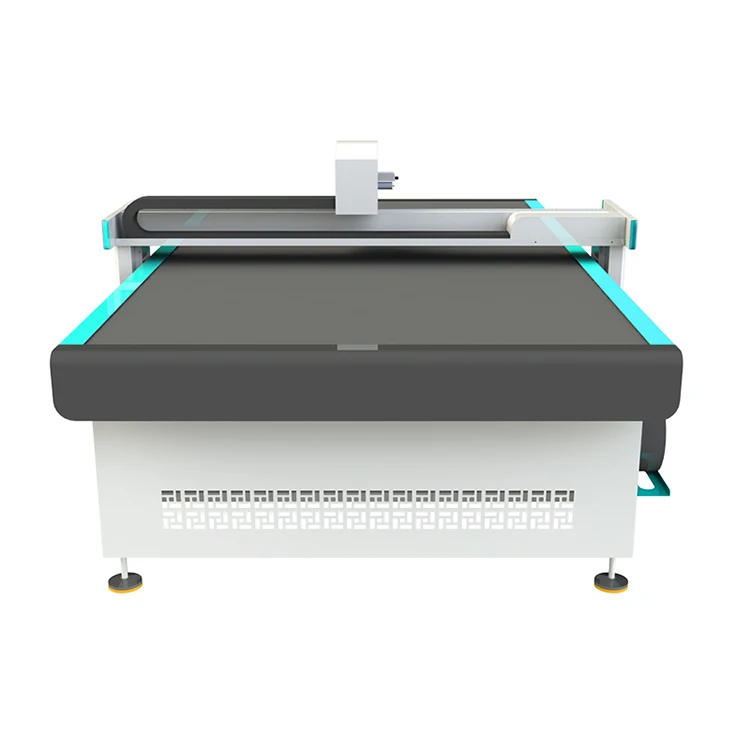
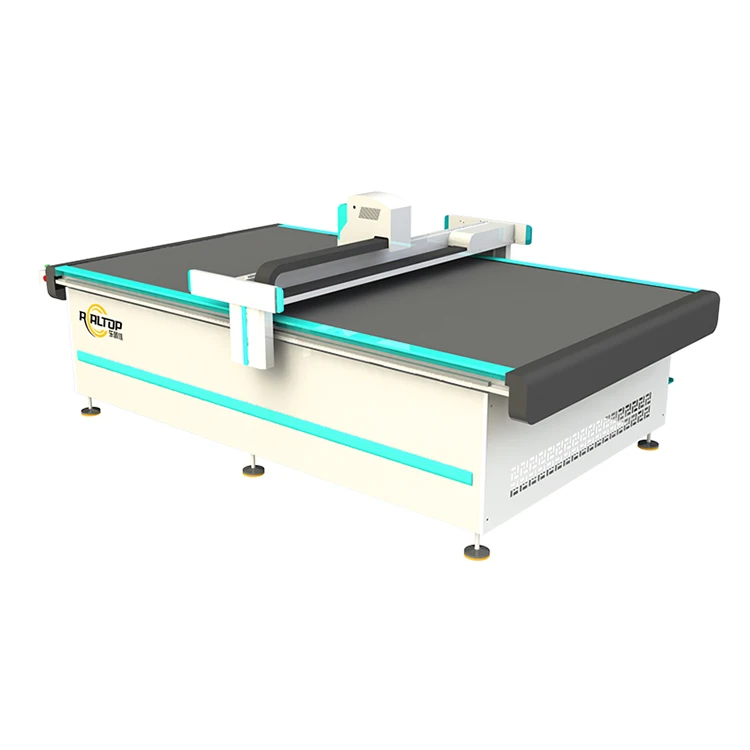
| Product Type | CNC Flatbed Digital Cutting Table with CCD Camera |
| Effective Cutting Area Options | 2500×1600mm / 2500×2200mm / 3000×2200mm |
| Maximum Traverse Speed | 2000 mm/s |
| Reset Accuracy | ±0.1 mm |
| Maximum Cutting Thickness | ≤40 mm (basis not stated in source — confirm material type and density) |
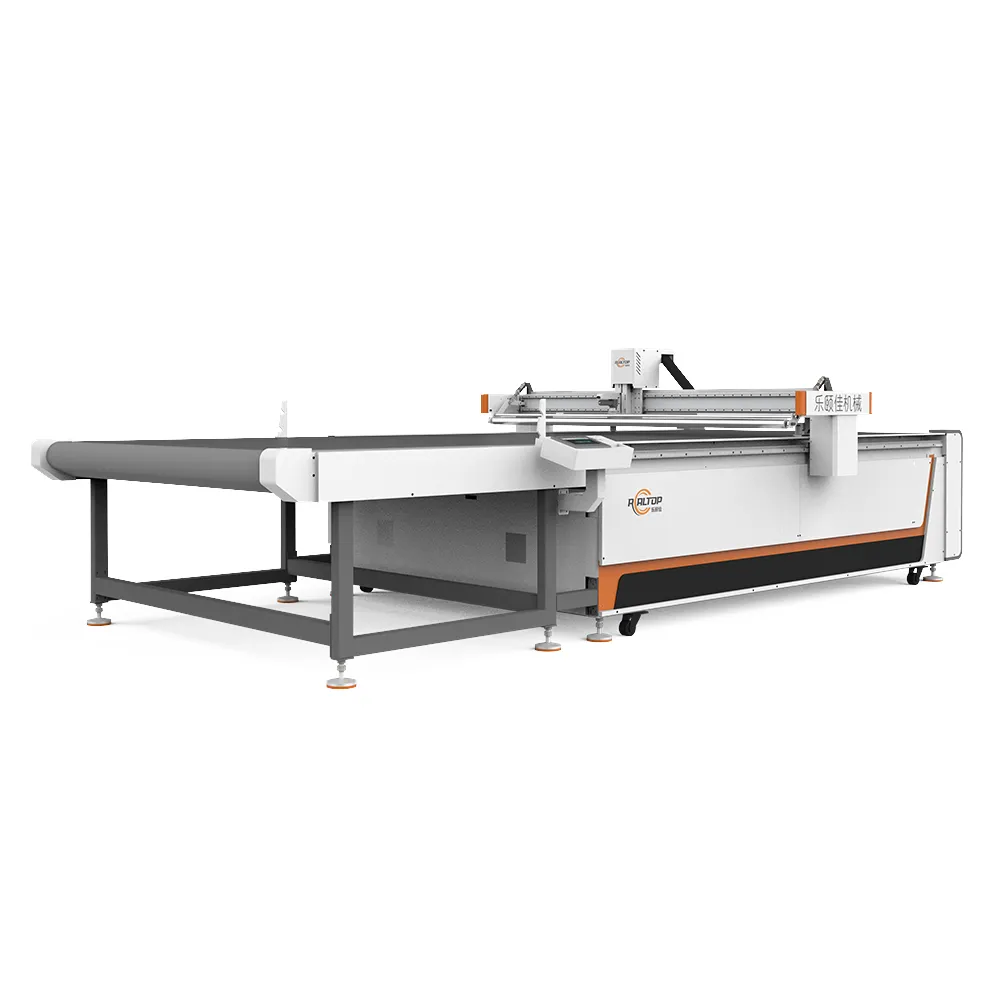
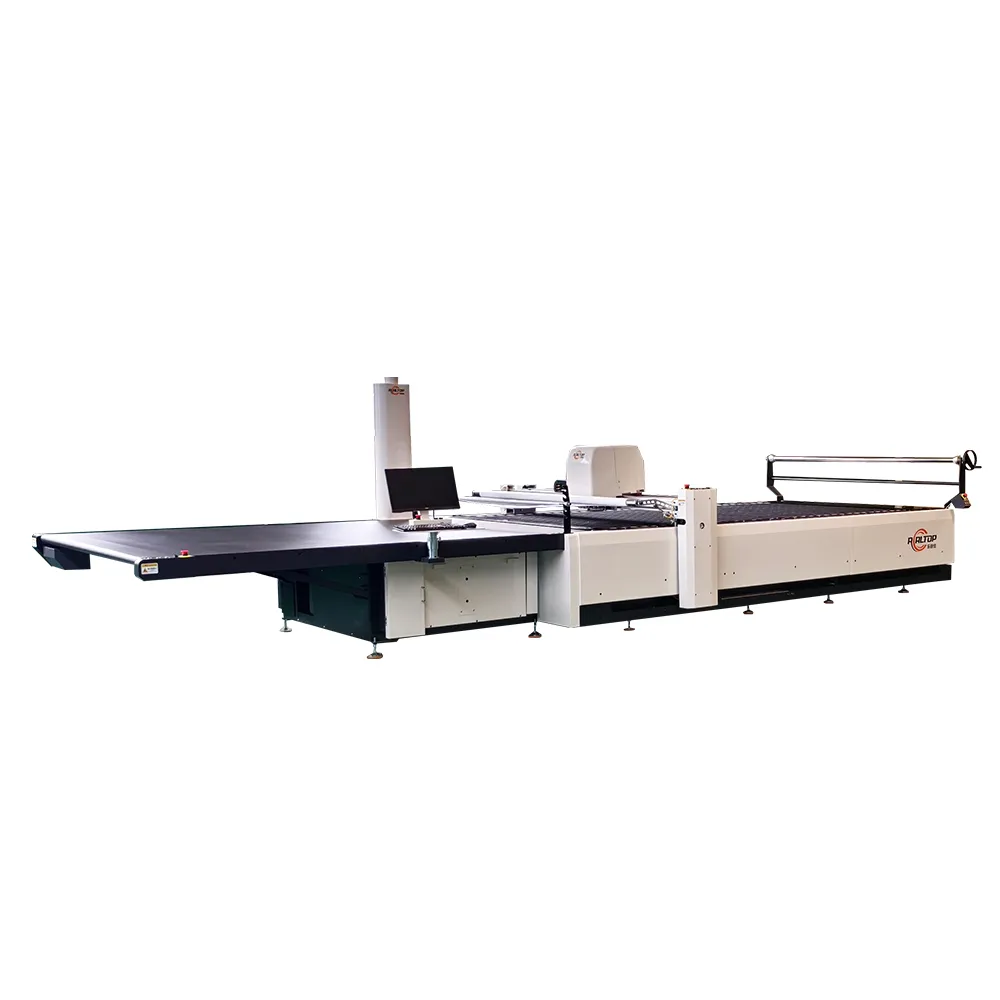
| Table Type | Automatic Feeding (Conveyor) |
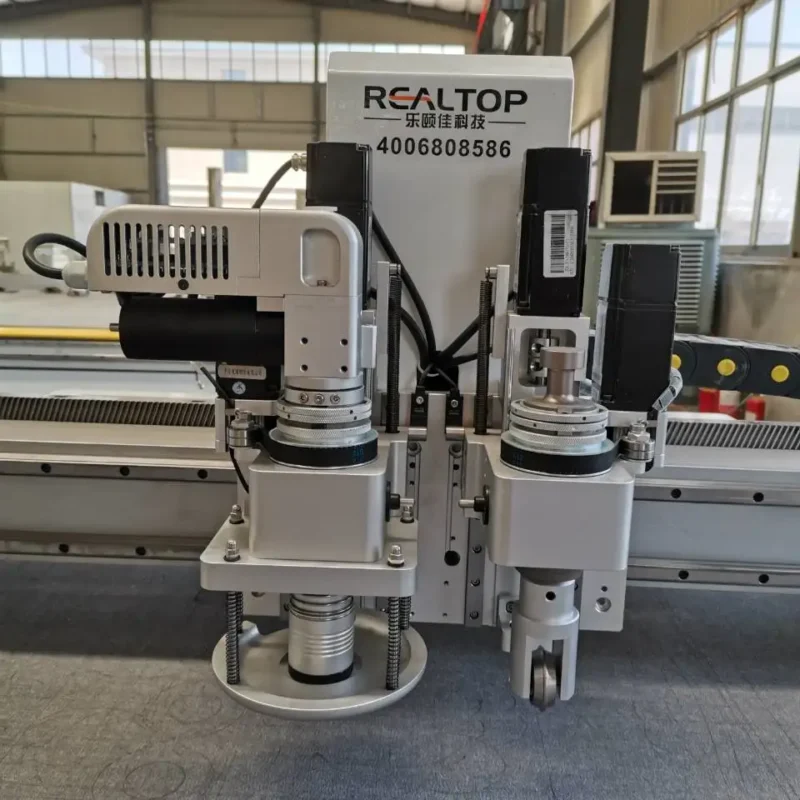
| Tool Head Options | Conventional Vibrating Knife, Servo Vibrating Knife, Pneumatic Knife, Circular Knife, Marking Pen |
| Positioning System | Panoramic Visual Positioning (CCD Camera) |
| Control System | REALTOP Customized High-Speed Control System |
| Compatible Data Formats | dxf, plt, ai, pdf |
| Safety Devices | Infrared Blocking Stop, Anti-collision Protection |
| Voltage Options | 380V / 220V |
| Industrial Belt | Low Noise, Flexible, High Temperature Resistant, Corrosion Resistant, Glass Fiber Tension Cord |
| Wiring Specification | Oxygen-free Copper Shielded Wire, Low Resistance, High Folding Strength |
| Bed Treatment | Quenched to Eliminate Internal Stress |
| Noise Design | Silent Design |
| Rated Power | (not stated in source) |
| Overall Dimensions | (not stated in source) |
| Net Weight | (not stated in source) |
| Certification | (not stated in source) |
| Warranty | (not stated in source) |
Application Suitability
| Application | Material or Output |
|---|---|
| Packaging sample making and short-run carton production | Corrugated board, folding carton stock, greyboard, honeycomb paper |
| Advertising and signage contour cutting | Printed vinyl, PVC foam board, KT board, composite sheets |
| Printed material edge and template cutting | Laminated graphics, adhesive decals, magnetic sheets with registered print marks |
| Gasket and industrial flat stock profiling | Rubber sheet, cork, non-asbestos fiber, PTFE up to confirmed thickness |
What "Maximum Cutting Thickness" Actually Means on a Conveyor Bed
The number on the spec sheet only matters if the material density and tool head are named beside it.
A packaging cutting machine for sale often lists a single thickness figure without telling you whether that was measured on soft foam or dense corrugated board. I have seen buyers order a conveyor-fed table assuming the stated limit covered their five-ply corrugated stock, only to find the vibrating knife stalled halfway through the flute at production speed. The real test is cutting your actual sheet at your target feed rate and measuring the edge. [NEED_CITE: material density and tool head interaction in oscillating knife cutting]
Matching the Knife Type to the Packaging Substrate
Different corrugated weights and coated boards demand different tool head choices. A conventional vibrating knife handles single and double wall corrugated adequately at moderate speed, while a servo vibrating knife maintains cleaner flute edges on heavier triple-wall stock where the blade must reverse direction more aggressively. The circular knife option suits continuous straight-line slitting of roll-fed vinyl or thin card, and the pneumatic knife provides extra down-force for dense gasket materials. Selecting the correct head avoids ragged edges that reject samples at the client approval stage.
Panoramic CCD Positioning Beyond a Single Registration Mark
The panoramic visual positioning system scans the entire bed rather than hunting for a single fiducial dot. On a printed sheet that has shifted or stretched during lamination, the camera captures multiple reference points and recalculates the cut path before the knife engages. This matters in advertising applications where a full-size board carries dozens of contour-cut decals, and any drift compounds across the sheet. The control system imports the original vector file and overlays it on the captured image, allowing the operator to verify alignment before committing the run. [NEED_CITE: CCD camera registration accuracy on laminated print media]
Reading the Specification Sheet Against Your Production Reality
The three working area options — 2516, 2522, and 3022 — determine not only the maximum sheet size but also the conveyor belt length and the vacuum zone layout. A larger belt requires a more powerful vacuum pump to maintain hold-down on small parts, so choosing the 3022 format for small carton samples may waste energy and reduce suction per zone. The reset accuracy of ±0.1mm applies when the bed is properly leveled and the belt tension is set to the manufacturer’s specification. The oxygen-free copper shielded wiring resists signal degradation from the high-frequency drive motors, which directly affects positioning repeatability over long shifts. The quenched bed eliminates internal stress from welding, preventing the gradual warp that shows up as inconsistent cutting depth after several months of operation.
The Cost of Underspecifying Vacuum Zones and Belt Grip
A conveyor table with inadequate vacuum zoning lets small cut pieces lift during the final pass, producing nicks that force a full sheet re-run. The glass fiber tension cord in the industrial belt resists stretch, but if the belt surface lacks sufficient friction for coated stock, the sheet drifts under the knife head. I have seen operators compensate by slowing the feed rate, which silently erodes the throughput advantage the conveyor was supposed to deliver. These mismatches rarely appear on a quotation — they surface weeks after the CNC flatbed digital cutting table manufacturer ships the machine. [NEED_CITE: vacuum zoning design for small-part retention on conveyor tables]
Why Source the Full Cutting Range from One Build Team
The in-house design team covers both knife and laser process knowledge, so a buyer producing mixed packaging and acrylic signage can receive a configuration that uses each method where it performs best rather than forcing one technology across every material. The tool head and table configuration is specified per material sample, not selected from a fixed catalogue page. CCD camera positioning is validated on the buyer’s own printed artwork before the order is confirmed. Voltage and control language are locked in at quotation stage, preventing field rewiring surprises. Sample cutting on the buyer’s actual corrugated or vinyl stock is completed and documented before production starts, giving a physical reference for edge quality and cycle time.
Documentation & Verification
- Machine specification sheet listing confirmed tool heads and conveyor width for your material
- Electrical schematic with 380V or 220V wiring diagram matched to your facility supply
- Sample cutting report on your corrugated or vinyl stock with edge and dimension photographs
- Software licence and file format compatibility note for dxf, plt, ai and pdf imports
- Factory test record showing reset accuracy verification across the full cutting area
- Spare parts list covering blades, belt sections, and vacuum filter elements
Installation, Commissioning & Support
- Verify floor flatness within tolerance across the full 3022 maximum footprint before delivery
- Provide a dedicated circuit matching the confirmed 380V or 220V supply with correct breaker rating
- Belt tension and vacuum zone calibration performed on-site after the conveyor bed is leveled
- CCD camera registration test run on your printed sheets to confirm contour accuracy at speed
- Operator training covering tool head changeover and control system file import workflow
- Scheduled blade replacement intervals and oxygen-free wiring inspection points documented
Before You Request a Quote
Send a sample of the thickest and the most abrasive material you plan to cut, along with the printed artwork file you use for contour jobs. Specify the daily sheet volume and the shift pattern so the conveyor configuration can be sized accordingly. Confirm your facility voltage, frequency, and the control language your operators need.
Frequently Asked Questions
Q: How do I choose between a vibrating knife and a laser for packaging and printed graphics?
A: Knife cutting leaves no burned edge and handles corrugated, foam, and thick card without sealing the surface, which is necessary for glued carton assembly. Laser cuts sealed edges on synthetics and is better for intricate acrylic or textile work. A CNC flatbed digital cutting table manufacturer offering both technologies can specify the right method for each material in your product mix.
Q: Which tool head should I run on five-ply corrugated board versus thin folding carton?
A: Five-ply corrugated typically requires a servo vibrating knife for clean flute separation at depth, while thin folding carton runs well on a conventional vibrating knife or a drag knife for crease-and-cut combinations. The pneumatic knife option adds down-force for dense materials. Always confirm with a sample cut on your exact stock before finalizing the configuration.
Q: Does the CCD camera maintain registration accuracy at full conveyor speed?
A: The panoramic system captures the entire sheet image and calculates offset before the knife starts, so speed during the actual cut does not affect registration. However, belt grip and vacuum hold-down must be adequate for the sheet weight. Expect consistent contour alignment on standard printed packaging substrates when the conveyor and vacuum zones are configured for your sheet size.
Q: What working area should I choose if my sheets vary from small samples to full-size boards?
A: The 2516 model suits most sample-making and short-run carton work, keeping vacuum zones tight for small parts. If you regularly run full-size advertising boards or long packaging layouts, the 2522 or 3022 provides the extra length without repositioning. Match the choice to your largest common sheet rather than your occasional maximum.
Q: Will the control system accept my existing design files without conversion?
A: The system imports dxf, plt, ai, and pdf formats directly. Before order confirmation, send your typical production file so compatibility and any nesting requirements can be tested on the REALTOP customized control system. This avoids post-delivery workflow delays and confirms that layer interpretation matches your design intent.
Quenched Bed with Stress Elimination — A cutting table that holds ±0.1mm repeatability only when the frame resists deflection under vacuum and tool load over years of continuous use.
Technical Specifications
| Parameter | Value |
|---|---|
| Product Type | CNC Flatbed Digital Cutting Table with CCD Camera |
| Effective Cutting Area Options | 2500×1600mm / 2500×2200mm / 3000×2200mm |
| Maximum Traverse Speed | 2000 mm/s |
| Reset Accuracy | ±0.1 mm |
| Maximum Cutting Thickness | ≤40 mm (basis not stated in source — confirm material type and density) |
| Table Type | Automatic Feeding (Conveyor) |
| Tool Head Options | Conventional Vibrating Knife, Servo Vibrating Knife, Pneumatic Knife, Circular Knife, Marking Pen |
| Positioning System | Panoramic Visual Positioning (CCD Camera) |
| Control System | REALTOP Customized High-Speed Control System |
| Compatible Data Formats | dxf, plt, ai, pdf |
| Safety Devices | Infrared Blocking Stop, Anti-collision Protection |
| Voltage Options | 380V / 220V |
| Industrial Belt | Low Noise, Flexible, High Temperature Resistant, Corrosion Resistant, Glass Fiber Tension Cord |
| Wiring Specification | Oxygen-free Copper Shielded Wire, Low Resistance, High Folding Strength |
| Bed Treatment | Quenched to Eliminate Internal Stress |
| Noise Design | Silent Design |
| Rated Power | (not stated in source) |
| Overall Dimensions | (not stated in source) |
| Net Weight | (not stated in source) |
| Certification | (not stated in source) |
| Warranty | (not stated in source) |
Application Suitability
| Application | Material or Output |
|---|---|
| Packaging sample making and short-run carton production | Corrugated board, folding carton stock, greyboard, honeycomb paper |
| Advertising and signage contour cutting | Printed vinyl, PVC foam board, KT board, composite sheets |
| Printed material edge and template cutting | Laminated graphics, adhesive decals, magnetic sheets with registered print marks |
| Gasket and industrial flat stock profiling | Rubber sheet, cork, non-asbestos fiber, PTFE up to confirmed thickness |
What "Maximum Cutting Thickness" Actually Means on a Conveyor Bed
The number on the spec sheet only matters if the material density and tool head are named beside it.
A packaging cutting machine for sale often lists a single thickness figure without telling you whether that was measured on soft foam or dense corrugated board. I have seen buyers order a conveyor-fed table assuming the stated limit covered their five-ply corrugated stock, only to find the vibrating knife stalled halfway through the flute at production speed. The real test is cutting your actual sheet at your target feed rate and measuring the edge. [NEED_CITE: material density and tool head interaction in oscillating knife cutting]
Matching the Knife Type to the Packaging Substrate
Different corrugated weights and coated boards demand different tool head choices. A conventional vibrating knife handles single and double wall corrugated adequately at moderate speed, while a servo vibrating knife maintains cleaner flute edges on heavier triple-wall stock where the blade must reverse direction more aggressively. The circular knife option suits continuous straight-line slitting of roll-fed vinyl or thin card, and the pneumatic knife provides extra down-force for dense gasket materials. Selecting the correct head avoids ragged edges that reject samples at the client approval stage.
Panoramic CCD Positioning Beyond a Single Registration Mark
The panoramic visual positioning system scans the entire bed rather than hunting for a single fiducial dot. On a printed sheet that has shifted or stretched during lamination, the camera captures multiple reference points and recalculates the cut path before the knife engages. This matters in advertising applications where a full-size board carries dozens of contour-cut decals, and any drift compounds across the sheet. The control system imports the original vector file and overlays it on the captured image, allowing the operator to verify alignment before committing the run. [NEED_CITE: CCD camera registration accuracy on laminated print media]
Reading the Specification Sheet Against Your Production Reality
The three working area options — 2516, 2522, and 3022 — determine not only the maximum sheet size but also the conveyor belt length and the vacuum zone layout. A larger belt requires a more powerful vacuum pump to maintain hold-down on small parts, so choosing the 3022 format for small carton samples may waste energy and reduce suction per zone. The reset accuracy of ±0.1mm applies when the bed is properly leveled and the belt tension is set to the manufacturer’s specification. The oxygen-free copper shielded wiring resists signal degradation from the high-frequency drive motors, which directly affects positioning repeatability over long shifts. The quenched bed eliminates internal stress from welding, preventing the gradual warp that shows up as inconsistent cutting depth after several months of operation.
The Cost of Underspecifying Vacuum Zones and Belt Grip
A conveyor table with inadequate vacuum zoning lets small cut pieces lift during the final pass, producing nicks that force a full sheet re-run. The glass fiber tension cord in the industrial belt resists stretch, but if the belt surface lacks sufficient friction for coated stock, the sheet drifts under the knife head. I have seen operators compensate by slowing the feed rate, which silently erodes the throughput advantage the conveyor was supposed to deliver. These mismatches rarely appear on a quotation — they surface weeks after the CNC flatbed digital cutting table manufacturer ships the machine. [NEED_CITE: vacuum zoning design for small-part retention on conveyor tables]
Why Source the Full Cutting Range from One Build Team
The in-house design team covers both knife and laser process knowledge, so a buyer producing mixed packaging and acrylic signage can receive a configuration that uses each method where it performs best rather than forcing one technology across every material. The tool head and table configuration is specified per material sample, not selected from a fixed catalogue page. CCD camera positioning is validated on the buyer’s own printed artwork before the order is confirmed. Voltage and control language are locked in at quotation stage, preventing field rewiring surprises. Sample cutting on the buyer’s actual corrugated or vinyl stock is completed and documented before production starts, giving a physical reference for edge quality and cycle time.
Documentation & Verification
- Machine specification sheet listing confirmed tool heads and conveyor width for your material
- Electrical schematic with 380V or 220V wiring diagram matched to your facility supply
- Sample cutting report on your corrugated or vinyl stock with edge and dimension photographs
- Software licence and file format compatibility note for dxf, plt, ai and pdf imports
- Factory test record showing reset accuracy verification across the full cutting area
- Spare parts list covering blades, belt sections, and vacuum filter elements
Installation, Commissioning & Support
- Verify floor flatness within tolerance across the full 3022 maximum footprint before delivery
- Provide a dedicated circuit matching the confirmed 380V or 220V supply with correct breaker rating
- Belt tension and vacuum zone calibration performed on-site after the conveyor bed is leveled
- CCD camera registration test run on your printed sheets to confirm contour accuracy at speed
- Operator training covering tool head changeover and control system file import workflow
- Scheduled blade replacement intervals and oxygen-free wiring inspection points documented
Before You Request a Quote
Send a sample of the thickest and the most abrasive material you plan to cut, along with the printed artwork file you use for contour jobs. Specify the daily sheet volume and the shift pattern so the conveyor configuration can be sized accordingly. Confirm your facility voltage, frequency, and the control language your operators need.
Frequently Asked Questions
Q: How do I choose between a vibrating knife and a laser for packaging and printed graphics?
A: Knife cutting leaves no burned edge and handles corrugated, foam, and thick card without sealing the surface, which is necessary for glued carton assembly. Laser cuts sealed edges on synthetics and is better for intricate acrylic or textile work. A CNC flatbed digital cutting table manufacturer offering both technologies can specify the right method for each material in your product mix.
Q: Which tool head should I run on five-ply corrugated board versus thin folding carton?
A: Five-ply corrugated typically requires a servo vibrating knife for clean flute separation at depth, while thin folding carton runs well on a conventional vibrating knife or a drag knife for crease-and-cut combinations. The pneumatic knife option adds down-force for dense materials. Always confirm with a sample cut on your exact stock before finalizing the configuration.
Q: Does the CCD camera maintain registration accuracy at full conveyor speed?
A: The panoramic system captures the entire sheet image and calculates offset before the knife starts, so speed during the actual cut does not affect registration. However, belt grip and vacuum hold-down must be adequate for the sheet weight. Expect consistent contour alignment on standard printed packaging substrates when the conveyor and vacuum zones are configured for your sheet size.
Q: What working area should I choose if my sheets vary from small samples to full-size boards?
A: The 2516 model suits most sample-making and short-run carton work, keeping vacuum zones tight for small parts. If you regularly run full-size advertising boards or long packaging layouts, the 2522 or 3022 provides the extra length without repositioning. Match the choice to your largest common sheet rather than your occasional maximum.
Q: Will the control system accept my existing design files without conversion?
A: The system imports dxf, plt, ai, and pdf formats directly. Before order confirmation, send your typical production file so compatibility and any nesting requirements can be tested on the REALTOP customized control system. This avoids post-delivery workflow delays and confirms that layer interpretation matches your design intent.
商品评价
There are no reviews yet.