


Fast Delivery
Quick, reliable shipping to any location.

Free & easy returns
Return this item by mail or in store within 90 days for a full refund.
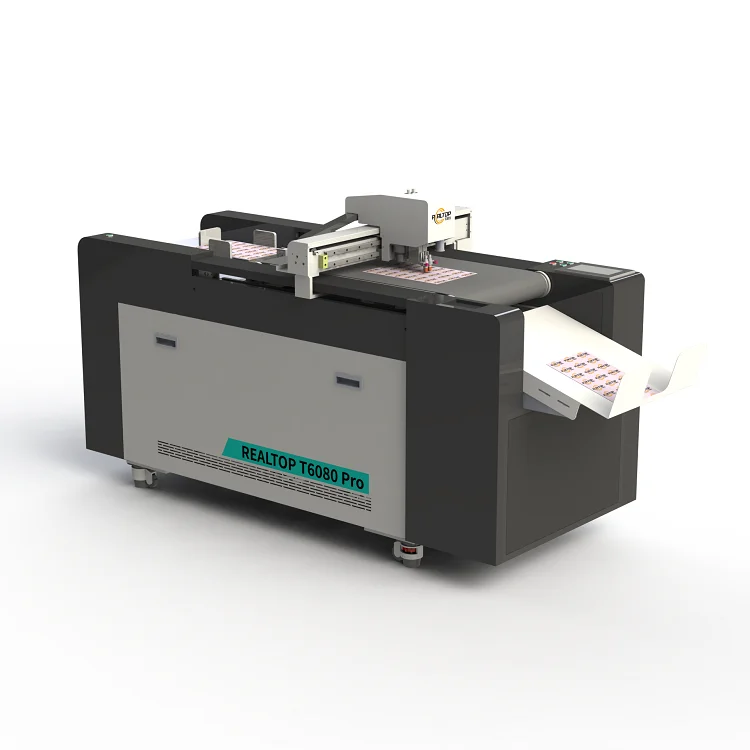
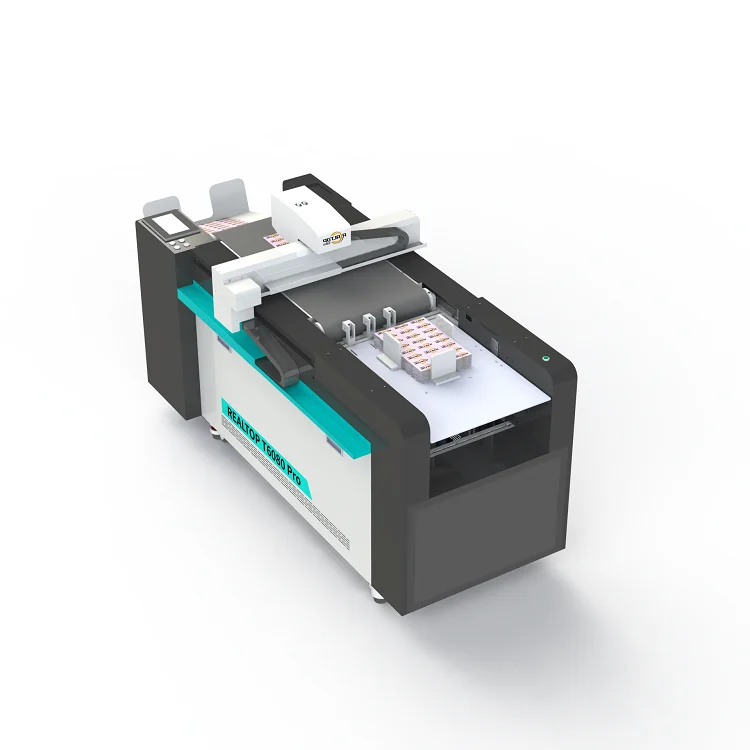
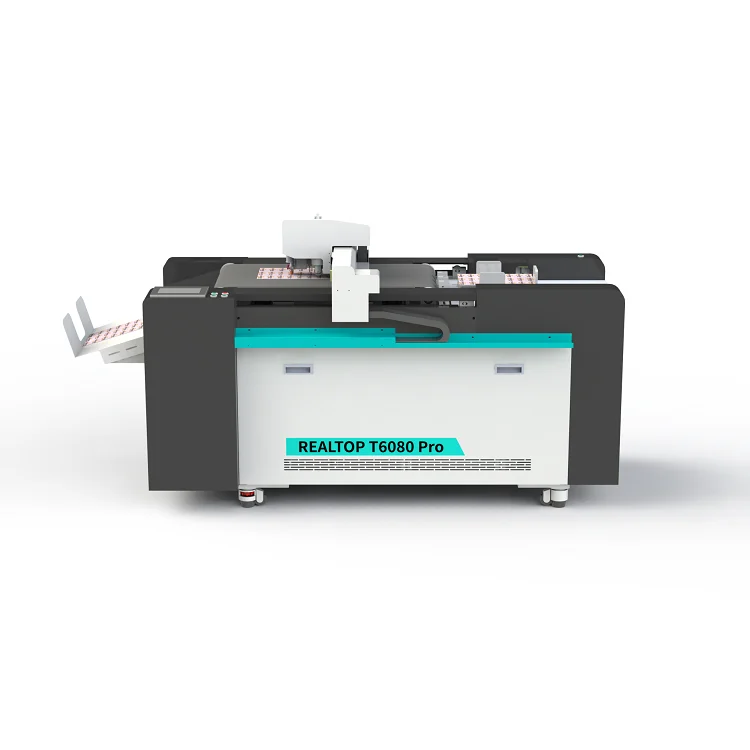
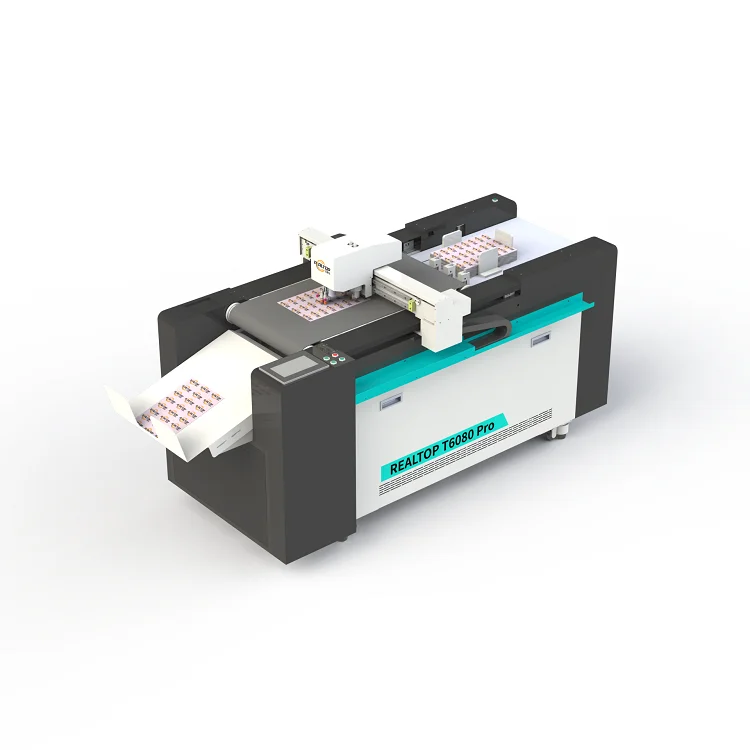
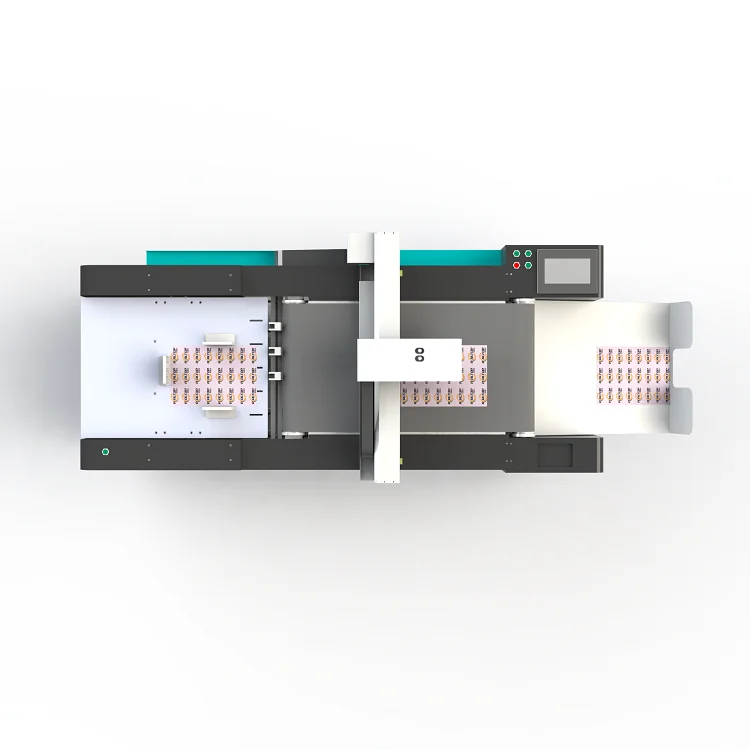
Tool Head & Table Configuration — Every RTT6080 unit is specified against the buyer’s actual artwork layout and material stack, not just working area, so small die-cut greeting card pieces stay flat during the kiss-cut pass.
Technical Specifications
| Parameter | Value |
|---|---|
| Model | RTT6080 / RTT6080 Pro |
| Product Type | CNC Flatbed Digital Cutting Plotter |
| Max Working Area | 600 mm × 800 mm |
| Cutting Thickness | ≤2 mm (RTT6080) / ≤5 mm (RTT6080 Pro) |
| Tool Group | Cutting tool, kiss cutting tool, creasing tool, CCD camera, high speed oscillating knife (Pro model) |
| Max Cutting Speed | 1500 mm/s (basis not stated in source — confirm material type and thickness) |
| Positioning Accuracy | 0.05 mm |
| File Format Support | DXF, PLT, PDF, AI |
| Transfer Method | Ethernet port |
| Rated Power | 3.2 kW |
| Voltage & Frequency | 220V / 380V, 50 Hz |
| Standards | CE declaration applicable |
Application Suitability
| Application | Material or Output |
|---|---|
| Folded greeting card production | Light card stock up to 2 mm, creasing and kiss cutting |
| Cardboard packaging sample making | Corrugated and composite boards up to 5 mm (Pro model) |
| Advertising and signage board cutting | Rigid board, foam board, PVC sheet |
| Vinyl contour cutting | Pre-printed vinyl with registration marks via CCD camera |
What "1500 mm/s" Actually Means for Your Card Stock
Travel speed on an empty axis is not the same as cutting speed through 300 gsm card with a creasing wheel engaged.
When I was sourcing flatbed plotters on the procurement side, I watched two different machines quote identical max speeds on paper, yet one produced clean crease lines on greeting card stock while the other left crushed fibers at every direction change. The difference was how the motion system managed deceleration into tight corners. Before committing to any CNC flatbed cutting plotter for sale, I now ask buyers to send their most complex artwork file so we can run it on the actual material and check edge quality at the speed that matters — the speed the job will actually run at. [NEED_CITE: motion dynamics in digital flatbed cutting systems]
Mapping Models to Material Thickness
The RTT6080 standard handles card stock and thin boards up to 2 mm, which covers the majority of greeting card, paper packaging sample and thin signage work. The RTT6080 Pro extends that range to 5 mm with the addition of a high speed oscillating knife, opening up heavier corrugated grades and composite packaging boards. This split matters because a plotter specified only on working area often fails when the buyer’s material turns out to be thicker than the standard head can penetrate cleanly.
CCD Contour Recognition in Production Conditions
Printed contour cutting relies on the CCD camera reading registration marks around the artwork. On pre-printed greeting cards and vinyl graphics, mark contrast, size and placement determine whether the camera can track reliably at full run speed. If the print shop uses low-contrast ink or places marks too close to the sheet edge, the system may hunt for marks and slow down or skip cuts entirely. I always request a few printed sheets from the buyer’s actual production run so we can verify tracking before the machine ships. [NEED_CITE: CCD registration mark standards for digital cutting tables]
Why the Creasing and Kiss-Cut Combination Matters
The tool group on this CNC flatbed cutting plotter for sale includes a dedicated creasing wheel alongside the cutting and kiss-cutting blades. For folded greeting card producers, that means a single setup can score the fold line and kiss-cut the outline in one pass, eliminating a separate creasing station on the shop floor. The creasing wheel compresses the card fibers rather than cutting through them, producing a clean hinge that folds without cracking. Positioning accuracy at 0.05 mm keeps the crease line registered to the printed artwork, which is what separates a retail-grade card from one that looks misaligned on the shelf. The 0.05 mm tolerance also ensures that nested sheet layouts yield maximum parts per board, reducing waste across short sample runs and medium-volume production batches alike.
What Happens When Vacuum Zoning Does Not Match the Artwork
A common complaint I heard from packaging sample makers was that small die-cut pieces lifted off the table mid-cut, producing jagged edges or throwing the registration out entirely. This happens when the vacuum table zones are too large for the part geometry — air leaks around the edges of a small piece and the hold-down force drops below the cutting resistance. For greeting card producers running nested layouts with many small offcuts, zone sizing and bleed slot layout directly affect whether the machine can hold every piece flat through the last cut in the nest. [NEED_CITE: vacuum table zoning requirements for small-part digital cutting]
Buying from a Manufacturer That Builds Both Knife and Laser
Realtop designs and produces both knife-based and laser cutting systems in-house, which means the cutting method is chosen to match the material rather than forcing every job onto one platform. For the RTT6080, that translates to a tool group configured specifically for card, board and vinyl — with the oscillating knife reserved for the Pro model where thicker corrugated stock demands it. Every unit ships with a factory test record on the buyer’s material, a software licence note confirming file format compatibility with DXF, PLT, PDF and AI workflows, and voltage documentation matched to the destination market. Sample cutting on the buyer’s own stock is available before any commitment, so edge quality, crease depth and CCD tracking are verified on the actual production file, not a generic test pattern.
Documentation & Verification
- Machine specification sheet confirming working area, cutting thickness and tool head configuration for the selected model
- Electrical schematic with voltage and frequency matched to 220V/380V destination supply
- Sample cutting report produced on buyer’s own card stock and artwork file
- Software licence and file format compatibility note for DXF, PLT, PDF and AI workflows
- Factory test record documenting positioning accuracy and cut quality before dispatch
- CE declaration documentation where required by destination market regulations
Installation, Commissioning & Support
- Dedicated circuit rated for 3.2 kW continuous draw with correct breaker sizing for 220V or 380V supply
- Table leveling on a flat workshop floor to maintain 0.05 mm positioning accuracy across the 600×800 mm bed
- Ethernet network point within cable reach of the machine for direct file transfer from the design station
- CCD camera calibration on buyer’s printed sheets during commissioning to verify contour tracking
- Tool head setup and creasing wheel pressure adjustment on buyer’s card stock thickness range
- Spare cutting blades, creasing wheels and vacuum seals included for initial production run
Sending the Right Information with Your Inquiry
To spec the RTT6080 correctly, share the material type and thickness range you plan to run, a sample artwork file showing your most complex layout, and the voltage and frequency standard at your facility. If you work with pre-printed sheets, send a few physical samples so we can test CCD mark recognition before quoting. Let us know your existing nesting software so we can verify file format compatibility on our end.
Frequently Asked Questions
Q: How do I choose between the RTT6080 and the RTT6080 Pro for my card stock?
A: The standard RTT6080 cuts up to 2 mm, covering most greeting card and light packaging sample work. The Pro extends to 5 mm with a high speed oscillating knife for heavier corrugated and composite boards. Send your thickest material and we will run a sample cut on both models so you can compare edge quality and cycle time before deciding.
Q: Where does this compact plotter sit within the full catalogue?
A: The RTT6080 is the compact-format entry in the flatbed digital cutting range, aimed at sample making, short-run greeting cards and signage prototypes. Larger-format models handle full-sheet production volumes. The catalogue page maps each model by working area and material so you can compare before narrowing to a cutting method.
Q: What printed mark quality does the CCD camera reliably track?
A: The CCD camera reads high-contrast registration marks on pre-printed sheets. Low-contrast ink, marks placed too close to the sheet edge, or heavy overprint varnish can reduce tracking reliability. We test with your actual printed sheets during sample cutting to confirm the camera locks on at production speed.
Q: How are voltage, plug and control language confirmed before shipment?
A: Voltage and frequency (220V/380V, 50 Hz) are confirmed on the electrical schematic before production. Plug type and control interface language are agreed during the quotation stage and documented on the machine specification sheet, so the machine arrives ready to connect without on-site rewiring.
Q: What file formats are supported and how is compatibility verified?
A: The system accepts DXF, PLT, PDF and AI files via Ethernet transfer. Before order confirmation, we run your actual artwork file through the software to verify import, nesting behavior and cut path generation, and include a compatibility note in the shipping documentation.










商品评价
There are no reviews yet.