



Fast Delivery
Quick, reliable shipping to any location.

Free & easy returns
Return this item by mail or in store within 90 days for a full refund.
Complete range under one roof — Realtop designs both knife and laser platforms in-house, so a 600×800mm flatbed job can be matched to oscillating knife, drag knife or creasing tool rather than forced through a single head.
Technical Specifications
| Parameter | Value |
|---|---|
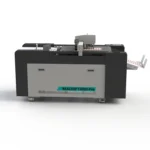
| Product Type | CNC Flatbed Cutter Plotter |
| Model | RTT6080 / RTT6080 Pro |
| Working Area | 600 mm × 800 mm |
| Tool Head Options | Cutting tool, kiss cutting tool, creasing tool, CCD camera, high speed oscillating knife (RTT6080 Pro) |
| Max Cutting Speed | 1500 mm/s (basis not stated in source — confirm material / thickness) |
| Cutting Thickness | ≤2 mm (RTT6080) / ≤5 mm (RTT6080 Pro) (basis not stated in source — confirm material type) |
| Positioning Accuracy | 0.05 mm |
| File Format Compatibility | DXF, PLT, PDF, AI |
| Transfer Method | Ethernet port |
| Rated Power | 3.2 kW (rated or peak not specified in source) |
| Certification | CE declaration where applicable |
Application Suitability
| Application | Material or Output |
|---|---|
| Signage and sticker production | Vinyl, self-adhesive board, thin rigid PVC sheets |
| Packaging sample making | Carton board, corrugated prototype stock, folding carton samples |
| Small-format graphic work | Kiss-cut sticker sheets, multi-layer label stock, window film |
Why a "600×800 Working Area" Doesn’t Tell You What the Machine Actually Cuts
A flatbed footprint alone never predicts edge quality on your specific vinyl or board stock.
I have seen signage shops order compact plotters purely on table dimensions, then discover the standard cutting tool cannot handle their 2 mm self-adhesive PVC without leaving micro-tears on tight radii. The CNC cutter plotter manufacturer you choose must confirm tool head selection against your actual material stack, not just the machine envelope. [NEED_CITE: material-specific tooling selection for flatbed digital cutters] When the wrong head is paired with a dense foam board, the blade drags, the edge fuzzes, and operators spend days tuning pressure that should have been dialed in at the factory.
Matching Tool Heads to Sign and Sticker Stock
A single CNC cutter plotter manufacturer offering interchangeable heads lets the same RTT6080 frame handle kiss-cut vinyl in the morning and crease carton board after lunch. The standard cutting tool scores clean edges on thin self-adhesive films, while the kiss cutting tool leaves the backing liner intact for sticker sheets. Switching heads takes minutes, and the software remembers each tool’s offset so registration stays within the machine’s 0.05 mm positioning accuracy across runs.
CCD Contour Recognition at Production Pace
Printed graphics rarely land in the exact same spot twice, and that is where the CCD camera option earns its keep. On short-run sticker jobs where registration marks shift slightly sheet to sheet, the camera reads each mark and nudges the cut path before the blade touches the material. This keeps contour cuts aligned without the operator manually re-zeroing the origin for every sheet. [NEED_CITE: CCD contour tracking tolerances on digital flatbed cutters] The result is a stack of finished decals where the cut line hugs the printed edge consistently, reducing scrap from misregistration.
What the Specs Actually Mean on the Shop Floor
The RTT6080 Pro raises the cutting thickness ceiling to 5 mm by swapping in a high speed oscillating knife — a stroke-based head that slices rather than drags, which matters when moving from 1 mm vinyl to denser foam or gasket stock. The 1500 mm/s travel figure looks competitive, but real throughput depends on how many direction changes the artwork demands; intricate sticker layouts with tight corners will run slower than straight-line cuts on banner material. Ethernet transfer avoids the USB-drive shuffle that still plagues older shops, and the DXF / PLT / PDF / AI import list covers the vector formats most signage studios already use. The 3.2 kW rated power envelope means a standard 16 A single-phase circuit is usually enough, but voltage and plug type must still be confirmed with the CNC cutter plotter manufacturer before crating.
The Hidden Cost of Skipping a Material Trial
Shipping a machine without a sample cut on the buyer’s own stock is a gamble both sides lose. A vinyl that cuts cleanly at the factory may tear on a different brand’s adhesive layer, or a carton board that creases fine at one humidity level may crack at another. [NEED_CITE: substrate variability in digital flatbed cutting outcomes] When this surfaces after delivery, the buyer faces weeks of parameter tuning while orders pile up, and remote troubleshooting rarely replaces a physical test on the exact roll or sheet.
Why Buyers Source This Range Here
The design team handles both knife and laser platforms under one roof, so if a signage shop later adds acrylic lettering to its workflow, the conversation stays with the same engineering group rather than bouncing to a separate vendor. Tool head and vacuum table configuration are locked to the buyer’s material list before production starts, not left to a default build sheet. CCD camera positioning is validated on the buyer’s printed layout during the factory test, not promised in a brochure. Software compatibility — down to the specific DXF or AI export version — is confirmed before the order is released. [NEED_CITE: factory pre-delivery testing protocols for CNC flatbed cutters] Finally, voltage, plug configuration and control language are written into the spec sheet so the machine arrives ready to power on, not waiting for a transformer.
Documentation & Verification
- Factory test record run on your vinyl or board stock before crating
- Machine specification sheet listing exact tool head and table configuration shipped
- Electrical schematic with voltage and plug type confirmed for your market
- Software licence and file format compatibility note matching your design workflow
- Spare parts list identifying consumable blades, tool holders and belts
Installation, Commissioning & Support
- 600×800 mm footprint fits through standard doorways; verify floor flatness within 2 mm over the table length
- 3.2 kW draw typically needs a dedicated 16 A circuit; confirm local voltage before wiring
- Machine ships assembled minus tool head and camera mast, which bolt on during commissioning
- First-run parameter tuning performed on your supplied material samples to set blade pressure and speed
- Operator training covers tool offset calibration, CCD mark teaching and nesting layout basics
- Consumable blade and creasing wheel inventory sized to cover the first production quarter
Before You Request a Quote
Send a short list of the materials you actually run — substrate type, thickness and whether the surface is printed — along with the vector formats your design team exports today. Note your workshop’s voltage and frequency, plus the control language your operators need. If you want a factory sample cut before committing, ship a roll or stack of your stock so the tool head can be dialed in on real material rather than a generic test sheet.
Frequently Asked Questions
Q: How do I pick between the standard cutting tool, kiss cutting tool and oscillating knife?
A: The standard cutting tool handles most thin vinyl and self-adhesive films. Kiss cutting tools score the face film while leaving the liner intact for sticker sheets. The oscillating knife on the Pro model slices thicker foam, gasket and corrugated stock up to 5 mm. Send a material sample so the correct head is confirmed before build.
Q: Will the CCD camera track my printed marks reliably on short-run sticker jobs?
A: The camera reads standard registration marks and shifts the cut path per sheet, keeping contour cuts aligned even when print position drifts slightly. During the factory test we run your actual printed layout to verify mark recognition speed and edge alignment before the machine ships.
Q: Which voltage and control language options are confirmed before shipment?
A: Voltage, frequency, plug type and control interface language are written into the specification sheet and electrical schematic before production starts. This ensures the RTT6080 or RTT6080 Pro arrives matching your local power supply and operator requirements without field modifications.
Q: How is cutting thickness verified against my specific material before I commit?
A: We run a sample cut on your own material — the exact vinyl, board or foam you plan to produce — and share a test report showing edge quality and achievable depth. This eliminates guesswork on whether the standard or Pro model suits your stock.
Q: Which file formats does the software import and will it fit my existing workflow?
A: The controller accepts DXF, PLT, PDF and AI files. Before order release we confirm your design software’s export version opens cleanly and that nesting settings match your sheet layout, so there is no file conversion bottleneck on the shop floor.










商品评价
There are no reviews yet.