
![CNC Vibrating Blade Cutter for Honeycomb Board – Manufacturer Let me verify: - Record ID 2085: digit sum = 2+0+8+5 = 15 - 15 mod 6 = 3 → Structure: [应用或物料] [品类词] – [站点修饰词] - Target site lyjcut.com → FULL CATALOGUE → Manufacturer / Factory Supply / Full Range - Pool length 3, 15 mod 3 = 0 → Manufacturer - Honeycomb Board CNC Vibrating Blade Cutter – Manufacturer = 53 chars ✓](https://lyjcut.com/wp-content/uploads/2026/03/H41623409a5ce4c46b9ca8ed8a9d59499K-150x150.webp)

Fast Delivery
Quick, reliable shipping to any location.

Free & easy returns
Return this item by mail or in store within 90 days for a full refund.
Configuration-Driven Cutting — tool head, vacuum zoning and software are matched to the buyer’s material and daily volume before the machine is built, not swapped in after delivery fails.
Technical Specifications
| Parameter | Value |
|---|---|
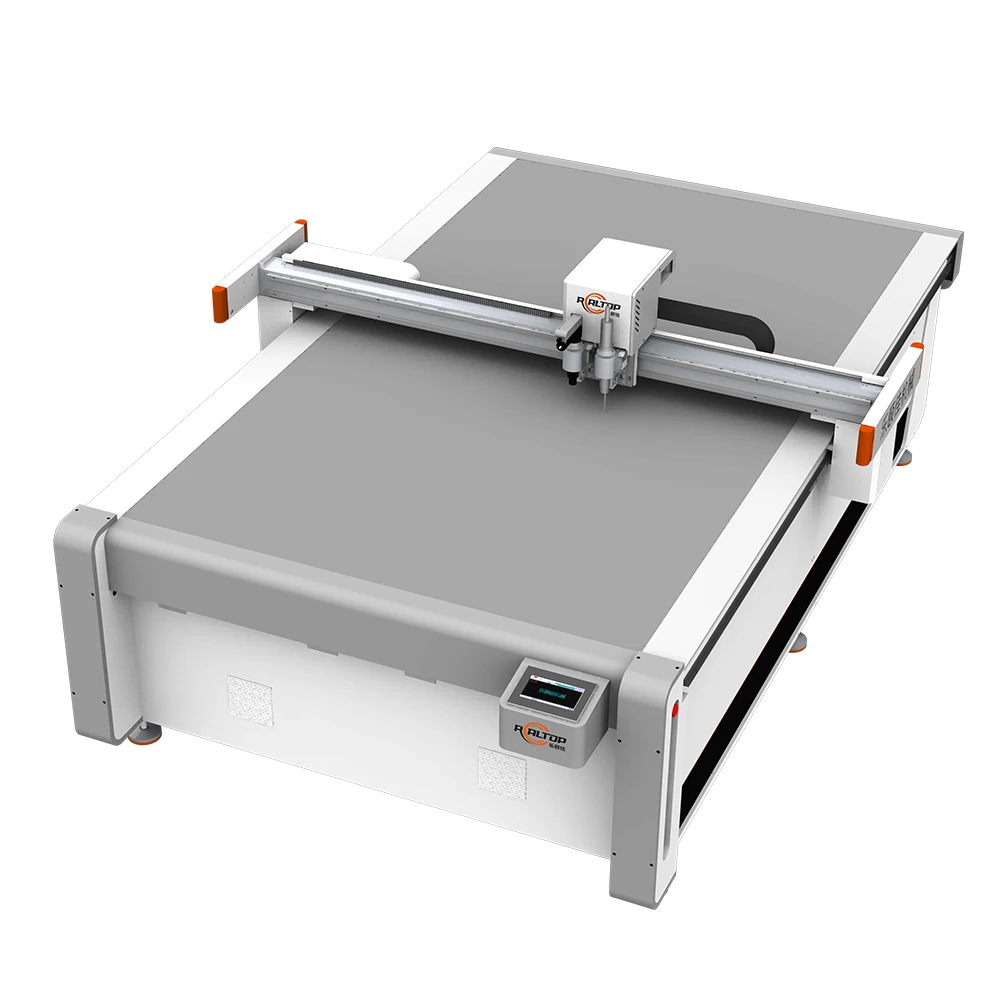
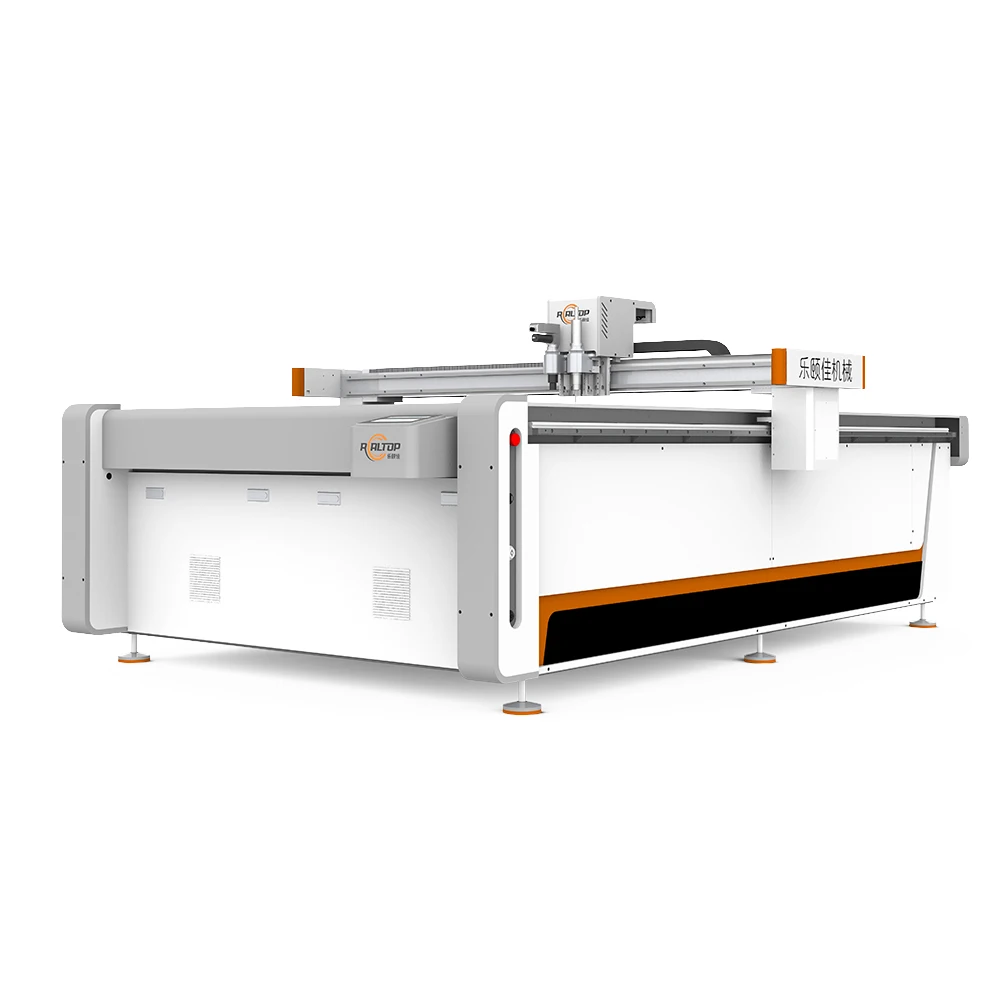
| Model | RT-D2516/RT-S2516 |
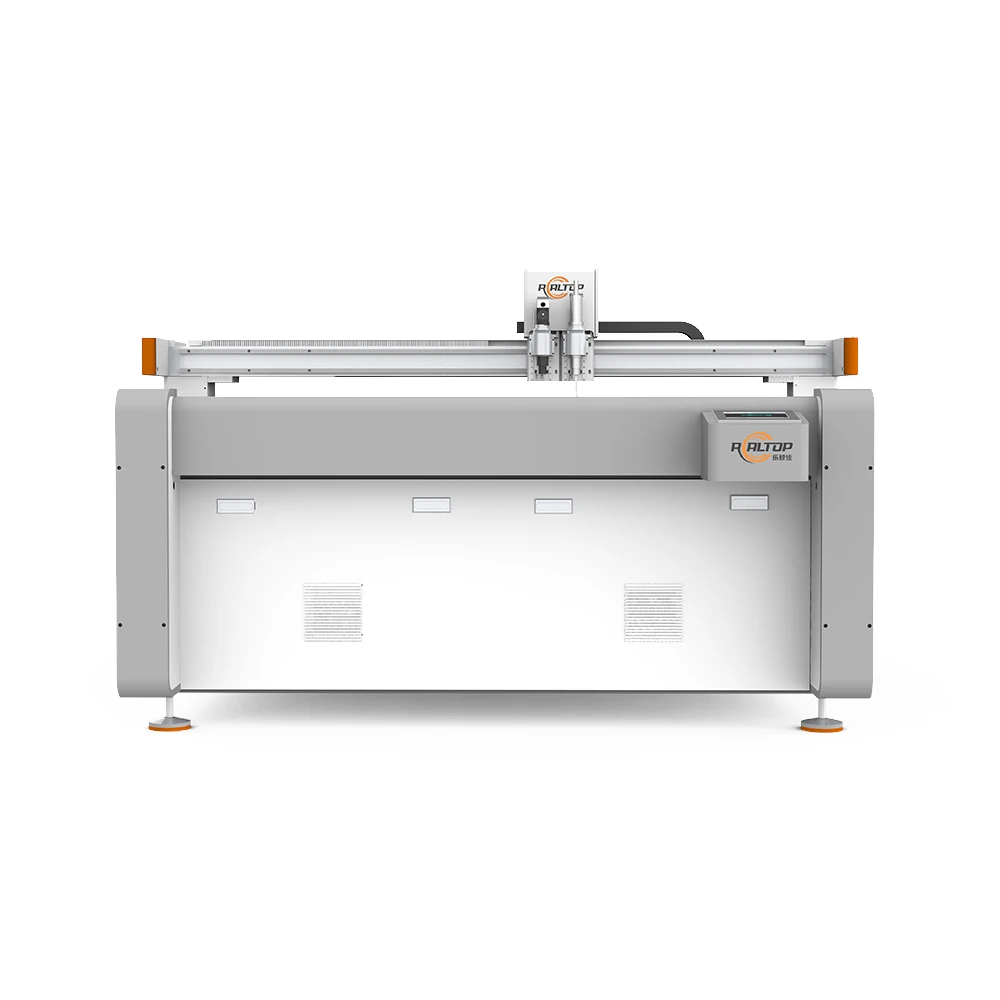
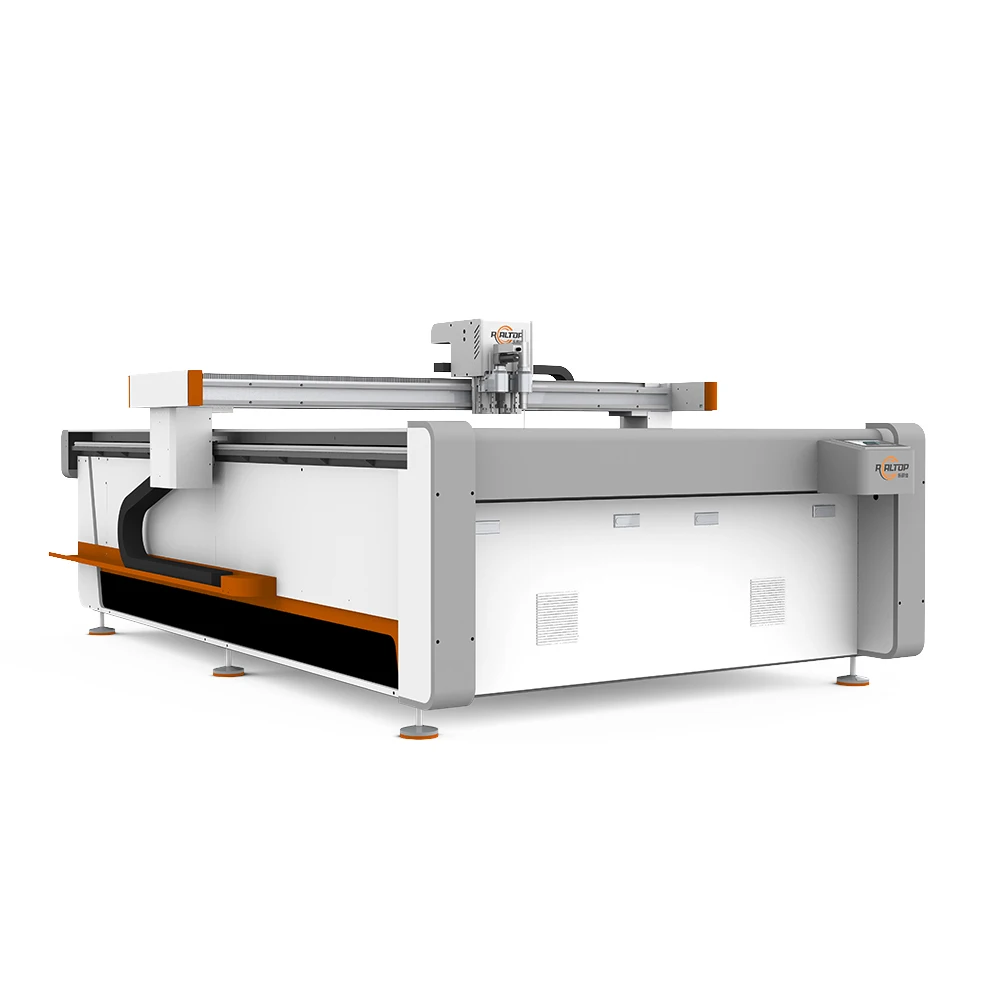
| Product Type | CNC Oscillating Knife Cutting Machine |
| Working Area | 1600 × 2500 mm |
| Machine Size | 3450 × 2300 × 1250 mm |
| Rated Power | 9 kW |
| Vacuum Pump | 7.5 kW |
| Cutting Speed | 200–800 mm/s (varies with material) |
| Translational Velocity | 800–2000 mm/s |
| Repeated Accuracy | ≤ 0.1 mm |
| Cutting Thickness | Up to 100 mm (basis to be confirmed by material type and density) |
| Transmission System | Digital servo motor, linear guide, synchronous belt, ball screw |
| Servo Motor | Delta (Panasonic optional) |
| Linear Rail | Taiwan Hiwin |
| Conveyor Belt | Germany imported |
| Vacuum Table | Magnesium-aluminum alloy, fluorocarbon PVDF powder spraying, anodic and hard oxidation |
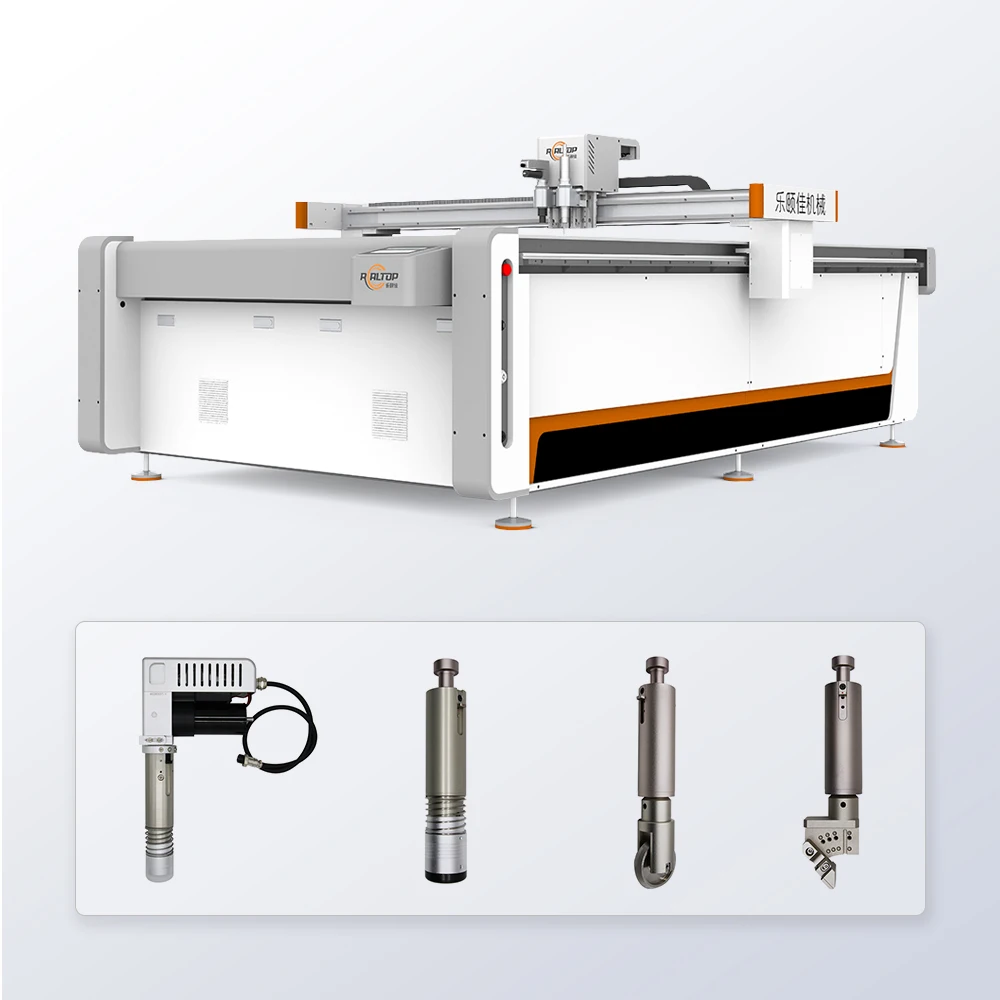
| Tool Head Options | Oscillating knife, pneumatic knife, high-power vibrating knife, circular knife, V-cutting knife, drag knife, creasing wheel, dotted line knife, punching, brush |
| Multifunctional Head | Swiss imported knife with vibration full cutting, vibration half cutting and cursor location |
| Visual Positioning | Small CCD camera mark point positioning, panoramic camera recognition, projection positioning |
| Control Panel | Touch screen with multiple language support |
| Software | Auto typesetting, supports PLT, DXF, AI formats |
| Instruction System | HP-GL compatible format |
| Voltage | 380 V ± 10 % |
| Safety Device | Infrared sensors, anti-collision, emergency stop |
| Fixed Model Options | Flat working table or auto feeding table |
| Certification | CE |
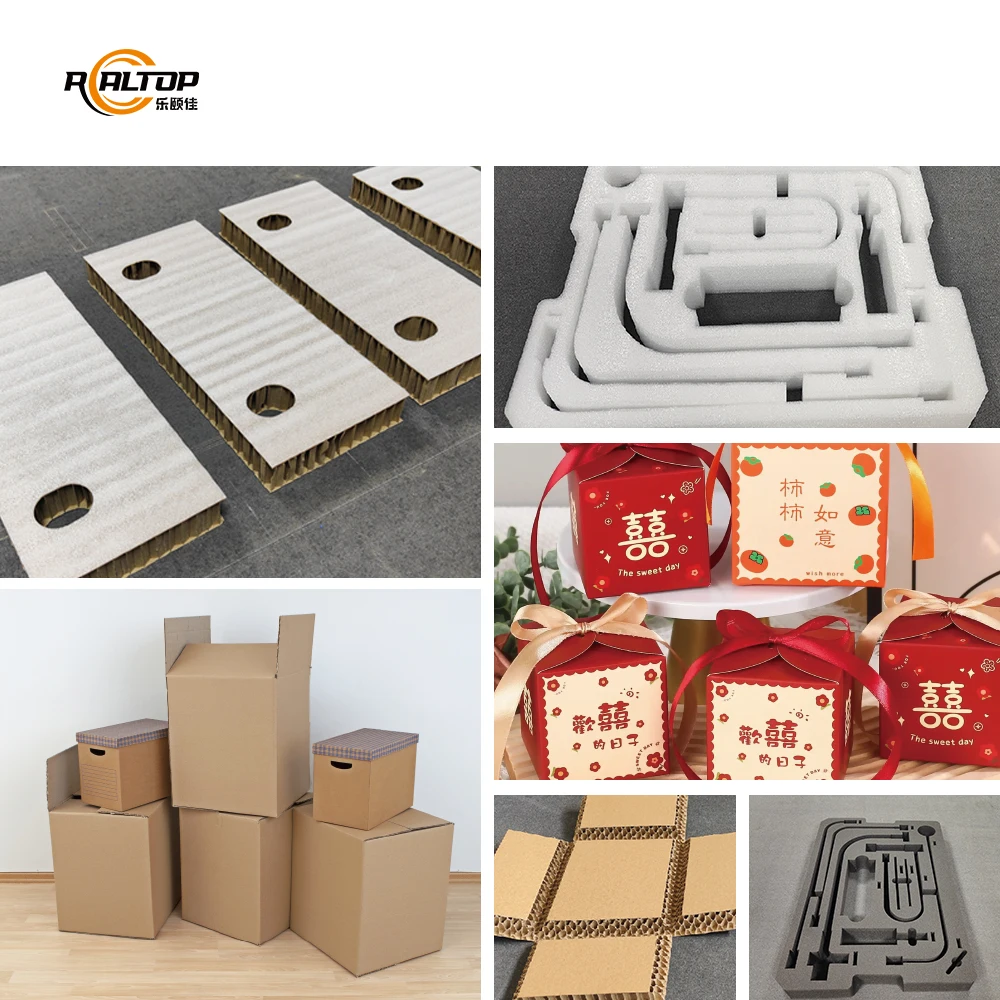
Application Suitability
| Application | Material or Output |
|---|---|
| Carton and packaging sample making | Corrugated cardboard, honeycomb cardboard, plastic box stock with creasing and slotting |
| Signage and display production | Foam board, PVC sheet, sticker film, composite panels |
| Garment and footwear manufacturing | Leather, fabric, non-woven textile, shoe material, luggage material |
| Automotive interior trimming | Gasket material, sponge composite leather, PU, EVA, XPE foam |
| Sealing and industrial gaskets | PTFE, ETFE, rubber, silicon, PE, PP sheets |
| Advertising and printing finishing | Vinyl, film, fiberglass, soft glass |
| Carpet and floor mat processing | Carpet, sponge, PU foam in large-format sheets |
| Composite material fabrication | Carbon fiber sheets, composite panels up to rated thickness |
What a Working-Area-Only Specification Costs You Down the Line
A 1600 × 2500 mm bed means nothing if the tool head cannot handle your material density or the vacuum zoning cannot hold small parts flat. I spent years on service calls where the machine footprint was correct but the cutting result was not. A packaging sample maker ordered a flatbed based solely on table size, then discovered the oscillating knife could not punch through double-wall corrugated at production speed. The vacuum pump lacked the zoning to hold nested carton blanks below a certain width, and small gusset pieces drifted mid-cut. Rework and rejected samples piled up before anyone checked whether the tool head and suction layout matched the actual job [NEED_CITE: vacuum hold-down requirements for small nested parts on flatbed cutters]. Choosing a CNC oscillating knife cutting machine manufacturer that specifies the full configuration against your material prevents these misalignments before the crate leaves the factory.
Matching the Tool Head to the Substrate
The RT-D2516/RT-S2516 platform supports a broad tool head lineup because no single blade geometry handles corrugated board, EVA foam and leather equally well. An oscillating knife slices through fibrous and layered stock with a high-frequency stroke, while a V-cutting knife opens precise slots in corrugated flutes for folding. A creasing wheel compresses fold lines without penetrating the liner, which matters for packaging samples that must score cleanly on the first pass. Selecting the right tool from this range means the machine cuts your actual material instead of adapting your design to the only blade available.
Vacuum Zoning and Small-Part Stability
The magnesium-aluminum alloy table on this CNC oscillating knife cutting machine is finished with fluorocarbon PVDF powder spraying and hard oxidation for a flat, wear-resistant surface. More importantly, zoned vacuum channels let the operator isolate suction to the area under the workpiece. When cutting narrow gasket strips or small carton fittings, full-table suction wastes pump capacity and still allows edge lift. Targeted zoning concentrates the 7.5 kW pump output where the material actually sits, keeping pieces stable at translational speeds up to 2000 mm/s without resorting to mechanical clamps that slow the workflow [NEED_CITE: vacuum table zoning practices for flatbed digital cutters].
Reading the Specification Sheet Beyond the Headline Numbers
Cutting speed is rated at 200–800 mm/s depending on material, which is an honest reflection of how substrate density changes the practical feed rate. A soft PU foam may allow the upper end of that range, while multi-layer corrugated or carbon fiber composite demands a slower pass to maintain the ≤ 0.1 mm repeated accuracy. The Delta servo motors, paired with Taiwan Hiwin linear rails and ball screw drives, provide the positional control needed at both extremes. Voltage is listed at 380 V ± 10 %, but buyers in regions with different mains standards should confirm transformer or drive compatibility before the electrical schematic is finalized [NEED_CITE: industrial voltage and frequency standards by export destination]. The Swiss imported multifunctional head adds vibration full cutting, half cutting and cursor location in one unit, reducing tool changes during a mixed-material job.
The Hidden Cost of a Misconfigured Cutter
When a buyer selects the wrong tool head for the material, the symptoms appear within the first week. Ragged edges on foam mean the oscillation frequency is too low for the cell structure. Crushed corrugated flutes indicate a drag knife was used where a V-cutting knife should have been. Small vinyl letters lifting off the table mid-cut point to vacuum zoning that was never adjusted for the nest layout. These are not machine defects — they are specification gaps. I have watched production floors lose multiple shifts to problems that a pre-shipment sample cut on the buyer’s own material would have revealed. Fixing the configuration after delivery costs more in downtime than confirming it at the quotation stage ever would.
Why Source This Platform From a Configuration-Led Builder
In-house design covering both knife and laser cutting means the buyer is not pushed toward one technology because the factory only builds one. The tool head and table configuration is specified per material and production volume, so a carton sample maker gets creasing wheels and V-cutting knives while a gasket producer gets oscillating and pneumatic options on the same frame. CCD camera positioning — small mark-point, panoramic and projection — is offered for printed contour work where registration accuracy matters at production speed. Software compatibility is confirmed before the order, with PLT, DXF and AI file format support verified against the buyer’s existing nesting workflow. Voltage, control language and plug type are locked in during the specification review, not discovered as a surprise when the machine arrives on the shop floor [NEED_CITE: CE machinery directive documentation requirements for exported industrial equipment]. Sample cutting on the buyer’s own material is available before commitment, providing a physical benchmark that a data sheet alone cannot deliver.
Documentation & Verification
- Machine specification sheet listing every selected tool head and table zone configuration
- Electrical schematic with confirmed voltage and frequency for the destination market
- Sample cutting report produced on buyer-supplied corrugated, foam or leather before shipment
- Software licence documentation with PLT, DXF and AI file format compatibility notes
- Factory test record showing repeated accuracy and cutting speed on the specified material
- CE declaration and operation manual in the agreed control language
Installation, Commissioning & Support
- Foundation must be level within tolerance to maintain the 3450 × 2300 mm footprint and rail alignment
- Dedicated 380 V ± 10 % circuit with rated capacity above the combined 9 kW machine and 7.5 kW pump draw
- Machine ships with fixed table or auto-feeding conveyor assembled; site reassembly limited to gantry and covers
- First-run calibration covers vacuum zone mapping, tool offset setting and CCD camera registration
- Operator training addresses tool head changeover, nesting software workflow and safety device testing
- Spare blade, pad and pinch roller kits ship with the machine to avoid unplanned downtime in the first weeks
- Scheduled maintenance covers linear rail lubrication, belt tension and vacuum pump filter intervals
What to Include in Your Inquiry
Provide the material type, thickness and sheet dimensions you plan to cut most often, along with your typical daily volume. Confirm the voltage and frequency at your facility and the preferred control panel language. If your workflow depends on a specific nesting software or file format, share a sample file so compatibility can be verified before the quotation is issued. For printed contour jobs, indicate the mark style and registration tolerance your artwork requires so the correct CCD positioning option is selected.
Frequently Asked Questions
Q: How do I choose between an oscillating knife and a creasing wheel for corrugated carton work?
A: An oscillating knife performs through-cuts and slot removal in corrugated board, while a creasing wheel compresses fold lines without cutting the liner. Most packaging sample jobs require both tools on the same head carriage so the machine can cut the outline and score the fold in a single pass. The tool selection is confirmed against your flute profile and board thickness during the sample cutting stage.
Q: Can the CCD camera track printed registration marks at full production speed?
A: The platform offers small CCD mark-point positioning, panoramic camera recognition and projection positioning. Each option handles different mark sizes and contrast levels. The correct choice depends on your print quality and the tolerance your nesting layout demands. We verify camera performance on your actual printed sheets during the pre-order sample run to confirm tracking accuracy before the machine is built.
Q: Will the vacuum table hold small nested parts without edge lift?
A: The magnesium-aluminum alloy table is divided into selectable vacuum zones. The operator activates only the zones under the current nest layout, concentrating the 7.5 kW pump output on the material area. This approach prevents small gasket pieces or narrow carton fittings from lifting at higher translational speeds. Zone configuration is set during commissioning based on your typical nest patterns.
Q: Is the software compatible with my existing nesting workflow and file formats?
A: The included software supports PLT, DXF and AI file formats with auto typesetting. If you currently use a third-party nesting system, compatibility is checked during the specification review by processing one of your production files. Any required post-processor adjustments are confirmed before the order, so the machine integrates into your workflow rather than forcing a new one.
Q: What voltage and language options are available before shipment?
A: The standard configuration is 380 V ± 10 % with a multi-language touch screen control panel. Voltage, plug type and control language are confirmed during the specification review to match your facility and operator requirements. The electrical schematic is reviewed and signed off before production begins, ensuring the machine arrives ready for connection without on-site transformer or rewiring work.
Configuration-Driven Cutting — tool head, vacuum zoning and software are matched to the buyer’s material and daily volume before the machine is built, not swapped in after delivery fails.
Technical Specifications
| Parameter | Value |
|---|---|
| Model | RT-D2516/RT-S2516 |
| Product Type | CNC Oscillating Knife Cutting Machine |
| Working Area | 1600 × 2500 mm |
| Machine Size | 3450 × 2300 × 1250 mm |
| Rated Power | 9 kW |
| Vacuum Pump | 7.5 kW |
| Cutting Speed | 200–800 mm/s (varies with material) |
| Translational Velocity | 800–2000 mm/s |
| Repeated Accuracy | ≤ 0.1 mm |
| Cutting Thickness | Up to 100 mm (basis to be confirmed by material type and density) |
| Transmission System | Digital servo motor, linear guide, synchronous belt, ball screw |
| Servo Motor | Delta (Panasonic optional) |
| Linear Rail | Taiwan Hiwin |
| Conveyor Belt | Germany imported |
| Vacuum Table | Magnesium-aluminum alloy, fluorocarbon PVDF powder spraying, anodic and hard oxidation |
| Tool Head Options | Oscillating knife, pneumatic knife, high-power vibrating knife, circular knife, V-cutting knife, drag knife, creasing wheel, dotted line knife, punching, brush |
| Multifunctional Head | Swiss imported knife with vibration full cutting, vibration half cutting and cursor location |
| Visual Positioning | Small CCD camera mark point positioning, panoramic camera recognition, projection positioning |
| Control Panel | Touch screen with multiple language support |
| Software | Auto typesetting, supports PLT, DXF, AI formats |
| Instruction System | HP-GL compatible format |
| Voltage | 380 V ± 10 % |
| Safety Device | Infrared sensors, anti-collision, emergency stop |
| Fixed Model Options | Flat working table or auto feeding table |
| Certification | CE |
Application Suitability
| Application | Material or Output |
|---|---|
| Carton and packaging sample making | Corrugated cardboard, honeycomb cardboard, plastic box stock with creasing and slotting |
| Signage and display production | Foam board, PVC sheet, sticker film, composite panels |
| Garment and footwear manufacturing | Leather, fabric, non-woven textile, shoe material, luggage material |
| Automotive interior trimming | Gasket material, sponge composite leather, PU, EVA, XPE foam |
| Sealing and industrial gaskets | PTFE, ETFE, rubber, silicon, PE, PP sheets |
| Advertising and printing finishing | Vinyl, film, fiberglass, soft glass |
| Carpet and floor mat processing | Carpet, sponge, PU foam in large-format sheets |
| Composite material fabrication | Carbon fiber sheets, composite panels up to rated thickness |
What a Working-Area-Only Specification Costs You Down the Line
A 1600 × 2500 mm bed means nothing if the tool head cannot handle your material density or the vacuum zoning cannot hold small parts flat. I spent years on service calls where the machine footprint was correct but the cutting result was not. A packaging sample maker ordered a flatbed based solely on table size, then discovered the oscillating knife could not punch through double-wall corrugated at production speed. The vacuum pump lacked the zoning to hold nested carton blanks below a certain width, and small gusset pieces drifted mid-cut. Rework and rejected samples piled up before anyone checked whether the tool head and suction layout matched the actual job [NEED_CITE: vacuum hold-down requirements for small nested parts on flatbed cutters]. Choosing a CNC oscillating knife cutting machine manufacturer that specifies the full configuration against your material prevents these misalignments before the crate leaves the factory.
Matching the Tool Head to the Substrate
The RT-D2516/RT-S2516 platform supports a broad tool head lineup because no single blade geometry handles corrugated board, EVA foam and leather equally well. An oscillating knife slices through fibrous and layered stock with a high-frequency stroke, while a V-cutting knife opens precise slots in corrugated flutes for folding. A creasing wheel compresses fold lines without penetrating the liner, which matters for packaging samples that must score cleanly on the first pass. Selecting the right tool from this range means the machine cuts your actual material instead of adapting your design to the only blade available.
Vacuum Zoning and Small-Part Stability
The magnesium-aluminum alloy table on this CNC oscillating knife cutting machine is finished with fluorocarbon PVDF powder spraying and hard oxidation for a flat, wear-resistant surface. More importantly, zoned vacuum channels let the operator isolate suction to the area under the workpiece. When cutting narrow gasket strips or small carton fittings, full-table suction wastes pump capacity and still allows edge lift. Targeted zoning concentrates the 7.5 kW pump output where the material actually sits, keeping pieces stable at translational speeds up to 2000 mm/s without resorting to mechanical clamps that slow the workflow [NEED_CITE: vacuum table zoning practices for flatbed digital cutters].
Reading the Specification Sheet Beyond the Headline Numbers
Cutting speed is rated at 200–800 mm/s depending on material, which is an honest reflection of how substrate density changes the practical feed rate. A soft PU foam may allow the upper end of that range, while multi-layer corrugated or carbon fiber composite demands a slower pass to maintain the ≤ 0.1 mm repeated accuracy. The Delta servo motors, paired with Taiwan Hiwin linear rails and ball screw drives, provide the positional control needed at both extremes. Voltage is listed at 380 V ± 10 %, but buyers in regions with different mains standards should confirm transformer or drive compatibility before the electrical schematic is finalized [NEED_CITE: industrial voltage and frequency standards by export destination]. The Swiss imported multifunctional head adds vibration full cutting, half cutting and cursor location in one unit, reducing tool changes during a mixed-material job.
The Hidden Cost of a Misconfigured Cutter
When a buyer selects the wrong tool head for the material, the symptoms appear within the first week. Ragged edges on foam mean the oscillation frequency is too low for the cell structure. Crushed corrugated flutes indicate a drag knife was used where a V-cutting knife should have been. Small vinyl letters lifting off the table mid-cut point to vacuum zoning that was never adjusted for the nest layout. These are not machine defects — they are specification gaps. I have watched production floors lose multiple shifts to problems that a pre-shipment sample cut on the buyer’s own material would have revealed. Fixing the configuration after delivery costs more in downtime than confirming it at the quotation stage ever would.
Why Source This Platform From a Configuration-Led Builder
In-house design covering both knife and laser cutting means the buyer is not pushed toward one technology because the factory only builds one. The tool head and table configuration is specified per material and production volume, so a carton sample maker gets creasing wheels and V-cutting knives while a gasket producer gets oscillating and pneumatic options on the same frame. CCD camera positioning — small mark-point, panoramic and projection — is offered for printed contour work where registration accuracy matters at production speed. Software compatibility is confirmed before the order, with PLT, DXF and AI file format support verified against the buyer’s existing nesting workflow. Voltage, control language and plug type are locked in during the specification review, not discovered as a surprise when the machine arrives on the shop floor [NEED_CITE: CE machinery directive documentation requirements for exported industrial equipment]. Sample cutting on the buyer’s own material is available before commitment, providing a physical benchmark that a data sheet alone cannot deliver.
Documentation & Verification
- Machine specification sheet listing every selected tool head and table zone configuration
- Electrical schematic with confirmed voltage and frequency for the destination market
- Sample cutting report produced on buyer-supplied corrugated, foam or leather before shipment
- Software licence documentation with PLT, DXF and AI file format compatibility notes
- Factory test record showing repeated accuracy and cutting speed on the specified material
- CE declaration and operation manual in the agreed control language
Installation, Commissioning & Support
- Foundation must be level within tolerance to maintain the 3450 × 2300 mm footprint and rail alignment
- Dedicated 380 V ± 10 % circuit with rated capacity above the combined 9 kW machine and 7.5 kW pump draw
- Machine ships with fixed table or auto-feeding conveyor assembled; site reassembly limited to gantry and covers
- First-run calibration covers vacuum zone mapping, tool offset setting and CCD camera registration
- Operator training addresses tool head changeover, nesting software workflow and safety device testing
- Spare blade, pad and pinch roller kits ship with the machine to avoid unplanned downtime in the first weeks
- Scheduled maintenance covers linear rail lubrication, belt tension and vacuum pump filter intervals
What to Include in Your Inquiry
Provide the material type, thickness and sheet dimensions you plan to cut most often, along with your typical daily volume. Confirm the voltage and frequency at your facility and the preferred control panel language. If your workflow depends on a specific nesting software or file format, share a sample file so compatibility can be verified before the quotation is issued. For printed contour jobs, indicate the mark style and registration tolerance your artwork requires so the correct CCD positioning option is selected.
Frequently Asked Questions
Q: How do I choose between an oscillating knife and a creasing wheel for corrugated carton work?
A: An oscillating knife performs through-cuts and slot removal in corrugated board, while a creasing wheel compresses fold lines without cutting the liner. Most packaging sample jobs require both tools on the same head carriage so the machine can cut the outline and score the fold in a single pass. The tool selection is confirmed against your flute profile and board thickness during the sample cutting stage.
Q: Can the CCD camera track printed registration marks at full production speed?
A: The platform offers small CCD mark-point positioning, panoramic camera recognition and projection positioning. Each option handles different mark sizes and contrast levels. The correct choice depends on your print quality and the tolerance your nesting layout demands. We verify camera performance on your actual printed sheets during the pre-order sample run to confirm tracking accuracy before the machine is built.
Q: Will the vacuum table hold small nested parts without edge lift?
A: The magnesium-aluminum alloy table is divided into selectable vacuum zones. The operator activates only the zones under the current nest layout, concentrating the 7.5 kW pump output on the material area. This approach prevents small gasket pieces or narrow carton fittings from lifting at higher translational speeds. Zone configuration is set during commissioning based on your typical nest patterns.
Q: Is the software compatible with my existing nesting workflow and file formats?
A: The included software supports PLT, DXF and AI file formats with auto typesetting. If you currently use a third-party nesting system, compatibility is checked during the specification review by processing one of your production files. Any required post-processor adjustments are confirmed before the order, so the machine integrates into your workflow rather than forcing a new one.
Q: What voltage and language options are available before shipment?
A: The standard configuration is 380 V ± 10 % with a multi-language touch screen control panel. Voltage, plug type and control language are confirmed during the specification review to match your facility and operator requirements. The electrical schematic is reviewed and signed off before production begins, ensuring the machine arrives ready for connection without on-site transformer or rewiring work.










商品评价
There are no reviews yet.