

Fast Delivery
Quick, reliable shipping to any location.

Free & easy returns
Return this item by mail or in store within 90 days for a full refund.
Tool head configurability across both knife and laser platforms — Realtop matches cutting method to your material rather than forcing one technology across every fabric, composite, or board.
Technical Specifications
| Parameter | Value |
|---|---|
| Model | RT-D2516 / RT-S2516 |
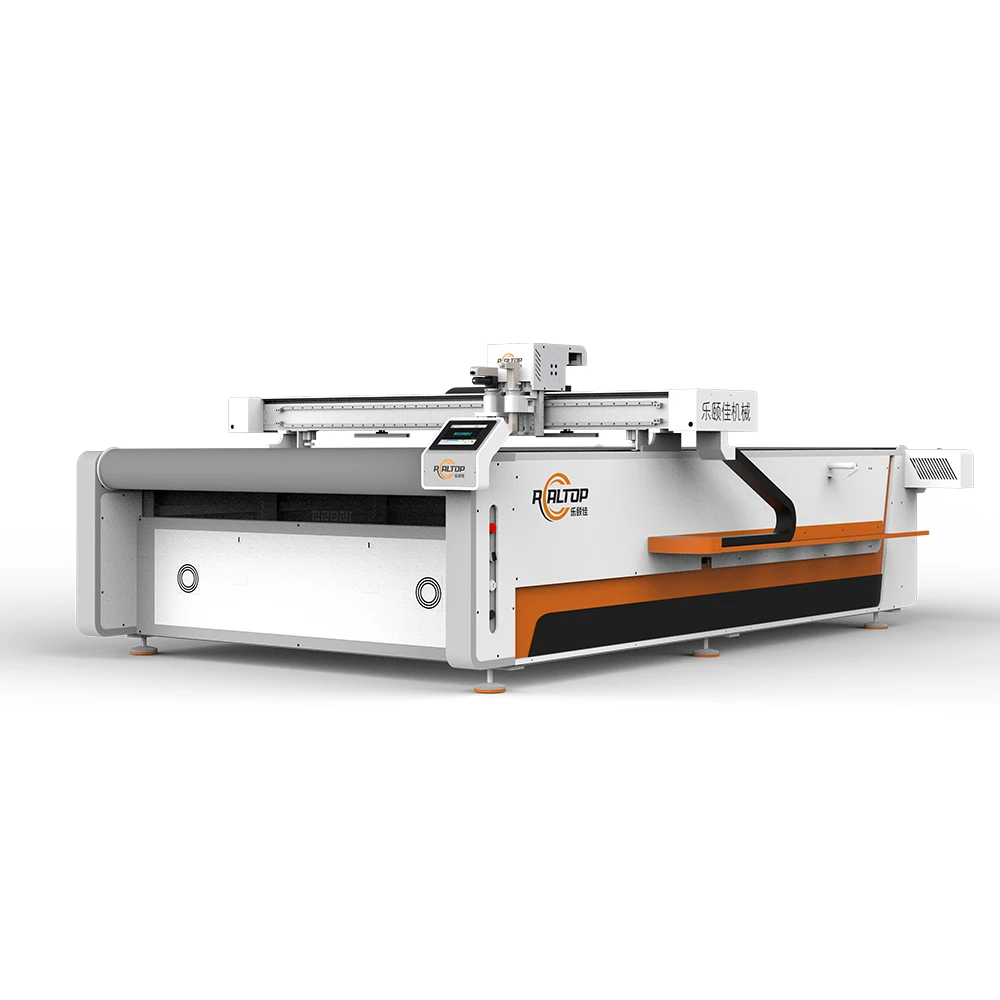
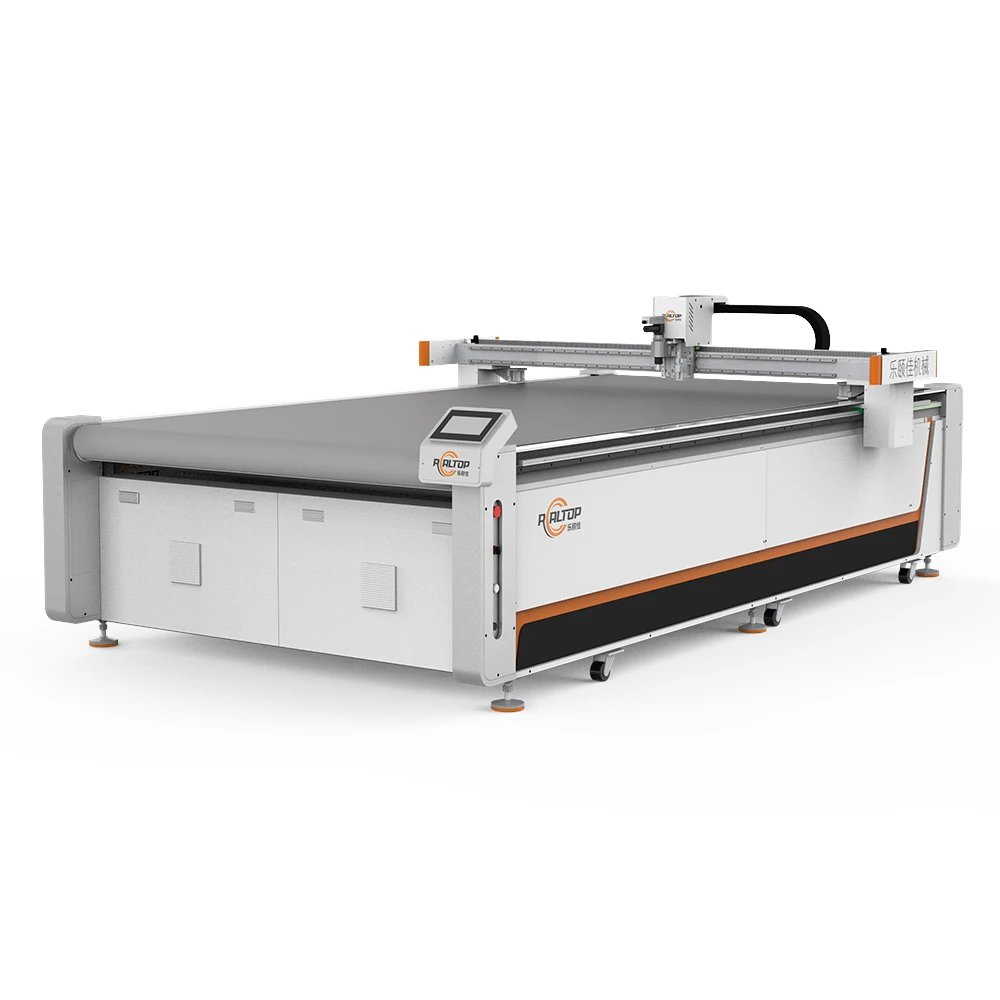
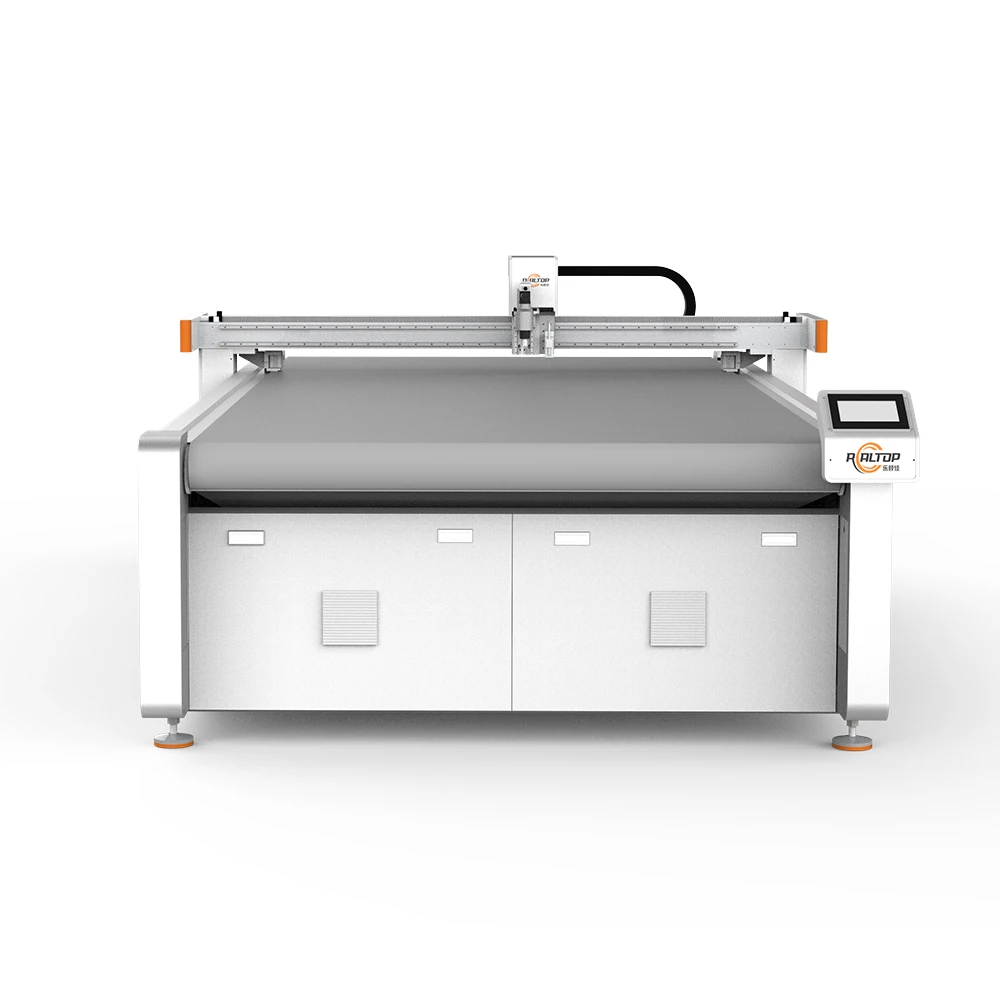
| Product Type | CNC Oscillating Knife Cutting Machine |
| Working Area | 1600×2500 mm |
| Overall Dimensions | 3450×2300×1250 mm |
| Rated Power | 9 kW |
| Voltage | 380V ±10% |
| Control System | CNC with touch screen, multi-language supported |
| Transmission System | Digital servo motor, linear guide, synchronous belt, imported ball screw |
| Servo Motor Options | Delta or Panasonic, IP67 waterproof protection |
| Translational Velocity | 800–2000 mm/s |
| Cutting Speed | 200–800 mm/s (according to different cutting materials) |
| Cutting Thickness | ≤100 mm (varies with material) |
| Repeated Accuracy | ≤0.1 mm |
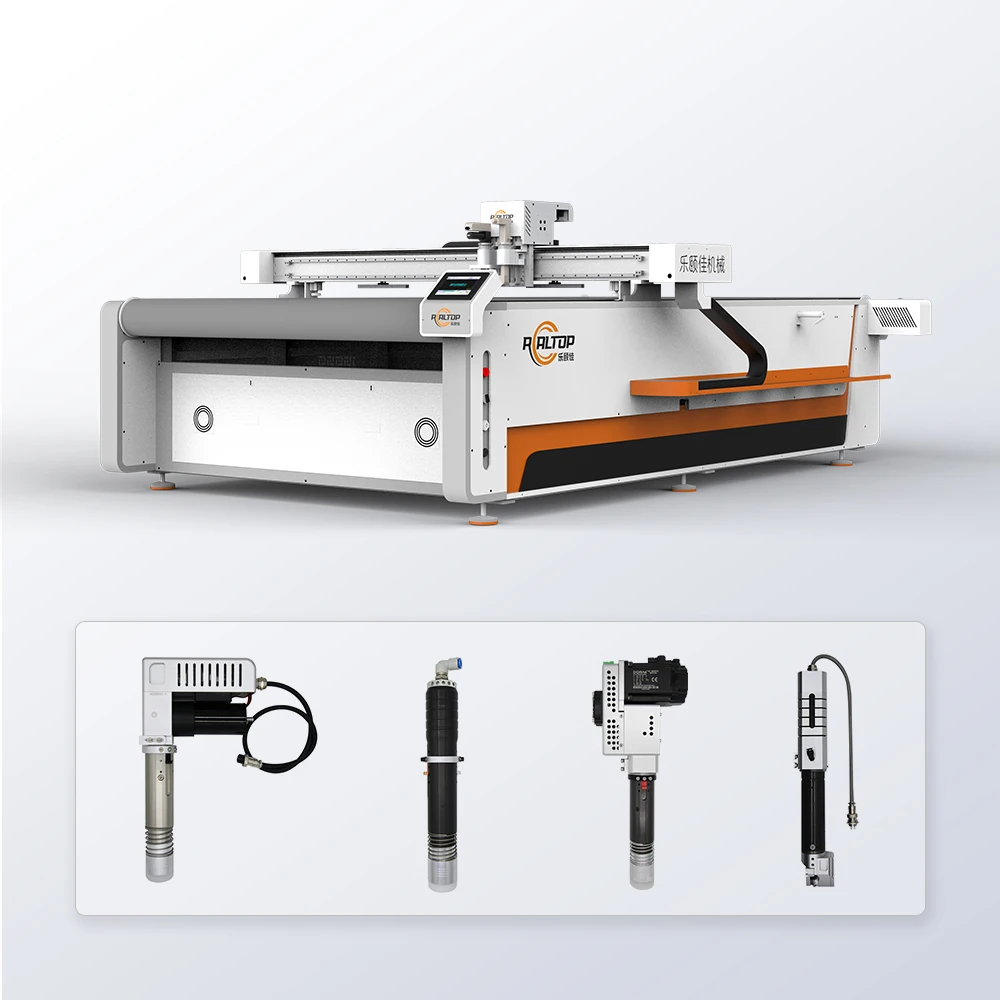
| Tool Head Types | Oscillating knife, pneumatic knife, high-power vibrating knife, circular knife, V-cutting knife, drag knife, creasing wheel, dotted line knife, punching, brush |
| Visual Positioning Options | Small CCD camera mark point, panoramic camera recognition, projection positioning |
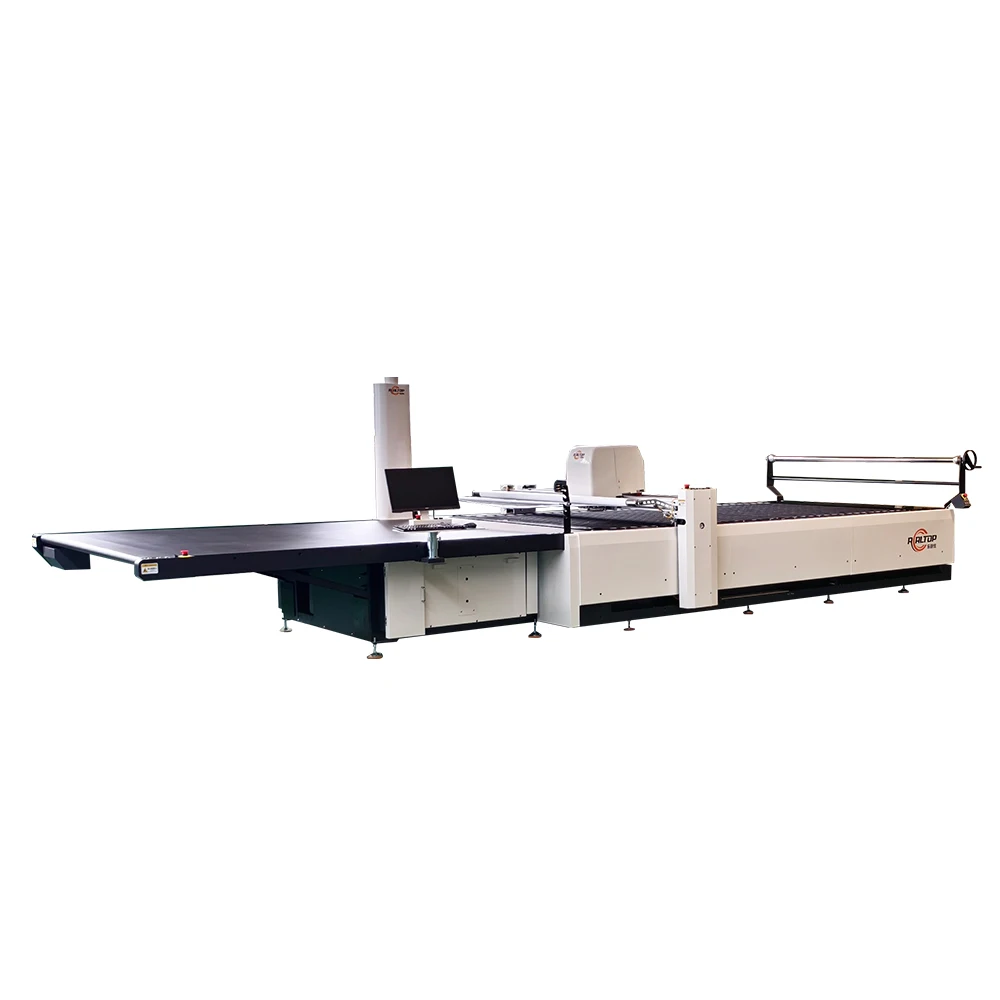
| Worktable Options | Flat working table or auto feeding (conveyor) table |
| Vacuum Table Surface | Magnesium-aluminum alloy, fluorocarbon PVDF powder sprayed, anodic and hard oxidation treated |
| Vacuum Pump | 7.5 kW, integrated aviation aluminum shell with built-in silencer |
| Safety Devices | Infrared induction blocking, beam anti-collision sensors, emergency stop |
| Instruction Format | HP-GL compatible |
| Software File Support | PLT, DXF, AI and other formats; auto nesting |
| Frame Construction | Thick-walled seamless steel welded, high-temperature tempered, CNC machined |
| Assembly State | Fully assembled (split vacuum box supported for transport) |
| Certification | CE |
Application Suitability
| Application | Material or Output |
|---|---|
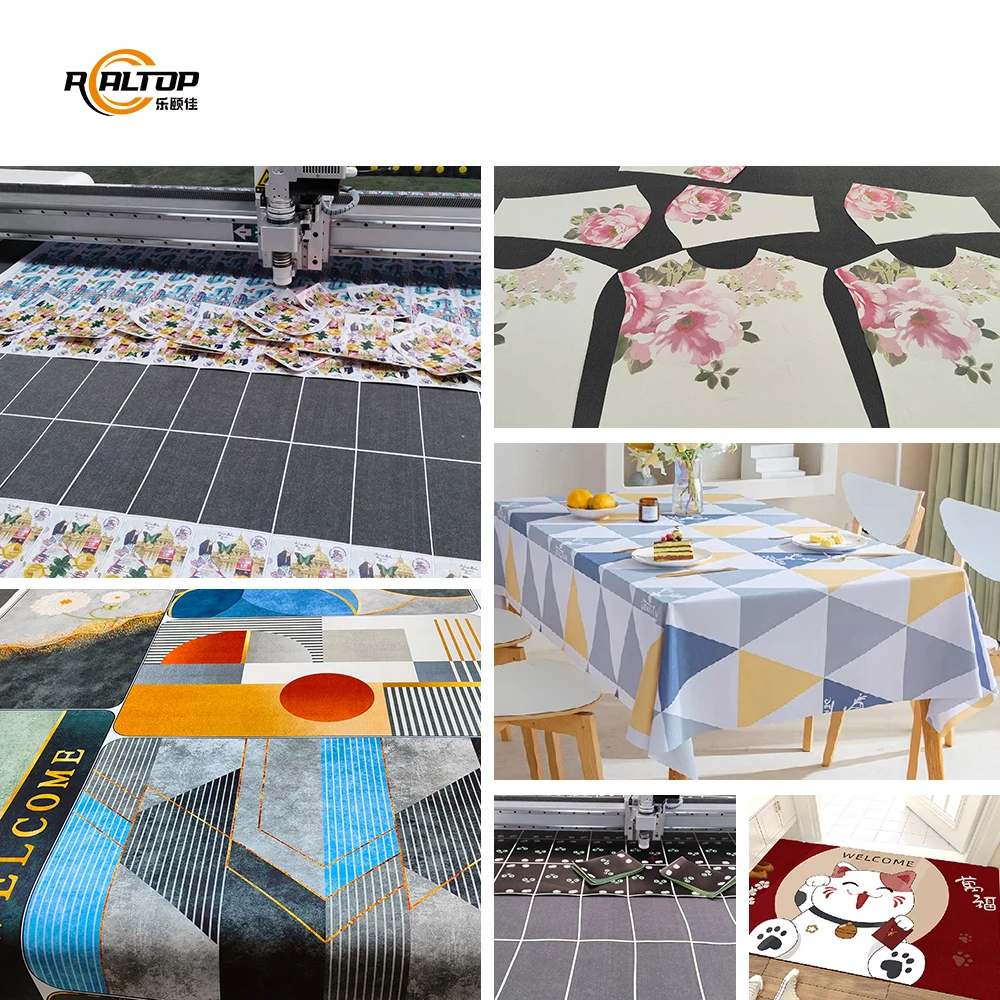
| Garment and footwear cutting | Woven fabric, textile, leather, shoe material, garment cloth |
| Automotive interior trimming | Non-woven fabric, PU, EVA, XPE, composite materials |
| Luggage and bag production | Leather, PVC, PP, PE, corrugated cardboard |
| Sealing gasket fabrication | PTFE, ETFE, fiberglass, rubber, gasket material |
| Carpet and floor mat cutting | Carpet, sponge, foam board, composite layers |
| Packaging sample making | Corrugated cardboard, sticker, film with creasing and drag knife |
| Soft home furnishings | Fabric, textile, sponge, PU, multi-layer composites |
Why "Working Area Only" Specs Cost Buyers Money
Many importers specify a flatbed cutter by bed size alone, then discover the machine cannot hold the material flat or the tool head tears rather than slices the fabric. A CNC oscillating knife cutting machine manufacturer must confirm the vacuum zoning, knife stroke, and blade type against the buyer’s actual stock — not just the sheet dimensions.
When a buyer cuts small gasket pieces on a large bed with insufficient vacuum hold-down, parts shift mid-cut and scrap rates climb. The same happens when a drag knife is specified for thick non-woven instead of an oscillating head. These are configuration failures, not machine failures, and they surface only after the machine is on the floor [NEED_CITE: common flatbed cutting configuration mismatches].
Knife Versus Laser: Matching the Method to the Non-Woven Fibre
Non-woven fabrics vary enormously in density, fibre length, and bonding method. Melt-bonded polypropylene responds differently to blade contact than needle-punched polyester or spun-lace cellulose. An oscillating knife slices through these without melting the edge, which matters when the cut part goes into filtration, medical, or automotive layers where a sealed or fused edge would alter air permeability or bonding behaviour.
Laser cutting seals synthetic edges, useful for garment textiles that must not fray, but it discolours natural fibres and can release fumes from PVC-backed materials. Buyers surveying the full catalogue should start with the end-use of the cut part before choosing knife or laser. A CNC oscillating knife cutting machine manufacturer that builds both platforms lets you switch direction without switching supplier.
Full Tool Head Menu and What Each One Actually Does
The RT-D2516 and RT-S2516 support ten tool head options, and each serves a distinct cutting action. The oscillating knife handles thick sponge, foam board, and layered composites with a rapid up-and-down stroke. The circular knife suits long straight cuts on roll-fed fabric. The V-cutting knife and creasing wheel produce fold lines on corrugated board without breaking the outer liner. Drag knife and dotted line knife handle thin films and perforation patterns.
Choosing the wrong head means ragged edges on foam or incomplete cuts on multi-layer stacks. The pneumatic knife and high-power vibrating knife extend the thickness range for dense rubber gasket material. This range exists because buyers in different industries face different edge-quality requirements, and a single head cannot serve all of them [NEED_CITE: tool head selection criteria for CNC flatbed cutting].
Reading the Specs That Matter on the Shop Floor
The 7.5 kW vacuum pump with aviation aluminum shell and built-in silencer addresses two realities: small non-woven parts lift off the table during high-speed traversal, and loud pumps distract operators in open workshops. The magnesium-aluminum alloy table with fluorocarbon PVDF coating resists the adhesive residue that sticker and film cutting leaves behind.
Repeated accuracy of ≤0.1 mm matters when nesting software packs dozens of pattern pieces into one sheet — cumulative drift wastes material. The Delta or Panasonic IP67 servo motors survive the fibre dust that non-woven cutting generates, which kills unprotected drives within months. Cutting speed ranges from 200 to 800 mm/s depending on material density and thickness, not a single published maximum.
The Hidden Cost of Skipping the Sample Cut
Buyers who approve a purchase based on brochure specs alone often face surprises when their material arrives on the machine. A non-woven roll that cuts cleanly at sample thickness may contain a scrim reinforcement layer that dulls standard blades in hours. Fibre content changes between batches alter the cutting resistance, and the speed the buyer planned their line around becomes unreachable.
This is not a defect — it is a mismatch caught too late. The cost includes not only scrap material but also line downtime while new parameters are found and tooling is swapped. A pre-order sample cut on the buyer’s actual stock eliminates this sequence before the machine ships [NEED_CITE: pre-shipment material testing best practices].
What the Full Catalogue Approach Means for Buyers
Realtop designs and builds both knife and laser platforms in-house, so a buyer evaluating non-woven cutting can see the full range before committing to one method. Tool head and table configuration are specified per material type and daily volume, not sold as a default package. CCD camera positioning, panoramic recognition, or projection systems are offered as options based on whether the buyer’s work involves printed contours.
Software compatibility — file formats, nesting workflow, language — is confirmed before the order is placed, not discovered during installation. Voltage, plug type, and control panel language are set to the destination market. Every machine ships with a sample cutting report on the buyer’s own material, so there is documented proof of capability before the crate leaves the factory.
Documentation & Verification
- Machine specification sheet listing every tool head and table option confirmed for your order
- Sample cutting report produced on your non-woven fabric or gasket stock before dispatch
- Electrical schematic with voltage, frequency, and plug type matched to your facility
- Software licence and file format compatibility note covering your existing nesting workflow
- Factory test record documenting cutting speed and accuracy on your material
- Operation manual and spare parts list with part numbers for blades, belts, and vacuum components
Installation, Commissioning & Support
- Fully assembled frame ships with split vacuum box option to fit standard container loading for the 3450 mm overall length
- 9 kW rated power requires a dedicated 380V circuit with ±10% tolerance and proper earth bonding
- 7.5 kW vacuum pump connects to the integrated table manifold; confirm extraction routing for fibre dust
- First-run calibration covers vacuum zoning, tool head stroke, and cutting speed parameters on your material
- Touch screen control panel configured in your operator language before crating
- Spare blade and belt kit included; replacement schedule provided per your daily cutting volume
What We Need to Give You an Accurate Quotation
Send us the exact material type, fibre content if known, thickness range, and maximum sheet or roll width you will run. Tell us your daily volume target so we can recommend flat table or auto-feeding conveyor configuration. Share your local voltage and frequency, preferred control language, and the CAD file formats your design team currently uses, so we confirm software compatibility before the order.
Frequently Asked Questions
Q: How do I decide between oscillating knife and laser cutting for my non-woven fabric?
A: Knife cutting leaves an untreated edge with no melting, which suits filtration and automotive layers where air permeability matters. Laser seals synthetic edges but discolours natural fibres and generates fumes from PVC-based materials. The right choice depends on your end-use requirement and fibre content, which is why sample testing on your stock should come first.
Q: Should I choose a flat table or auto-feeding conveyor for my cutting volume?
A: Flat tables suit single-sheet work where operators load and unload manually. Auto-feeding conveyor tables handle roll-fed fabric in continuous production, advancing material automatically between cuts. The decision rests on your sheet size, daily volume, and whether your upstream process feeds from rolls or pre-cut sheets.
Q: Which tool head do I need for thick sponge versus thin film?
A: Thick sponge and layered composites require the oscillating knife or high-power vibrating knife to slice through without crushing. Thin films, stickers, and vinyl respond better to a drag knife or circular knife that follows contours cleanly. Specifying the wrong head produces ragged edges or incomplete cuts.
Q: Will the machine read my existing CAD files and nesting layouts?
A: The control system accepts PLT, DXF, AI, and HP-GL compatible formats with built-in auto nesting. Before your order is confirmed, we verify that your specific file format and nesting workflow transfer correctly, so there are no surprises when your operators load their first job.
Tool head configurability across both knife and laser platforms — Realtop matches cutting method to your material rather than forcing one technology across every fabric, composite, or board.
Technical Specifications
| Parameter | Value |
|---|---|
| Model | RT-D2516 / RT-S2516 |
| Product Type | CNC Oscillating Knife Cutting Machine |
| Working Area | 1600×2500 mm |
| Overall Dimensions | 3450×2300×1250 mm |
| Rated Power | 9 kW |
| Voltage | 380V ±10% |
| Control System | CNC with touch screen, multi-language supported |
| Transmission System | Digital servo motor, linear guide, synchronous belt, imported ball screw |
| Servo Motor Options | Delta or Panasonic, IP67 waterproof protection |
| Translational Velocity | 800–2000 mm/s |
| Cutting Speed | 200–800 mm/s (according to different cutting materials) |
| Cutting Thickness | ≤100 mm (varies with material) |
| Repeated Accuracy | ≤0.1 mm |
| Tool Head Types | Oscillating knife, pneumatic knife, high-power vibrating knife, circular knife, V-cutting knife, drag knife, creasing wheel, dotted line knife, punching, brush |
| Visual Positioning Options | Small CCD camera mark point, panoramic camera recognition, projection positioning |
| Worktable Options | Flat working table or auto feeding (conveyor) table |
| Vacuum Table Surface | Magnesium-aluminum alloy, fluorocarbon PVDF powder sprayed, anodic and hard oxidation treated |
| Vacuum Pump | 7.5 kW, integrated aviation aluminum shell with built-in silencer |
| Safety Devices | Infrared induction blocking, beam anti-collision sensors, emergency stop |
| Instruction Format | HP-GL compatible |
| Software File Support | PLT, DXF, AI and other formats; auto nesting |
| Frame Construction | Thick-walled seamless steel welded, high-temperature tempered, CNC machined |
| Assembly State | Fully assembled (split vacuum box supported for transport) |
| Certification | CE |
Application Suitability
| Application | Material or Output |
|---|---|
| Garment and footwear cutting | Woven fabric, textile, leather, shoe material, garment cloth |
| Automotive interior trimming | Non-woven fabric, PU, EVA, XPE, composite materials |
| Luggage and bag production | Leather, PVC, PP, PE, corrugated cardboard |
| Sealing gasket fabrication | PTFE, ETFE, fiberglass, rubber, gasket material |
| Carpet and floor mat cutting | Carpet, sponge, foam board, composite layers |
| Packaging sample making | Corrugated cardboard, sticker, film with creasing and drag knife |
| Soft home furnishings | Fabric, textile, sponge, PU, multi-layer composites |
Why "Working Area Only" Specs Cost Buyers Money
Many importers specify a flatbed cutter by bed size alone, then discover the machine cannot hold the material flat or the tool head tears rather than slices the fabric. A CNC oscillating knife cutting machine manufacturer must confirm the vacuum zoning, knife stroke, and blade type against the buyer’s actual stock — not just the sheet dimensions.
When a buyer cuts small gasket pieces on a large bed with insufficient vacuum hold-down, parts shift mid-cut and scrap rates climb. The same happens when a drag knife is specified for thick non-woven instead of an oscillating head. These are configuration failures, not machine failures, and they surface only after the machine is on the floor [NEED_CITE: common flatbed cutting configuration mismatches].
Knife Versus Laser: Matching the Method to the Non-Woven Fibre
Non-woven fabrics vary enormously in density, fibre length, and bonding method. Melt-bonded polypropylene responds differently to blade contact than needle-punched polyester or spun-lace cellulose. An oscillating knife slices through these without melting the edge, which matters when the cut part goes into filtration, medical, or automotive layers where a sealed or fused edge would alter air permeability or bonding behaviour.
Laser cutting seals synthetic edges, useful for garment textiles that must not fray, but it discolours natural fibres and can release fumes from PVC-backed materials. Buyers surveying the full catalogue should start with the end-use of the cut part before choosing knife or laser. A CNC oscillating knife cutting machine manufacturer that builds both platforms lets you switch direction without switching supplier.
Full Tool Head Menu and What Each One Actually Does
The RT-D2516 and RT-S2516 support ten tool head options, and each serves a distinct cutting action. The oscillating knife handles thick sponge, foam board, and layered composites with a rapid up-and-down stroke. The circular knife suits long straight cuts on roll-fed fabric. The V-cutting knife and creasing wheel produce fold lines on corrugated board without breaking the outer liner. Drag knife and dotted line knife handle thin films and perforation patterns.
Choosing the wrong head means ragged edges on foam or incomplete cuts on multi-layer stacks. The pneumatic knife and high-power vibrating knife extend the thickness range for dense rubber gasket material. This range exists because buyers in different industries face different edge-quality requirements, and a single head cannot serve all of them [NEED_CITE: tool head selection criteria for CNC flatbed cutting].
Reading the Specs That Matter on the Shop Floor
The 7.5 kW vacuum pump with aviation aluminum shell and built-in silencer addresses two realities: small non-woven parts lift off the table during high-speed traversal, and loud pumps distract operators in open workshops. The magnesium-aluminum alloy table with fluorocarbon PVDF coating resists the adhesive residue that sticker and film cutting leaves behind.
Repeated accuracy of ≤0.1 mm matters when nesting software packs dozens of pattern pieces into one sheet — cumulative drift wastes material. The Delta or Panasonic IP67 servo motors survive the fibre dust that non-woven cutting generates, which kills unprotected drives within months. Cutting speed ranges from 200 to 800 mm/s depending on material density and thickness, not a single published maximum.
The Hidden Cost of Skipping the Sample Cut
Buyers who approve a purchase based on brochure specs alone often face surprises when their material arrives on the machine. A non-woven roll that cuts cleanly at sample thickness may contain a scrim reinforcement layer that dulls standard blades in hours. Fibre content changes between batches alter the cutting resistance, and the speed the buyer planned their line around becomes unreachable.
This is not a defect — it is a mismatch caught too late. The cost includes not only scrap material but also line downtime while new parameters are found and tooling is swapped. A pre-order sample cut on the buyer’s actual stock eliminates this sequence before the machine ships [NEED_CITE: pre-shipment material testing best practices].
What the Full Catalogue Approach Means for Buyers
Realtop designs and builds both knife and laser platforms in-house, so a buyer evaluating non-woven cutting can see the full range before committing to one method. Tool head and table configuration are specified per material type and daily volume, not sold as a default package. CCD camera positioning, panoramic recognition, or projection systems are offered as options based on whether the buyer’s work involves printed contours.
Software compatibility — file formats, nesting workflow, language — is confirmed before the order is placed, not discovered during installation. Voltage, plug type, and control panel language are set to the destination market. Every machine ships with a sample cutting report on the buyer’s own material, so there is documented proof of capability before the crate leaves the factory.
Documentation & Verification
- Machine specification sheet listing every tool head and table option confirmed for your order
- Sample cutting report produced on your non-woven fabric or gasket stock before dispatch
- Electrical schematic with voltage, frequency, and plug type matched to your facility
- Software licence and file format compatibility note covering your existing nesting workflow
- Factory test record documenting cutting speed and accuracy on your material
- Operation manual and spare parts list with part numbers for blades, belts, and vacuum components
Installation, Commissioning & Support
- Fully assembled frame ships with split vacuum box option to fit standard container loading for the 3450 mm overall length
- 9 kW rated power requires a dedicated 380V circuit with ±10% tolerance and proper earth bonding
- 7.5 kW vacuum pump connects to the integrated table manifold; confirm extraction routing for fibre dust
- First-run calibration covers vacuum zoning, tool head stroke, and cutting speed parameters on your material
- Touch screen control panel configured in your operator language before crating
- Spare blade and belt kit included; replacement schedule provided per your daily cutting volume
What We Need to Give You an Accurate Quotation
Send us the exact material type, fibre content if known, thickness range, and maximum sheet or roll width you will run. Tell us your daily volume target so we can recommend flat table or auto-feeding conveyor configuration. Share your local voltage and frequency, preferred control language, and the CAD file formats your design team currently uses, so we confirm software compatibility before the order.
Frequently Asked Questions
Q: How do I decide between oscillating knife and laser cutting for my non-woven fabric?
A: Knife cutting leaves an untreated edge with no melting, which suits filtration and automotive layers where air permeability matters. Laser seals synthetic edges but discolours natural fibres and generates fumes from PVC-based materials. The right choice depends on your end-use requirement and fibre content, which is why sample testing on your stock should come first.
Q: Should I choose a flat table or auto-feeding conveyor for my cutting volume?
A: Flat tables suit single-sheet work where operators load and unload manually. Auto-feeding conveyor tables handle roll-fed fabric in continuous production, advancing material automatically between cuts. The decision rests on your sheet size, daily volume, and whether your upstream process feeds from rolls or pre-cut sheets.
Q: Which tool head do I need for thick sponge versus thin film?
A: Thick sponge and layered composites require the oscillating knife or high-power vibrating knife to slice through without crushing. Thin films, stickers, and vinyl respond better to a drag knife or circular knife that follows contours cleanly. Specifying the wrong head produces ragged edges or incomplete cuts.
Q: Will the machine read my existing CAD files and nesting layouts?
A: The control system accepts PLT, DXF, AI, and HP-GL compatible formats with built-in auto nesting. Before your order is confirmed, we verify that your specific file format and nesting workflow transfer correctly, so there are no surprises when your operators load their first job.










商品评价
There are no reviews yet.