


Fast Delivery
Quick, reliable shipping to any location.

Free & easy returns
Return this item by mail or in store within 90 days for a full refund.
Method-to-material matching — Realtop’s complete catalogue covers oscillating knife, drag knife, and multi-tool CNC cutting alongside laser systems, letting buyers select the exact cutting method for their fabric rather than forcing a single technology across incompatible materials.
Technical Specifications
| Parameter | Value |
|---|---|
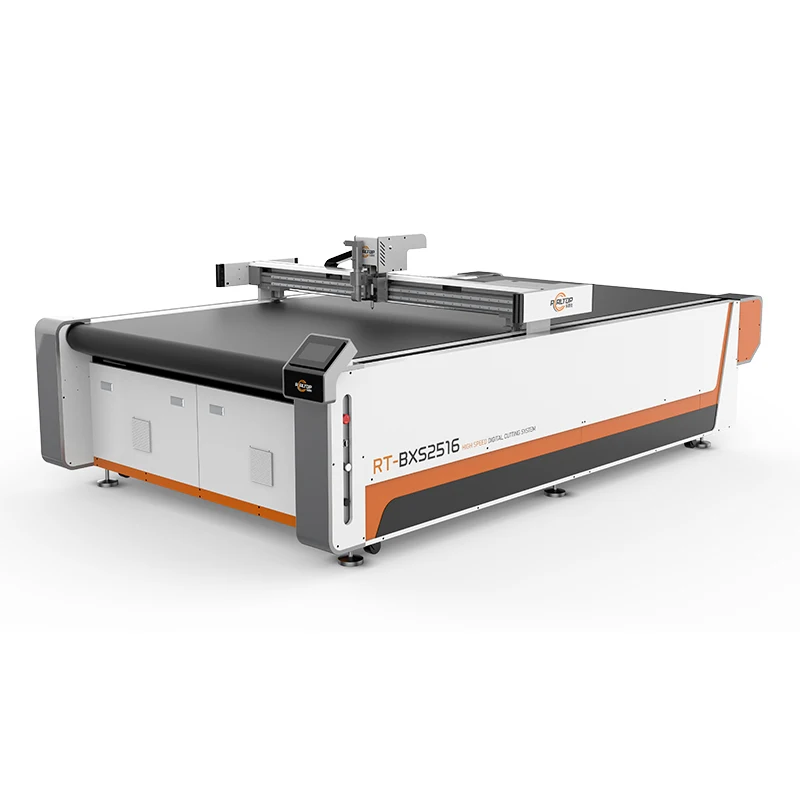
| Model | RT-D2516 / RT-S2516 |
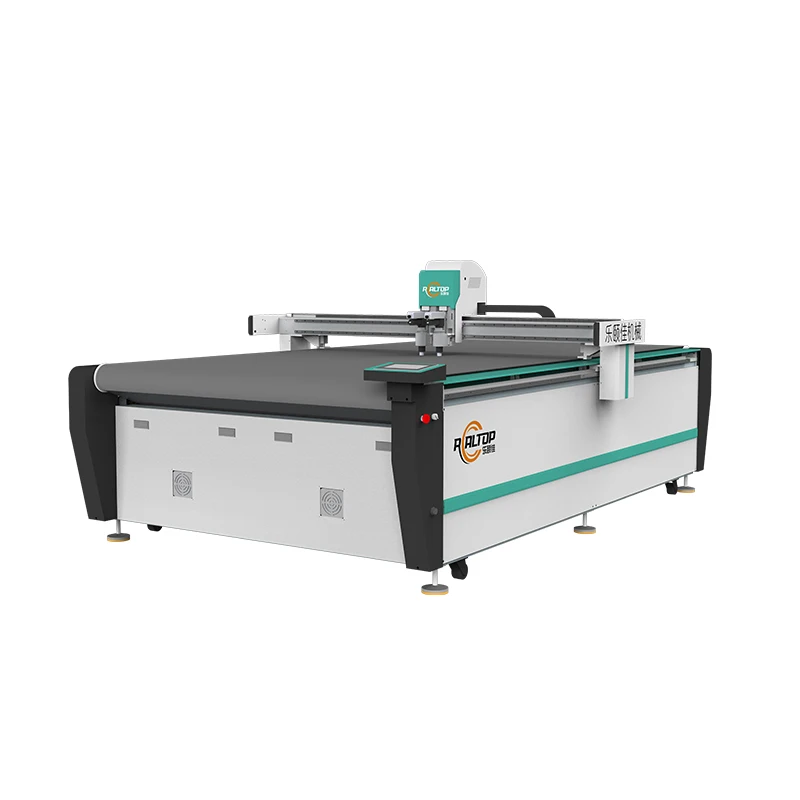
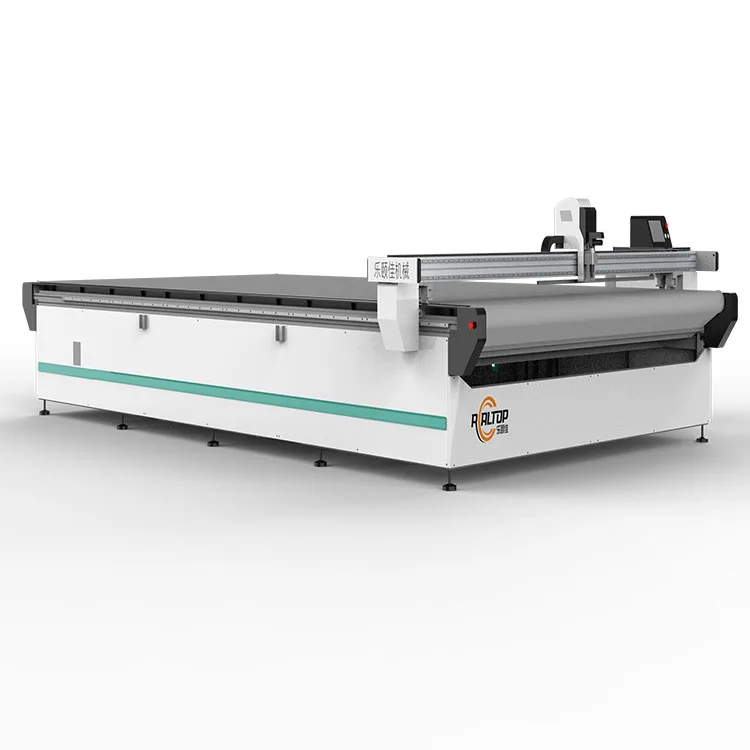
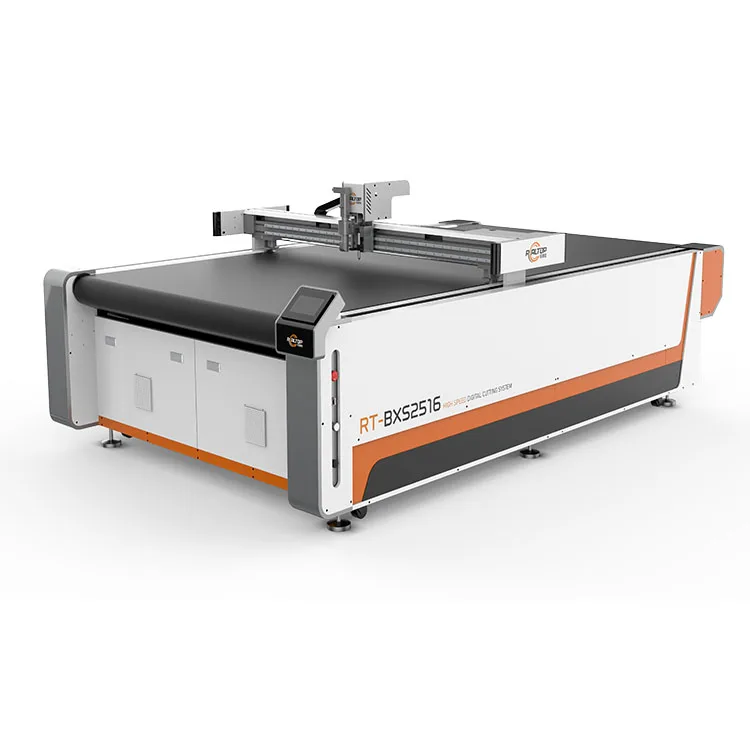
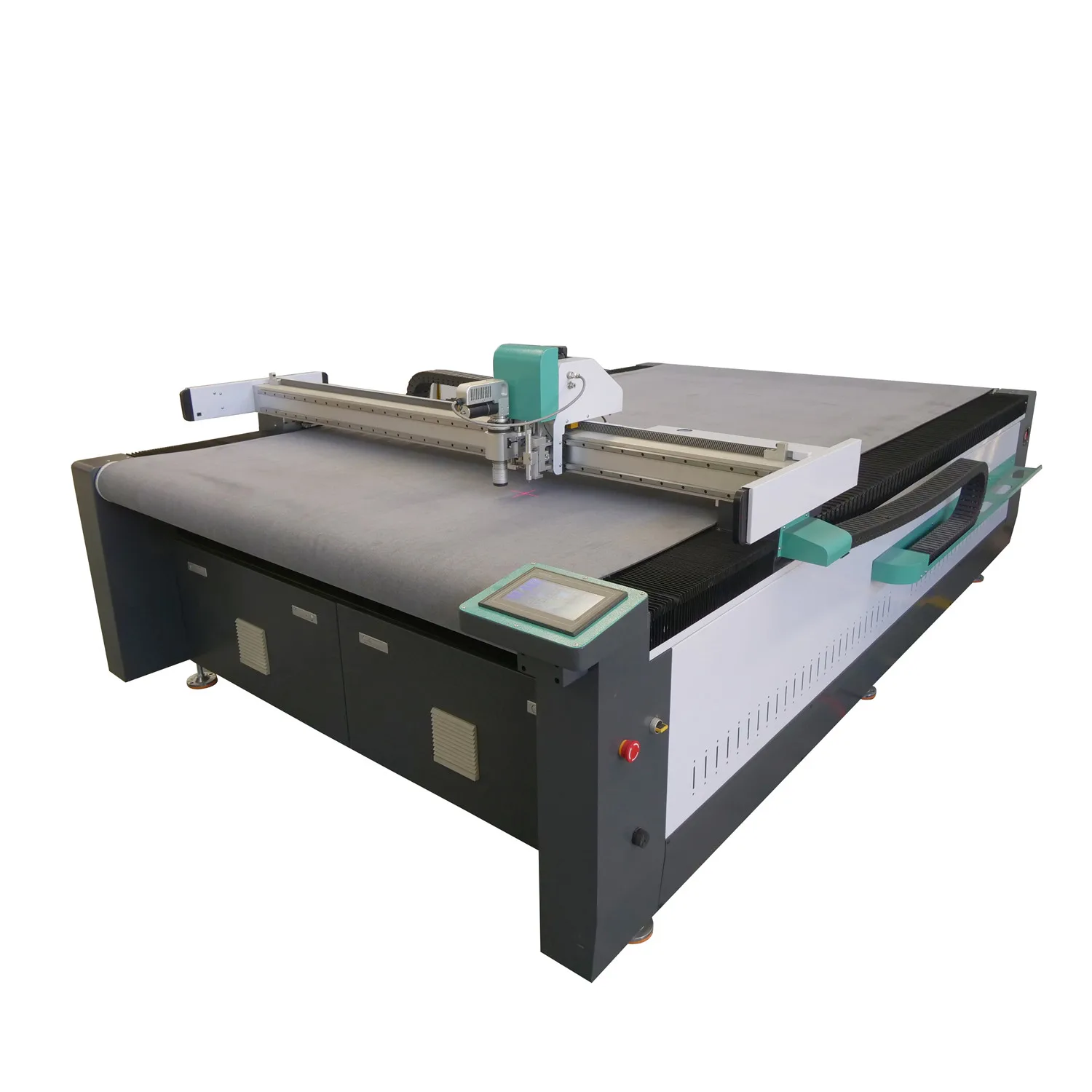
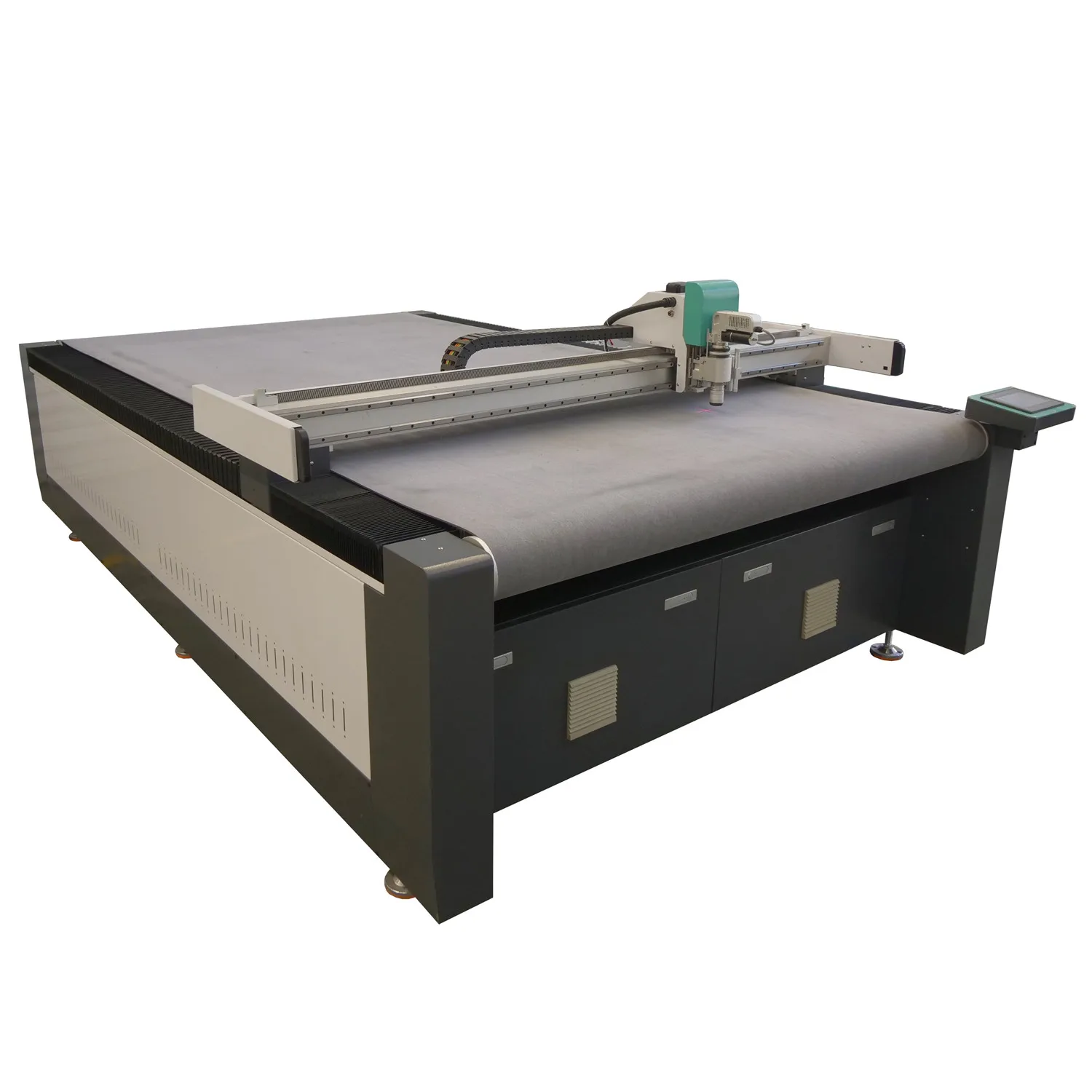
| Product Type | CNC Oscillating Knife Fabric Cutting Machine |
| Working Area | 1600 × 2500 mm |
| Machine Size | 3450 × 2300 × 1250 mm |
| Rated Power | 9 kW |
| Voltage | 380V ±10% |
| Translational Velocity | 800 – 2000 mm/s |
| Cutting Speed | 200 – 800 mm/s (basis not stated in source — confirm material type / thickness / layer count) |
| Repeatability | ≤0.1 mm |
| Cutting Thickness | ≤100 mm (varies with material — confirm specific material and layer count) |
| Multifunctional Head | Swiss imported knife with vibration full cutting, half cutting, and cursor location; additional tool heads available (oscillating knife, pneumatic knife, high-power vibrating knife, circular knife, V-cutting knife, drag knife, creasing wheel, dotted line knife, punching, brush) |
| Visual Positioning | Small CCD camera mark point positioning, panoramic camera recognition positioning, projection positioning |
| Table Type | Flat working table or auto feeding table (configurable) |
| Vacuum Table Material | Magnesium-aluminum alloy with fluorocarbon PVDF powder spraying, anodic oxidation, hard oxidation |
| Vacuum Pump | 7.5 kW, integrated aviation aluminum shell with built-in silencer sponge |
| Transmission System | Digital servo motor (Delta or Panasonic IP67), linear guide, synchronous belt, ball screw (imported) |
| Linear Guide | Taiwan Hiwin rail |
| Conveyor Belt | Germany imported |
| Control Panel | Touch screen, multiple languages (English, Russian, Italian, Chinese; special languages customizable) |
| Instruction System | HP-GL compatible format |
| Supported File Formats | PLT, DXF, AI |
| Safety Device | Infrared sensors with auto-pause, anti-collision beam sensors, emergency stop with in-situ resume |
Application Suitability
| Application | Material or Output |
|---|---|
| Garment and footwear manufacturing | Woven fabric, knit textile, clothing cloth, shoe material, luggage material, non-woven fabric |
| Automotive interior and gasket production | Leather, sponge composite leather, PVC sheet, soft glass, silicon, rubber, carbon fiber |
| Soft furnishing and carpet processing | Carpet, floor mat, foam board, sponge, composite materials |
| Packaging and graphic advertising | Corrugated cardboard, cardboard, plastic box, fiberglass, sticker, film |
| Composite and technical material fabrication | PU, EVA, XPE, PP, PE, PTFE, ETFE, composite materials, sealing pads |
Why Specifying by Working Area Alone Fails on Real Production Runs
A 1600×2500 mm table tells you the footprint, not whether the machine can hold down your fabric and cut it cleanly at production speed.
Many buyers in the garment and automotive interior sectors start their search by filtering for bed size. The RT-D2516 and RT-S2516 share the same working envelope, yet the cutting outcome on a multi-layer composite used for car seat covers depends entirely on which tool head is mounted, how the vacuum table is zoned, and whether the auto-feeding conveyor can maintain registration across a continuous roll. I once worked on an order where the sample passed on single-ply cotton, but when the buyer switched to a three-layer bonded fabric for their actual production run, the oscillating knife crushed the middle foam layer and left visible fraying. The machine was right; the tool head and vacuum zoning were not matched to the real material [NEED_CITE: material-specific tool head selection for multi-layer fabric cutting].
Matching the Full Equipment Range to Your Fabric
Realtop’s catalogue as a CNC fabric cutting machine manufacturer spans oscillating knife, drag knife, circular knife, and pneumatic knife heads on a single platform. For woven and knit textiles used in garment production, a high-frequency oscillating knife delivers a clean edge through multiple plies. For single-layer leather or synthetic sheets, a drag knife or V-cutting knife prevents the material from lifting during direction changes. The ability to swap tool heads — rather than buying separate machines — lets production managers adapt to shifting order requirements without additional capital outlay.
Three Positioning Modes for Printed Contour Work
Printed fabric cutting demands that the machine track registration marks at production speed, not just on a static sample. The available positioning options include a small CCD camera for mark point positioning, a panoramic camera for full-field recognition, and projection positioning for manual alignment assistance. For high-volume footwear uppers with sublimation-printed patterns, the panoramic camera captures the entire sheet in one pass and compensates for print distortion or fabric stretch. For simpler appliqué work on luggage panels, the single CCD mark point system handles spot registration efficiently [NEED_CITE: CCD versus panoramic camera positioning accuracy on printed textile].
Reading the Specs That Matter on the Shop Floor
The 9 kW rated power and 7.5 kW vacuum pump together define what this platform can actually hold and cut. A weaker vacuum pump fails to maintain suction across the full 1600×2500 mm magnesium-aluminum table, causing small pattern pieces — like collar stays or gasket blanks — to shift mid-cut. The Panasonic or Delta IP67 servo motors with vibration suppression matter when cutting tight radii on shoe uppers, where servo jitter translates directly into visible edge irregularity. The Taiwan Hiwin linear guides and imported ball screws maintain the ≤0.1 mm repeatability spec, which becomes critical when nesting dozens of garment pieces across a single lay and expecting them to match after sewing. The German-imported conveyor belt on the auto-feeding configuration resists stretch under continuous tension, keeping feed accuracy consistent over long production runs rather than drifting after the first few meters.
The Hidden Cost of Wrong Tool Head and Table Configuration
When the tool head is chosen for price rather than material, the consequences show up on the factory floor within the first production batch. A pneumatic knife used on a dense sponge composite will compress rather than cut, leaving partially severed layers that operators must rework by hand. A flat vacuum table without adequate zoning forces the pump to evacuate the entire surface even when cutting a small piece in one corner, reducing effective hold-down force [NEED_CITE: vacuum table zoning effect on small part cutting accuracy]. Switching to an auto-feeding conveyor without confirming the material’s coefficient of friction against the belt can cause slippage, destroying the registration that the CCD system worked to establish.
Why Source This Range Here
Realtop designs and manufactures both knife and laser cutting systems in-house, which means the CNC fabric cutting machine manufacturer can recommend the correct method for your material rather than defaulting to whichever technology they happen to sell. Every tool head and table configuration is specified per material and production volume, confirmed through sample cutting on the buyer’s own fabric before any commitment. Software compatibility — including PLT, DXF, and AI file format integration with your existing nesting workflow — is verified before the order is finalized. Voltage, control language, and plug type are confirmed and documented prior to shipment, so the machine arrives ready for your facility’s electrical standard.
Documentation & Verification
- Machine specification sheet with confirmed tool head and table configuration matched to your fabric type
- Sample cutting report on your own material verifying edge quality, cutting depth, and cycle behavior
- Electrical schematic and voltage confirmation document aligned to your facility power supply
- Software licence and file format compatibility note for your PLT, DXF, or AI nesting workflow
- Factory test record captured before dispatch with your selected configuration running
- CE declaration documentation where applicable to your destination market requirements
Installation, Commissioning & Support
- The 3450×2300×1250 mm machine size requires clear floor space plus access for material staging on the feeding side
- A dedicated 380V ±10% circuit must be available; the 9 kW rated power plus 7.5 kW vacuum pump require confirmed breaker sizing
- Machine ships fully assembled and factory tested; on-site work is limited to leveling, utility connection, and conveyor tensioning
- Touch screen control panel supports English, Russian, Italian, and Chinese with additional languages configurable for operator training
- Infrared safety sensors and anti-collision beam sensors are calibrated during commissioning before production cutting begins
- Spare parts list and maintenance schedule provided covering Swiss knife blades, vacuum pump sponge, and belt tracking checks
What We Need to Quote the Right Configuration
To specify the correct tool head, table format, and vision system for your line, share the fabric or composite material type you actually produce, the maximum ply count or single-sheet thickness, and your daily cutting volume target. Let us know your facility voltage and frequency, preferred control language, and whether your current workflow uses PLT, DXF, or AI files. If printed contour cutting is part of your process, send a sample printed panel so we can confirm which positioning mode tracks your registration marks reliably at speed.
Frequently Asked Questions
Q: How do I choose between oscillating knife and drag knife for my fabric?
A: Oscillating knives suit multi-ply woven and knit textiles where a vibrating blade prevents layer shifting during the cut. Drag knives work better on single-layer leather, vinyl, or synthetic sheets where the blade follows the cut path without lifting the material. Share your exact fabric type and ply count so we can confirm which tool head produces the cleanest edge.
Q: What table configurations are available across the range?
A: The platform offers a flat vacuum table for precision single-sheet cutting and an auto-feeding conveyor table for continuous-roll, high-volume production. The flat table is available with zoning options for small parts. The conveyor uses a German-imported belt suited to extended production runs. Your material format and daily volume determine which configuration fits.
Q: How do CCD and panoramic camera positioning differ for printed fabric?
A: A single CCD camera reads individual registration marks and is efficient for appliqué and panel work. A panoramic camera captures the full sheet in one pass, compensating for print distortion or fabric stretch across large formats. The right choice depends on your pattern complexity and tolerance requirements at production speed.
Q: Which file formats does the software support?
A: The system natively accepts PLT, DXF, and AI files through an HP-GL compatible instruction system with auto typesetting and nesting. Before ordering, we verify that your existing nesting software exports a compatible file and confirm the workflow end-to-end with a test import.
Q: How do CNC knife machines compare to laser options in the catalogue?
A: Knife cutting handles thick composites, multi-ply fabrics, and materials that melt or discolor under a laser beam. Laser cutting seals synthetic edges and suits thin acrylic, wood, or textile engraving. Realtop manufactures both technologies, so the recommendation depends on your specific material behavior and edge quality requirement.










商品评价
There are no reviews yet.