

Fast Delivery
Quick, reliable shipping to any location.

Free & easy returns
Return this item by mail or in store within 90 days for a full refund.
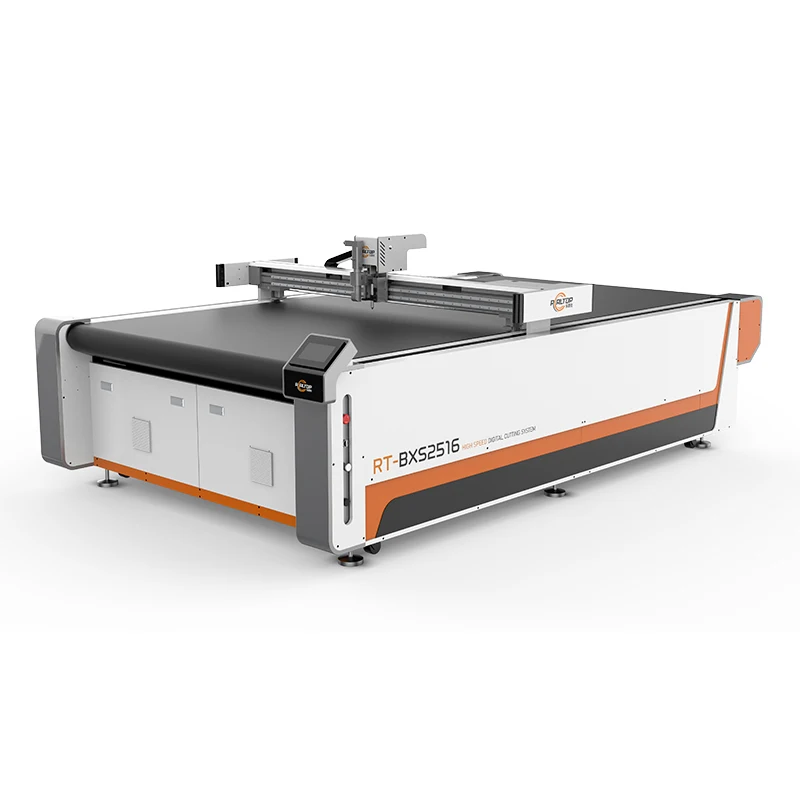
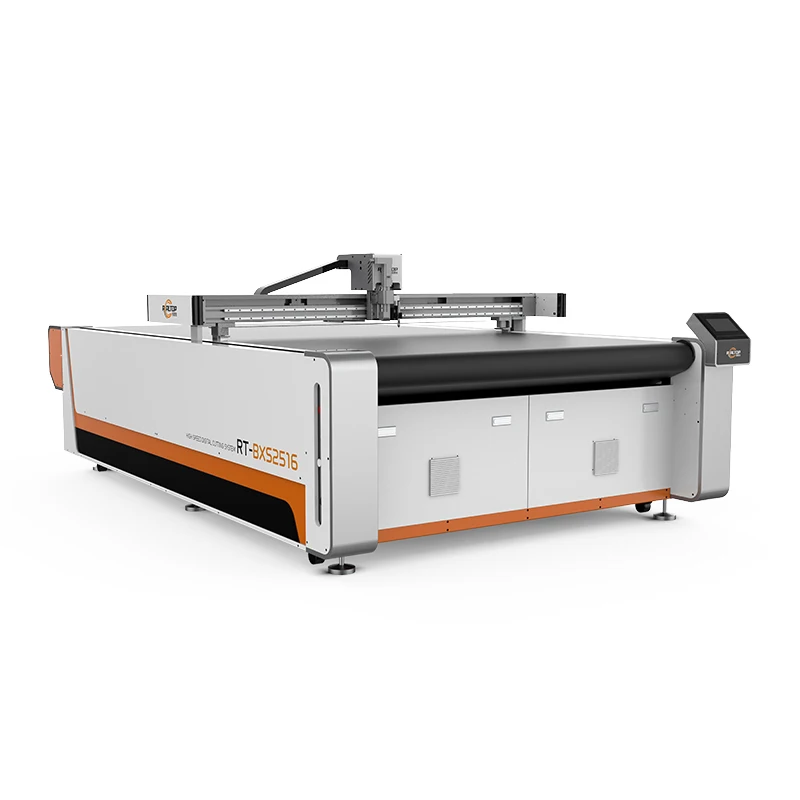
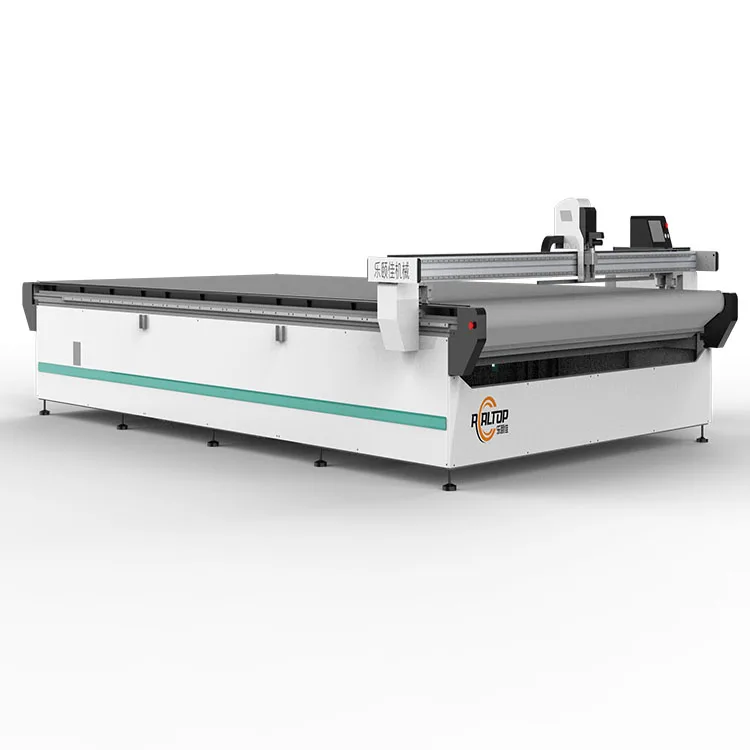
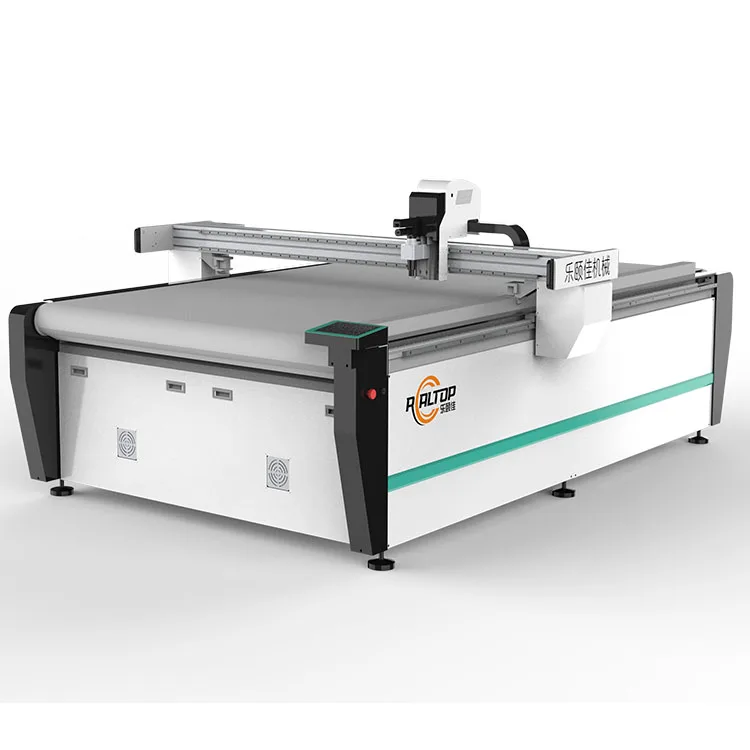
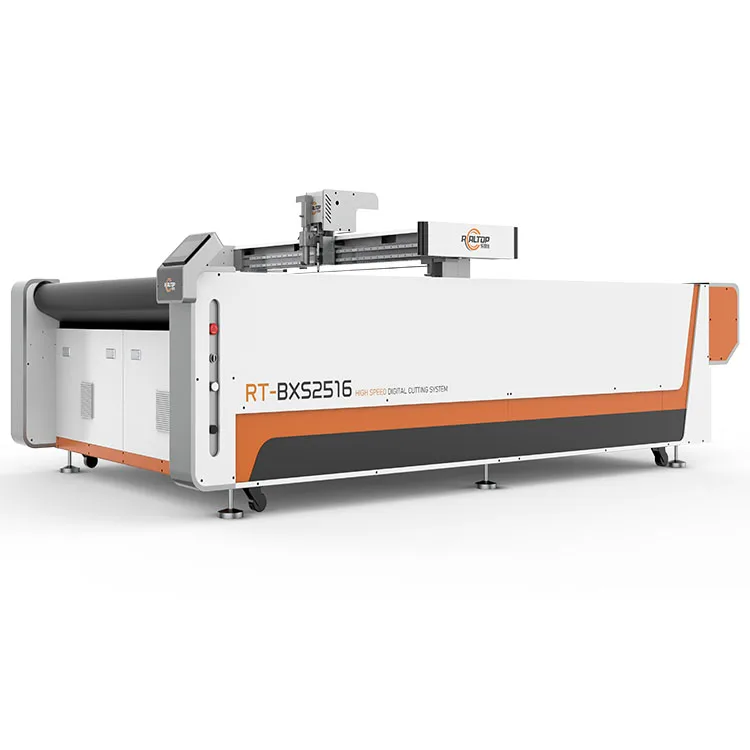
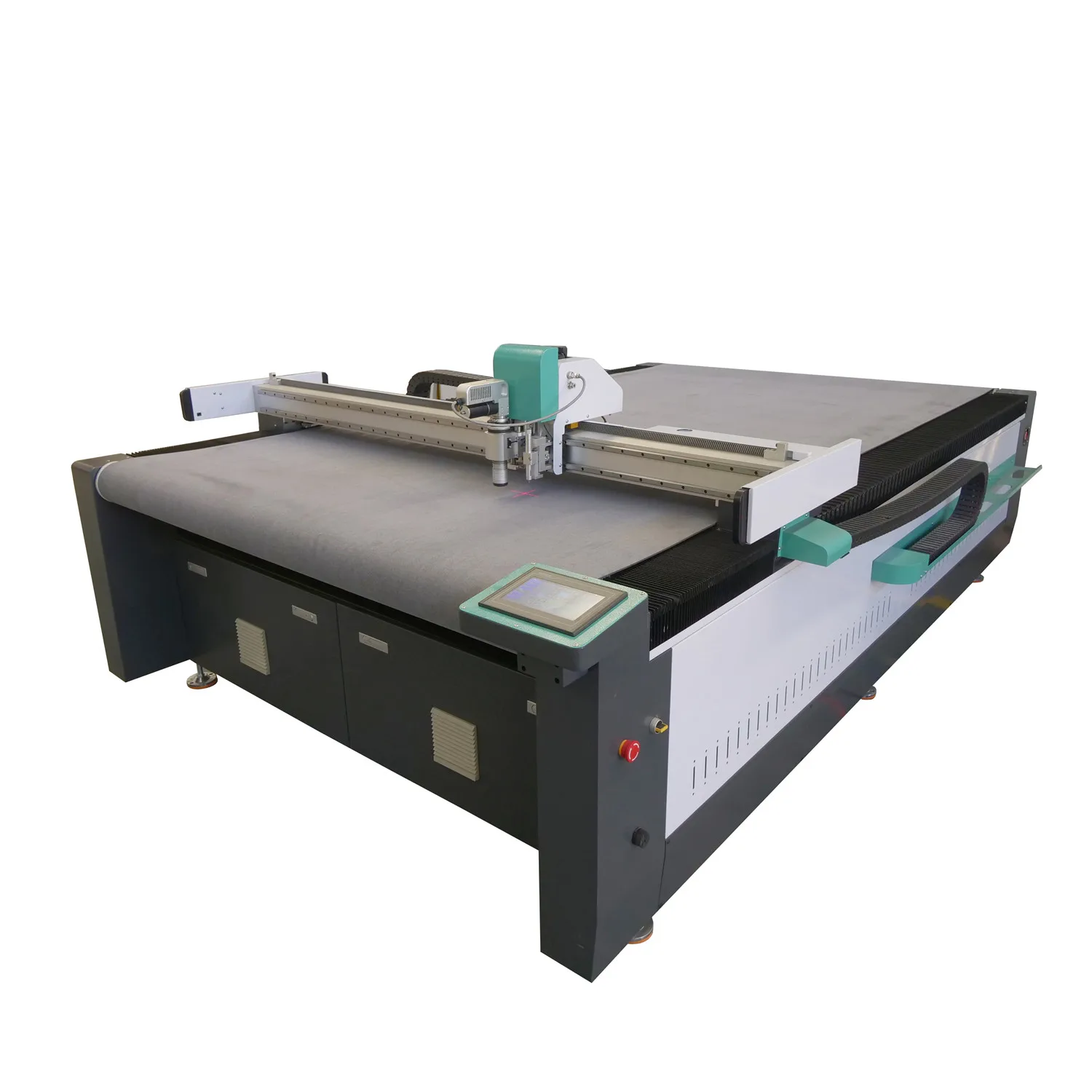
Tool Head Versatility — The RT-D2516 and RT-S2516 support Swiss-imported vibration knives alongside eight optional heads, letting a single flatbed cut PVC mouse pad composites, apparel fabrics, and automotive gaskets without forcing one method onto every job.
Technical Specifications
| Parameter | Value |
|---|---|
| Model | RT-D2516 / RT-S2516 |
| Product Type | CNC Oscillating Knife Cutting Machine |
| Working Area | 1600 × 2500 mm |
| Overall Dimensions (L×W×H) | 3450 × 2300 × 1250 mm |
| Rated Power | 9 kW |
| Voltage | 380V ±10% |
| Translational Velocity | 800–2000 mm/s |
| Cutting Speed | 200–800 mm/s (varies with material type and thickness) |
| Cutting Thickness | ≤100 mm (material dependent) |
| Repeated Accuracy | ≤0.1 mm |
| Vacuum Pump | 7.5 kW |
| Vacuum Table Surface | Magnesium-aluminum alloy with fluorocarbon PVDF coating, anodic and hard oxidation |
| Transmission System | Digital servo motor, linear guide, synchronous belt, ball screw |
| Servo Motor Options | Delta (China) or Panasonic (Japan) |
| Conveyor Belt | Germany imported |
| Instruction System | HP-GL compatible format |
| Software File Formats | PLT, DXF, AI |
| Visual Positioning | Small CCD camera mark-point, panoramic camera recognition, projection positioning |
| Multifunctional Head | Swiss imported knife (vibration full/half cutting, cursor location); optional: oscillating knife, pneumatic knife, high-power vibrating knife, circular knife, V-cutting knife, drag knife, creasing wheel, dotted-line knife, punching, brush |
| Safety Device | Infrared induction blocking, anti-collision beam sensors, emergency stop |
| Control Panel | Touch screen, multi-language (English, Russian, Italian, Chinese; special languages customizable) |
| Table Configuration | Flat working table or auto-feeding table (basis to be confirmed) |
| Standards | CE (certificate availability to be confirmed) |
Application Suitability
| Application | Material or Output |
|---|---|
| Gaming mouse pad production | PVC top layer, fabric surface, rubber base composites |
| Apparel and footwear cutting | Clothing cloth, shoe uppers, luggage material, leather |
| Automotive interior trim | Headliner fabric, seat cover textiles, door panel composites |
| Industrial gasket fabrication | PTFE, ETFE, rubber sheet, non-asbestos fiber |
| Advertising and signage | Self-adhesive vinyl, sticker film, reflective sheeting |
| Soft furnishings and flooring | Carpet tiles, floor mats, curtain fabric, upholstery textiles |
| Composite and foam processing | Sponge, PU, EVA, XPE sheets up to rated thickness |
| Packaging sample making | Corrugated board, card stock, folding carton prototypes |
Why Buyers Discover the Thickness Mismatch After Delivery
Ordering by working area alone leaves the cutting head and vacuum configuration to chance.
I have walked into workshops in Jinan where a buyer ordered a flatbed based on table size, only to find the oscillating knife could not penetrate their PVC composite mouse pad stock once the actual material arrived. The sample they sent was 2 mm of laminated fabric; production rolls came in at nearly 3 mm with a denser rubber base layer. The machine ran, but the blade stalled halfway through, leaving ragged edges on every pad. That two-week delay for a tool head swap could have been avoided with a single material test before the order was locked. A CNC oscillating knife cutting machine manufacturer should always confirm cutting depth against the buyer’s real stock, not a catalog maximum. [NEED_CITE: material thickness variation in roll goods versus sample swatches]
Matching the Knife to the Composite Layer
A gaming mouse pad is rarely one material. The top surface might be a woven polyester print, bonded to a PVC mid-layer, sitting on a natural or synthetic rubber base. Each layer responds differently to blade frequency and stroke length. The Swiss-imported vibration knife on the RT-D2516 and RT-S2516 handles the fabric face cleanly, while a high-power vibrating knife option provides the downward force needed for the denser rubber underlay. Switching between heads on the same multifunctional carriage means the operator does not need a second machine when the product mix shifts from thin apparel cloth to thick composite pads. This flexibility is what separates a CNC oscillating knife cutting machine manufacturer that understands layered materials from one that only quotes table dimensions.
Contour Cutting at Production Pace
Printed mouse pads require the cutter to follow registration marks printed on the fabric surface. The small CCD camera handles mark-point positioning for individual cutouts, while the panoramic camera option scans the entire nest layout for full-field contour recognition. When the print shifts slightly during feeding — a common occurrence on roll-fed fabric — the panoramic system recalculates the cut path across the whole sheet rather than correcting one mark at a time. [NEED_CITE: CCD contour recognition accuracy on stretchable textile substrates] Projection positioning adds a visual overlay so operators can verify alignment before the blade touches the material, reducing wasted sheets on short runs.
Reading the Numbers That Matter on the Spec Sheet
The 9 kW rated power covers the spindle drive, vacuum assist and conveyor motor together. The separate 7.5 kW vacuum pump pulls air through zoned channels in the magnesium-aluminum table. Zoning matters: when cutting small mouse pad shapes, only the active zone under the cutting path needs full suction, so peripheral zones stay closed and hold-down pressure concentrates where the blade is working. The repeated accuracy of ≤0.1 mm across the 1600 × 2500 mm working area depends on the linear guide and ball screw combination — a synchronous belt alone would drift over long production runs. Servo motor choice between Delta and Panasonic affects responsiveness at the higher translational velocities, particularly when the head reverses direction at the end of each stroke. A CNC oscillating knife cutting machine manufacturer specifying these drive components directly determines whether the machine holds tolerance on the hundredth pad or only the first.
The Cost of Skipping the Material Test
Buyers who skip sending actual production stock for a test cut often discover the problem during installation. A vacuum table that holds a rigid acrylic sheet perfectly may let a thin stretchy fabric lift at the edges if the zoning is too broad. A circular knife that slices through single-ply cotton cleanly will fray a three-layer PVC composite. These mismatches surface only when the real material meets the real blade at production speed. [NEED_CITE: common cutting defects caused by incorrect tool head selection] The downtime cost is not the tool swap itself — it is the idle operator, the delayed shipment, and the loss of confidence from the buyer’s own customer downstream.
What the Full Catalogue Means for Your Selection
REALTOP builds both oscillating knife and laser cutting systems in-house, which means the recommendation starts with the material rather than with whichever machine is on the showroom floor. For PVC mouse pad composites, knife cutting avoids the melted edge and fume extraction requirements of a CO2 laser. The design team configures the tool head, vacuum zoning, and feeding system around the buyer’s specific layer stack and daily volume. Factory testing runs the buyer’s own material before the machine is crated, so the cutting parameters ship with the unit rather than being guessed at on the production floor. Every CNC oscillating knife cutting machine manufacturer claims versatility; the difference here is that knife and laser sit under one roof, so the honest answer is available even when it means recommending a different technology.
Documentation & Verification
- Machine specification sheet listing working area, tool head options, and vacuum zone layout
- Electrical schematic with confirmed voltage and frequency for the destination market
- Sample cutting report performed on your PVC, fabric, or rubber stock before order commitment
- Software license note confirming PLT, DXF, and AI file format compatibility
- Factory test record showing repeated accuracy and cutting edge quality on your material
- Spare parts list matched to your selected knife head and servo motor configuration
Installation, Commissioning & Support
- Floor space planning for the 3450 × 2300 mm footprint plus material staging clearance
- Dedicated 380V ±10% circuit with sufficient capacity for the combined 9 kW machine and 7.5 kW vacuum pump
- Machine ships fully assembled; positioning requires forklift access to the workshop floor
- First-run parameter tuning on your material thickness and cutting speed during on-site commissioning
- Operator training on the touch screen interface in your selected control language
- Wearing parts schedule covering knife blades, conveyor belt sections, and vacuum seal strips
Before You Request a Quote
Send the actual production material — not a catalog sample — including the PVC top layer, printed fabric, and rubber base in the thickness you run daily. Specify your target daily output in finished pads, the local voltage and frequency at the installation site, and your preferred control panel language. If your design files are already set up in a particular nesting software, share a sample file so we can confirm format compatibility before the order.
Frequently Asked Questions
Q: Knife cutting or laser cutting — which method suits PVC composite mouse pads?
A: Oscillating knife cutting is preferred for PVC and rubber composites because it produces a clean mechanical edge without melting or discoloration. Laser cutting generates fumes from PVC that require extensive extraction systems and can leave sealed but discolored edges on rubber layers. We build both technologies in-house and will recommend based on your actual material test.
Q: How do you match the vacuum table to small mouse pad shapes?
A: The 7.5 kW vacuum pump feeds zoned channels in the magnesium-aluminum table. For small pad outlines, only the active cutting zone opens, concentrating suction directly under the blade path. This prevents thin stretchy fabrics from lifting at the edges during high-speed contour cuts while reducing overall air consumption.
Q: Which CCD camera type should I choose for printed mouse pad contours?
A: Small CCD mark-point positioning works when each pad has an individual registration mark. Panoramic camera recognition is better for nested layouts where the entire print sheet must be scanned and the cut path adjusted across the full field. We confirm the choice by running your printed material on the machine before shipment.
Q: Can the control panel language be changed after delivery?
A: The touch screen supports English, Russian, Italian, and Chinese as standard, with special languages customizable before shipment. Language changes after delivery depend on software licensing; we confirm available language packs and include a compatibility note with your documentation set.










商品评价
There are no reviews yet.