

Fast Delivery
Quick, reliable shipping to any location.

Free & easy returns
Return this item by mail or in store within 90 days for a full refund.
Material-matched configuration — In-house design across both oscillating knife and laser platforms lets carpet mat and composite fabricators specify the exact cutting method against their own stock density rather than force a single technology onto every job.
Technical Specifications
| Parameter | Value |
|---|---|
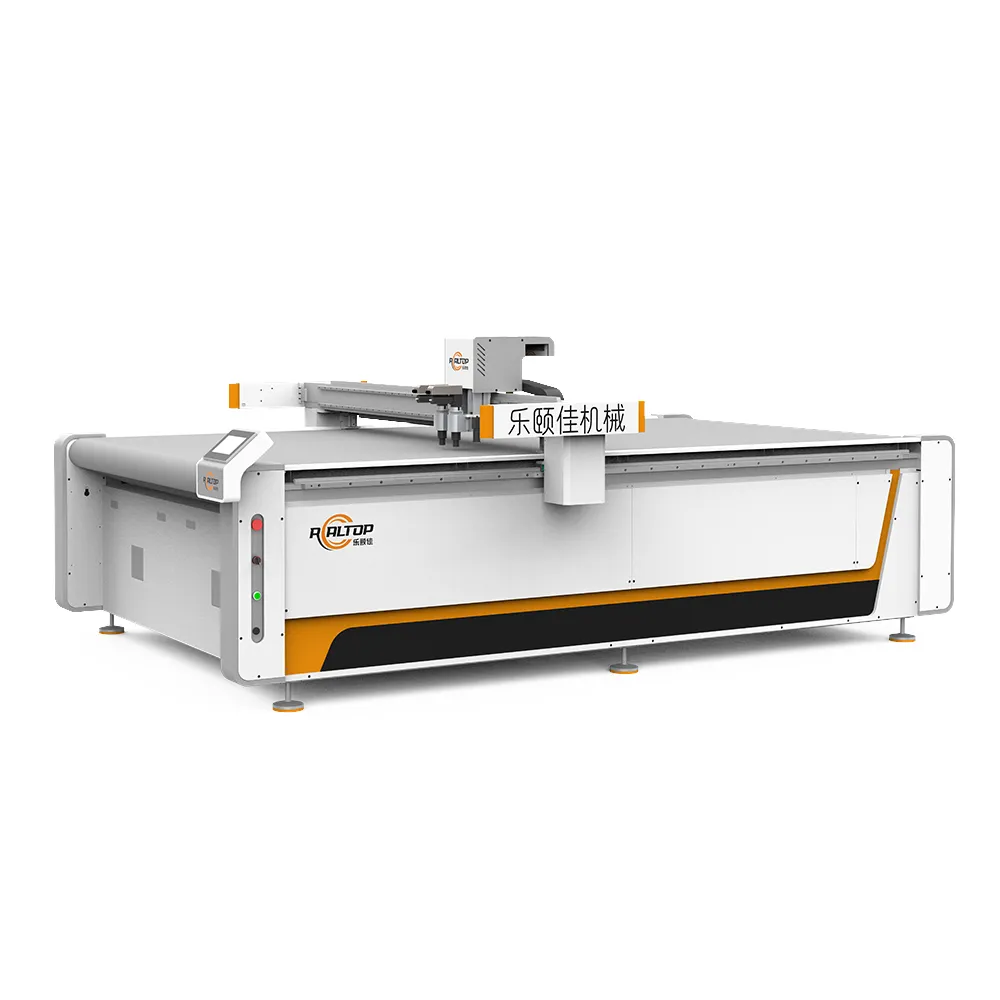
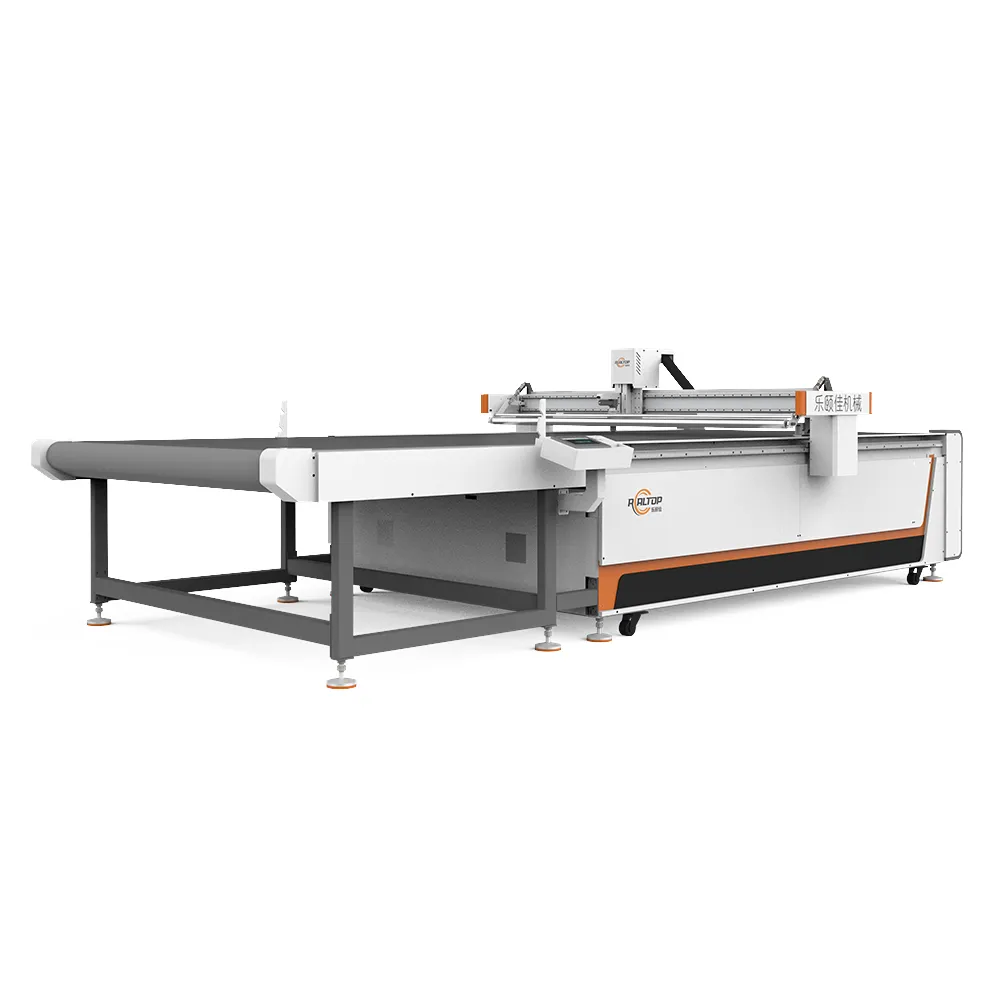
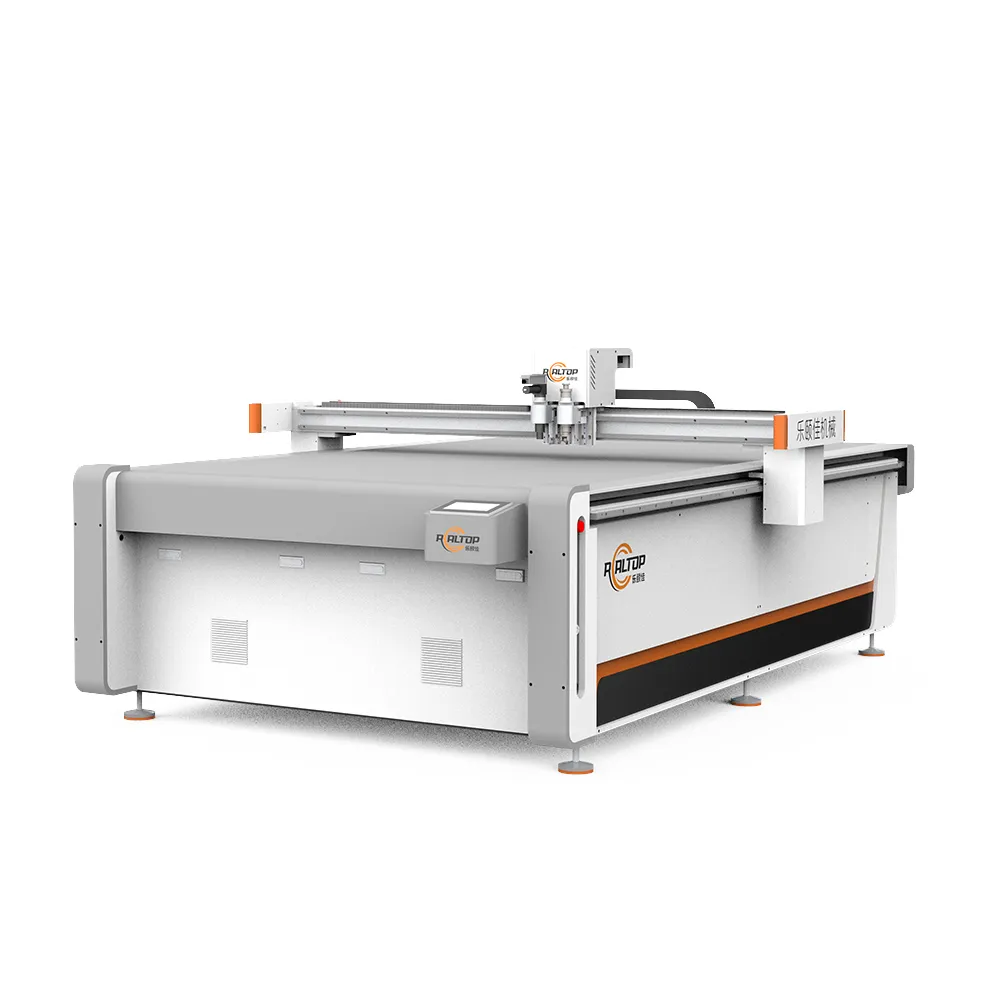
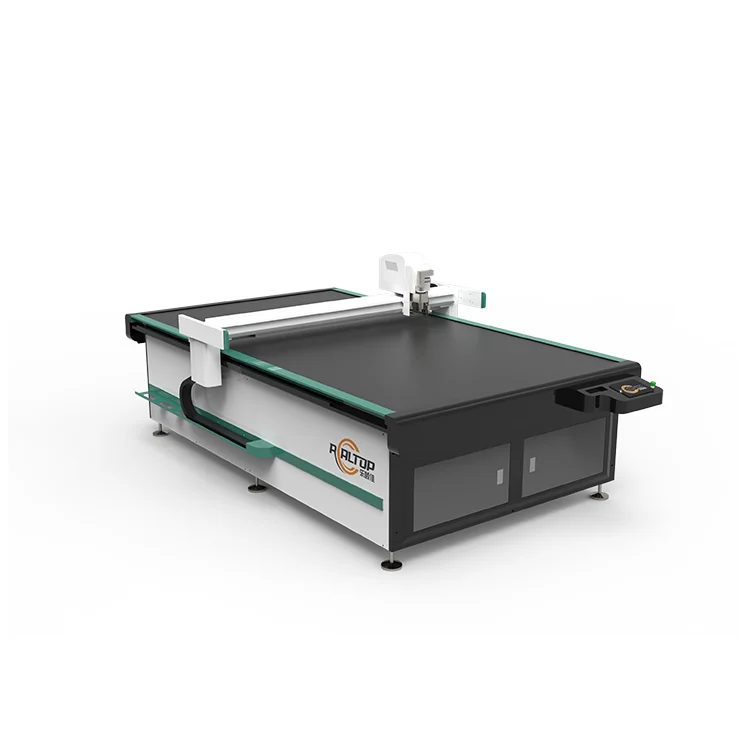
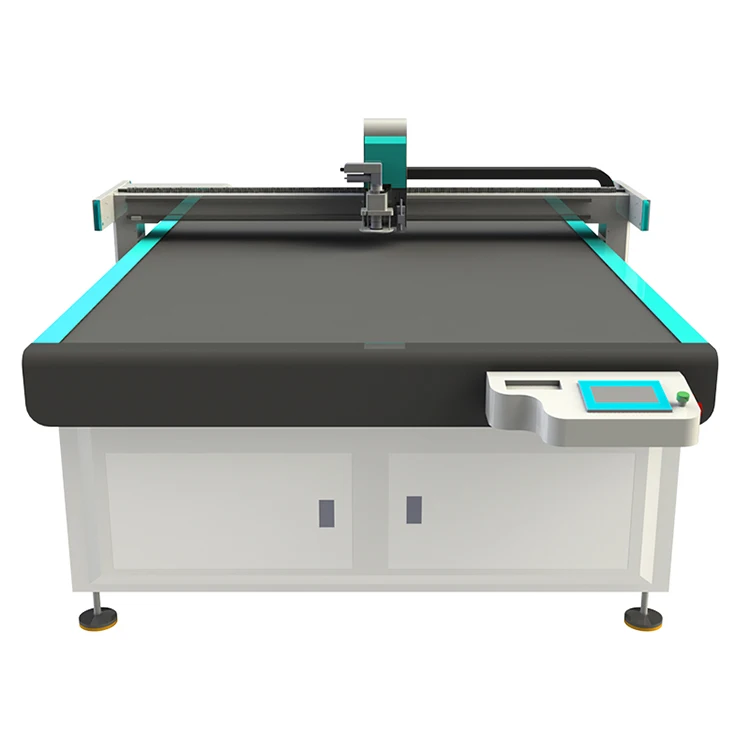
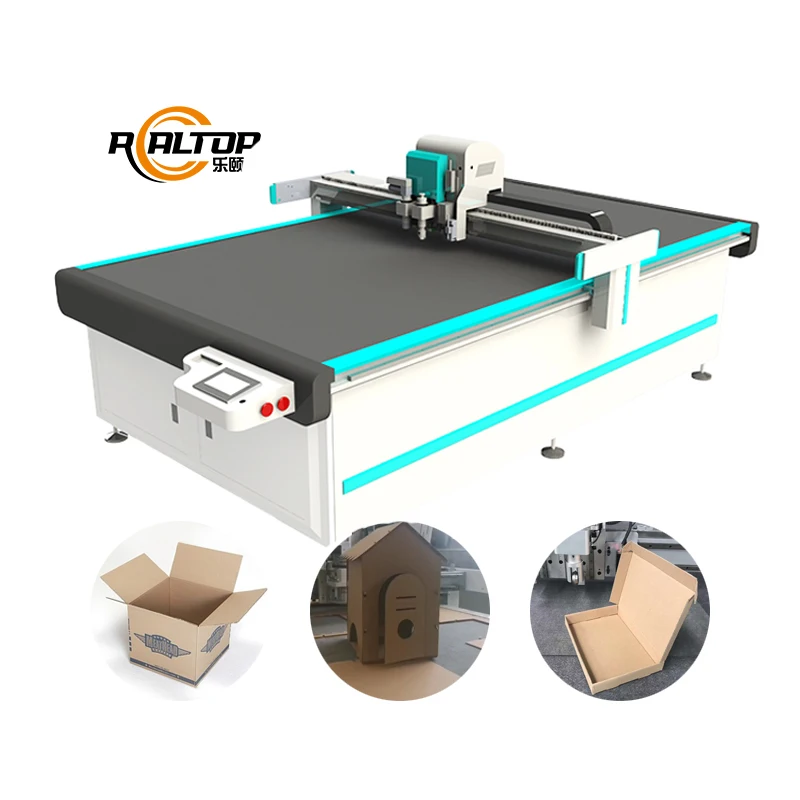
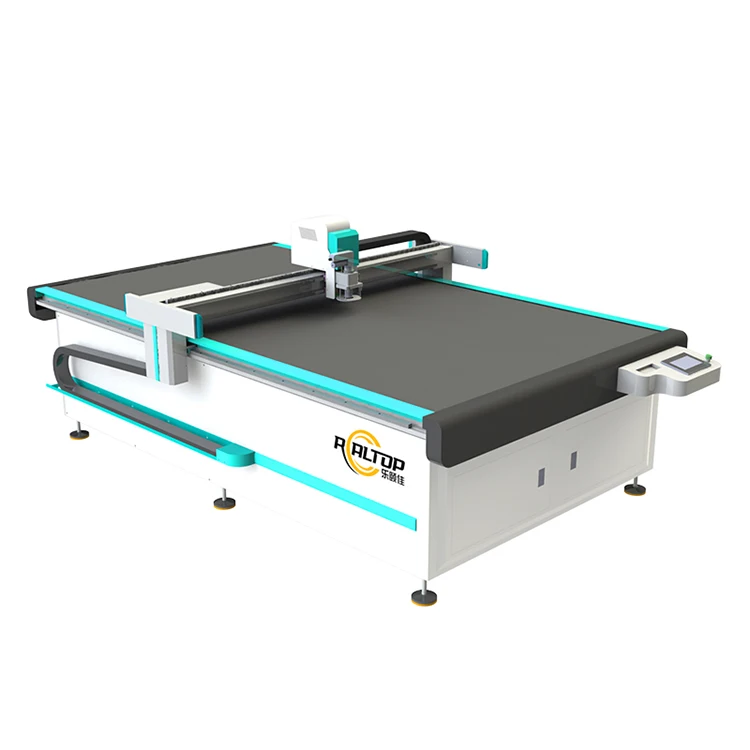
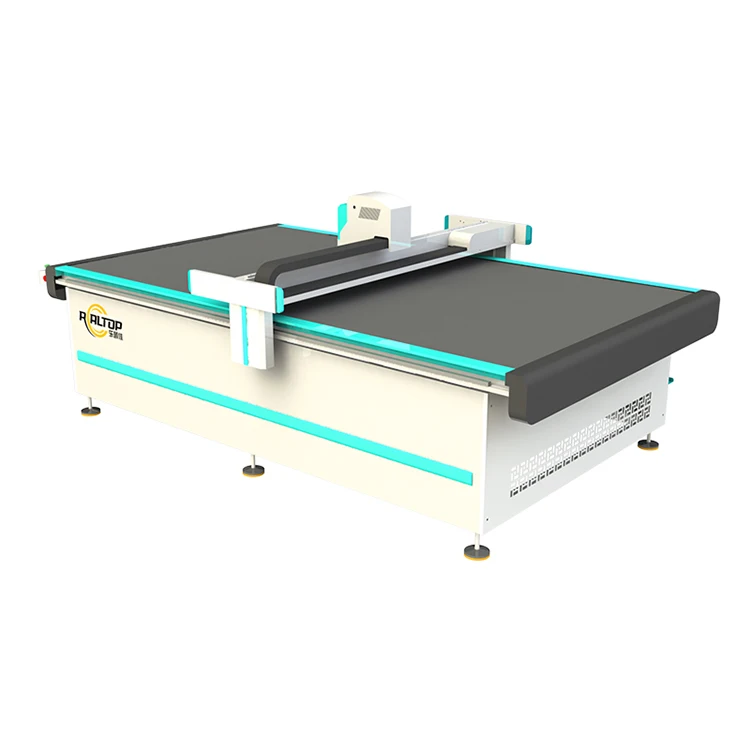
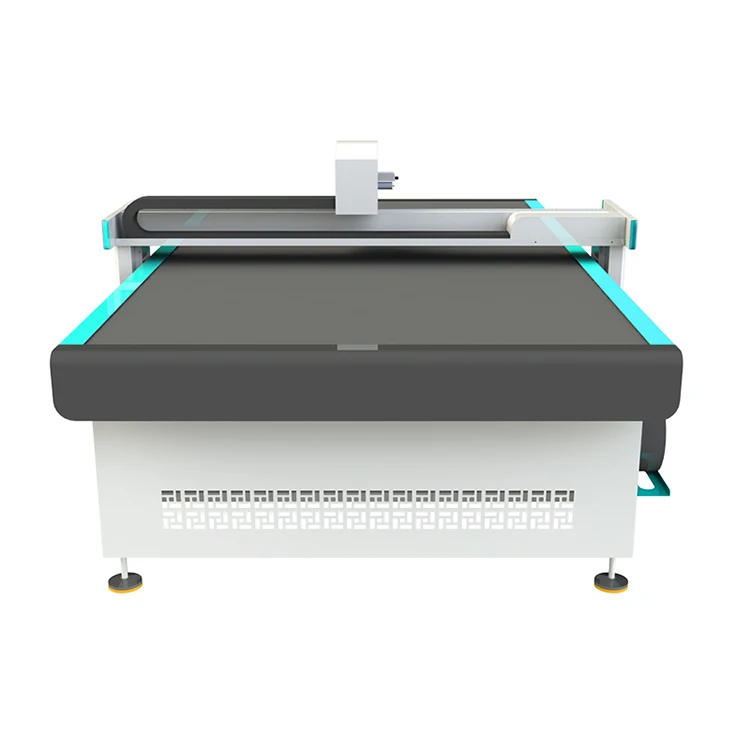
| Product Type | CNC Oscillating Knife Cutting Table |
| Effective Cutting Area | 2500×1600mm / 2500×2200mm / 3000×2200mm |
| Maximum Travel Speed | 2000mm/s |
| Reset Accuracy | ±0.1mm |
| Cutting Thickness | ≤40mm (basis not stated in source — confirm material type and density) |
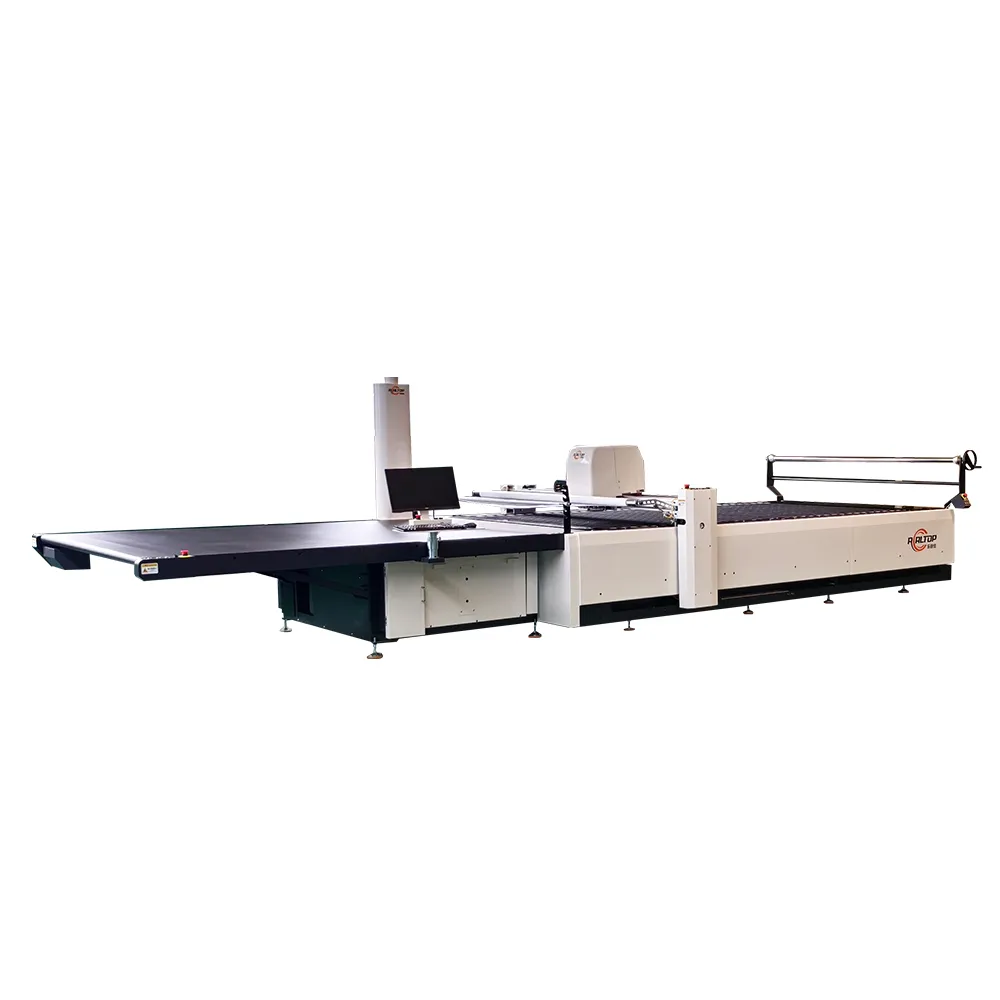
| Table Type | Automatic feeding conveyor |
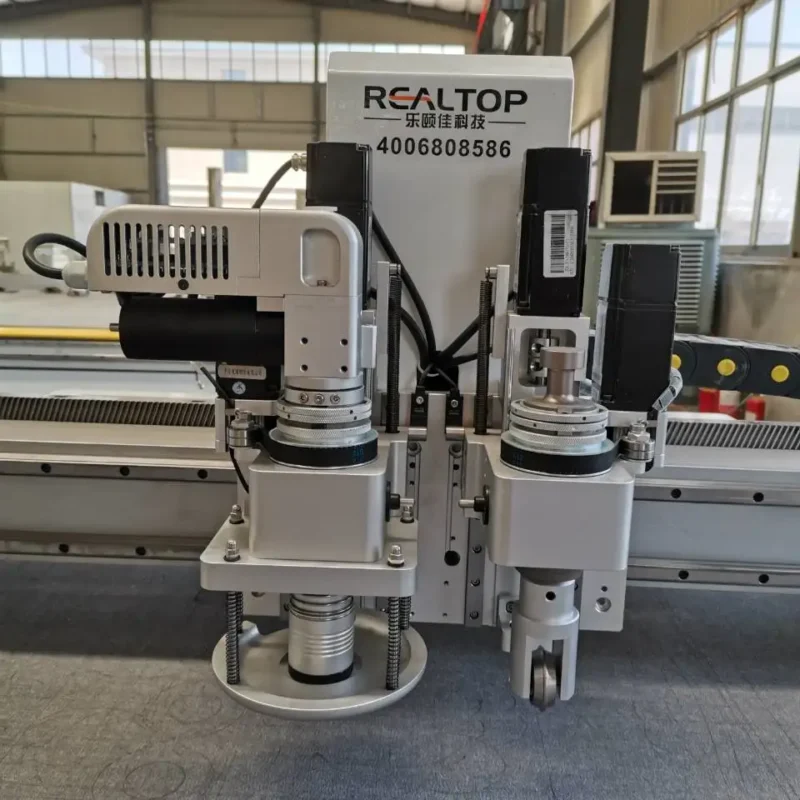
| Tool Head Options | Round knife, oscillating knife, marking pen |
| Positioning System | Panoramic visual positioning with CCD contour recognition |
| Data Format Compatibility | dxf, plt, ai, pdf |
| Control System | REALTOP customized high-speed controller |
| Voltage | 380V / 220V (frequency to be confirmed per market) |
| Bed Construction | Quenched steel frame with stress elimination |
| Belt Specification | Industrial belt with glass fiber tension cord |
| Wiring | Oxygen-free copper shielded cable |
| Safety Devices | Infrared blocking stop, anti-collision protection |
Application Suitability
| Application | Material or Output |
|---|---|
| Carpet mat and floor covering production | Tufted carpet, woven rugs, PVC-backed mats, foam underlay |
| Advertising and signage fabrication | Printed vinyl, PVC foam board, corrugated board, adhesive film |
| Automotive interior trimming | Non-woven fabric, trunk liner felt, sound-damping foam |
| Gasket and seal fabrication | Cork, compressed fiber, silicone sheet, PTFE |
| Composite and insulation panel cutting | Glass fiber batts, mineral wool boards, acoustic panels |
Why a 40mm Cutting Depth Claim Means Nothing Without Your Material
The only cutting depth figure that matters is the one achieved on your actual carpet mat or foam stock at production speed.
A thickness rating listed without material density and tool head context leads to underpowered machines on the shop floor. I have watched customers specify a CNC oscillating knife cutting table based on working area alone, only to find the knife stalls halfway through a high-density PVC foam board or leaves compressed edges on thick tufted carpet. The oscillating frequency, blade profile, vacuum hold-down and feed rate all interact with the specific stock being processed, and no single number captures that interaction [NEED_CITE: oscillating knife cutting force requirements across material densities].
Full Catalogue Approach — Knife Versus Laser for Carpet and Composite
REALTOP designs and builds both oscillating knife cutting tables and laser cutting systems under one roof, which means the cutting method is selected after your material has been evaluated rather than dictated by a single product line. Carpet mats with printed patterns often require knife cutting for edge integrity, while thin synthetic overlays may seal better under CO2 laser. This catalogue-level approach prevents the common situation where a buyer is sold a knife machine for a job that a laser would finish cleaner, or vice versa.
Panoramic Visual Positioning for Printed Contour Work
The CCD-based panoramic positioning system reads registration marks on pre-printed carpet and vinyl at production speed, enabling automatic edge-following and template-matching cuts. This matters for signage and printed mat producers where the graphic is laid down before cutting and any drift produces scrap. The system supports both contour-tracing and template-overlay modes, so operators can switch between bespoke one-off shapes and repeat batch runs without reconfiguring hardware [NEED_CITE: CCD contour recognition accuracy at continuous feed rates].
Reading the Specs That Actually Affect Your Floor Mat Output
The ±0.1mm reset accuracy governs how tightly nested patterns can be placed on a roll, directly influencing material yield on expensive tufted or woven carpet. The 2000mm/s maximum travel speed sets the upper boundary for non-cutting moves between contours, but actual cutting speed depends on blade engagement with your specific mat thickness. The quenched bed with stress elimination maintains flatness over continuous shifts; without this treatment, welded frames gradually warp under thermal cycling and vacuum load, pushing cut dimensions out of tolerance. Automatic feeding with the glass fiber tension cord belt ensures the roll advances without stretching or slipping, which is critical when a multi-meter carpet mat must be cut in a single uninterrupted pass.
The Hidden Cost of a Mismatched Tool Head
Choosing the wrong knife profile for your mat material shows up as ragged edges on loop-pile carpet, crushed cells in foam underlay, or delamination of multi-layer composites. These defects are not visible in a short demonstration video cut on sample stock that happens to suit the default blade. Once the machine is on your floor running your actual inventory, every defective edge becomes manual rework or outright scrap, and the cost accumulates silently across thousands of linear meters [NEED_CITE: material waste rates from incorrect tool head selection in textile cutting].
Why Source This Equipment From the Same Facility That Designs It
The oscillating knife platform and the laser platform share a common engineering team, so when a carpet mat job sits on the boundary between the two methods, the recommendation is based on cut quality data rather than which machine needs to move off the showroom floor. Sample cutting is performed on the buyer’s own material roll before any order is confirmed, producing a cutting report that documents edge finish, cycle time and achievable thickness. Voltage, plug configuration and control panel language are locked in during the specification stage, not left as assumptions. The software workflow is verified against your existing dxf or plt nesting files so that no format conversion surprises appear at commissioning.
Documentation & Verification
- Machine specification sheet listing the exact tool head and conveyor configuration matched to your mat stock
- Factory test record cut on your own carpet material with measured edge quality and cycle data
- Electrical schematic and voltage confirmation sheet signed off before the unit leaves the assembly hall
- Software licence documentation and file format compatibility note covering dxf, plt, ai and pdf imports
- Spare parts list identifying blades, belts and wear items specific to your configured tool head
Installation, Commissioning & Support
- Foundation must be level within tolerance to support the quenched bed across the full 3000×2200mm footprint
- Dedicated 380V or 220V circuit with confirmed frequency before the control cabinet is energized
- Machine arrives partially assembled; belt tension and vacuum zone calibration completed on site
- First-run parameter setting performed on your carpet mat stock to establish baseline cutting speeds
- Operator training covers tool head changeover, CCD mark teaching and nesting file import workflow
- Wearing parts kit supplied with initial shipment includes matched oscillating blades and marking pens
What to Send With Your Inquiry
Provide the exact carpet mat or composite material type, thickness range and roll or sheet dimensions you run most often. Include your daily linear meter target and the floor space available, so the correct working area format and feeding configuration can be recommended. Confirm your workshop voltage and frequency, along with the control language your operators need, so these are written into the build specification from day one.
Frequently Asked Questions
Q: How do I choose between oscillating knife and laser cutting for carpet mats?
A: Oscillating knife is generally preferred for thicker tufted carpet and foam-backed mats where a sealed laser edge is not required and mechanical cutting preserves fibre structure. Laser suits thin synthetic overlays where edge sealing prevents fraying. Sending your actual material for sample cutting on both platforms removes the guesswork.
Q: Which tool head works best for dense PVC foam board used in signage?
A: A servo-driven oscillating knife with a single-flute blade typically handles dense PVC foam without crushing the cell structure, but the exact blade profile depends on your board density and required edge finish. We confirm the tool head choice by cutting samples from your specific stock before finalising the order.
Q: Can the CCD system track printed marks on carpet mats at full production speed?
A: The panoramic visual positioning system is designed to read registration marks on pre-printed material during continuous feed, enabling contour-accurate cuts. Tracking reliability depends on mark contrast, size and placement, all of which are verified during the sample cutting stage using your printed material.
Q: How should I size the table and vacuum zones for small mat offcuts?
A: The three available formats (2516, 2522, 3022) cover most roll widths, but vacuum zone layout matters when small pieces must stay flat during cutting. We configure zone segmentation based on your smallest part dimension so that lift and drift are eliminated across the entire bed area.
Q: How are voltage and control language handled before shipment?
A: Voltage, plug type, frequency and control panel language are confirmed in writing during the specification stage and verified against the electrical schematic before the machine is crated. This prevents on-site rewiring or operator confusion when the equipment arrives at your facility.
Material-matched configuration — In-house design across both oscillating knife and laser platforms lets carpet mat and composite fabricators specify the exact cutting method against their own stock density rather than force a single technology onto every job.
Technical Specifications
| Parameter | Value |
|---|---|
| Product Type | CNC Oscillating Knife Cutting Table |
| Effective Cutting Area | 2500×1600mm / 2500×2200mm / 3000×2200mm |
| Maximum Travel Speed | 2000mm/s |
| Reset Accuracy | ±0.1mm |
| Cutting Thickness | ≤40mm (basis not stated in source — confirm material type and density) |
| Table Type | Automatic feeding conveyor |
| Tool Head Options | Round knife, oscillating knife, marking pen |
| Positioning System | Panoramic visual positioning with CCD contour recognition |
| Data Format Compatibility | dxf, plt, ai, pdf |
| Control System | REALTOP customized high-speed controller |
| Voltage | 380V / 220V (frequency to be confirmed per market) |
| Bed Construction | Quenched steel frame with stress elimination |
| Belt Specification | Industrial belt with glass fiber tension cord |
| Wiring | Oxygen-free copper shielded cable |
| Safety Devices | Infrared blocking stop, anti-collision protection |
Application Suitability
| Application | Material or Output |
|---|---|
| Carpet mat and floor covering production | Tufted carpet, woven rugs, PVC-backed mats, foam underlay |
| Advertising and signage fabrication | Printed vinyl, PVC foam board, corrugated board, adhesive film |
| Automotive interior trimming | Non-woven fabric, trunk liner felt, sound-damping foam |
| Gasket and seal fabrication | Cork, compressed fiber, silicone sheet, PTFE |
| Composite and insulation panel cutting | Glass fiber batts, mineral wool boards, acoustic panels |
Why a 40mm Cutting Depth Claim Means Nothing Without Your Material
The only cutting depth figure that matters is the one achieved on your actual carpet mat or foam stock at production speed.
A thickness rating listed without material density and tool head context leads to underpowered machines on the shop floor. I have watched customers specify a CNC oscillating knife cutting table based on working area alone, only to find the knife stalls halfway through a high-density PVC foam board or leaves compressed edges on thick tufted carpet. The oscillating frequency, blade profile, vacuum hold-down and feed rate all interact with the specific stock being processed, and no single number captures that interaction [NEED_CITE: oscillating knife cutting force requirements across material densities].
Full Catalogue Approach — Knife Versus Laser for Carpet and Composite
REALTOP designs and builds both oscillating knife cutting tables and laser cutting systems under one roof, which means the cutting method is selected after your material has been evaluated rather than dictated by a single product line. Carpet mats with printed patterns often require knife cutting for edge integrity, while thin synthetic overlays may seal better under CO2 laser. This catalogue-level approach prevents the common situation where a buyer is sold a knife machine for a job that a laser would finish cleaner, or vice versa.
Panoramic Visual Positioning for Printed Contour Work
The CCD-based panoramic positioning system reads registration marks on pre-printed carpet and vinyl at production speed, enabling automatic edge-following and template-matching cuts. This matters for signage and printed mat producers where the graphic is laid down before cutting and any drift produces scrap. The system supports both contour-tracing and template-overlay modes, so operators can switch between bespoke one-off shapes and repeat batch runs without reconfiguring hardware [NEED_CITE: CCD contour recognition accuracy at continuous feed rates].
Reading the Specs That Actually Affect Your Floor Mat Output
The ±0.1mm reset accuracy governs how tightly nested patterns can be placed on a roll, directly influencing material yield on expensive tufted or woven carpet. The 2000mm/s maximum travel speed sets the upper boundary for non-cutting moves between contours, but actual cutting speed depends on blade engagement with your specific mat thickness. The quenched bed with stress elimination maintains flatness over continuous shifts; without this treatment, welded frames gradually warp under thermal cycling and vacuum load, pushing cut dimensions out of tolerance. Automatic feeding with the glass fiber tension cord belt ensures the roll advances without stretching or slipping, which is critical when a multi-meter carpet mat must be cut in a single uninterrupted pass.
The Hidden Cost of a Mismatched Tool Head
Choosing the wrong knife profile for your mat material shows up as ragged edges on loop-pile carpet, crushed cells in foam underlay, or delamination of multi-layer composites. These defects are not visible in a short demonstration video cut on sample stock that happens to suit the default blade. Once the machine is on your floor running your actual inventory, every defective edge becomes manual rework or outright scrap, and the cost accumulates silently across thousands of linear meters [NEED_CITE: material waste rates from incorrect tool head selection in textile cutting].
Why Source This Equipment From the Same Facility That Designs It
The oscillating knife platform and the laser platform share a common engineering team, so when a carpet mat job sits on the boundary between the two methods, the recommendation is based on cut quality data rather than which machine needs to move off the showroom floor. Sample cutting is performed on the buyer’s own material roll before any order is confirmed, producing a cutting report that documents edge finish, cycle time and achievable thickness. Voltage, plug configuration and control panel language are locked in during the specification stage, not left as assumptions. The software workflow is verified against your existing dxf or plt nesting files so that no format conversion surprises appear at commissioning.
Documentation & Verification
- Machine specification sheet listing the exact tool head and conveyor configuration matched to your mat stock
- Factory test record cut on your own carpet material with measured edge quality and cycle data
- Electrical schematic and voltage confirmation sheet signed off before the unit leaves the assembly hall
- Software licence documentation and file format compatibility note covering dxf, plt, ai and pdf imports
- Spare parts list identifying blades, belts and wear items specific to your configured tool head
Installation, Commissioning & Support
- Foundation must be level within tolerance to support the quenched bed across the full 3000×2200mm footprint
- Dedicated 380V or 220V circuit with confirmed frequency before the control cabinet is energized
- Machine arrives partially assembled; belt tension and vacuum zone calibration completed on site
- First-run parameter setting performed on your carpet mat stock to establish baseline cutting speeds
- Operator training covers tool head changeover, CCD mark teaching and nesting file import workflow
- Wearing parts kit supplied with initial shipment includes matched oscillating blades and marking pens
What to Send With Your Inquiry
Provide the exact carpet mat or composite material type, thickness range and roll or sheet dimensions you run most often. Include your daily linear meter target and the floor space available, so the correct working area format and feeding configuration can be recommended. Confirm your workshop voltage and frequency, along with the control language your operators need, so these are written into the build specification from day one.
Frequently Asked Questions
Q: How do I choose between oscillating knife and laser cutting for carpet mats?
A: Oscillating knife is generally preferred for thicker tufted carpet and foam-backed mats where a sealed laser edge is not required and mechanical cutting preserves fibre structure. Laser suits thin synthetic overlays where edge sealing prevents fraying. Sending your actual material for sample cutting on both platforms removes the guesswork.
Q: Which tool head works best for dense PVC foam board used in signage?
A: A servo-driven oscillating knife with a single-flute blade typically handles dense PVC foam without crushing the cell structure, but the exact blade profile depends on your board density and required edge finish. We confirm the tool head choice by cutting samples from your specific stock before finalising the order.
Q: Can the CCD system track printed marks on carpet mats at full production speed?
A: The panoramic visual positioning system is designed to read registration marks on pre-printed material during continuous feed, enabling contour-accurate cuts. Tracking reliability depends on mark contrast, size and placement, all of which are verified during the sample cutting stage using your printed material.
Q: How should I size the table and vacuum zones for small mat offcuts?
A: The three available formats (2516, 2522, 3022) cover most roll widths, but vacuum zone layout matters when small pieces must stay flat during cutting. We configure zone segmentation based on your smallest part dimension so that lift and drift are eliminated across the entire bed area.
Q: How are voltage and control language handled before shipment?
A: Voltage, plug type, frequency and control panel language are confirmed in writing during the specification stage and verified against the electrical schematic before the machine is crated. This prevents on-site rewiring or operator confusion when the equipment arrives at your facility.
商品评价
There are no reviews yet.