



Fast Delivery
Quick, reliable shipping to any location.

Free & easy returns
Return this item by mail or in store within 90 days for a full refund.
Tool Head & Table Matched To Material — we configure oscillating, rotary, pneumatic or milling heads alongside vacuum zoning based on the specific composite you run, not just the sheet size you quote.
Technical Specifications
| Parameter | Value |
|---|---|
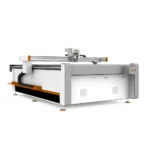
| Product Type | CNC Oscillating Knife Cutting Machine |
| Model | 1625 |
| Working Area | 1600×2500 mm |
| Cutting Accuracy | ±0.1 mm |
| Cutting Thickness Capacity | ≤ 30 mm (basis to be confirmed by material density) |
| Cutting Speed Range | 0–2000 mm/s (basis to be confirmed by material and thickness) |
| Tool Head Options | Oscillating knife, Driven rotary knife, Creasing wheel, Kiss cutting tool, Pneumatic knife, Milling tool, V groove knife |
| Applicable Materials | Fabric, Cardboard, Carton, Mats, PVC, EVA, Leather, Acrylic, Foam, PTFE, Rubber, composite materials (carbon fiber, aramid honeycomb, fiberglass cloth, G10 epoxy boards) |
| Vacuum Table Type | Aluminum bellows vacuum table |
| Vacuum Pump | 9 kW |
| Servo Motor Options | Panasonic, Delta, Dorna |
| Control System | PLC control panel |
| Supported File Formats | PLT, DXF, AI, PDF |
| Voltage Options | 110V, 220V, 380V (frequency to be confirmed) |
| Software Language Options | English, Russian, Italian, Chinese (special languages customizable) |
| Safety Devices | Infrared sensor device, emergency stop device |
| Machine Size | 3300×2100×1350 mm |
| Standards | CE declaration |
Application Suitability
| Application | Material or Output |
|---|---|
| Aerospace interior and structural trimming | Carbon fiber prepreg, aramid honeycomb (Nomex), fiberglass cloth, ceramic fiber blankets, thermal and acoustic insulation foam |
| Automotive and rail lightweighting | Carbon fiber covers, FRP panels, interior composites, acoustic felt, damping pads, carpets, sealing strips |
| Wind power and new energy component prep | Fiberglass cloth, carbon fiber cloth, vacuum infusion mesh, PET and PVC foam core, battery insulation sheets |
| Sporting goods and leisure equipment | Carbon fiber sheets and fabric, Kevlar, high-performance foam for bicycle frame prepreg, helmet liners, surfboards, kayak components |
Why the Wrong Tool Head Ruins a Perfect Working Area
Matching the cutting method to the composite density is more important than choosing the largest table available. A CNC oscillating knife cutting machine for sale is often selected based solely on working area dimensions, yet buyers later discover the standard oscillating head cannot cleanly slice through semi-rigid fiberglass or dense epoxy boards without fraying the edges. The machine may hold the sheet perfectly flat, but if the tool head is wrong for the material composition, the output is scrap. I have seen installations where the vacuum table performed flawlessly while the knife dragged and tore through aramid honeycomb because the driven rotary option was never discussed during the specification stage [NEED_CITE: composite cutting tool selection by material hardness].
Knife Versus Laser: Where Each Method Fits
The full equipment range covers both oscillating knife and laser cutting technologies under one manufacturer. For composite fabricators, this means you can match the process to the material rather than forcing a single method across every job. Oscillating and driven rotary knives handle layered fabrics, prepregs and honeycomb cores without melting or sealing the edges, which is critical when those edges will later be bonded or resin-infused. Laser methods sit on a separate machine family within the catalogue, suited to synthetics and non-metals where edge sealing is acceptable or desired.
Tool Head Configuration Across Composite Densities
The available heads on the 1625 span from a standard oscillating knife for soft fabrics and foam cores, through to a driven rotary knife for woven fiberglass and aramid, and a milling tool for rigid G10 epoxy boards. Each option addresses a different failure mode: frayed edges on woven materials, crushed foam cores, or delamination on rigid laminates. Selecting the right head before the order is placed avoids the situation where the machine arrives, the first test cut fails, and a replacement tool must be shipped internationally while production waits [NEED_CITE: oscillating versus rotary knife cutting on composite fabrics].
Reading the Specs Against Your Actual Material
The cutting speed range of 0–2000 mm/s and thickness capacity up to 30 mm are starting points, not guarantees. Actual throughput depends entirely on the composite you run — a 3 mm carbon fiber prepreg cuts at a different speed and requires a different blade profile than a 20 mm acoustic insulation foam. The 9 kW vacuum pump paired with the aluminum bellows table holds flexible fabrics and prepregs flat, which matters more on large sheets where edge lift causes misalignment. The ±0.1 mm accuracy is achievable on stable materials; on compressible foams or springy honeycomb, real-world tolerance depends on vacuum zoning and tool head pressure. File format compatibility with PLT, DXF, AI and PDF profiles means most nesting software outputs can be imported, but confirming this with your actual workflow before shipment prevents format translation errors on the factory floor.
The Cost of Skipping the Sample Cut
When a machine is specified on working area alone and the tool head is chosen from a brochure rather than tested on the buyer’s own material, the problems surface after installation. Ragged edges on fiberglass cloth mean every piece needs manual trimming. Crushed foam cores compromise the structural integrity of sandwich panels. A vacuum table without adequate zoning lets small composite parts lift during cutting, ruining the nesting yield. These are not machine defects — they are specification errors that could have been caught with a sample cutting report on the actual material before the order was confirmed [NEED_CITE: vacuum table zoning requirements for small composite parts].
Why Source the Full Range From One Build Floor
The design and production team covers both knife and laser cutting technologies in-house, so the cutting method recommendation is based on your material, not on which machine happens to be in stock. Tool head and table configurations are specified per composite type and production volume rather than offered as a fixed package. Software compatibility is confirmed against your existing nesting workflow before the order is finalized. Voltage, plug type and control language are documented and locked in before production begins, not discovered as a problem at the destination port. Sample cutting on your own composite material is available before commitment, providing a physical record of edge quality, cutting depth and cycle time that you can evaluate in your own facility.
Documentation & Verification
- Machine specification sheet confirming working area, tool head configuration and vacuum table type
- Electrical schematic with voltage and frequency matched to your facility’s supply
- Sample cutting report produced on your own composite material before order confirmation
- Software licence and file format compatibility note for your nesting workflow
- Factory test record documenting cutting accuracy and tool head performance before dispatch
- CE declaration covering the complete machine assembly as shipped
Installation, Commissioning & Support
- Floor space planning based on the 3300×2100×1350 mm machine footprint with access clearance
- Dedicated electrical circuit matching confirmed voltage option (110V, 220V or 380V)
- Assembly of aluminum bellows vacuum table and connection of 9 kW vacuum pump on site
- First-run calibration of selected tool head against your composite material thickness and density
- Operator training on PLC control panel functions and file import from PLT, DXF, AI or PDF sources
- Spare parts list covering blades, knife holders and vacuum table seals specific to your configuration
What We Need To Recommend the Right Configuration
To narrow the machine family and tool head selection down to what actually fits your production, we need to know the composite material type and thickness you plan to cut, the largest sheet dimension you receive, and the daily volume you need to achieve. Share your local voltage and frequency, the control language your operators require, and whether your existing nesting software outputs in PLT, DXF, AI or PDF. If you can send a sample of your material, we will run a cutting test and return a physical sample and report before any commitment is made.
Frequently Asked Questions
Q: How do I choose between oscillating knife and laser cutting for my composite material?
A: The choice depends on the material composition and what happens to the cut edge in the next production step. Oscillating and rotary knives leave a clean, unsealed edge suitable for bonding or resin infusion on prepregs and honeycomb cores. Laser methods seal edges on synthetics but can melt or discolor certain composite resins. We recommend the method based on a sample cutting test on your actual material.
Q: How is the working area and vacuum table matched to my production needs?
A: The 1600×2500 mm working area on the 1625 is one configuration within a broader range. Table size is selected based on your sheet dimensions and nesting layout, while vacuum zoning is configured to hold both large panels and small trimmed parts flat. The aluminum bellows table with the 9 kW pump provides the hold-down force needed for flexible composite fabrics.
Q: What voltage and control language options are confirmed before shipment?
A: Voltage options include 110V, 220V and 380V, with frequency confirmed to match your local supply. Control language is available in English, Russian, Italian and Chinese as standard, with special languages customizable. An electrical schematic and voltage confirmation document is issued before production begins so there are no surprises at installation.
Q: How do I verify the machine can handle my specific composite before ordering?
A: We run a sample cutting test on your own material — whether that is carbon fiber prepreg, aramid honeycomb, fiberglass cloth or rigid epoxy board. You receive a physical sample and a cutting report documenting edge quality, achievable cutting depth and cycle time, so you can evaluate the result in your own facility before committing to the order.
Q: Can the software import my existing nesting files?
A: The control system accepts PLT, DXF, AI and PDF profile formats. Before the order is finalized, we confirm compatibility with your specific nesting software output and workflow. A software licence and file format compatibility note is included in the documentation package so your operators can verify the import process during training.
Tool Head & Table Matched To Material — we configure oscillating, rotary, pneumatic or milling heads alongside vacuum zoning based on the specific composite you run, not just the sheet size you quote.
Technical Specifications
| Parameter | Value |
|---|---|
| Product Type | CNC Oscillating Knife Cutting Machine |
| Model | 1625 |
| Working Area | 1600×2500 mm |
| Cutting Accuracy | ±0.1 mm |
| Cutting Thickness Capacity | ≤ 30 mm (basis to be confirmed by material density) |
| Cutting Speed Range | 0–2000 mm/s (basis to be confirmed by material and thickness) |
| Tool Head Options | Oscillating knife, Driven rotary knife, Creasing wheel, Kiss cutting tool, Pneumatic knife, Milling tool, V groove knife |
| Applicable Materials | Fabric, Cardboard, Carton, Mats, PVC, EVA, Leather, Acrylic, Foam, PTFE, Rubber, composite materials (carbon fiber, aramid honeycomb, fiberglass cloth, G10 epoxy boards) |
| Vacuum Table Type | Aluminum bellows vacuum table |
| Vacuum Pump | 9 kW |
| Servo Motor Options | Panasonic, Delta, Dorna |
| Control System | PLC control panel |
| Supported File Formats | PLT, DXF, AI, PDF |
| Voltage Options | 110V, 220V, 380V (frequency to be confirmed) |
| Software Language Options | English, Russian, Italian, Chinese (special languages customizable) |
| Safety Devices | Infrared sensor device, emergency stop device |
| Machine Size | 3300×2100×1350 mm |
| Standards | CE declaration |
Application Suitability
| Application | Material or Output |
|---|---|
| Aerospace interior and structural trimming | Carbon fiber prepreg, aramid honeycomb (Nomex), fiberglass cloth, ceramic fiber blankets, thermal and acoustic insulation foam |
| Automotive and rail lightweighting | Carbon fiber covers, FRP panels, interior composites, acoustic felt, damping pads, carpets, sealing strips |
| Wind power and new energy component prep | Fiberglass cloth, carbon fiber cloth, vacuum infusion mesh, PET and PVC foam core, battery insulation sheets |
| Sporting goods and leisure equipment | Carbon fiber sheets and fabric, Kevlar, high-performance foam for bicycle frame prepreg, helmet liners, surfboards, kayak components |
Why the Wrong Tool Head Ruins a Perfect Working Area
Matching the cutting method to the composite density is more important than choosing the largest table available. A CNC oscillating knife cutting machine for sale is often selected based solely on working area dimensions, yet buyers later discover the standard oscillating head cannot cleanly slice through semi-rigid fiberglass or dense epoxy boards without fraying the edges. The machine may hold the sheet perfectly flat, but if the tool head is wrong for the material composition, the output is scrap. I have seen installations where the vacuum table performed flawlessly while the knife dragged and tore through aramid honeycomb because the driven rotary option was never discussed during the specification stage [NEED_CITE: composite cutting tool selection by material hardness].
Knife Versus Laser: Where Each Method Fits
The full equipment range covers both oscillating knife and laser cutting technologies under one manufacturer. For composite fabricators, this means you can match the process to the material rather than forcing a single method across every job. Oscillating and driven rotary knives handle layered fabrics, prepregs and honeycomb cores without melting or sealing the edges, which is critical when those edges will later be bonded or resin-infused. Laser methods sit on a separate machine family within the catalogue, suited to synthetics and non-metals where edge sealing is acceptable or desired.
Tool Head Configuration Across Composite Densities
The available heads on the 1625 span from a standard oscillating knife for soft fabrics and foam cores, through to a driven rotary knife for woven fiberglass and aramid, and a milling tool for rigid G10 epoxy boards. Each option addresses a different failure mode: frayed edges on woven materials, crushed foam cores, or delamination on rigid laminates. Selecting the right head before the order is placed avoids the situation where the machine arrives, the first test cut fails, and a replacement tool must be shipped internationally while production waits [NEED_CITE: oscillating versus rotary knife cutting on composite fabrics].
Reading the Specs Against Your Actual Material
The cutting speed range of 0–2000 mm/s and thickness capacity up to 30 mm are starting points, not guarantees. Actual throughput depends entirely on the composite you run — a 3 mm carbon fiber prepreg cuts at a different speed and requires a different blade profile than a 20 mm acoustic insulation foam. The 9 kW vacuum pump paired with the aluminum bellows table holds flexible fabrics and prepregs flat, which matters more on large sheets where edge lift causes misalignment. The ±0.1 mm accuracy is achievable on stable materials; on compressible foams or springy honeycomb, real-world tolerance depends on vacuum zoning and tool head pressure. File format compatibility with PLT, DXF, AI and PDF profiles means most nesting software outputs can be imported, but confirming this with your actual workflow before shipment prevents format translation errors on the factory floor.
The Cost of Skipping the Sample Cut
When a machine is specified on working area alone and the tool head is chosen from a brochure rather than tested on the buyer’s own material, the problems surface after installation. Ragged edges on fiberglass cloth mean every piece needs manual trimming. Crushed foam cores compromise the structural integrity of sandwich panels. A vacuum table without adequate zoning lets small composite parts lift during cutting, ruining the nesting yield. These are not machine defects — they are specification errors that could have been caught with a sample cutting report on the actual material before the order was confirmed [NEED_CITE: vacuum table zoning requirements for small composite parts].
Why Source the Full Range From One Build Floor
The design and production team covers both knife and laser cutting technologies in-house, so the cutting method recommendation is based on your material, not on which machine happens to be in stock. Tool head and table configurations are specified per composite type and production volume rather than offered as a fixed package. Software compatibility is confirmed against your existing nesting workflow before the order is finalized. Voltage, plug type and control language are documented and locked in before production begins, not discovered as a problem at the destination port. Sample cutting on your own composite material is available before commitment, providing a physical record of edge quality, cutting depth and cycle time that you can evaluate in your own facility.
Documentation & Verification
- Machine specification sheet confirming working area, tool head configuration and vacuum table type
- Electrical schematic with voltage and frequency matched to your facility’s supply
- Sample cutting report produced on your own composite material before order confirmation
- Software licence and file format compatibility note for your nesting workflow
- Factory test record documenting cutting accuracy and tool head performance before dispatch
- CE declaration covering the complete machine assembly as shipped
Installation, Commissioning & Support
- Floor space planning based on the 3300×2100×1350 mm machine footprint with access clearance
- Dedicated electrical circuit matching confirmed voltage option (110V, 220V or 380V)
- Assembly of aluminum bellows vacuum table and connection of 9 kW vacuum pump on site
- First-run calibration of selected tool head against your composite material thickness and density
- Operator training on PLC control panel functions and file import from PLT, DXF, AI or PDF sources
- Spare parts list covering blades, knife holders and vacuum table seals specific to your configuration
What We Need To Recommend the Right Configuration
To narrow the machine family and tool head selection down to what actually fits your production, we need to know the composite material type and thickness you plan to cut, the largest sheet dimension you receive, and the daily volume you need to achieve. Share your local voltage and frequency, the control language your operators require, and whether your existing nesting software outputs in PLT, DXF, AI or PDF. If you can send a sample of your material, we will run a cutting test and return a physical sample and report before any commitment is made.
Frequently Asked Questions
Q: How do I choose between oscillating knife and laser cutting for my composite material?
A: The choice depends on the material composition and what happens to the cut edge in the next production step. Oscillating and rotary knives leave a clean, unsealed edge suitable for bonding or resin infusion on prepregs and honeycomb cores. Laser methods seal edges on synthetics but can melt or discolor certain composite resins. We recommend the method based on a sample cutting test on your actual material.
Q: How is the working area and vacuum table matched to my production needs?
A: The 1600×2500 mm working area on the 1625 is one configuration within a broader range. Table size is selected based on your sheet dimensions and nesting layout, while vacuum zoning is configured to hold both large panels and small trimmed parts flat. The aluminum bellows table with the 9 kW pump provides the hold-down force needed for flexible composite fabrics.
Q: What voltage and control language options are confirmed before shipment?
A: Voltage options include 110V, 220V and 380V, with frequency confirmed to match your local supply. Control language is available in English, Russian, Italian and Chinese as standard, with special languages customizable. An electrical schematic and voltage confirmation document is issued before production begins so there are no surprises at installation.
Q: How do I verify the machine can handle my specific composite before ordering?
A: We run a sample cutting test on your own material — whether that is carbon fiber prepreg, aramid honeycomb, fiberglass cloth or rigid epoxy board. You receive a physical sample and a cutting report documenting edge quality, achievable cutting depth and cycle time, so you can evaluate the result in your own facility before committing to the order.
Q: Can the software import my existing nesting files?
A: The control system accepts PLT, DXF, AI and PDF profile formats. Before the order is finalized, we confirm compatibility with your specific nesting software output and workflow. A software licence and file format compatibility note is included in the documentation package so your operators can verify the import process during training.










商品评价
There are no reviews yet.