


Fast Delivery
Quick, reliable shipping to any location.

Free & easy returns
Return this item by mail or in store within 90 days for a full refund.
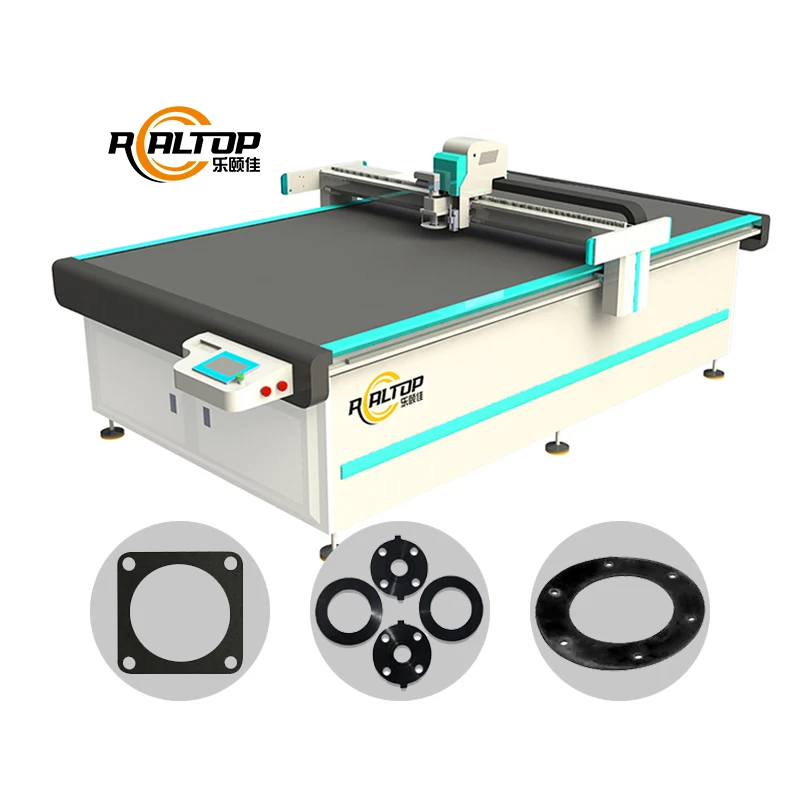
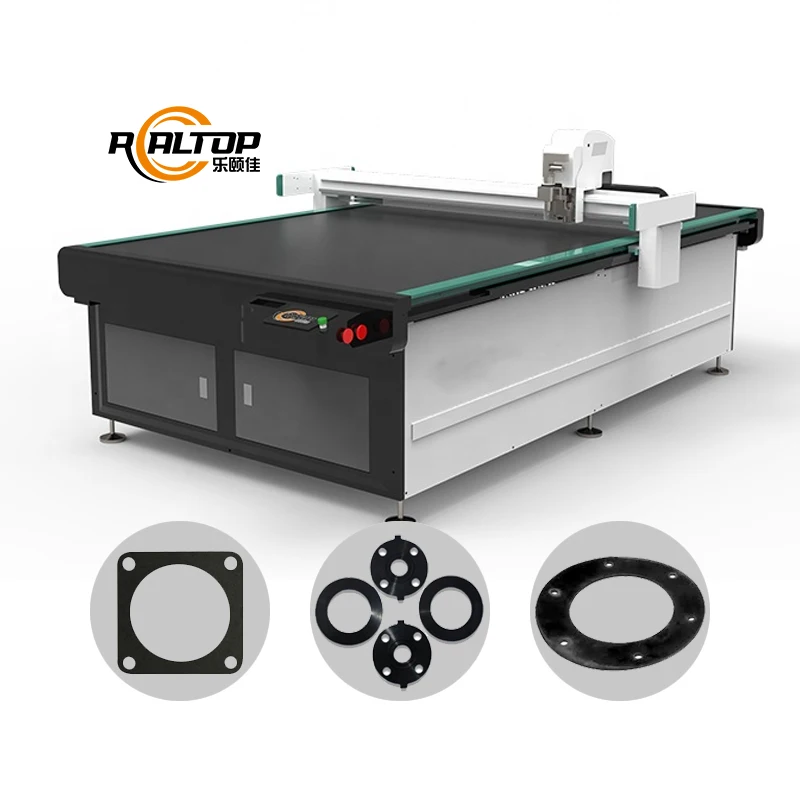
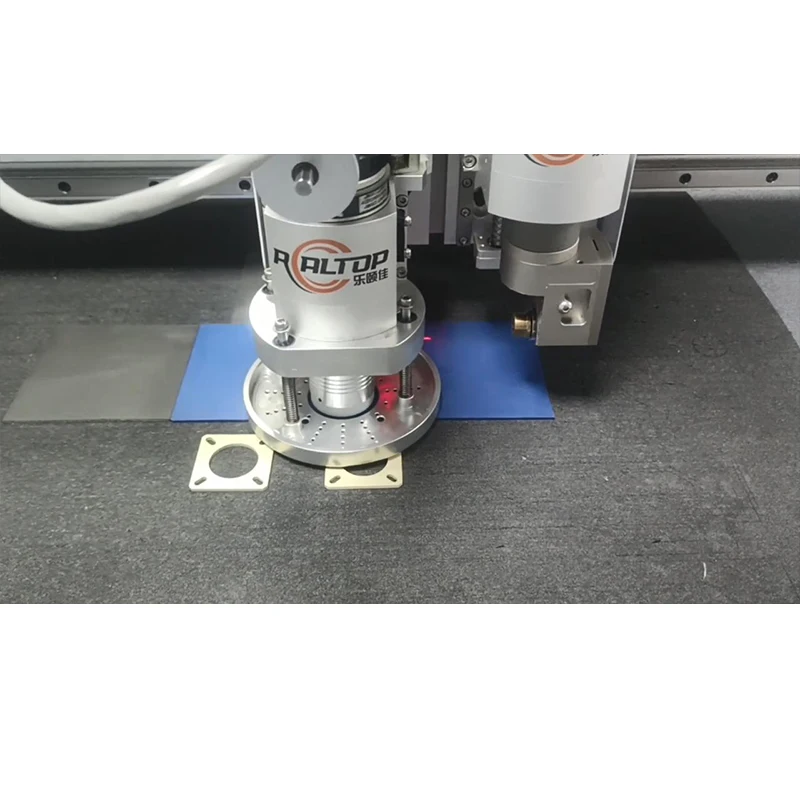
Precision Tool Head Matching — We configure the cutting head per your actual gasket material and density, not by catalog default, to prevent premature blade breakage and ragged edges on production runs.
Technical Specifications
| Parameter | Value |
|---|---|
| Model | RT-D2516/RT-S2516 |
| Product Type | CNC Oscillating Knife Cutting Machine |
| Working Area | 1600×2500 mm |
| Machine Size | 3450×2300×1250 mm |
| Rated Power | 9 kW |
| Voltage | 380V±10% |
| Cutting Thickness | 20–80 mm (basis to be confirmed per material density) |
| Translational Velocity | 800–1200 mm/s |
| Repeated Accuracy | ≤0.1 mm |
| Servo Motor | Delta (Panasonic optional) |
| Linear Guide | Taiwan Hiwin rail |
| Working Table | Flat magnesium-aluminum alloy vacuum adsorption with PVDF coating, anodic and hard oxidation |
| Vacuum Pump | 7.5 kW, aviation aluminum shell with built-in silencer sponge |
| Conveyor | Germany imported belt, auto feeding |
| Tool Head Options | Swiss imported knife (vibration full/half cut, cursor location); optional oscillating, pneumatic, high-power vibrating, circular, V-cut, drag knife, creasing wheel, dotted line, punching, brush |
| Visual Positioning | Small CCD mark point, panoramic camera recognition, projection positioning (options) |
| Control Format | HP-GL compatible |
| Safety Devices | Infrared induction blocking, anti-collision beam sensors, emergency stop with in-situ resume |
| Language Options | English, Russian, Italian, Chinese; special languages customizable |
| Certification | CE (specific certificate details to be confirmed with documentation) |
| Warranty | One year free (domestic and abroad); lifetime technical support |
Application Suitability
| Application | Material or Output |
|---|---|
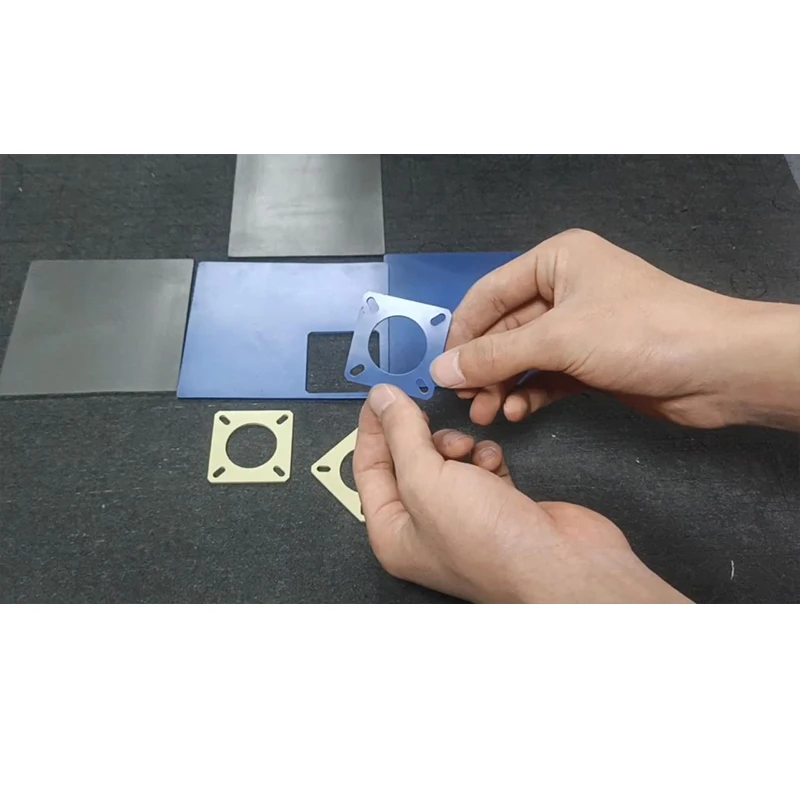
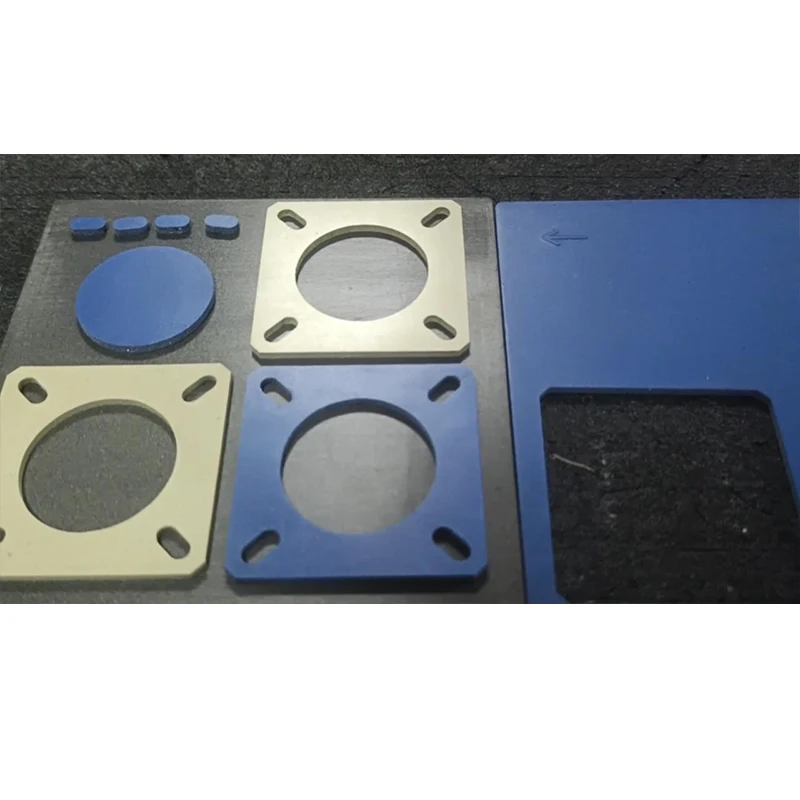
| Gasket and sealing pad production | Rubber, PTFE, ETFE, PTFE composites, non-asbestos fiber sheets |
| Automotive interior components | PU foam, EVA, XPE, sponge composites, headliner fabric |
| Industrial sealing fabrication | Cork-rubber blends, compressed fiber, graphite laminate |
| Packaging sample making | Corrugated cardboard, PVC board, film, sticker sheets |
| Signage and display cutting | Foam board, acrylic sheet, vinyl, adhesive-backed materials |
Why "20–80 mm Cutting Thickness" Can Mislead Gasket Buyers
Thickness ratings shift dramatically once you move from soft foam to high-density rubber or compressed PTFE.
A CNC oscillating knife cutting machine for sale might list an impressive depth range, yet that figure often references low-density foam. When a gasket producer feeds 60 mm compressed non-asbestos fiber into the same setup, the blade deflects, edges delaminate, and cycle times stretch well beyond the brochure estimate. I once stood beside a line where the operator swapped blades three times in a single shift because the tool head had been chosen on paper thickness alone. The material vendor’s data sheet told a different story about Shore hardness and tensile strength. [NEED_CITE: material hardness and tensile variation across gasket compound families]
From Knife to Laser — Where Each Technology Fits
Buyers surveying cutting equipment often face the knife-versus-laser decision before any model is chosen. Oscillating knife technology suits compressible and fibrous gasket materials where a physical blade yields a clean, uncompressed edge. Laser cutting, by contrast, seals synthetic edges and handles intricate contours on thinner films. Our product range covers both methods, so a buyer evaluates material response first and selects the process afterward rather than forcing one method onto every substrate. The RT-D2516/RT-S2516 occupies the mid-to-large format knife segment, bridging prototype runs and continuous gasket sheet production.
Matching the Tool Head to Gasket Density and Behavior
Selecting the correct tool head is where most configuration mistakes originate. An oscillating knife handles mid-density rubber and fiber sheets with a rapid up-and-down stroke, while a pneumatic knife drives through thicker compressed PTFE with higher downward force. A drag knife traces thin sticker and film contours at speed but crushes foam. The multi-functional head on this machine supports swapping among these options on a single gantry, meaning a gasket shop can run a rubber compound in the morning and switch to a PTFE laminate in the afternoon without re-rigging the carriage. [NEED_CITE: tool head selection criteria for industrial gasket cutting applications]
Reading the Specs That Matter on the Production Floor
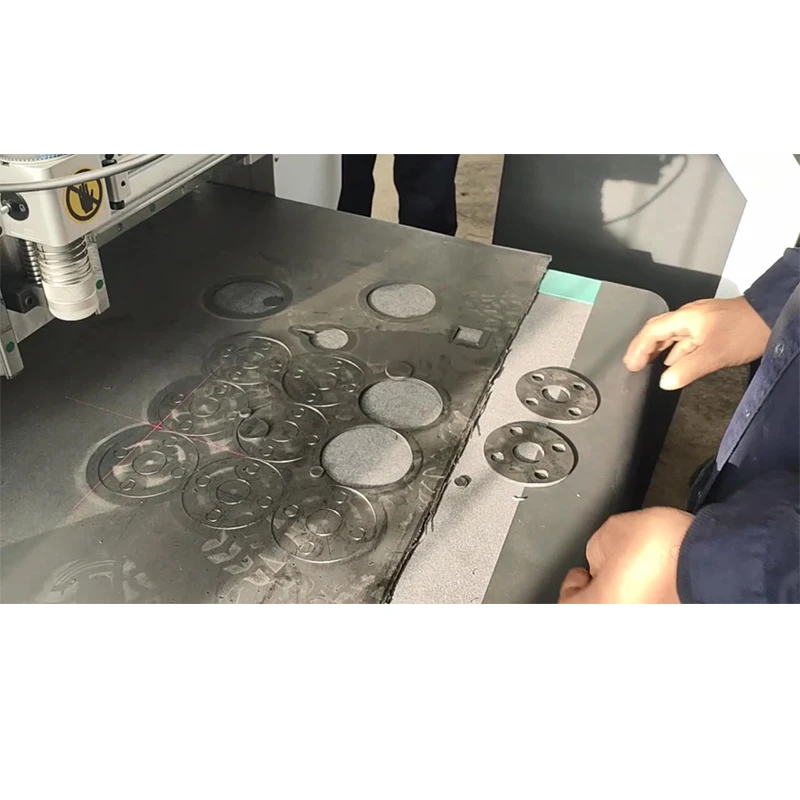
The 1600×2500 mm working area accommodates standard gasket sheet stock without excessive repositioning, which reduces registration errors across nested parts. A Delta servo system paired with Hiwin linear rails holds repeated accuracy within 0.1 mm — a tolerance that keeps bolt-hole patterns in gaskets within assembly spec. The 7.5 kW vacuum pump distributed across a magnesium-aluminum table with PVDF coating addresses a recurring complaint in gasket shops: small cut parts lifting off the bed mid-cycle. Uniform suction across properly zoned sections holds even lightweight PTFE shims flat. HP-GL compatible control format means most existing CAD nesting files import without a software overhaul, though file format compatibility should always be confirmed before order placement.
What Happens When Configuration Is Skipped
I recall a gasket shop that received a machine configured for soft foam. Their actual stock was 40 mm high-density nitrile rubber. The standard vibration knife snapped repeatedly, and the finished gaskets showed feathered edges that failed seal testing. The vacuum zoning was also set for large-format signage, leaving small O-ring blanks drifting during the cut. That shop scrapped two full batches before the supplier sent a technician to reconfigure the head and re-map the suction zones. The downtime and material loss far exceeded the cost of a proper sample cut up front. [NEED_CITE: cost of unplanned downtime in gasket manufacturing environments]
Why Source This Machine Through Our Process
In-house design covers both knife and laser platforms, allowing a gasket buyer to compare cutting methods on the same material rather than accept a default recommendation. Tool head and table zoning are specified per the buyer’s material samples, not selected from a static menu. CCD camera and panoramic positioning options address printed-contour work when gaskets carry registration marks. Software format and HP-GL compatibility are validated before order confirmation. Voltage, plug type, and control language are documented and signed off before the machine leaves the factory. Every unit ships after a factory test recorded against the buyer’s own material and thickness.
Documentation & Verification
- Machine specification sheet listing confirmed tool head and vacuum table zone configuration
- Electrical schematic with voltage and frequency matched to your facility supply
- Sample cutting report run on your gasket material with measured edge quality and cycle time
- Tool head and table configuration list signed off per material type and thickness
- Software licence and file format compatibility note referencing your existing nesting workflow
- Packing photographs documenting condition at point of dispatch
Installation, Commissioning & Support
- Floor plan review for the 3450×2300 mm footprint plus conveyor infeed clearance
- Dedicated 380V±10% circuit with breaker sizing matched to the 9 kW rated draw
- Assembly on site with leveling verification across the magnesium-aluminum vacuum table
- First-run parameter setup on your gasket stock, adjusting oscillation frequency and feed rate
- Operator training covering tool head swap procedure and vacuum zone mapping
- Spare parts list with Swiss knife blades, belts, and Hiwin rail carriages identified
What We Need to Configure Your Machine
Send us the gasket material type, density or Shore hardness, sheet dimensions, and your target daily volume. Confirm your facility voltage and frequency, preferred control language, and any existing nesting software in use. If your parts carry printed registration marks, let us know the mark format so we can specify the appropriate CCD or panoramic positioning option. We will run sample cuts on your actual material and return a cutting report before any order is finalized.
Frequently Asked Questions
Q: How do I verify the cutting thickness will work for my specific gasket material?
A: Thickness capacity depends on material density and hardness, not just depth. We run sample cuts on your actual stock — rubber, PTFE, fiber composite — and document edge quality, cycle time, and blade wear in a cutting report before you commit to an order.
Q: Which tool head suits my gasket material — oscillating, pneumatic, or drag knife?
A: Oscillating knives handle mid-density rubber and fiber sheets; pneumatic knives push through thicker compressed PTFE; drag knives trace thin films. We recommend the head after sample testing your material and confirm the configuration before production.
Q: Can the CCD camera track printed marks at production speed on gasket sheets?
A: Both small CCD mark-point and panoramic camera options are available. Performance depends on mark contrast, print quality, and line speed. We test recognition on your printed material during the sample phase and report tracking accuracy before shipment.
Q: Will the vacuum table hold small gasket parts flat during cutting?
A: The magnesium-aluminum table is divided into suction zones. We map zone activation to your part nesting layout during setup. Small O-rings and thin shims require proper zoning to prevent lift, which we validate on your material before dispatch.
Q: What electrical and language details must be confirmed before the machine ships?
A: We document your facility voltage, frequency, plug type, and preferred control language before production begins. An electrical schematic is provided for your electrician’s review, and any special language requests are programmed into the interface ahead of factory testing.
Precision Tool Head Matching — We configure the cutting head per your actual gasket material and density, not by catalog default, to prevent premature blade breakage and ragged edges on production runs.
Technical Specifications
| Parameter | Value |
|---|---|
| Model | RT-D2516/RT-S2516 |
| Product Type | CNC Oscillating Knife Cutting Machine |
| Working Area | 1600×2500 mm |
| Machine Size | 3450×2300×1250 mm |
| Rated Power | 9 kW |
| Voltage | 380V±10% |
| Cutting Thickness | 20–80 mm (basis to be confirmed per material density) |
| Translational Velocity | 800–1200 mm/s |
| Repeated Accuracy | ≤0.1 mm |
| Servo Motor | Delta (Panasonic optional) |
| Linear Guide | Taiwan Hiwin rail |
| Working Table | Flat magnesium-aluminum alloy vacuum adsorption with PVDF coating, anodic and hard oxidation |
| Vacuum Pump | 7.5 kW, aviation aluminum shell with built-in silencer sponge |
| Conveyor | Germany imported belt, auto feeding |
| Tool Head Options | Swiss imported knife (vibration full/half cut, cursor location); optional oscillating, pneumatic, high-power vibrating, circular, V-cut, drag knife, creasing wheel, dotted line, punching, brush |
| Visual Positioning | Small CCD mark point, panoramic camera recognition, projection positioning (options) |
| Control Format | HP-GL compatible |
| Safety Devices | Infrared induction blocking, anti-collision beam sensors, emergency stop with in-situ resume |
| Language Options | English, Russian, Italian, Chinese; special languages customizable |
| Certification | CE (specific certificate details to be confirmed with documentation) |
| Warranty | One year free (domestic and abroad); lifetime technical support |
Application Suitability
| Application | Material or Output |
|---|---|
| Gasket and sealing pad production | Rubber, PTFE, ETFE, PTFE composites, non-asbestos fiber sheets |
| Automotive interior components | PU foam, EVA, XPE, sponge composites, headliner fabric |
| Industrial sealing fabrication | Cork-rubber blends, compressed fiber, graphite laminate |
| Packaging sample making | Corrugated cardboard, PVC board, film, sticker sheets |
| Signage and display cutting | Foam board, acrylic sheet, vinyl, adhesive-backed materials |
Why "20–80 mm Cutting Thickness" Can Mislead Gasket Buyers
Thickness ratings shift dramatically once you move from soft foam to high-density rubber or compressed PTFE.
A CNC oscillating knife cutting machine for sale might list an impressive depth range, yet that figure often references low-density foam. When a gasket producer feeds 60 mm compressed non-asbestos fiber into the same setup, the blade deflects, edges delaminate, and cycle times stretch well beyond the brochure estimate. I once stood beside a line where the operator swapped blades three times in a single shift because the tool head had been chosen on paper thickness alone. The material vendor’s data sheet told a different story about Shore hardness and tensile strength. [NEED_CITE: material hardness and tensile variation across gasket compound families]
From Knife to Laser — Where Each Technology Fits
Buyers surveying cutting equipment often face the knife-versus-laser decision before any model is chosen. Oscillating knife technology suits compressible and fibrous gasket materials where a physical blade yields a clean, uncompressed edge. Laser cutting, by contrast, seals synthetic edges and handles intricate contours on thinner films. Our product range covers both methods, so a buyer evaluates material response first and selects the process afterward rather than forcing one method onto every substrate. The RT-D2516/RT-S2516 occupies the mid-to-large format knife segment, bridging prototype runs and continuous gasket sheet production.
Matching the Tool Head to Gasket Density and Behavior
Selecting the correct tool head is where most configuration mistakes originate. An oscillating knife handles mid-density rubber and fiber sheets with a rapid up-and-down stroke, while a pneumatic knife drives through thicker compressed PTFE with higher downward force. A drag knife traces thin sticker and film contours at speed but crushes foam. The multi-functional head on this machine supports swapping among these options on a single gantry, meaning a gasket shop can run a rubber compound in the morning and switch to a PTFE laminate in the afternoon without re-rigging the carriage. [NEED_CITE: tool head selection criteria for industrial gasket cutting applications]
Reading the Specs That Matter on the Production Floor
The 1600×2500 mm working area accommodates standard gasket sheet stock without excessive repositioning, which reduces registration errors across nested parts. A Delta servo system paired with Hiwin linear rails holds repeated accuracy within 0.1 mm — a tolerance that keeps bolt-hole patterns in gaskets within assembly spec. The 7.5 kW vacuum pump distributed across a magnesium-aluminum table with PVDF coating addresses a recurring complaint in gasket shops: small cut parts lifting off the bed mid-cycle. Uniform suction across properly zoned sections holds even lightweight PTFE shims flat. HP-GL compatible control format means most existing CAD nesting files import without a software overhaul, though file format compatibility should always be confirmed before order placement.
What Happens When Configuration Is Skipped
I recall a gasket shop that received a machine configured for soft foam. Their actual stock was 40 mm high-density nitrile rubber. The standard vibration knife snapped repeatedly, and the finished gaskets showed feathered edges that failed seal testing. The vacuum zoning was also set for large-format signage, leaving small O-ring blanks drifting during the cut. That shop scrapped two full batches before the supplier sent a technician to reconfigure the head and re-map the suction zones. The downtime and material loss far exceeded the cost of a proper sample cut up front. [NEED_CITE: cost of unplanned downtime in gasket manufacturing environments]
Why Source This Machine Through Our Process
In-house design covers both knife and laser platforms, allowing a gasket buyer to compare cutting methods on the same material rather than accept a default recommendation. Tool head and table zoning are specified per the buyer’s material samples, not selected from a static menu. CCD camera and panoramic positioning options address printed-contour work when gaskets carry registration marks. Software format and HP-GL compatibility are validated before order confirmation. Voltage, plug type, and control language are documented and signed off before the machine leaves the factory. Every unit ships after a factory test recorded against the buyer’s own material and thickness.
Documentation & Verification
- Machine specification sheet listing confirmed tool head and vacuum table zone configuration
- Electrical schematic with voltage and frequency matched to your facility supply
- Sample cutting report run on your gasket material with measured edge quality and cycle time
- Tool head and table configuration list signed off per material type and thickness
- Software licence and file format compatibility note referencing your existing nesting workflow
- Packing photographs documenting condition at point of dispatch
Installation, Commissioning & Support
- Floor plan review for the 3450×2300 mm footprint plus conveyor infeed clearance
- Dedicated 380V±10% circuit with breaker sizing matched to the 9 kW rated draw
- Assembly on site with leveling verification across the magnesium-aluminum vacuum table
- First-run parameter setup on your gasket stock, adjusting oscillation frequency and feed rate
- Operator training covering tool head swap procedure and vacuum zone mapping
- Spare parts list with Swiss knife blades, belts, and Hiwin rail carriages identified
What We Need to Configure Your Machine
Send us the gasket material type, density or Shore hardness, sheet dimensions, and your target daily volume. Confirm your facility voltage and frequency, preferred control language, and any existing nesting software in use. If your parts carry printed registration marks, let us know the mark format so we can specify the appropriate CCD or panoramic positioning option. We will run sample cuts on your actual material and return a cutting report before any order is finalized.
Frequently Asked Questions
Q: How do I verify the cutting thickness will work for my specific gasket material?
A: Thickness capacity depends on material density and hardness, not just depth. We run sample cuts on your actual stock — rubber, PTFE, fiber composite — and document edge quality, cycle time, and blade wear in a cutting report before you commit to an order.
Q: Which tool head suits my gasket material — oscillating, pneumatic, or drag knife?
A: Oscillating knives handle mid-density rubber and fiber sheets; pneumatic knives push through thicker compressed PTFE; drag knives trace thin films. We recommend the head after sample testing your material and confirm the configuration before production.
Q: Can the CCD camera track printed marks at production speed on gasket sheets?
A: Both small CCD mark-point and panoramic camera options are available. Performance depends on mark contrast, print quality, and line speed. We test recognition on your printed material during the sample phase and report tracking accuracy before shipment.
Q: Will the vacuum table hold small gasket parts flat during cutting?
A: The magnesium-aluminum table is divided into suction zones. We map zone activation to your part nesting layout during setup. Small O-rings and thin shims require proper zoning to prevent lift, which we validate on your material before dispatch.
Q: What electrical and language details must be confirmed before the machine ships?
A: We document your facility voltage, frequency, plug type, and preferred control language before production begins. An electrical schematic is provided for your electrician’s review, and any special language requests are programmed into the interface ahead of factory testing.










商品评价
There are no reviews yet.