



Fast Delivery
Quick, reliable shipping to any location.

Free & easy returns
Return this item by mail or in store within 90 days for a full refund.
Complete Cutting Range — The catalogue spans knife and laser models from compact to large format, so you match the method to the material rather than forcing one technology.
Technical Specifications
| Parameter | Value |
|---|---|
| Model | RT-D2516 / RT-S2516 |
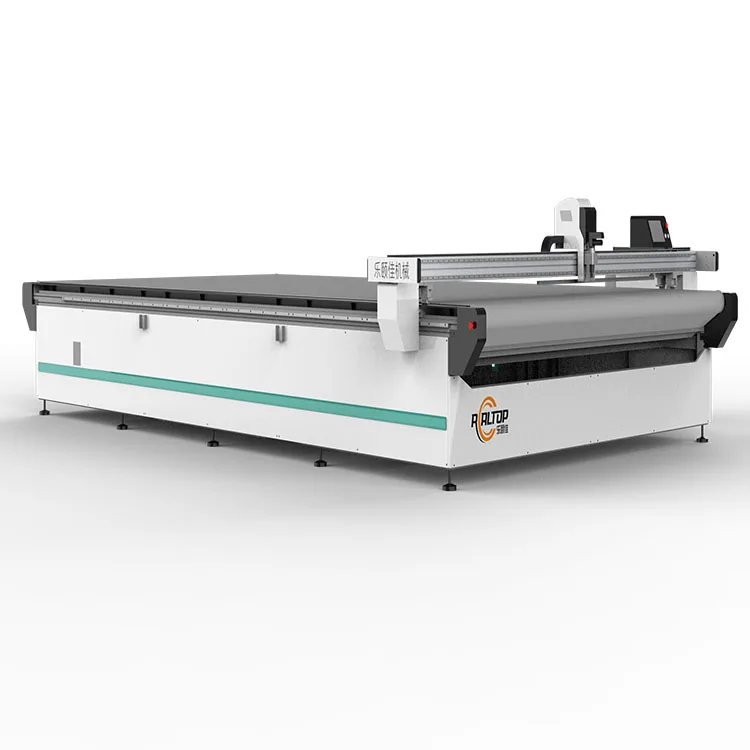
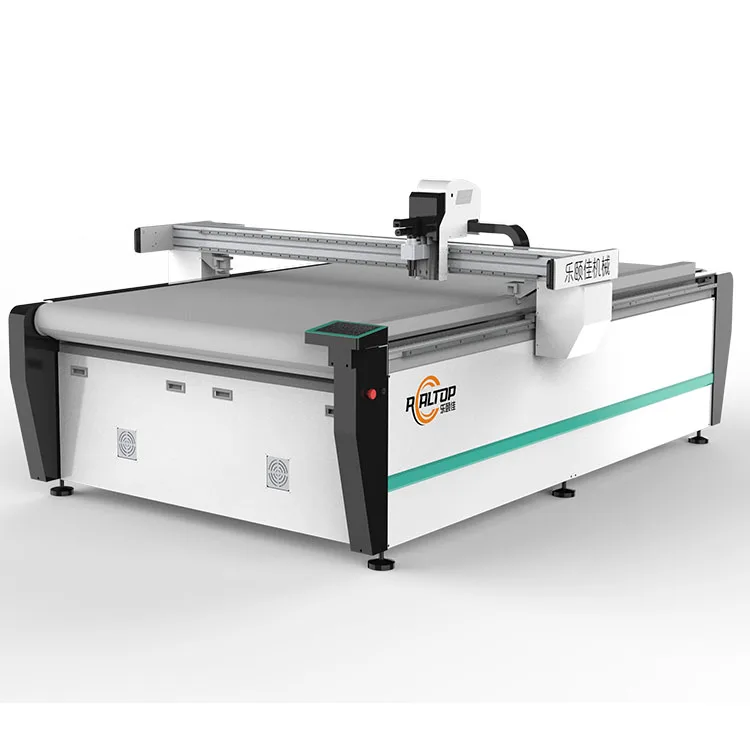
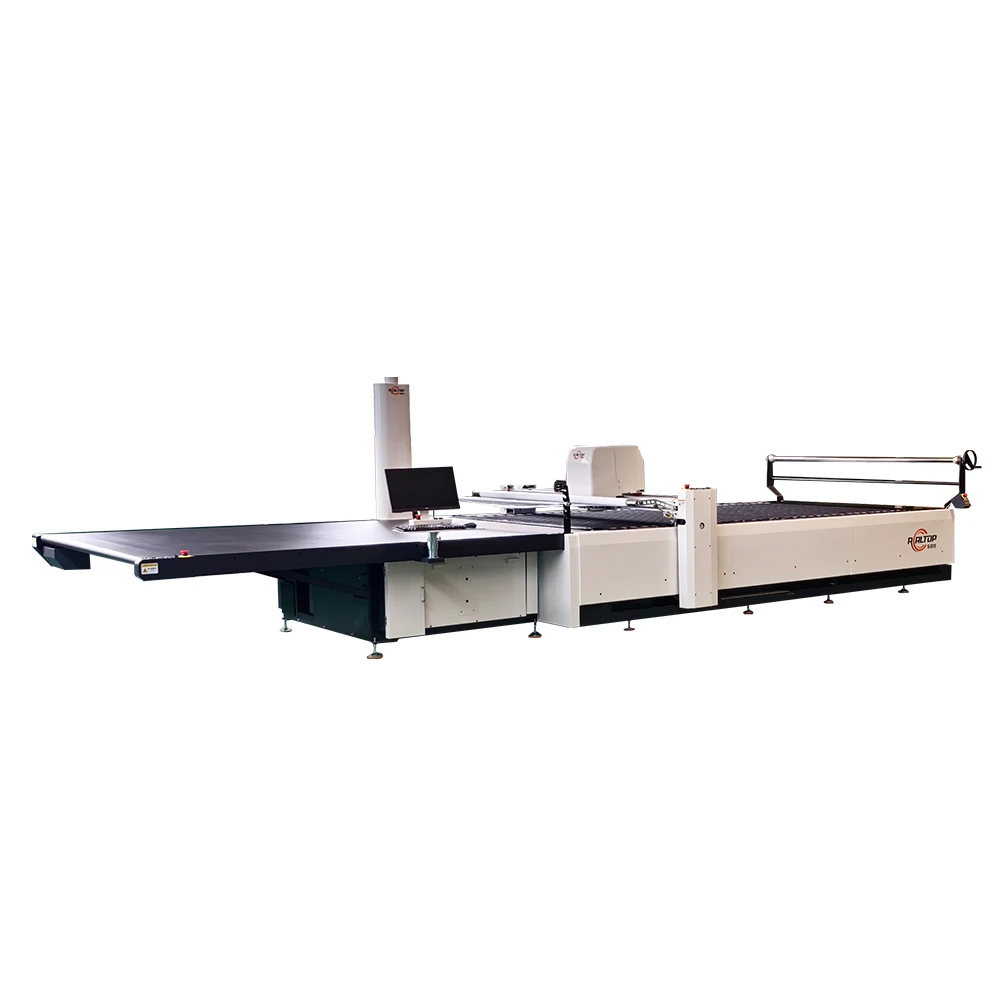
| Product Type | CNC Oscillating Knife Cutting Machine |
| Working Area | 1600 × 2500 mm |
| Overall Dimensions (L×W×H) | 3450 × 2300 × 1250 mm |
| Rated Power | 9 kW |
| Voltage | 380V ± 10% |
| Servo Motor | Delta (Panasonic optional) |
| Transmission | Linear guide with synchronous belt and ball screw, Taiwan Hiwin rail |
| Translational Velocity | 800 – 2000 mm/s |
| Cutting Speed | 200 – 800 mm/s (basis not stated in source — confirm with material and thickness) |
| Cutting Thickness | Up to 100 mm (varies with material) |
| Repeated Accuracy | ≤ 0.1 mm |
| Vacuum Pump | 7.5 kW, aviation aluminum shell with built-in silencer |
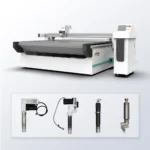
| Tool Head Options | Swiss imported knife, oscillating, pneumatic, high-power vibrating, circular, V-cutting, drag knife, creasing wheel, dotted line, punching, brush |
| Visual Positioning | Small CCD mark-point, panoramic camera recognition, projection positioning |
| Working Table | Magnesium-aluminum alloy vacuum adsorption, fluorocarbon PVDF coating; flat or auto-feeding conveyor |
| Control System | CNC touch screen, multi-language |
| Software & File Formats | HP-GL compatible; PLT, DXF, AI |
| Safety | Infrared induction blocking, anti-collision, emergency stop |
| Assembly State | Fully assembled |
| Standards | CE |
Application Suitability
| Application | Material or Output |
|---|---|
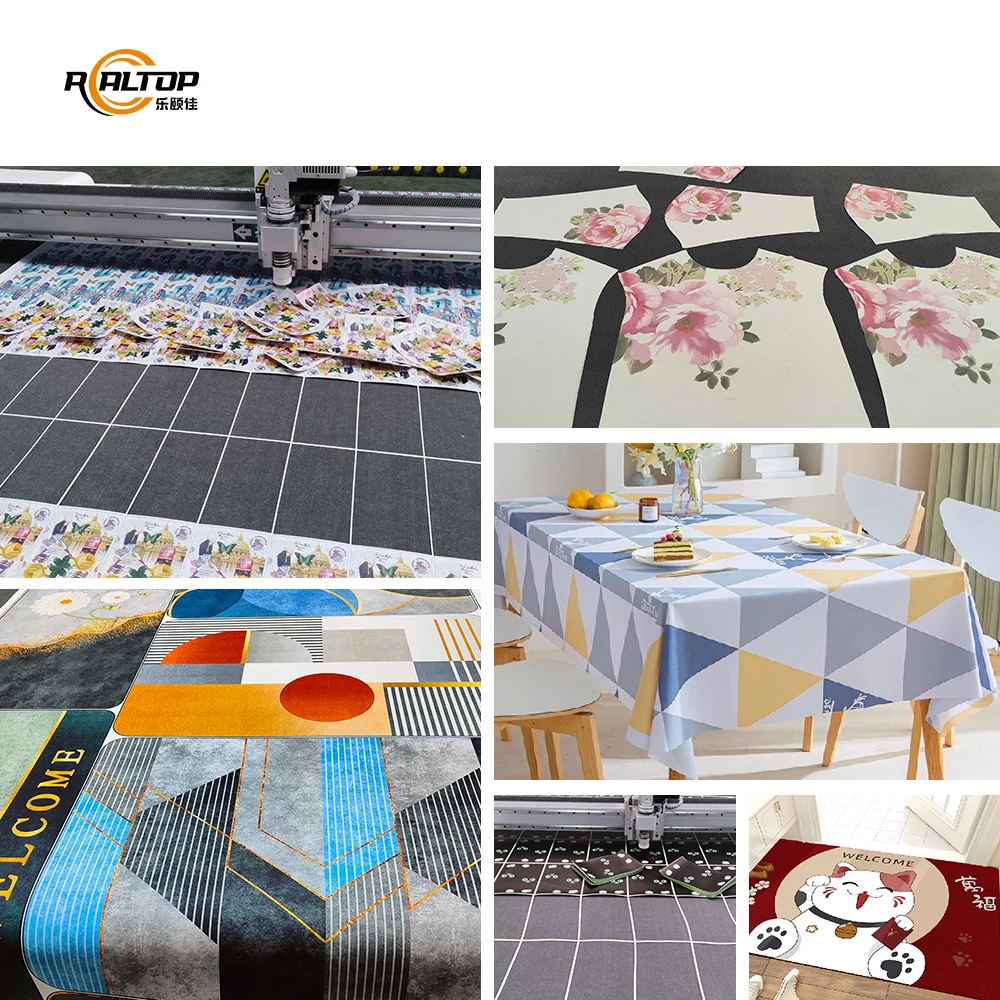
| Garment and footwear cutting | Single-layer or multi-layer woven fabric, knit, non-woven, leather, shoe uppers |
| Automotive interior trimming | PU foam, sponge, composite panels, synthetic leather, gasket stock |
| Soft furnishing production | Carpet, upholstery textile, curtain fabric, home textile composites |
| Packaging and sample making | Corrugated cardboard, film, sticker, foam board |
| Composite and gasket fabrication | PTFE, ETFE, carbon fiber prepreg, rubber, silicon sheet |
Why "Working Area" Alone Is Not a Specification
A CNC oscillating knife cutting machine manufacturer that quotes only table size leaves the buyer guessing what actually happens when the knife hits the material. The cutting method, tool head type, vacuum zoning and blade frequency must all be specified against the exact material and thickness before an order is meaningful.
I have watched fabricators receive a machine with the right bed size and the wrong tool head, then spend weeks trying to force clean edges out of a drag knife on closed-cell foam. The ragged edges and crushed cores were not a machine defect — they were a specification gap. The same gap appears when vacuum zones are too large for the parts being cut, letting small pieces lift mid-cycle [NEED_CITE: vacuum table zoning and small-part hold-down in digital cutting]. A real CNC digital cutting machine for sale listing should answer what happens at the knife tip, not just how big the table is.
Matching the Knife to the Fabric
Every textile behaves differently under a vibrating blade. Woven cotton with no stretch cuts cleanly with a standard oscillating knife at moderate frequency. Introduce elastane or Lycra into the weave and the same blade pulls the yarn, leaving frayed edges that fail quality inspection. The RT-D2516 and RT-S2516 address this through a tool head carousel that holds Swiss imported knives alongside pneumatic and high-power vibrating options, letting the operator switch cutting tools without changing machines. For apparel producers running seasonal fabric changes, this flexibility means the same CNC oscillating knife cutting machine manufacturer configuration handles spring cotton and winter fleece without compromise.
Printed Contour Recognition Across the Range
Many buyers assume any CCD camera system will track printed registration marks at full production speed. In practice, small mark-point cameras work well for discrete logos and labels but struggle with continuous roll textiles where the print repeats every several meters. The panoramic camera option on these models captures a wider field, recognizing contour patterns across the full working width. Combined with projection positioning for manual alignment checks, the CNC digital cutting machine for sale lineup covers three distinct visual workflows — and the right one depends entirely on whether the buyer cuts piece goods or continuous printed rolls [NEED_CITE: CCD camera positioning accuracy on printed textile at production speed].
What the Specs Mean on the Shop Floor
The 1600 × 2500 mm working area fits standard fabric roll widths without re-cutting, reducing handling time between lays. Taiwan Hiwin linear rails and ball screw transmission hold repeated accuracy to 0.1 mm, which matters when nesting software packs pattern pieces tightly — even a slight drift over a long cut path compounds into misaligned panels downstream. The 7.5 kW vacuum pump with integrated silencer keeps noise within acceptable workshop limits while maintaining enough suction to hold lightweight non-woven and slippery film flat against the magnesium-aluminum table. Translational speed reaching 2000 mm/s and cutting speed up to 800 mm/s give a wide operating window, though actual throughput depends on material density and part geometry (basis not stated in source). The touch-screen CNC panel with multi-language support reduces operator onboarding time in export markets, where the control interface needs to match the local workforce.
The Cost of Skipping Material Trials
Buyers who commit to a CNC oscillating knife cutting machine manufacturer without running their own material on the machine often discover problems only after installation. A garment producer cutting technical sportswear with bonded layers may find the standard oscillating knife crushes the membrane while a pneumatic knife separates the layers cleanly. Without a pre-order sample cut, that discovery happens on the production floor with a full roll of expensive fabric already loaded. The consequences extend beyond material waste — production schedules slip, operator confidence drops, and the machine sits idle while tooling parameters are reworked from scratch [NEED_CITE: material trial importance in CNC cutting machine procurement].
Why Source From This Catalogue
Realtop Machinery designs and produces both knife and laser cutting systems in-house, so the buyer selects the correct cutting physics for the material rather than being steered toward whichever technology the supplier happens to stock. Tool head and table configuration are specified per material sample and production volume, not picked from a generic menu. CCD camera positioning, voltage customization, control language and software file format compatibility are confirmed before the order enters production — not discovered as problems at commissioning. Every machine ships with a sample cutting report on the buyer’s own material, providing documented proof that the configuration works before the crate leaves Jinan. The assembly arrives fully built, reducing on-site installation time and eliminating alignment errors from field assembly.
Documentation & Verification
- Machine specification sheet listing exact tool head, vacuum zone layout and cutting parameters for your material
- Electrical schematic with voltage confirmation matching your facility supply before production begins
- Sample cutting report on your fabric or composite material with edge quality photographs
- Software licence and file format note confirming PLT, DXF and AI compatibility with your nesting workflow
- CE declaration included with shipment documentation package
- Spare parts list with tool head consumables matched to your material type
Installation, Commissioning & Support
- Flat concrete floor required for the 3450 × 2300 mm footprint with clearance for conveyor feed if equipped
- Dedicated 380V ± 10% circuit with proper grounding for the 9 kW rated power draw
- Machine ships fully assembled — position, level, connect power and vacuum, then calibrate
- First-run commissioning includes tool head frequency tuning on your specific fabric or composite stock
- Operator training covers touch-screen CNC panel in your selected language including English, Russian or Italian
- Wear parts inventory recommended: oscillating knife blades, vacuum table seals, CCD camera lens covers
What to Share With Your Inquiry
To configure the right model from this range, provide your primary material type with thickness range, typical sheet or roll width, and daily cutting volume. Include your facility voltage and frequency, preferred control language, and the CAD or nesting software you currently use. If you are cutting printed material, specify the mark type and repeat length so the correct visual positioning system can be selected. Material samples sent to the factory enable a documented trial cut before quotation.
Frequently Asked Questions
Q: How do I choose between oscillating knife and drag knife for my materials?
A: Oscillating knives vibrate at high frequency and suit thicker, fibrous materials like foam, sponge and multi-layer fabric where a clean shear cut is needed. Drag knives pull through thinner, flexible materials such as single-layer vinyl, sticker film and lightweight textile. The RT-D2516 and RT-S2516 support both on the same tool head, and the correct choice is confirmed through a sample cut on your actual material before order.
Q: What working area and table options are available across this model range?
A: These models offer a 1600 × 2500 mm working area with a choice of flat magnesium-aluminum vacuum table or auto-feeding conveyor table. The flat table suits sheet-fed operations and rigid materials, while the conveyor feeds continuous roll fabric for uninterrupted cutting cycles. Working area sizes across the broader catalogue range from compact to large format for different production scales.
Q: How is the correct tool head matched to a specific material?
A: The tool head selection depends on material composition, thickness and required edge quality. A buyer cutting bonded sportswear layers may need a pneumatic knife to prevent delamination, while a gasket producer cutting PTFE sheet requires a high-power vibrating knife. Each configuration is validated by cutting your material sample at the factory, with parameters recorded in the sample cutting report.
Q: What voltage and language options are available for export?
A: The baseline electrical specification is 380V ± 10%, with customization available for different market requirements. Voltage, plug type and frequency must be confirmed before production to match your facility supply. The CNC touch-screen control panel supports English, Russian, Italian and Chinese, with additional languages configurable on request.
Q: Can I arrange a sample cut on my own material before ordering?
A: Yes. Send your fabric, composite or gasket material to the factory and the engineering team runs it on the proposed configuration. The sample cutting report documents edge quality, cutting parameters and tool head settings, giving you evidence that the machine handles your production material before you commit to the purchase.










商品评价
There are no reviews yet.