



Fast Delivery
Quick, reliable shipping to any location.

Free & easy returns
Return this item by mail or in store within 90 days for a full refund.
Material-Matched Configuration — Every cutting head and table zoning setup is validated against your specific corrugated flute density and board grade before the order is finalized, preventing the common trap of machines that stall on thicker stocks.
Technical Specifications
| Parameter | Value |
|---|---|
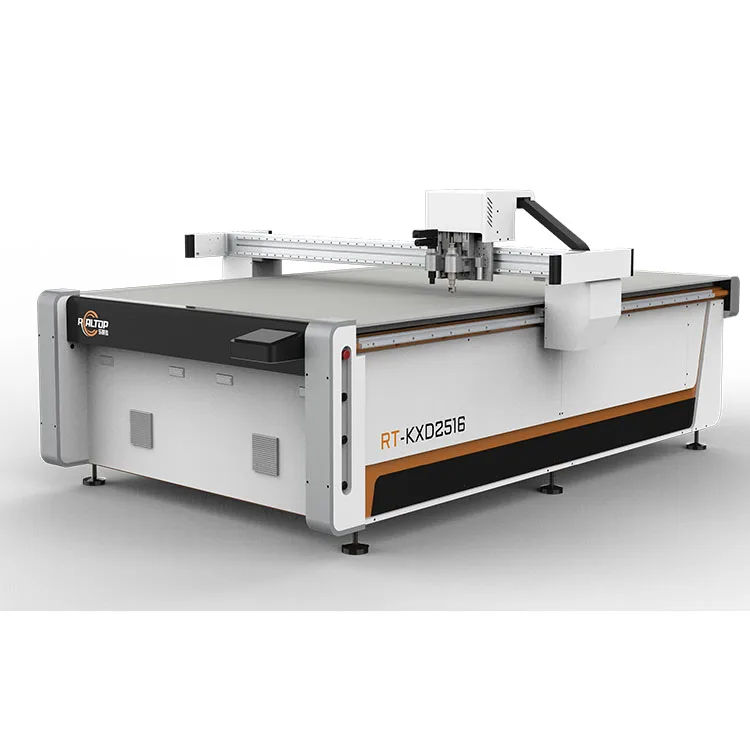
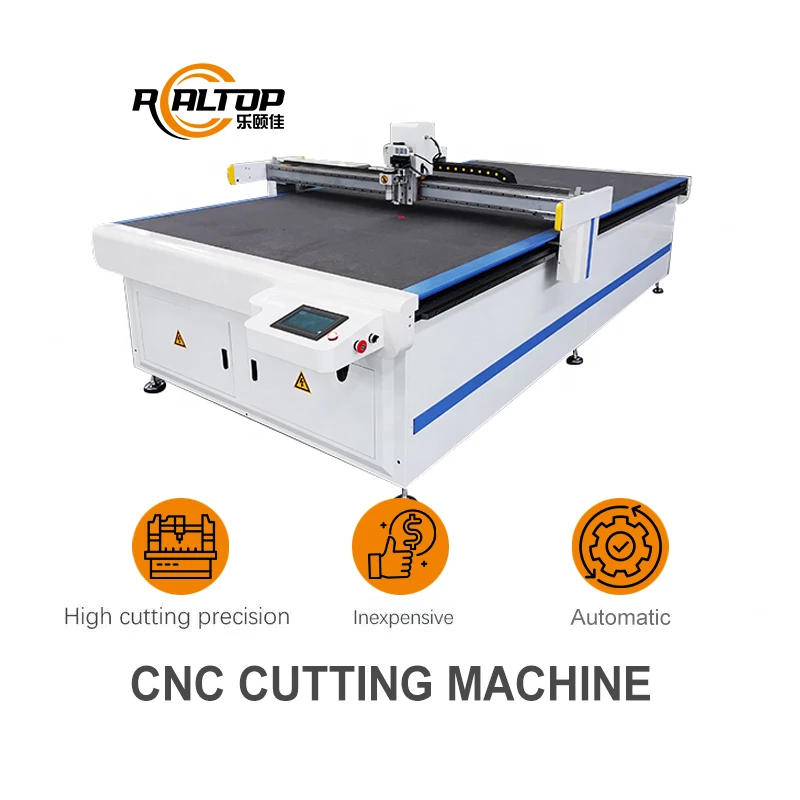
| Product Type | CNC Oscillating Knife Cutting Machine for Carton and Packaging |
| Working Area | 1600 × 2500 mm |
| Machine Dimensions (L×W×H) | 3450 × 2300 × 1250 mm |
| Rated Power | 9 kW |
| Voltage | 380V ±10% (frequency 50/60Hz to be confirmed by destination market) |
| Control System | CNC with HP-GL compatible format |
| Tool Head | Swiss imported oscillating knife (full cut, half cut, cursor location) |
| Translational Velocity | 800–1200 mm/s |
| Cutting Speed | 200–800 mm/s (varies by material type and board grade) |
| Cutting Thickness | ≤100 mm (basis not stated in source — confirm board grade / flute type) |
| Repeatability | ≤0.1 mm |
| Transmission System | Digital servo motor, linear guide, synchronous belt, ball screw (Taiwan Hiwin rail) |
| Drive Motors | Taiwan Delta servo motors and drivers |
| Working Table | Aluminum alloy honeycomb vacuum adsorption flatbed |
| Vacuum Pump | 7.5 kW |
| Conveyor Belt | Germany imported |
| Safety Device | Infrared sensors and emergency stop |
| Software | Professional carton nesting and cutting design software (multi-format import, customizable language) |
| Language Options | English, Russian, Italian, Chinese (special languages customizable) |
| Assembly State | Fully assembled flatbed cutting table |
| Warranty | 1 year (parts free, buyer covers shipping; on-site engineer available at buyer’s travel cost) |
| Certification | CE declaration where applicable |
Application Suitability
| Application | Material or Output |
|---|---|
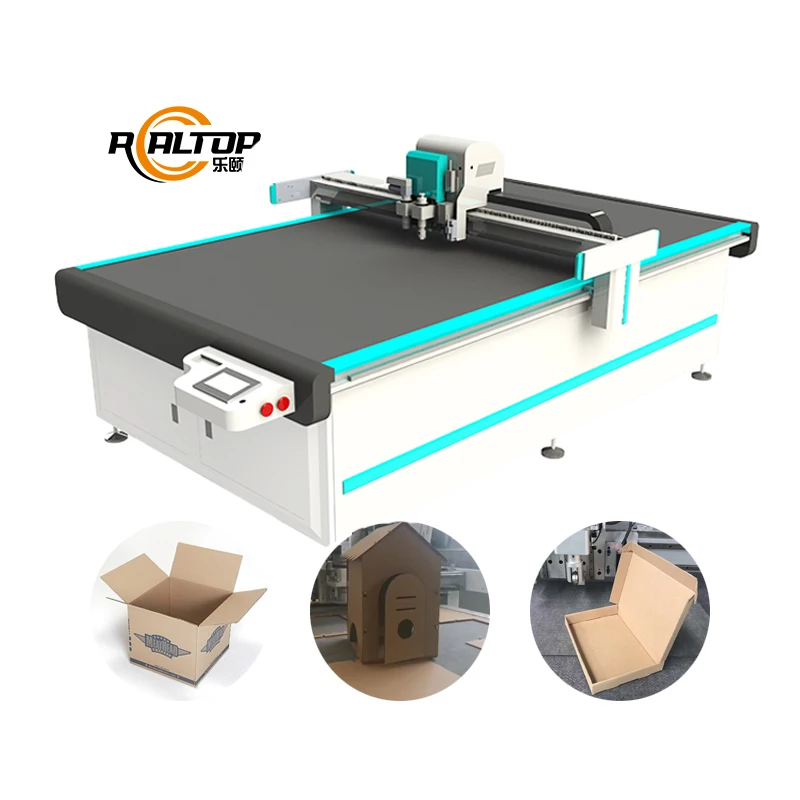
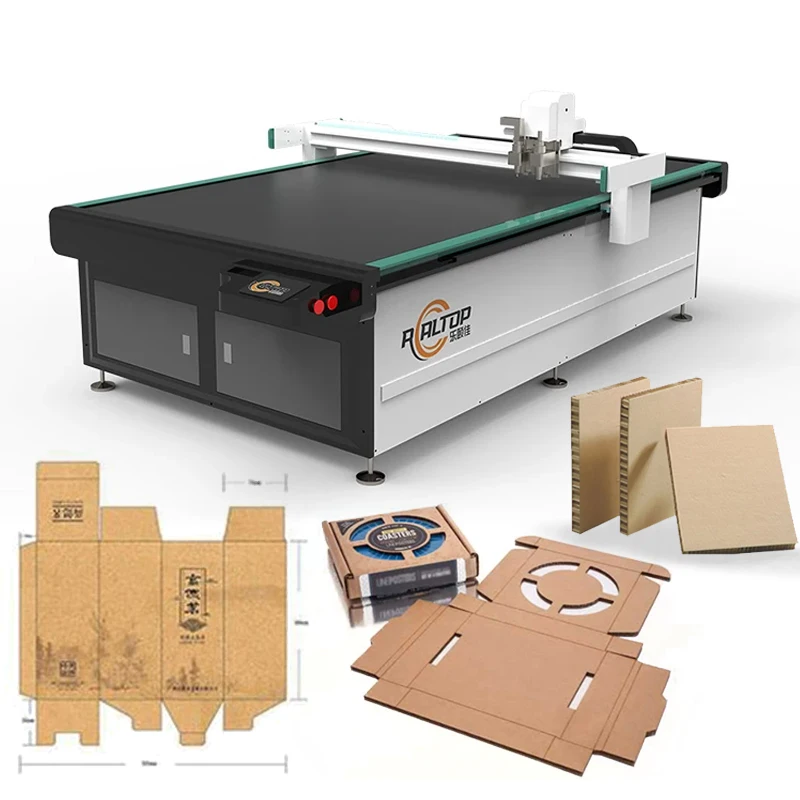
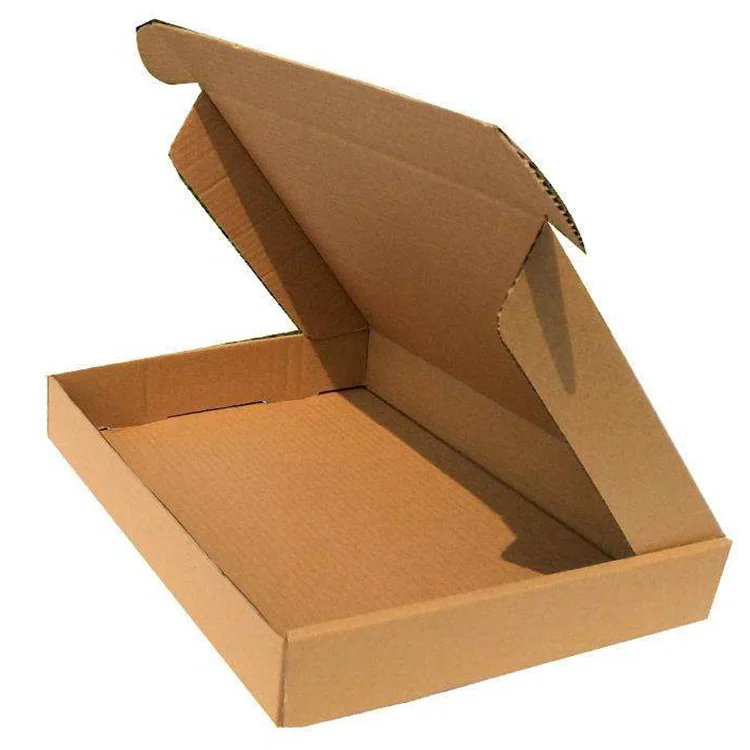
| Corrugated carton production | Single, double, and triple-wall corrugated board cutting and creasing |
| Packaging sample making | Rapid format changes on cardboard and paperboard without physical dies |
| Sticker and label contour cutting | Printed vinyl, adhesive film, and label stock |
| Signage and billboard fabrication | Foam board, corrugated plastic, and lightweight display materials |
| Business card and tag production | Cardstock, coated paper, and thin plastic sheets |
| Flexible material processing | Leather, PVC, sponge composite, soft glass, silicone, rubber |
What "Cutting Thickness ≤100 mm" Actually Means for Your Board
Real cutting depth depends entirely on your flute type and board density, not the headline number on a spec sheet.
I once worked with a carton packaging buyer who ordered a vibration knife cutter based on sample throughput alone. Their actual corrugated board had double the flute density we tested with, and the machine was choking at half speed. Thickness ratings shift dramatically between single-wall B-flute and triple-wall boards, and a number printed without context can cost weeks of downtime. A CNC carton cutting machine manufacturer worth working with will always demand your actual board samples before locking in tool head pressure and knife oscillation frequency. [NEED_CITE: corrugated flute types and crush resistance standards]
Knife Versus Laser: Matching the Process to Packaging Stock
When evaluating a CNC carton cutting machine manufacturer, the first decision is whether your materials call for oscillating knife or laser cutting. Knife heads handle the full spectrum of corrugated board without burning edges or producing the scorch marks that ruin print-ready surfaces. Laser systems serve non-packaging substrates well, but corrugated fiberboard responds poorly to thermal cutting. The flatbed oscillating knife configuration here preserves edge integrity on fluted structures and supports creasing wheels in the same tool head, letting one machine handle both cutting and fold-line scoring.
Vacuum Zoning and the Small-Parts Problem
Corrugated carton production frequently involves short runs of irregular shapes — inserts, dividers, custom-fit packaging pieces. Without proper vacuum table zoning, these small parts lift off the bed mid-cut, ruining the sheet and risking knife damage. The aluminum honeycomb platform on this system pairs with a 7.5 kW vacuum pump to distribute suction across zones. [NEED_CITE: vacuum hold-down principles for flatbed CNC cutting tables] This means the operator can isolate suction to the cutting area rather than pulling air through the entire 1600 × 2500 mm surface, keeping even lightweight cardstock flat during high-speed traverses.
Reading the Specs That Matter for Carton Work
The Swiss imported oscillating knife head performs full cutting, half cutting, and cursor location in a single pass — that half-cut capability is what enables kiss-cutting through the top liner of corrugated board without severing the flutes beneath, critical for tear-strip and easy-open packaging features. Taiwan Delta servo motors paired with Hiwin linear guides deliver the ≤0.1 mm repeatability needed when register marks must align with pre-printed graphics. The HP-GL compatible control system accepts files directly from most packaging design platforms, and the professional carton nesting software optimizes sheet yield, reducing board waste across production runs. Translational velocity reaching 1200 mm/s keeps non-cutting moves fast, while actual cutting speed between 200 and 800 mm/s depends on board density. [NEED_CITE: HP-GL format compatibility in packaging CAD software]
The Cost of Choosing the Wrong Tool Head
Selecting a drag knife instead of an oscillating knife for corrugated board forces the blade to drag through fluted layers, crushing rather than slicing them and leaving ragged edges that fail drop tests. An underpowered vacuum pump means small carton inserts shift during cutting, producing dimensional drift that accumulates across a run. Skipping the sample cutting test before order confirmation means discovering these problems after the machine arrives, when reconfiguration requires shipping new tool heads internationally and losing weeks of production time. [NEED_CITE: oscillating knife mechanics for layered composite materials]
Why Source This Configuration Here
In-house design covering both knife and laser cutting technologies means the cutting method matches the material rather than forcing every job through one process. Tool head and table configuration gets specified per material type and production volume, not sold as a one-size package. Sample cutting on your own corrugated board grade happens before commitment, confirming edge quality and throughput on the actual stock you run daily. Software compatibility is verified against your existing nesting workflow and file formats before the order is placed. Voltage, plug type, and control panel language are confirmed for your destination market, preventing costly rewiring or operator confusion on arrival.
Documentation & Verification
- Machine specification sheet confirming working area, tool head setup, and cutting depth by your board grade
- Sample cutting report on your corrugated flute type and thickness before order confirmation
- Electrical schematic with voltage and frequency validated for your market
- Software licence and file format compatibility note for your nesting workflow
- Factory test record documenting repeatability and cutting speed on your material
- Operation and maintenance manual with spare parts list
Installation, Commissioning & Support
- Machine arrives fully assembled — requires level concrete floor rated for the 3450 × 2300 mm footprint and machine weight
- Dedicated 380V circuit with confirmed frequency matching the servo drives and 7.5 kW vacuum pump
- First-run parameter tuning includes knife oscillation frequency and vacuum zone mapping to your board stock
- Operator training covers nesting software import, creasing wheel setup, and tool head changeover procedures
- Spare oscillating knife blades and conveyor belt sections included for initial consumable coverage
- Annual linear guide inspection and synchronous belt tension check recommended per Hiwin maintenance schedule
What We Need to Quote Accurately
To recommend the right configuration, share your primary corrugated board type and flute profile, maximum sheet dimensions, and daily cutting volume. Confirm your workshop voltage and frequency so we spec the correct electrical package. Let us know which file formats your design team currently uses and whether you need control panel language beyond the standard options.
Frequently Asked Questions
Q: Should I choose oscillating knife or laser cutting for corrugated packaging?
A: Oscillating knife is the standard for corrugated board because it slices through fluted layers without burning or scorching printed surfaces. Laser cutting suits non-packaging materials like acrylic, wood, and textiles. If your operation handles only corrugated carton and paperboard, an oscillating knife flatbed with creasing capability covers your needs without thermal damage risk.
Q: How do I verify the cutting thickness will handle my board grade?
A: Request sample cutting on your actual corrugated stock before committing to an order. Cutting depth capacity varies by flute type — single-wall E-flute behaves very differently from double-wall BC-flute. A sample test confirms edge quality, cutting speed, and whether the oscillation frequency needs adjustment for your specific board density.
Q: What software file formats does the nesting system accept?
A: The control system is HP-GL compatible and the included carton nesting software imports common formats from packaging CAD platforms. Before ordering, share a sample file from your design workflow so we can verify direct import without intermediate conversion steps that might lose crease-line data.
Q: How does vacuum table zoning prevent small carton parts from lifting?
A: The aluminum honeycomb flatbed segments vacuum suction into controllable zones. For small inserts or divider pieces, the operator activates only the zone under the cutting area, concentrating the 7.5 kW pump’s hold-down force instead of distributing it across the full 1600 × 2500 mm surface.
Q: How are voltage and control language confirmed before shipment?
A: During the specification confirmation stage, we document your workshop voltage, frequency, plug type, and preferred control panel language. These details appear on the electrical schematic and are validated during the factory test before the machine is packed for export.
Material-Matched Configuration — Every cutting head and table zoning setup is validated against your specific corrugated flute density and board grade before the order is finalized, preventing the common trap of machines that stall on thicker stocks.
Technical Specifications
| Parameter | Value |
|---|---|
| Product Type | CNC Oscillating Knife Cutting Machine for Carton and Packaging |
| Working Area | 1600 × 2500 mm |
| Machine Dimensions (L×W×H) | 3450 × 2300 × 1250 mm |
| Rated Power | 9 kW |
| Voltage | 380V ±10% (frequency 50/60Hz to be confirmed by destination market) |
| Control System | CNC with HP-GL compatible format |
| Tool Head | Swiss imported oscillating knife (full cut, half cut, cursor location) |
| Translational Velocity | 800–1200 mm/s |
| Cutting Speed | 200–800 mm/s (varies by material type and board grade) |
| Cutting Thickness | ≤100 mm (basis not stated in source — confirm board grade / flute type) |
| Repeatability | ≤0.1 mm |
| Transmission System | Digital servo motor, linear guide, synchronous belt, ball screw (Taiwan Hiwin rail) |
| Drive Motors | Taiwan Delta servo motors and drivers |
| Working Table | Aluminum alloy honeycomb vacuum adsorption flatbed |
| Vacuum Pump | 7.5 kW |
| Conveyor Belt | Germany imported |
| Safety Device | Infrared sensors and emergency stop |
| Software | Professional carton nesting and cutting design software (multi-format import, customizable language) |
| Language Options | English, Russian, Italian, Chinese (special languages customizable) |
| Assembly State | Fully assembled flatbed cutting table |
| Warranty | 1 year (parts free, buyer covers shipping; on-site engineer available at buyer’s travel cost) |
| Certification | CE declaration where applicable |
Application Suitability
| Application | Material or Output |
|---|---|
| Corrugated carton production | Single, double, and triple-wall corrugated board cutting and creasing |
| Packaging sample making | Rapid format changes on cardboard and paperboard without physical dies |
| Sticker and label contour cutting | Printed vinyl, adhesive film, and label stock |
| Signage and billboard fabrication | Foam board, corrugated plastic, and lightweight display materials |
| Business card and tag production | Cardstock, coated paper, and thin plastic sheets |
| Flexible material processing | Leather, PVC, sponge composite, soft glass, silicone, rubber |
What "Cutting Thickness ≤100 mm" Actually Means for Your Board
Real cutting depth depends entirely on your flute type and board density, not the headline number on a spec sheet.
I once worked with a carton packaging buyer who ordered a vibration knife cutter based on sample throughput alone. Their actual corrugated board had double the flute density we tested with, and the machine was choking at half speed. Thickness ratings shift dramatically between single-wall B-flute and triple-wall boards, and a number printed without context can cost weeks of downtime. A CNC carton cutting machine manufacturer worth working with will always demand your actual board samples before locking in tool head pressure and knife oscillation frequency. [NEED_CITE: corrugated flute types and crush resistance standards]
Knife Versus Laser: Matching the Process to Packaging Stock
When evaluating a CNC carton cutting machine manufacturer, the first decision is whether your materials call for oscillating knife or laser cutting. Knife heads handle the full spectrum of corrugated board without burning edges or producing the scorch marks that ruin print-ready surfaces. Laser systems serve non-packaging substrates well, but corrugated fiberboard responds poorly to thermal cutting. The flatbed oscillating knife configuration here preserves edge integrity on fluted structures and supports creasing wheels in the same tool head, letting one machine handle both cutting and fold-line scoring.
Vacuum Zoning and the Small-Parts Problem
Corrugated carton production frequently involves short runs of irregular shapes — inserts, dividers, custom-fit packaging pieces. Without proper vacuum table zoning, these small parts lift off the bed mid-cut, ruining the sheet and risking knife damage. The aluminum honeycomb platform on this system pairs with a 7.5 kW vacuum pump to distribute suction across zones. [NEED_CITE: vacuum hold-down principles for flatbed CNC cutting tables] This means the operator can isolate suction to the cutting area rather than pulling air through the entire 1600 × 2500 mm surface, keeping even lightweight cardstock flat during high-speed traverses.
Reading the Specs That Matter for Carton Work
The Swiss imported oscillating knife head performs full cutting, half cutting, and cursor location in a single pass — that half-cut capability is what enables kiss-cutting through the top liner of corrugated board without severing the flutes beneath, critical for tear-strip and easy-open packaging features. Taiwan Delta servo motors paired with Hiwin linear guides deliver the ≤0.1 mm repeatability needed when register marks must align with pre-printed graphics. The HP-GL compatible control system accepts files directly from most packaging design platforms, and the professional carton nesting software optimizes sheet yield, reducing board waste across production runs. Translational velocity reaching 1200 mm/s keeps non-cutting moves fast, while actual cutting speed between 200 and 800 mm/s depends on board density. [NEED_CITE: HP-GL format compatibility in packaging CAD software]
The Cost of Choosing the Wrong Tool Head
Selecting a drag knife instead of an oscillating knife for corrugated board forces the blade to drag through fluted layers, crushing rather than slicing them and leaving ragged edges that fail drop tests. An underpowered vacuum pump means small carton inserts shift during cutting, producing dimensional drift that accumulates across a run. Skipping the sample cutting test before order confirmation means discovering these problems after the machine arrives, when reconfiguration requires shipping new tool heads internationally and losing weeks of production time. [NEED_CITE: oscillating knife mechanics for layered composite materials]
Why Source This Configuration Here
In-house design covering both knife and laser cutting technologies means the cutting method matches the material rather than forcing every job through one process. Tool head and table configuration gets specified per material type and production volume, not sold as a one-size package. Sample cutting on your own corrugated board grade happens before commitment, confirming edge quality and throughput on the actual stock you run daily. Software compatibility is verified against your existing nesting workflow and file formats before the order is placed. Voltage, plug type, and control panel language are confirmed for your destination market, preventing costly rewiring or operator confusion on arrival.
Documentation & Verification
- Machine specification sheet confirming working area, tool head setup, and cutting depth by your board grade
- Sample cutting report on your corrugated flute type and thickness before order confirmation
- Electrical schematic with voltage and frequency validated for your market
- Software licence and file format compatibility note for your nesting workflow
- Factory test record documenting repeatability and cutting speed on your material
- Operation and maintenance manual with spare parts list
Installation, Commissioning & Support
- Machine arrives fully assembled — requires level concrete floor rated for the 3450 × 2300 mm footprint and machine weight
- Dedicated 380V circuit with confirmed frequency matching the servo drives and 7.5 kW vacuum pump
- First-run parameter tuning includes knife oscillation frequency and vacuum zone mapping to your board stock
- Operator training covers nesting software import, creasing wheel setup, and tool head changeover procedures
- Spare oscillating knife blades and conveyor belt sections included for initial consumable coverage
- Annual linear guide inspection and synchronous belt tension check recommended per Hiwin maintenance schedule
What We Need to Quote Accurately
To recommend the right configuration, share your primary corrugated board type and flute profile, maximum sheet dimensions, and daily cutting volume. Confirm your workshop voltage and frequency so we spec the correct electrical package. Let us know which file formats your design team currently uses and whether you need control panel language beyond the standard options.
Frequently Asked Questions
Q: Should I choose oscillating knife or laser cutting for corrugated packaging?
A: Oscillating knife is the standard for corrugated board because it slices through fluted layers without burning or scorching printed surfaces. Laser cutting suits non-packaging materials like acrylic, wood, and textiles. If your operation handles only corrugated carton and paperboard, an oscillating knife flatbed with creasing capability covers your needs without thermal damage risk.
Q: How do I verify the cutting thickness will handle my board grade?
A: Request sample cutting on your actual corrugated stock before committing to an order. Cutting depth capacity varies by flute type — single-wall E-flute behaves very differently from double-wall BC-flute. A sample test confirms edge quality, cutting speed, and whether the oscillation frequency needs adjustment for your specific board density.
Q: What software file formats does the nesting system accept?
A: The control system is HP-GL compatible and the included carton nesting software imports common formats from packaging CAD platforms. Before ordering, share a sample file from your design workflow so we can verify direct import without intermediate conversion steps that might lose crease-line data.
Q: How does vacuum table zoning prevent small carton parts from lifting?
A: The aluminum honeycomb flatbed segments vacuum suction into controllable zones. For small inserts or divider pieces, the operator activates only the zone under the cutting area, concentrating the 7.5 kW pump’s hold-down force instead of distributing it across the full 1600 × 2500 mm surface.
Q: How are voltage and control language confirmed before shipment?
A: During the specification confirmation stage, we document your workshop voltage, frequency, plug type, and preferred control panel language. These details appear on the electrical schematic and are validated during the factory test before the machine is packed for export.










商品评价
There are no reviews yet.