



Fast Delivery
Quick, reliable shipping to any location.

Free & easy returns
Return this item by mail or in store within 90 days for a full refund.
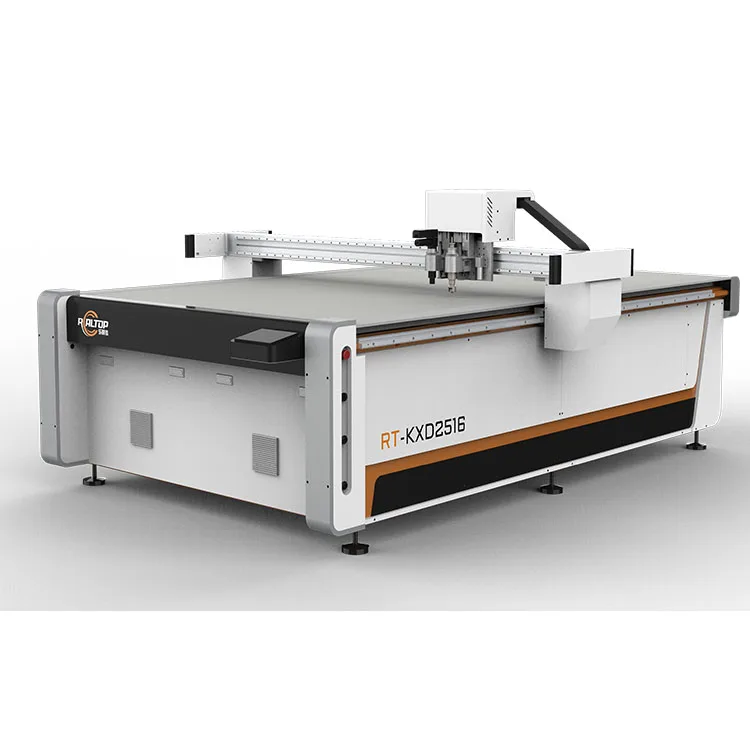
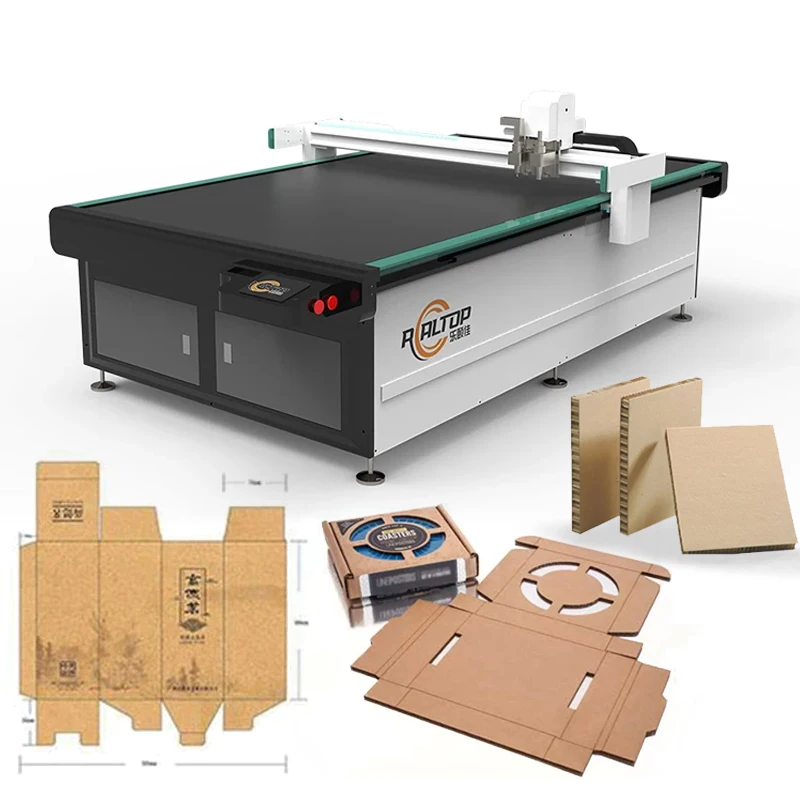
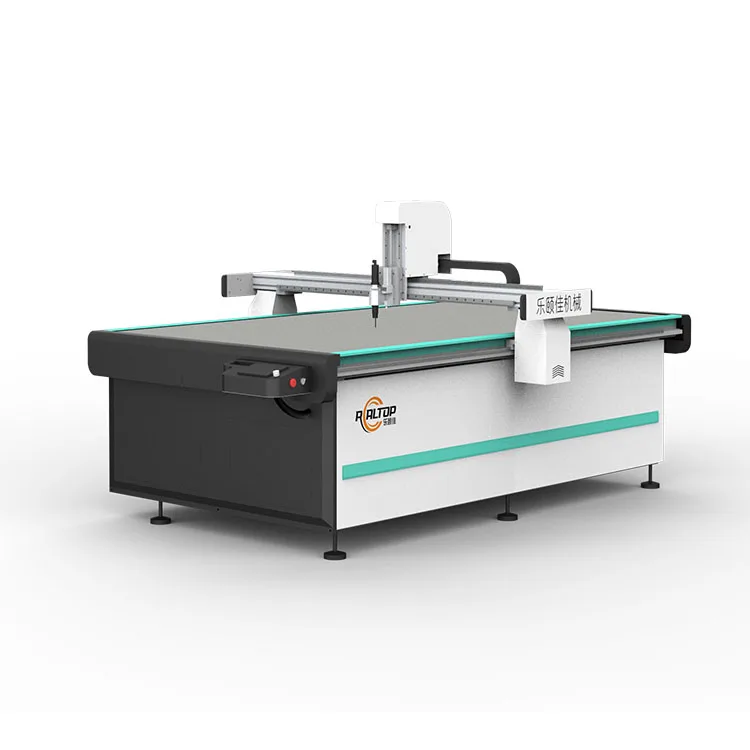
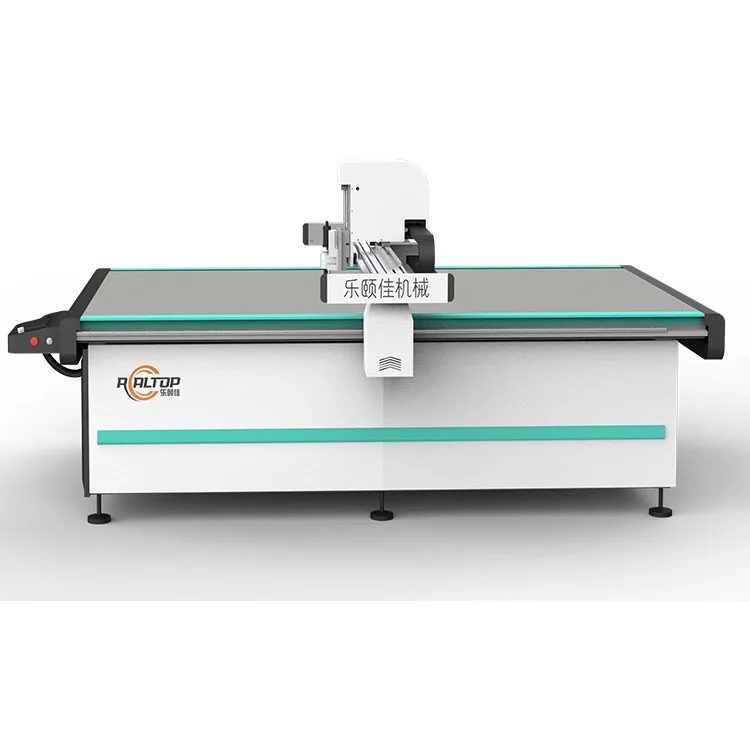
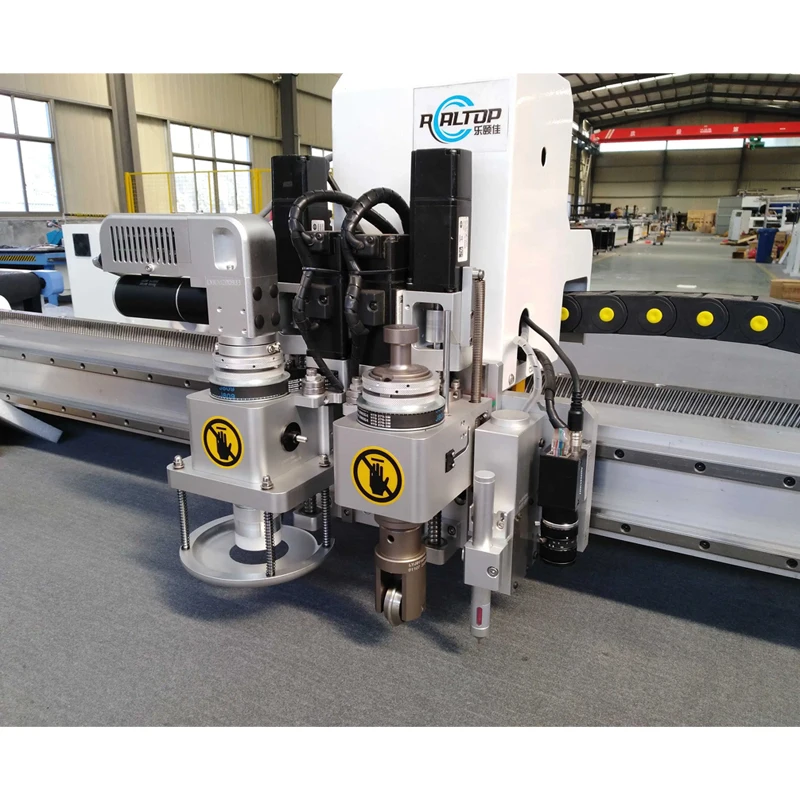
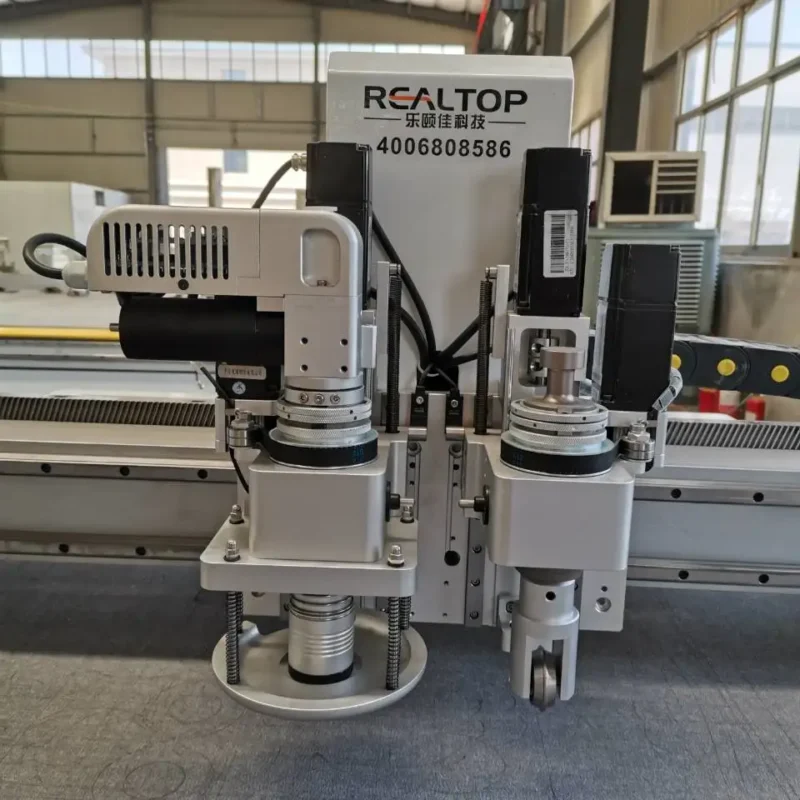
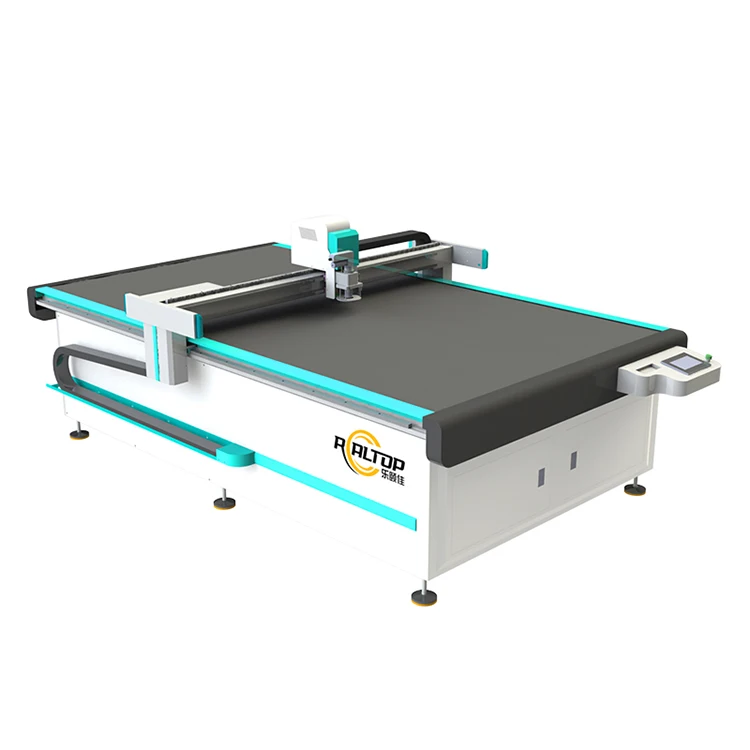
Tool Head & Table Configuration Specified Per Material — Realtop matches oscillating knife, creasing wheel and vacuum zoning to your actual corrugated flute grade and sheet dimension before the machine is built.
Technical Specifications
| Parameter | Value |
|---|---|
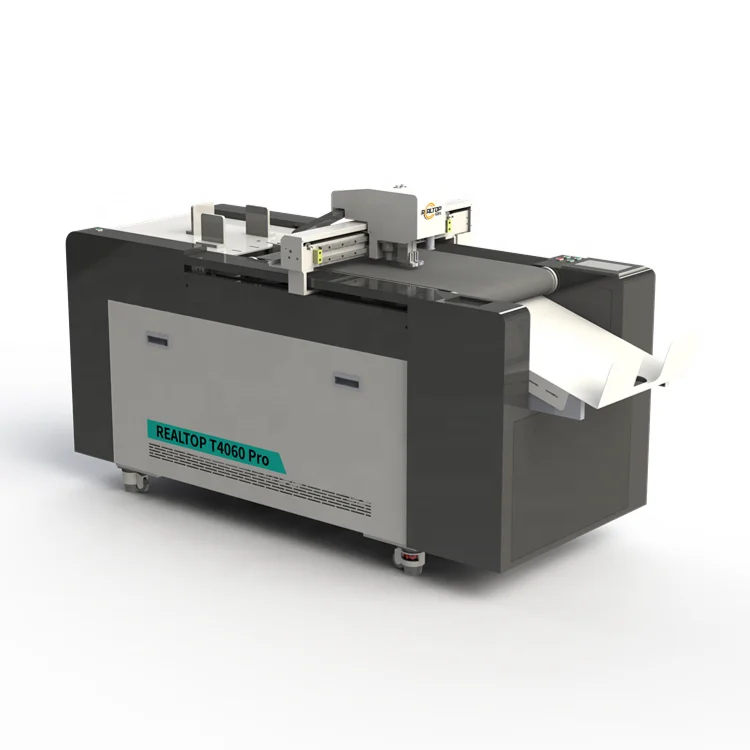
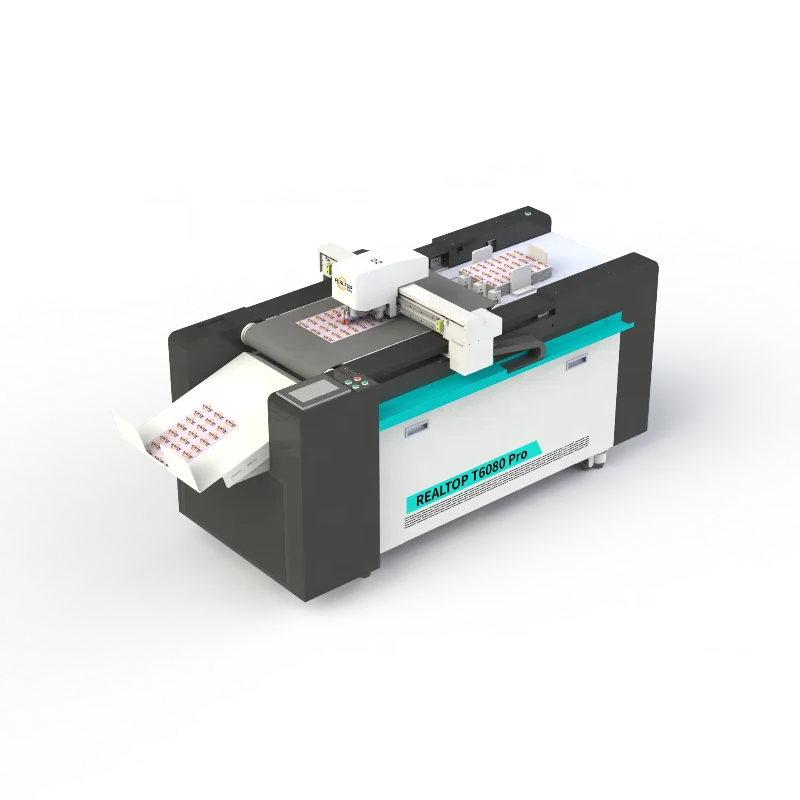
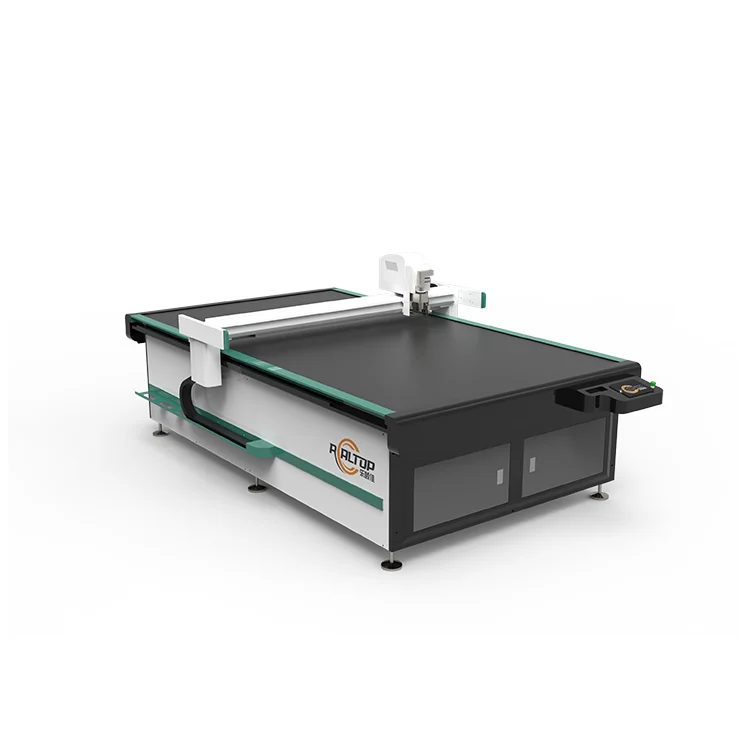
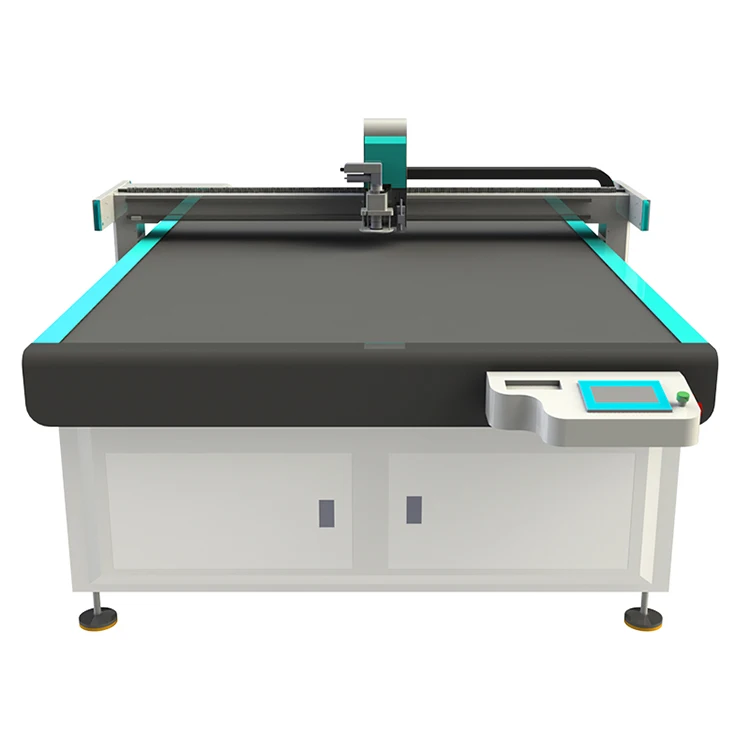
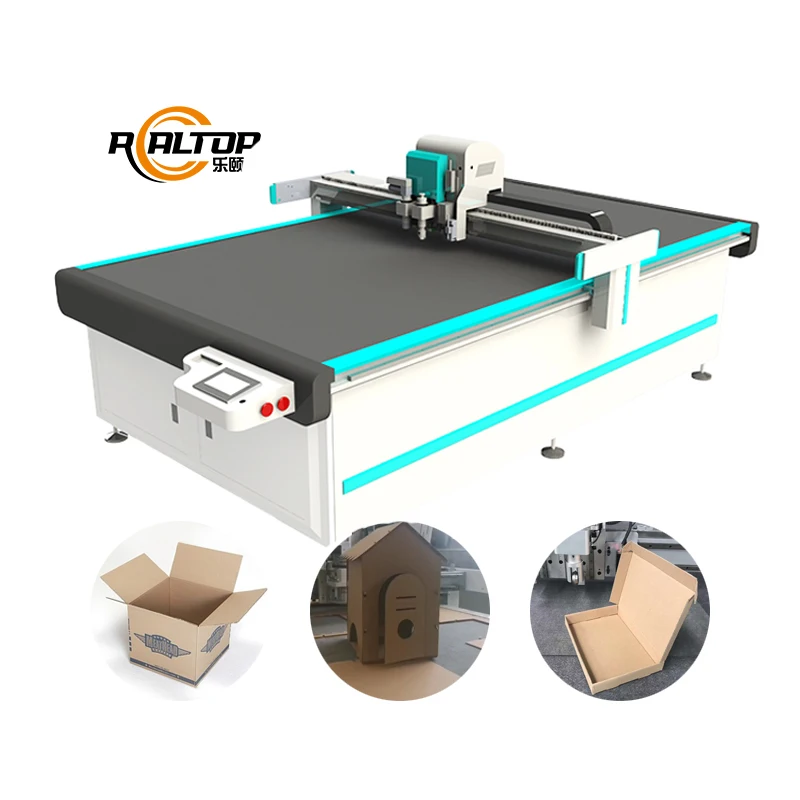
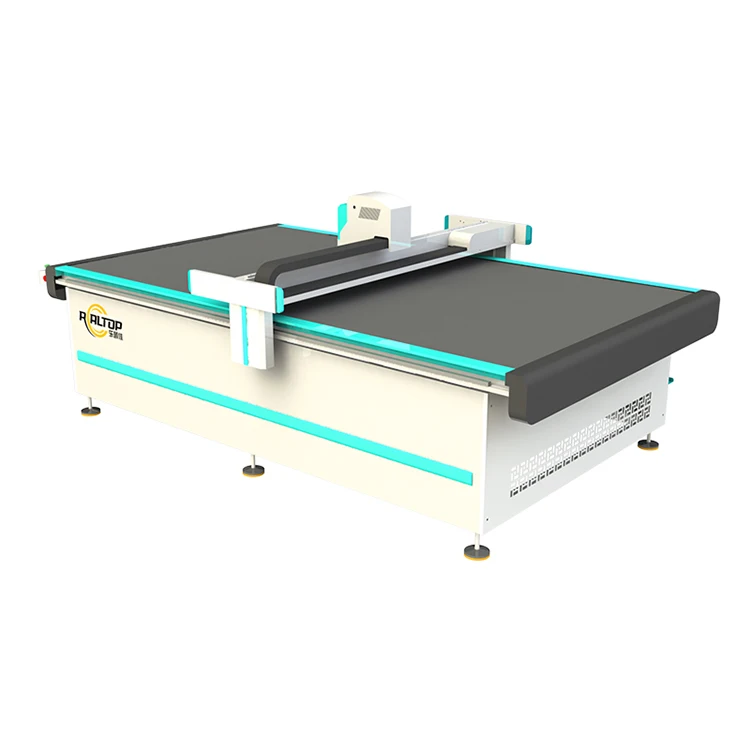
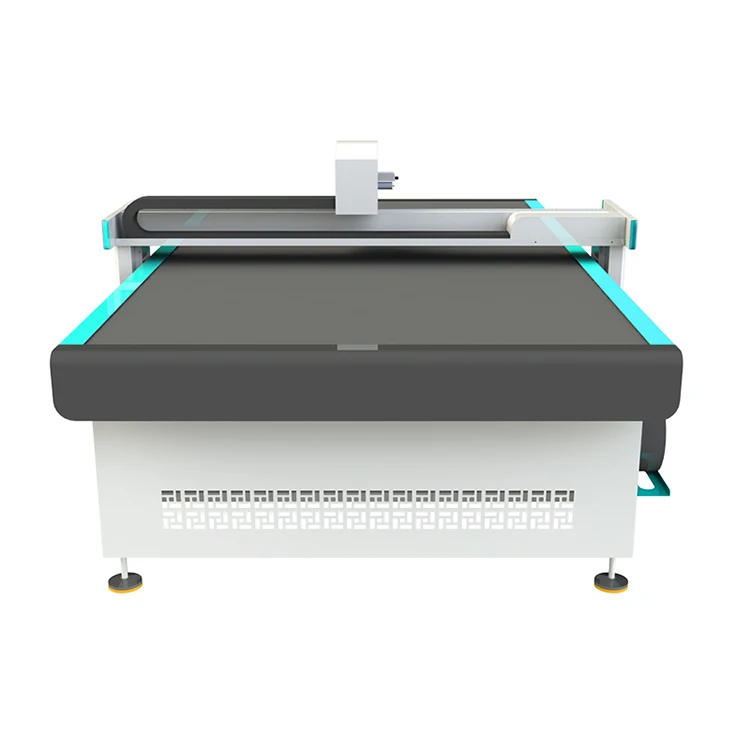
| Product Type | CNC Oscillating Knife Cutting Machine for Packaging & Carton Sample Making |
| Working Area Options | 2500×1300mm / 1600×2500mm |
| Machine Dimensions | 3550×1910×1400mm (2500×1300mm variant); 3450×2300×1250mm (1600×2500mm variant) |
| Cutting Tools | Oscillating knife, creasing tool, kiss-cut knife, round punch |
| Maximum Cutting Thickness | ≤18mm (basis not stated in source — confirm material type and flute grade) |
| Fixing Method | Aluminum alloy honeycomb vacuum adsorption platform |
| Rated Power | 9 kW |
| Voltage | 380V (frequency to confirm with local supply) |
| Transmission | Ethernet port |
| Repeated Positioning Accuracy | <0.05mm |
| Servo System | Dongling servo (Delta servo motor available as alternative configuration) |
| Supported File Formats | DXF, OLT, PDF, AI |
| Safety Devices | Infrared sensors, emergency stop |
| Vacuum Pump | 7.5 kW |
| Guide Rail | Taiwan Hiwin rail |
| Cutting Speed | 5–8 times faster than laser cutting (basis not stated in source — confirm material type, thickness and path complexity) |
| Frame Construction | Welded thick square seamless steel structure with high-temperature treatment |
| Felt Belt | Wear-resistant anti-pull composite fiber felt |
| Language Options | English, Russian, Italian, Chinese; additional languages customizable |
| Included Software | Professional carton nesting software with lifelong technical support |
| Blade Supply | 10 oscillating blades included |
| Assembly State | Fully assembled before shipment |
Application Suitability
| Application | Material or Output |
|---|---|
| Large electrical appliance carton cutting | Multi-wall corrugated board, single and double flute |
| Express paper box and shipping carton | Standard B-flute and C-flute corrugated stock |
| Snack food and consumer packaging | Thin-wall E-flute and F-flute micro-corrugated |
| High-end gift box sample making | Laminated corrugated and specialty coated board |
| Sticker and label contour cutting | Self-adhesive vinyl, PP paper, coated label stock |
| Billboard and signage production | Corrugated plastic board, foam PVC, honeycomb paper board |
| Business card and tag cutting | Card stock, coated paperboard, synthetic tag material |
Why Material Thickness Changes Everything About Machine Selection
A CNC oscillating knife cutting machine manufacturer must confirm your actual board flute profile before quoting a working area — otherwise the vacuum hold-down, blade stroke and cutting speed will all be mismatched to the material you run daily.
Specifying a packaging CNC cutting machine for sale on table size alone leaves the most critical variables unresolved.
I once watched a carton sample line stall because the machine was tuned for virgin B-flute board while the client ran recycled stock with mixed fiber content and inconsistent caliper. The cutting parameters that worked on day one produced ragged edges and incomplete cuts by day three. Output dropped noticeably and the operator spent more time clearing half-cut sheets than running samples [NEED_CITE: corrugated fiber content variation in recycled board]. The fix was not a bigger motor — it was testing the exact material upfront and matching the oscillating knife stroke and vacuum zoning to that specific flute structure.
Knife Versus Laser: Picking the Right Process for Board and Vinyl
Corrugated cardboard compresses under a drag knife but cuts cleanly with an oscillating blade that moves vertically at high frequency, slicing through the flute without crushing the facing paper. Laser cutting seals the edge on synthetic materials like acrylic and PP, which is useful for signage, but it leaves a burn line on corrugated that most packaging buyers reject. A full catalogue approach lets the buyer see both methods side by side and select based on the material they actually process rather than defaulting to whichever technology they encounter first. For sticker and label contour work, a kiss-cut knife paired with CCD camera positioning handles printed registration marks without the thermal distortion a CO2 beam can introduce on thin adhesive films.
Working Area Selection and Vacuum Zoning for Mixed Sheet Sizes
Packaging sample shops rarely run one sheet dimension all day. A 1600×2500mm table accommodates full-size corrugated sheets fed directly from a slitter-scorer, while a 2500×1300mm footprint suits smaller carton blanks and label runs where workshop space is limited. The aluminum honeycomb vacuum platform holds thin recycled stock flat across the entire bed, but small nested parts can lift if the vacuum zoning does not segment the table into independently valved regions [NEED_CITE: vacuum hold-down requirements for small nested corrugated parts]. Confirming the zoning layout against your nesting software’s typical part size prevents mid-cut lift and the wasted sheet that follows.
Reading the Specifications That Actually Affect Cut Quality
The repeated positioning accuracy of <0.05mm matters most when the creasing tool and oscillating knife must register to the same cut line within a fraction of a millimetre — any drift shows up as a misaligned fold on the assembled carton. The 9 kW rated power covers both the servo drives and the oscillating knife motor; verify that your facility’s 380V supply can sustain this draw on a dedicated circuit to avoid voltage sag that degrades servo response. Hiwin guide rails maintain linear precision over the full travel length, which directly affects edge straightness on long diagonal cuts across a 2500mm sheet. The Ethernet transmission port allows direct file transfer from the nesting workstation without intermediate USB steps, reducing the chance of file corruption on large nesting layouts. Welded steel frame construction with high-temperature stress relief prevents the bed from warping under continuous vacuum load, keeping the felt belt tracking true over extended production runs.
The Hidden Cost of Skipping a Material Test Run
Choosing a tool head based on generic material categories rather than your specific board grade leads to problems that surface only after installation. A kiss-cut blade set for standard vinyl may tear through the liner on a thicker PP label stock, wasting entire rolls before the operator adjusts the depth stop. Undersized vacuum pump capacity for a large-format bed means the edges of a corrugated sheet flutter during high-speed passes, producing scalloped edges that fail the sample approval. These issues are avoidable when the buyer supplies actual material samples and the manufacturer runs a documented test before the machine leaves the factory [NEED_CITE: factory sample cutting verification before equipment dispatch].
What Makes Sourcing This Equipment Range Reliable
In-house design covers both knife and laser cutting technologies under one roof, so a packaging buyer comparing oscillating knife against laser for corrugated board gets a recommendation based on material behaviour rather than whichever machine happens to be in stock. Tool head and table configuration is specified per material and production volume, meaning the creasing wheel, oscillating knife and kiss-cut tool are selected to match the flute grades and label stocks you actually run. CCD camera positioning for printed contour work is confirmed against your registration mark size and print repeat before order. Software compatibility is verified with your existing DXF or AI artwork files so the nesting workflow integrates without re-drawing. Voltage, language and control interface are customised to the destination facility, eliminating on-site surprises during commissioning.
Documentation & Verification
- Machine specification sheet listing confirmed tool head and vacuum zoning layout
- Electrical schematic with 380V circuit requirements and frequency notation
- Sample cutting report on buyer’s own corrugated board with flute grade noted
- Tool head and table configuration list matched to material profile
- Software licence and file format compatibility note for DXF, AI, PDF, OLT
- Factory test record documenting cutting accuracy across full working area
Installation, Commissioning & Support
- Fully assembled delivery — no on-site frame welding or bed alignment required
- Dedicated 380V circuit with rated capacity for 9 kW draw plus 7.5 kW vacuum pump
- Aluminum honeycomb vacuum platform inspected for zoning seal integrity at startup
- Ethernet port tested with buyer’s workstation to confirm nesting file transfer
- Servo parameters tuned to buyer’s confirmed board thickness and flute grade
- Ten oscillating blades included; felt belt tension checked after initial run-in period
What to Prepare Before Requesting a Quotation
Share the corrugated flute grades you run most often, the thickest board in your sample library, and the largest sheet dimension your slitter-scorer produces. Note your facility’s voltage and frequency, the control language your operators prefer, and whether your existing CAD output is DXF, AI or another format. If you produce both carton samples and kiss-cut labels, list the label stock types so the tool head package covers both applications in one setup.
Frequently Asked Questions
Q: Should I choose oscillating knife or laser for corrugated cardboard and sticker cutting?
A: Oscillating knife cuts corrugated cleanly without crushing the flute or leaving burn marks, which matters for packaging presentation. Laser is better suited to sealing edges on synthetic signage materials. For stickers and labels, a kiss-cut knife on the same oscillating knife platform handles contour cutting without thermal distortion on thin adhesive films.
Q: How do I decide between the 2500×1300mm and 1600×2500mm working area?
A: Match the table to your largest sheet dimension and typical nesting layout. The 1600×2500mm variant handles full sheets from a slitter-scorer, while the 2500×1300mm suits smaller carton blanks in workshops with limited floor space. Confirm your daily mix of sheet sizes before committing.
Q: Which tool heads do I need for corrugated board and label work on one machine?
A: A combination of oscillating knife for through-cutting corrugated, a creasing wheel for fold lines, and a kiss-cut knife for labels covers most packaging sample and sticker jobs. A round punch adds handle holes or ventilation slots. The configuration is confirmed after testing your actual materials.
Q: What electrical and language details must be confirmed before shipment?
A: Voltage and frequency must match your facility supply — the standard 380V configuration needs a dedicated circuit for the 9 kW machine plus the 7.5 kW vacuum pump. Control language, software menu language and plug type should all be specified before production to avoid on-site delays during commissioning.
Q: Can the nesting software import my existing DXF or AI files?
A: The supplied carton nesting software supports DXF, OLT, PDF and AI formats. Compatibility with your specific CAD output is verified before order so your existing artwork imports without re-drawing. If you use a proprietary format, share a sample file for testing during the quotation stage.
Tool Head & Table Configuration Specified Per Material — Realtop matches oscillating knife, creasing wheel and vacuum zoning to your actual corrugated flute grade and sheet dimension before the machine is built.
Technical Specifications
| Parameter | Value |
|---|---|
| Product Type | CNC Oscillating Knife Cutting Machine for Packaging & Carton Sample Making |
| Working Area Options | 2500×1300mm / 1600×2500mm |
| Machine Dimensions | 3550×1910×1400mm (2500×1300mm variant); 3450×2300×1250mm (1600×2500mm variant) |
| Cutting Tools | Oscillating knife, creasing tool, kiss-cut knife, round punch |
| Maximum Cutting Thickness | ≤18mm (basis not stated in source — confirm material type and flute grade) |
| Fixing Method | Aluminum alloy honeycomb vacuum adsorption platform |
| Rated Power | 9 kW |
| Voltage | 380V (frequency to confirm with local supply) |
| Transmission | Ethernet port |
| Repeated Positioning Accuracy | <0.05mm |
| Servo System | Dongling servo (Delta servo motor available as alternative configuration) |
| Supported File Formats | DXF, OLT, PDF, AI |
| Safety Devices | Infrared sensors, emergency stop |
| Vacuum Pump | 7.5 kW |
| Guide Rail | Taiwan Hiwin rail |
| Cutting Speed | 5–8 times faster than laser cutting (basis not stated in source — confirm material type, thickness and path complexity) |
| Frame Construction | Welded thick square seamless steel structure with high-temperature treatment |
| Felt Belt | Wear-resistant anti-pull composite fiber felt |
| Language Options | English, Russian, Italian, Chinese; additional languages customizable |
| Included Software | Professional carton nesting software with lifelong technical support |
| Blade Supply | 10 oscillating blades included |
| Assembly State | Fully assembled before shipment |
Application Suitability
| Application | Material or Output |
|---|---|
| Large electrical appliance carton cutting | Multi-wall corrugated board, single and double flute |
| Express paper box and shipping carton | Standard B-flute and C-flute corrugated stock |
| Snack food and consumer packaging | Thin-wall E-flute and F-flute micro-corrugated |
| High-end gift box sample making | Laminated corrugated and specialty coated board |
| Sticker and label contour cutting | Self-adhesive vinyl, PP paper, coated label stock |
| Billboard and signage production | Corrugated plastic board, foam PVC, honeycomb paper board |
| Business card and tag cutting | Card stock, coated paperboard, synthetic tag material |
Why Material Thickness Changes Everything About Machine Selection
A CNC oscillating knife cutting machine manufacturer must confirm your actual board flute profile before quoting a working area — otherwise the vacuum hold-down, blade stroke and cutting speed will all be mismatched to the material you run daily.
Specifying a packaging CNC cutting machine for sale on table size alone leaves the most critical variables unresolved.
I once watched a carton sample line stall because the machine was tuned for virgin B-flute board while the client ran recycled stock with mixed fiber content and inconsistent caliper. The cutting parameters that worked on day one produced ragged edges and incomplete cuts by day three. Output dropped noticeably and the operator spent more time clearing half-cut sheets than running samples [NEED_CITE: corrugated fiber content variation in recycled board]. The fix was not a bigger motor — it was testing the exact material upfront and matching the oscillating knife stroke and vacuum zoning to that specific flute structure.
Knife Versus Laser: Picking the Right Process for Board and Vinyl
Corrugated cardboard compresses under a drag knife but cuts cleanly with an oscillating blade that moves vertically at high frequency, slicing through the flute without crushing the facing paper. Laser cutting seals the edge on synthetic materials like acrylic and PP, which is useful for signage, but it leaves a burn line on corrugated that most packaging buyers reject. A full catalogue approach lets the buyer see both methods side by side and select based on the material they actually process rather than defaulting to whichever technology they encounter first. For sticker and label contour work, a kiss-cut knife paired with CCD camera positioning handles printed registration marks without the thermal distortion a CO2 beam can introduce on thin adhesive films.
Working Area Selection and Vacuum Zoning for Mixed Sheet Sizes
Packaging sample shops rarely run one sheet dimension all day. A 1600×2500mm table accommodates full-size corrugated sheets fed directly from a slitter-scorer, while a 2500×1300mm footprint suits smaller carton blanks and label runs where workshop space is limited. The aluminum honeycomb vacuum platform holds thin recycled stock flat across the entire bed, but small nested parts can lift if the vacuum zoning does not segment the table into independently valved regions [NEED_CITE: vacuum hold-down requirements for small nested corrugated parts]. Confirming the zoning layout against your nesting software’s typical part size prevents mid-cut lift and the wasted sheet that follows.
Reading the Specifications That Actually Affect Cut Quality
The repeated positioning accuracy of <0.05mm matters most when the creasing tool and oscillating knife must register to the same cut line within a fraction of a millimetre — any drift shows up as a misaligned fold on the assembled carton. The 9 kW rated power covers both the servo drives and the oscillating knife motor; verify that your facility’s 380V supply can sustain this draw on a dedicated circuit to avoid voltage sag that degrades servo response. Hiwin guide rails maintain linear precision over the full travel length, which directly affects edge straightness on long diagonal cuts across a 2500mm sheet. The Ethernet transmission port allows direct file transfer from the nesting workstation without intermediate USB steps, reducing the chance of file corruption on large nesting layouts. Welded steel frame construction with high-temperature stress relief prevents the bed from warping under continuous vacuum load, keeping the felt belt tracking true over extended production runs.
The Hidden Cost of Skipping a Material Test Run
Choosing a tool head based on generic material categories rather than your specific board grade leads to problems that surface only after installation. A kiss-cut blade set for standard vinyl may tear through the liner on a thicker PP label stock, wasting entire rolls before the operator adjusts the depth stop. Undersized vacuum pump capacity for a large-format bed means the edges of a corrugated sheet flutter during high-speed passes, producing scalloped edges that fail the sample approval. These issues are avoidable when the buyer supplies actual material samples and the manufacturer runs a documented test before the machine leaves the factory [NEED_CITE: factory sample cutting verification before equipment dispatch].
What Makes Sourcing This Equipment Range Reliable
In-house design covers both knife and laser cutting technologies under one roof, so a packaging buyer comparing oscillating knife against laser for corrugated board gets a recommendation based on material behaviour rather than whichever machine happens to be in stock. Tool head and table configuration is specified per material and production volume, meaning the creasing wheel, oscillating knife and kiss-cut tool are selected to match the flute grades and label stocks you actually run. CCD camera positioning for printed contour work is confirmed against your registration mark size and print repeat before order. Software compatibility is verified with your existing DXF or AI artwork files so the nesting workflow integrates without re-drawing. Voltage, language and control interface are customised to the destination facility, eliminating on-site surprises during commissioning.
Documentation & Verification
- Machine specification sheet listing confirmed tool head and vacuum zoning layout
- Electrical schematic with 380V circuit requirements and frequency notation
- Sample cutting report on buyer’s own corrugated board with flute grade noted
- Tool head and table configuration list matched to material profile
- Software licence and file format compatibility note for DXF, AI, PDF, OLT
- Factory test record documenting cutting accuracy across full working area
Installation, Commissioning & Support
- Fully assembled delivery — no on-site frame welding or bed alignment required
- Dedicated 380V circuit with rated capacity for 9 kW draw plus 7.5 kW vacuum pump
- Aluminum honeycomb vacuum platform inspected for zoning seal integrity at startup
- Ethernet port tested with buyer’s workstation to confirm nesting file transfer
- Servo parameters tuned to buyer’s confirmed board thickness and flute grade
- Ten oscillating blades included; felt belt tension checked after initial run-in period
What to Prepare Before Requesting a Quotation
Share the corrugated flute grades you run most often, the thickest board in your sample library, and the largest sheet dimension your slitter-scorer produces. Note your facility’s voltage and frequency, the control language your operators prefer, and whether your existing CAD output is DXF, AI or another format. If you produce both carton samples and kiss-cut labels, list the label stock types so the tool head package covers both applications in one setup.
Frequently Asked Questions
Q: Should I choose oscillating knife or laser for corrugated cardboard and sticker cutting?
A: Oscillating knife cuts corrugated cleanly without crushing the flute or leaving burn marks, which matters for packaging presentation. Laser is better suited to sealing edges on synthetic signage materials. For stickers and labels, a kiss-cut knife on the same oscillating knife platform handles contour cutting without thermal distortion on thin adhesive films.
Q: How do I decide between the 2500×1300mm and 1600×2500mm working area?
A: Match the table to your largest sheet dimension and typical nesting layout. The 1600×2500mm variant handles full sheets from a slitter-scorer, while the 2500×1300mm suits smaller carton blanks in workshops with limited floor space. Confirm your daily mix of sheet sizes before committing.
Q: Which tool heads do I need for corrugated board and label work on one machine?
A: A combination of oscillating knife for through-cutting corrugated, a creasing wheel for fold lines, and a kiss-cut knife for labels covers most packaging sample and sticker jobs. A round punch adds handle holes or ventilation slots. The configuration is confirmed after testing your actual materials.
Q: What electrical and language details must be confirmed before shipment?
A: Voltage and frequency must match your facility supply — the standard 380V configuration needs a dedicated circuit for the 9 kW machine plus the 7.5 kW vacuum pump. Control language, software menu language and plug type should all be specified before production to avoid on-site delays during commissioning.
Q: Can the nesting software import my existing DXF or AI files?
A: The supplied carton nesting software supports DXF, OLT, PDF and AI formats. Compatibility with your specific CAD output is verified before order so your existing artwork imports without re-drawing. If you use a proprietary format, share a sample file for testing during the quotation stage.
商品评价
There are no reviews yet.