


Fast Delivery
Quick, reliable shipping to any location.

Free & easy returns
Return this item by mail or in store within 90 days for a full refund.
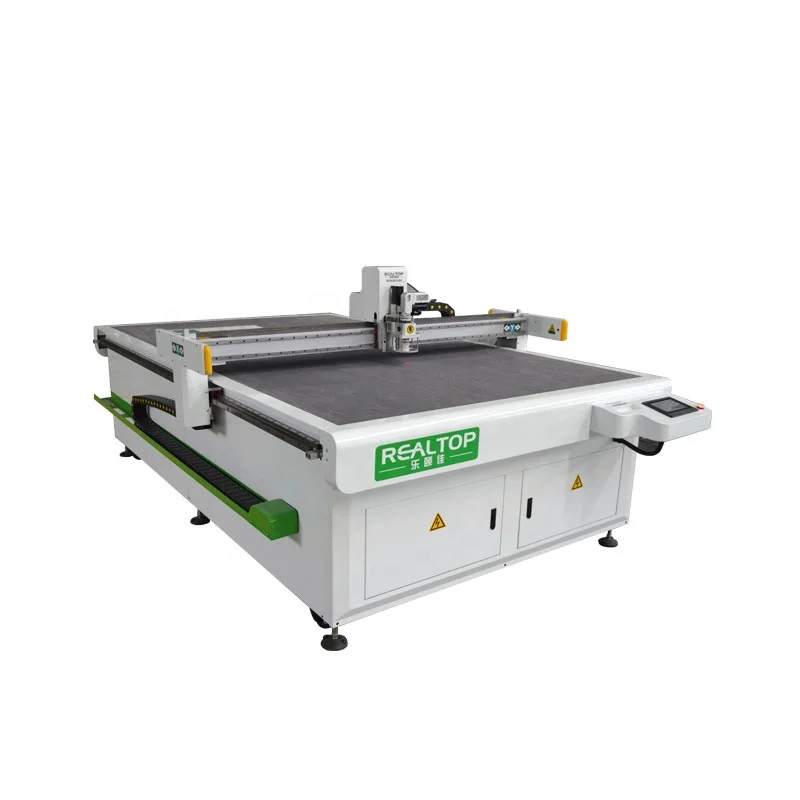
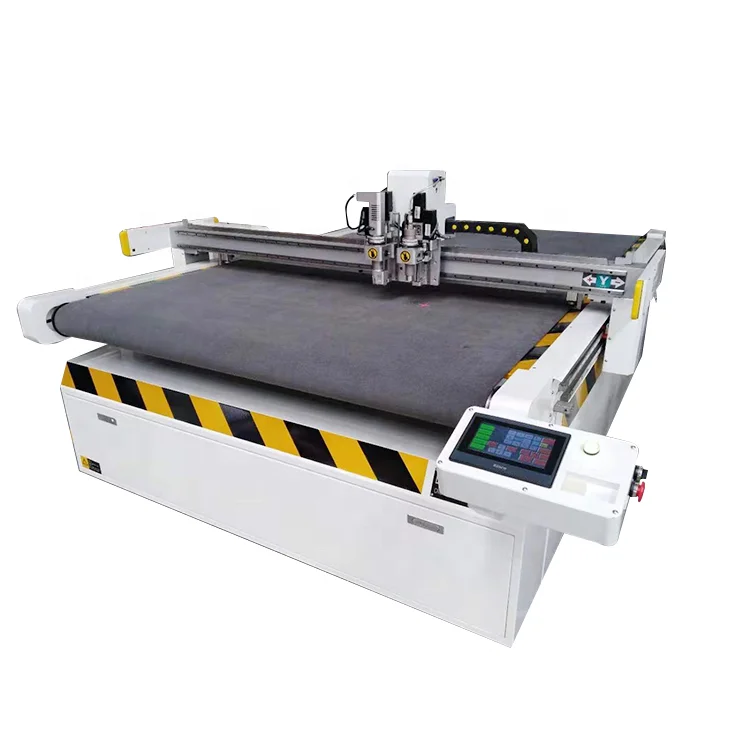
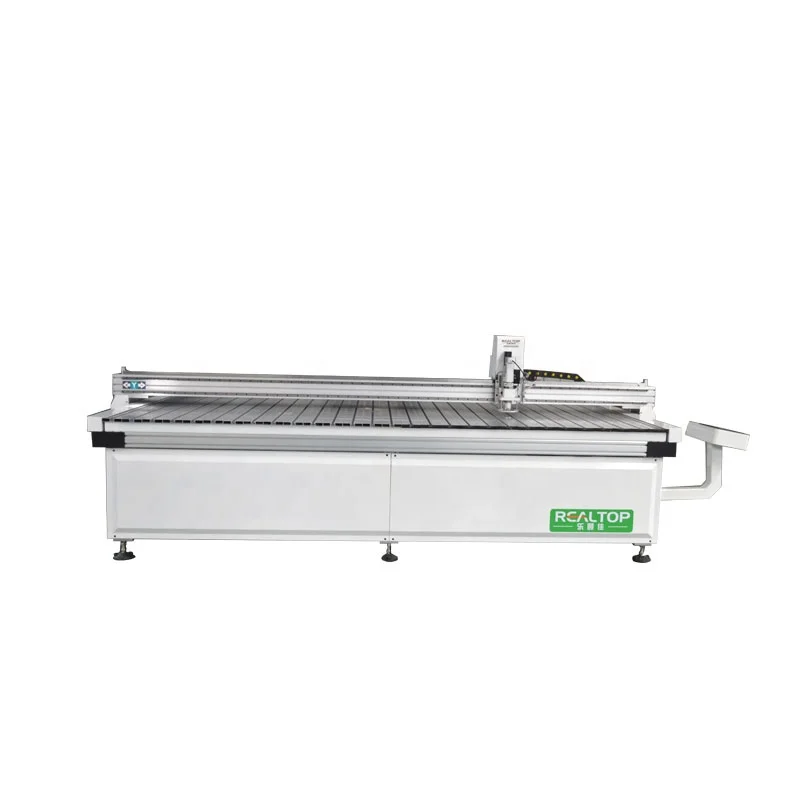
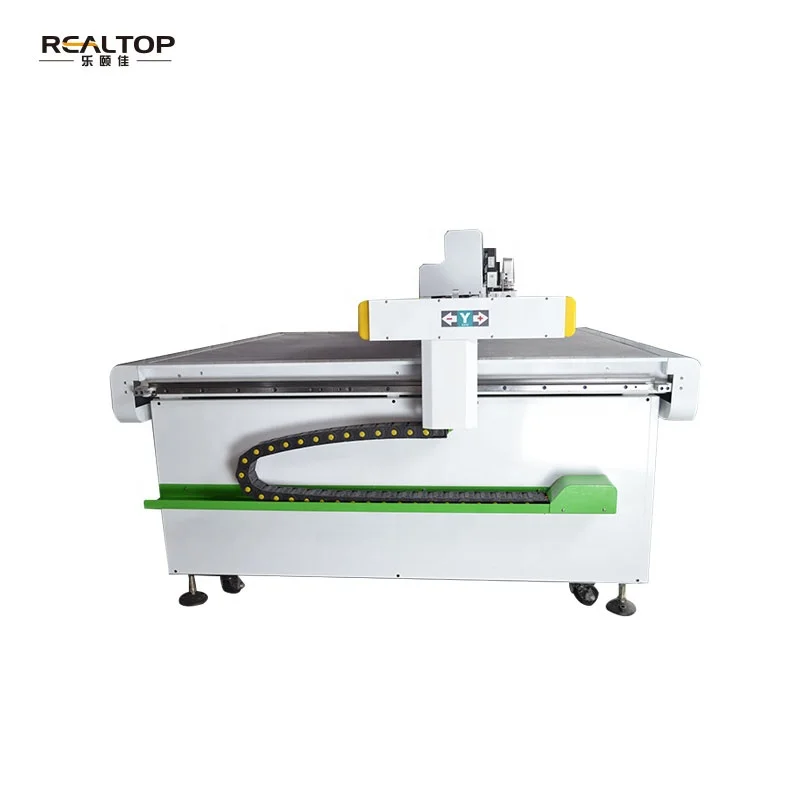
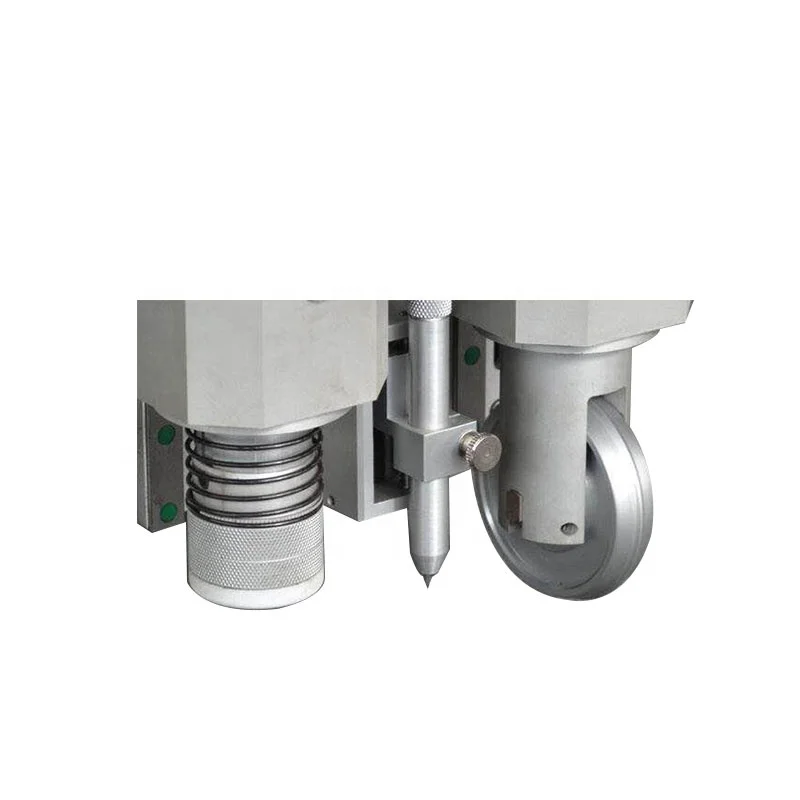
Swiss Knife Head Configuration — the RT-D2516/RT-S2516 oscillating knife setup supports full cut, half cut and cursor location on a single multifunctional tool head, tested on buyer-supplied fabric before order.
Technical Specifications
| Parameter | Value |
|---|---|
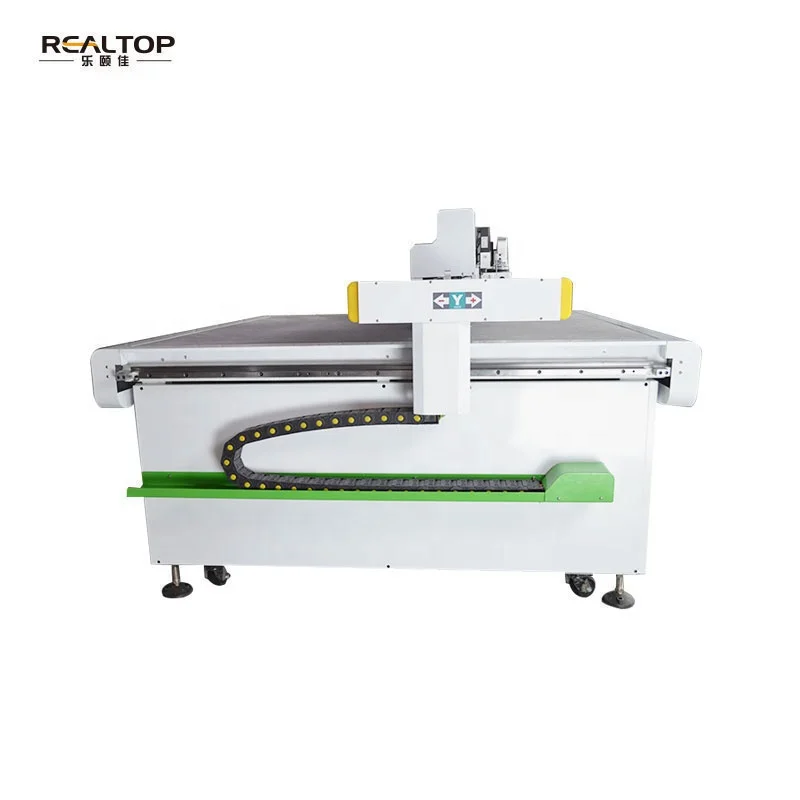
| Product Type | CNC Oscillating Knife Cutting Machine |
| Model | RT-D2516/RT-S2516 |
| Working Area | 1600×2500 mm |
| Machine Size (L×W×H) | 3450×2300×1250 mm |
| Rated Power | 9 kW |
| Voltage | 380V ±10% (frequency to be confirmed: 50 or 60 Hz) |
| Vacuum Pump Power | 7.5 kW |
| Translational Velocity | 800–1200 mm/s |
| Cutting Speed | 200–800 mm/s (varies by material type and thickness) |
| Repeated Accuracy | ≤0.1 mm |
| Servo Motor | Japanese Yaskawa digital servo |
| Linear Guide | Taiwan Hiwin rail |
| Conveyor Belt | Germany-imported belt |
| Feed System | Auto feeding |
| Table Type | Flat working table with vacuum and conveyor |
| Tool Head | Multifunctional with Swiss imported knife (vibration full cut, half cut, cursor location) |
| Safety Device | Infrared sensors |
| Instruction System | HP-GL compatible format |
| Warranty | 12 months whole machine, 3 months consumables |
Application Suitability
| Application | Material or Output |
|---|---|
| Bridal gown and wedding dress cutting | Chiffon, organza, satin, multi-layer composite tulle |
| Garment and apparel cutting | Cotton, linen, polyester, denim lay stacks |
| Leather goods production | Cowhide, sheepskin, PU leather sheets |
| Sponge composite leather cutting | Foam-bonded leather and textile laminates |
| Gasket and seal fabrication | PVC, soft glass, silicon, rubber sheets |
Why the Cutting Speed Range Matters More Than You Think
A CNC oscillating knife cutting machine for sale often lists a single speed figure, but the RT-D2516/RT-S2516 specifies 200–800 mm/s depending on material — because a blade that slices chiffon at full speed will crush sponge composite leather at that same rate.
Match the speed to the material stack, not the machine’s maximum.
I once worked with a bridal workshop that switched from lightweight chiffon to layered satin without adjusting parameters. The knife dragged through the inner layers, leaving visible fiber pull on the cut edges. That was the job where I stopped trusting spec sheets alone and started requiring actual material samples before finalizing any tool head or speed recommendation. When the cutting speed is quoted as a range, it means the control system can accommodate different material densities — but only if someone takes the time to map those settings before the machine reaches your floor [NEED_CITE: oscillating knife cutting parameters for layered textile materials].
Knife Versus Laser: Choosing the Right Method for Your Fabric
The complete equipment range at this facility covers both knife and laser cutting, so the decision does not default to one method by absence of alternatives. For woven and knit fabrics where edge sealing is not required, the oscillating knife produces a clean cut without thermal discoloration. Laser cutting serves a different purpose — it seals synthetic edges and handles intricate contours on single plies.
A CNC oscillating knife cutting machine for sale in this working area size handles multi-ply lay cutting on garment and bridal fabrics, where stacking several layers and cutting all of them simultaneously gives a throughput advantage that a single-ply laser process cannot match. The choice between methods should follow the material, the ply count, and whether edge fusion is desirable or destructive.
The Drive Train That Holds Repeatability Across Long Cuts
Repeatability of ≤0.1 mm across a 2500 mm cut length depends on every motion component working together. The Yaskawa digital servo motor delivers precise positional feedback, the Hiwin linear guide keeps the carriage aligned over thousands of travel cycles, and the synchronous belt and imported ball screw transfer motion without the backlash that cheaper rack-and-pinion setups introduce over time.
When cutting bridal gown panels that must align with pattern pieces sewn together later, a positional drift of even half a millimeter at the far end of the table causes misaligned seams. The combination of servo, guide and transmission here addresses that failure mode at the mechanical level, not through software compensation after the fact [NEED_CITE: linear guide and servo motor repeatability standards in CNC cutting equipment].
Vacuum, Conveyor and Continuous Feed Integration
The 7.5 kW vacuum pump paired with the Germany-imported conveyor belt serves a specific production workflow: the auto-feeding system advances a new section of fabric roll while the vacuum holds the current lay flat against the table. This matters most when cutting long continuous runs of garment fabric or bridal tulle, where manually repositioning material between cuts introduces both downtime and registration errors.
For small pattern pieces — think individual bodice panels or appliqué shapes — the vacuum table zoning must be sufficient to hold edges down during the final cut passes. Without adequate localized suction, lightweight fabrics lift at the trailing edge and produce incomplete cuts or blade deflection. The conveyor belt material and vacuum zone layout on this table were selected to handle flexible materials across the garment and leather spectrum.
What Happens When the Tool Head Is Wrong for the Material
Selecting a drag knife instead of an oscillating knife for layered composite leather produces ragged edges on the bottom ply and crushed foam in the middle layer. The multifunctional head on this model includes a Swiss imported oscillating blade specifically because vibration frequency lets the knife slice through dense composites without the downward pressure that deforms softer inner layers.
A buyer who specifies a machine based on working area alone, then discovers the tool head cannot handle their actual material stack, faces a retrofit that is rarely simple or inexpensive. The oscillation frequency, blade geometry and stroke length must all match the material profile — which is exactly why sample cutting on the buyer’s own fabric should happen before the order is placed [NEED_CITE: tool head selection criteria for oscillating knife cutting machines].
Why Buyers Source This Machine Here
In-house design and production across both knife and laser technologies means the cutting method is matched to the buyer’s material rather than forced into whatever the factory happens to manufacture. Tool head and table configuration are specified per material type and production volume, not pulled from a default build sheet.
CCD camera positioning availability is confirmed per order, so buyers who need printed contour recognition know before payment whether this model supports it. Software compatibility with existing HP-GL file workflows is verified during the pre-order stage. Voltage, frequency and control language customization are documented in writing before production begins. Sample cutting on the buyer’s actual material produces a written report showing cut quality, edge condition and achievable speed on each specific fabric or composite.
Documentation & Verification
- Machine specification sheet with tool head and table configuration matched to your material type
- Electrical schematic confirming 380V ±10% wiring and voltage tap settings before dispatch
- Sample cutting report performed on your supplied fabric or leather stock before order finalization
- HP-GL file format compatibility note verifying software integration with your existing nesting workflow
- CE declaration and factory test record documenting run-off accuracy and repeatability results
Installation, Commissioning & Support
- 3450×2300 mm footprint requires clear floor space with level concrete substrate for table stability
- 9 kW rated power plus 7.5 kW vacuum pump demands dedicated three-phase circuit at confirmed voltage and frequency
- Auto-feeding and conveyor system commissioning includes belt tension, vacuum zone and sensor calibration
- Operator training covers multifunctional tool head setup for full cut, half cut and cursor location functions
- Consumable blade and spare parts list provided matching the Swiss imported knife specification
Before You Request a Quote
To size this CNC oscillating knife cutting machine for sale to your actual production needs, provide the specific fabric or composite material type, the maximum lay thickness in plies or millimeters, and the typical sheet or roll width you run. Confirm your workshop voltage and frequency, along with the control language your operators require. If you use a specific nesting software, send the file format so compatibility is verified before the machine is built.
Frequently Asked Questions
Q: Should I choose oscillating knife or laser cutting for bridal gown fabrics?
A: For multi-ply lay cutting of chiffon, satin and tulle without thermal edge effects, the oscillating knife is the standard method. Laser cutting serves better when edge sealing on synthetics is required or when working with single-ply intricate contours. The full range includes both technologies, so the method follows your material rather than the available equipment.
Q: Is CCD camera contour recognition available on the RT-D2516/RT-S2516?
A: CCD camera positioning availability must be confirmed per order for this model. If your workflow requires tracking printed registration marks at production speed on fabric, this option should be specified and tested during the sample cutting stage before the order is finalized.
Q: What voltage and frequency options are supported for export shipments?
A: The standard configuration is 380V ±10%, but frequency (50 or 60 Hz), plug type and control panel language must all be confirmed in writing before production. These parameters affect motor ratings, transformer sizing and interface labeling, so they cannot be changed after assembly without significant rework.
Q: How does the sample cutting process work before I commit to an order?
A: You send your actual fabric, leather or composite material to the factory. A cutting test runs on the RT-D2516/RT-S2516 using the recommended tool head and speed settings. A written report documents edge quality, cutting speed achieved, and any adjustments needed — so you see real results on your material before payment.










商品评价
There are no reviews yet.