




Fast Delivery
Quick, reliable shipping to any location.

Free & easy returns
Return this item by mail or in store within 90 days for a full refund.
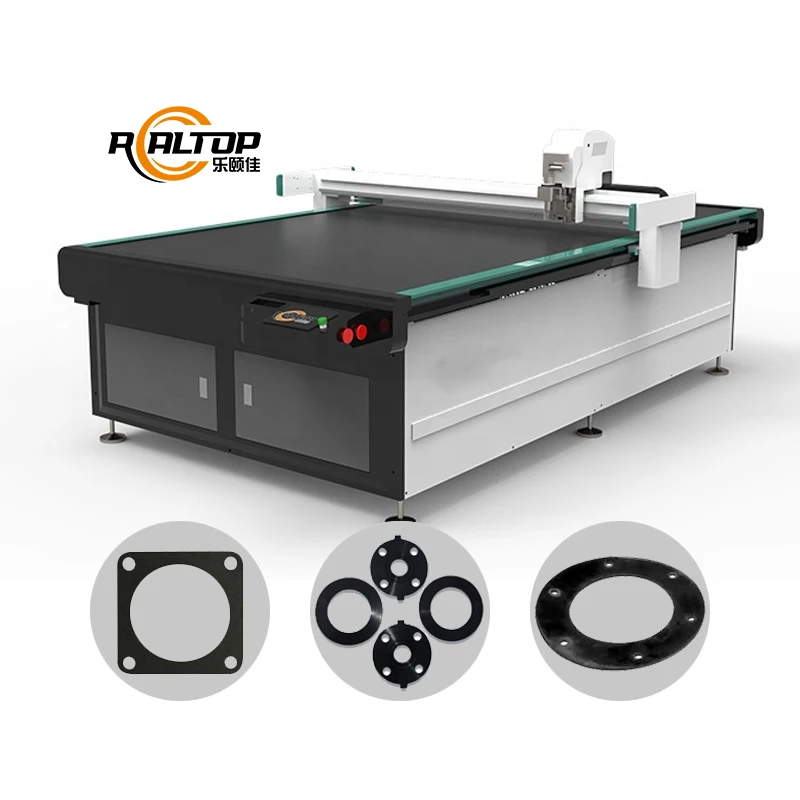
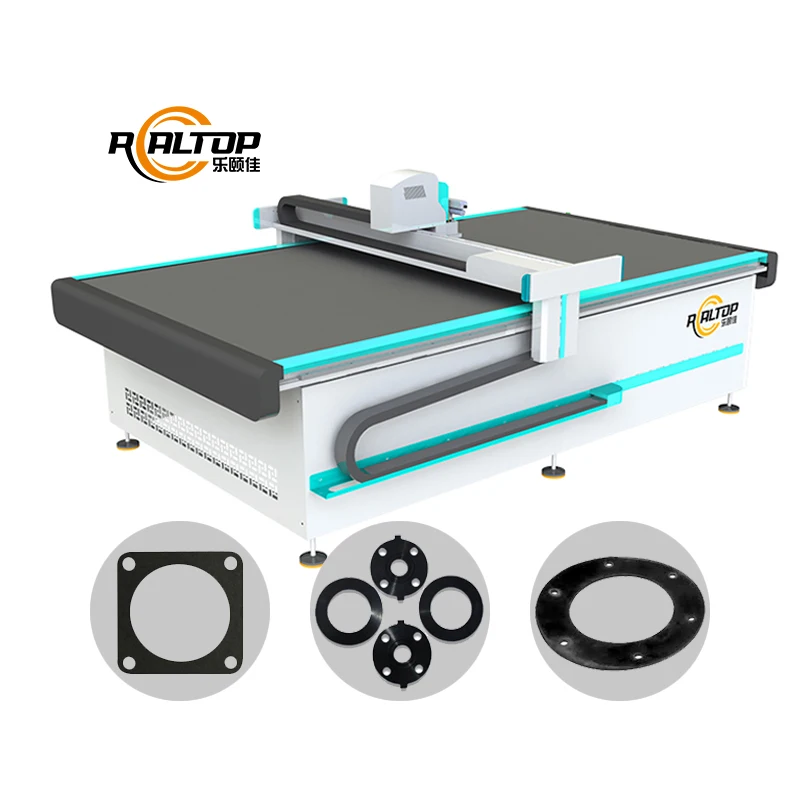
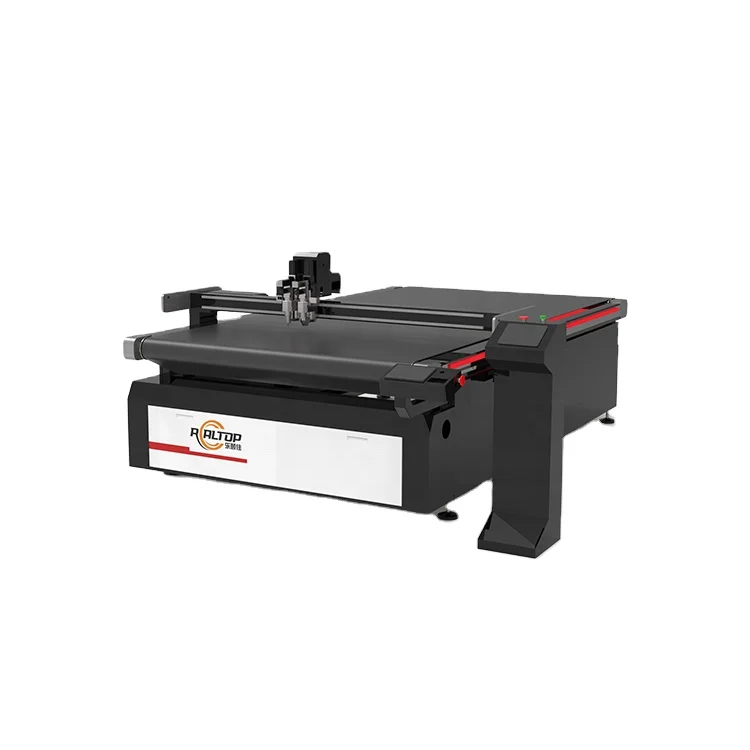
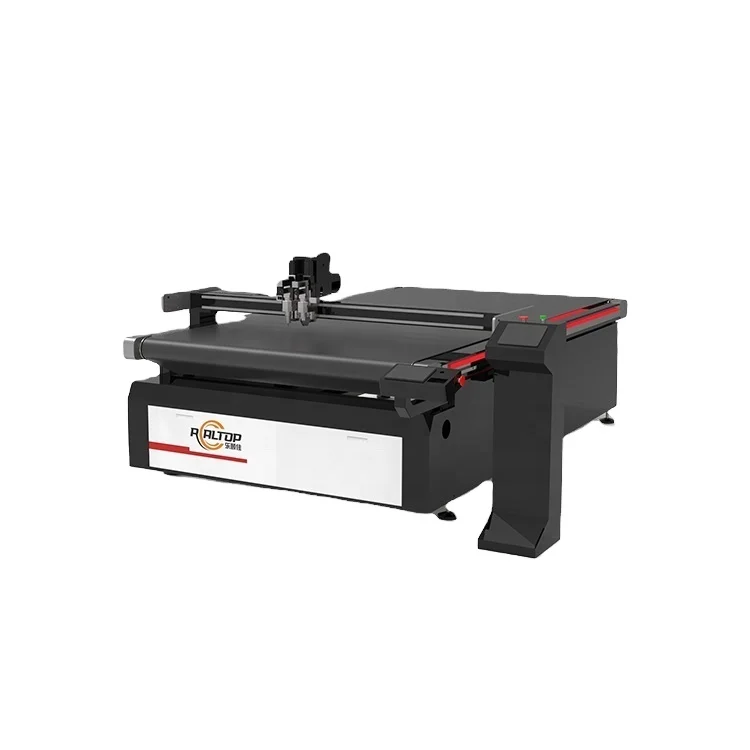
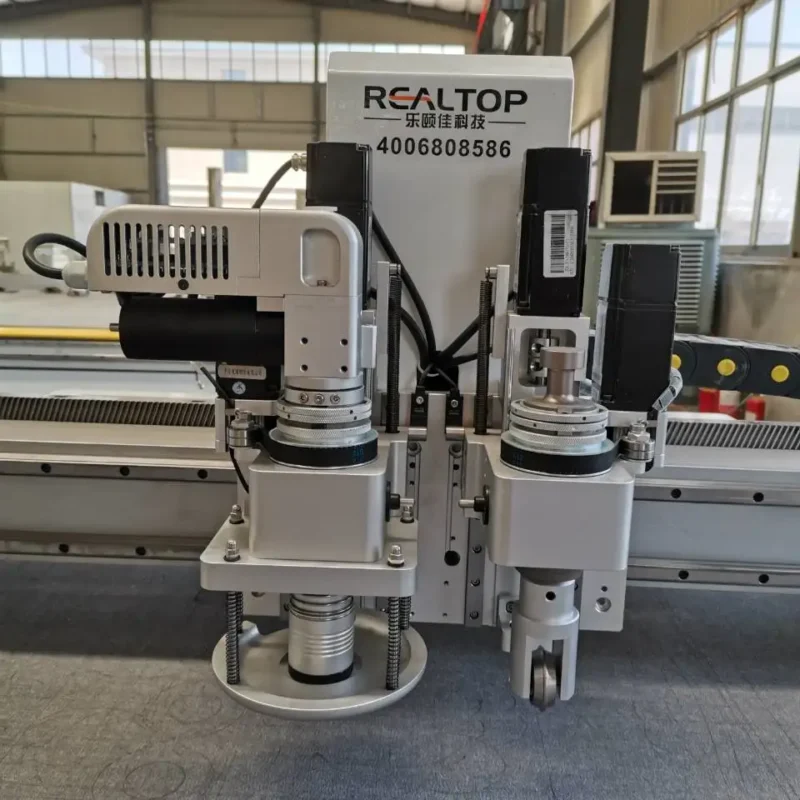
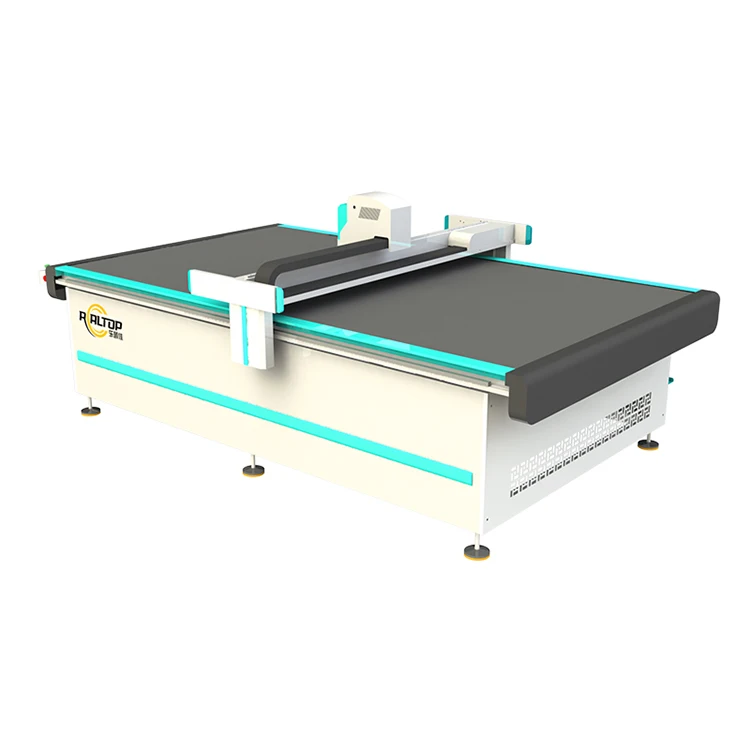
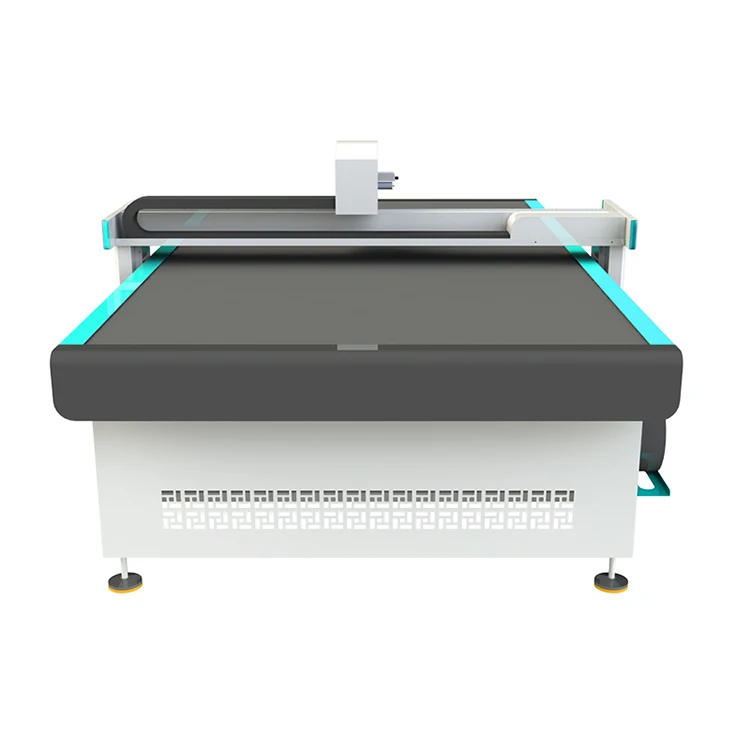
Swiss Knife Head Configuration — the multifunctional oscillating tool head on the RT-D2516/RT-S2516 runs full cut, half cut and cursor positioning from a single setup, letting gasket fabricators switch between rubber sheet and foam composite without re-rigging the beam.
Technical Specifications
| Parameter | Value |
|---|---|
| Model | RT-D2516/RT-S2516 |
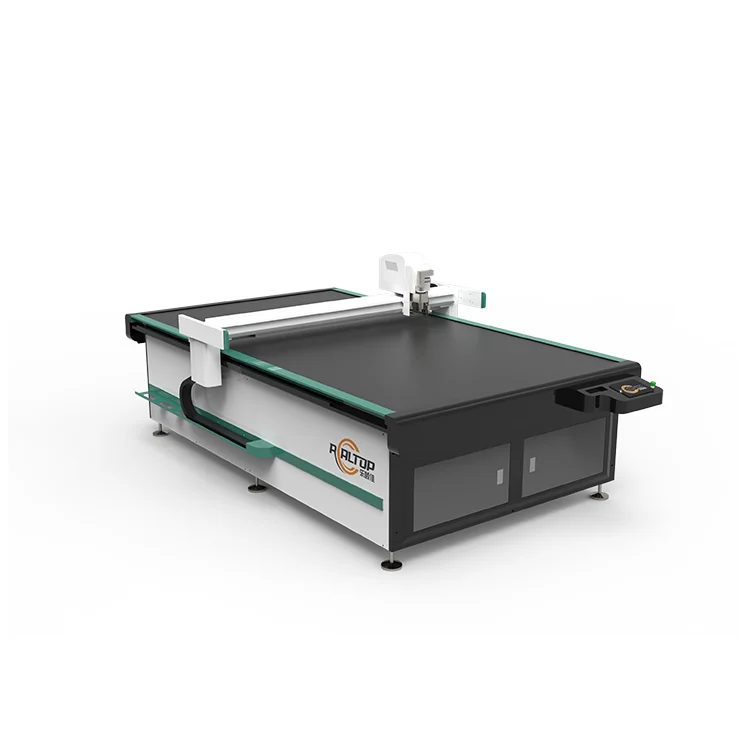
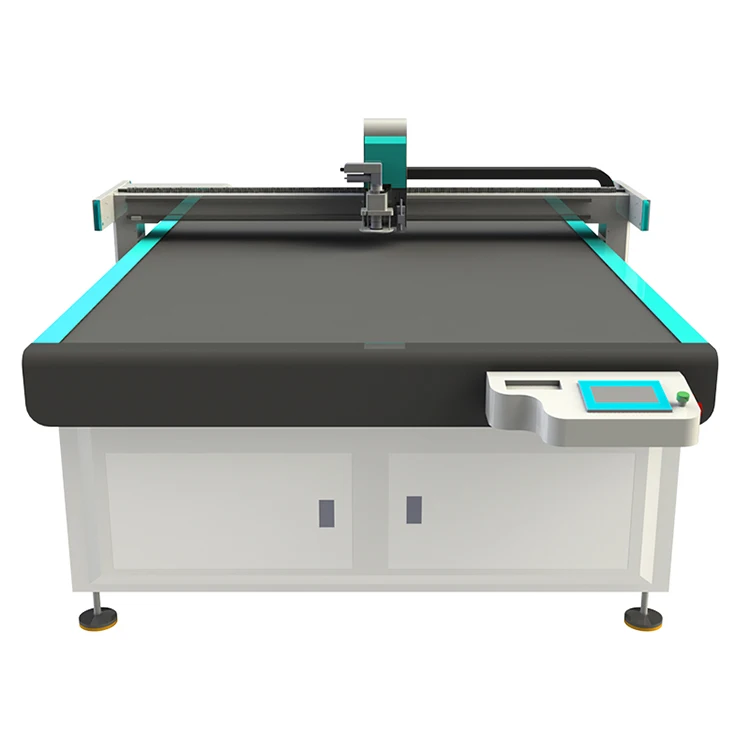
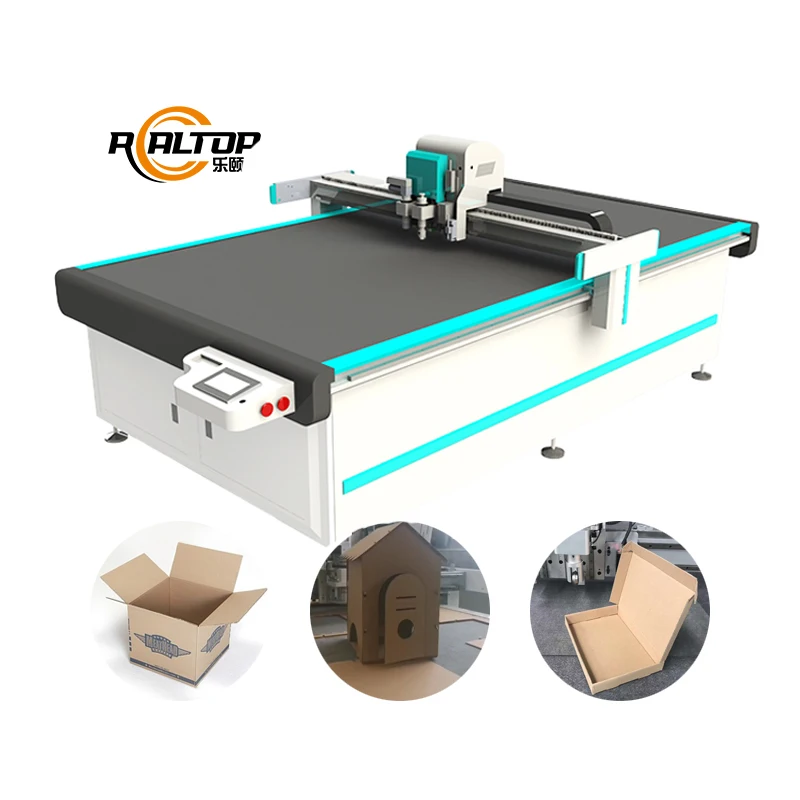
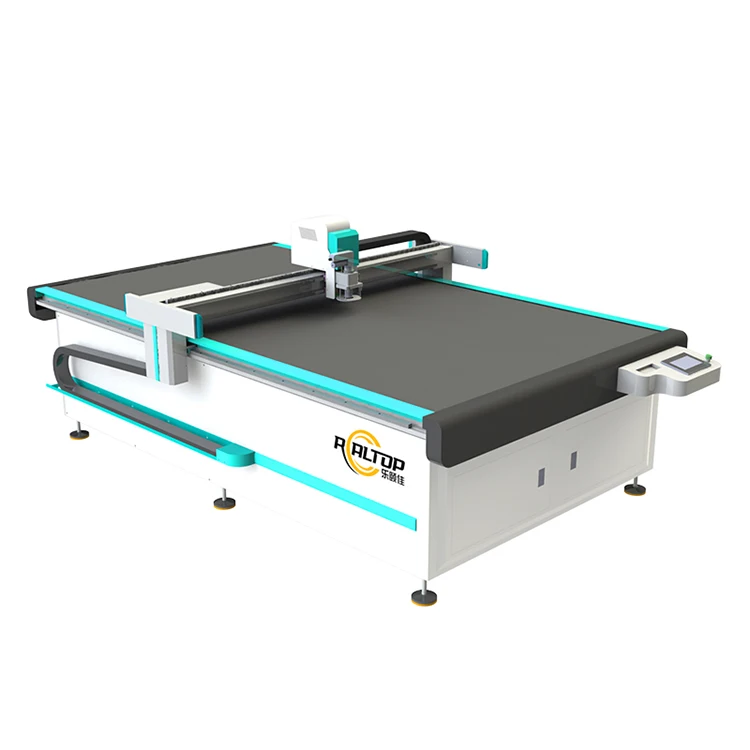
| Product Type | CNC Oscillating Knife Cutting Machine |
| Working Area | 1600×2500 mm |
| Overall Dimensions (L×W×H) | 3450×2300×1250 mm |
| Rated Power | 9 kW |
| Voltage | 380V ±10% |
| Vacuum Pump Power | 7.5 kW |
| Translational Velocity | 800–1200 mm/s |
| Repeatability | ≤0.1 mm |
| Tool Head | Multifunctional head with Swiss imported oscillating knife (vibration full cutting, half cutting, cursor location) |
| Transmission System | Digital servo motor (Delta), Taiwan Hiwin linear guide, synchronous belt, ball screw |
| Working Table | Flat working table with vacuum hold-down |
| Conveyor Feed | Germany imported conveyor belt, auto feeding |
| Safety Device | Infrared sensors |
| Instruction Format | HP-GL compatible |
| Warranty | 12 months for whole machine |
| Certification | CE (declared where applicable) |
Application Suitability
| Application | Material or Output |
|---|---|
| Gasket and seal fabrication | Rubber, silicone, PTFE and fiber composite sheet in nested layouts |
| Automotive interior padding | Foam, sponge and composite materials requiring clean edge finishing |
| Industrial protective covers | PVC, soft glass and flexible sheet stock for curtains and shields |
| Footwear and leather goods | Leather, flexible garment materials and sponge composite leather |
| Packaging sample making | Corrugated and flexible board stock for short-run carton prototypes |
Why Cutting Thickness Claims Fail on Hard Rubber Stock
Specifying a machine only by working area size leaves the most critical variable — material density and knife penetration force — entirely to chance.
I have watched buyers order a flatbed cutter based on the 1600×2500 mm bed, only to find the oscillating knife stalls halfway through a dense silicone gasket sheet or leaves ragged tears on fiber-reinforced PTFE. The issue is rarely the bed; it is the mismatch between tool head oscillation frequency, blade geometry and the actual Shore hardness of the stock being fed. A CNC oscillating knife cutting machine manufacturer worth engaging will ask for your specific material samples before quoting a configuration [NEED_CITE: material hardness and knife oscillation frequency matching in gasket fabrication]. Without that verification step, you are buying a frame and hoping the tooling keeps up.
Matching the Oscillating Knife to Gasket Material Density
The Swiss imported oscillating knife on the RT-D2516/RT-S2516 handles full cut, half cut and cursor positioning without a tool change, which matters when a single gasket job involves cutting through a 3 mm rubber base and then scoring a fold line on a thinner composite overlay. Different gasket materials demand different oscillation amplitudes and blade profiles, and the multifunctional head allows the operator to select the appropriate cutting mode directly from the control interface rather than swapping physical tool holders mid-run.
Vacuum Hold-Down for Thin and Flexible Gasket Stock
Gasket materials like PTFE film and thin silicone sheet tend to lift at the edges when the knife exits a cut, especially at translational velocities approaching 1200 mm/s. The 7.5 kW vacuum pump paired with the flat working table pulls the material flat across the cutting zone, reducing lift and preventing the blade from dragging a folded edge through the rest of the contour [NEED_CITE: vacuum table zoning and material lift prevention in digital cutting systems]. For nested small-part layouts common in seal production, consistent vacuum across the full 1600×2500 mm area is what separates usable parts from scrap.
Translating Specs into Real Cutting Behaviour
The Delta digital servo motor and Taiwan Hiwin linear guide combination delivers ≤0.1 mm repeatability across the bed, which directly affects how well nested gasket patterns fit together — tight tolerances mean less wasted rubber between parts and more seals per sheet. The 9 kW rated power covers the spindle, vacuum assist and conveyor drive simultaneously, so the machine does not bog down when auto-feeding a continuous roll of sponge composite leather through the Germany imported conveyor belt. HP-GL instruction compatibility means the cutter integrates with the CAD and nesting software most gasket shops already use, avoiding a forced software migration that delays production while operators learn a new workflow.
The Cost of Skipping Material Verification Before Purchase
When the tool head is specified generically rather than matched to the buyer’s actual rubber compound, the result shows up within the first production week — blades dull faster, edge quality degrades on thicker stock and the operator starts reducing feed speed to compensate. Small gasket parts below a certain footprint can shift on the table if vacuum zoning is insufficient, forcing manual repositioning and re-cuts [NEED_CITE: small-part lifting and vacuum zone configuration on CNC flatbed cutters]. These problems do not appear on a specification sheet; they appear on the shop floor, usually after the machine has been paid for.
Why Buyers Source This Cutter Here
In-house design and production across both knife and laser cutting platforms means the RT-D2516/RT-S2516 is specified as a knife machine because the material calls for it, not because that is the only technology available. Tool head and table configuration is confirmed per material and production volume before the order is locked. Sample cutting on the buyer’s own gasket stock — rubber, silicone or composite — runs before commitment, so edge quality and cutting depth are verified on real material. Voltage, plug type and control language are confirmed for the destination market before shipment. Software and file format compatibility is documented, so the nesting workflow the buyer already uses is supported on day one.
Documentation & Verification
- Machine specification sheet listing working area, tool head type and vacuum configuration per material
- Sample cutting report on your gasket or foam material before order confirmation
- Electrical schematic and voltage confirmation matched to destination market requirements
- Software licence and file format compatibility note covering HP-GL and nesting integration
- Factory test record documenting cutting accuracy and vacuum performance before dispatch
- Packing photographs verifying shipment condition and component completeness
Installation, Commissioning & Support
- Floor space of at least 4000×3000 mm required to accommodate the 3450×2300×1250 mm footprint with operator clearance
- Dedicated 380V ±10% three-phase circuit rated for 9 kW continuous draw with appropriate breaker sizing
- Machine arrives factory-assembled in flatbed format, requiring gantry and conveyor belt alignment on site
- First-run commissioning includes vacuum table zone testing and oscillating knife calibration on your material
- Operator training covers tool head mode selection, HP-GL file import and nesting workflow integration
- Spare parts list includes Swiss oscillating knife blades and conveyor belt wear components
What to Include in Your Inquiry
Send the specific gasket material type, thickness range and Shore hardness so the correct oscillating knife blade and vacuum configuration can be matched to your production. Include your daily sheet volume and whether you run nested layouts or single large-format cuts. Confirm your local voltage and frequency, preferred control language and whether your existing CAD software outputs HP-GL or requires a different instruction format.
Frequently Asked Questions
Q: How do I verify the cutting thickness capacity against my specific gasket material?
A: Send sample sheets of your actual rubber, silicone or composite stock, including the hardest and thickest grades you run. A cutting test on the RT-D2516/RT-S2516 with the appropriate oscillating knife blade is completed before order confirmation, so you see edge quality and penetration depth on your own material rather than a generic demo sample.
Q: Which tool head works best for rubber versus foam versus composite gasket materials?
A: The multifunctional head on this CNC oscillating knife cutting machine manufacturer platform supports Swiss oscillating knife for full and half cutting across rubber and foam, with blade profile and oscillation frequency selected per material density. Creasing wheels and drag knives are available for scoring and thinner stock where a vibrating blade is unnecessary.
Q: Does the vacuum table prevent small gasket parts from lifting during cutting?
A: The 7.5 kW vacuum pump provides hold-down across the 1600×2500 mm flat working table. For very small seal parts, vacuum zoning configuration is confirmed during the sample cutting stage to ensure adequate suction in the cutting zone and prevent material shift at production speed.
Q: Can the voltage, plug type and control language be customized before shipment?
A: Yes. The baseline specification is 380V ±10%, but voltage and plug configuration are confirmed for the destination market before production begins. Control interface language is set according to operator preference, and the electrical schematic reflects the as-built configuration for local maintenance.
Q: Is CCD camera contour recognition available for printed-mark gasket workflows?
A: CCD camera positioning is available as a configuration option for buyers cutting gaskets from pre-printed material where contour tracking is required. The system reads printed registration marks to align cuts, and this capability is confirmed and tested during the sample cutting phase before the order is finalized.
Swiss Knife Head Configuration — the multifunctional oscillating tool head on the RT-D2516/RT-S2516 runs full cut, half cut and cursor positioning from a single setup, letting gasket fabricators switch between rubber sheet and foam composite without re-rigging the beam.
Technical Specifications
| Parameter | Value |
|---|---|
| Model | RT-D2516/RT-S2516 |
| Product Type | CNC Oscillating Knife Cutting Machine |
| Working Area | 1600×2500 mm |
| Overall Dimensions (L×W×H) | 3450×2300×1250 mm |
| Rated Power | 9 kW |
| Voltage | 380V ±10% |
| Vacuum Pump Power | 7.5 kW |
| Translational Velocity | 800–1200 mm/s |
| Repeatability | ≤0.1 mm |
| Tool Head | Multifunctional head with Swiss imported oscillating knife (vibration full cutting, half cutting, cursor location) |
| Transmission System | Digital servo motor (Delta), Taiwan Hiwin linear guide, synchronous belt, ball screw |
| Working Table | Flat working table with vacuum hold-down |
| Conveyor Feed | Germany imported conveyor belt, auto feeding |
| Safety Device | Infrared sensors |
| Instruction Format | HP-GL compatible |
| Warranty | 12 months for whole machine |
| Certification | CE (declared where applicable) |
Application Suitability
| Application | Material or Output |
|---|---|
| Gasket and seal fabrication | Rubber, silicone, PTFE and fiber composite sheet in nested layouts |
| Automotive interior padding | Foam, sponge and composite materials requiring clean edge finishing |
| Industrial protective covers | PVC, soft glass and flexible sheet stock for curtains and shields |
| Footwear and leather goods | Leather, flexible garment materials and sponge composite leather |
| Packaging sample making | Corrugated and flexible board stock for short-run carton prototypes |
Why Cutting Thickness Claims Fail on Hard Rubber Stock
Specifying a machine only by working area size leaves the most critical variable — material density and knife penetration force — entirely to chance.
I have watched buyers order a flatbed cutter based on the 1600×2500 mm bed, only to find the oscillating knife stalls halfway through a dense silicone gasket sheet or leaves ragged tears on fiber-reinforced PTFE. The issue is rarely the bed; it is the mismatch between tool head oscillation frequency, blade geometry and the actual Shore hardness of the stock being fed. A CNC oscillating knife cutting machine manufacturer worth engaging will ask for your specific material samples before quoting a configuration [NEED_CITE: material hardness and knife oscillation frequency matching in gasket fabrication]. Without that verification step, you are buying a frame and hoping the tooling keeps up.
Matching the Oscillating Knife to Gasket Material Density
The Swiss imported oscillating knife on the RT-D2516/RT-S2516 handles full cut, half cut and cursor positioning without a tool change, which matters when a single gasket job involves cutting through a 3 mm rubber base and then scoring a fold line on a thinner composite overlay. Different gasket materials demand different oscillation amplitudes and blade profiles, and the multifunctional head allows the operator to select the appropriate cutting mode directly from the control interface rather than swapping physical tool holders mid-run.
Vacuum Hold-Down for Thin and Flexible Gasket Stock
Gasket materials like PTFE film and thin silicone sheet tend to lift at the edges when the knife exits a cut, especially at translational velocities approaching 1200 mm/s. The 7.5 kW vacuum pump paired with the flat working table pulls the material flat across the cutting zone, reducing lift and preventing the blade from dragging a folded edge through the rest of the contour [NEED_CITE: vacuum table zoning and material lift prevention in digital cutting systems]. For nested small-part layouts common in seal production, consistent vacuum across the full 1600×2500 mm area is what separates usable parts from scrap.
Translating Specs into Real Cutting Behaviour
The Delta digital servo motor and Taiwan Hiwin linear guide combination delivers ≤0.1 mm repeatability across the bed, which directly affects how well nested gasket patterns fit together — tight tolerances mean less wasted rubber between parts and more seals per sheet. The 9 kW rated power covers the spindle, vacuum assist and conveyor drive simultaneously, so the machine does not bog down when auto-feeding a continuous roll of sponge composite leather through the Germany imported conveyor belt. HP-GL instruction compatibility means the cutter integrates with the CAD and nesting software most gasket shops already use, avoiding a forced software migration that delays production while operators learn a new workflow.
The Cost of Skipping Material Verification Before Purchase
When the tool head is specified generically rather than matched to the buyer’s actual rubber compound, the result shows up within the first production week — blades dull faster, edge quality degrades on thicker stock and the operator starts reducing feed speed to compensate. Small gasket parts below a certain footprint can shift on the table if vacuum zoning is insufficient, forcing manual repositioning and re-cuts [NEED_CITE: small-part lifting and vacuum zone configuration on CNC flatbed cutters]. These problems do not appear on a specification sheet; they appear on the shop floor, usually after the machine has been paid for.
Why Buyers Source This Cutter Here
In-house design and production across both knife and laser cutting platforms means the RT-D2516/RT-S2516 is specified as a knife machine because the material calls for it, not because that is the only technology available. Tool head and table configuration is confirmed per material and production volume before the order is locked. Sample cutting on the buyer’s own gasket stock — rubber, silicone or composite — runs before commitment, so edge quality and cutting depth are verified on real material. Voltage, plug type and control language are confirmed for the destination market before shipment. Software and file format compatibility is documented, so the nesting workflow the buyer already uses is supported on day one.
Documentation & Verification
- Machine specification sheet listing working area, tool head type and vacuum configuration per material
- Sample cutting report on your gasket or foam material before order confirmation
- Electrical schematic and voltage confirmation matched to destination market requirements
- Software licence and file format compatibility note covering HP-GL and nesting integration
- Factory test record documenting cutting accuracy and vacuum performance before dispatch
- Packing photographs verifying shipment condition and component completeness
Installation, Commissioning & Support
- Floor space of at least 4000×3000 mm required to accommodate the 3450×2300×1250 mm footprint with operator clearance
- Dedicated 380V ±10% three-phase circuit rated for 9 kW continuous draw with appropriate breaker sizing
- Machine arrives factory-assembled in flatbed format, requiring gantry and conveyor belt alignment on site
- First-run commissioning includes vacuum table zone testing and oscillating knife calibration on your material
- Operator training covers tool head mode selection, HP-GL file import and nesting workflow integration
- Spare parts list includes Swiss oscillating knife blades and conveyor belt wear components
What to Include in Your Inquiry
Send the specific gasket material type, thickness range and Shore hardness so the correct oscillating knife blade and vacuum configuration can be matched to your production. Include your daily sheet volume and whether you run nested layouts or single large-format cuts. Confirm your local voltage and frequency, preferred control language and whether your existing CAD software outputs HP-GL or requires a different instruction format.
Frequently Asked Questions
Q: How do I verify the cutting thickness capacity against my specific gasket material?
A: Send sample sheets of your actual rubber, silicone or composite stock, including the hardest and thickest grades you run. A cutting test on the RT-D2516/RT-S2516 with the appropriate oscillating knife blade is completed before order confirmation, so you see edge quality and penetration depth on your own material rather than a generic demo sample.
Q: Which tool head works best for rubber versus foam versus composite gasket materials?
A: The multifunctional head on this CNC oscillating knife cutting machine manufacturer platform supports Swiss oscillating knife for full and half cutting across rubber and foam, with blade profile and oscillation frequency selected per material density. Creasing wheels and drag knives are available for scoring and thinner stock where a vibrating blade is unnecessary.
Q: Does the vacuum table prevent small gasket parts from lifting during cutting?
A: The 7.5 kW vacuum pump provides hold-down across the 1600×2500 mm flat working table. For very small seal parts, vacuum zoning configuration is confirmed during the sample cutting stage to ensure adequate suction in the cutting zone and prevent material shift at production speed.
Q: Can the voltage, plug type and control language be customized before shipment?
A: Yes. The baseline specification is 380V ±10%, but voltage and plug configuration are confirmed for the destination market before production begins. Control interface language is set according to operator preference, and the electrical schematic reflects the as-built configuration for local maintenance.
Q: Is CCD camera contour recognition available for printed-mark gasket workflows?
A: CCD camera positioning is available as a configuration option for buyers cutting gaskets from pre-printed material where contour tracking is required. The system reads printed registration marks to align cuts, and this capability is confirmed and tested during the sample cutting phase before the order is finalized.
商品评价
There are no reviews yet.