


Fast Delivery
Quick, reliable shipping to any location.

Free & easy returns
Return this item by mail or in store within 90 days for a full refund.
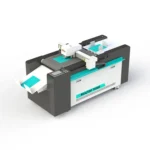
Tooling matched to material — the RTT6080 series pairs oscillating knife, drag knife and creasing wheel options with a CCD camera on the same table, verified on your decal stock before shipment.
Technical Specifications
| Parameter | Value |
|---|---|
| Product Type | CNC Flatbed Cutter |
| Model | RTT6080 / RTT6080 Pro |
| Max Working Area | 600mm × 800mm |
| Tools Group | Cutting tool, kiss cutting tool, creasing tool, CCD camera; high speed oscillating knife (Pro model) |
| Max Cutting Speed | 1500 mm/s (according to the material) |
| Cutting Thickness | ≤ 2 mm (RTT6080); ≤ 5 mm (RTT6080 Pro) |
| Positioning Accuracy | 0.05 mm |
| File Format | DXF, PLT, PDF, AI |
| Transfer Method | Ethernet port |
| Rated Power | 3.2 kW |
| Voltage & Frequency | 220V / 380V, 50Hz |
Application Suitability
| Application | Material or Output |
|---|---|
| Car decal and vehicle wrap production | Printed vinyl and reflective films cut along registered contours using CCD tracking |
| Planner sticker and graphic sheet output | Adhesive-backed paper, PVC and thin PE sheets kiss-cut or through-cut |
| Carton box sample making | Corrugated and folding carton board scored and cut for short-run prototypes |
| Signage flatbed cutting | Self-adhesive lettering film, magnetic sheet and thin foam board |
Why Contour Accuracy Breaks Down on the Shop Floor
A flatbed cutter that chases printed marks must track them at actual production speed, not just during setup.
Many shops discover after installation that their CCD camera holds tight registration on a single test sheet but loses the mark when the material feed accelerates across a run of vehicle decals. The gap between a sample proof and daily output is where most contour jobs stall, leaving operators hand-trimming sheets that were supposed to finish on the table [NEED_CITE: registration drift at feed speed on printed vinyl]. This CNC flatbed cutter for sale addresses the issue by confirming camera tracking on your printed decal file before the machine leaves the factory.
Knife Selection Dictates Edge Quality on Adhesive Films
When cutting self-adhesive vinyl for car decals, the difference between a clean release and a ragged tear often comes down to blade angle and oscillation frequency. The RTT6080 base model handles films up to 2 mm with a standard cutting tool, while the RTT6080 Pro adds a high speed oscillating knife for denser reflective films and thicker PVC laminates. Choosing the wrong blade geometry leaves adhesive residue on the cutting mat and forces operators to peel decals by hand.
Creasing and Kiss-Cutting on the Same Table
Carton sample makers need a creasing wheel that scores folding carton without cracking the coated surface, followed by a kiss-cut that penetrates the top ply but leaves the backing intact. The tool group on this CNC flatbed cutter for sale switches between these operations without a manual head change, keeping short-run box prototypes moving through a single setup [NEED_CITE: creasing wheel pressure settings for coated carton grades]. This matters when a packaging studio runs a dozen different box structures in one shift.
Reading the Specs That Affect Daily Output
The 0.05 mm positioning accuracy sets the floor for contour work: when the CCD camera follows printed registration marks around a curved decal, the cumulative error across an 800 mm sheet stays within the tolerance most vehicle wrap installers accept. File import over Ethernet via DXF, PLT, PDF and AI means the operator does not need to re-draw artwork received from a client’s design studio. The 3.2 kW rated power covers vacuum hold-down and servo motion simultaneously, so the table does not lose suction on thin, low-tack films during high-speed passes. Cutting speed reaches 1500 mm/s depending on the material, meaning reflective films with dense adhesive layers will run slower than plain cast vinyl.
The Cost of Skipping a Material-Specific Tool Setup
A shop that orders a flatbed cutter based only on working area often finds the standard drag knife tears through foam-backed magnetic sheets instead of slicing cleanly. When the tool head cannot handle the material thickness, operators reduce speed and make multiple passes, wearing blades faster and introducing edge chatter [NEED_CITE: tool head mismatch effects on laminated signage materials]. On reflective vehicle films, insufficient down-force leaves partial cuts that peel up during weeding, turning a job that should take an hour into a full-day rework session.
Why Source This CNC Flatbed Cutter Here
In-house design covers both knife and laser cutting technologies, so a buyer running decals and carton samples can match the cutting method to each material rather than forcing one process. Tool head and table configuration is specified per the decal stock and carton grade you actually run, not quoted from a generic list. CCD camera positioning is verified on your printed artwork before the machine ships, reducing on-site adjustment time. Software compatibility is confirmed against your existing DXF or AI workflow so file conversion does not become a bottleneck. Sample cutting on your own material takes place before you commit to an order.
Documentation & Verification
- Machine specification sheet listing RTT6080 or RTT6080 Pro tool group as shipped
- Electrical schematic with your confirmed voltage and frequency noted
- Sample cutting report produced on your decal film or carton board
- Tool head and table configuration list matching the chosen model
- Software licence and file format compatibility note for DXF, PLT, PDF, AI
- Factory test record showing positioning accuracy verification before packing
Installation, Commissioning & Support
- Dedicated 3.2 kW circuit required; confirm 220V or 380V supply and plug type before wiring
- 600 mm × 800 mm table footprint needs clear access on three sides for material loading
- Ethernet port setup and file transfer tested with your design software during commissioning
- CCD camera calibration performed on your printed decal stock at operating speed
- Tool head pressure and blade depth set for your specific film thickness range
- Spare blade and cutting mat stock listed for your first reorder cycle
What to Share Before Quoting
Send a roll or sheet of the decal film, reflective material or carton board you plan to run in production, along with the file format your designers currently export. Confirm the voltage and frequency at your facility and the language your operators prefer on the control interface. If your shop already uses nesting software, share a sample nested file so import compatibility is checked before the machine is configured.
Frequently Asked Questions
Q: How do I choose between the RTT6080 and RTT6080 Pro for my decal work?
A: The RTT6080 handles materials up to 2 mm with a standard cutting tool, suitable for cast vinyl and thin PVC films. The RTT6080 Pro extends thickness capacity to 5 mm and adds a high speed oscillating knife, which cuts denser reflective films and adhesive-backed foams without dragging. Match the model to your thickest production material, not your thinnest.
Q: What print mark format does the CCD camera need for contour cutting?
A: The camera reads high-contrast registration marks printed along the decal artwork border. Marks should be solid black on a light background, with a clear gap between the mark and the cut line. Send a sample printed sheet so mark size, contrast and placement can be verified before the machine is calibrated to your file layout.
Q: Which tool head fits carton sample making versus car decal cutting?
A: Carton prototypes use the creasing tool to score fold lines and the cutting tool to separate the blank. Car decals rely on the cutting tool for through-cuts or the kiss cutting tool for adhesive-layer work. The RTT6080 Pro oscillating knife suits thicker reflective films where a drag knife would tear the surface.
Q: Will my existing DXF or AI files import without re-drawing?
A: The system accepts DXF, PLT, PDF and AI files transferred over Ethernet. Before shipment, your sample file is loaded and a test cut is run to confirm layer recognition, cut order and contour path direction match your current design workflow without manual re-drawing.
Q: Is the voltage and control language confirmed before the machine ships?
A: Yes. The RTT6080 series supports 220V or 380V at 50Hz, and the control language is set to your operator preference. Both are written into the specification confirmation document you sign before production begins, so there are no surprises at installation.










商品评价
There are no reviews yet.