
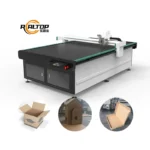
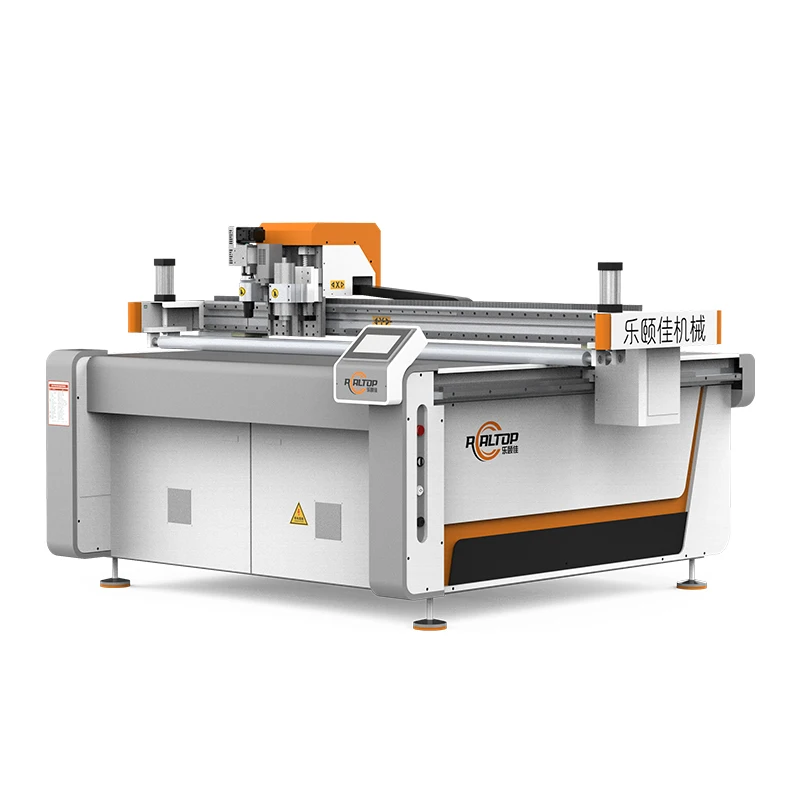
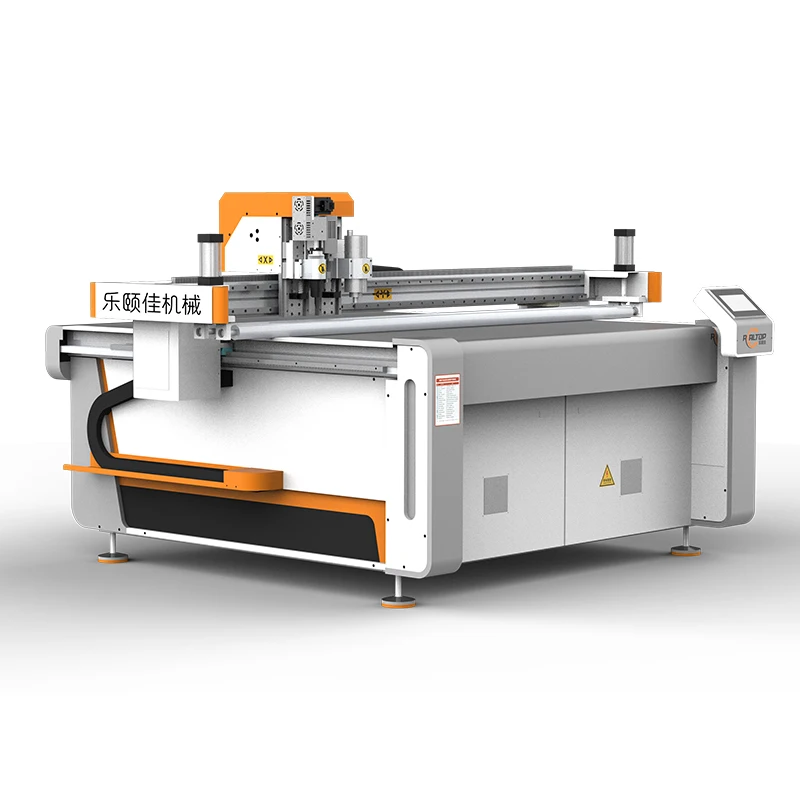
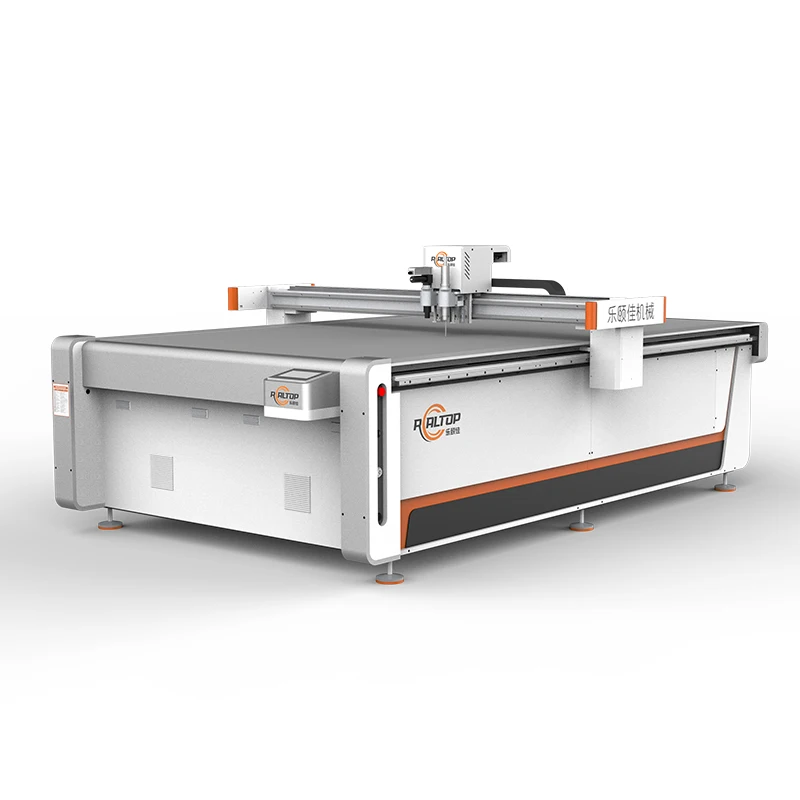
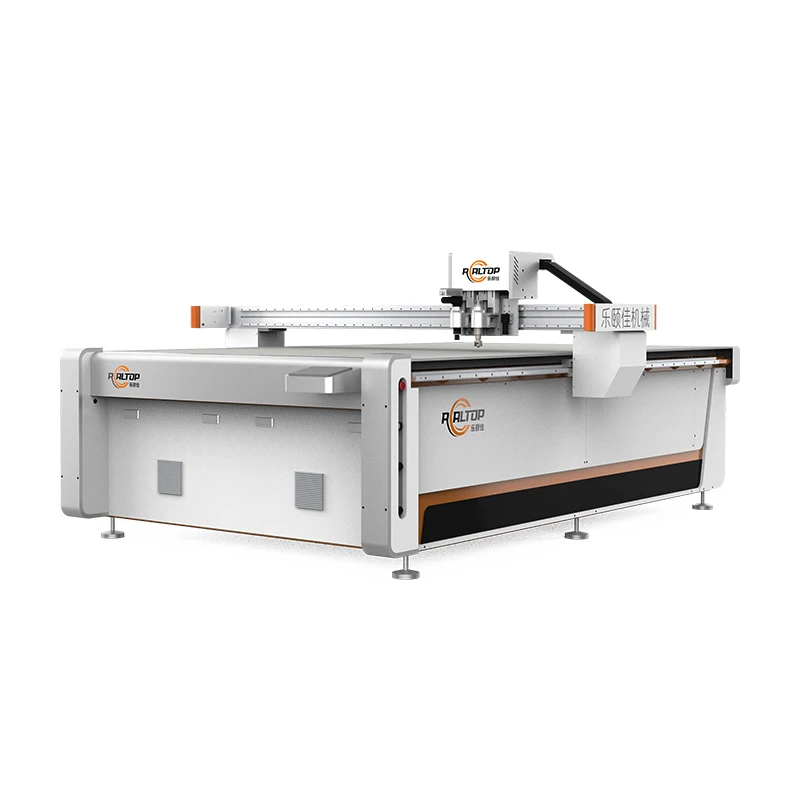
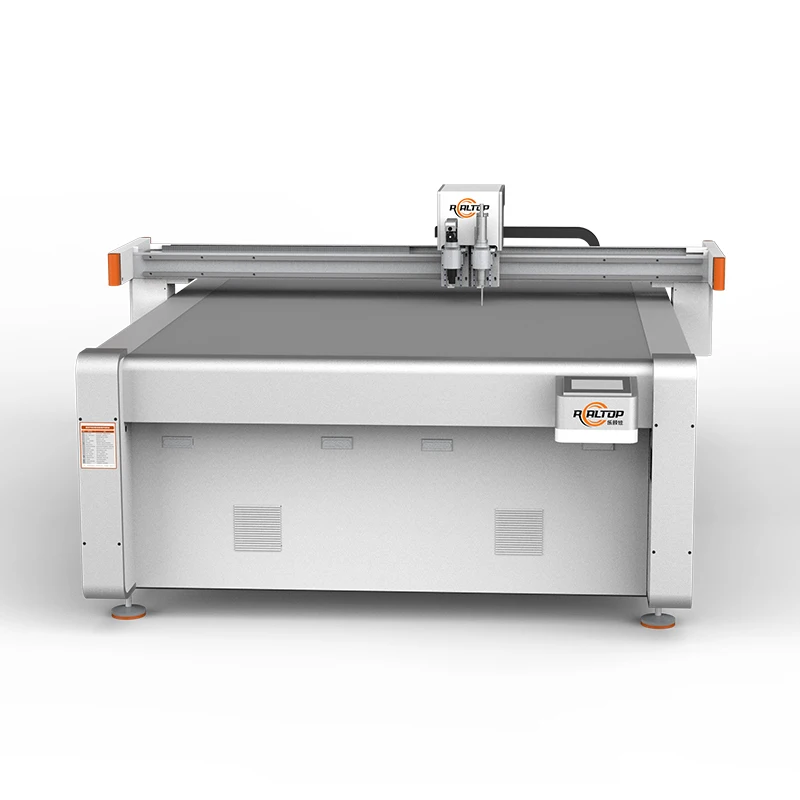
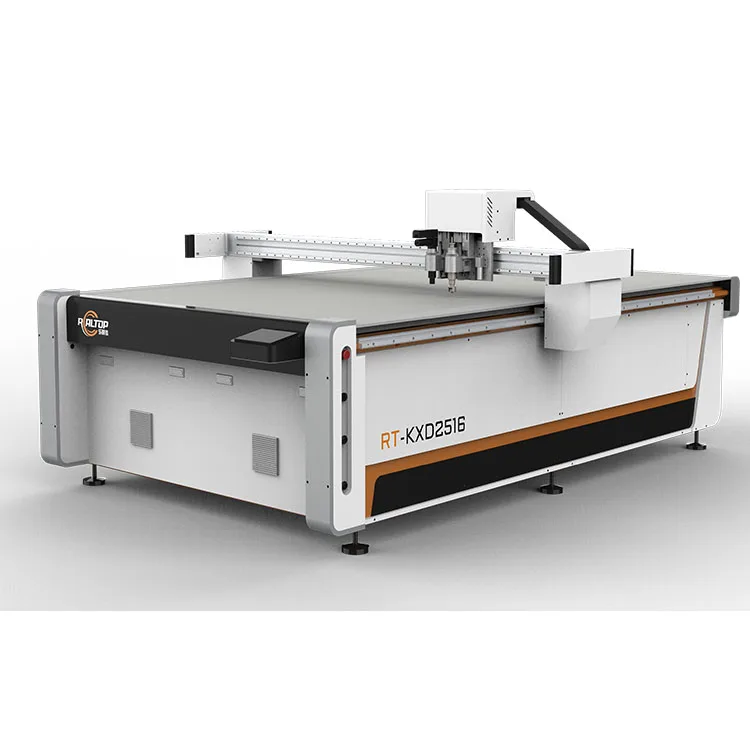
Realtop 2516 CNC Oscillating Knife Cutting Machine for Flexible Materials – Full Range
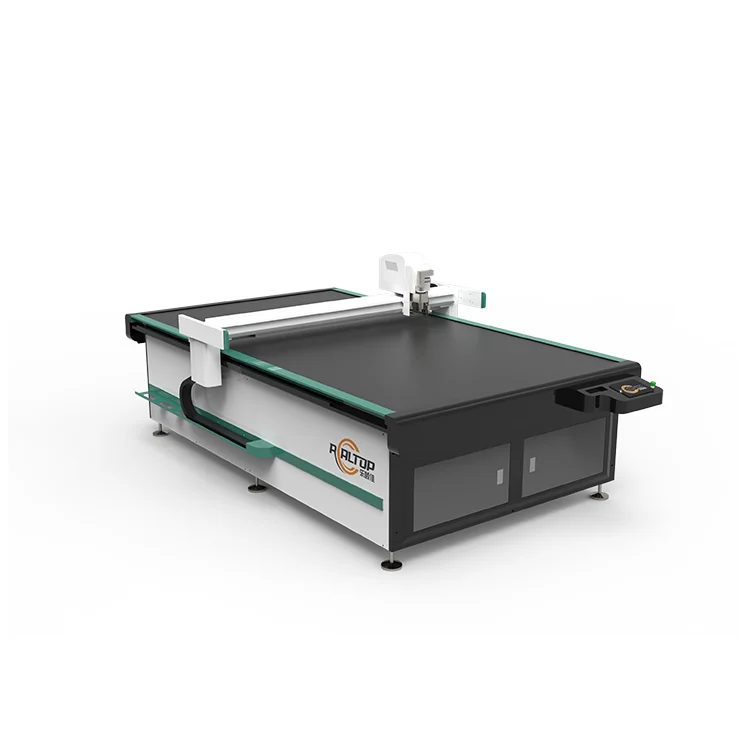
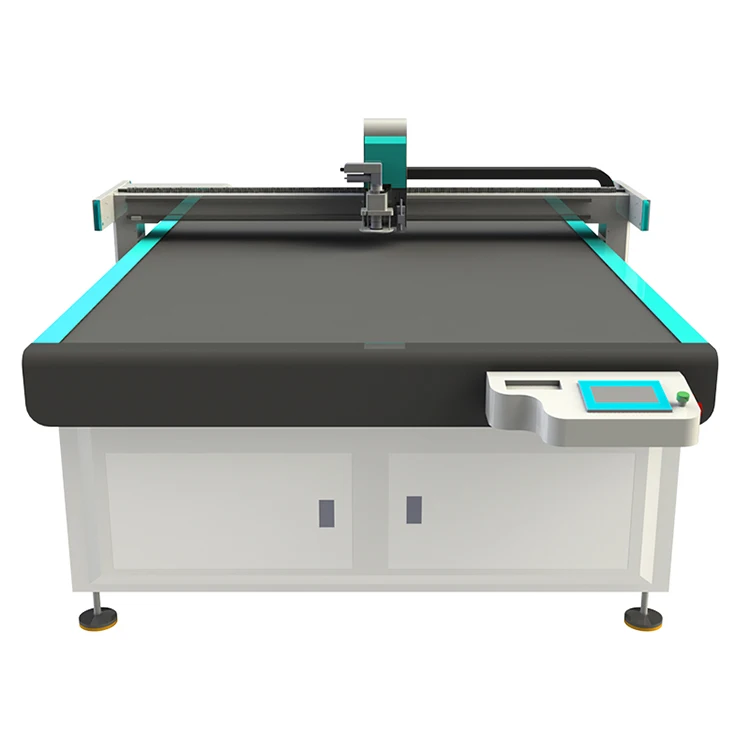
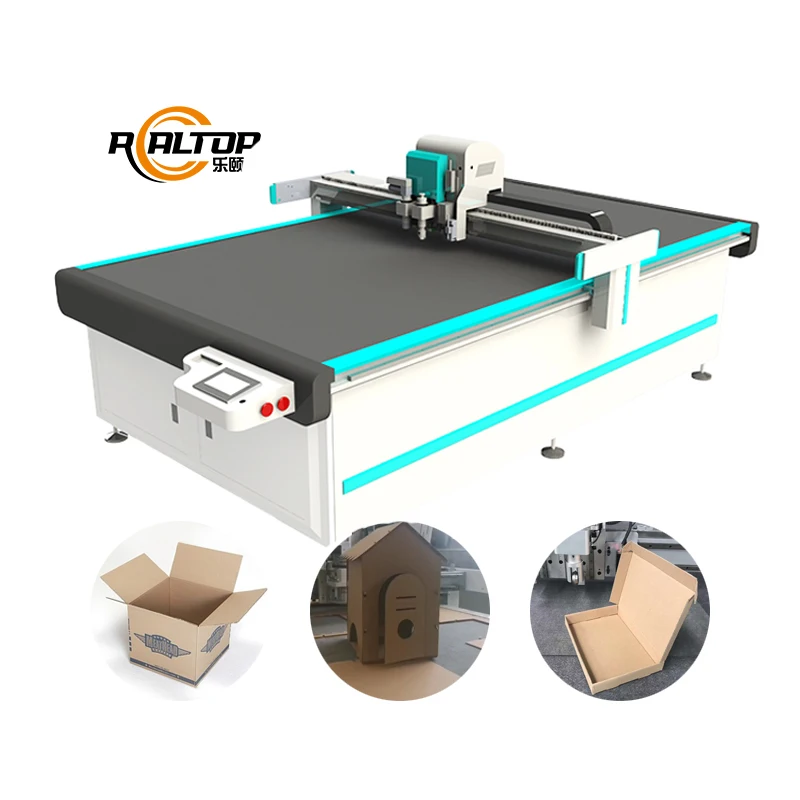
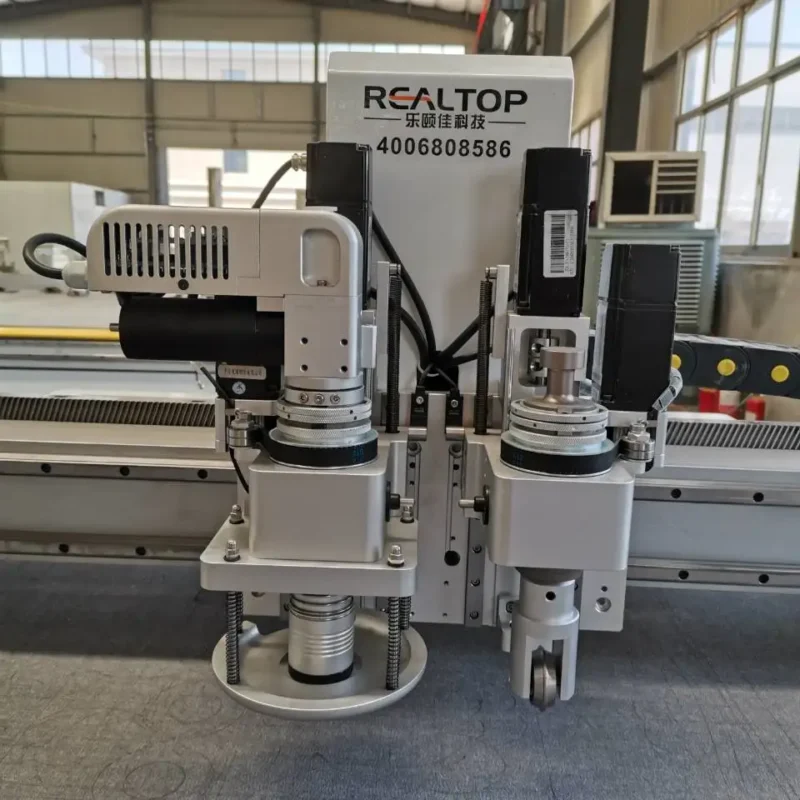
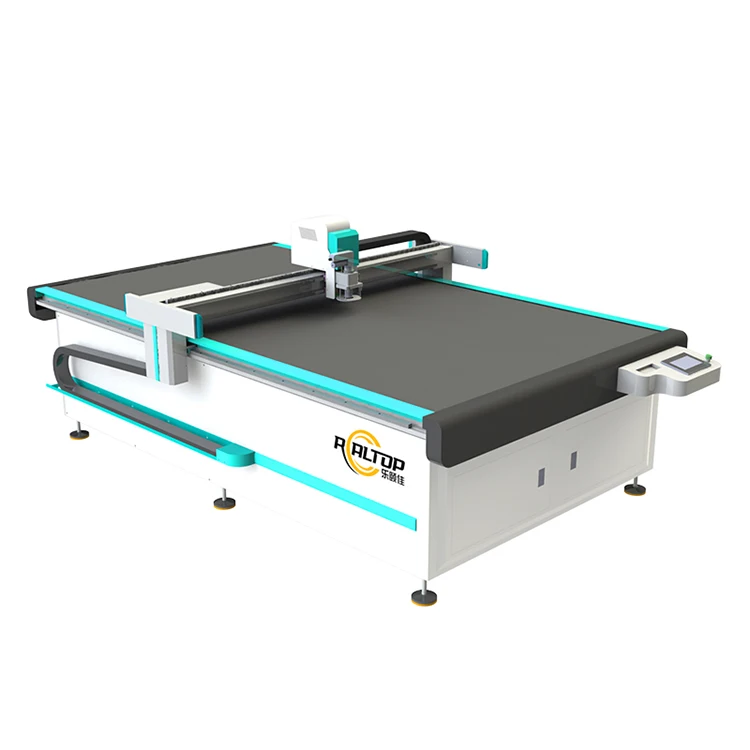
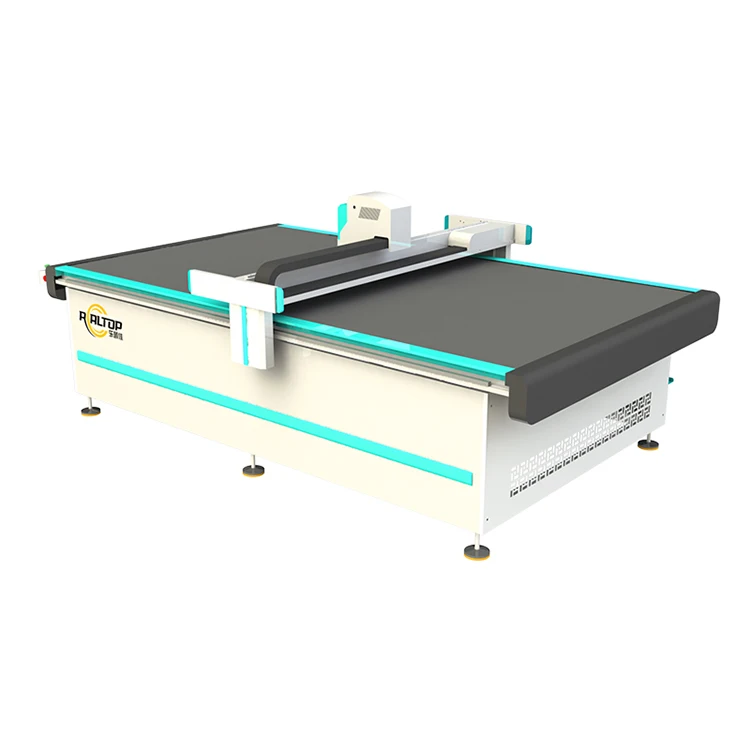
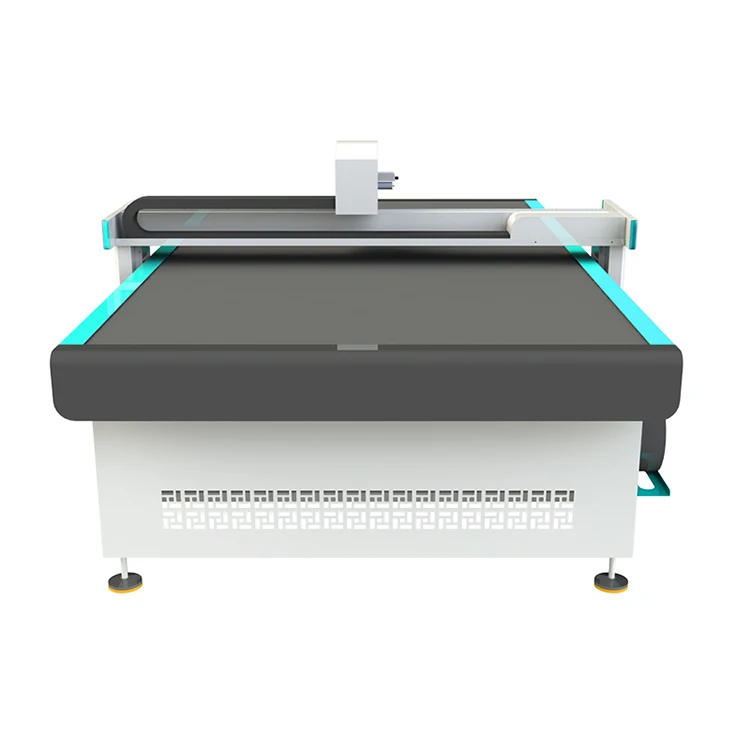
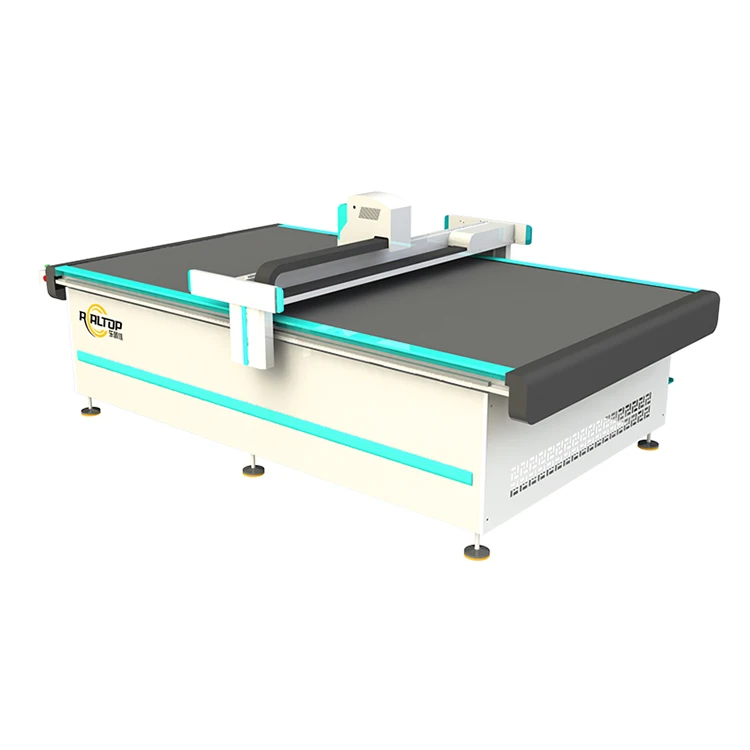
RT-D2516/RT-S2516 CNC Oscillating Knife Cutting Machine, 1600×2500mm Working Area, 9kW Rated Power — equipped with Swiss imported multifunctional knife head supporting vibration full and half cutting, plus aluminum honeycomb vacuum platform for secure material hold across cardboard, PVC, leather and composite sheets.
Designed for buyers surveying the complete cutting equipment range, this flatbed system pairs CCD camera contour recognition with professional carton nesting software, enabling precise match between oscillating knife method and flexible material requirements.
- Cutting speed 200-800mm/s depending on material type and thickness up to 100mm
- HP-GL compatible instruction system with multiple file format imports and customized language
- Delta servo motor, Taiwan Hiwin linear rail and 7.5kW vacuum pump configuration
- Sample cutting on buyer’s own material provided before commitment, with tool head and table configuration confirmed per application, voltage and control language verified before shipment
You’re now subscribed to price tracking for this product. We’ll notify you if the price drops.

Fast Delivery
Quick, reliable shipping to any location.

Free & easy returns
Return this item by mail or in store within 90 days for a full refund.
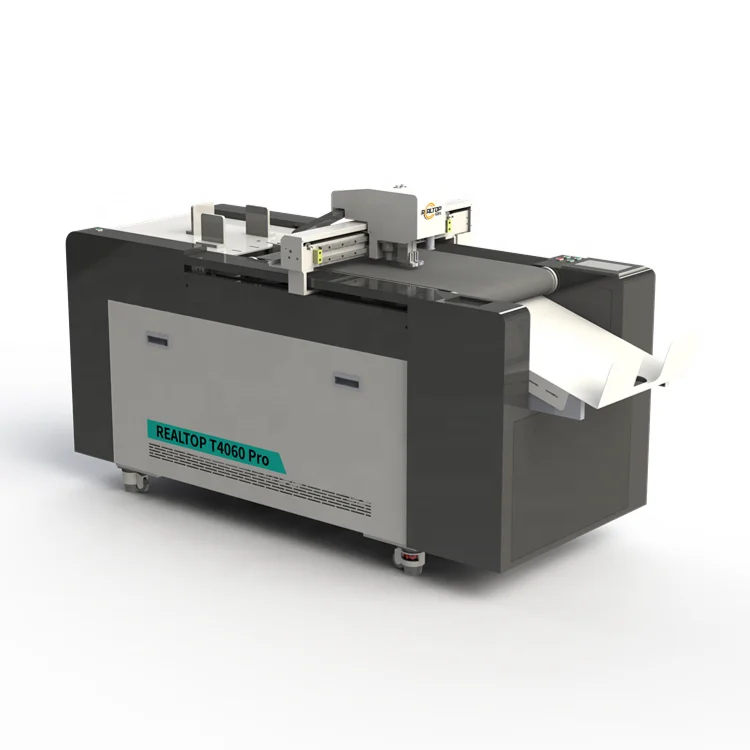
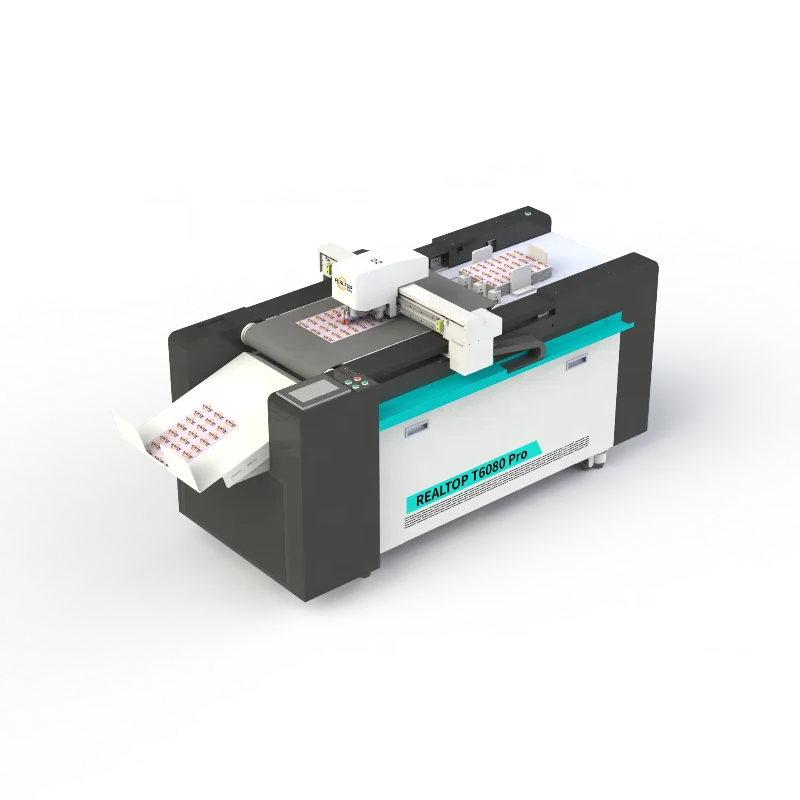
Complete Cutting Range — In-house design covering both knife and laser methods allows buyers to match technology to material rather than forcing a single approach on every substrate.
Technical Specifications
| Parameter | Value |
|---|---|
| Model | RT-D2516/RT-S2516 |
| Product Type | CNC Oscillating Knife Cutting Machine |
| Working Area | 1600 × 2500 mm |
| Machine Size | 3450 × 2300 × 1250 mm |
| Rated Power | 9 kW |
| Table Type | Flat aluminum alloy honeycomb vacuum platform |
| Cutting Head | Swiss imported oscillating knife (full cut, half cut, cursor location) |
| Translational Velocity | 800–2000 mm/s |
| Cutting Speed | 200–800 mm/s (varies by material) |
| Cutting Thickness | ≤100 mm (basis not stated in source — confirm block format / material / thickness) |
| Repeated Accuracy | ≤0.1 mm |
| Transmission System | Digital servo motor, linear guide, synchronous belt, ball screw |
| Instruction System | HP-GL compatible format |
| Voltage | 380V ± 10% |
| Vacuum Pump | 7.5 kW |
| Conveyor | Germany imported belt, auto feeding |
| Guide Rail | Taiwan Hiwin rail |
| Safety | Infrared sensors |
| Software | Professional carton nested software, multiple format imports |
Application Suitability
| Application | Material or Output |
|---|---|
| Packaging carton sample making | Corrugated board, cardboard, paper box stock |
| Sticker and label contour cutting | Vinyl, adhesive film with printed marks |
| Large electrical carton packaging | Heavy-duty corrugated and honeycomb board |
| Snack food and gift box packaging | Folding carton, coated paperboard |
| Express shipping box prototyping | Kraft liner, single and double-wall corrugated |
| Flexible non-metal cutting | Leather, PVC, sponge composite, silicon, rubber |
| Billboard and business card production | Board, coated paper, magnetic sheet |
Why the Voltage Question Should Come Before the Price on Any CNC Oscillating Knife Cutting Machine
Confirm the workshop supply voltage before confirming the cutting configuration.
A machine that cuts cleanly in the factory can sit idle for weeks on the buyer’s floor if the local power supply does not match. Three-phase systems vary significantly across markets: 380V at 50 Hz is common in parts of Asia, while 220V three-phase or 440V at 60 Hz appears in other regions. When a cutting line is specified on working area and tool head alone, the electrical mismatch only surfaces after delivery, stalling production while a transformer is sourced [NEED_CITE: voltage and frequency standards by export market].
Choosing Between Knife and Laser for Packaging Substrates
A CNC oscillating knife cutting machine manufacturer that builds both knife and laser platforms can recommend the correct method instead of defaulting to one technology. Knife cutting handles thicker corrugated and multi-layer board without burning edges, while CO2 laser suits thinner coated stock where sealed edges are required.
Matching the Tool Head to the Production Job
Oscillating knife heads cut through dense corrugated layers cleanly, while drag knives score fold lines on folding carton. Creasing wheels handle high-speed crease work on packaging samples. Selecting the wrong tool produces crushed flutes or ragged edges that fail assembly checks [NEED_CITE: corrugated flute crush tolerance in packaging standards].
Reading the Spec Sheet for Real Production Conditions
The 9 kW rated power accounts for the servo drives, vacuum pump and control system running simultaneously, not just the cutting head. The 7.5 kW vacuum pump paired with the honeycomb aluminum platform must hold flat stock securely across the full 1600 × 2500 mm area; zoning matters when cutting small carton samples where full-table suction wastes capacity. Repeated accuracy of ≤0.1 mm ensures registration marks stay aligned through nested layouts, which is essential when the software nests dozens of box patterns per sheet. Cutting speed ranges from 200 to 800 mm/s depending on material density, so quoting throughput without naming the substrate is not useful.
The Cost of Skipping a Sample Cut on Your Own Board Stock
Buyers who approve a machine based on the supplier’s reference material often discover problems only after installation. Foam-core board that cuts cleanly at the factory may delaminate at the buyer’s line speed. Corrugated flute profiles differ between regions, and a tool setting optimized for B-flute can crush E-flute cartons. Without a documented sample cut on the buyer’s actual stock, there is no baseline for troubleshooting [NEED_CITE: packaging material variability across regional suppliers].
What This Purchase Process Covers
Tool head and table configuration are specified per material type and daily volume rather than selected from a fixed list. The cutting method — knife or laser — is chosen to match the substrate, not forced by equipment limitation. Software compatibility with the buyer’s existing file formats is confirmed before the order enters production. Voltage, plug type and control panel language are documented and verified before shipment. Sample cutting on the buyer’s own material is standard, providing a written report before commitment.
Documentation & Verification
- Machine specification sheet confirming RT-D2516/RT-S2516 working area and power rating
- Electrical schematic with confirmed voltage, plug type and phase arrangement
- Tool head and table configuration list matched to your board and flexible material types
- Sample cutting report on your corrugated and carton stock with speed and edge quality notes
- Software licence and file format compatibility note for your nesting workflow
- CE declaration and factory test record before dispatch
Installation, Commissioning & Support
- Requires level concrete floor supporting 3450 × 2300 mm footprint and vibration from the 7.5 kW vacuum pump
- Dedicated three-phase circuit matching confirmed voltage and frequency with appropriate breaker rating for 9 kW draw
- Arrives as a single-frame unit; conveyor and auto-feeding system aligned during on-site commissioning
- First-run parameter setting for your specific board thickness, flute type and cutting path
- Operator training on the professional carton nested software including file import and nesting workflow
- Spare parts list covering Swiss knife blades, vacuum seals and Hiwin rail lubrication schedule
Before You Send an Inquiry
To move past general specifications, share the material types and maximum thickness you run daily, along with your target sheet output. Confirm your workshop voltage, frequency and preferred control language. If you already use nesting software, provide a sample file so compatibility can be checked before quotation.
Frequently Asked Questions
Q: How is cutting capacity verified before the order is confirmed?
A: A sample cut is run on your actual material — corrugated board, carton stock or flexible sheet — at the target production speed. The written report documents edge quality, cutting depth and any flute deformation observed, giving you a baseline before financial commitment.
Q: Can the voltage and control language be customized for our market?
A: Yes. The standard 380V ± 10% configuration can be adjusted to match your workshop supply. Control panel language and software interface are set before production. Both are confirmed on the electrical schematic and specification sheet signed off prior to shipment.
Q: Which tool head works best for mixed carton and sticker jobs?
A: The oscillating knife handles thick corrugated and board, while the CCD camera enables contour recognition for printed stickers and labels. The multifunctional head also supports half-cut and cursor location for creasing work. Tool selection is confirmed after reviewing your material range.
Q: Will our existing design files import directly into the nested software?
A: The professional carton nested software supports multiple file format imports and is HP-GL compatible. A test import of your actual production files is run before order confirmation to verify that layers, dimensions and nesting parameters carry over correctly.
Q: How does the vacuum platform handle small carton samples?
A: The aluminum honeycomb platform is zoned so suction concentrates on the active cutting area rather than the full table. This prevents small cardboard pieces from lifting during high-speed oscillating knife passes, maintaining registration accuracy through nested layouts.
Complete Cutting Range — In-house design covering both knife and laser methods allows buyers to match technology to material rather than forcing a single approach on every substrate.
Technical Specifications
| Parameter | Value |
|---|---|
| Model | RT-D2516/RT-S2516 |
| Product Type | CNC Oscillating Knife Cutting Machine |
| Working Area | 1600 × 2500 mm |
| Machine Size | 3450 × 2300 × 1250 mm |
| Rated Power | 9 kW |
| Table Type | Flat aluminum alloy honeycomb vacuum platform |
| Cutting Head | Swiss imported oscillating knife (full cut, half cut, cursor location) |
| Translational Velocity | 800–2000 mm/s |
| Cutting Speed | 200–800 mm/s (varies by material) |
| Cutting Thickness | ≤100 mm (basis not stated in source — confirm block format / material / thickness) |
| Repeated Accuracy | ≤0.1 mm |
| Transmission System | Digital servo motor, linear guide, synchronous belt, ball screw |
| Instruction System | HP-GL compatible format |
| Voltage | 380V ± 10% |
| Vacuum Pump | 7.5 kW |
| Conveyor | Germany imported belt, auto feeding |
| Guide Rail | Taiwan Hiwin rail |
| Safety | Infrared sensors |
| Software | Professional carton nested software, multiple format imports |
Application Suitability
| Application | Material or Output |
|---|---|
| Packaging carton sample making | Corrugated board, cardboard, paper box stock |
| Sticker and label contour cutting | Vinyl, adhesive film with printed marks |
| Large electrical carton packaging | Heavy-duty corrugated and honeycomb board |
| Snack food and gift box packaging | Folding carton, coated paperboard |
| Express shipping box prototyping | Kraft liner, single and double-wall corrugated |
| Flexible non-metal cutting | Leather, PVC, sponge composite, silicon, rubber |
| Billboard and business card production | Board, coated paper, magnetic sheet |
Why the Voltage Question Should Come Before the Price on Any CNC Oscillating Knife Cutting Machine
Confirm the workshop supply voltage before confirming the cutting configuration.
A machine that cuts cleanly in the factory can sit idle for weeks on the buyer’s floor if the local power supply does not match. Three-phase systems vary significantly across markets: 380V at 50 Hz is common in parts of Asia, while 220V three-phase or 440V at 60 Hz appears in other regions. When a cutting line is specified on working area and tool head alone, the electrical mismatch only surfaces after delivery, stalling production while a transformer is sourced [NEED_CITE: voltage and frequency standards by export market].
Choosing Between Knife and Laser for Packaging Substrates
A CNC oscillating knife cutting machine manufacturer that builds both knife and laser platforms can recommend the correct method instead of defaulting to one technology. Knife cutting handles thicker corrugated and multi-layer board without burning edges, while CO2 laser suits thinner coated stock where sealed edges are required.
Matching the Tool Head to the Production Job
Oscillating knife heads cut through dense corrugated layers cleanly, while drag knives score fold lines on folding carton. Creasing wheels handle high-speed crease work on packaging samples. Selecting the wrong tool produces crushed flutes or ragged edges that fail assembly checks [NEED_CITE: corrugated flute crush tolerance in packaging standards].
Reading the Spec Sheet for Real Production Conditions
The 9 kW rated power accounts for the servo drives, vacuum pump and control system running simultaneously, not just the cutting head. The 7.5 kW vacuum pump paired with the honeycomb aluminum platform must hold flat stock securely across the full 1600 × 2500 mm area; zoning matters when cutting small carton samples where full-table suction wastes capacity. Repeated accuracy of ≤0.1 mm ensures registration marks stay aligned through nested layouts, which is essential when the software nests dozens of box patterns per sheet. Cutting speed ranges from 200 to 800 mm/s depending on material density, so quoting throughput without naming the substrate is not useful.
The Cost of Skipping a Sample Cut on Your Own Board Stock
Buyers who approve a machine based on the supplier’s reference material often discover problems only after installation. Foam-core board that cuts cleanly at the factory may delaminate at the buyer’s line speed. Corrugated flute profiles differ between regions, and a tool setting optimized for B-flute can crush E-flute cartons. Without a documented sample cut on the buyer’s actual stock, there is no baseline for troubleshooting [NEED_CITE: packaging material variability across regional suppliers].
What This Purchase Process Covers
Tool head and table configuration are specified per material type and daily volume rather than selected from a fixed list. The cutting method — knife or laser — is chosen to match the substrate, not forced by equipment limitation. Software compatibility with the buyer’s existing file formats is confirmed before the order enters production. Voltage, plug type and control panel language are documented and verified before shipment. Sample cutting on the buyer’s own material is standard, providing a written report before commitment.
Documentation & Verification
- Machine specification sheet confirming RT-D2516/RT-S2516 working area and power rating
- Electrical schematic with confirmed voltage, plug type and phase arrangement
- Tool head and table configuration list matched to your board and flexible material types
- Sample cutting report on your corrugated and carton stock with speed and edge quality notes
- Software licence and file format compatibility note for your nesting workflow
- CE declaration and factory test record before dispatch
Installation, Commissioning & Support
- Requires level concrete floor supporting 3450 × 2300 mm footprint and vibration from the 7.5 kW vacuum pump
- Dedicated three-phase circuit matching confirmed voltage and frequency with appropriate breaker rating for 9 kW draw
- Arrives as a single-frame unit; conveyor and auto-feeding system aligned during on-site commissioning
- First-run parameter setting for your specific board thickness, flute type and cutting path
- Operator training on the professional carton nested software including file import and nesting workflow
- Spare parts list covering Swiss knife blades, vacuum seals and Hiwin rail lubrication schedule
Before You Send an Inquiry
To move past general specifications, share the material types and maximum thickness you run daily, along with your target sheet output. Confirm your workshop voltage, frequency and preferred control language. If you already use nesting software, provide a sample file so compatibility can be checked before quotation.
Frequently Asked Questions
Q: How is cutting capacity verified before the order is confirmed?
A: A sample cut is run on your actual material — corrugated board, carton stock or flexible sheet — at the target production speed. The written report documents edge quality, cutting depth and any flute deformation observed, giving you a baseline before financial commitment.
Q: Can the voltage and control language be customized for our market?
A: Yes. The standard 380V ± 10% configuration can be adjusted to match your workshop supply. Control panel language and software interface are set before production. Both are confirmed on the electrical schematic and specification sheet signed off prior to shipment.
Q: Which tool head works best for mixed carton and sticker jobs?
A: The oscillating knife handles thick corrugated and board, while the CCD camera enables contour recognition for printed stickers and labels. The multifunctional head also supports half-cut and cursor location for creasing work. Tool selection is confirmed after reviewing your material range.
Q: Will our existing design files import directly into the nested software?
A: The professional carton nested software supports multiple file format imports and is HP-GL compatible. A test import of your actual production files is run before order confirmation to verify that layers, dimensions and nesting parameters carry over correctly.
Q: How does the vacuum platform handle small carton samples?
A: The aluminum honeycomb platform is zoned so suction concentrates on the active cutting area rather than the full table. This prevents small cardboard pieces from lifting during high-speed oscillating knife passes, maintaining registration accuracy through nested layouts.
商品评价
There are no reviews yet.