


Fast Delivery
Quick, reliable shipping to any location.

Free & easy returns
Return this item by mail or in store within 90 days for a full refund.
Sample-Proven Configuration — every tool head and vacuum zone is tested on the buyer’s actual board stock before the order is confirmed.
Technical Specifications
| Parameter | Value |
|---|---|
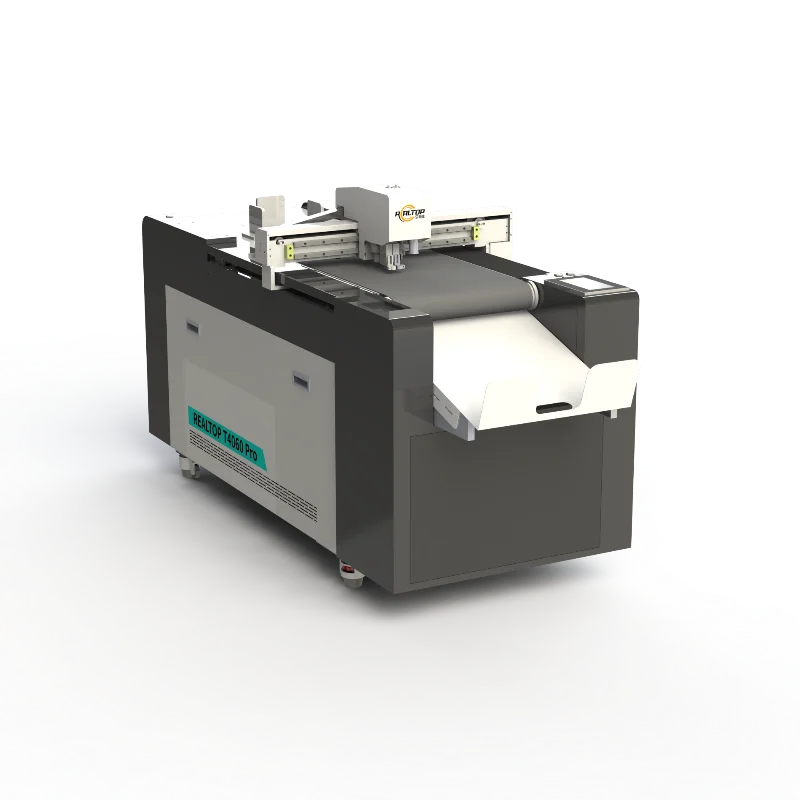
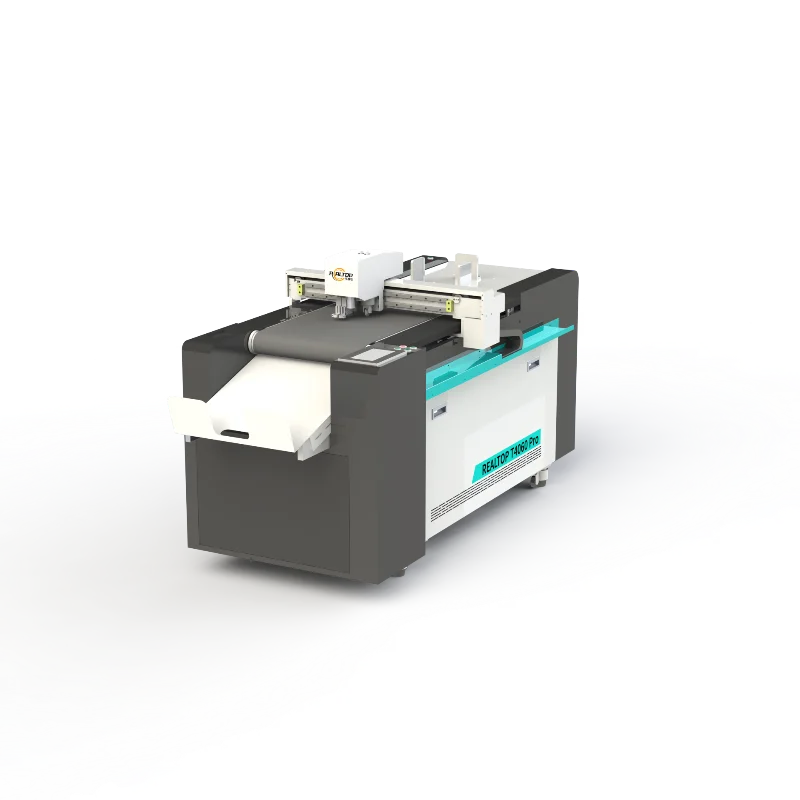
| Model | RTT-4060 Pro |
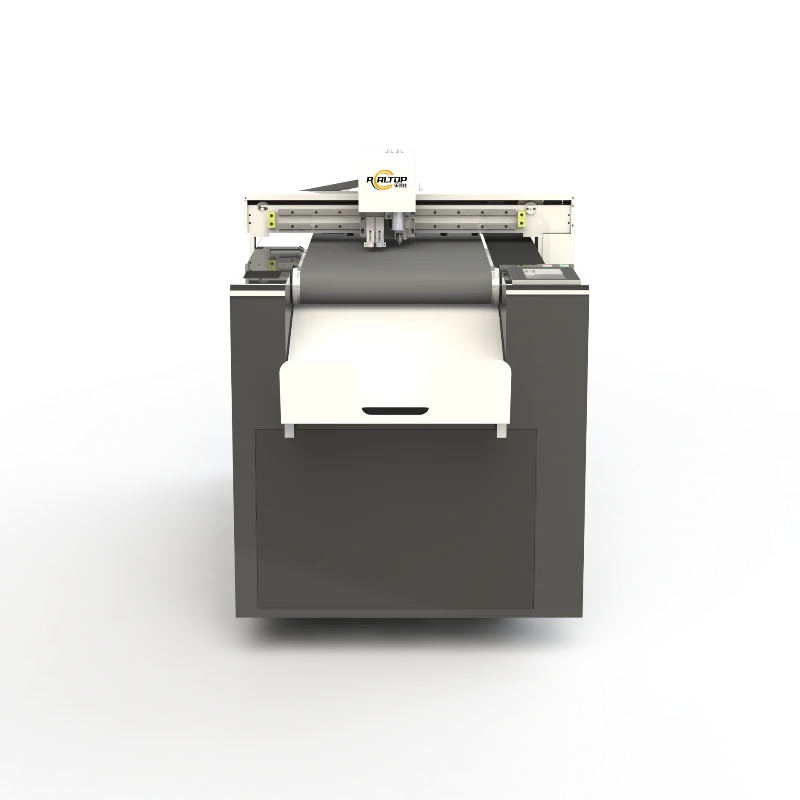
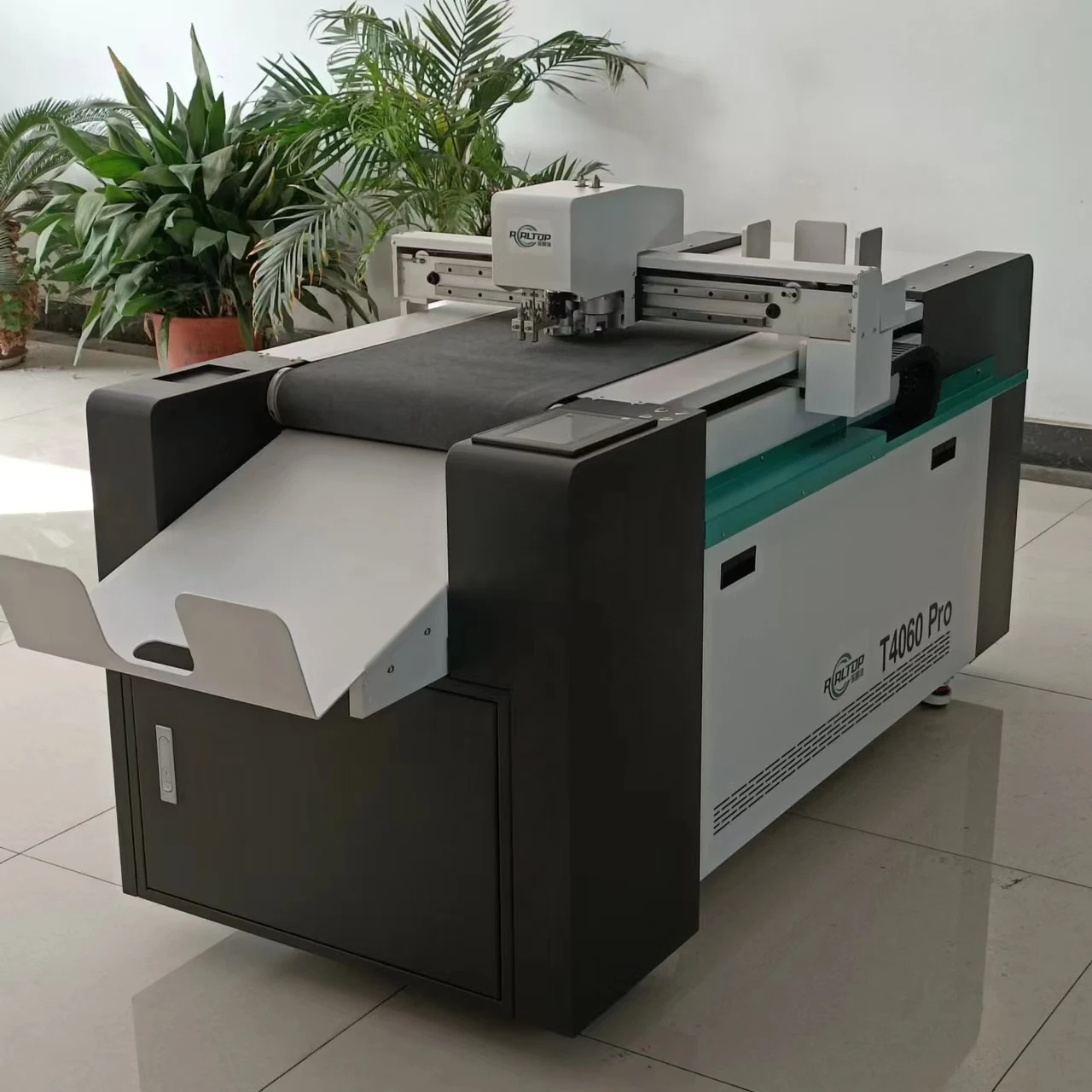
| Product Type | CNC Carton Creasing and Cutting Plotter |
| Working Area | 400 × 600 mm (basis not stated in source — confirm effective cutting area vs bed size) |
| Tool Head Options | Oscillating knife, creasing wheel (verify full tool head configuration) |
| Control System | Not stated in source (basis to be confirmed) |
| CCD Camera | Not stated in source (basis to be confirmed) |
| Vacuum Zones | Not stated in source (basis to be confirmed) |
| Positioning Accuracy | Not stated in source (basis to be confirmed) |
| Repeatability | Not stated in source (basis to be confirmed) |
| Software & File Formats | CD software included (source value — verify compatibility with buyer file format) |
| Warranty | One year for whole machine |
| CE Declaration | Where applicable |
Application Suitability
| Application | Material or Output |
|---|---|
| Carton sample making | Single-wall, double-wall and triple-wall corrugated board, greyboard |
| Packaging prototype development | Folding carton stock, solid bleached sulphate, coated kraft |
| Short-run signage and display | Foam board, corrugated plastic, honeycomb paper panels |
| Paper processing and converting | Cardstock, art paper, laminated sheets for die-line proofing |
What "400 × 600 mm Working Area" Leaves Out for a CNC Carton Creasing and Cutting Plotter
Cutting depth and creasing force depend on the tool head matched to the board flute, not the table dimensions.
I remember a packaging shop that ordered a compact-format plotter based purely on the bed size, only to discover the oscillating knife could not fully penetrate their five-layer BC-flute stock at production speed. The creasing wheel left shallow scores on triple-wall board, and fold lines cracked during assembly. A CNC carton creasing and cutting plotter manufacturer must confirm the exact board thickness and flute profile the machine will handle before the machine ships [NEED_CITE: material thickness and tool head selection for corrugated board converting]. When the board specification changes after delivery — from three-layer to five-layer, for instance — the original tool head configuration may no longer produce acceptable crease quality.
Matching Knife and Crease Tools to Board Flute Profiles
The oscillating knife cuts through corrugated board along the die-line, while the creasing wheel compresses the flutes to form a clean fold. The tool head configuration for this CNC carton creasing and cutting plotter is specified around the flute type the buyer runs most often — single-face, double-wall or triple-wall each demands a different wheel diameter and pressure setting. Selecting the wrong creasing wheel width for the board thickness produces ragged fold lines or crushed flutes that weaken the finished carton.
Contour Recognition and File Format Compatibility
Printed carton samples often require the knife path to follow a printed registration mark rather than a simple coordinate grid. CCD camera positioning, where available on the RTT-4060 Pro platform, tracks these marks so cut-outs align with pre-printed graphics. Before the order is finalized, software compatibility must be confirmed so the buyer’s existing DXF, PLT or AI design files import without manual redrawing [NEED_CITE: file format compatibility for CNC cutting software in packaging sample workflows].
Reading the Specification Sheet Against Your Board Stock
Working area defines the maximum sheet the table accepts, but effective cutting area may be slightly smaller once clamp rails or tool-head clearance are accounted for. Positioning accuracy and repeatability determine whether repeated sample runs produce identical die-lines — critical when a packaging buyer presents multiple prototype copies to a client. Vacuum zone layout matters for small carton blanks; if the vacuum table has only one large zone, a small piece may lift during cutting and produce an inaccurate edge. The oscillating knife stroke length sets the maximum single-pass cutting depth, so five-layer board may need a different knife amplitude than three-layer stock.
The Cost of Skipping the Material Test
When a creasing wheel is specified for three-layer board and the buyer later switches to seven-layer, every fold line risks cracking or splitting under assembly pressure. Vacuum tables with insufficient zoning let lightweight carton blanks drift during the cut, producing scrap instead of sellable samples. Software that cannot read the buyer’s native file format forces operators to redraw every die-line, adding hours to each prototype cycle [NEED_CITE: common causes of dimensional inaccuracy in flatbed digital cutting of corrugated board].
Why Source This CNC Carton Creasing and Cutting Plotter Here
In-house design covers both oscillating knife and creasing wheel tooling, so the tool head is matched to the board flute rather than forced into a one-size-fits-all setup. Sample cutting on the buyer’s own corrugated stock is completed before the order is confirmed, showing actual edge quality and crease depth. Software and file format compatibility is verified during the quotation stage, preventing import problems after delivery. Voltage, plug type and control language are confirmed to match the destination workshop before the machine ships.
Documentation & Verification
- Machine specification sheet listing working area, tool head options and cutting depth per board type
- Tool head and vacuum table configuration list matched to the buyer’s corrugated and card stock
- Sample cutting report on the buyer’s own board material before shipment confirmation
- Software licence and file format compatibility note for the buyer’s design workflow
- CE declaration documentation where applicable for the destination market
- Electrical schematic confirming voltage, frequency and plug type for the installation site
Installation, Commissioning & Support
- Verify workshop floor levelness across the 400 × 600 mm bed footprint to prevent frame twist
- Provide a dedicated electrical circuit matching the confirmed voltage and frequency before delivery
- Machine arrives partially assembled; plan for table and gantry alignment during on-site setup
- First-run commissioning includes vacuum zone calibration and tool head pressure adjustment on buyer stock
- Operator training covers oscillating knife blade change and creasing wheel replacement procedures
- Spare parts list includes oscillating knife blades, creasing wheels and vacuum cup seals
What We Need From Your Next Inquiry
Share the exact corrugated flute profile, board thickness and maximum sheet size you plan to run on the RTT-4060 Pro. Let us know the file formats your design team currently uses so we can confirm software import compatibility before quotation. Confirm the local voltage, frequency and preferred control interface language so the electrical package and operator manual match your workshop from day one.
Frequently Asked Questions
Q: How do I verify the cutting thickness capacity of this CNC carton creasing and cutting plotter?
A: Request a sample cutting test on your own corrugated board before the order is finalized. The sample report shows actual edge quality, crease depth and cutting speed on your specific flute profile and thickness, rather than a generic specification.
Q: Is CCD camera contour recognition available on the RTT-4060 Pro?
A: CCD camera positioning is available as a configuration option on the platform. Its ability to track printed registration marks depends on mark contrast, print quality and the cutting speed selected. Confirm your typical print artwork with the engineering team before ordering.
Q: Which software file formats does the included design software accept?
A: The software supplied on CD supports common vector formats used in packaging die-line design. Compatibility with the buyer’s specific design application and nesting workflow must be confirmed during the quotation stage to avoid re-drawing work after delivery.
Q: What electrical and language customization is confirmed before shipment?
A: Voltage, frequency, plug type and control interface language are specified to match the destination workshop. The electrical schematic and operator manual language are confirmed in writing before the machine enters production.
Q: How is the tool head configured for different board flutes?
A: The oscillating knife and creasing wheel are selected based on the buyer’s corrugated flute type and board thickness. A configuration list is provided with the quotation, and sample cutting validates the setup on the actual material before commitment.
Sample-Proven Configuration — every tool head and vacuum zone is tested on the buyer’s actual board stock before the order is confirmed.
Technical Specifications
| Parameter | Value |
|---|---|
| Model | RTT-4060 Pro |
| Product Type | CNC Carton Creasing and Cutting Plotter |
| Working Area | 400 × 600 mm (basis not stated in source — confirm effective cutting area vs bed size) |
| Tool Head Options | Oscillating knife, creasing wheel (verify full tool head configuration) |
| Control System | Not stated in source (basis to be confirmed) |
| CCD Camera | Not stated in source (basis to be confirmed) |
| Vacuum Zones | Not stated in source (basis to be confirmed) |
| Positioning Accuracy | Not stated in source (basis to be confirmed) |
| Repeatability | Not stated in source (basis to be confirmed) |
| Software & File Formats | CD software included (source value — verify compatibility with buyer file format) |
| Warranty | One year for whole machine |
| CE Declaration | Where applicable |
Application Suitability
| Application | Material or Output |
|---|---|
| Carton sample making | Single-wall, double-wall and triple-wall corrugated board, greyboard |
| Packaging prototype development | Folding carton stock, solid bleached sulphate, coated kraft |
| Short-run signage and display | Foam board, corrugated plastic, honeycomb paper panels |
| Paper processing and converting | Cardstock, art paper, laminated sheets for die-line proofing |
What "400 × 600 mm Working Area" Leaves Out for a CNC Carton Creasing and Cutting Plotter
Cutting depth and creasing force depend on the tool head matched to the board flute, not the table dimensions.
I remember a packaging shop that ordered a compact-format plotter based purely on the bed size, only to discover the oscillating knife could not fully penetrate their five-layer BC-flute stock at production speed. The creasing wheel left shallow scores on triple-wall board, and fold lines cracked during assembly. A CNC carton creasing and cutting plotter manufacturer must confirm the exact board thickness and flute profile the machine will handle before the machine ships [NEED_CITE: material thickness and tool head selection for corrugated board converting]. When the board specification changes after delivery — from three-layer to five-layer, for instance — the original tool head configuration may no longer produce acceptable crease quality.
Matching Knife and Crease Tools to Board Flute Profiles
The oscillating knife cuts through corrugated board along the die-line, while the creasing wheel compresses the flutes to form a clean fold. The tool head configuration for this CNC carton creasing and cutting plotter is specified around the flute type the buyer runs most often — single-face, double-wall or triple-wall each demands a different wheel diameter and pressure setting. Selecting the wrong creasing wheel width for the board thickness produces ragged fold lines or crushed flutes that weaken the finished carton.
Contour Recognition and File Format Compatibility
Printed carton samples often require the knife path to follow a printed registration mark rather than a simple coordinate grid. CCD camera positioning, where available on the RTT-4060 Pro platform, tracks these marks so cut-outs align with pre-printed graphics. Before the order is finalized, software compatibility must be confirmed so the buyer’s existing DXF, PLT or AI design files import without manual redrawing [NEED_CITE: file format compatibility for CNC cutting software in packaging sample workflows].
Reading the Specification Sheet Against Your Board Stock
Working area defines the maximum sheet the table accepts, but effective cutting area may be slightly smaller once clamp rails or tool-head clearance are accounted for. Positioning accuracy and repeatability determine whether repeated sample runs produce identical die-lines — critical when a packaging buyer presents multiple prototype copies to a client. Vacuum zone layout matters for small carton blanks; if the vacuum table has only one large zone, a small piece may lift during cutting and produce an inaccurate edge. The oscillating knife stroke length sets the maximum single-pass cutting depth, so five-layer board may need a different knife amplitude than three-layer stock.
The Cost of Skipping the Material Test
When a creasing wheel is specified for three-layer board and the buyer later switches to seven-layer, every fold line risks cracking or splitting under assembly pressure. Vacuum tables with insufficient zoning let lightweight carton blanks drift during the cut, producing scrap instead of sellable samples. Software that cannot read the buyer’s native file format forces operators to redraw every die-line, adding hours to each prototype cycle [NEED_CITE: common causes of dimensional inaccuracy in flatbed digital cutting of corrugated board].
Why Source This CNC Carton Creasing and Cutting Plotter Here
In-house design covers both oscillating knife and creasing wheel tooling, so the tool head is matched to the board flute rather than forced into a one-size-fits-all setup. Sample cutting on the buyer’s own corrugated stock is completed before the order is confirmed, showing actual edge quality and crease depth. Software and file format compatibility is verified during the quotation stage, preventing import problems after delivery. Voltage, plug type and control language are confirmed to match the destination workshop before the machine ships.
Documentation & Verification
- Machine specification sheet listing working area, tool head options and cutting depth per board type
- Tool head and vacuum table configuration list matched to the buyer’s corrugated and card stock
- Sample cutting report on the buyer’s own board material before shipment confirmation
- Software licence and file format compatibility note for the buyer’s design workflow
- CE declaration documentation where applicable for the destination market
- Electrical schematic confirming voltage, frequency and plug type for the installation site
Installation, Commissioning & Support
- Verify workshop floor levelness across the 400 × 600 mm bed footprint to prevent frame twist
- Provide a dedicated electrical circuit matching the confirmed voltage and frequency before delivery
- Machine arrives partially assembled; plan for table and gantry alignment during on-site setup
- First-run commissioning includes vacuum zone calibration and tool head pressure adjustment on buyer stock
- Operator training covers oscillating knife blade change and creasing wheel replacement procedures
- Spare parts list includes oscillating knife blades, creasing wheels and vacuum cup seals
What We Need From Your Next Inquiry
Share the exact corrugated flute profile, board thickness and maximum sheet size you plan to run on the RTT-4060 Pro. Let us know the file formats your design team currently uses so we can confirm software import compatibility before quotation. Confirm the local voltage, frequency and preferred control interface language so the electrical package and operator manual match your workshop from day one.
Frequently Asked Questions
Q: How do I verify the cutting thickness capacity of this CNC carton creasing and cutting plotter?
A: Request a sample cutting test on your own corrugated board before the order is finalized. The sample report shows actual edge quality, crease depth and cutting speed on your specific flute profile and thickness, rather than a generic specification.
Q: Is CCD camera contour recognition available on the RTT-4060 Pro?
A: CCD camera positioning is available as a configuration option on the platform. Its ability to track printed registration marks depends on mark contrast, print quality and the cutting speed selected. Confirm your typical print artwork with the engineering team before ordering.
Q: Which software file formats does the included design software accept?
A: The software supplied on CD supports common vector formats used in packaging die-line design. Compatibility with the buyer’s specific design application and nesting workflow must be confirmed during the quotation stage to avoid re-drawing work after delivery.
Q: What electrical and language customization is confirmed before shipment?
A: Voltage, frequency, plug type and control interface language are specified to match the destination workshop. The electrical schematic and operator manual language are confirmed in writing before the machine enters production.
Q: How is the tool head configured for different board flutes?
A: The oscillating knife and creasing wheel are selected based on the buyer’s corrugated flute type and board thickness. A configuration list is provided with the quotation, and sample cutting validates the setup on the actual material before commitment.










商品评价
There are no reviews yet.