




Fast Delivery
Quick, reliable shipping to any location.

Free & easy returns
Return this item by mail or in store within 90 days for a full refund.
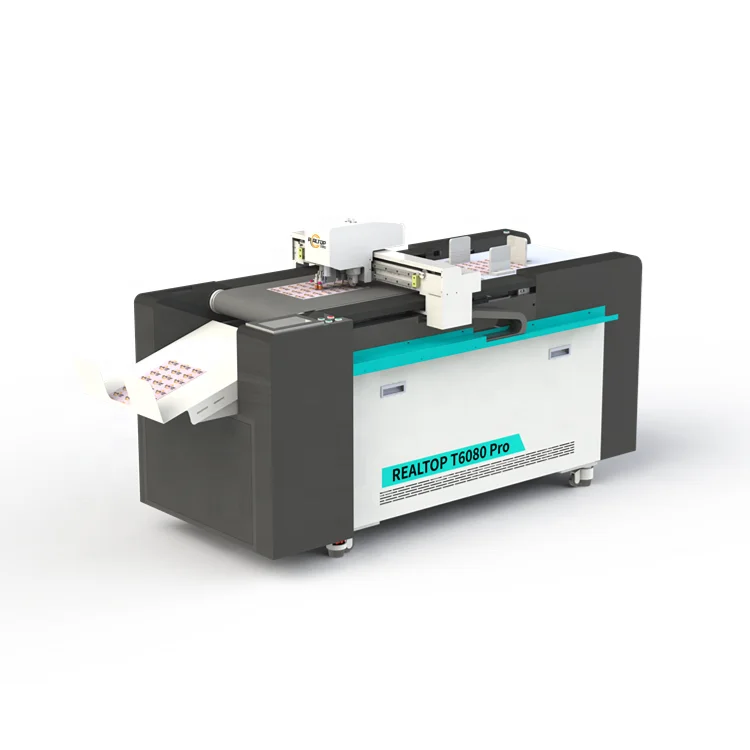
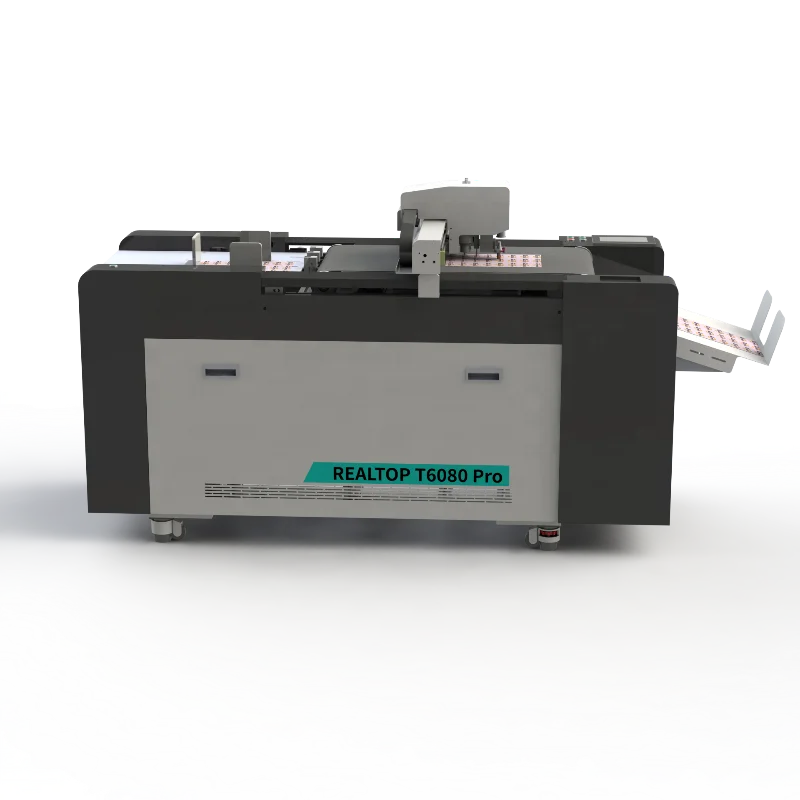
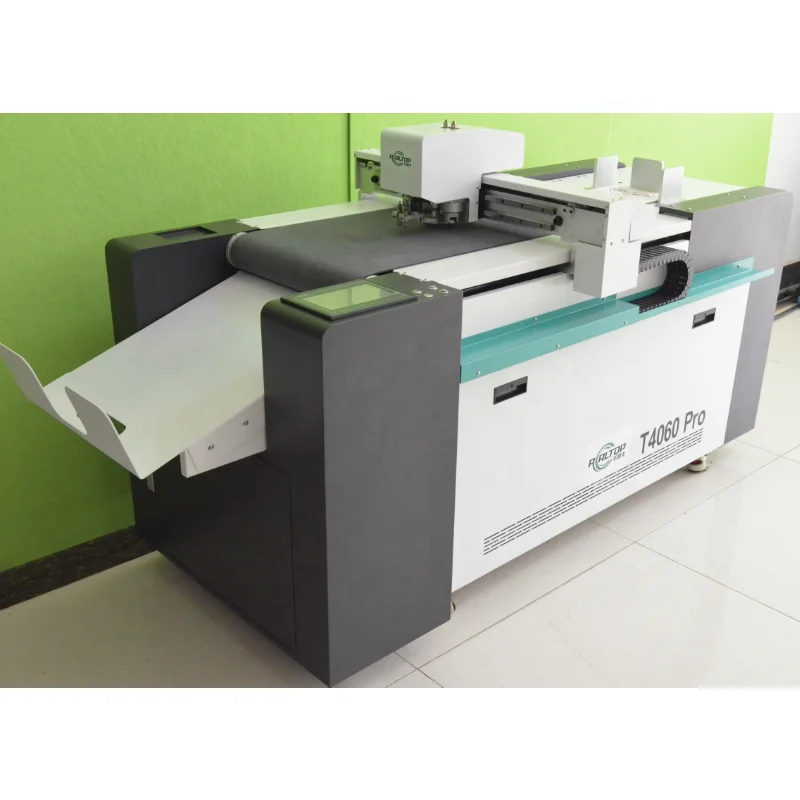
Integrated Knife and Laser Design — The RTT6080 series lets packaging and print finishing buyers match the tool head to their specific material rather than forcing a single cutting method, with sample cutting on your own stock before commitment.
Technical Specifications
| Parameter | Value |
|---|---|
| Product Type | CNC Digital Flatbed Cutter |
| Model | RTT6080 / RTT6080 Pro |
| Max Working Area | 600 mm × 800 mm |
| Tool Group | Cutting tool, kiss cutting tool, creasing tool, CCD camera, high speed oscillating knife (Pro) |
| Max Cutting Speed | 1500 mm/s (according to the material) |
| Cutting Thickness | ≤2 mm (RTT6080) / ≤5 mm (RTT6080 Pro) |
| Positioning Accuracy | 0.05 mm |
| Supported File Formats | DXF, PLT, PDF, AI |
| Transfer Method | Ethernet port |
| Rated Power | 3.2 kW |
| Voltage | 220V / 380V, 50Hz |
Application Suitability
| Application | Material or Output |
|---|---|
| Packaging and carton sample making | Thin board, corrugated media, folding carton stock |
| Print finishing and contour cutting | A4 and small-format printed media, vinyl, label stock |
| Small-batch gasket and label production | Non-metallic gasket sheets, adhesive-backed materials |
| Graphic prototype and mock-up work | Foam board, lightweight composite sheets |
Why the Voltage Question Must Come Before the Price
Confirming local voltage and plug standards at the inquiry stage prevents multi-week delays once the CNC flatbed digital cutter for sale arrives at your facility.
I remember a buyer who specified a machine purely on working area and cutting speed, only to discover the control cabinet was wired for a three-phase supply his workshop did not have. The unit sat idle while a local electrician reconfigured the incoming line. When buyers evaluate compact-format digital cutters, the focus tends to land on bed size and tool options, but electrical compatibility dictates whether the machine can even power on [NEED_CITE: voltage and frequency standards by export market]. Asking about voltage, phase and plug type during the first exchange eliminates a failure mode that no amount of tool head variety can fix.
Tool Group Selection for Thin-Format Workflows
The RTT6080 series offers a mix of cutting, kiss cutting, creasing and CCD camera tools that address the typical steps in a packaging or print finishing workflow. Buyers working with folding carton or corrugated sample stock can switch between a standard cutting tool and a creasing wheel without changing machines, keeping the entire sample-making cycle on one CNC flatbed digital cutter for sale. The kiss cutting tool adds label and sticker production to the same footprint, which matters when floor space is limited and daily volumes stay in the low-to-medium range.
CCD Camera Contour Recognition at Production Speed
Printed contour cutting depends on the camera reading registration marks fast enough to keep pace with the cutting head. The RTT6080 series includes CCD camera positioning with 0.05 mm accuracy, but that figure only matters if the software tracks marks reliably at the speed you intend to run. I have watched buyers test contour cutting at a slow feed rate during a demonstration, then discover misalignment once the feed rate increases to production levels [NEED_CITE: CCD contour recognition performance at production speed]. Requesting a sample cutting report that records both speed and deviation on your actual printed stock gives you data instead of promises.
Reading the Specs That Affect Daily Output
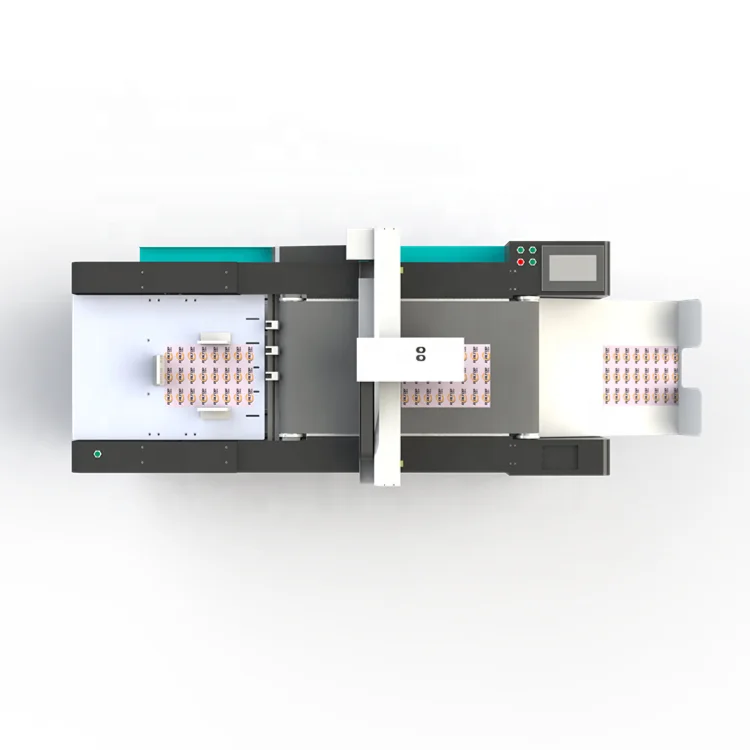
The 600 mm × 800 mm working area fits A4 and small-format sheets without wasted travel, which keeps cycle times tight for packaging samples and short-run labels. Positioning accuracy of 0.05 mm is tight enough for most printed contour jobs, but verify that the file format your design software exports—whether DXF, PLT, PDF or AI—imports cleanly into the machine’s nesting software before you commit. The high speed oscillating knife on the RTT6080 Pro extends cutting thickness to 5 mm, opening up denser foam and thicker gasket material that the standard RTT6080, rated for up to 2 mm, would crush or leave ragged. Ethernet transfer avoids the driver and cable issues that still surface with legacy USB workflows, and the 3.2 kW rated power figure tells you what dedicated circuit to plan for rather than relying on a shared workshop line.
The Hidden Cost of Skipping Material Thickness Verification
Buyers sometimes choose a machine on working area alone, assuming any flatbed of the right size will handle their stock. When the material is thicker than the cutting tool can manage, the result is crushed foam, ragged edges on corrugated board or incomplete cuts on multi-ply gasket sheets. I have seen sample reports where a 3 mm foam board was listed as "cut successfully," yet the edge quality was only acceptable at half the rated speed, cutting daily output in proportion [NEED_CITE: material thickness and edge quality relationship in oscillating knife cutting]. Specifying the RTT6080 Pro when your thickest regular material approaches 5 mm avoids the cost of re-cutting and scrapped sheets.
Why Sourcing This Series Here
The in-house design team covers both knife and laser cutting technologies, so you can confirm whether the RTT6080’s oscillating knife is the right method for your material or whether a CO2 laser would produce a sealed edge instead. Tool head and table configuration are specified per material and production volume rather than offered as a fixed package. CCD camera positioning is tested on your printed stock before the order is finalized. Software compatibility is confirmed against your existing file format and nesting workflow. Voltage, plug type and control language are verified at the order stage, not left to the packing list.
Documentation & Verification
- Factory test record on your exact material thickness and tool head configuration before dispatch.
- Machine specification sheet listing RTT6080 or RTT6080 Pro with confirmed voltage and frequency.
- Electrical schematic and voltage confirmation matching your local supply standard.
- Sample cutting report showing edge quality and contour deviation on your printed stock.
- Software licence and file format compatibility note for DXF, PLT, PDF or AI workflows.
- Spare parts list covering oscillating knife blades, creasing wheels and CCD calibration targets.
Installation, Commissioning & Support
- Dedicated 220V or 380V circuit sized for the 3.2 kW rated power of the RTT6080 series.
- Ethernet connection to your local network for file transfer without additional driver setup.
- First-run parameter setting on your material thickness, up to 2 mm or 5 mm depending on model.
- Operator training on CCD camera calibration for your specific printed registration mark size.
- Scheduled blade and creasing wheel replacement intervals based on your daily cutting volume.
- Vacuum table zoning check for small-part fixation before full-speed production begins.
What to Share When Requesting a Quotation
To get a configuration that matches your workflow, provide the material type and maximum thickness you cut most often, the sheet size you feed, and the daily volume you need to hit. Confirm the local voltage and frequency, the plug type your electrician expects, and the control language your operators prefer. If you already use nesting software or a specific design file format, send a sample file so compatibility can be checked before the CNC flatbed digital cutter for sale is built.
Frequently Asked Questions
Q: How do I decide between the RTT6080 and the RTT6080 Pro for my material?
A: Check the thickest material you cut on a regular basis. The RTT6080 handles up to 2 mm, while the RTT6080 Pro extends that limit to 5 mm with a high speed oscillating knife. If your typical stock sits near the 2 mm line, choosing the Pro gives you headroom for occasional thicker jobs without risking crushed edges or incomplete cuts.
Q: How can I verify CCD contour recognition accuracy before buying?
A: Ask for a sample cutting report run on your own printed media. The report should record the feed speed, the measured deviation from the printed contour, and the registration mark size used. Comparing these figures at your intended production speed, rather than a slow demonstration rate, shows whether the 0.05 mm positioning accuracy holds under real conditions.
Q: Which file formats does the RTT6080 series accept?
A: The machine imports DXF, PLT, PDF and AI files. Before placing an order, send a sample file from your current design or nesting software so the supplier can confirm clean import and correct tool path assignment for cutting, creasing and kiss cutting operations.
Q: How do I confirm voltage and control language for my market?
A: State your local voltage, phase and frequency along with the plug type and preferred control language during the inquiry stage. The supplier will include an electrical schematic and voltage confirmation document with the machine, ensuring the RTT6080 series arrives ready to connect without on-site electrical modification.
Q: What cutting speed can I expect on my specific material?
A: The maximum cutting speed is listed at 1500 mm/s according to the material. Actual speed depends on thickness, density and edge quality requirements. Request a sample cutting report that records the feed rate used and the resulting edge condition on your exact stock to set realistic throughput expectations.










商品评价
There are no reviews yet.