



Fast Delivery
Quick, reliable shipping to any location.

Free & easy returns
Return this item by mail or in store within 90 days for a full refund.
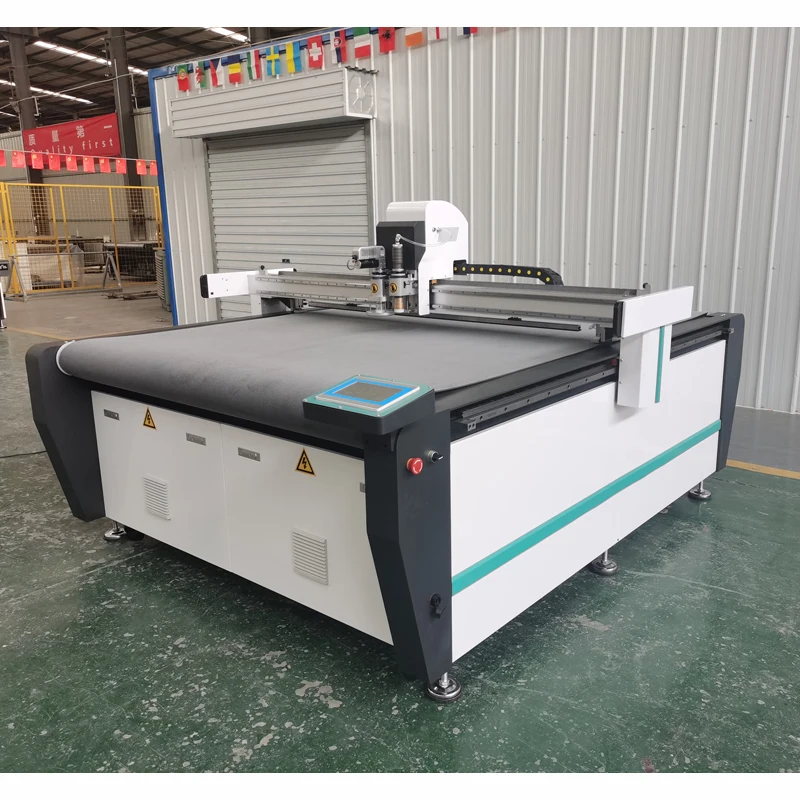
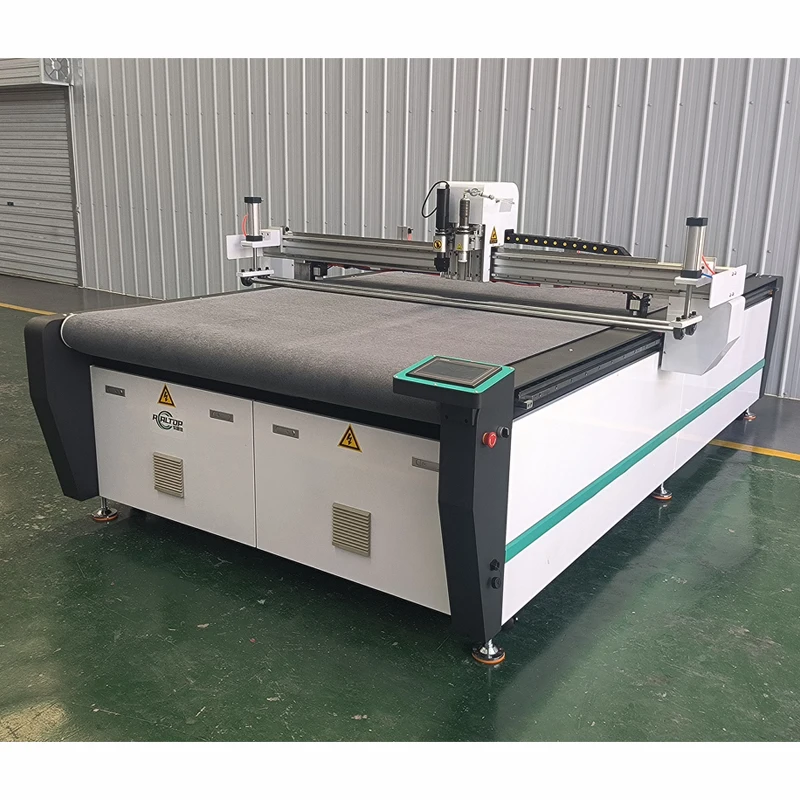
In-house tool head and table configuration — RT-D2516/RT-S2516 CNC oscillating knife cutting machine is configured per material and production volume with matching vacuum zoning, rather than sold as a one-size-fits-all flatbed.
Technical Specifications
| Parameter | Value |
|---|---|
| Model | RT-D2516 / RT-S2516 |
| Product Type | CNC Oscillating Knife Cutting Machine with Vision System |
| Working Area | 1600 × 2500 mm |
| Overall Dimensions | 3450 × 2300 × 1250 mm |
| Rated Power | 9 kW |
| Voltage | 380V ±10% |
| Working Table | Flat aluminum alloy vacuum adsorption table |
| Vacuum Pump | 7.5 kW |
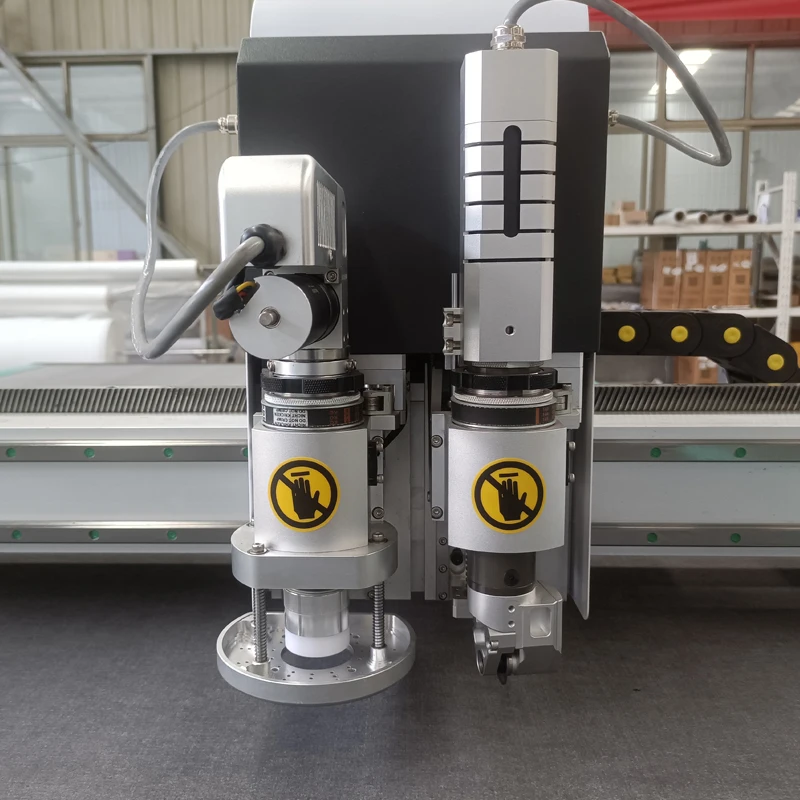
| Multifunctional Tool Head | Swiss imported knife with vibration full cutting, vibration half cutting, cursor location |
| Positioning System | Panoramic camera recognition / Small CCD mark point / Projection positioning (optional) |
| Safety Device | Infrared sensors |
| Translational Velocity | 800–1200 mm/s |
| Cutting Thickness | 20–80 mm (basis not stated in source — confirm material type and density) |
| Repeated Accuracy | ≤0.1 mm |
| Transmission System | Digital servo motor, linear guide, synchronous belt, ball screw |
| Servo Motor | Taiwan Delta |
| Linear Guide | Taiwan Hiwin rail |
| Conveyor Belt | Germany imported |
| Auto Feeding | Yes |
| Instruction System | HP-GL compatible format |
| Software Language Options | English, Russian, Italian, Chinese; special languages customizable |
| Key Features | Full cutting, kiss cutting, slot milling, punching, inkjet, drawing marking; CE declaration where applicable; 5 patents technology certification |
Application Suitability
| Application | Material or Output |
|---|---|
| Automotive interior and floor mat production | EVA, XPE, sponge, PU composite layers for car mats and trunk liners |
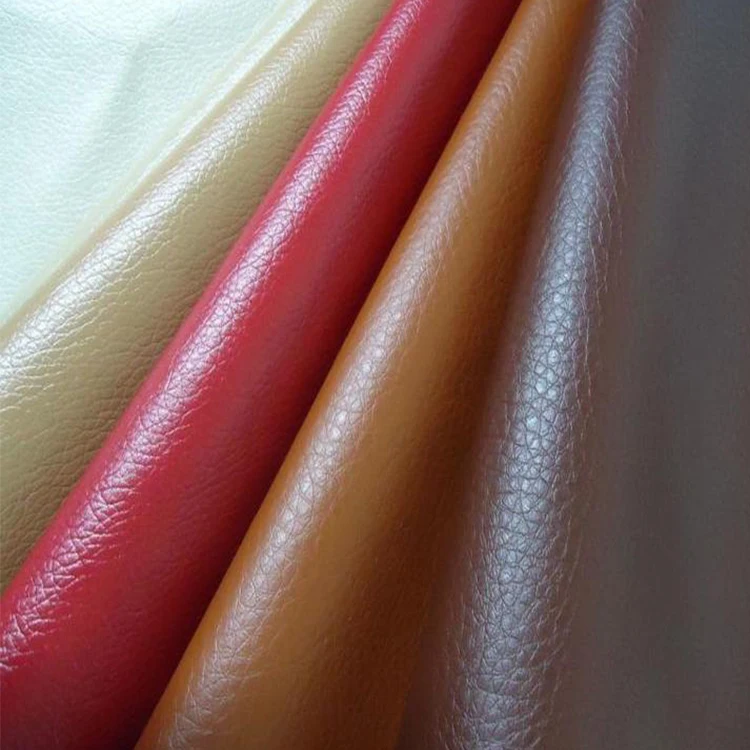
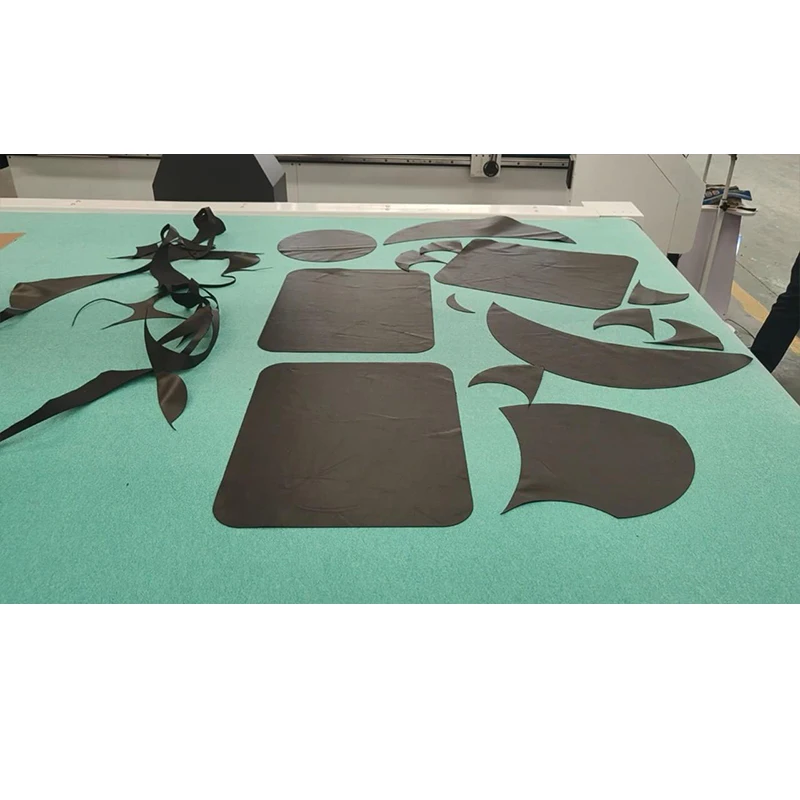
| Leather and shoe material cutting | Natural and synthetic leather hides, shoe uppers, luggage panels |
| Packaging sample making and carton prototyping | Corrugated cardboard, plastic box stock, sticker film |
| Soft furnishing and textile fabrication | Non-woven fabric, carpet, clothing cloth, foam board |
| Gasket and sealing pad manufacturing | Rubber, PTFE, ETFE, silicone, soft glass sheet |
| Advertising signage and graphic printing | PVC board, vinyl film, foam board contour cutting |
Why "Working Area Only" Selection Fails on a CNC Oscillating Knife Cutting Machine
Tool head mismatch causes more production stoppages than any other configuration error on flatbed digital cutters.
Many buyers specify a CNC digital cutting machine for sale based purely on bed size, then discover that the standard oscillating knife cannot handle their actual material density or thickness. A blade chosen for soft foam will chip within days when hitting wire-reinforced composites, and a drag knife that works on vinyl film will crush corrugated board edges [NEED_CITE: material-specific tooling requirements for oscillating knife cutting]. The result is ragged cuts, rejected parts, and unplanned downtime while the correct tool head is sourced and tested. Voltage and software language often compound the problem if confirmed only after the machine is already built.
Matching Tool Head to Material Thickness and Density
The RT-D2516/RT-S2516 supports a multifunctional tool head carrying Swiss-imported blades configured for vibration full cutting, vibration half cutting, and cursor location. Buyers working with dense composites like fiberglass or rubber gasket stock need the oscillating knife set to higher frequency and appropriate blade geometry, while soft textiles and non-woven fabrics perform better with a drag knife or round knife attachment. Selecting the wrong CNC oscillating knife cutting machine manufacturer configuration leads to crushed foam cores or frayed textile edges that require secondary trimming.
Vision System Options for Printed Contour Work
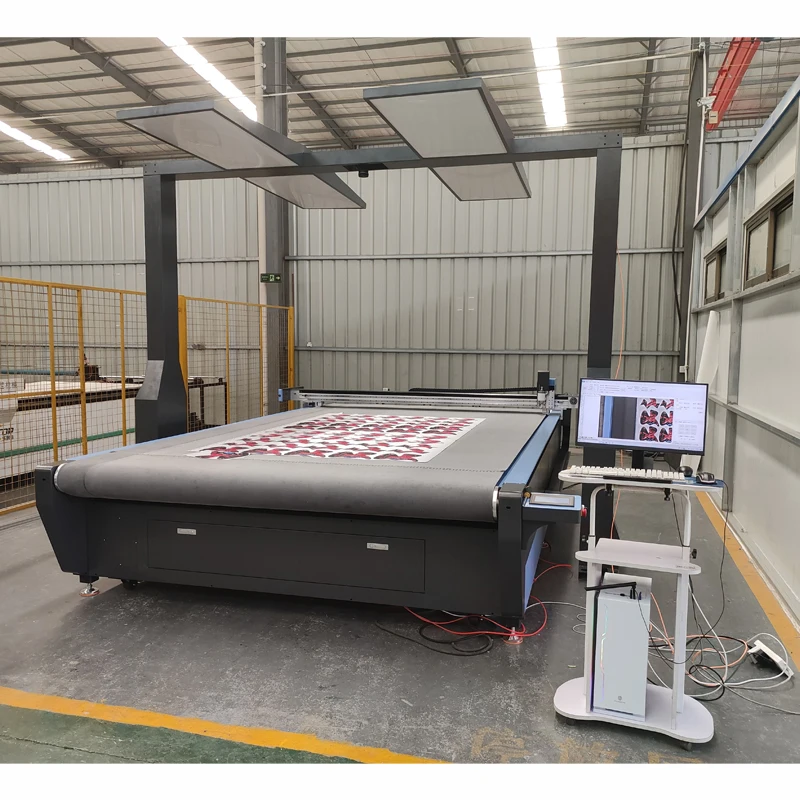
Three positioning systems are available: panoramic camera recognition for full-sheet contour tracking, small CCD mark point positioning for registered print jobs, and projection positioning for manual layout verification. Panoramic camera recognition suits high-volume printed textile and sticker production where the camera must track registration marks across the entire 1600 × 2500 mm bed at production speed [NEED_CITE: vision system accuracy standards for digital cutting]. Small CCD mark point positioning is adequate for shorter runs where operators can place fiducial marks at known intervals.
How Core Specifications Translate to Shop Floor Results
The 9 kW rated power and 7.5 kW vacuum pump together determine what the machine can hold and cut simultaneously. A 7.5 kW pump on a 1600 × 2500 mm bed generates sufficient hold-down for most single-layer textile and foam work, but smaller parts cut from stiff corrugated board may lift if vacuum zoning is not configured for the part geometry. Taiwan Delta digital servo motors and Hiwin linear rails deliver the ≤0.1 mm repeated accuracy needed for nesting tight patterns on expensive leather hides. The 800–1200 mm/s translational velocity range means operators can slow the head for intricate contours without losing position registration, then accelerate across open travel moves.
What Happens When Vacuum Zoning Is Overlooked
Insufficient vacuum zoning on a large-format flatbed causes small parts to shift during the final cuts of a nested sheet, producing scrap that is only discovered after the entire job has run. On a CNC oscillating knife cutting machine, this problem is worse with lightweight films and thin foams because the material has less mass to resist the cutting force [NEED_CITE: vacuum hold-down requirements for lightweight flexible materials]. Buyers who skip the sample cutting test on their own material often discover zoning gaps only after installation, when reconfiguring the table zones requires a service visit.
Why Buyers Source This Range Here
The RT-D2516/RT-S2516 is built with in-house design covering both knife and laser cutting technologies, so buyers can match the cutting method to material rather than forcing one method. Tool head and table configuration is specified per material and production volume before the order is placed. CCD camera positioning is tested with the buyer’s actual printed stock to confirm mark tracking at speed. Software compatibility with the buyer’s existing file format and nesting workflow is confirmed in writing. Voltage, plug type, and control language are customized and verified before shipment. Sample cutting on the buyer’s own material is performed before commitment, not after.
Documentation & Verification
- Machine specification sheet confirming working area, tool head list, and voltage rating
- Electrical schematic and voltage confirmation matched to target market grid standards
- Sample cutting report on buyer’s own material with measured edge quality and tolerances
- Software licence and file format compatibility note for HP-GL import workflow
- Factory test record documenting repeated accuracy and vacuum performance before dispatch
- Operation and maintenance manual with tool head changeover procedures
Installation, Commissioning & Support
- Floor space must accommodate 3450 × 2300 mm footprint plus operator clearance on all sides
- Dedicated 380V ±10% circuit required for combined 9 kW machine and 7.5 kW vacuum pump load
- Machine ships fully assembled; rigging plan needed for workshop door and overhead crane access
- First-run commissioning includes vacuum zoning calibration for buyer’s specific part geometry
- Operator training covers tool head changeover, CCD mark registration, and nesting file import
- Spare parts list includes Swiss knife blades, vacuum seals, and conveyor belt segments
Preparing Your Enquiry
To get an accurate configuration recommendation, share your material type, maximum thickness, sheet or roll dimensions, and daily cutting volume. Specify your local voltage and frequency, preferred control language, and the file formats your design team currently uses. If your material has internal reinforcement or unusual density, send a sample sheet for test cutting before the order is finalized.
Frequently Asked Questions
Q: What risks come with selecting a CNC digital cutting machine for sale based only on working area?
A: Working area tells you nothing about whether the tool head can handle your material thickness or density. A machine sized for 1600 × 2500 mm sheets may still produce crushed edges on foam or chipped blades on composites if the oscillating knife frequency and blade type are not matched to your specific stock. Always request sample cutting on your actual material.
Q: Can the panoramic camera track printed marks reliably at full production speed?
A: Panoramic camera recognition is designed for continuous contour tracking across the full bed, but reliability depends on mark contrast, print quality, and ambient lighting conditions in your workshop. Small CCD mark point positioning may be more stable for shorter runs where fiducial marks can be placed at controlled intervals. Confirm with a sample cutting report on your printed material.
Q: What material does the 20–80 mm cutting thickness specification assume?
A: The stated range is not tied to a single material in the source documentation. Actual cutting depth varies significantly between soft sponge, dense EVA, and wire-reinforced composites. Buyers should submit their specific material for a sample cutting test to verify achievable thickness and edge quality before ordering.
Q: Does the software accept my existing nesting and design files?
A: The instruction system supports HP-GL compatible formats, but compatibility with specific third-party nesting software depends on your file export settings. Request the software licence and file format compatibility note before ordering to confirm your current workflow will transfer without manual re-drawing.
Q: Can voltage, plug type, and control interface language be customized before shipment?
A: Yes. The standard voltage is 380V ±10%, but the electrical schematic and plug configuration can be adapted to your local grid. Control software language options include English, Russian, Italian, and Chinese, with special languages customizable. Confirm all three parameters in writing before production begins.
In-house tool head and table configuration — RT-D2516/RT-S2516 CNC oscillating knife cutting machine is configured per material and production volume with matching vacuum zoning, rather than sold as a one-size-fits-all flatbed.
Technical Specifications
| Parameter | Value |
|---|---|
| Model | RT-D2516 / RT-S2516 |
| Product Type | CNC Oscillating Knife Cutting Machine with Vision System |
| Working Area | 1600 × 2500 mm |
| Overall Dimensions | 3450 × 2300 × 1250 mm |
| Rated Power | 9 kW |
| Voltage | 380V ±10% |
| Working Table | Flat aluminum alloy vacuum adsorption table |
| Vacuum Pump | 7.5 kW |
| Multifunctional Tool Head | Swiss imported knife with vibration full cutting, vibration half cutting, cursor location |
| Positioning System | Panoramic camera recognition / Small CCD mark point / Projection positioning (optional) |
| Safety Device | Infrared sensors |
| Translational Velocity | 800–1200 mm/s |
| Cutting Thickness | 20–80 mm (basis not stated in source — confirm material type and density) |
| Repeated Accuracy | ≤0.1 mm |
| Transmission System | Digital servo motor, linear guide, synchronous belt, ball screw |
| Servo Motor | Taiwan Delta |
| Linear Guide | Taiwan Hiwin rail |
| Conveyor Belt | Germany imported |
| Auto Feeding | Yes |
| Instruction System | HP-GL compatible format |
| Software Language Options | English, Russian, Italian, Chinese; special languages customizable |
| Key Features | Full cutting, kiss cutting, slot milling, punching, inkjet, drawing marking; CE declaration where applicable; 5 patents technology certification |
Application Suitability
| Application | Material or Output |
|---|---|
| Automotive interior and floor mat production | EVA, XPE, sponge, PU composite layers for car mats and trunk liners |
| Leather and shoe material cutting | Natural and synthetic leather hides, shoe uppers, luggage panels |
| Packaging sample making and carton prototyping | Corrugated cardboard, plastic box stock, sticker film |
| Soft furnishing and textile fabrication | Non-woven fabric, carpet, clothing cloth, foam board |
| Gasket and sealing pad manufacturing | Rubber, PTFE, ETFE, silicone, soft glass sheet |
| Advertising signage and graphic printing | PVC board, vinyl film, foam board contour cutting |
Why "Working Area Only" Selection Fails on a CNC Oscillating Knife Cutting Machine
Tool head mismatch causes more production stoppages than any other configuration error on flatbed digital cutters.
Many buyers specify a CNC digital cutting machine for sale based purely on bed size, then discover that the standard oscillating knife cannot handle their actual material density or thickness. A blade chosen for soft foam will chip within days when hitting wire-reinforced composites, and a drag knife that works on vinyl film will crush corrugated board edges [NEED_CITE: material-specific tooling requirements for oscillating knife cutting]. The result is ragged cuts, rejected parts, and unplanned downtime while the correct tool head is sourced and tested. Voltage and software language often compound the problem if confirmed only after the machine is already built.
Matching Tool Head to Material Thickness and Density
The RT-D2516/RT-S2516 supports a multifunctional tool head carrying Swiss-imported blades configured for vibration full cutting, vibration half cutting, and cursor location. Buyers working with dense composites like fiberglass or rubber gasket stock need the oscillating knife set to higher frequency and appropriate blade geometry, while soft textiles and non-woven fabrics perform better with a drag knife or round knife attachment. Selecting the wrong CNC oscillating knife cutting machine manufacturer configuration leads to crushed foam cores or frayed textile edges that require secondary trimming.
Vision System Options for Printed Contour Work
Three positioning systems are available: panoramic camera recognition for full-sheet contour tracking, small CCD mark point positioning for registered print jobs, and projection positioning for manual layout verification. Panoramic camera recognition suits high-volume printed textile and sticker production where the camera must track registration marks across the entire 1600 × 2500 mm bed at production speed [NEED_CITE: vision system accuracy standards for digital cutting]. Small CCD mark point positioning is adequate for shorter runs where operators can place fiducial marks at known intervals.
How Core Specifications Translate to Shop Floor Results
The 9 kW rated power and 7.5 kW vacuum pump together determine what the machine can hold and cut simultaneously. A 7.5 kW pump on a 1600 × 2500 mm bed generates sufficient hold-down for most single-layer textile and foam work, but smaller parts cut from stiff corrugated board may lift if vacuum zoning is not configured for the part geometry. Taiwan Delta digital servo motors and Hiwin linear rails deliver the ≤0.1 mm repeated accuracy needed for nesting tight patterns on expensive leather hides. The 800–1200 mm/s translational velocity range means operators can slow the head for intricate contours without losing position registration, then accelerate across open travel moves.
What Happens When Vacuum Zoning Is Overlooked
Insufficient vacuum zoning on a large-format flatbed causes small parts to shift during the final cuts of a nested sheet, producing scrap that is only discovered after the entire job has run. On a CNC oscillating knife cutting machine, this problem is worse with lightweight films and thin foams because the material has less mass to resist the cutting force [NEED_CITE: vacuum hold-down requirements for lightweight flexible materials]. Buyers who skip the sample cutting test on their own material often discover zoning gaps only after installation, when reconfiguring the table zones requires a service visit.
Why Buyers Source This Range Here
The RT-D2516/RT-S2516 is built with in-house design covering both knife and laser cutting technologies, so buyers can match the cutting method to material rather than forcing one method. Tool head and table configuration is specified per material and production volume before the order is placed. CCD camera positioning is tested with the buyer’s actual printed stock to confirm mark tracking at speed. Software compatibility with the buyer’s existing file format and nesting workflow is confirmed in writing. Voltage, plug type, and control language are customized and verified before shipment. Sample cutting on the buyer’s own material is performed before commitment, not after.
Documentation & Verification
- Machine specification sheet confirming working area, tool head list, and voltage rating
- Electrical schematic and voltage confirmation matched to target market grid standards
- Sample cutting report on buyer’s own material with measured edge quality and tolerances
- Software licence and file format compatibility note for HP-GL import workflow
- Factory test record documenting repeated accuracy and vacuum performance before dispatch
- Operation and maintenance manual with tool head changeover procedures
Installation, Commissioning & Support
- Floor space must accommodate 3450 × 2300 mm footprint plus operator clearance on all sides
- Dedicated 380V ±10% circuit required for combined 9 kW machine and 7.5 kW vacuum pump load
- Machine ships fully assembled; rigging plan needed for workshop door and overhead crane access
- First-run commissioning includes vacuum zoning calibration for buyer’s specific part geometry
- Operator training covers tool head changeover, CCD mark registration, and nesting file import
- Spare parts list includes Swiss knife blades, vacuum seals, and conveyor belt segments
Preparing Your Enquiry
To get an accurate configuration recommendation, share your material type, maximum thickness, sheet or roll dimensions, and daily cutting volume. Specify your local voltage and frequency, preferred control language, and the file formats your design team currently uses. If your material has internal reinforcement or unusual density, send a sample sheet for test cutting before the order is finalized.
Frequently Asked Questions
Q: What risks come with selecting a CNC digital cutting machine for sale based only on working area?
A: Working area tells you nothing about whether the tool head can handle your material thickness or density. A machine sized for 1600 × 2500 mm sheets may still produce crushed edges on foam or chipped blades on composites if the oscillating knife frequency and blade type are not matched to your specific stock. Always request sample cutting on your actual material.
Q: Can the panoramic camera track printed marks reliably at full production speed?
A: Panoramic camera recognition is designed for continuous contour tracking across the full bed, but reliability depends on mark contrast, print quality, and ambient lighting conditions in your workshop. Small CCD mark point positioning may be more stable for shorter runs where fiducial marks can be placed at controlled intervals. Confirm with a sample cutting report on your printed material.
Q: What material does the 20–80 mm cutting thickness specification assume?
A: The stated range is not tied to a single material in the source documentation. Actual cutting depth varies significantly between soft sponge, dense EVA, and wire-reinforced composites. Buyers should submit their specific material for a sample cutting test to verify achievable thickness and edge quality before ordering.
Q: Does the software accept my existing nesting and design files?
A: The instruction system supports HP-GL compatible formats, but compatibility with specific third-party nesting software depends on your file export settings. Request the software licence and file format compatibility note before ordering to confirm your current workflow will transfer without manual re-drawing.
Q: Can voltage, plug type, and control interface language be customized before shipment?
A: Yes. The standard voltage is 380V ±10%, but the electrical schematic and plug configuration can be adapted to your local grid. Control software language options include English, Russian, Italian, and Chinese, with special languages customizable. Confirm all three parameters in writing before production begins.










商品评价
There are no reviews yet.