

Fast Delivery
Quick, reliable shipping to any location.

Free & easy returns
Return this item by mail or in store within 90 days for a full refund.
Knife-and-laser flexibility — our engineering team configures the cutting method and tool head specifically for your material stock, eliminating the need to force one technology across different jobs.
Technical Specifications
| Parameter | Value |
|---|---|
| Model | RT-D2516 / RT-S2516 |
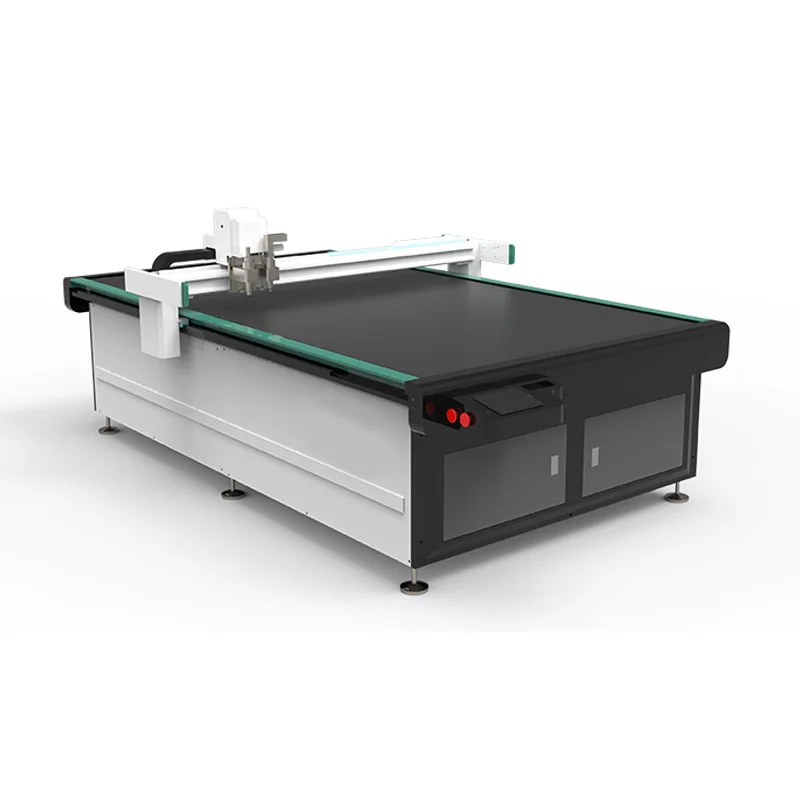
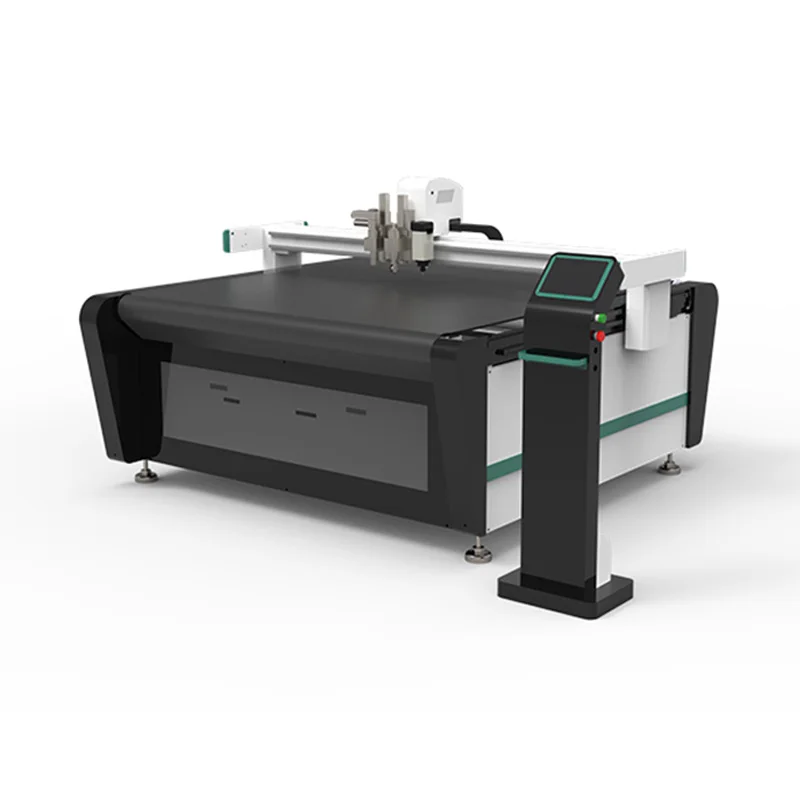
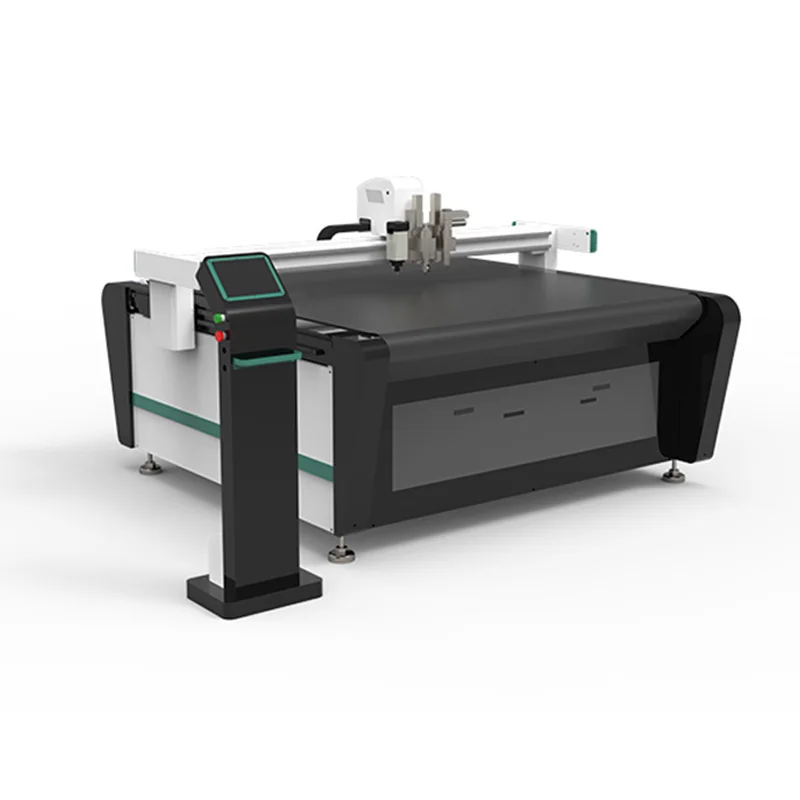
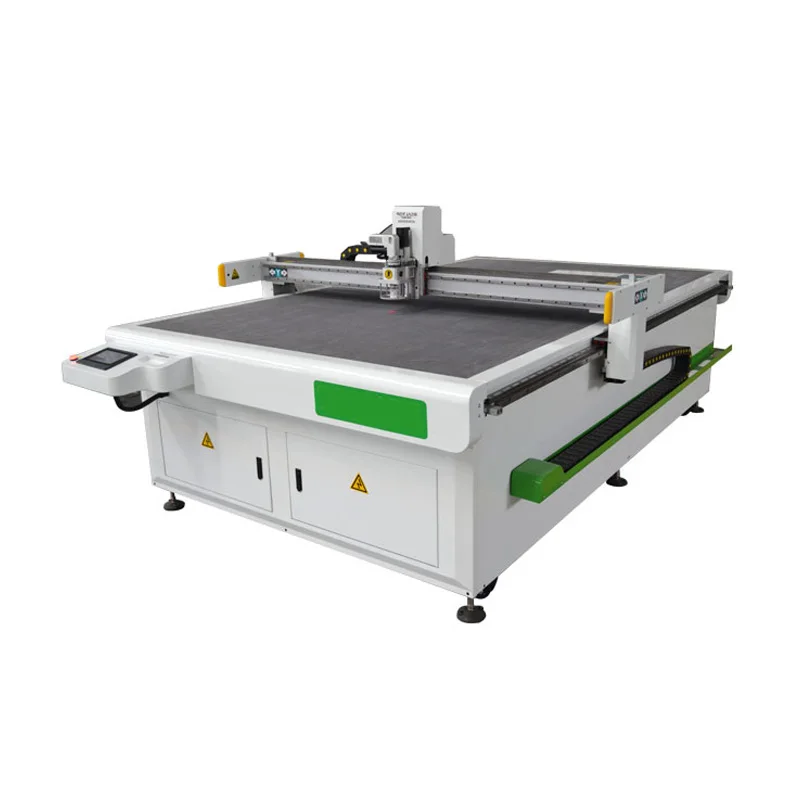
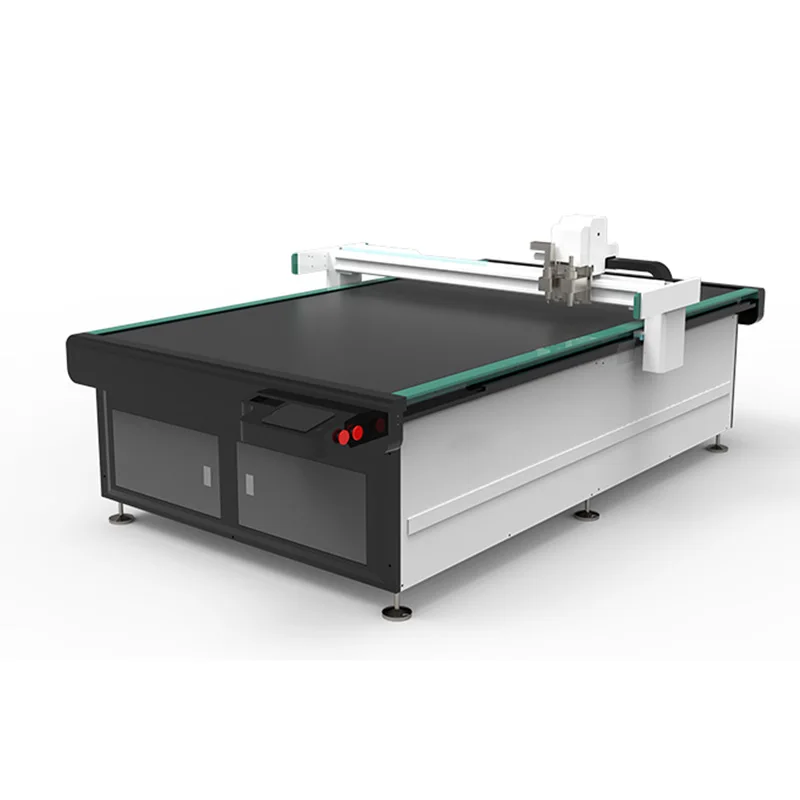
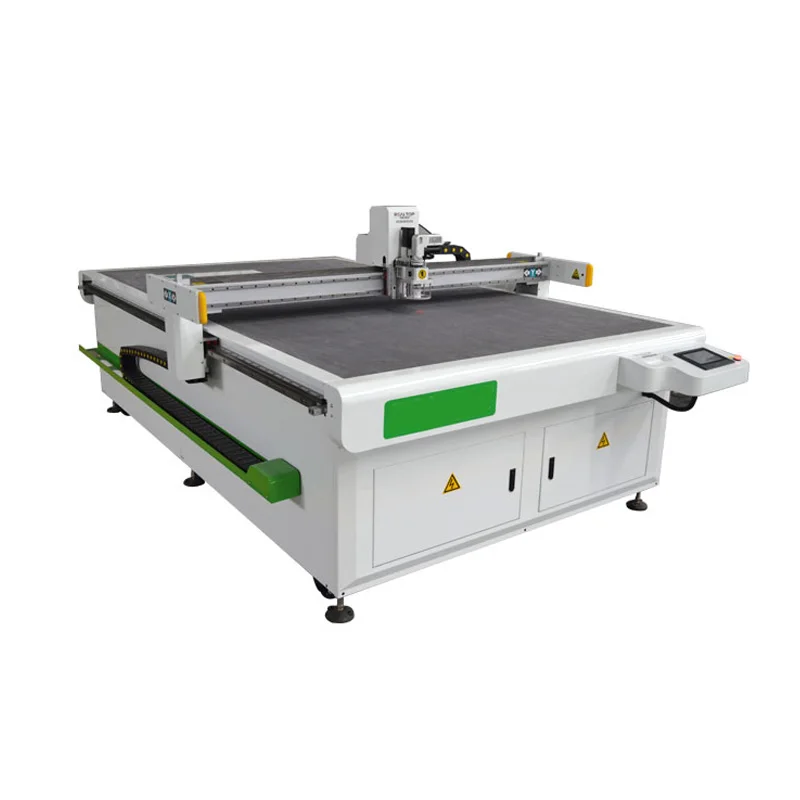
| Product Type | CNC Oscillating Knife Cutting Machine |
| Working Area | 1600 × 2500 mm |
| Overall Dimensions | 3450 × 2300 × 1250 mm |
| Rated Power | 11 kW |
| Vacuum Pump | 7.5 kW |
| Table Type | Flat working table with vacuum and conveyor belt |
| Tool Head | Swiss imported oscillating knife — full cutting, half cutting, cursor location |
| Translational Velocity | 800–1200 mm/s |
| Cutting Speed | 200–800 mm/s (varies by material type and thickness) |
| Repeatability | ≤0.1 mm |
| Servo Motor | Japanese Yaskawa digital servo |
| Linear Rail | Taiwan Hiwin |
| Conveyor Belt | Germany imported |
| Transmission System | Digital servo motor, linear guide, synchronous belt, imported ball screw |
| Control Format | HP-GL compatible |
| Voltage | 380V ± 10% |
| Safety Device | Infrared sensors |
| Auto Feeding | Yes |
| Cutting Thickness by Material | To be confirmed with buyer’s sample |
| CCD Camera | Not stated in source |
| Language Options | Not stated in source |
| Certification | Not stated in source |
Application Suitability
| Application | Material or Output |
|---|---|
| Blanket and carpet production | Large-format textile rolls, woven and non-woven fabrics |
| Garment and footwear manufacturing | Leather, flexible garment materials, sponge composite leather |
| Automotive interior trimming | Soft composite panels, synthetic leather, foam-backed textiles |
| Gasket and seal fabrication | PVC, soft glass, silicon, rubber sheets |
| Flexible packaging sampling | Corrugated card, carton board, flexible laminates |
Why "Working Area" Alone Fails Half the Buyers
When a textile converter specifies a cloth cutting machine for sale based purely on table size, the first production run often reveals the real problem: the knife head cannot handle the ply count or material density at usable speed. Configuration must match the actual stock, not just the sheet dimensions.
I have walked into workshops where a 1600×2500 table sat half-loaded because the buyer cut small leather pieces and the vacuum zoning could not hold them flat. The oscillating knife stalled on multi-layer sponge composite leather because the stroke frequency and blade geometry were never matched to that specific material. These mismatches show up on day one, not during the demo. [NEED_CITE: common CNC knife cutting machine configuration mismatches in textile workshops]
Matching Tool Head Geometry to Fabric Density
The Swiss imported oscillating knife head on the RT-D2516 supports full cutting, half cutting, and cursor location — three functions that matter differently depending on whether you are slicing single-ply garment fabric or scoring multi-layer carpet backing. Full cutting handles roll-to-sheet textile work cleanly, while half cutting lets packaging sample makers kiss-cut through the top layer without damaging the belt below. The oscillating stroke frequency and blade angle determine whether sponge composite leather cuts through or simply compresses and rebounds.
Vacuum Hold-Down and Continuous Feed Accuracy
A 7.5 kW vacuum pump paired with a flat vacuum table and Germany-imported conveyor belt provides the material restraint needed when the knife head travels at translational velocities up to 1200 mm/s. Without adequate hold-down, lightweight blanket fabrics lift at the cut line, producing dimensional drift that accumulates across a long roll. The auto-feeding system advances material after each cutting cycle, keeping production continuous without an operator manually repositioning sheets. [NEED_CITE: vacuum table zoning standards for oscillating knife cutting tables]
How Servo Drives and Linear Rails Define Edge Quality
Japanese Yaskawa digital servo motors driving Taiwan Hiwin linear rails deliver ≤0.1 mm repeatability across the 1600×2500 mm working area. In garment production, that tolerance level means nested pattern pieces cut from a single lay maintain consistent seam allowances — a 0.3 mm drift on a collar piece compounds into visible misalignment after sewing. The imported ball screw and synchronous belt transmission system eliminates the backlash that causes ragged edges on tight-radius curves in leather work.
The Cost of Skipping the Sample Cut
Buyers who commit to a cloth cutting machine for sale without testing their own material routinely face two problems: the cutting speed drops to keep the edge clean, cutting effective throughput, or the blade wears through consumables at a rate the original quotation never projected. I have seen carpet converters discover mid-installation that their backed textile required a different blade geometry entirely, turning a two-week commissioning into a month-long reconfiguration. Send your actual roll or sheet stock first — the sample cutting report will confirm whether the oscillating knife head, vacuum zoning, and feed rate align with your daily volume. [NEED_CITE: material sample testing protocols for digital cutting equipment procurement]
What Separates a Manufacturer from a Reseller
Our in-house design team covers both knife and laser cutting technologies, so when a buyer’s material suits one method over the other, we recommend accordingly rather than forcing every job onto a single platform. Tool head and table configuration get specified per material and production volume before the order is placed. We confirm HP-GL file format compatibility with the buyer’s existing nesting software before production starts. Voltage, plug type, and control language are locked in during the quotation stage, not discovered at unpacking. Sample cutting on the buyer’s own material is a standard pre-commitment step, not a special request.
Documentation & Verification
- Machine specification sheet listing tool head options and vacuum table zoning matched to your fabric type
- Sample cutting report on your own textile roll or leather hide before order confirmation
- Electrical schematic with voltage and frequency locked to your workshop supply
- Software licence and HP-GL file format compatibility note for your nesting workflow
- Factory test record capturing cutting speed and repeatability on your submitted material
- Spare parts list covering blades, vacuum seals, and belt sections
Installation, Commissioning & Support
- 3450×2300 mm footprint requires a level concrete floor with clearance for roll loading on the conveyor side
- 380V ± 10% three-phase supply with dedicated circuit for combined 11 kW machine and 7.5 kW vacuum pump load
- Arrives partially assembled; table frame, gantry, and vacuum table require on-site alignment and belt tensioning
- First-run parameter setting includes oscillation frequency, vacuum zone activation, and auto-feed advance calibration
- Operator training covers HP-GL file import, tool head changeover, and blade replacement procedures
- Consumable spares package includes oscillating knife blades and vacuum table seals sized to your material
What to Share with Your Inquiry
Send the material type, ply count, and maximum roll width you plan to process — this determines whether the standard oscillating knife head is sufficient or whether a different tool configuration is required. Include your target daily volume so the auto-feeding cycle and conveyor speed can be matched to your upstream and downstream workflow. Confirm your workshop voltage and frequency, as the 380V ± 10% system needs validation against local supply standards before the electrical cabinet is built.
Frequently Asked Questions
Q: How do I choose between oscillating knife and laser cutting for my textile material?
A: Knife cutting handles multi-layer fabrics, foam-backed composites, and materials that melt or discolor under laser heat. Laser suits single-ply synthetics where sealed edges prevent fraying. We recommend the method based on your actual material sample rather than asking you to pick a technology upfront.
Q: What working area and tool head configuration fits my daily roll volume?
A: The 1600×2500 mm working area accommodates standard textile roll widths with auto-feeding for continuous processing. Tool head selection — full cut, half cut, or creasing — depends on whether you are through-cutting blankets or scoring packaging board. Share your sheet size and ply count for a specific recommendation.
Q: Can the control system import my existing nesting files and software workflow?
A: The system is HP-GL compatible, which covers most nesting software outputs used in garment and textile production. We confirm file format compatibility during the quotation stage by processing your actual production files and returning the cut path for your approval before any hardware is built.
Q: How is voltage, plug type, and control language confirmed before shipment?
A: We collect your workshop voltage, frequency, and plug standard during the specification review. The electrical schematic and control panel language are documented and confirmed in writing before the cabinet is wired, so there are no surprises when the CNC oscillating knife cutting machine arrives on your floor.
Q: Can I send my material for a sample cutting test before placing an order?
A: Yes — sample cutting on the buyer’s own material is a standard step. You ship a roll section or sheet sample, we run it on the configured tool head and vacuum table, and you receive a cutting report showing speed, edge quality, and repeatability data before committing to the purchase.
Knife-and-laser flexibility — our engineering team configures the cutting method and tool head specifically for your material stock, eliminating the need to force one technology across different jobs.
Technical Specifications
| Parameter | Value |
|---|---|
| Model | RT-D2516 / RT-S2516 |
| Product Type | CNC Oscillating Knife Cutting Machine |
| Working Area | 1600 × 2500 mm |
| Overall Dimensions | 3450 × 2300 × 1250 mm |
| Rated Power | 11 kW |
| Vacuum Pump | 7.5 kW |
| Table Type | Flat working table with vacuum and conveyor belt |
| Tool Head | Swiss imported oscillating knife — full cutting, half cutting, cursor location |
| Translational Velocity | 800–1200 mm/s |
| Cutting Speed | 200–800 mm/s (varies by material type and thickness) |
| Repeatability | ≤0.1 mm |
| Servo Motor | Japanese Yaskawa digital servo |
| Linear Rail | Taiwan Hiwin |
| Conveyor Belt | Germany imported |
| Transmission System | Digital servo motor, linear guide, synchronous belt, imported ball screw |
| Control Format | HP-GL compatible |
| Voltage | 380V ± 10% |
| Safety Device | Infrared sensors |
| Auto Feeding | Yes |
| Cutting Thickness by Material | To be confirmed with buyer’s sample |
| CCD Camera | Not stated in source |
| Language Options | Not stated in source |
| Certification | Not stated in source |
Application Suitability
| Application | Material or Output |
|---|---|
| Blanket and carpet production | Large-format textile rolls, woven and non-woven fabrics |
| Garment and footwear manufacturing | Leather, flexible garment materials, sponge composite leather |
| Automotive interior trimming | Soft composite panels, synthetic leather, foam-backed textiles |
| Gasket and seal fabrication | PVC, soft glass, silicon, rubber sheets |
| Flexible packaging sampling | Corrugated card, carton board, flexible laminates |
Why "Working Area" Alone Fails Half the Buyers
When a textile converter specifies a cloth cutting machine for sale based purely on table size, the first production run often reveals the real problem: the knife head cannot handle the ply count or material density at usable speed. Configuration must match the actual stock, not just the sheet dimensions.
I have walked into workshops where a 1600×2500 table sat half-loaded because the buyer cut small leather pieces and the vacuum zoning could not hold them flat. The oscillating knife stalled on multi-layer sponge composite leather because the stroke frequency and blade geometry were never matched to that specific material. These mismatches show up on day one, not during the demo. [NEED_CITE: common CNC knife cutting machine configuration mismatches in textile workshops]
Matching Tool Head Geometry to Fabric Density
The Swiss imported oscillating knife head on the RT-D2516 supports full cutting, half cutting, and cursor location — three functions that matter differently depending on whether you are slicing single-ply garment fabric or scoring multi-layer carpet backing. Full cutting handles roll-to-sheet textile work cleanly, while half cutting lets packaging sample makers kiss-cut through the top layer without damaging the belt below. The oscillating stroke frequency and blade angle determine whether sponge composite leather cuts through or simply compresses and rebounds.
Vacuum Hold-Down and Continuous Feed Accuracy
A 7.5 kW vacuum pump paired with a flat vacuum table and Germany-imported conveyor belt provides the material restraint needed when the knife head travels at translational velocities up to 1200 mm/s. Without adequate hold-down, lightweight blanket fabrics lift at the cut line, producing dimensional drift that accumulates across a long roll. The auto-feeding system advances material after each cutting cycle, keeping production continuous without an operator manually repositioning sheets. [NEED_CITE: vacuum table zoning standards for oscillating knife cutting tables]
How Servo Drives and Linear Rails Define Edge Quality
Japanese Yaskawa digital servo motors driving Taiwan Hiwin linear rails deliver ≤0.1 mm repeatability across the 1600×2500 mm working area. In garment production, that tolerance level means nested pattern pieces cut from a single lay maintain consistent seam allowances — a 0.3 mm drift on a collar piece compounds into visible misalignment after sewing. The imported ball screw and synchronous belt transmission system eliminates the backlash that causes ragged edges on tight-radius curves in leather work.
The Cost of Skipping the Sample Cut
Buyers who commit to a cloth cutting machine for sale without testing their own material routinely face two problems: the cutting speed drops to keep the edge clean, cutting effective throughput, or the blade wears through consumables at a rate the original quotation never projected. I have seen carpet converters discover mid-installation that their backed textile required a different blade geometry entirely, turning a two-week commissioning into a month-long reconfiguration. Send your actual roll or sheet stock first — the sample cutting report will confirm whether the oscillating knife head, vacuum zoning, and feed rate align with your daily volume. [NEED_CITE: material sample testing protocols for digital cutting equipment procurement]
What Separates a Manufacturer from a Reseller
Our in-house design team covers both knife and laser cutting technologies, so when a buyer’s material suits one method over the other, we recommend accordingly rather than forcing every job onto a single platform. Tool head and table configuration get specified per material and production volume before the order is placed. We confirm HP-GL file format compatibility with the buyer’s existing nesting software before production starts. Voltage, plug type, and control language are locked in during the quotation stage, not discovered at unpacking. Sample cutting on the buyer’s own material is a standard pre-commitment step, not a special request.
Documentation & Verification
- Machine specification sheet listing tool head options and vacuum table zoning matched to your fabric type
- Sample cutting report on your own textile roll or leather hide before order confirmation
- Electrical schematic with voltage and frequency locked to your workshop supply
- Software licence and HP-GL file format compatibility note for your nesting workflow
- Factory test record capturing cutting speed and repeatability on your submitted material
- Spare parts list covering blades, vacuum seals, and belt sections
Installation, Commissioning & Support
- 3450×2300 mm footprint requires a level concrete floor with clearance for roll loading on the conveyor side
- 380V ± 10% three-phase supply with dedicated circuit for combined 11 kW machine and 7.5 kW vacuum pump load
- Arrives partially assembled; table frame, gantry, and vacuum table require on-site alignment and belt tensioning
- First-run parameter setting includes oscillation frequency, vacuum zone activation, and auto-feed advance calibration
- Operator training covers HP-GL file import, tool head changeover, and blade replacement procedures
- Consumable spares package includes oscillating knife blades and vacuum table seals sized to your material
What to Share with Your Inquiry
Send the material type, ply count, and maximum roll width you plan to process — this determines whether the standard oscillating knife head is sufficient or whether a different tool configuration is required. Include your target daily volume so the auto-feeding cycle and conveyor speed can be matched to your upstream and downstream workflow. Confirm your workshop voltage and frequency, as the 380V ± 10% system needs validation against local supply standards before the electrical cabinet is built.
Frequently Asked Questions
Q: How do I choose between oscillating knife and laser cutting for my textile material?
A: Knife cutting handles multi-layer fabrics, foam-backed composites, and materials that melt or discolor under laser heat. Laser suits single-ply synthetics where sealed edges prevent fraying. We recommend the method based on your actual material sample rather than asking you to pick a technology upfront.
Q: What working area and tool head configuration fits my daily roll volume?
A: The 1600×2500 mm working area accommodates standard textile roll widths with auto-feeding for continuous processing. Tool head selection — full cut, half cut, or creasing — depends on whether you are through-cutting blankets or scoring packaging board. Share your sheet size and ply count for a specific recommendation.
Q: Can the control system import my existing nesting files and software workflow?
A: The system is HP-GL compatible, which covers most nesting software outputs used in garment and textile production. We confirm file format compatibility during the quotation stage by processing your actual production files and returning the cut path for your approval before any hardware is built.
Q: How is voltage, plug type, and control language confirmed before shipment?
A: We collect your workshop voltage, frequency, and plug standard during the specification review. The electrical schematic and control panel language are documented and confirmed in writing before the cabinet is wired, so there are no surprises when the CNC oscillating knife cutting machine arrives on your floor.
Q: Can I send my material for a sample cutting test before placing an order?
A: Yes — sample cutting on the buyer’s own material is a standard step. You ship a roll section or sheet sample, we run it on the configured tool head and vacuum table, and you receive a cutting report showing speed, edge quality, and repeatability data before committing to the purchase.










商品评价
There are no reviews yet.