

Fast Delivery
Quick, reliable shipping to any location.

Free & easy returns
Return this item by mail or in store within 90 days for a full refund.
Match Method to Material — In-house design covering both knife and laser cutting technologies allows buyers to verify the oscillating knife approach on their actual leather and composite fabrics before narrowing to a single machine family.
Technical Specifications
| Parameter | Value |
|---|---|
| Model | RT-D2516/RT-S2516 |
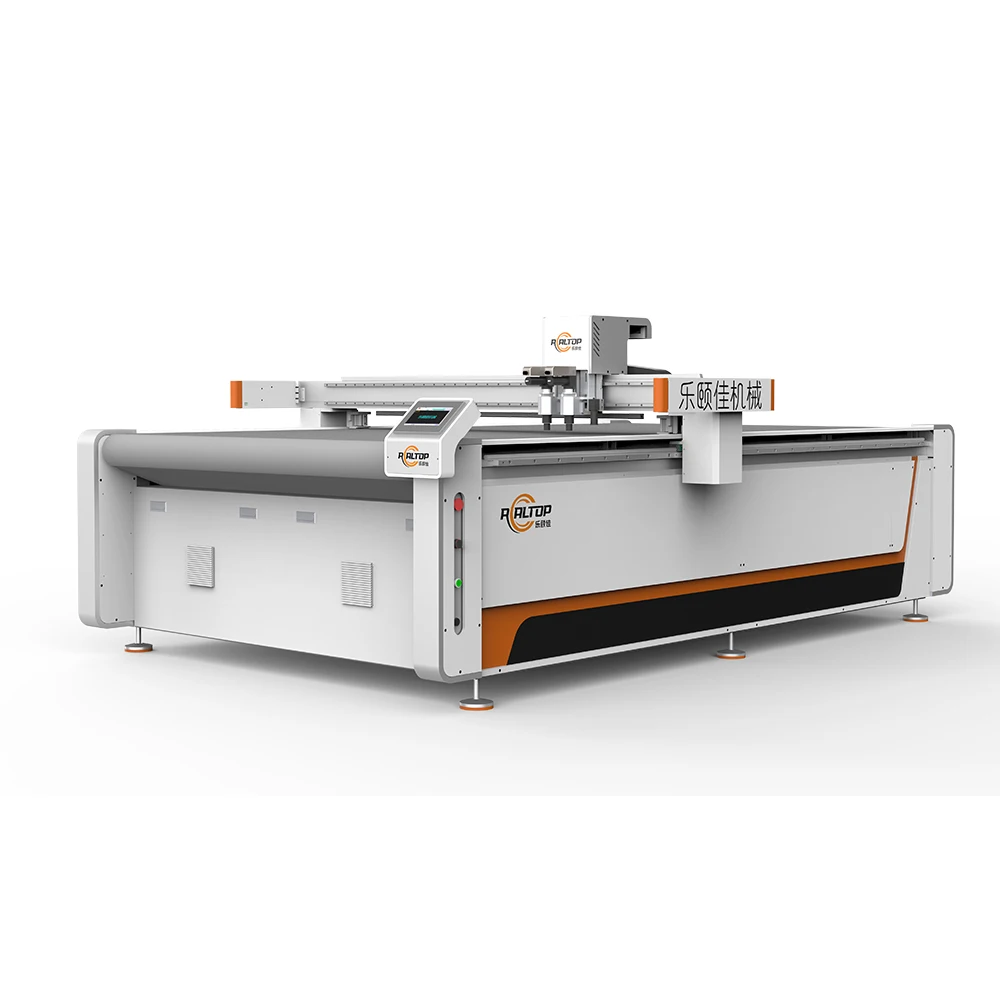
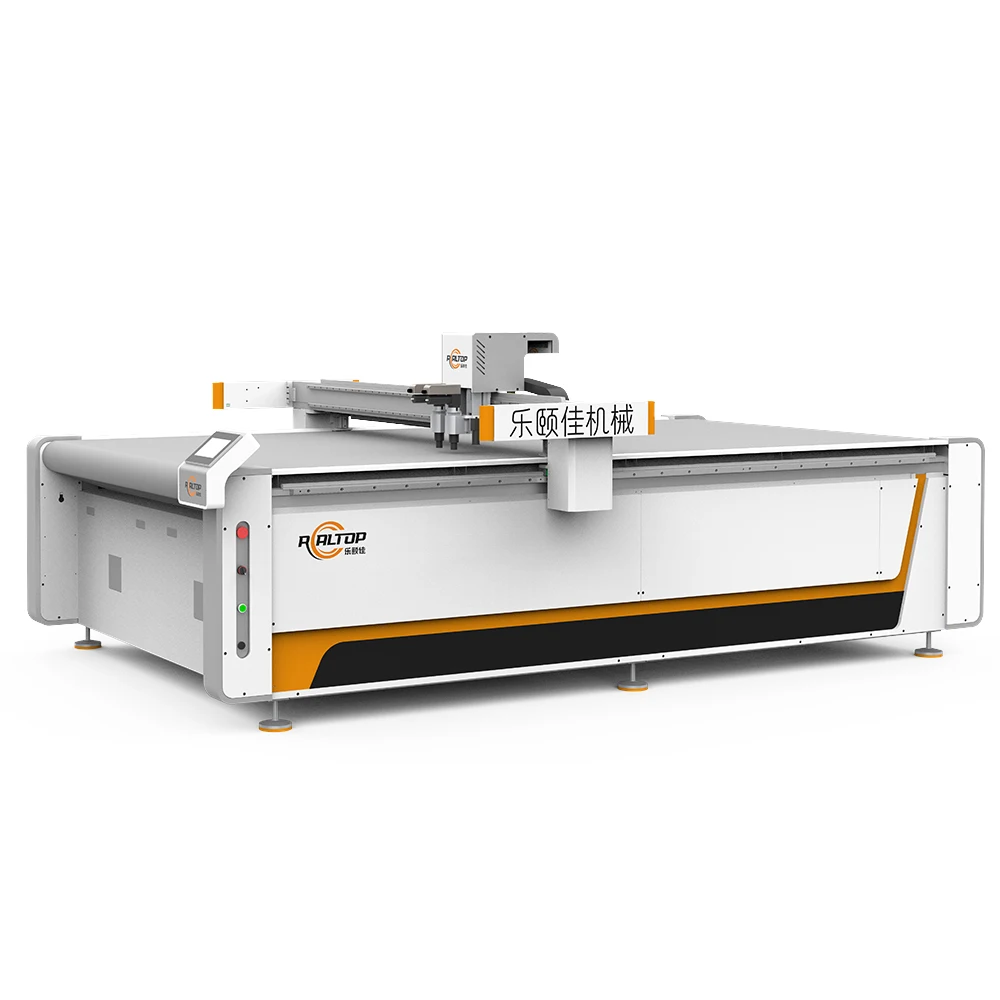
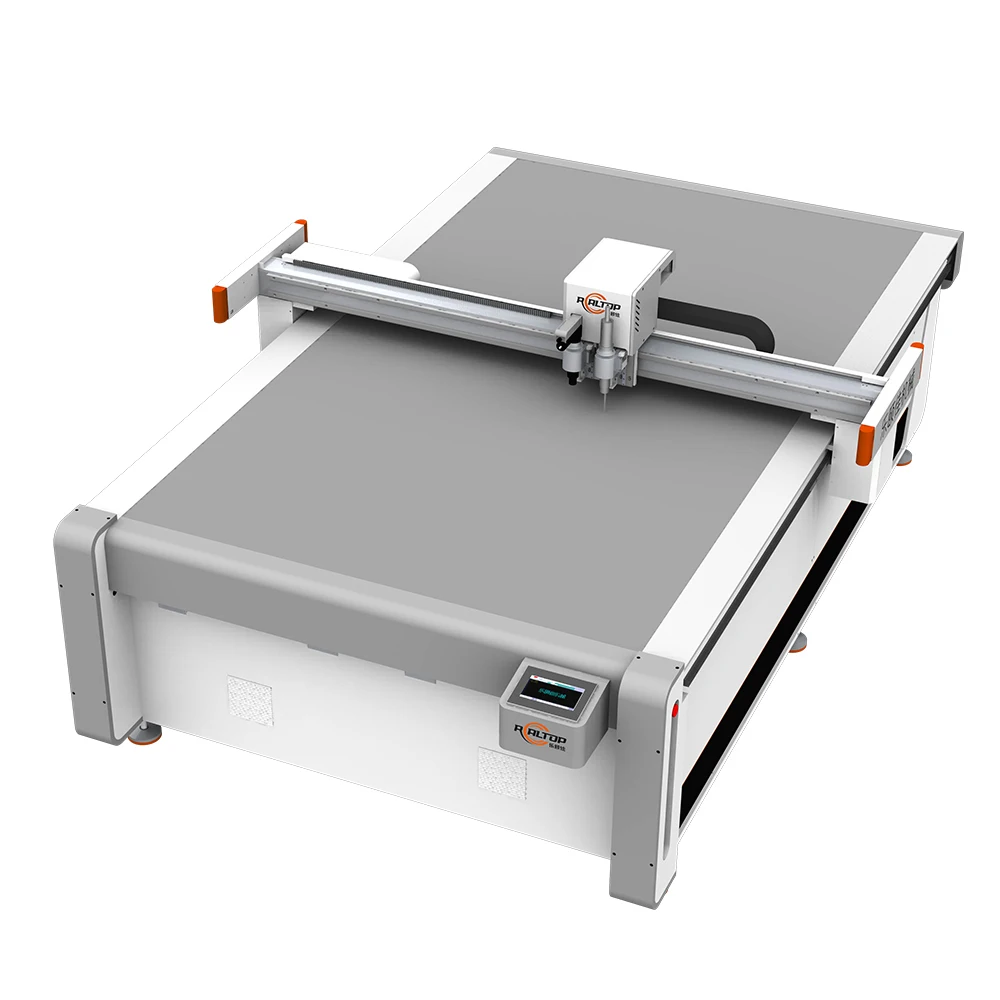
| Product Type | CNC Oscillating Knife Cutting Machine |
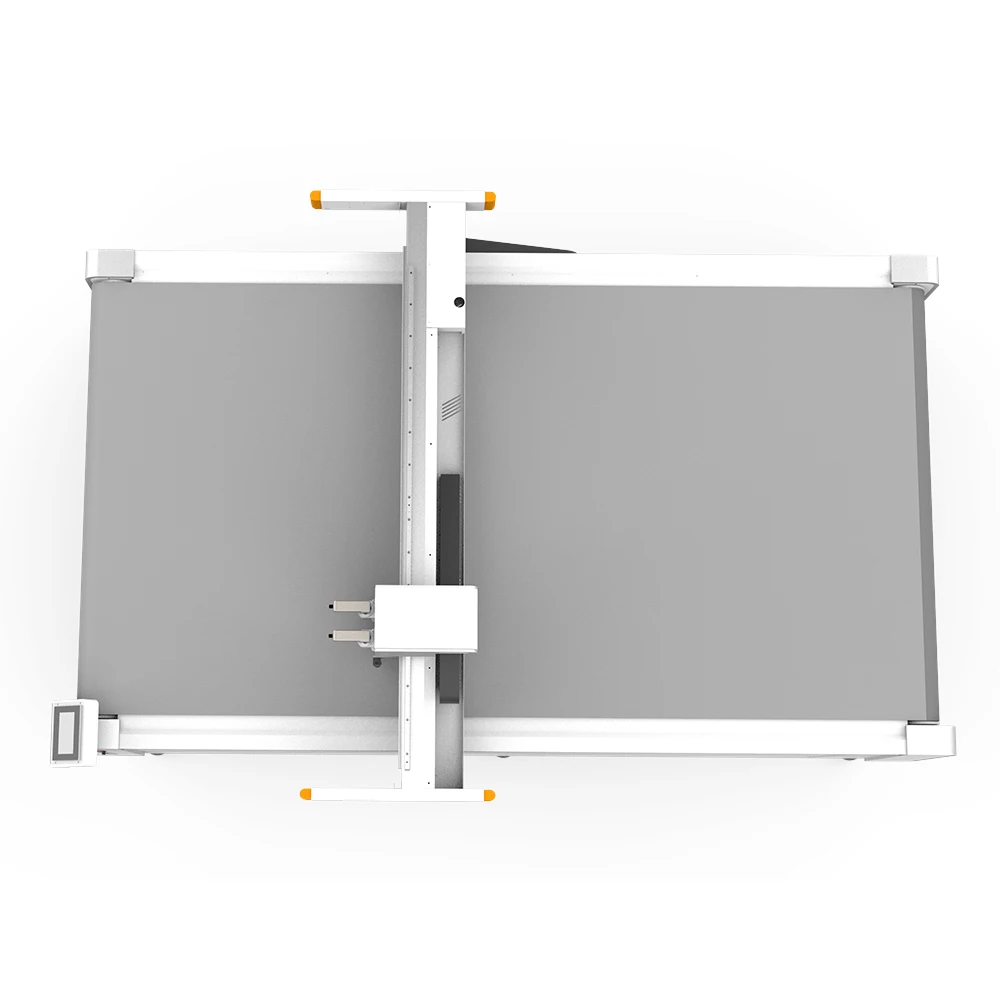
| Working Area | 1600 × 2500 mm |
| Machine Size (Overall) | 3450 × 2300 × 1250 mm |
| Rated Power | 9 kW |
| Voltage | 380V ±10% (frequency to be confirmed for target market) |
| Vacuum Pump | 7.5 kW |
| Table Type | Flatbed vacuum working table, aluminum alloy honeycomb structure |
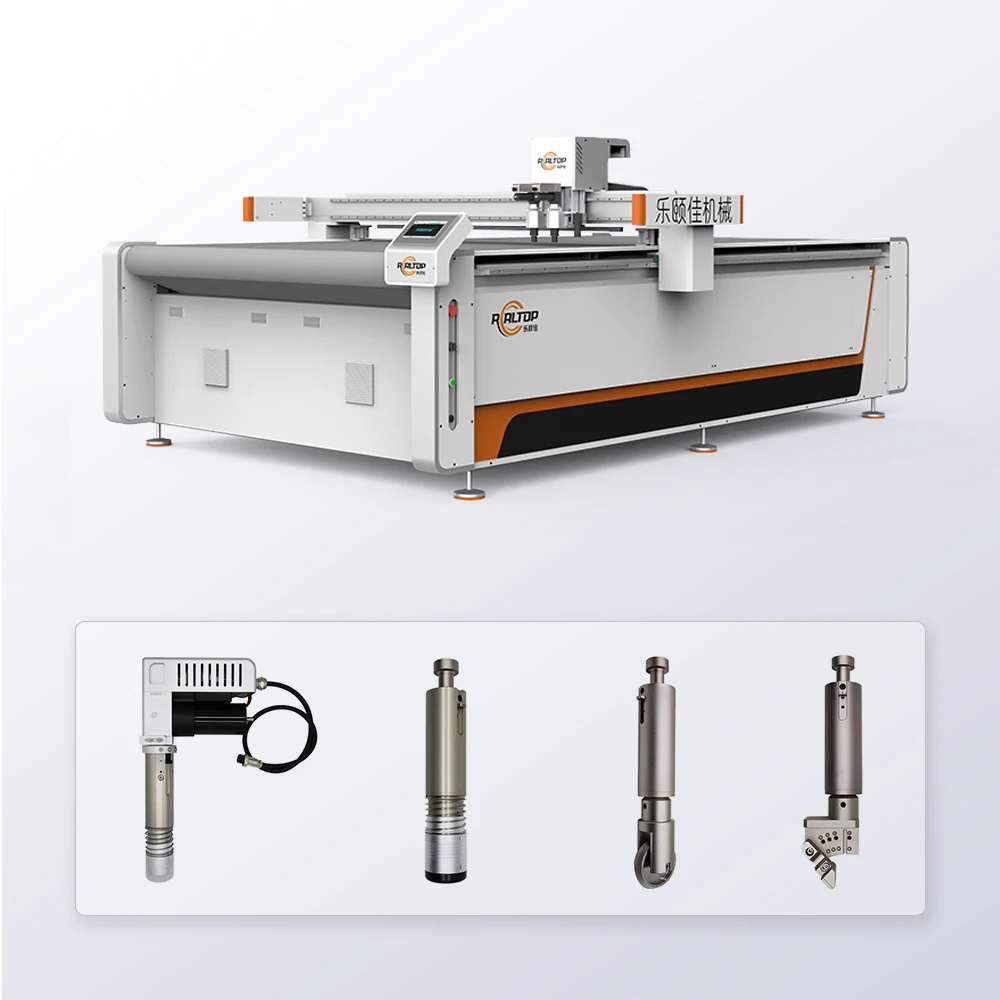
| Tool Head | Swiss imported oscillating knife (vibration full cutting, vibration half cutting, cursor location) |
| Translational Velocity | 800 – 2000 mm/s |
| Cutting Speed | 200 – 800 mm/s (varies by material type and thickness) |
| Repeated Accuracy | ≤0.1 mm |
| Transmission System | Digital servo motor (Taiwan Delta), linear guide (Taiwan Hiwin), synchronous belt, ball screw, rack transmission |
| Auto Feeding | Equipped with Germany imported conveyor belt |
| Instruction System | HP-GL compatible format |
| Safety Device | Infrared sensors, emergency stop |
| Software | Professional nesting software included, supports multiple file format imports, auto nesting |
| Language Options | English, Russian, Italian, Chinese (special languages customizable) |
| Cutting Thickness | Up to 100 mm depending on material density (basis to be confirmed) |
Application Suitability
| Application | Material or Output |
|---|---|
| Leather goods manufacturing | Natural leather, PU, synthetic leather for bags, belts and accessories |
| Footwear upper cutting | Full-grain leather, split leather, textile uppers, sponge composite leather |
| Garment pattern cutting | Clothing flexible materials, multi-layer fabric lays |
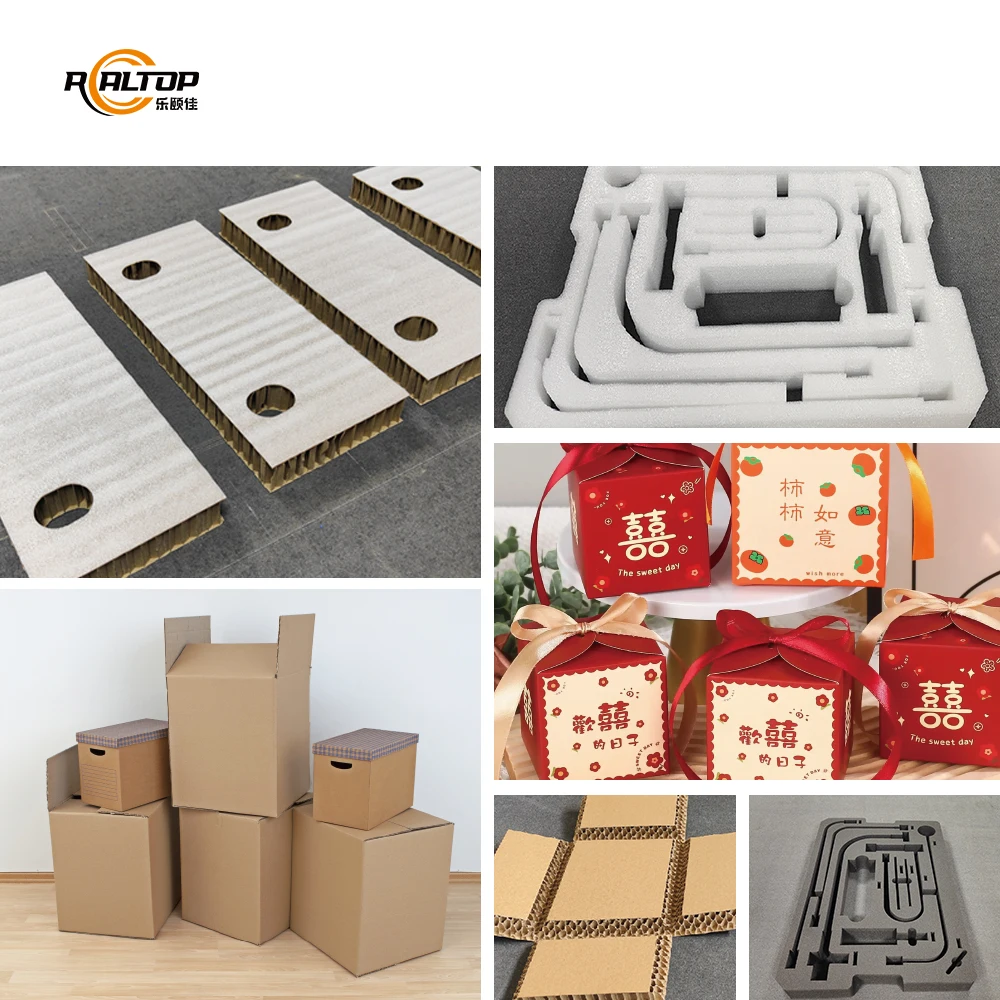
| Packaging carton sample making | Corrugated board, greyboard, kraft paper for structural prototypes |
| Signage and billboard production | PVC, vinyl, soft board for indoor and outdoor display graphics |
| Composite flexible material processing | Sponge composite leather, silicon, rubber, soft glass sheets |
What "Cutting Thickness Up to 100 mm" Actually Depends On
The stated maximum is a material-dependent ceiling, not a guarantee across every flexible sheet you run.
Buyers often see a thickness figure and assume it applies universally. In practice, a dense rubber gasket and a soft sponge composite leather behave completely differently under the same oscillating knife head. I learned this the hard way when a customer tested on single-layer genuine leather, got clean edges, then switched to a nonwoven-backed composite for production — the knife could not penetrate the backing layer, and we had to swap in a higher-torque spindle to solve it. Always send your actual production material for sample cutting before committing to a configuration [NEED_CITE: material density and tool head pairing for oscillating knife systems]. A CNC oscillating knife cutting machine for sale may list a broad range, but real cutting depth is determined by material structure, blade geometry and oscillation frequency working together.
How the RT-D2516/RT-S2516 Sits in the Full Equipment Range
This flatbed knife cutter occupies the mid-format position in the complete Realtop lineup, bridging compact desktop units and large-format multi-head production systems. It covers the 1600 × 2500 mm working area that suits most leather workshops and garment sampling rooms where sheet sizes rarely exceed a standard hide or fabric roll width. Buyers surveying options across knife versus laser technologies can use this model as a reference point — knife cutting preserves the natural edge character of leather without the burn or discoloration that CO2 laser can leave on organic materials.
Where Knife Cutting Outperforms Laser on Leather and Composites
Natural leather contains oils and collagen fibers that react unpredictably to thermal cutting. An oscillating knife produces a clean mechanical shear with no heat-affected zone, which matters when edge appearance directly affects the finished product’s perceived quality. For sponge composite leather — the layered material combining a foam core with a PU or PVC face — the knife slices through all layers simultaneously without melting the foam. This is the reason footwear and automotive interior producers typically specify oscillating knife over laser for anything thicker than a single veneer [NEED_CITE: edge quality comparison between oscillating knife and CO2 laser on composite leather].
Reading the Drive System and Accuracy Specification
The Taiwan Delta digital servo motors paired with Taiwan Hiwin linear guides deliver the ≤0.1 mm repeatability stated in the specification. In a nesting workflow cutting dozens of shoe uppers from one hide, this tolerance means the distance between any two adjacent pieces stays consistent across the entire 1600 × 2500 mm table, reducing material waste caused by cumulative positioning drift. The synchronous belt and rack transmission handle the high translational velocities (up to 2000 mm/s) between cuts, while the ball screw manages the precision segments. The 7.5 kW vacuum pump generates hold-down force through the aluminum honeycomb table — a critical pairing because even a slight material lift during cutting will shift the piece and break the tolerance chain.
The Hidden Cost of Skipping the Material Test
When a buyer specifies a machine based on working area and price alone, the most common failure appears weeks after installation: ragged edges on the actual production material, crushed foam cores, or incomplete cuts through multi-layer composites. The root cause is almost always a tool head that was matched to the sample rather than the real workload. Swapping a spindle or oscillation motor after delivery involves downtime, return shipping and re-calibration — costs that far exceed the price of a pre-order material test [NEED_CITE: post-installation reconfiguration costs for CNC cutting equipment]. This is why the sales process here starts with the buyer sending their actual production rolls or hides.
Why Buyers Source This Model Through the Full Catalogue
The design team engineers both knife and laser platforms in-house, so a buyer evaluating the RT-D2516/RT-S2516 can directly compare its mechanical cutting output against a CO2 or fiber laser alternative for the same material. The core factory controls frame welding, motion assembly and vacuum table zoning under one roof, which means configuration changes — such as adding a CCD camera for printed contour work or adjusting vacuum zones for small leather pieces — are handled during build rather than retrofitted. Tool head and table configuration are specified per material and production volume, not sold as a fixed package. Software compatibility with the buyer’s existing nesting workflow and file formats is confirmed before the order is placed. Voltage, control language and plug type are customized for the destination market before shipment.
Documentation & Verification
- Machine specification sheet listing confirmed tool head, vacuum pump rating and table zone layout for your material
- Electrical schematic with 380V ±10% wiring diagram and frequency confirmation for your local grid
- Sample cutting report produced on your actual leather or composite material with edge quality photographs
- Factory test record documenting repeatability measurements across the 1600 × 2500 mm working area before dispatch
- Software licence key with file format compatibility note covering your existing HP-GL workflow
Installation, Commissioning & Support
- Floor space requirement of at least 4000 × 3000 mm to accommodate the 3450 × 2300 × 1250 mm machine footprint and operator access
- Dedicated 380V ±10% circuit with minimum capacity for the combined 9 kW rated power plus 7.5 kW vacuum pump load
- Auto-feeding conveyor belt tension calibrated on-site to match your specific roll material weight and diameter
- Vacuum table zoning tested with your smallest leather piece to confirm hold-down without edge lift during cutting
- Operator training covering tool head changeover between oscillating knife, drag knife and creasing wheel functions
- Spare parts list covering Swiss oscillating knife blades, conveyor belt segments and infrared sensor units
How to Prepare a Useful Inquiry
Send your actual material type, thickness range and maximum sheet or roll width so we can confirm the working area and tool head pairing. Specify your local voltage and frequency, the control language your operators need, and whether your existing nesting software outputs HP-GL or another format. If your production involves printed contours, let us know the mark type and print registration tolerance so we can advise on CCD camera configuration before quoting.
Frequently Asked Questions
Q: How do I decide between oscillating knife and laser cutting for my leather material?
A: Knife cutting produces a mechanical shear with no heat-affected zone, which preserves edge color and texture on natural leather and avoids melting foam cores in composite materials. Laser works better for very thin synthetic sheets where sealed edges prevent fraying. The full Realtop catalogue covers both methods, so you can compare cutting results on your actual material before choosing.
Q: What working area sizes are available across the Realtop catalogue?
A: The RT-D2516/RT-S2516 offers a 1600 × 2500 mm flatbed, which handles most standard hide and fabric roll widths. The broader range includes compact tables for sample rooms and large-format systems for high-volume production. Each size is available in knife or laser configuration depending on your material and throughput requirements.
Q: How is the stated cutting thickness verified for different flexible materials?
A: The up-to-100 mm figure depends on material density, layer structure and the specific oscillating knife blade selected. We verify actual cutting depth by running your production material on the machine before the order is confirmed, documenting edge quality and completeness in a sample cutting report.
Q: Which tool head options are available, and how do I confirm the right one?
A: The standard configuration includes the Swiss oscillating knife supporting full cutting, half cutting and cursor location. Additional tool heads can be specified for creasing, milling or drag knife work. The correct choice depends on your material type and thickness — we recommend sending production samples for testing before finalizing the configuration.
Q: What voltage, language and file format configurations are supported?
A: The machine is built for 380V ±10% with frequency configurable for 50 or 60 Hz markets. Control language options include English, Russian, Italian and Chinese, with custom languages available. The included nesting software imports HP-GL compatible formats; if your workflow uses a different format, compatibility is confirmed before the order is placed.










商品评价
There are no reviews yet.