



Fast Delivery
Quick, reliable shipping to any location.

Free & easy returns
Return this item by mail or in store within 90 days for a full refund.
Material-Matched Configuration — Every oscillating knife and laser system in this catalogue is configured around the buyer’s actual sheet stock, thickness and fold-line requirement rather than a default working area.
Technical Specifications
| Parameter | Value |
|---|---|
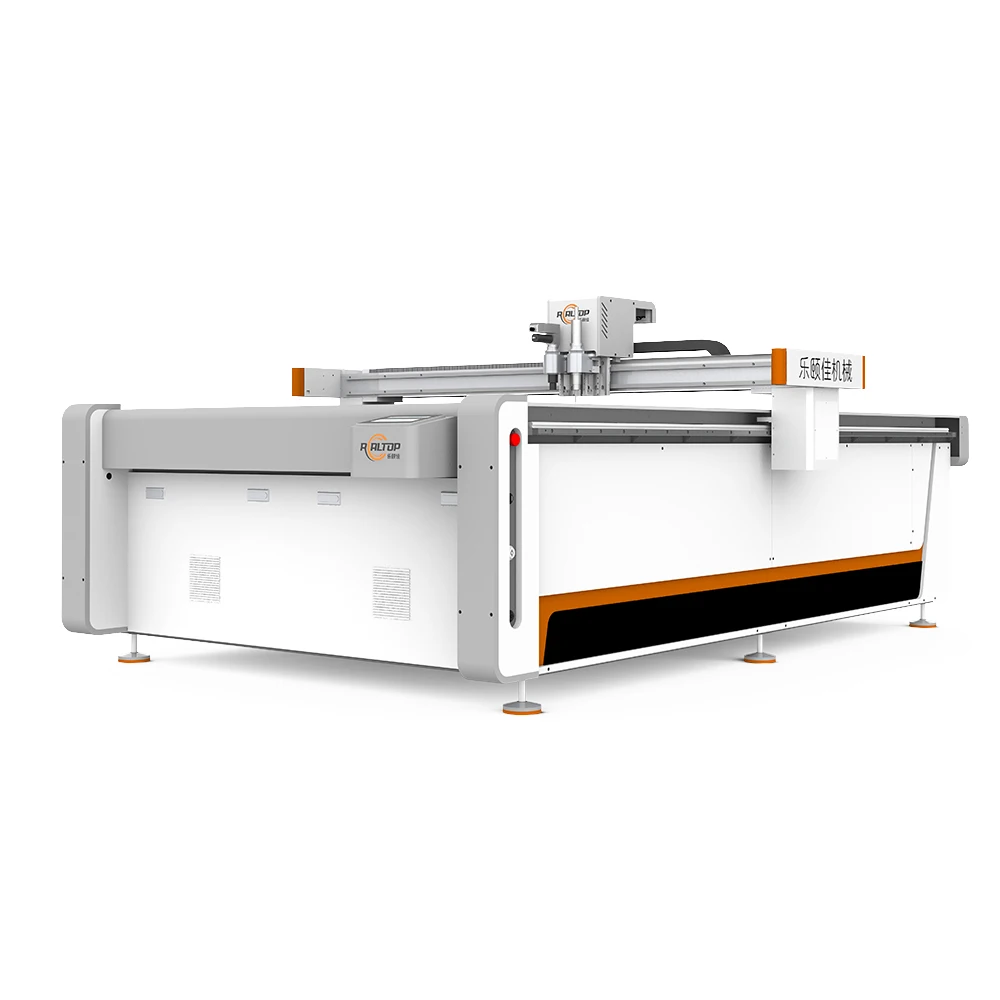
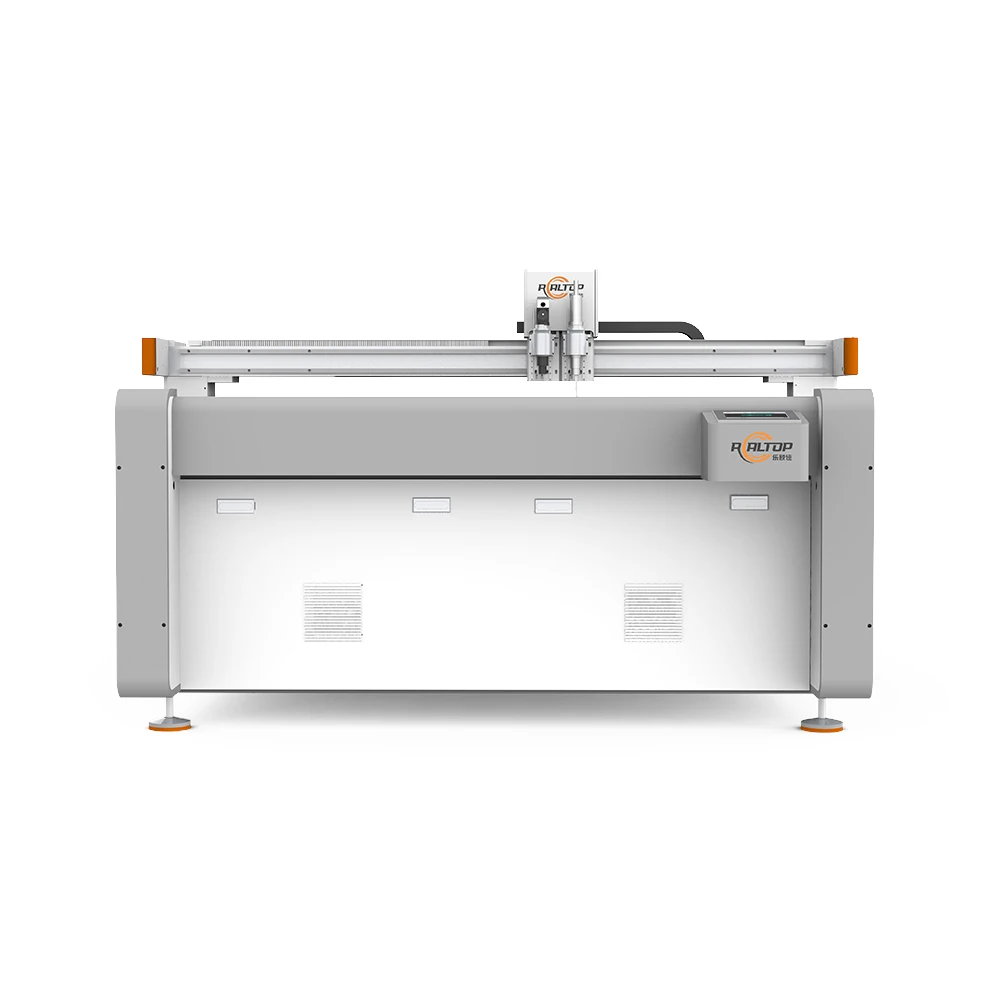
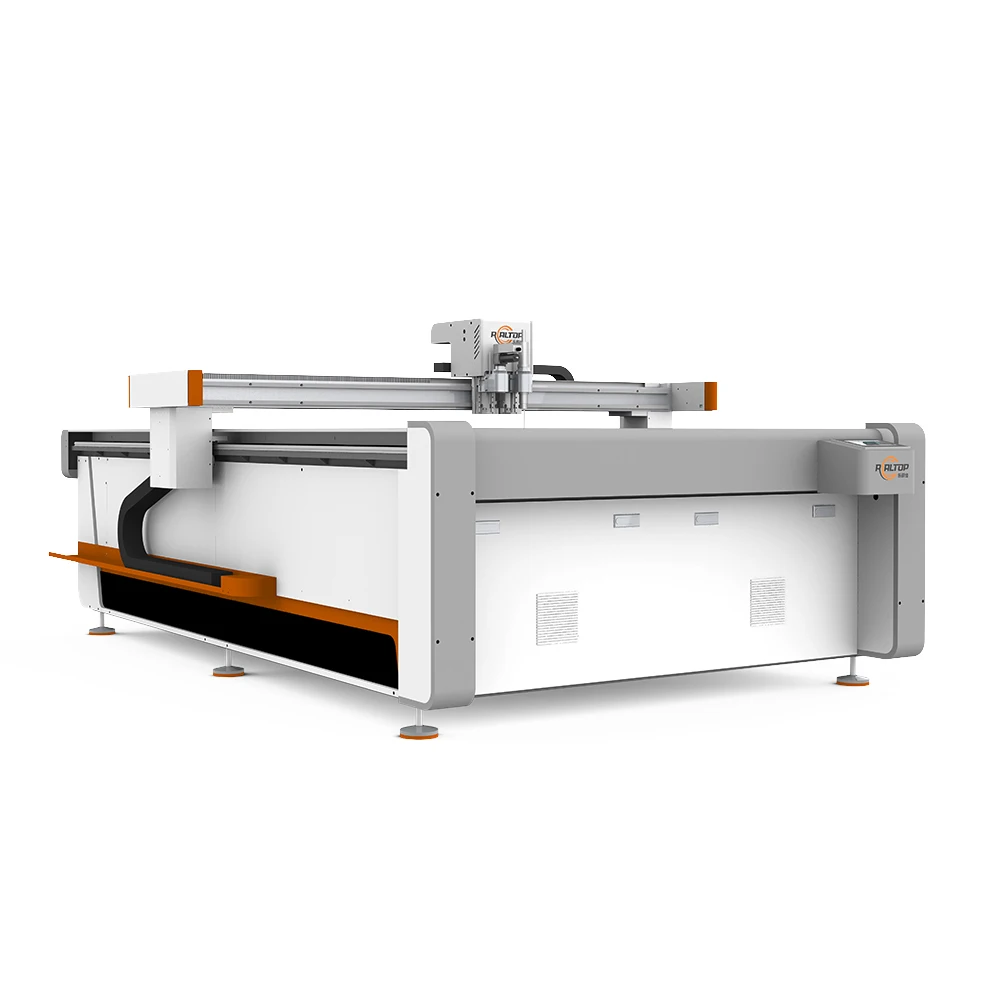
| Product Type | CNC Oscillating Knife Digital Cutting Machine for Carton & Packaging |
| Working Area | 1600×2500 mm |
| Tool Head Options | Oscillating knife, Driven rotary knife, Creasing wheel, Kiss cutting tool, Pneumatic knife, Milling tool, V-groove knife |
| Cutting Speed | 0–1500 mm/s |
| Cutting Thickness | ≤ 40 mm (basis to be confirmed by material density and type) |
| Positioning Accuracy | ±0.1 mm |
| Vacuum Pump | 9 kW |
| Vacuum Table | Aluminum bellows vacuum table |
| Voltage Options | 110V / 220V / 380V (frequency to be confirmed: 50Hz/60Hz) |
| Control System | PLC control panel with display |
| Software & File Formats | PLT, DXF, AI, PDF; dedicated packaging box structure design software included |
| Servo Drive Options | Panasonic, Delta, Dorna |
| Safety Device | Infrared sensor device and emergency stop device |
| Machine Dimensions (L×W×H) | 3300×2100×1350 mm |
| Language Options | English, Russian, Italian, Chinese; special languages customizable |
| Assembly State | Fully assembled (source value — verify against manufacturer catalog) |
| Certification | CE (referenced in Certifications section) |
Application Suitability
| Application | Material or Output |
|---|---|
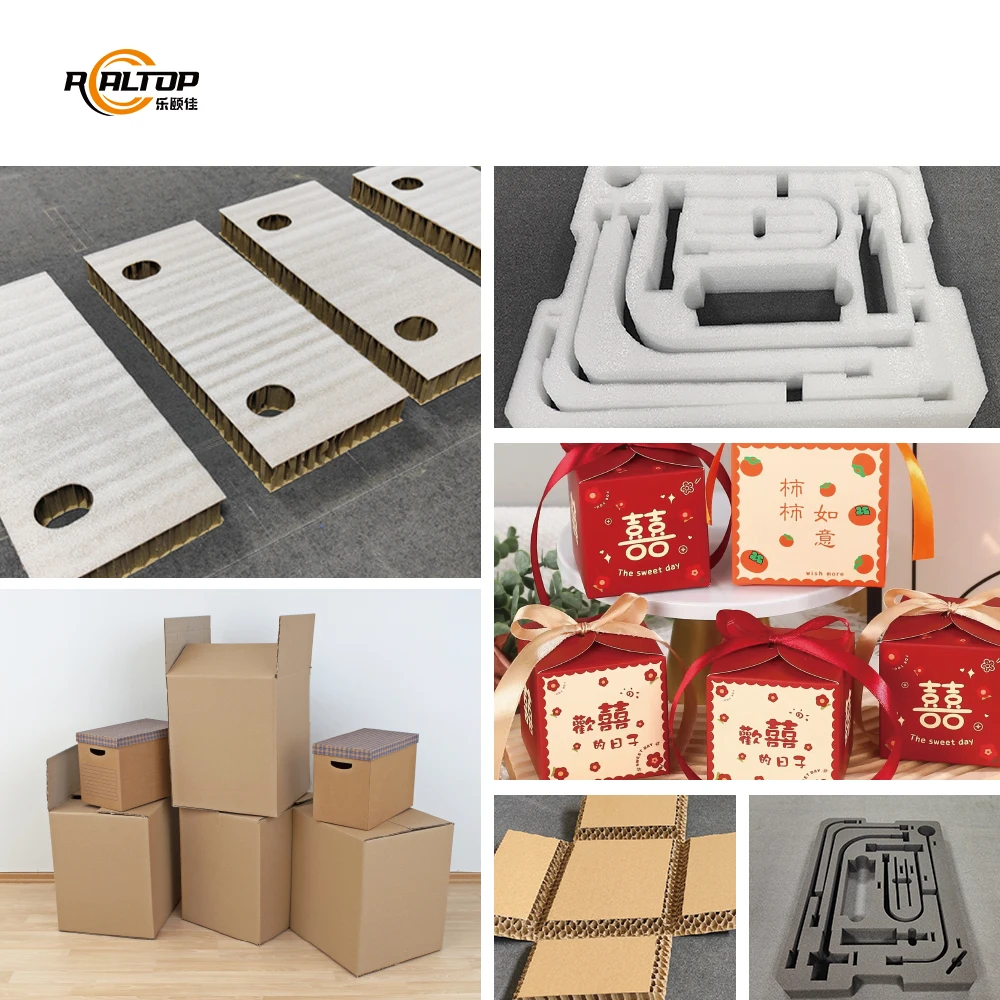
| Packaging sample making | Corrugated cardboard (E-flute, B-flute, BC-flute), greyboard, cardstock |
| Carton box prototyping | Art paper, specialty paper, adhesive-backed materials |
| Short-run packaging production | EVA foam, EPE foam, PU foam inserts and cushioning |
| Display and signage cutting | Foam board, PVC, PET thin plastic sheets |
| Protective insert fabrication | Rubber mats, velvet/fleece fabric, non-woven fabric |
| Leather goods sample cutting | Leather, synthetic leather, composite materials |
Why the Thickness Specification Matters More Than the Working Area
A packaging producer specifies a flatbed cutter by table size alone, only to discover the oscillating knife cannot penetrate their actual board grade at production speed.
Cutting depth is a function of material density, not just thickness — and the knife must be matched to both.
I spent years on the assembly floor in Jinan before moving into technical sales across Africa and South Asia. One job in Nigeria stands out: a carton sample maker ordered a standard vibratory knife setup for corrugated board, then revealed on commissioning day that most of their work was high-density greyboard. The knife head could not hold an edge through the material, leaving ragged cuts and crushed fibres. The machine went back to the factory for a spindle and tool holder swap. Since that project, I never quote a CNC oscillating knife cutting machine for sale without first confirming the buyer’s heaviest daily material, its actual density, and the fold-line depth required for creasing [NEED_CITE: material density and knife oscillation frequency matching for clean edge quality].
Matching the Tool Head to the Packaging Substrate
Seven interchangeable tool heads are available for this platform: oscillating knife, driven rotary knife, creasing wheel, kiss cutting tool, pneumatic knife, milling tool, and V-groove knife. Each addresses a different substrate behaviour. Corrugated flutes compress under drag knives, so an oscillating knife with adjustable stroke frequency slices through E-flute and BC-flute without crushing the internal structure. For solid greyboard or multi-layer cardstock, a pneumatic knife delivers the downward force needed to penetrate dense fibre without delaminating the surface ply.
Fold Lines, Crease Depth and Structural Integrity
The creasing wheel attachment produces the scored fold lines that define carton structural performance. Crease depth must be precise: too shallow and the board cracks at the fold, too deep and the flute structure collapses. On this CNC oscillating knife cutting machine for sale, the creasing wheel sits on the same tool carriage as the cutting knife, allowing a single file to drive both cut paths and crease paths in one pass. The dedicated packaging box structure design software exports both operations from a single DXF or AI file, eliminating the registration errors that occur when cutting and creasing happen on separate machines [NEED_CITE: crease-to-cut registration tolerance in digital carton sample making].
Reading the Specification Sheet Beyond the Headline Numbers
The 1600×2500 mm working area accommodates full-size packaging sheets, but the aluminum bellows vacuum table is what actually holds those sheets flat during cutting. Corrugated board warps with humidity changes, and uneven surfaces cause the knife to skip or the material to shift. The 9 kW vacuum pump generates sufficient hold-down force across the entire table surface, though zoning configuration should be confirmed for buyers who primarily cut small-format inserts or nested carton blanks. The ±0.1 mm positioning accuracy, driven by selectable servo systems from Panasonic, Delta or Dorna, keeps crease lines aligned with printed graphics — a requirement for any packaging that goes directly to shelf without additional die-cutting.
The Cost of Skipping the Material Sample Test
When a buyer orders without sending a material sample for test cutting, the most common consequence is tool head mismatch. A drag knife specified for thin cardstock will tear through foam board. An oscillating knife set to a stroke frequency optimised for corrugated will leave visible chatter marks on leather or synthetic leather. These issues surface only after the machine arrives and production begins, turning a commissioning visit into a troubleshooting exercise. Vacuum table zoning is another frequent gap: a full-sheet zone works fine for A1-size boards but leaves small gasket or insert pieces lifting off the table mid-cut, producing dimensional drift and wasted material [NEED_CITE: vacuum table zoning requirements for small-format digital cutting].
Why Buyers Source This Range Here
In-house design covers both oscillating knife and laser cutting technologies, so a packaging producer can evaluate which method suits each material in their product mix rather than forcing one process across every substrate. Tool head and table configurations are specified per material type and production volume before the order is placed. The dedicated packaging software confirms compatibility with the buyer’s existing PLT, DXF, AI and PDF files before commitment. Voltage, control language and plug type are verified against the destination market’s electrical standards. Sample cutting on the buyer’s own material is conducted before shipment, with a report documenting edge quality, crease depth and dimensional accuracy. The factory test record travels with the machine, giving the buyer a documented baseline for commissioning.
Documentation & Verification
- Machine specification sheet confirming working area, tool head list and vacuum configuration
- Sample cutting report on the buyer’s own board grade and foam density before dispatch
- Electrical schematic and voltage confirmation matching the destination market supply
- Software licence and file format compatibility note for PLT, DXF, AI and PDF workflows
- CE declaration and factory test record documenting positioning accuracy and cut quality
Installation, Commissioning & Support
- Fully assembled delivery requires a level concrete floor with clearance for the 3300×2100×1350 mm machine envelope
- Dedicated electrical circuit matching confirmed voltage (110V/220V/380V) with appropriate breaker rating for the 9 kW vacuum pump
- PLC control panel configured to buyer’s selected language before commissioning begins
- First-run calibration of oscillating knife stroke frequency and creasing wheel depth on buyer’s production material
- Operator training covering tool head changeover, vacuum table zoning adjustment and software nesting workflow
- Spare parts list covering knife blades, creasing wheels and vacuum table seals for initial operational period
What to Include in Your Enquiry
Send the material types you cut most frequently, with actual thickness and density values for your heaviest board grade. Confirm your daily sheet volume and the maximum sheet size you need to process in a single loading. Specify your workshop voltage and frequency, and note the control language your operators require. If you run existing packaging design files, attach a sample DXF or AI file so software compatibility can be verified before quotation.
Frequently Asked Questions
Q: Oscillating knife or CO2 laser — which suits corrugated and foam packaging materials?
A: Oscillating knife cuts corrugated board and foam without burning or sealing the edge, which matters when the cut surface is visible or must accept adhesive. CO2 laser seals synthetic edges and handles intricate contour work on thinner materials but produces burn marks on uncoated board. The choice depends on whether edge appearance and downstream gluing are part of your packaging workflow.
Q: How do I select the right working area and tool head combination?
A: Start with your largest sheet size and your heaviest material grade. The 1600×2500 mm table covers standard packaging sheets, but the tool head selection — oscillating knife for corrugated, pneumatic knife for dense greyboard, creasing wheel for fold lines — must match the substrate. Daily volume determines whether single-head or multi-head configuration is appropriate.
Q: What does the ≤ 40 mm cutting thickness specification actually cover?
A: The thickness limit depends on material density, not just caliper measurement. Low-density EPE foam at 40 mm cuts cleanly with an oscillating knife, while high-density greyboard at the same thickness requires a pneumatic knife and reduced cutting speed. Always confirm the actual material and density before relying on the headline thickness figure.
Q: Will the packaging software work with my existing design files?
A: The included packaging box structure design software imports PLT, DXF, AI and PDF formats. Compatibility is confirmed before order by testing your actual production files through the nesting and tool-path generation workflow, ensuring crease lines, cut paths and kiss-cut operations translate correctly from your current design environment.
Q: Where do carton sample cutters fit relative to large-format flatbed digital cutting tables?
A: Carton sample cutters prioritise crease-and-cut accuracy for prototyping and short-run packaging, typically running mixed material grades in small batches. Large-format flatbed tables are configured for higher daily volume on a narrower material range, with conveyor-fed systems and automated nesting for continuous production runs.
Material-Matched Configuration — Every oscillating knife and laser system in this catalogue is configured around the buyer’s actual sheet stock, thickness and fold-line requirement rather than a default working area.
Technical Specifications
| Parameter | Value |
|---|---|
| Product Type | CNC Oscillating Knife Digital Cutting Machine for Carton & Packaging |
| Working Area | 1600×2500 mm |
| Tool Head Options | Oscillating knife, Driven rotary knife, Creasing wheel, Kiss cutting tool, Pneumatic knife, Milling tool, V-groove knife |
| Cutting Speed | 0–1500 mm/s |
| Cutting Thickness | ≤ 40 mm (basis to be confirmed by material density and type) |
| Positioning Accuracy | ±0.1 mm |
| Vacuum Pump | 9 kW |
| Vacuum Table | Aluminum bellows vacuum table |
| Voltage Options | 110V / 220V / 380V (frequency to be confirmed: 50Hz/60Hz) |
| Control System | PLC control panel with display |
| Software & File Formats | PLT, DXF, AI, PDF; dedicated packaging box structure design software included |
| Servo Drive Options | Panasonic, Delta, Dorna |
| Safety Device | Infrared sensor device and emergency stop device |
| Machine Dimensions (L×W×H) | 3300×2100×1350 mm |
| Language Options | English, Russian, Italian, Chinese; special languages customizable |
| Assembly State | Fully assembled (source value — verify against manufacturer catalog) |
| Certification | CE (referenced in Certifications section) |
Application Suitability
| Application | Material or Output |
|---|---|
| Packaging sample making | Corrugated cardboard (E-flute, B-flute, BC-flute), greyboard, cardstock |
| Carton box prototyping | Art paper, specialty paper, adhesive-backed materials |
| Short-run packaging production | EVA foam, EPE foam, PU foam inserts and cushioning |
| Display and signage cutting | Foam board, PVC, PET thin plastic sheets |
| Protective insert fabrication | Rubber mats, velvet/fleece fabric, non-woven fabric |
| Leather goods sample cutting | Leather, synthetic leather, composite materials |
Why the Thickness Specification Matters More Than the Working Area
A packaging producer specifies a flatbed cutter by table size alone, only to discover the oscillating knife cannot penetrate their actual board grade at production speed.
Cutting depth is a function of material density, not just thickness — and the knife must be matched to both.
I spent years on the assembly floor in Jinan before moving into technical sales across Africa and South Asia. One job in Nigeria stands out: a carton sample maker ordered a standard vibratory knife setup for corrugated board, then revealed on commissioning day that most of their work was high-density greyboard. The knife head could not hold an edge through the material, leaving ragged cuts and crushed fibres. The machine went back to the factory for a spindle and tool holder swap. Since that project, I never quote a CNC oscillating knife cutting machine for sale without first confirming the buyer’s heaviest daily material, its actual density, and the fold-line depth required for creasing [NEED_CITE: material density and knife oscillation frequency matching for clean edge quality].
Matching the Tool Head to the Packaging Substrate
Seven interchangeable tool heads are available for this platform: oscillating knife, driven rotary knife, creasing wheel, kiss cutting tool, pneumatic knife, milling tool, and V-groove knife. Each addresses a different substrate behaviour. Corrugated flutes compress under drag knives, so an oscillating knife with adjustable stroke frequency slices through E-flute and BC-flute without crushing the internal structure. For solid greyboard or multi-layer cardstock, a pneumatic knife delivers the downward force needed to penetrate dense fibre without delaminating the surface ply.
Fold Lines, Crease Depth and Structural Integrity
The creasing wheel attachment produces the scored fold lines that define carton structural performance. Crease depth must be precise: too shallow and the board cracks at the fold, too deep and the flute structure collapses. On this CNC oscillating knife cutting machine for sale, the creasing wheel sits on the same tool carriage as the cutting knife, allowing a single file to drive both cut paths and crease paths in one pass. The dedicated packaging box structure design software exports both operations from a single DXF or AI file, eliminating the registration errors that occur when cutting and creasing happen on separate machines [NEED_CITE: crease-to-cut registration tolerance in digital carton sample making].
Reading the Specification Sheet Beyond the Headline Numbers
The 1600×2500 mm working area accommodates full-size packaging sheets, but the aluminum bellows vacuum table is what actually holds those sheets flat during cutting. Corrugated board warps with humidity changes, and uneven surfaces cause the knife to skip or the material to shift. The 9 kW vacuum pump generates sufficient hold-down force across the entire table surface, though zoning configuration should be confirmed for buyers who primarily cut small-format inserts or nested carton blanks. The ±0.1 mm positioning accuracy, driven by selectable servo systems from Panasonic, Delta or Dorna, keeps crease lines aligned with printed graphics — a requirement for any packaging that goes directly to shelf without additional die-cutting.
The Cost of Skipping the Material Sample Test
When a buyer orders without sending a material sample for test cutting, the most common consequence is tool head mismatch. A drag knife specified for thin cardstock will tear through foam board. An oscillating knife set to a stroke frequency optimised for corrugated will leave visible chatter marks on leather or synthetic leather. These issues surface only after the machine arrives and production begins, turning a commissioning visit into a troubleshooting exercise. Vacuum table zoning is another frequent gap: a full-sheet zone works fine for A1-size boards but leaves small gasket or insert pieces lifting off the table mid-cut, producing dimensional drift and wasted material [NEED_CITE: vacuum table zoning requirements for small-format digital cutting].
Why Buyers Source This Range Here
In-house design covers both oscillating knife and laser cutting technologies, so a packaging producer can evaluate which method suits each material in their product mix rather than forcing one process across every substrate. Tool head and table configurations are specified per material type and production volume before the order is placed. The dedicated packaging software confirms compatibility with the buyer’s existing PLT, DXF, AI and PDF files before commitment. Voltage, control language and plug type are verified against the destination market’s electrical standards. Sample cutting on the buyer’s own material is conducted before shipment, with a report documenting edge quality, crease depth and dimensional accuracy. The factory test record travels with the machine, giving the buyer a documented baseline for commissioning.
Documentation & Verification
- Machine specification sheet confirming working area, tool head list and vacuum configuration
- Sample cutting report on the buyer’s own board grade and foam density before dispatch
- Electrical schematic and voltage confirmation matching the destination market supply
- Software licence and file format compatibility note for PLT, DXF, AI and PDF workflows
- CE declaration and factory test record documenting positioning accuracy and cut quality
Installation, Commissioning & Support
- Fully assembled delivery requires a level concrete floor with clearance for the 3300×2100×1350 mm machine envelope
- Dedicated electrical circuit matching confirmed voltage (110V/220V/380V) with appropriate breaker rating for the 9 kW vacuum pump
- PLC control panel configured to buyer’s selected language before commissioning begins
- First-run calibration of oscillating knife stroke frequency and creasing wheel depth on buyer’s production material
- Operator training covering tool head changeover, vacuum table zoning adjustment and software nesting workflow
- Spare parts list covering knife blades, creasing wheels and vacuum table seals for initial operational period
What to Include in Your Enquiry
Send the material types you cut most frequently, with actual thickness and density values for your heaviest board grade. Confirm your daily sheet volume and the maximum sheet size you need to process in a single loading. Specify your workshop voltage and frequency, and note the control language your operators require. If you run existing packaging design files, attach a sample DXF or AI file so software compatibility can be verified before quotation.
Frequently Asked Questions
Q: Oscillating knife or CO2 laser — which suits corrugated and foam packaging materials?
A: Oscillating knife cuts corrugated board and foam without burning or sealing the edge, which matters when the cut surface is visible or must accept adhesive. CO2 laser seals synthetic edges and handles intricate contour work on thinner materials but produces burn marks on uncoated board. The choice depends on whether edge appearance and downstream gluing are part of your packaging workflow.
Q: How do I select the right working area and tool head combination?
A: Start with your largest sheet size and your heaviest material grade. The 1600×2500 mm table covers standard packaging sheets, but the tool head selection — oscillating knife for corrugated, pneumatic knife for dense greyboard, creasing wheel for fold lines — must match the substrate. Daily volume determines whether single-head or multi-head configuration is appropriate.
Q: What does the ≤ 40 mm cutting thickness specification actually cover?
A: The thickness limit depends on material density, not just caliper measurement. Low-density EPE foam at 40 mm cuts cleanly with an oscillating knife, while high-density greyboard at the same thickness requires a pneumatic knife and reduced cutting speed. Always confirm the actual material and density before relying on the headline thickness figure.
Q: Will the packaging software work with my existing design files?
A: The included packaging box structure design software imports PLT, DXF, AI and PDF formats. Compatibility is confirmed before order by testing your actual production files through the nesting and tool-path generation workflow, ensuring crease lines, cut paths and kiss-cut operations translate correctly from your current design environment.
Q: Where do carton sample cutters fit relative to large-format flatbed digital cutting tables?
A: Carton sample cutters prioritise crease-and-cut accuracy for prototyping and short-run packaging, typically running mixed material grades in small batches. Large-format flatbed tables are configured for higher daily volume on a narrower material range, with conveyor-fed systems and automated nesting for continuous production runs.










商品评价
There are no reviews yet.