

Fast Delivery
Quick, reliable shipping to any location.

Free & easy returns
Return this item by mail or in store within 90 days for a full refund.
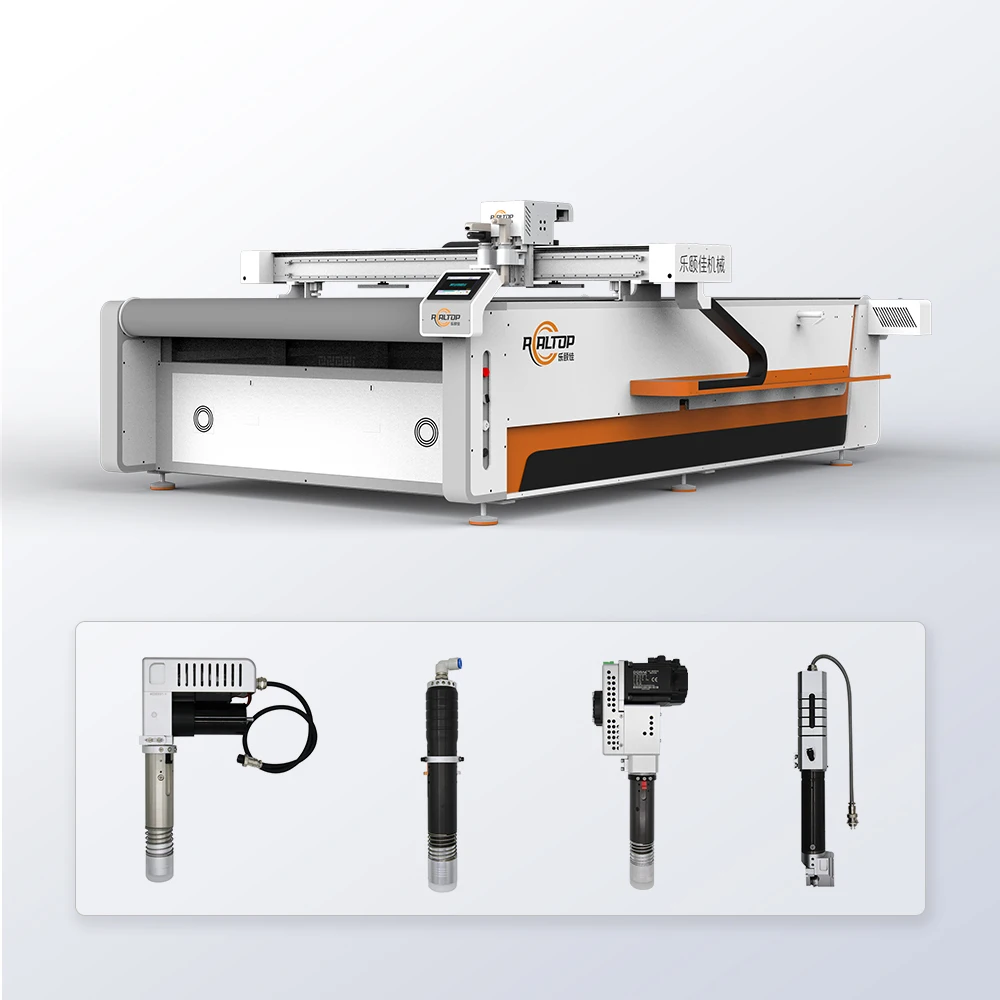
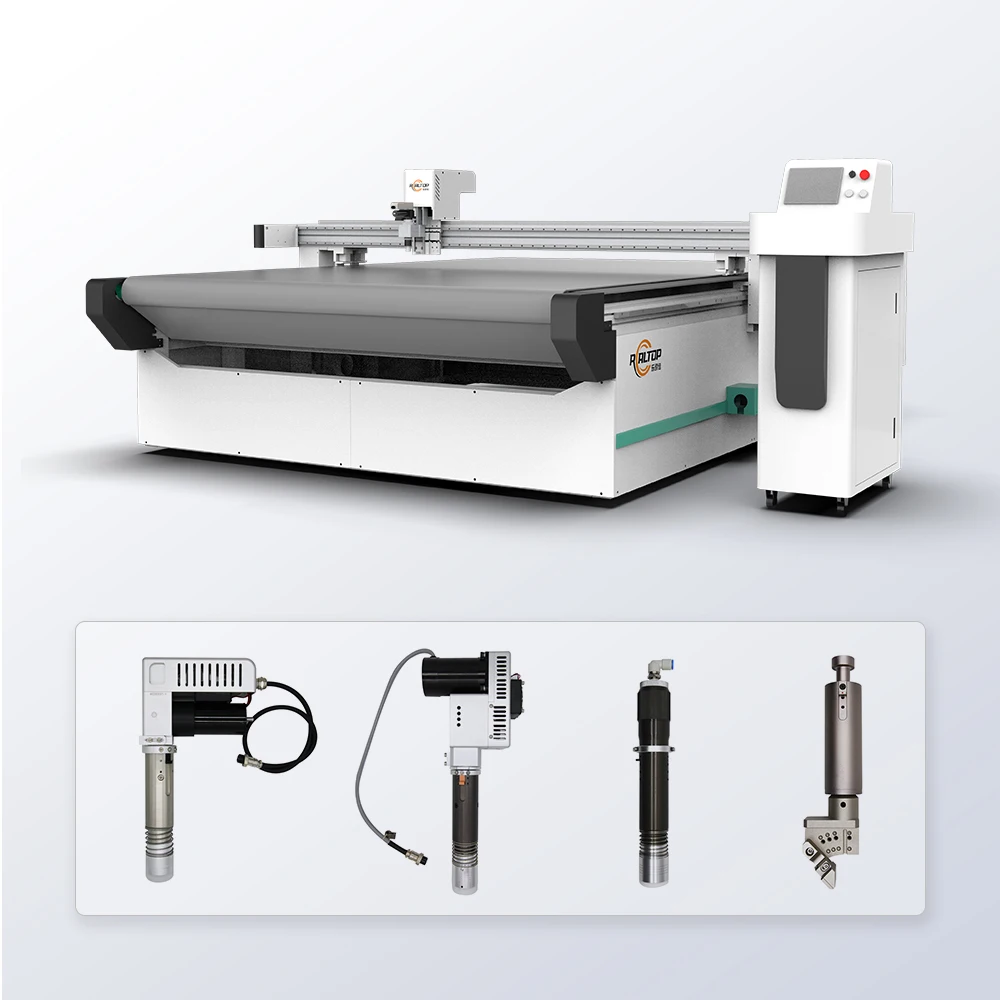
Tool Head Flexibility — Every knife and laser option is specified per material test, ensuring the cutting method fits the production job rather than forcing one approach.
Technical Specifications
| Parameter | Value |
|---|---|
| Product Type | CNC Oscillating Knife Cutting Machine |
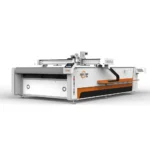
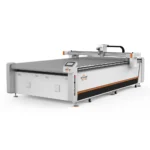
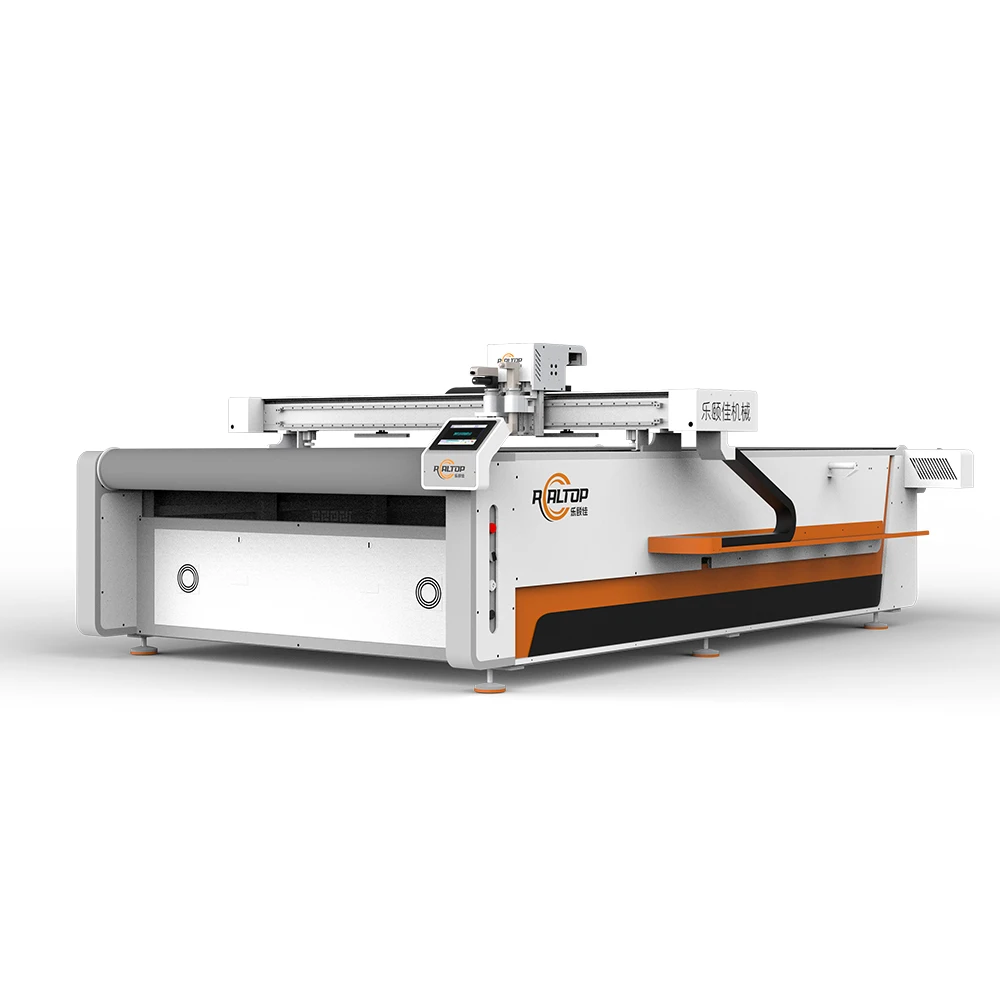
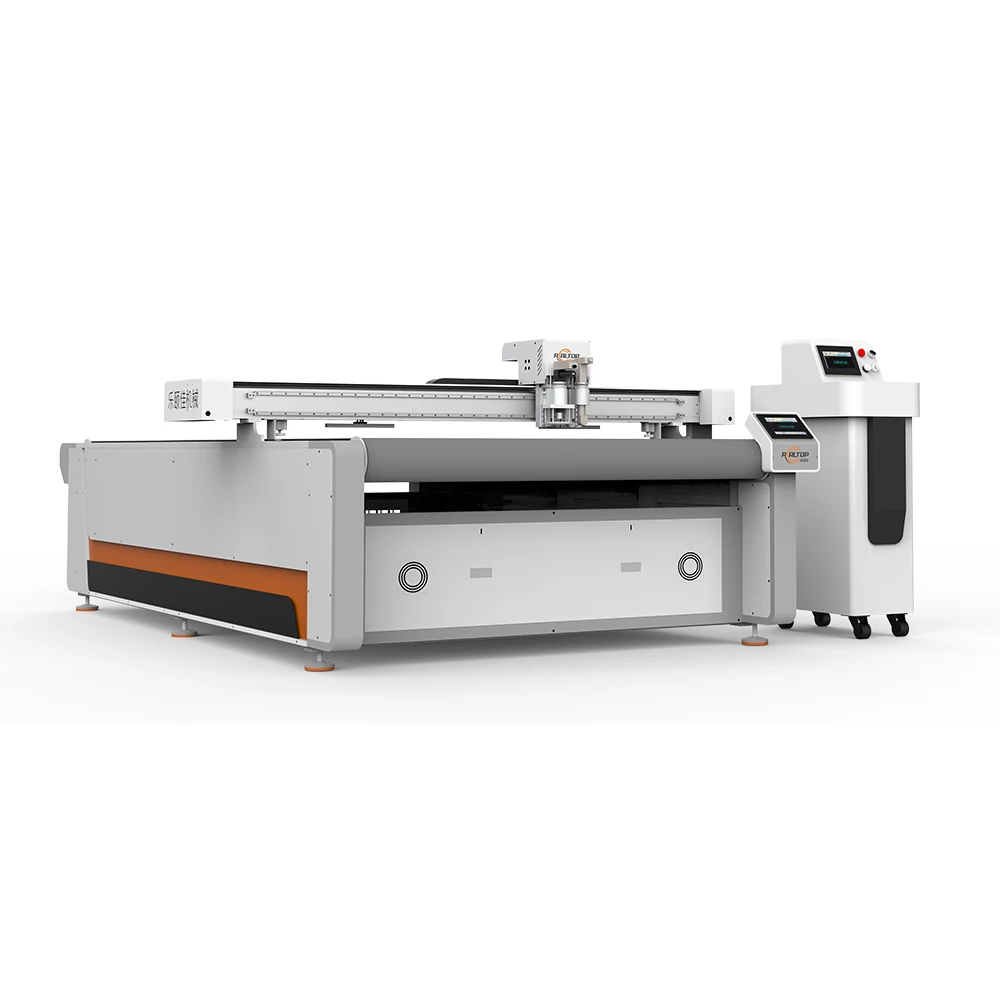
| Working Area | 1600 × 2500 mm |
| Overall Dimensions | 3450 × 2300 × 1250 mm |
| Rated Power | 9 kW |
| Voltage | 380V ±10% |
| Table Options | Flat working table / Auto feeding table (conveyor) |
| Tool Head Options | Oscillating knife, pneumatic knife, high-power vibrating knife, circular knife, V-cutting knife, drag knife, creasing wheel, dotted line knife, punching tool, brush |
| Visual Positioning | Small CCD camera mark point, panoramic camera, projection positioning |
| Translational Velocity | 800 – 2000 mm/s |
| Cutting Speed | 200 – 800 mm/s (varies by material; basis to be confirmed) |
| Cutting Thickness | ≤ 100 mm (material dependent) |
| Repeatability | ≤ 0.1 mm |
| Transmission | Digital servo motor, linear guide, synchronous belt, ball screw |
| Servo Motor | Delta (China) / Panasonic (Japan) |
| Vacuum Pump | 7.5 kW, aviation aluminum shell, built-in silencer sponge |
| Vacuum Table | Magnesium-aluminum alloy, fluorocarbon PVDF spray, anodic/hard oxidation |
| Instruction System | HP-GL compatible |
| File Formats | PLT, DXF, AI |
| Safety Devices | Infrared blocking, beam anti-collision sensors, emergency stop with resume |
| Control Panel | Touch screen, multi-language (EN/RU/IT/ZH, customizable) |
| Frame | Thick-walled seamless steel, high-temperature tempered, CNC machined |
| Assembly | Fully assembled (split box platform available for transport) |
Application Suitability
| Application | Material or Output |
|---|---|
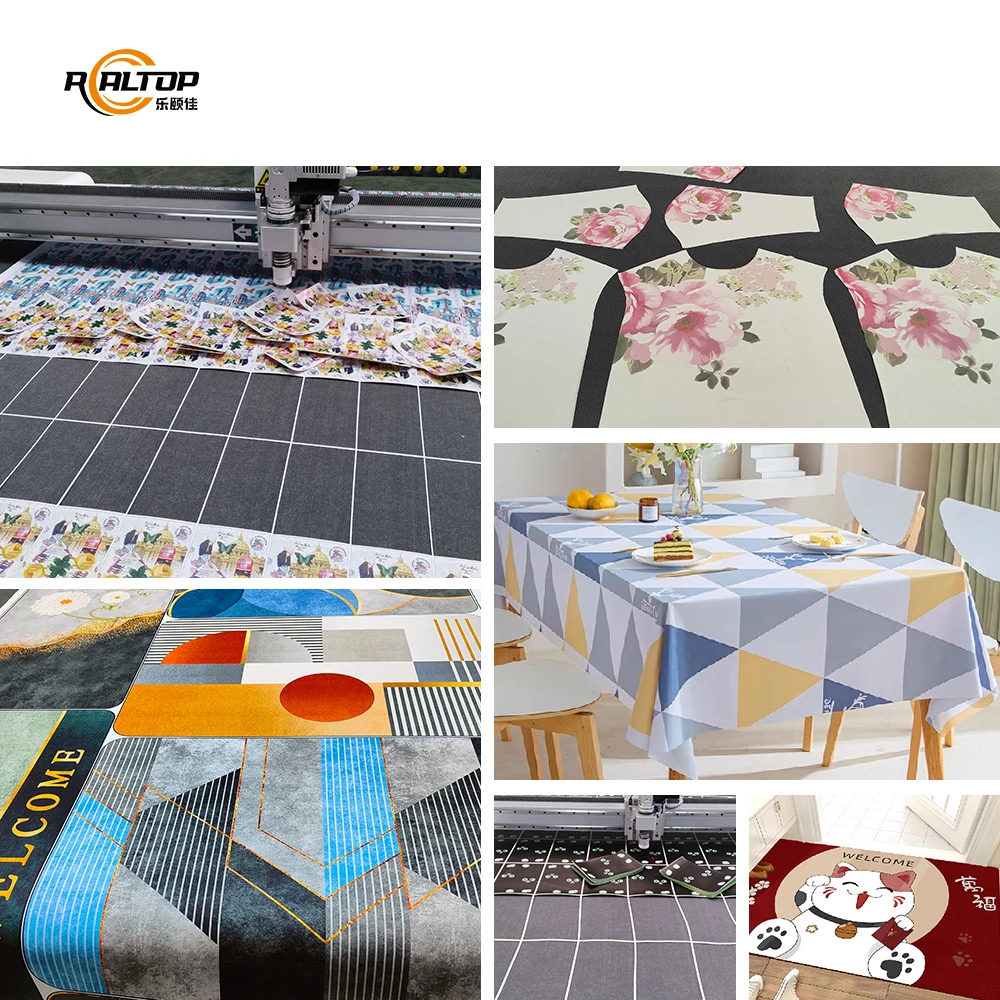
| Garment and footwear cutting | Woven fabric, non-woven, denim, technical textiles |
| Bag and luggage production | Genuine leather, PU, PVC, synthetic leather |
| Automotive interior trim | Carpet, floor mats, seat upholstery, headliner fabric |
| Soft home furnishing | Sofa fabric, curtain material, upholstery composites |
| Multi-layer apparel production | Stacked woven and knit fabrics for high-volume cutting |
| Composite and foam fabrication | Sponge, PU, EVA, XPE, PTFE, ETFE |
| Gasket and sealing pad | PTFE, rubber, fiber-reinforced sheet |
| Packaging sample making | Corrugated cardboard, folding carton board |
Why the Material Test Must Come Before the Purchase Order
A machine quoted on working area alone often fails when the real production material hits the table.
I have watched fabric producers uncrate a new CNC oscillating knife cutting table, load their standard cotton blend, and find the edge is clean — until they switch to the coated canvas they actually run eight hours a day. The coating melts under friction, the oscillating knife drags, and the edge frays. What looked like a finished deal turns into weeks of swapping knife heads and adjusting stroke frequency. [NEED_CITE: coated textile cutting behavior under oscillating and circular knife systems] This happens more often than suppliers admit, and the only reliable way to prevent it is to cut the buyer’s actual roll goods before the contract is signed. A CNC cutting machine manufacturer who insists on a material sample is protecting both sides from a costly mismatch.
Knife Versus Laser: Matching the Method to the Textile
The full range sits under one roof, so a buyer producing denim workwear can compare an oscillating knife cutting through twelve plies against a CO2 laser sealing the edge of a synthetic panel in a single pass. Neither method is universally better; the choice depends on fiber content, ply count, and whether the downstream process tolerates a sealed edge. Having both technologies available from the same CNC cutting machine manufacturer means the decision is driven by the fabric, not by the supplier’s limited catalogue.
Continuous-Roll Feeding for High-Volume Apparel Lines
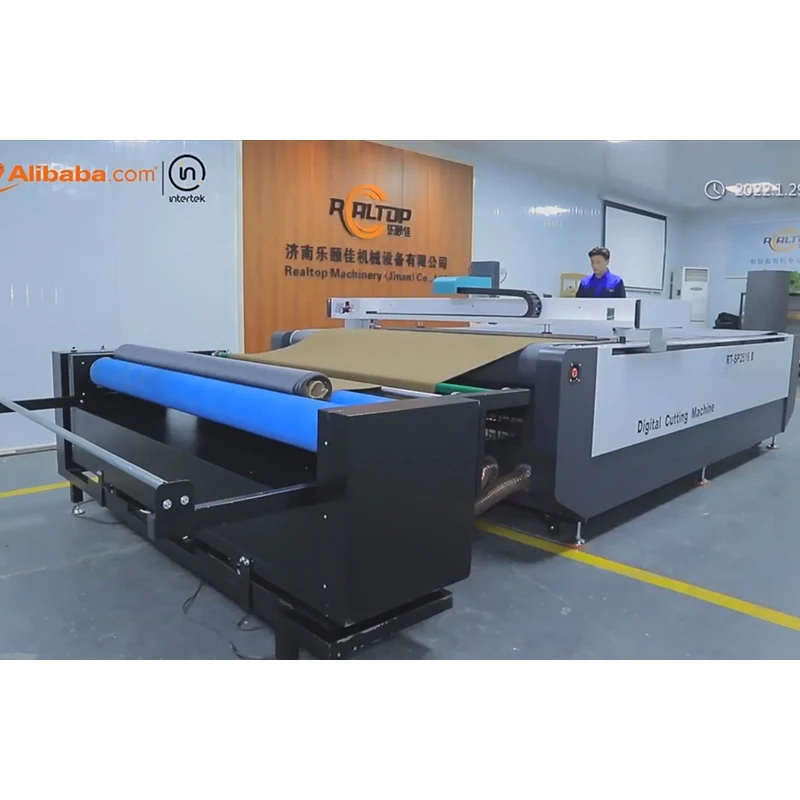
The RT-S2516 conveyor variant feeds fabric directly from the roll across the 1600 × 2500 mm table, advancing the cut nest forward while the operator unloads finished pieces at the front. This continuous workflow suits multi-layer knit and woven fabric runs where stopping to reposition sheets would consume a large share of the shift. The conveyor belt tension and vacuum hold-down must be tuned to the specific fabric weight; lightweight chiffon and heavy denim behave very differently under the same suction setting. [NEED_CITE: conveyor feeding tension standards for woven versus knit textiles]
Reading the Specs That Actually Affect Cut Quality
The 7.5 kW vacuum pump with aviation aluminum shell and internal silencer sponge is not just a noise-reduction measure — it maintains steady suction across the magnesium-aluminum table surface, which is critical when cutting small pattern pieces that tend to lift under knife vibration. The fluorocarbon PVDF powder coating and anodic oxidation keep the table flat and resistant to adhesive residue from backing papers. Repeatability of ≤0.1 mm matters most in nested garment panels where a millimeter drift over a long cut path throws off sleeve-to-body alignment. The choice between Delta and Panasonic servo motors affects long-term positional consistency rather than peak speed; both meet the specification, but their maintenance intervals and parts availability differ by region.
The Hidden Cost of Skipping Tool Head Configuration
A buyer who accepts a default oscillating knife head for all fabric types will eventually encounter materials that need a circular knife for clean single-ply cuts or a pneumatic knife for thick composite stacks. Running the wrong head produces frayed edges, crushed foam layers, or incomplete cuts that require secondary trimming. [NEED_CITE: tool head selection impact on edge quality across textile types] These defects often surface weeks after installation, when the factory is already committed to a production schedule and cannot afford downtime for reconfiguration.
Why Source the Full Range From One Manufacturer
In-house design covers both knife and laser platforms, so a buyer can evaluate cutting methods side by side on the same material. Tool head and table configuration are specified per fabric type and daily volume rather than sold as a fixed package. CCD camera and panoramic vision options address printed contour work that generic machines cannot track at production speed. Software compatibility — PLT, DXF, AI import and nesting workflows — is confirmed against the buyer’s existing system before the order goes to production. Sample cutting on the buyer’s own roll goods provides a physical cut-quality record, removing guesswork from the purchase decision.
Documentation & Verification
- Machine specification sheet listing every tool head and table option selected for your material
- Electrical schematic confirming 380V ±10% rating and plug type for your facility
- Sample cutting report with edge photographs taken on your submitted fabric roll
- Software licence note confirming PLT, DXF, AI import and nesting compatibility
- Factory test record documenting repeatability and speed on your material before crating
Installation, Commissioning & Support
- Floor space planning for 3450 × 2300 mm footprint with clearance for conveyor feed and unload
- Dedicated 380V circuit sized for 9 kW rated draw plus 7.5 kW vacuum pump startup surge
- Split box platform option when container door height restricts fully assembled delivery
- First-run parameter tuning on your fabric, including vacuum zoning and knife stroke frequency
- Touch screen language set to operator preference before trainer departure
- Spare knife blades and vacuum seals stocked based on your daily cutting volume
Requesting an Accurate Configuration
Send a roll sample of the actual fabric, including any coating or backing, along with the maximum ply count you plan to cut and your target daily output in linear meters. Specify the local voltage and frequency, the control language your operators need, and whether your workflow requires the flat table or conveyor-fed model.
Frequently Asked Questions
Q: How do I decide between knife cutting and laser cutting for my fabric?
A: Knife cutting suits multi-layer woven and knit fabrics where a clean, unsealed edge is required for sewing. Laser cutting seals synthetic edges automatically, preventing fraying on materials like polyester or nylon. The choice depends on fiber content, ply count, and whether your downstream sewing process accepts a heat-sealed edge. We test both methods on your submitted sample before recommending one.
Q: Which tool head works best for coated or laminated textiles?
A: Coated fabrics often require a circular knife or high-power vibrating knife rather than a standard oscillating head, because friction from oscillation can soften the coating and cause edge drag. We run your coated sample with multiple heads and document edge condition at production speed so the correct tool is configured before shipment.
Q: Can the software import my existing pattern files?
A: The control system accepts PLT, DXF, and AI formats and supports HP-GL compatible instruction sets. Before order confirmation, we test your actual file export through the nesting software to verify contour accuracy, kerf compensation, and marker placement. Any incompatibility is resolved before the machine enters production.
Q: What voltage and language options are available for export markets?
A: Standard configuration is 380V ±10%, but voltage and plug type are confirmed against your facility’s supply before production. The touch screen ships with English, Russian, Italian, or Chinese interface text, and special language packs can be loaded for other operator groups.
Q: How does the sample cutting process work before I commit?
A: You send a roll or sheet of your actual production material. We cut it using the recommended tool head and table configuration, then send you a sample cutting report with edge close-up photographs, measured cutting speed, and observed edge quality. You approve the result before the purchase order is finalized.










商品评价
There are no reviews yet.