


Fast Delivery
Quick, reliable shipping to any location.

Free & easy returns
Return this item by mail or in store within 90 days for a full refund.
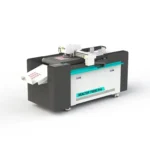
Configurable tool head selection — the RTT6080 and RTT6080 Pro ship with verified tool-to-material mapping, including CCD contour tracking confirmed on your printed stock before order placement.
Technical Specifications
| Parameter | Value |
|---|---|
| Model | RTT6080 / RTT6080 Pro |
| Product Type | CNC Oscillating Knife Cutting Machine |
| Working Area | 600mm × 800mm |
| Tool Group | cutting tool, kiss cutting tool, creasing tool, CCD camera, high speed oscillating knife (Pro version) |
| Max Cutting Speed | 1500 mm/s (basis not stated in source — confirm material / thickness) |
| Cutting Thickness | ≤2mm (RTT6080); ≤5mm (RTT6080 Pro) (basis not stated in source — confirm material type) |
| Positioning Accuracy | 0.05mm |
| Supported File Formats | DXF, PLT, PDF, AI |
| Transfer Method | Ethernet port |
| Rated Power | 3.2kW |
| Voltage & Frequency | 220V / 380V, 50Hz |
| Standards | CE |
Application Suitability
| Application | Material or Output |
|---|---|
| Packaging sample making | Thin cardstock, corrugated board, carton mock-ups |
| Printed contour cutting | Vinyl graphics, labels, point-of-sale display sheets with printed registration marks |
| Gasket and seal prototyping | Non-asbestos fiber sheets, thin rubber, PTFE film |
| Short-run signage | Adhesive-backed films, thin foam board, magnetic sheet |
Why "Max Speed 1500 mm/s" Can Mislead a Buyer
The quoted cutting speed only becomes real when matched to your specific material density and thickness.
A high-speed oscillating knife moving at full velocity through thin vinyl behaves very differently than the same tool pushing through 5mm foam or dense gasket material. I have stood at trade show demos where a cutter sliced effortlessly through thin PVC at speed, then watched the same machine struggle with automotive leather of a different grain structure on the buyer’s first production day. Edge quality dropped, blade wear accelerated, and the production bottleneck shifted right to the cutting table. A CNC oscillating knife cutting machine manufacturer must specify the speed-to-material relationship honestly — otherwise the buyer inherits the problem [NEED_CITE: cutting speed versus material density interaction in oscillating knife systems].
How Tool Head Matching Changes the Cut
The RTT6080 series carries a multi-tool group rather than a single blade holder. The standard configuration includes a cutting tool, a kiss cutting tool, a creasing tool, and a CCD camera for printed mark recognition. The Pro version adds a high speed oscillating knife to that lineup. Each tool addresses a different failure mode: the oscillating knife handles fibrous and layered materials that a drag knife would tear; the creasing wheel scores fold lines without penetrating the sheet; the kiss cutting tool cuts through adhesive layers without damaging the release liner beneath. Selecting the wrong tool for the material is one of the most common reasons buyers report ragged edges after delivery.
CCD Recognition at Production Pace
The integrated CCD camera reads printed registration marks and adjusts the cut path in real time, which matters when pre-printed graphics must be contour-cut with tight registration. But camera tracking has limits depending on mark contrast, print quality, and the speed at which the head moves between marks. Before the machine ships, we run your printed sheets through the CCD system and document whether the camera holds position lock at the speeds your production volume requires. Skipping this step is how a CNC oscillating knife cutting machine manufacturer can promise contour accuracy on paper and deliver tracking errors on the shop floor [NEED_CITE: CCD camera mark detection tolerances in digital cutting systems].
Reading the Specs That Actually Matter
Positioning accuracy at 0.05mm means the cutting head deviates no more than fifty microns from its programmed path across the 600×800mm travel range. For label and gasket work where tolerances stack up across nested parts, this level of repeatability determines whether finished pieces assemble cleanly or require manual trimming. The cutting thickness split between the two configurations — ≤2mm for the RTT6080 and ≤5mm for the RTT6080 Pro — reflects the difference in oscillating knife stroke and motor torque between the standard and high-speed tool heads. Ethernet data transfer eliminates the unreliability of USB drives moving between office PCs and the shop floor, particularly in environments where dust and vibration corrupt removable media connections.
The Cost of Skipping Material Verification
A buyer who specifies a cutting table based on working area alone often discovers that the machine cannot handle the material thickness they actually run. A vacuum table with insufficient zoning fails to hold small nested parts flat, causing lift and blade deflection mid-cut. Software that cannot import the buyer’s existing DXF or AI files creates a bottleneck upstream of the machine itself. These are not warranty issues — they are specification gaps that surface only after the machine arrives and the first real production run begins [NEED_CITE: common specification mismatches in CNC knife cutting equipment procurement].
What Separates This Build from a Generic Flatbed
In-house design covering both knife and laser cutting means the RTT6080 was developed as a knife-first platform rather than a laser table adapted for blades. Tool head and table configuration is specified per material and production volume before the order is confirmed, not swapped after delivery. CCD camera positioning is validated on the buyer’s own printed stock with documented results. File format compatibility — DXF, PLT, PDF, AI — is tested against the buyer’s nesting software workflow before shipment. Voltage, plug type, and control language are confirmed for the destination market so the machine powers on correctly the day it is unpacked.
Documentation & Verification
- Machine specification sheet listing every configured tool head and table option
- Electrical schematic confirming 220V or 380V wiring and circuit protection
- Sample cutting report produced on your material with edge quality photographs
- Software licence and file format compatibility note for DXF, PLT, PDF, AI import
- Factory test record documenting positioning accuracy and CCD tracking performance
- CE declaration covering the complete machine assembly as shipped
Installation, Commissioning & Support
- Requires level floor space accommodating the 600×800mm working area plus operator clearance
- Dedicated circuit matching confirmed 220V or 380V, 50Hz at 3.2kW rated draw
- Ethernet connection to your network for direct file transfer from design stations
- First-run parameter setup including vacuum pressure tuning for your material type
- Operator training covering tool head changes, CCD calibration, and creasing wheel adjustment
- Spare blade and consumable list matched to your specific tool group configuration
What to Send with Your Inquiry
We need to know the material you cut, its thickness range, and the sheet size you feed. Share the file formats your design team exports and the nesting software you currently run. Confirm your facility voltage and frequency along with the control language your operators require. If you have printed contour work, send a sample sheet so we can validate CCD tracking before quoting the configuration.
Frequently Asked Questions
Q: Which tool head should I specify for thin cardstock versus adhesive-backed vinyl?
A: Cardstock sample making typically uses the standard cutting tool combined with the creasing wheel for fold lines. Adhesive-backed vinyl requires the kiss cutting tool to slice the face material without damaging the release liner beneath. The Pro version’s high-speed oscillating knife handles fibrous materials that a drag knife would tear. We confirm tool selection on your actual material samples before the order is finalized.
Q: What printed marks can the CCD camera reliably track at working speed?
A: The CCD camera reads high-contrast registration marks printed on the sheet surface. Reliability depends on mark size, print density, and the distance between marks on your layout. We run your printed files through the system before shipment and document whether tracking holds at production speed. Low-contrast or partially obscured marks may require file adjustment upstream.
Q: What material thickness can the RTT6080 and RTT6080 Pro actually handle?
A: The RTT6080 is rated for materials up to 2mm thick and the RTT6080 Pro extends to 5mm, but both figures depend on material density and composition. A 2mm silicone gasket sheet behaves differently from 2mm corrugated board under the same blade. We cut your specific material and record the result so the thickness rating applies to your production, not just a generic test sample.
Q: Can my existing DXF and AI files be imported without conversion?
A: The control system accepts DXF, PLT, PDF, and AI file formats directly. Before order confirmation, we import a sample of your production files and verify that layer structure, line weights, and cut-order sequencing translate correctly. If your nesting software outputs a non-standard DXF variant, we identify any mapping adjustments needed before the machine ships.
Q: Is the voltage and control language configurable for my local market?
A: The machine is available wired for 220V or 380V at 50Hz, and the control interface language is set before shipment. Confirming voltage with your facility electrician and specifying the operator language during the order process prevents delays at commissioning. We document the confirmed electrical specification in the machine schematic provided with your delivery.










商品评价
There are no reviews yet.