


Fast Delivery
Quick, reliable shipping to any location.

Free & easy returns
Return this item by mail or in store within 90 days for a full refund.
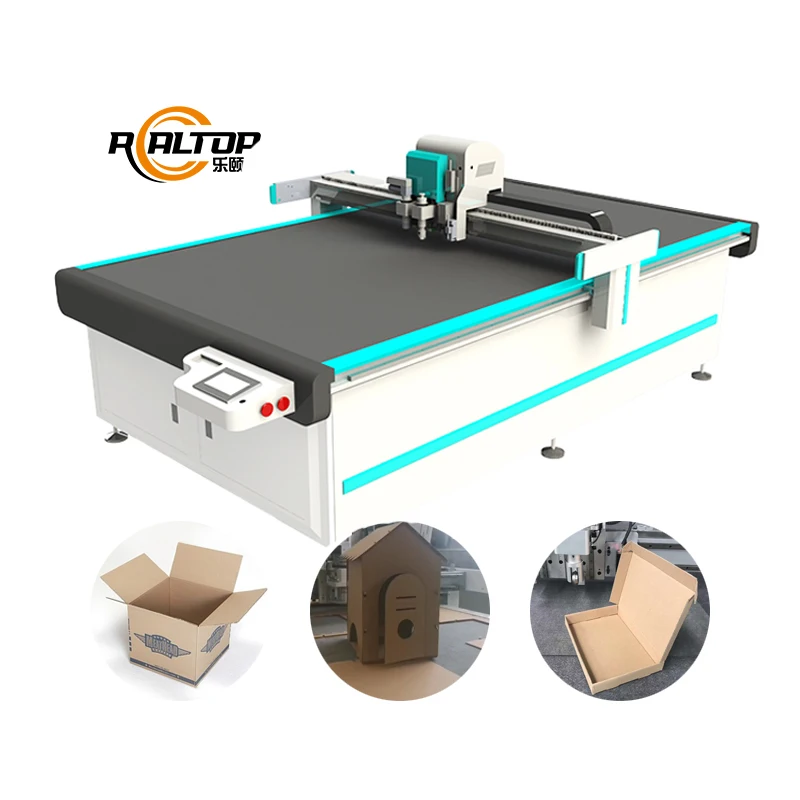
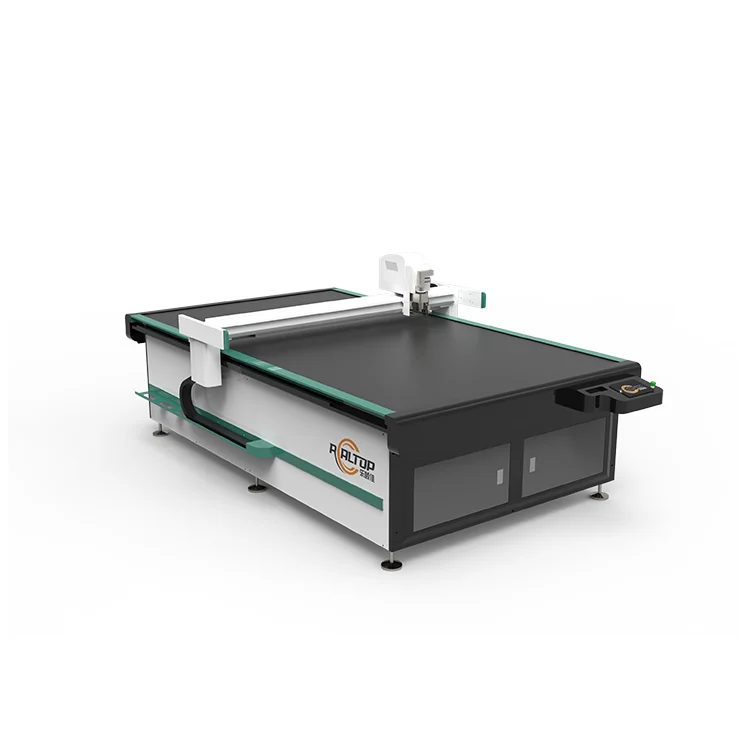
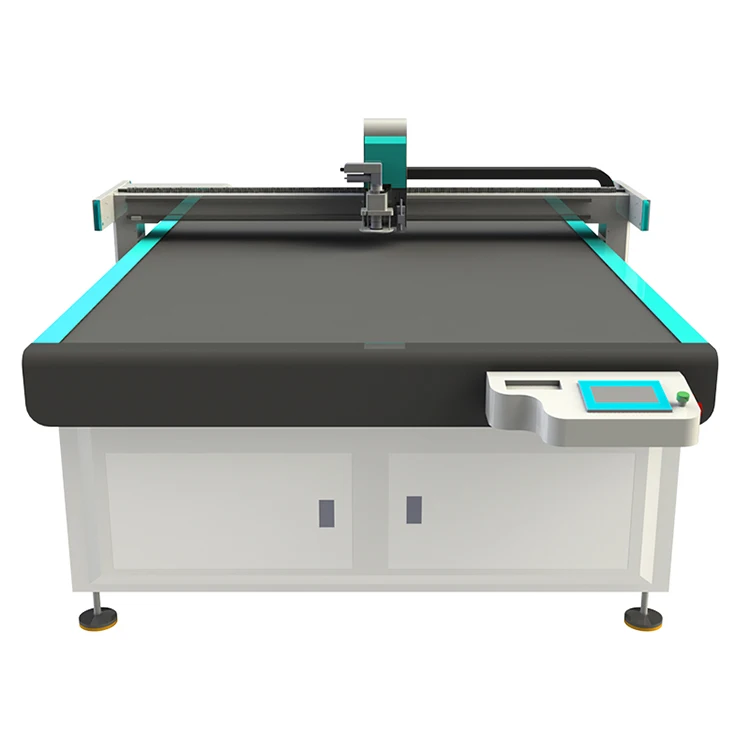
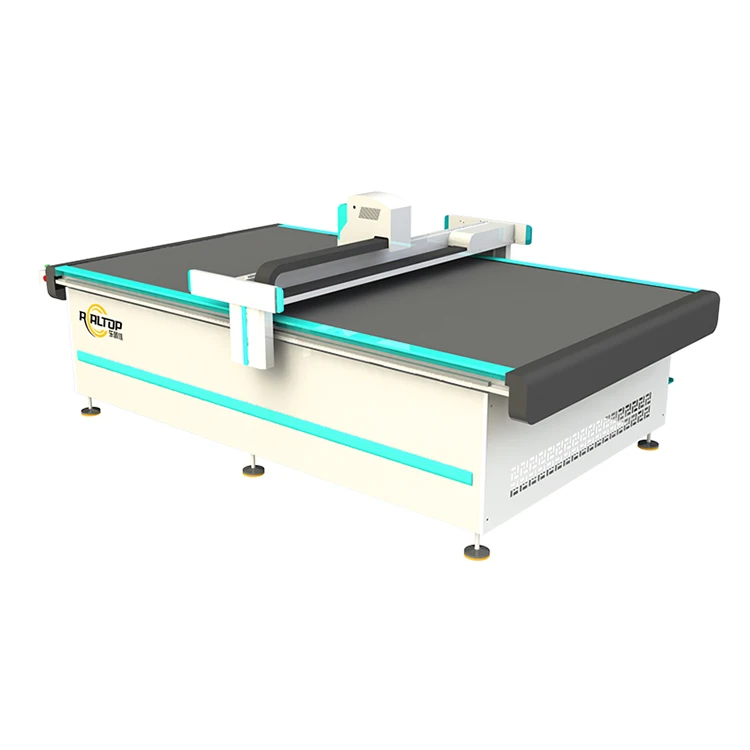
Precision tool head matching — Every RT-D2516/RT-S2516 flatbed digital cutter machine ships with tool head configuration specified against your actual material sample, not just a generic working area promise.
Technical Specifications
| Parameter | Value |
|---|---|
| Product Type | Flatbed Digital Cutter Machine |
| Model | RT-D2516/RT-S2516 |
| Working Area | 1600×2500 mm |
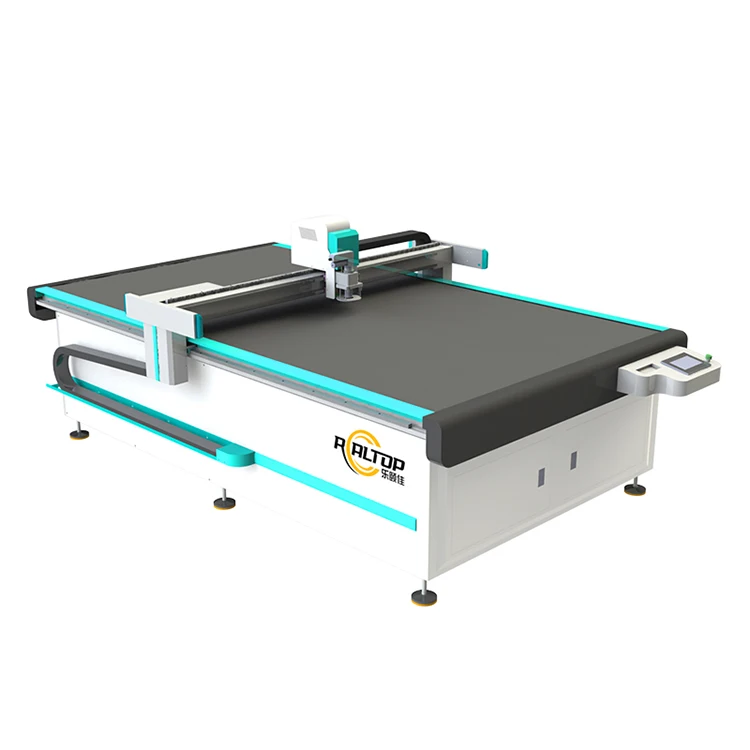
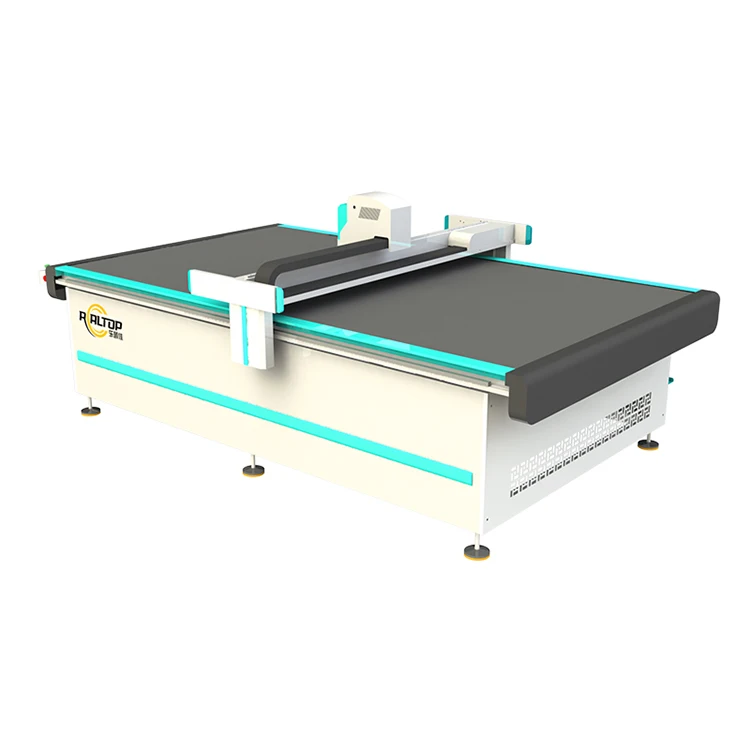
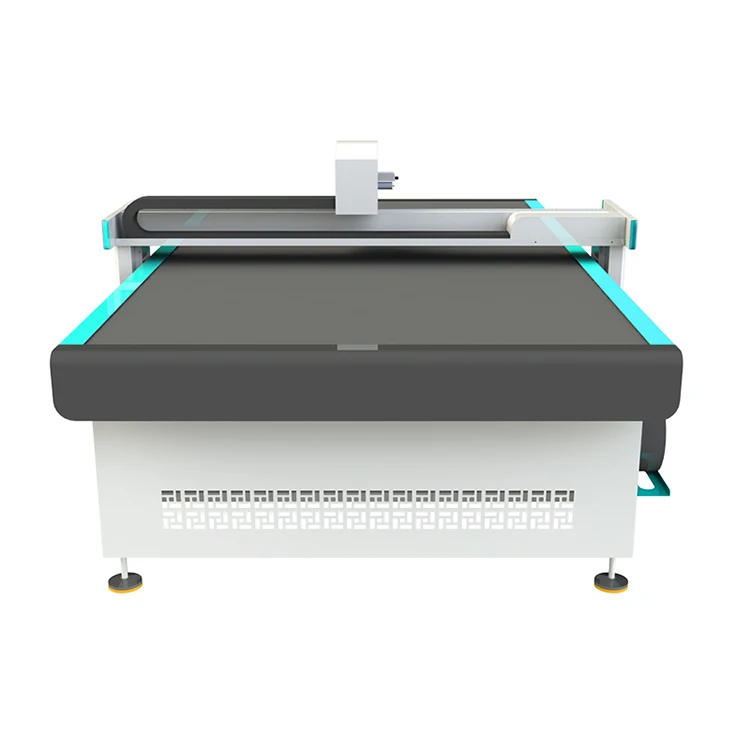
| Machine Size | 3450×2300×1250 mm |
| Rated Power | 9 kW |
| Translational Velocity | 800–1200 mm/s |
| Cutting Speed | 200–800 mm/s (varies by material) |
| Repeated Accuracy | ≤0.1 mm |
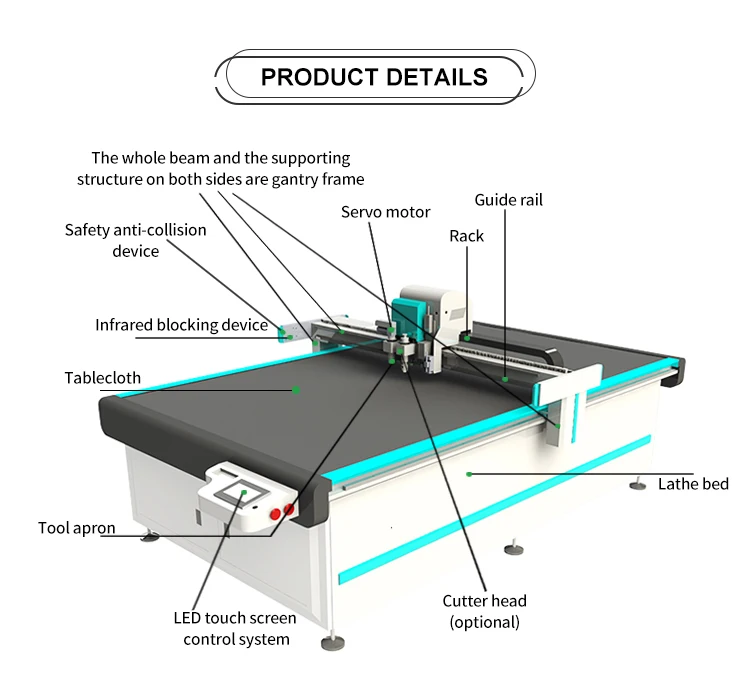
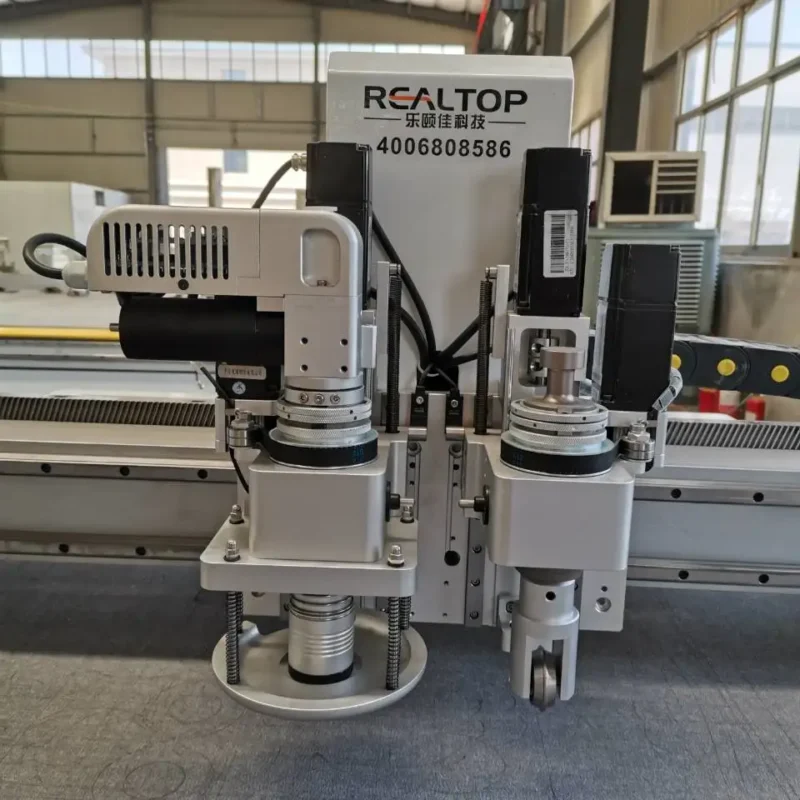
| Multifunctional Head | Swiss imported knife with vibration full cutting, vibration half cutting, and cursor location |
| Transmission System | Digital servo motor, linear guide, synchronous belt, ball screw |
| Instruction System | HP-GL compatible format |
| Voltage | 380V ±10% |
| Vacuum Pump | 7.5 kW |
| Other Configuration | Delta servo motor, Germany imported conveyor belt, vacuum table, auto feeding, Taiwan Hiwin rail |
| Safety Device | Infrared sensors |
| Fixed Model | Flat working table |
Application Suitability
| Application | Material or Output |
|---|---|
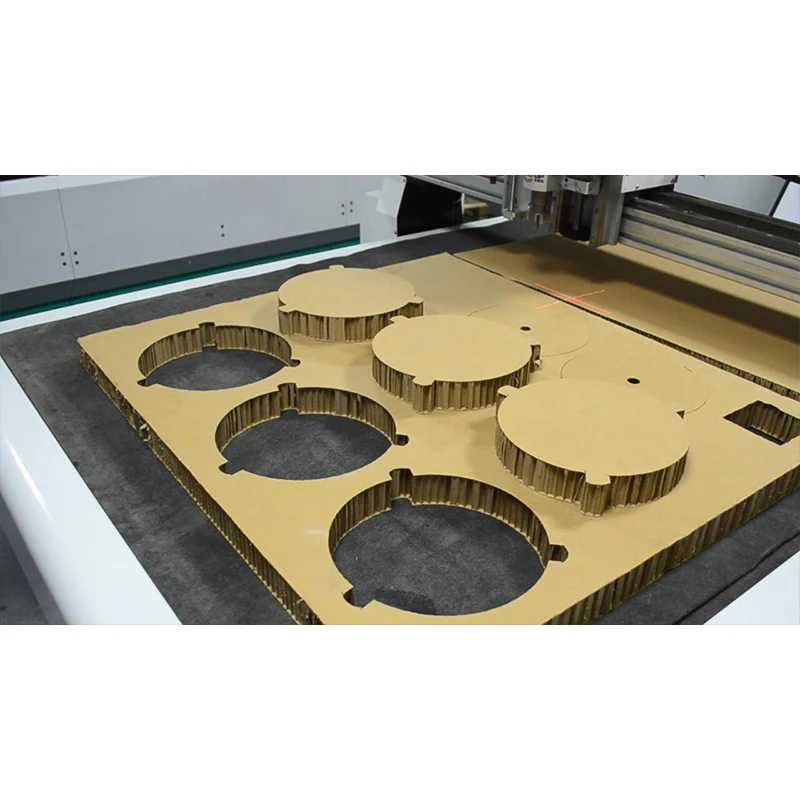
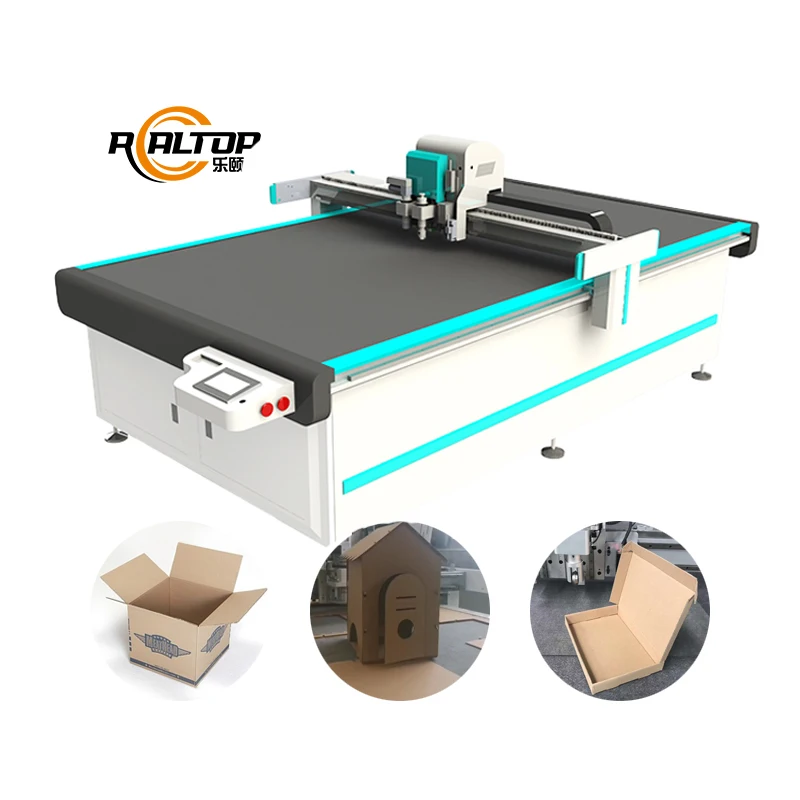
| Packaging carton manufacturing | Corrugated cardboard, greyboard, honeycomb board |
| Signage and billboard production | PVC foam board, vinyl, sticker stock |
| Leather goods and footwear | Genuine leather, PU, synthetic leather |
| Garment and flexible material cutting | Fabric, sponge composite leather |
| Gasket and industrial sealing | Soft glass, silicon, rubber |
| Large format carton packaging | Electrical appliance cartons, express paper boxes |
| Gift and retail packaging | High-end gift box board, pattern stickers, tags |
Why "Working Area Only" Quotes Fail at the Cutting Head
A flatbed digital cutter machine specified on table size alone will not guarantee clean edges on your actual material.
I once stood in a packaging plant where the operator had just spent two days fighting ragged edges on five-layer corrugated board. The machine they received was correctly sized for their sheet format, but the tool head specified for standard three-layer stock could not push through the higher glue content and denser flute profile. The result was crushed edges and material buildup on the blade that required constant stopping to clear. A Flatbed Digital Cutter Machine manufacturer worth engaging will ask for your thickest and most abrasive material before quoting a configuration [NEED_CITE:].
Matching the Knife System to Your Material Stack
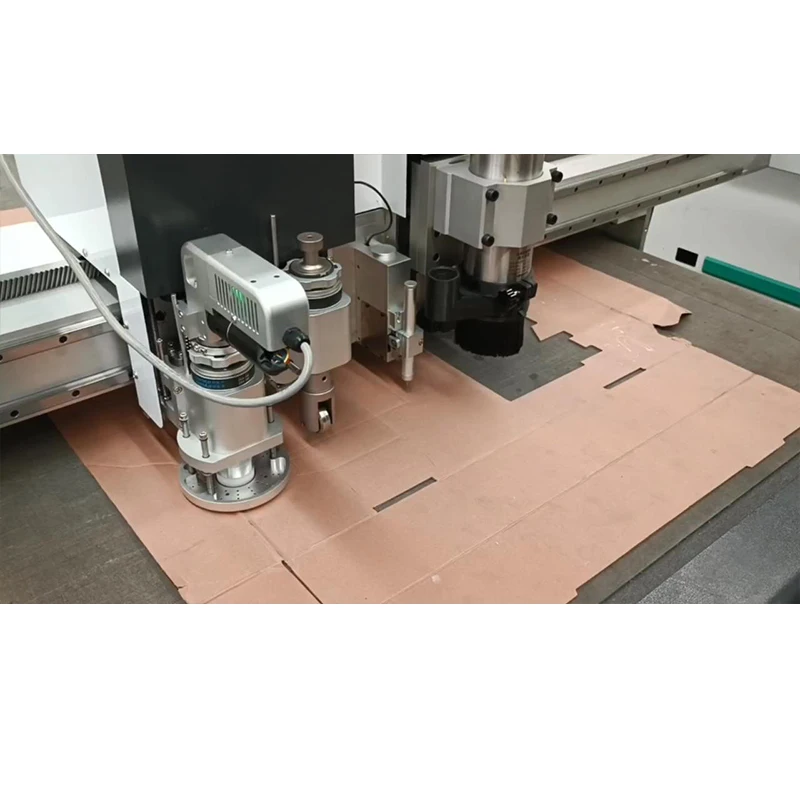
The Swiss imported knife on this platform delivers vibration full cutting and vibration half cutting, which matters when you move between solid board for carton creasing and flexible sponge composite leather for gasket work. Vibration action keeps the blade moving through dense and fibrous stock without dragging, while half cutting leaves a controlled kiss-cut depth for sticker and label stock that must stay on the liner during weeding.
Vacuum Table Zoning and Small Part Stability
The 7.5 kW vacuum pump and conveyor-equipped table handle full-sheet formats up to 1600×2500 mm, but the zoning layout is what keeps small parts flat during cutting. When a narrow gasket or a small tag sits in the centre of a large table, an undivided vacuum zone loses suction across the rest of the open area. The table must be zoned so that only the occupied section pulls suction, preventing material lift that ruins edge registration on high-speed passes [NEED_CITE:].
Reading the Spec Sheet for Real Cutting Behaviour
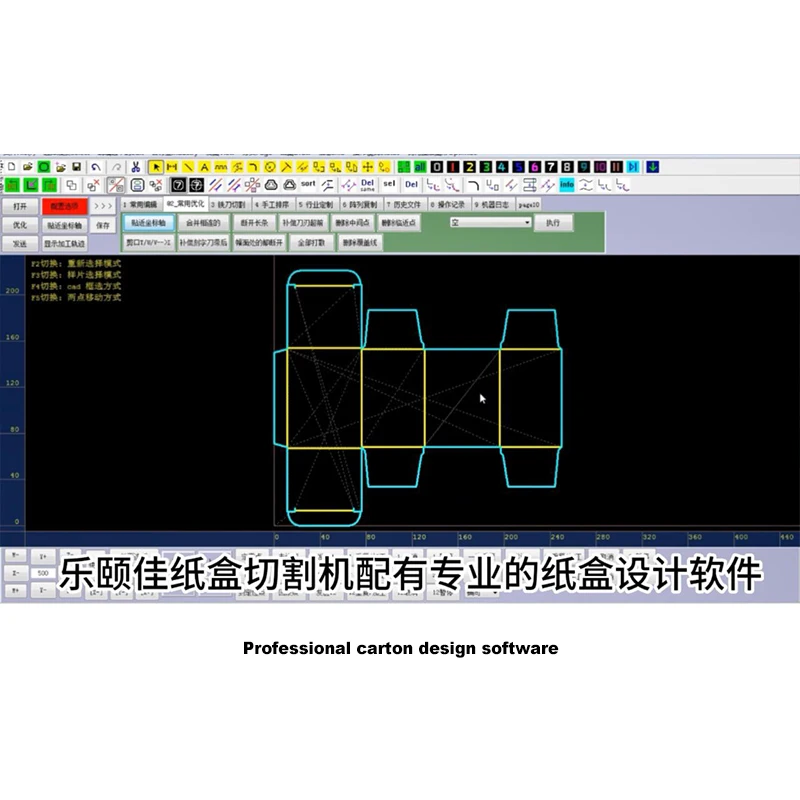
The translational velocity of 800–1200 mm/s describes the head moving without cutting. Actual cutting speed ranges from 200 to 800 mm/s depending on material density and thickness. On soft PVC and thin fabric, the upper range holds; on thick rubber gasket stock or multi-layer corrugated board, the head must slow to let the oscillating blade clear the material fully. Repeated accuracy of ≤0.1 mm means consecutive cuts on the same sheet land within one tenth of a millimetre, which matters when a carton crease line must align with a printed fold mark. The Delta servo motor and Taiwan Hiwin linear rail combination keeps this tolerance stable across long production runs because the rail resists the lateral deflection that cheaper guides develop over time. The HP-GL compatible instruction system means your existing CAD nesting files can feed directly into the controller without conversion through a third-party software layer.
What Happens When the Configuration Misses
When a buyer receives a machine with insufficient vacuum zoning, small sticker parts lift off the conveyor belt mid-cut and wrap around the tool head. When the voltage arrives at 380V but the buyer’s facility runs on a different frequency, the servo motors run hot and lose positional accuracy within the first shift. These are not warranty failures in the traditional sense — the machine works, just not on the buyer’s actual job [NEED_CITE:].
Why Buyers Source This Range Here
In-house design covers both knife and laser cutting technologies under one roof, so the recommendation starts with your material rather than forcing every job onto one method. Tool head and table configuration are specified per material sample and daily volume before any quotation is issued. CCD camera positioning is available for printed contour work where registration marks must be tracked at production speed. Software compatibility with your existing file format and nesting workflow is confirmed before order placement, not discovered during commissioning. Voltage, plug type, control language, and documentation are customised to the destination market. Sample cutting on your own material takes place before you commit to the order, so edge quality and cutting depth are verified on the exact stock you will run.
Documentation & Verification
- Machine specification sheet confirming working area, tool head list, and voltage for your site
- Sample cutting report on your material showing edge quality at specified cutting speed
- Tool head and table configuration list matched to your material type and maximum thickness
- Electrical schematic and voltage confirmation document for your facility’s supply standard
- Software licence and HP-GL file format compatibility note before shipment
- Factory test record run on material samples matching your production stock
Installation, Commissioning & Support
- 3450×2300 mm footprint requires level concrete floor with clearance for auto feeding conveyor
- 9 kW rated power plus 7.5 kW vacuum pump needs dedicated 380V three-phase circuit
- Machine arrives with table and gantry pre-assembled; vacuum pump connects on site
- First-run parameter setting covers cutting speed and vibration depth per material sample
- Operator training covers tool head changeover between oscillating knife and drag knife
- Spare parts list includes Swiss knife blades and conveyor belt wear sections
What to Prepare Before You Enquire
Send the specific materials you run today — type, thickness, and maximum sheet size — along with your daily volume target so the tool head and vacuum table zoning can be specified correctly. Confirm your facility voltage and frequency, and note the control language your operators need. If you run printed materials requiring contour recognition, share a sample print file so software compatibility and camera configuration are locked in before production.
Frequently Asked Questions
Q: How do I verify the machine can handle my material thickness before ordering?
A: Submit your actual material samples for test cutting. We run the material on the configured tool head at production cutting speed and document edge quality, depth, and cycle time in a sample cutting report. This confirms whether the oscillating knife or drag knife is the correct choice before the order is placed.
Q: Which tool head should I choose for mixed material production?
A: It depends on the thickest and most abrasive material in your mix. Oscillating knife handles dense corrugated board and foam without crushing, while drag knife suits thin vinyl and sticker stock. The multifunctional head allows changeover between tools when your production schedule shifts between material types.
Q: Will small sticker parts stay flat during high-speed cutting?
A: Vacuum table zoning determines this. When the table is divided into sections, only the zone under the workpiece pulls suction. Without adequate zoning, small parts lift on a large table format because vacuum pressure dissipates across the open area. Confirm your smallest typical part size so zoning can be matched.
Q: Can I use my existing CAD files without buying new software?
A: The HP-GL compatible instruction system accepts common vector file formats from packaging and signage CAD platforms. Confirm your specific software and file export format during the enquiry stage so we test compatibility and nesting workflow integration before the machine ships to your facility.
Precision tool head matching — Every RT-D2516/RT-S2516 flatbed digital cutter machine ships with tool head configuration specified against your actual material sample, not just a generic working area promise.
Technical Specifications
| Parameter | Value |
|---|---|
| Product Type | Flatbed Digital Cutter Machine |
| Model | RT-D2516/RT-S2516 |
| Working Area | 1600×2500 mm |
| Machine Size | 3450×2300×1250 mm |
| Rated Power | 9 kW |
| Translational Velocity | 800–1200 mm/s |
| Cutting Speed | 200–800 mm/s (varies by material) |
| Repeated Accuracy | ≤0.1 mm |
| Multifunctional Head | Swiss imported knife with vibration full cutting, vibration half cutting, and cursor location |
| Transmission System | Digital servo motor, linear guide, synchronous belt, ball screw |
| Instruction System | HP-GL compatible format |
| Voltage | 380V ±10% |
| Vacuum Pump | 7.5 kW |
| Other Configuration | Delta servo motor, Germany imported conveyor belt, vacuum table, auto feeding, Taiwan Hiwin rail |
| Safety Device | Infrared sensors |
| Fixed Model | Flat working table |
Application Suitability
| Application | Material or Output |
|---|---|
| Packaging carton manufacturing | Corrugated cardboard, greyboard, honeycomb board |
| Signage and billboard production | PVC foam board, vinyl, sticker stock |
| Leather goods and footwear | Genuine leather, PU, synthetic leather |
| Garment and flexible material cutting | Fabric, sponge composite leather |
| Gasket and industrial sealing | Soft glass, silicon, rubber |
| Large format carton packaging | Electrical appliance cartons, express paper boxes |
| Gift and retail packaging | High-end gift box board, pattern stickers, tags |
Why "Working Area Only" Quotes Fail at the Cutting Head
A flatbed digital cutter machine specified on table size alone will not guarantee clean edges on your actual material.
I once stood in a packaging plant where the operator had just spent two days fighting ragged edges on five-layer corrugated board. The machine they received was correctly sized for their sheet format, but the tool head specified for standard three-layer stock could not push through the higher glue content and denser flute profile. The result was crushed edges and material buildup on the blade that required constant stopping to clear. A Flatbed Digital Cutter Machine manufacturer worth engaging will ask for your thickest and most abrasive material before quoting a configuration [NEED_CITE:].
Matching the Knife System to Your Material Stack
The Swiss imported knife on this platform delivers vibration full cutting and vibration half cutting, which matters when you move between solid board for carton creasing and flexible sponge composite leather for gasket work. Vibration action keeps the blade moving through dense and fibrous stock without dragging, while half cutting leaves a controlled kiss-cut depth for sticker and label stock that must stay on the liner during weeding.
Vacuum Table Zoning and Small Part Stability
The 7.5 kW vacuum pump and conveyor-equipped table handle full-sheet formats up to 1600×2500 mm, but the zoning layout is what keeps small parts flat during cutting. When a narrow gasket or a small tag sits in the centre of a large table, an undivided vacuum zone loses suction across the rest of the open area. The table must be zoned so that only the occupied section pulls suction, preventing material lift that ruins edge registration on high-speed passes [NEED_CITE:].
Reading the Spec Sheet for Real Cutting Behaviour
The translational velocity of 800–1200 mm/s describes the head moving without cutting. Actual cutting speed ranges from 200 to 800 mm/s depending on material density and thickness. On soft PVC and thin fabric, the upper range holds; on thick rubber gasket stock or multi-layer corrugated board, the head must slow to let the oscillating blade clear the material fully. Repeated accuracy of ≤0.1 mm means consecutive cuts on the same sheet land within one tenth of a millimetre, which matters when a carton crease line must align with a printed fold mark. The Delta servo motor and Taiwan Hiwin linear rail combination keeps this tolerance stable across long production runs because the rail resists the lateral deflection that cheaper guides develop over time. The HP-GL compatible instruction system means your existing CAD nesting files can feed directly into the controller without conversion through a third-party software layer.
What Happens When the Configuration Misses
When a buyer receives a machine with insufficient vacuum zoning, small sticker parts lift off the conveyor belt mid-cut and wrap around the tool head. When the voltage arrives at 380V but the buyer’s facility runs on a different frequency, the servo motors run hot and lose positional accuracy within the first shift. These are not warranty failures in the traditional sense — the machine works, just not on the buyer’s actual job [NEED_CITE:].
Why Buyers Source This Range Here
In-house design covers both knife and laser cutting technologies under one roof, so the recommendation starts with your material rather than forcing every job onto one method. Tool head and table configuration are specified per material sample and daily volume before any quotation is issued. CCD camera positioning is available for printed contour work where registration marks must be tracked at production speed. Software compatibility with your existing file format and nesting workflow is confirmed before order placement, not discovered during commissioning. Voltage, plug type, control language, and documentation are customised to the destination market. Sample cutting on your own material takes place before you commit to the order, so edge quality and cutting depth are verified on the exact stock you will run.
Documentation & Verification
- Machine specification sheet confirming working area, tool head list, and voltage for your site
- Sample cutting report on your material showing edge quality at specified cutting speed
- Tool head and table configuration list matched to your material type and maximum thickness
- Electrical schematic and voltage confirmation document for your facility’s supply standard
- Software licence and HP-GL file format compatibility note before shipment
- Factory test record run on material samples matching your production stock
Installation, Commissioning & Support
- 3450×2300 mm footprint requires level concrete floor with clearance for auto feeding conveyor
- 9 kW rated power plus 7.5 kW vacuum pump needs dedicated 380V three-phase circuit
- Machine arrives with table and gantry pre-assembled; vacuum pump connects on site
- First-run parameter setting covers cutting speed and vibration depth per material sample
- Operator training covers tool head changeover between oscillating knife and drag knife
- Spare parts list includes Swiss knife blades and conveyor belt wear sections
What to Prepare Before You Enquire
Send the specific materials you run today — type, thickness, and maximum sheet size — along with your daily volume target so the tool head and vacuum table zoning can be specified correctly. Confirm your facility voltage and frequency, and note the control language your operators need. If you run printed materials requiring contour recognition, share a sample print file so software compatibility and camera configuration are locked in before production.
Frequently Asked Questions
Q: How do I verify the machine can handle my material thickness before ordering?
A: Submit your actual material samples for test cutting. We run the material on the configured tool head at production cutting speed and document edge quality, depth, and cycle time in a sample cutting report. This confirms whether the oscillating knife or drag knife is the correct choice before the order is placed.
Q: Which tool head should I choose for mixed material production?
A: It depends on the thickest and most abrasive material in your mix. Oscillating knife handles dense corrugated board and foam without crushing, while drag knife suits thin vinyl and sticker stock. The multifunctional head allows changeover between tools when your production schedule shifts between material types.
Q: Will small sticker parts stay flat during high-speed cutting?
A: Vacuum table zoning determines this. When the table is divided into sections, only the zone under the workpiece pulls suction. Without adequate zoning, small parts lift on a large table format because vacuum pressure dissipates across the open area. Confirm your smallest typical part size so zoning can be matched.
Q: Can I use my existing CAD files without buying new software?
A: The HP-GL compatible instruction system accepts common vector file formats from packaging and signage CAD platforms. Confirm your specific software and file export format during the enquiry stage so we test compatibility and nesting workflow integration before the machine ships to your facility.
商品评价
There are no reviews yet.