

Fast Delivery
Quick, reliable shipping to any location.

Free & easy returns
Return this item by mail or in store within 90 days for a full refund.
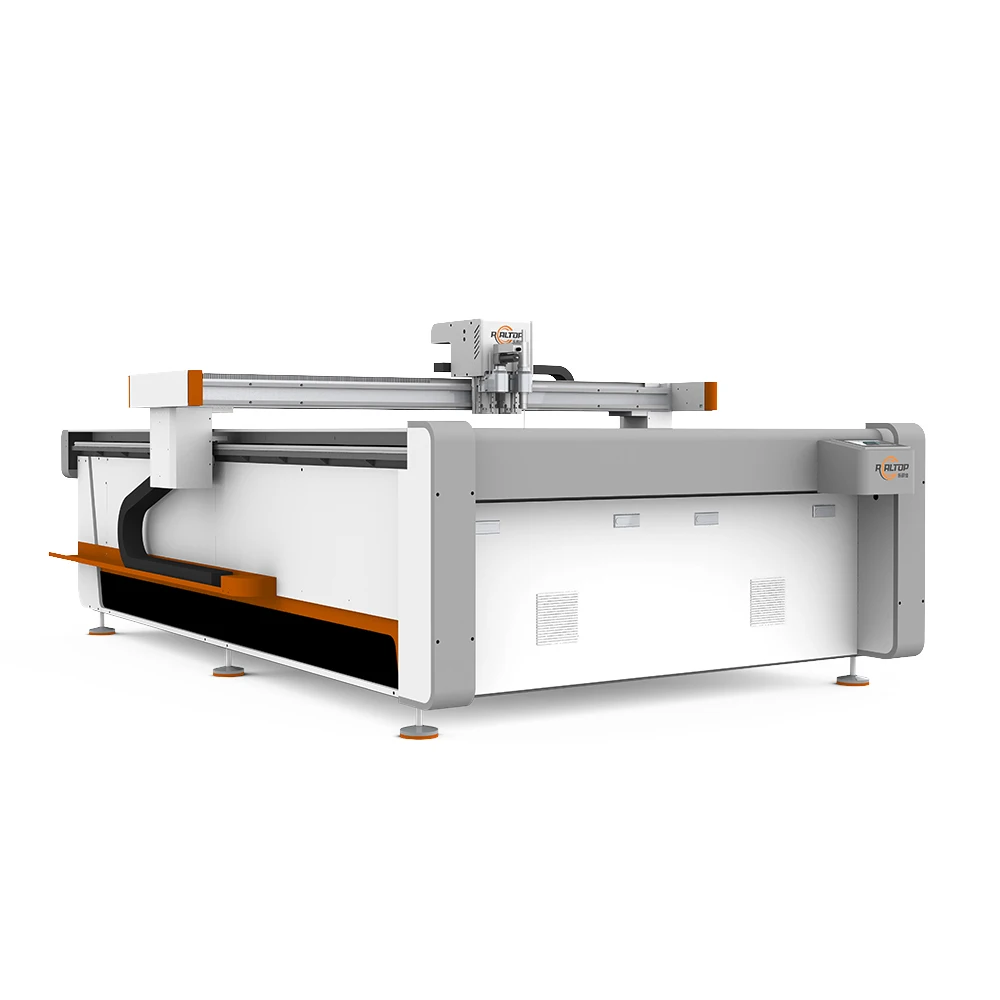
Configurable Tooling — Tool heads specified per flute profile and board weight, tested on the buyer’s own corrugated stock before the order is confirmed.
Technical Specifications
| Parameter | Value |
|---|---|
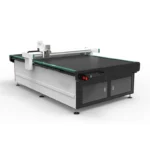
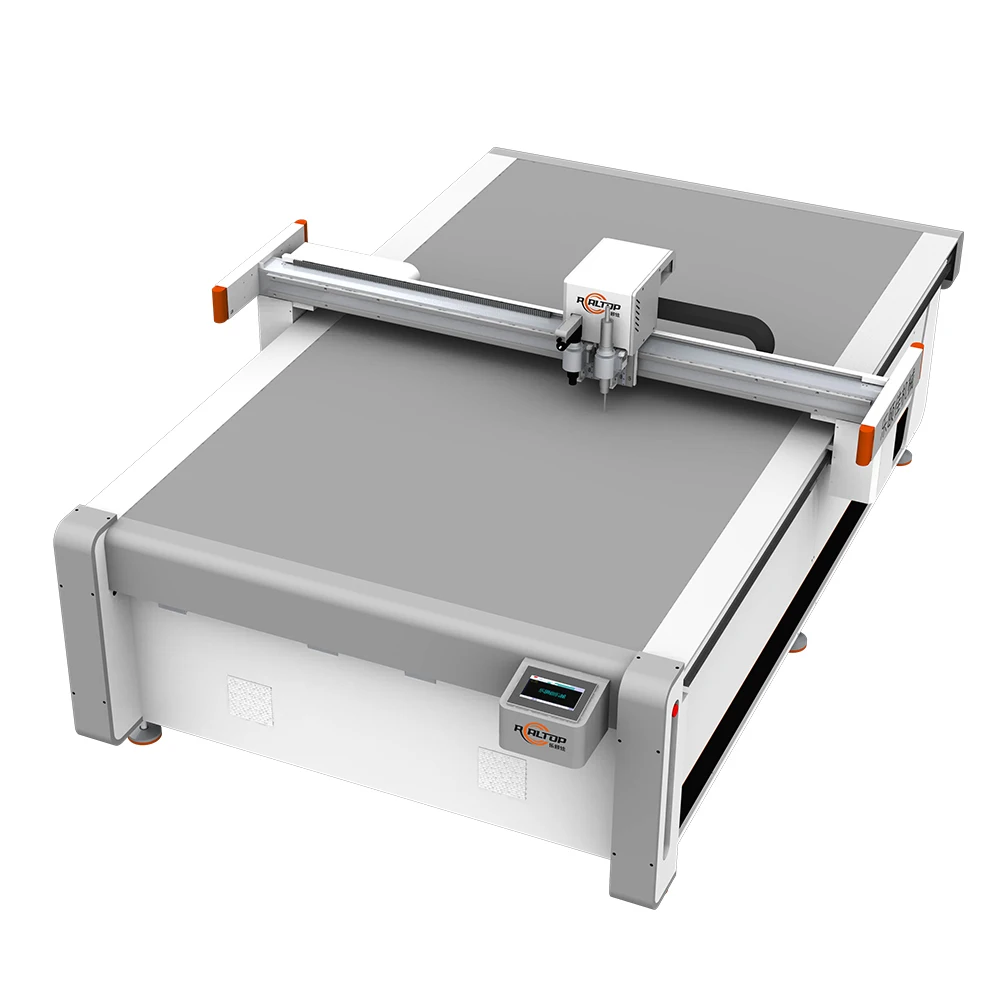
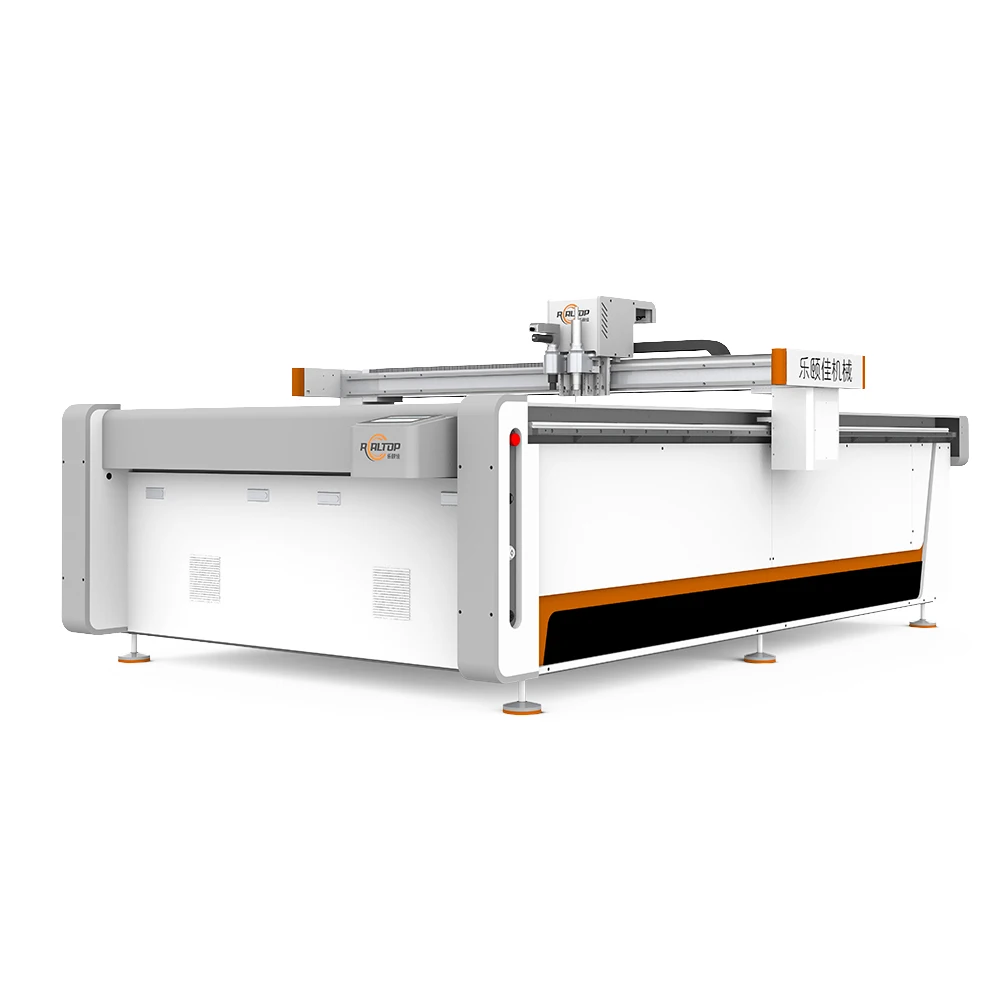
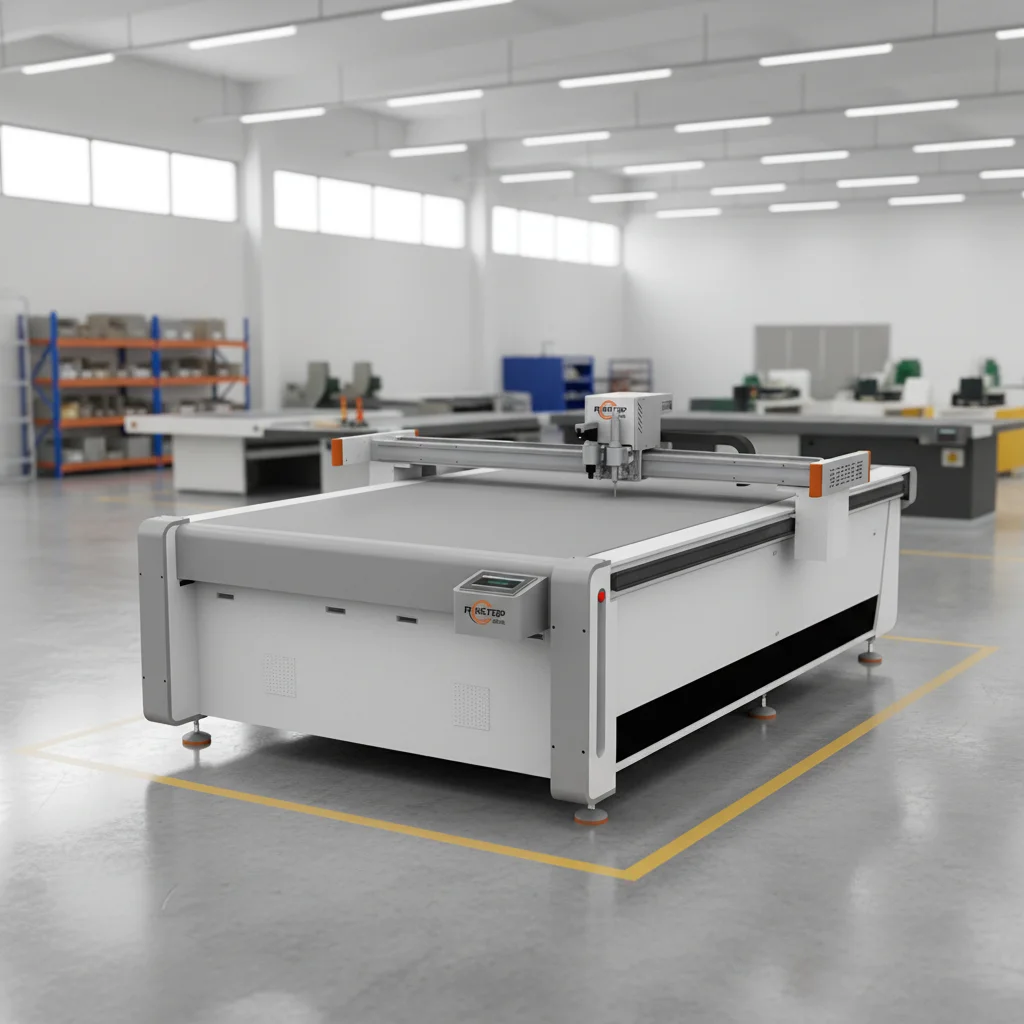
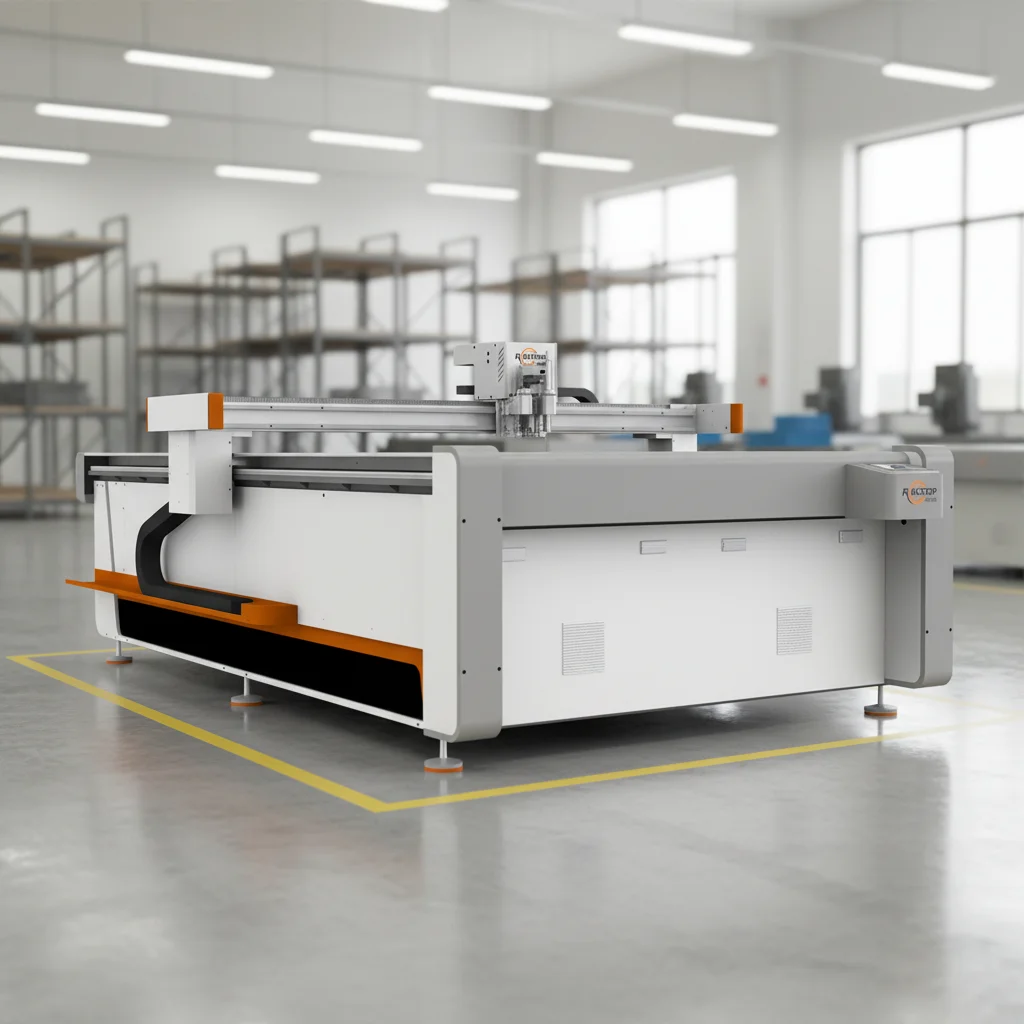
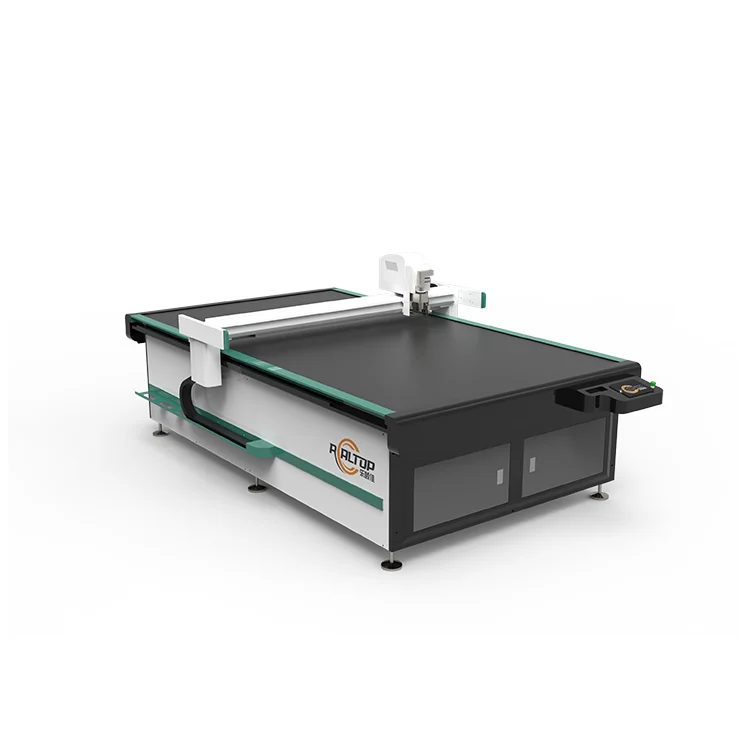
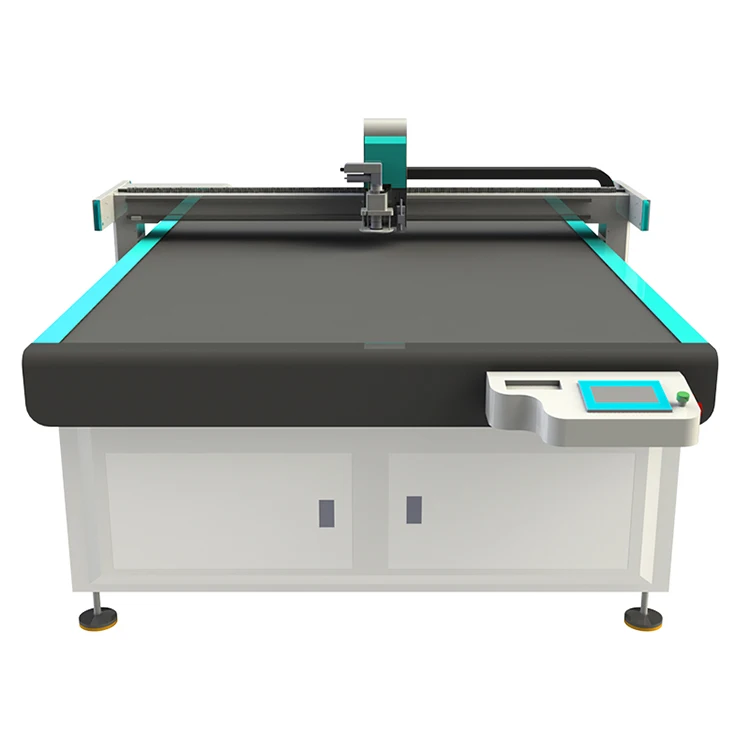
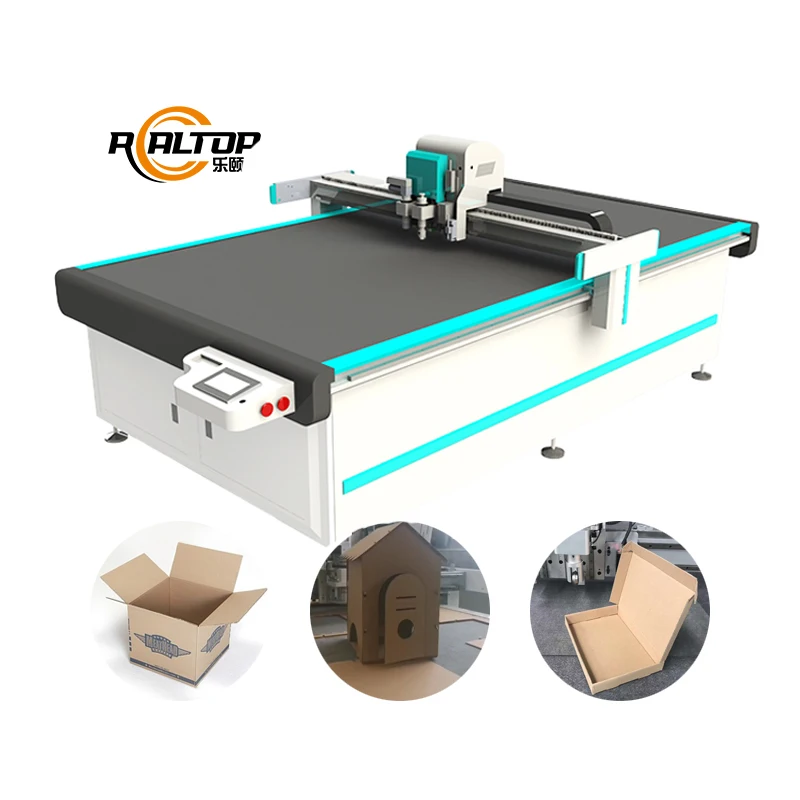
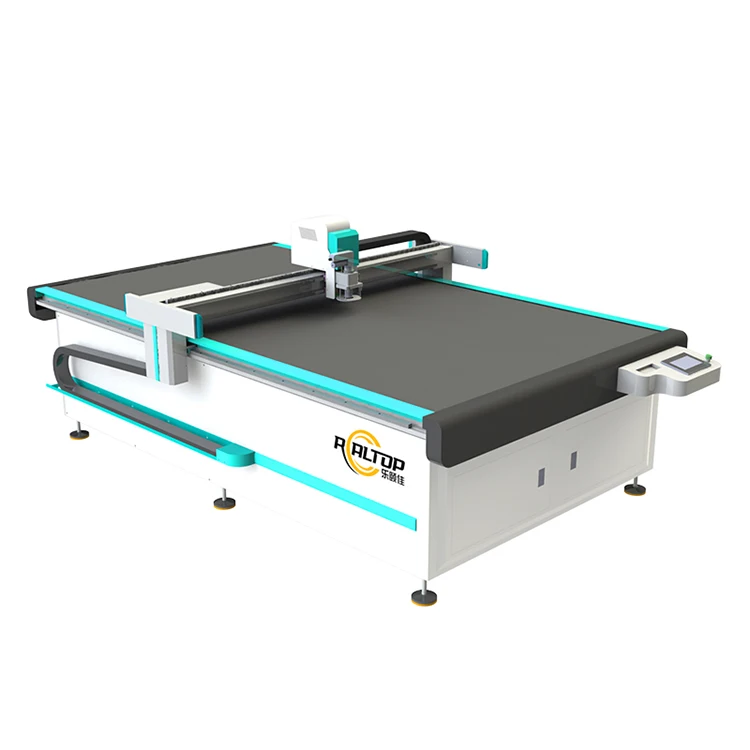
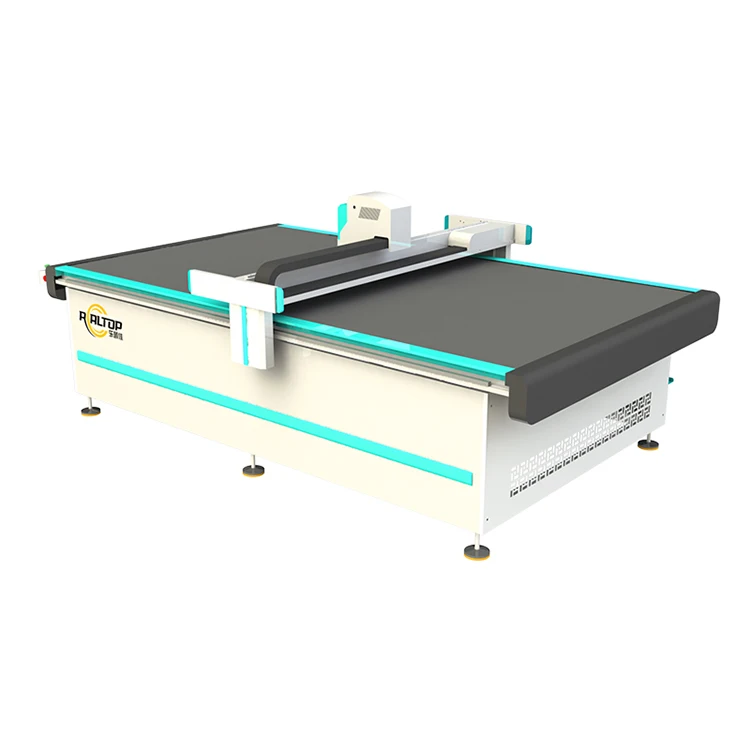
| Product Type | CNC Oscillating Knife Cutting Machine for Packaging |
| Working Area | 1600×2500 mm |
| Cutting Speed | 0-1500 mm/s |
| Cutting Thickness | ≤40 mm |
| Cutting Accuracy | ±0.1 mm |
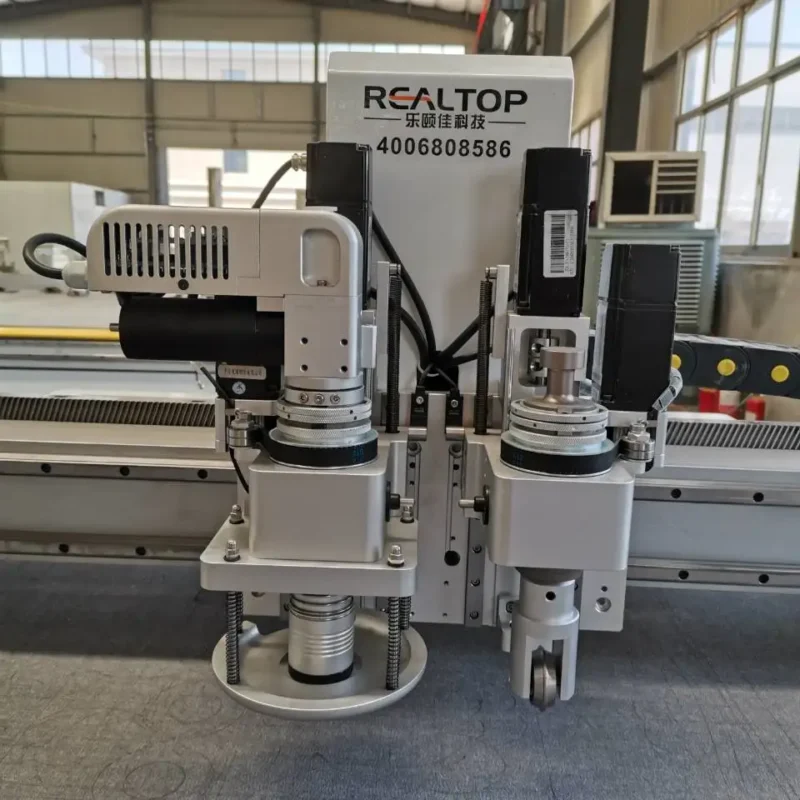
| Tool Head Options | Oscillating knife, Driven rotary knife, Creasing wheel, Kiss cutting tool, Pneumatic knife, Milling tool, V groove knife |
| Vacuum Pump | 9 kW |
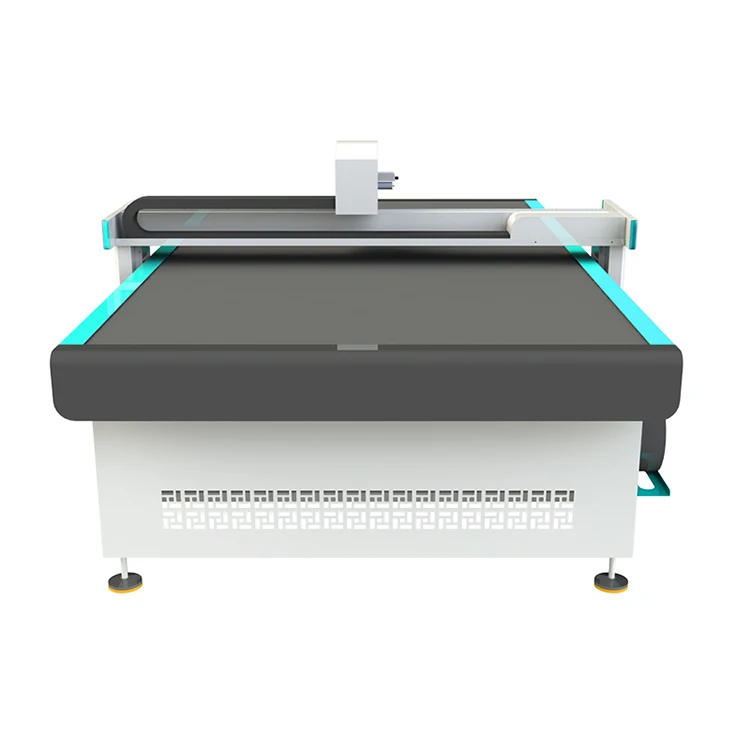
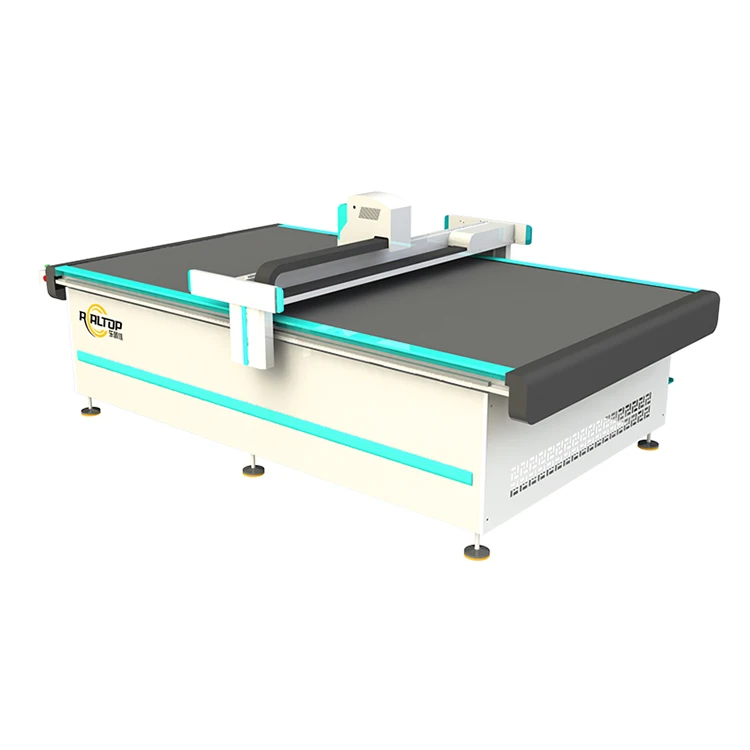
| Vacuum Table | Aluminum bellows with full-surface adsorption |
| Machine Frame | Heavy-duty with precision-ground surface |
| Servo Motor Options | Panasonic, Delta, Dorna (source value — verify against manufacturer catalog) |
| Voltage Options | 110V, 220V, 380V |
| File Format Compatibility | PLT, DXF, AI, PDF |
| Control Panel | PLC with intuitive interface, optional display languages |
| Safety Devices | Infrared sensor device, emergency stop device |
| Machine Size | 3300×2100×1350 mm |
| Certification | CE |
Application Suitability
| Application | Material or Output |
|---|---|
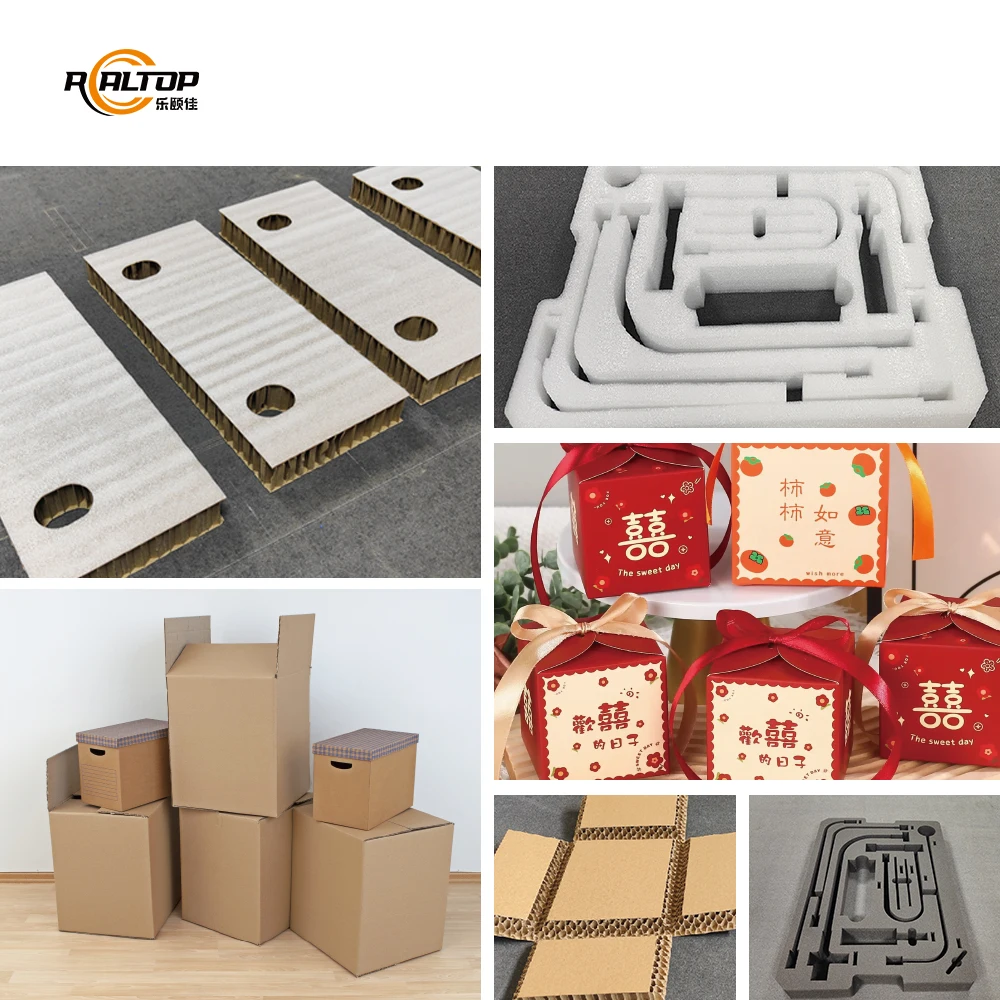
| Packaging Sample Making | E-flute, B-flute, BC-flute corrugated cardboard |
| Carton Prototyping | Greyboard, cardstock, art paper, specialty paper |
| Foam Insert Cutting | EVA foam, EPE foam, PU foam |
| Short-Run Custom Packaging | Coroplast, composite and adhesive-backed materials |
| Inlay and Lining Production | Rubber mats, velvet/fleece fabric, non-woven fabric |
| Thin Plastic Component Cutting | PVC, PET sheets |
Why the Vacuum Table Matters More Than the Working Area
A machine specified on working area alone often fails when small carton parts lift off the table at full cutting speed.
The mistake happens more often than it should. A buyer selects a CNC cutting equipment for sale based on a 1600×2500 mm bed and assumes the vacuum hold-down covers the entire surface evenly. Then production starts, and the small partition pieces from a wine box layout drift under the oscillating knife, producing ragged edges and forcing a full stop to reposition the sheet. The issue is rarely the pump power itself but the zoning of the vacuum table. Corrugated board is porous by nature — air pulls straight through the flutes — so the table must be divided into independently controlled zones that concentrate suction only where the sheet actually sits. Without this, the vacuum bleeds across unoccupied areas and the hold-down pressure at the cutting point drops below what is needed to keep E-flute or B-flute board flat. I have seen operators try to compensate by weighting down the edges with scrap pieces, which then get caught by the tool head and damage the cutting mat underneath. [NEED_CITE: vacuum table zoning requirements for porous corrugated materials]
Matching Tool Heads to Flute Profiles
A single oscillating knife does not cut every corrugated board cleanly. E-flute at 1.5 mm behaves differently from BC-flute at 7 mm — the fiber density, the crush resistance of the flutes, and the glue bond between liner and medium all change. This CNC oscillating knife cutting machine manufacturer supplies up to eight interchangeable tool heads, allowing a packaging converter to assign a specific blade angle and oscillation frequency to each flute type. The creasing wheel runs alongside the knife to score fold lines without fracturing the top liner, while the V groove knife removes material to create fold channels for thicker greyboard structures. Each head is swapped on the same carriage, so a single setup can cut the outline, score the folds, and mill a window opening without manual intervention.
Contour Recognition for Printed Packaging
When a pre-printed corrugated sheet arrives on the table, the cutting path must align with the printed graphics within a fraction of a millimeter. The optional CCD camera reads registration marks placed at the corners of the print, then adjusts the cutting file in real time to compensate for any stretch or skew introduced during the printing process. This matters especially for short-run promotional packaging where the board may have been printed on a flatbed UV press with slight dimensional variation across the sheet. The camera system communicates directly with the PLC controller, shifting the coordinate origin before each cut starts. [NEED_CITE: CCD registration accuracy standards in digital packaging finishing]
Reading the Specification Sheet Beyond the Headline Numbers
The ±0.1 mm cutting accuracy figure is meaningful only when the machine frame and motion system can hold that tolerance across the full 1600×2500 mm travel. A heavy-duty frame with a precision-ground surface prevents the micro-deflection that accumulates on a lighter chassis as the gantry accelerates and decelerates at the ends of each cut path. The 9 kW vacuum pump paired with the aluminum bellows table is sized to maintain adsorption pressure when cutting dense double-wall BC-flute board, which demands more hold-down force than single-face material. File format compatibility — PLT, DXF, AI, PDF — means the machine accepts artwork directly from the packaging designer’s workflow without intermediate conversion steps that can distort curve geometry. The dedicated packaging box structure design software included with the control system handles parametric box templates, letting the operator enter internal dimensions and board thickness to generate a cut-and-crease file automatically.
What Happens When Configuration Is Guessed Instead of Specified
The consequences show up on the first production day. A creasing wheel set too deep for single-wall B-flute crushes the flutes and weakens the box stacking strength. A kiss cutting tool calibrated for thin PVC cuts through the release liner on an adhesive-backed foam gasket, rendering the entire sheet unusable. A vacuum zone layout designed for full-sheet cutting leaves small die-cut shapes loose on the table, and the oscillating knife drags them across the cutting mat, damaging both the part and the belt. Each of these is a configuration error, not a machine defect, and each could have been caught with a sample cutting report run on the buyer’s actual board grade before shipment. [NEED_CITE: common digital cutting configuration errors in packaging production]
What Sets This Procurement Path Apart
In-house design covers both knife and laser cutting technologies, so the recommendation starts with the material rather than forcing corrugated board or foam through a single process. Tool head and table configurations are specified per flute profile, board weight, and production volume instead of quoted as a standard package. CCD camera positioning is confirmed against the buyer’s print mark size and contrast before the order is finalized. Software compatibility — including file format and nesting workflow — is validated with a test file exchange during the inquiry stage. Voltage, plug type, and control language are documented on the electrical schematic and confirmed in writing before production begins. Sample cutting on the buyer’s own corrugated board is completed and shared as a report with cut edge photographs and crease depth measurements before any commitment is made.
Documentation & Verification
- Machine specification sheet listing configured tool heads and vacuum zone layout for your board range
- Electrical schematic with voltage and frequency confirmed against your facility supply
- Sample cutting report on your own corrugated board grade showing edge quality and crease depth
- Software licence and file format compatibility note for PLT, DXF, AI, PDF workflows
- Operation and maintenance manual in your selected control language
- Factory test record documenting accuracy verification across the full working area
Installation, Commissioning & Support
- Floor plan review confirming the 3300×2100 mm footprint and clearance for material loading on all sides
- Dedicated electrical circuit matching the confirmed voltage option — 110V, 220V, or 380V — and the 9 kW vacuum pump draw
- Table leveling and belt tension adjustment during on-site commissioning to verify ±0.1 mm accuracy
- First-run parameter setting for your specific flute profiles, adjusting oscillation frequency and vacuum zone pressure
- Operator training covering tool head changeover, CCD registration calibration, and nesting file import
- Spare parts list with recommended consumable blades and cutting mats sized to your production volume
Before You Send an Inquiry
Packaging cutting projects vary more than most buyers expect at the inquiry stage. Share your typical board grades and flute profiles — E, B, BC, or a mix — along with the thickest material you plan to run. Include the smallest part size in your current box designs, as this determines the vacuum table zoning layout. Specify your local voltage and frequency, the control language your operators need, and whether your existing design files come from ArtiosCAD, Impact, or another packaging CAD system. If you can send a sample sheet of your most demanding board stock, a test cut will be run and documented before any quotation is issued.
Frequently Asked Questions
Q: How do I decide between oscillating knife and laser cutting for my packaging materials?
A: Knife cutting handles corrugated board, greyboard, and foam inserts without burning the edges or generating fumes, which matters for food-contact packaging. Laser cutting works better for intricate window cutouts in thin cardstock or sealing synthetic fabric edges. The choice depends on your material mix and whether edge discoloration is acceptable on your finished product.
Q: Which tool heads should I specify for my board range?
A: The configuration depends on your flute profiles and whether you run greyboard or solid fiberboard. A typical setup for mixed E-flute and B-flute work includes the oscillating knife, creasing wheel, and CCD camera. Heavier BC-flute or foam insert work may add the pneumatic knife or V groove tool. Your sample cutting test determines the final selection.
Q: Can the CCD camera keep up with full production speed on pre-printed sheets?
A: The camera reads registration marks before each cutting cycle starts, so tracking accuracy is maintained regardless of cutting speed. The critical factors are mark size, contrast against the print, and placement consistency on your sheets. These are verified during the sample cutting stage to ensure reliable detection on your specific printed board.
Q: What vacuum zoning options are available for small carton parts?
A: The aluminum bellows table can be configured with multiple independently controlled zones. For packaging work with many small cutouts — partitions, inserts, or retail display components — finer zoning concentrates suction under the actual sheet area and prevents parts from lifting during high-speed cutting passes.
Q: Does the packaging design software work with my existing nesting workflow?
A: The bundled software generates parametric box structures and exports to PLT and DXF formats. If you already use a third-party nesting system, the machine accepts files directly in PLT, DXF, AI, and PDF. Compatibility with your specific nesting software is confirmed by exchanging a test file before the order is placed.
Configurable Tooling — Tool heads specified per flute profile and board weight, tested on the buyer’s own corrugated stock before the order is confirmed.
Technical Specifications
| Parameter | Value |
|---|---|
| Product Type | CNC Oscillating Knife Cutting Machine for Packaging |
| Working Area | 1600×2500 mm |
| Cutting Speed | 0-1500 mm/s |
| Cutting Thickness | ≤40 mm |
| Cutting Accuracy | ±0.1 mm |
| Tool Head Options | Oscillating knife, Driven rotary knife, Creasing wheel, Kiss cutting tool, Pneumatic knife, Milling tool, V groove knife |
| Vacuum Pump | 9 kW |
| Vacuum Table | Aluminum bellows with full-surface adsorption |
| Machine Frame | Heavy-duty with precision-ground surface |
| Servo Motor Options | Panasonic, Delta, Dorna (source value — verify against manufacturer catalog) |
| Voltage Options | 110V, 220V, 380V |
| File Format Compatibility | PLT, DXF, AI, PDF |
| Control Panel | PLC with intuitive interface, optional display languages |
| Safety Devices | Infrared sensor device, emergency stop device |
| Machine Size | 3300×2100×1350 mm |
| Certification | CE |
Application Suitability
| Application | Material or Output |
|---|---|
| Packaging Sample Making | E-flute, B-flute, BC-flute corrugated cardboard |
| Carton Prototyping | Greyboard, cardstock, art paper, specialty paper |
| Foam Insert Cutting | EVA foam, EPE foam, PU foam |
| Short-Run Custom Packaging | Coroplast, composite and adhesive-backed materials |
| Inlay and Lining Production | Rubber mats, velvet/fleece fabric, non-woven fabric |
| Thin Plastic Component Cutting | PVC, PET sheets |
Why the Vacuum Table Matters More Than the Working Area
A machine specified on working area alone often fails when small carton parts lift off the table at full cutting speed.
The mistake happens more often than it should. A buyer selects a CNC cutting equipment for sale based on a 1600×2500 mm bed and assumes the vacuum hold-down covers the entire surface evenly. Then production starts, and the small partition pieces from a wine box layout drift under the oscillating knife, producing ragged edges and forcing a full stop to reposition the sheet. The issue is rarely the pump power itself but the zoning of the vacuum table. Corrugated board is porous by nature — air pulls straight through the flutes — so the table must be divided into independently controlled zones that concentrate suction only where the sheet actually sits. Without this, the vacuum bleeds across unoccupied areas and the hold-down pressure at the cutting point drops below what is needed to keep E-flute or B-flute board flat. I have seen operators try to compensate by weighting down the edges with scrap pieces, which then get caught by the tool head and damage the cutting mat underneath. [NEED_CITE: vacuum table zoning requirements for porous corrugated materials]
Matching Tool Heads to Flute Profiles
A single oscillating knife does not cut every corrugated board cleanly. E-flute at 1.5 mm behaves differently from BC-flute at 7 mm — the fiber density, the crush resistance of the flutes, and the glue bond between liner and medium all change. This CNC oscillating knife cutting machine manufacturer supplies up to eight interchangeable tool heads, allowing a packaging converter to assign a specific blade angle and oscillation frequency to each flute type. The creasing wheel runs alongside the knife to score fold lines without fracturing the top liner, while the V groove knife removes material to create fold channels for thicker greyboard structures. Each head is swapped on the same carriage, so a single setup can cut the outline, score the folds, and mill a window opening without manual intervention.
Contour Recognition for Printed Packaging
When a pre-printed corrugated sheet arrives on the table, the cutting path must align with the printed graphics within a fraction of a millimeter. The optional CCD camera reads registration marks placed at the corners of the print, then adjusts the cutting file in real time to compensate for any stretch or skew introduced during the printing process. This matters especially for short-run promotional packaging where the board may have been printed on a flatbed UV press with slight dimensional variation across the sheet. The camera system communicates directly with the PLC controller, shifting the coordinate origin before each cut starts. [NEED_CITE: CCD registration accuracy standards in digital packaging finishing]
Reading the Specification Sheet Beyond the Headline Numbers
The ±0.1 mm cutting accuracy figure is meaningful only when the machine frame and motion system can hold that tolerance across the full 1600×2500 mm travel. A heavy-duty frame with a precision-ground surface prevents the micro-deflection that accumulates on a lighter chassis as the gantry accelerates and decelerates at the ends of each cut path. The 9 kW vacuum pump paired with the aluminum bellows table is sized to maintain adsorption pressure when cutting dense double-wall BC-flute board, which demands more hold-down force than single-face material. File format compatibility — PLT, DXF, AI, PDF — means the machine accepts artwork directly from the packaging designer’s workflow without intermediate conversion steps that can distort curve geometry. The dedicated packaging box structure design software included with the control system handles parametric box templates, letting the operator enter internal dimensions and board thickness to generate a cut-and-crease file automatically.
What Happens When Configuration Is Guessed Instead of Specified
The consequences show up on the first production day. A creasing wheel set too deep for single-wall B-flute crushes the flutes and weakens the box stacking strength. A kiss cutting tool calibrated for thin PVC cuts through the release liner on an adhesive-backed foam gasket, rendering the entire sheet unusable. A vacuum zone layout designed for full-sheet cutting leaves small die-cut shapes loose on the table, and the oscillating knife drags them across the cutting mat, damaging both the part and the belt. Each of these is a configuration error, not a machine defect, and each could have been caught with a sample cutting report run on the buyer’s actual board grade before shipment. [NEED_CITE: common digital cutting configuration errors in packaging production]
What Sets This Procurement Path Apart
In-house design covers both knife and laser cutting technologies, so the recommendation starts with the material rather than forcing corrugated board or foam through a single process. Tool head and table configurations are specified per flute profile, board weight, and production volume instead of quoted as a standard package. CCD camera positioning is confirmed against the buyer’s print mark size and contrast before the order is finalized. Software compatibility — including file format and nesting workflow — is validated with a test file exchange during the inquiry stage. Voltage, plug type, and control language are documented on the electrical schematic and confirmed in writing before production begins. Sample cutting on the buyer’s own corrugated board is completed and shared as a report with cut edge photographs and crease depth measurements before any commitment is made.
Documentation & Verification
- Machine specification sheet listing configured tool heads and vacuum zone layout for your board range
- Electrical schematic with voltage and frequency confirmed against your facility supply
- Sample cutting report on your own corrugated board grade showing edge quality and crease depth
- Software licence and file format compatibility note for PLT, DXF, AI, PDF workflows
- Operation and maintenance manual in your selected control language
- Factory test record documenting accuracy verification across the full working area
Installation, Commissioning & Support
- Floor plan review confirming the 3300×2100 mm footprint and clearance for material loading on all sides
- Dedicated electrical circuit matching the confirmed voltage option — 110V, 220V, or 380V — and the 9 kW vacuum pump draw
- Table leveling and belt tension adjustment during on-site commissioning to verify ±0.1 mm accuracy
- First-run parameter setting for your specific flute profiles, adjusting oscillation frequency and vacuum zone pressure
- Operator training covering tool head changeover, CCD registration calibration, and nesting file import
- Spare parts list with recommended consumable blades and cutting mats sized to your production volume
Before You Send an Inquiry
Packaging cutting projects vary more than most buyers expect at the inquiry stage. Share your typical board grades and flute profiles — E, B, BC, or a mix — along with the thickest material you plan to run. Include the smallest part size in your current box designs, as this determines the vacuum table zoning layout. Specify your local voltage and frequency, the control language your operators need, and whether your existing design files come from ArtiosCAD, Impact, or another packaging CAD system. If you can send a sample sheet of your most demanding board stock, a test cut will be run and documented before any quotation is issued.
Frequently Asked Questions
Q: How do I decide between oscillating knife and laser cutting for my packaging materials?
A: Knife cutting handles corrugated board, greyboard, and foam inserts without burning the edges or generating fumes, which matters for food-contact packaging. Laser cutting works better for intricate window cutouts in thin cardstock or sealing synthetic fabric edges. The choice depends on your material mix and whether edge discoloration is acceptable on your finished product.
Q: Which tool heads should I specify for my board range?
A: The configuration depends on your flute profiles and whether you run greyboard or solid fiberboard. A typical setup for mixed E-flute and B-flute work includes the oscillating knife, creasing wheel, and CCD camera. Heavier BC-flute or foam insert work may add the pneumatic knife or V groove tool. Your sample cutting test determines the final selection.
Q: Can the CCD camera keep up with full production speed on pre-printed sheets?
A: The camera reads registration marks before each cutting cycle starts, so tracking accuracy is maintained regardless of cutting speed. The critical factors are mark size, contrast against the print, and placement consistency on your sheets. These are verified during the sample cutting stage to ensure reliable detection on your specific printed board.
Q: What vacuum zoning options are available for small carton parts?
A: The aluminum bellows table can be configured with multiple independently controlled zones. For packaging work with many small cutouts — partitions, inserts, or retail display components — finer zoning concentrates suction under the actual sheet area and prevents parts from lifting during high-speed cutting passes.
Q: Does the packaging design software work with my existing nesting workflow?
A: The bundled software generates parametric box structures and exports to PLT and DXF formats. If you already use a third-party nesting system, the machine accepts files directly in PLT, DXF, AI, and PDF. Compatibility with your specific nesting software is confirmed by exchanging a test file before the order is placed.
商品评价
There are no reviews yet.