




Fast Delivery
Quick, reliable shipping to any location.

Free & easy returns
Return this item by mail or in store within 90 days for a full refund.
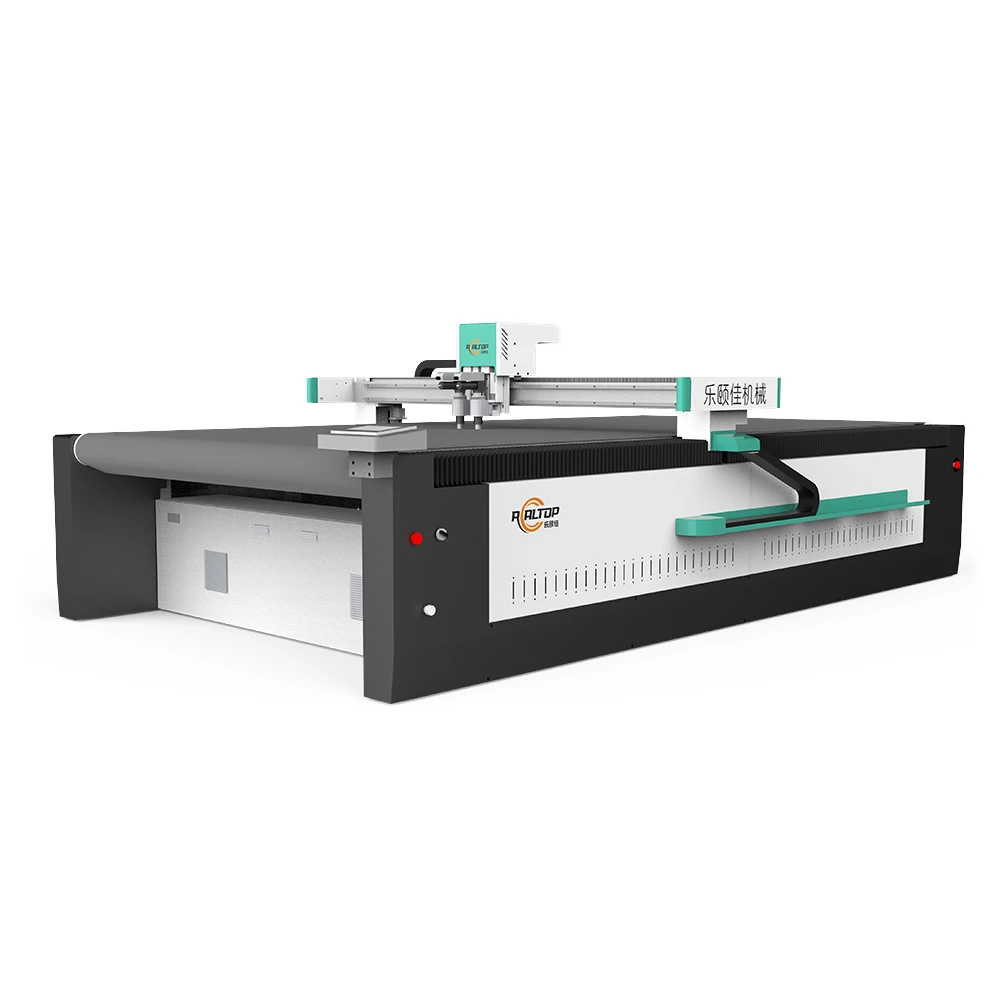
Sample cutting on buyer material before commitment — The 1625 platform is validated against your actual fabric, prepreg or composite layup, documenting edge quality and cutting speed before any production order is placed.
Technical Specifications
| Parameter | Value |
|---|---|
| Model | 1625 |
| Product Type | CNC Oscillating Knife Cutting Machine |
| Working Area | 1600×2500 mm |
| Tool Head Options | Oscillating knife, Driven rotary knife, Creasing wheel, Kiss cutting tool, Pneumatic knife, Milling tool, V-groove knife |
| Cutting Speed | 0–2000 mm/s |
| Cutting Thickness | ≤ 30 mm (basis not stated in source — confirm material type and density) |
| Cutting Accuracy | ±0.1 mm |
| Vacuum Table | Aluminum bellows vacuum table |
| Vacuum Pump | 9 kW |
| Servo Motor Options | Panasonic, Delta, Dorna |
| Control System | PLC control panel |
| Voltage Options | 110V / 220V / 380V (frequency to be confirmed) |
| File Format Support | PLT, DXF, AI, PDF |
| Safety Devices | Infrared sensor, emergency stop |
| Machine Size | 3300×2100×1350 mm |
| Language Options | English, Russian, Italian, Chinese; special languages customizable |
| Certification | CE |
Application Suitability
| Application | Material or Output |
|---|---|
| Aerospace composite layup | Carbon fiber prepreg, aramid honeycomb, fiberglass cloth for wing skins and interior trim |
| Automotive interior trimming | Headliners, floor carpets, seat foam, lightweight body panels, battery insulation pads |
| Wind energy blade preforms | Infusion mesh, core material preforms, carbon spar caps |
| Sporting goods manufacturing | Bicycle frame prepreg, helmet liners, surfboard cores, ski components |
| Garment and footwear cutting | Multi-ply fabric, leather, technical textiles |
| Packaging sample making | Cardboard, carton, corrugated board, foam inserts |
Why a 1600×2500 mm Bed Is Not the Whole Story for CNC Oscillating Knife Cutting Machine Selection
Working area is the easiest spec to compare — and the easiest to over-spec without understanding the downstream consequences.
When I first started specifying machines for composite fabricators in the Gulf region, the conversation almost always opened with table size. A 1600×2500 mm work envelope sounds generous until you realize that cutting 3 mm aramid honeycomb on a poorly zoned vacuum surface causes the material to lift at the trailing edge, ruining a panel that took forty minutes to lay up. The same applies to multi-ply carbon fiber prepreg: if the oscillating stroke cannot be tuned to the stack density, the bottom ply tears while the top ply cuts clean [NEED_CITE: vacuum zoning requirements for composite prepreg cutting]. A CNC oscillating knife cutting machine manufacturer worth engaging will ask about your layup sequence and ply count before they quote a working area.
Tool Head Selection Dictates Material Range More Than Power Ratings
The 1625 carries seven interchangeable tool head options: oscillating knife, driven rotary knife, creasing wheel, kiss cutting tool, pneumatic knife, milling tool, and V-groove knife. This is the axis along which real production flexibility is determined. An oscillating blade handles carbon fiber prepreg and aramid honeycomb with clean, cold-cut edges that preserve the resin matrix; a driven rotary knife runs through continuous fabric rolls at the upper speed range; a creasing wheel scores carton for packaging samples without penetrating the face stock. The CNC oscillating knife cutting machine manufacturer configures these heads against the material stack you bring, not against a generic catalogue entry.
Cold-Cutting Preserves What Heat Destroys
Composite fabricators working with epoxy-impregnated prepreg or thermoplastic-backed aramid cannot afford thermal edge damage. Laser cutting melts resin at the kerf line, leaving a hardened bead that delaminates during autoclave cure. The oscillating knife process on the 1625 is entirely mechanical — no heat-affected zone, no resin migration, no edge sealing required before layup. For automotive interior suppliers cutting multi-layer headliner assemblies, the same cold-cut principle prevents foam compression at the cut face, keeping the adhesive surface intact for downstream bonding [NEED_CITE: thermal versus mechanical cutting effects on composite prepreg].
Reading the 1625 Spec Sheet Against Real Production Demands
The ±0.1 mm cutting accuracy matters most when nesting carbon spar caps for wind blade preforms, where a 0.5 mm drift across a 2.4-meter cut path accumulates into a misaligned layup that fails ultrasonic inspection. The 9 kW vacuum pump paired with an aluminum bellows table delivers the adsorption pressure needed to hold thin infusion mesh flat without wrinkling — a specification that is often underpowered on competing platforms in this format class. Servo motor selection across Panasonic, Delta, and Dorna options lets buyers match motion control characteristics to their production rhythm: high-torque servos for dense composite stacks, high-response servos for intricate garment pattern cutting. File format compatibility with PLT, DXF, AI, and PDF means the machine accepts output from most nesting and CAD software in use across these industries, though confirmation of your specific file workflow should happen before order.
The Configuration Gap That Stops a Production Line
Wrong tool head chosen for the material is the most common failure I encounter in the field. A buyer specifies an oscillating knife for carbon fiber prepreg and receives a machine set up with a drag knife configured for vinyl — the result is frayed edges, delaminated plies, and a cutting speed that drops to a fraction of what was quoted. The same pattern appears when vacuum table zoning is not matched to part geometry: small composite preforms lift off the table mid-cut because the full-bed vacuum is not sectioned to concentrate hold-down force on the active cutting zone [NEED_CITE: vacuum table zoning and small-part retention in digital cutting]. These are not machine defects — they are specification errors that a CNC oscillating knife cutting machine manufacturer should catch during the sample cutting stage.
Why Buyers Source This Range Here
In-house design and production covering both knife and laser cutting technologies means the 1625 is specified as the correct method for your material, not forced into a single-technology catalogue. Tool head and table configuration is locked to your material sample and daily volume before production begins. PLC control with multi-language support and voltage options across 110V, 220V, and 380V ensures the machine matches your local electrical supply and operator language — confirmed in writing before shipment. Sample cutting on your own material documents thickness capability, edge quality, and achievable speed before you commit to an order. The aluminum bellows vacuum table and interchangeable head system are built on a single platform, so format and configuration changes do not require a different machine family.
Documentation & Verification
- Machine specification sheet matching your selected tool head and vacuum configuration
- Electrical schematic confirming voltage, frequency, and circuit requirements for your facility
- Sample cutting report on your fabric or composite material with documented parameters
- Software licence and file format compatibility note for your nesting workflow
- Factory test record with cutting accuracy verification before dispatch
Installation, Commissioning & Support
- Floor loading assessment for the 3300×2100×1350 mm footprint with vibration isolation pads
- Dedicated circuit provision for 9 kW vacuum pump and servo system at confirmed voltage
- Vacuum table leveling and zone calibration on-site against your material thickness range
- PLC parameter setup for your selected servo motor option and tool head combination
- Operator training on tool changeover across all seven head types in your production mix
- Spare blade and wear part list matched to your composite or fabric cutting schedule
What to Prepare Before Requesting a Quotation
Send material type, ply count, maximum stack thickness, and the largest single-piece pattern dimension you cut. Specify your local voltage, frequency, and the control language your operators require. If you run existing nesting software, share a sample output file so format compatibility is verified before the quotation stage.
Frequently Asked Questions
Q: How do I choose between knife and laser cutting for my material from the full catalogue?
A: Knife cutting suits composites, prepreg, foam, and multi-ply fabric where cold-cut edge quality and no heat-affected zone are critical. Laser cutting serves acrylic, wood, and textile applications where edge sealing or engraving is required. The selection depends on your material’s thermal sensitivity and edge finish requirement — sample cutting on your material confirms the correct method.
Q: What configuration options are available across the working area range?
A: The catalogue covers compact through large-format working areas with single and multi-head configurations. The 1625 at 1600×2500 mm sits in the mid-large format range suited to aerospace prepreg and automotive interior panels. Tool head selection, vacuum zoning, and servo specification are all configured per material and production volume before order.
Q: How are voltage, plug type, and control language confirmed before shipment?
A: Voltage is confirmed against your facility supply — options include 110V, 220V, and 380V with frequency verified for your market. Plug type follows local standards. Control language is set on the PLC panel, with English, Russian, Italian, and Chinese standard, and special languages customizable. All three are documented in the electrical schematic before production.
Q: Where does the 1625 sit in the catalogue by material and production volume?
A: The 1625 is positioned as a versatile mid-large format oscillating knife platform for composite fabricators, automotive interior suppliers, and garment manufacturers running moderate to high daily volumes. Larger format machines in the range serve full-width fabric rolls, while compact models handle sample-making and prototyping. The correct position depends on your maximum pattern dimension and throughput requirement.
Q: Which models in the range offer CCD camera contour recognition for printed materials?
A: CCD camera positioning is available on selected models within the catalogue for tracking printed registration marks at production speed. This is relevant for signage, packaging, and printed textile applications where contour accuracy depends on optical mark detection. Confirm your print mark specification and required tracking speed during the sample cutting stage.










商品评价
There are no reviews yet.