

Fast Delivery
Quick, reliable shipping to any location.

Free & easy returns
Return this item by mail or in store within 90 days for a full refund.
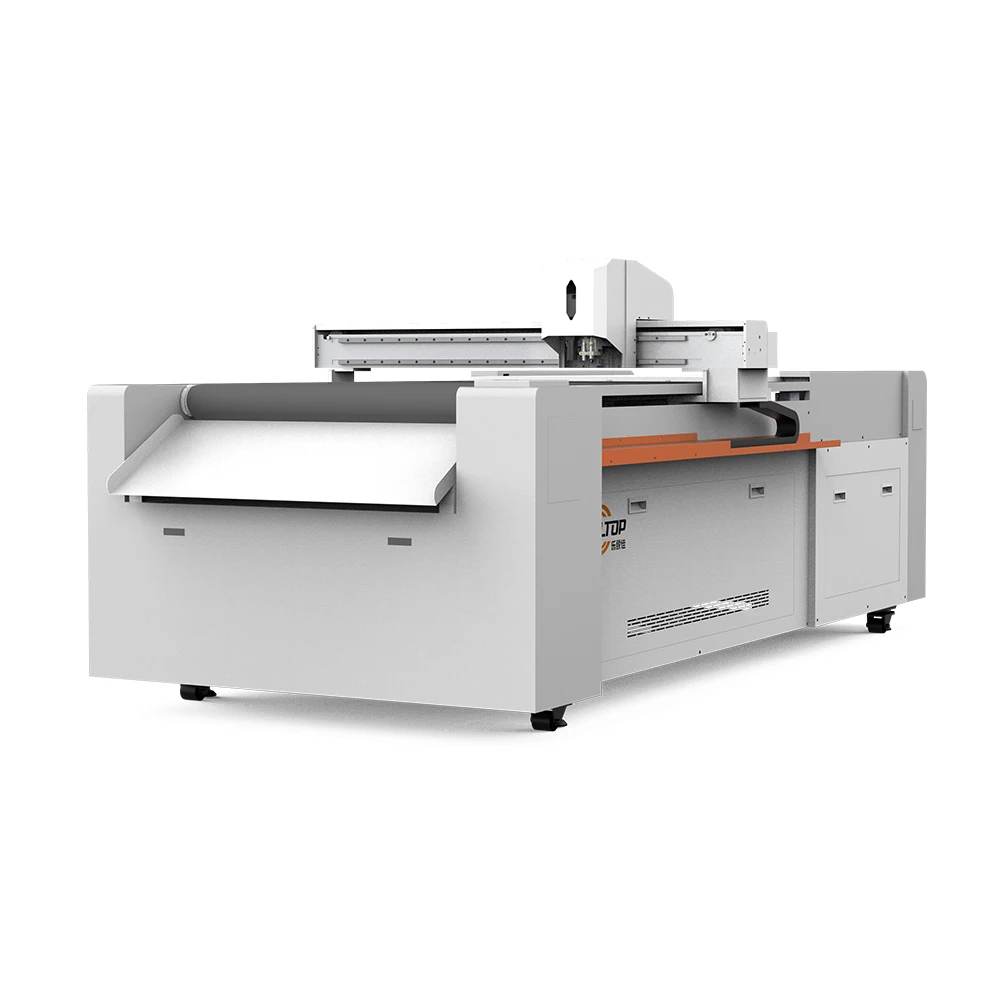
Material-driven configuration — every T-series tool head and vacuum zone is specified only after sample cutting on the buyer’s actual stock, eliminating guesswork on thickness and edge quality.
Technical Specifications
| Parameter | Value |
|---|---|
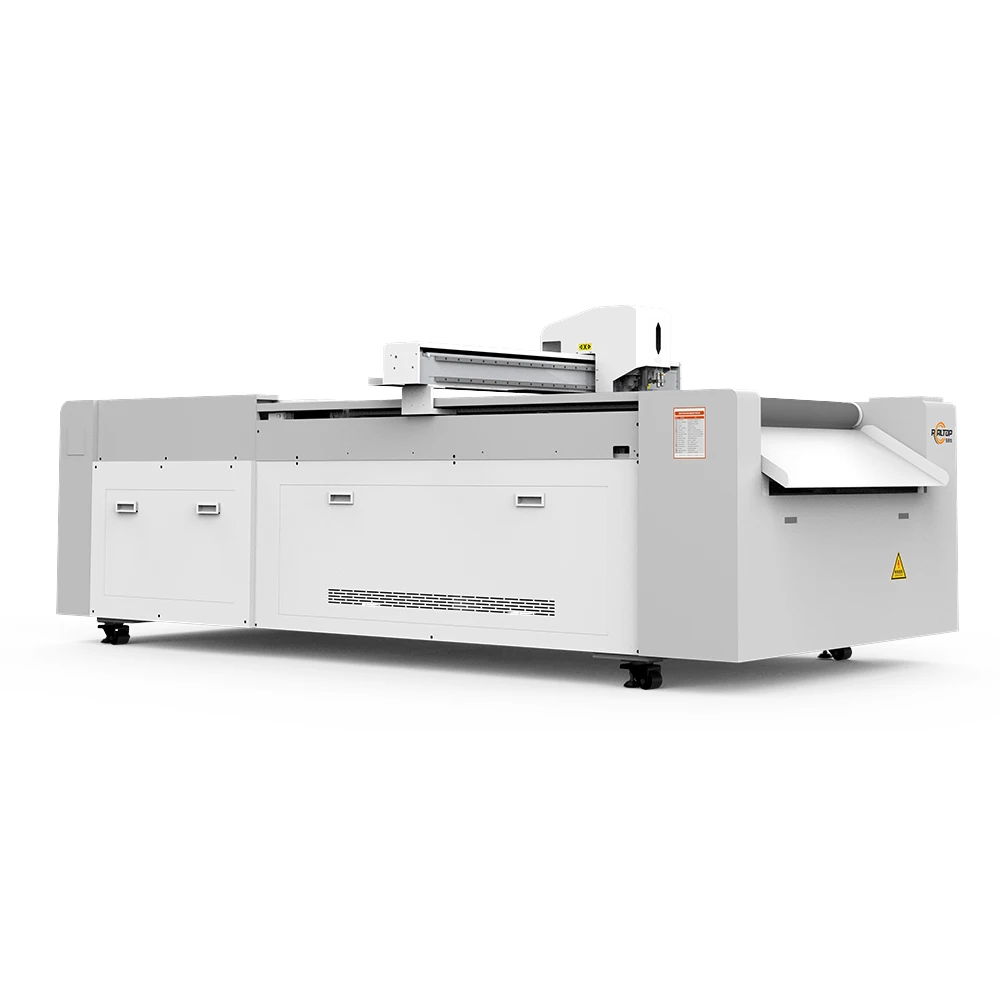
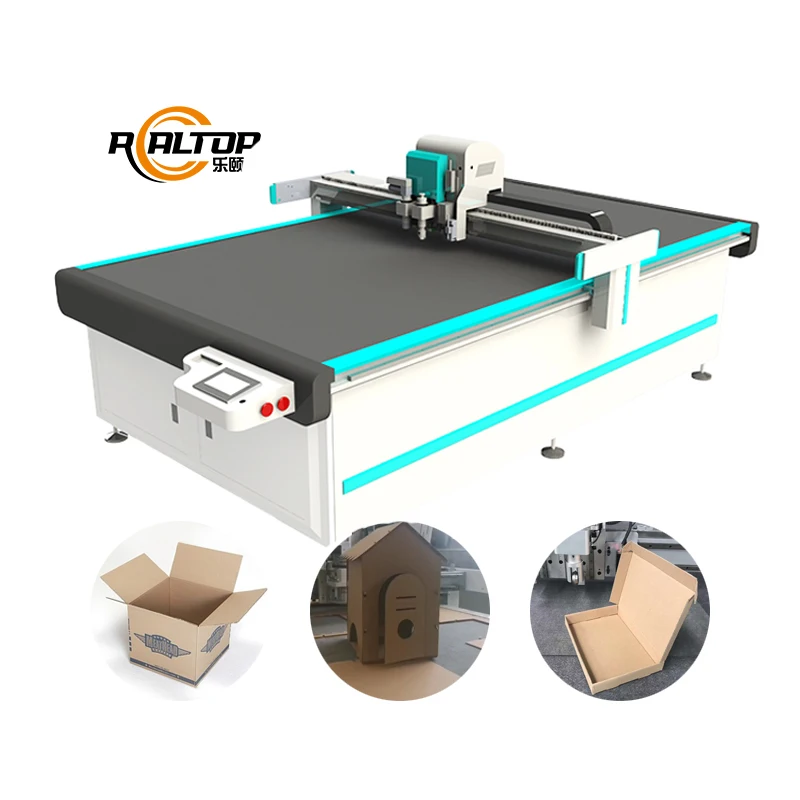
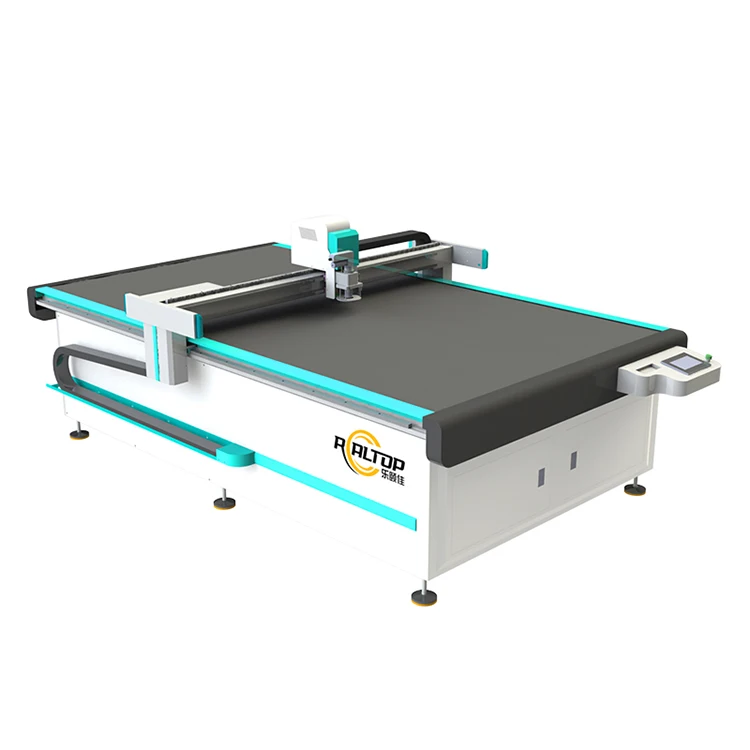
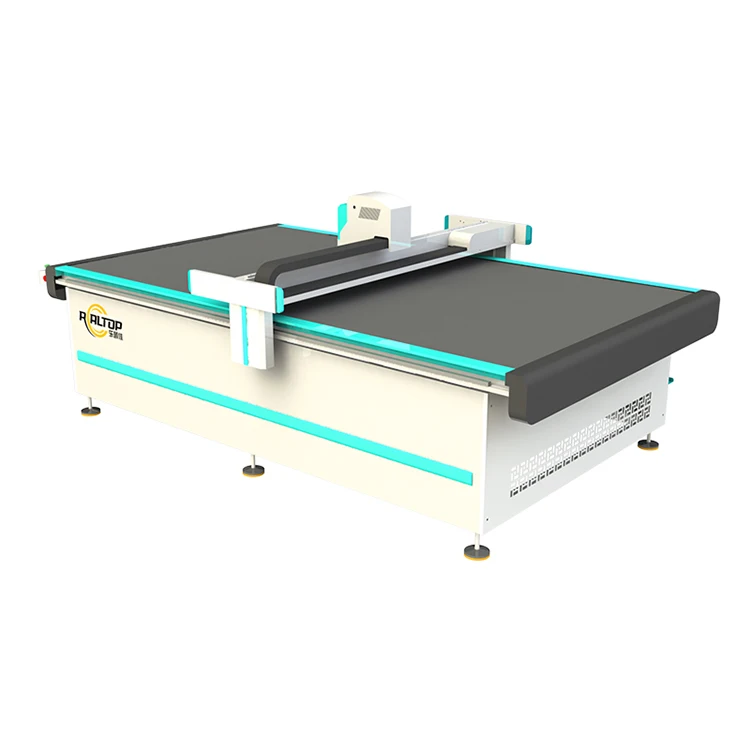
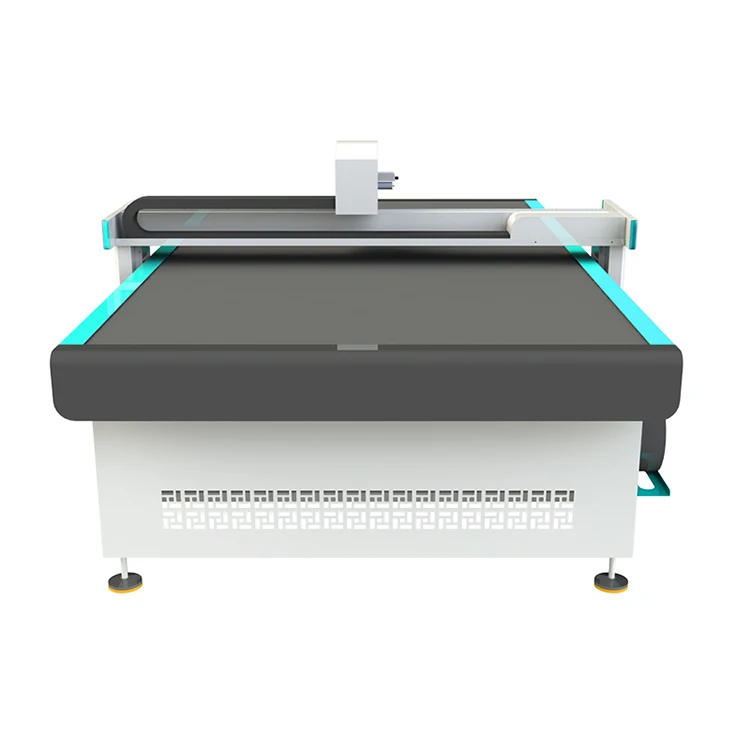
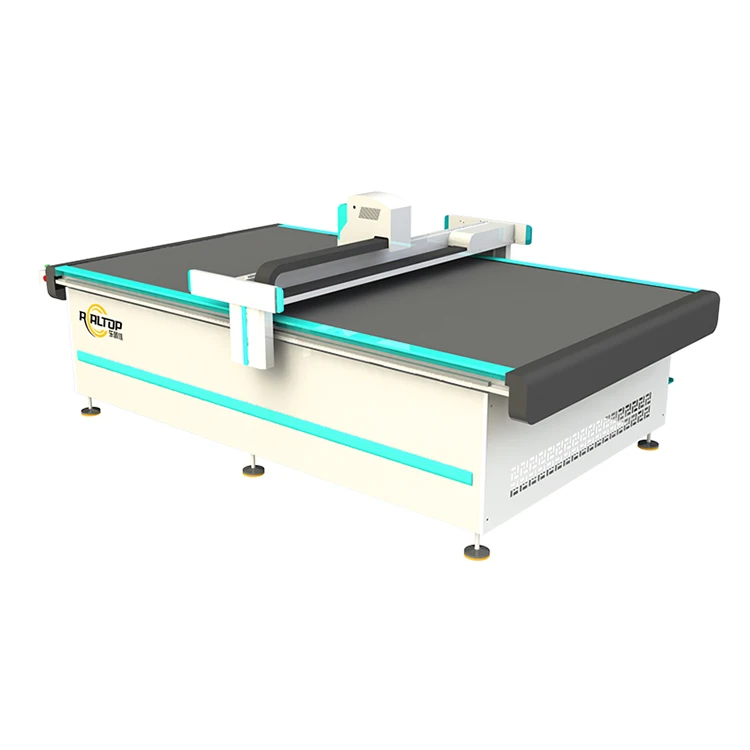
| Product Type | CNC Flatbed Digital Cutting Plotter |
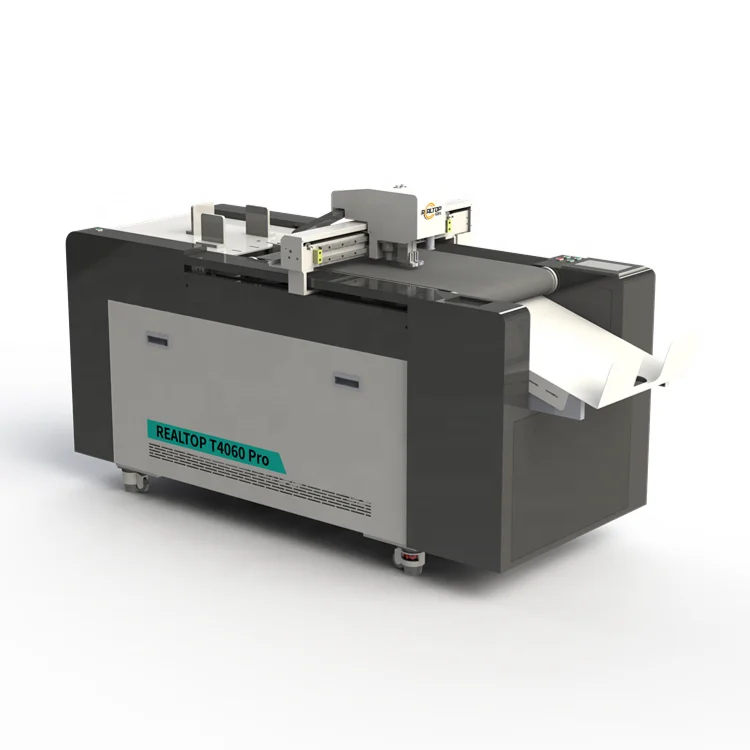
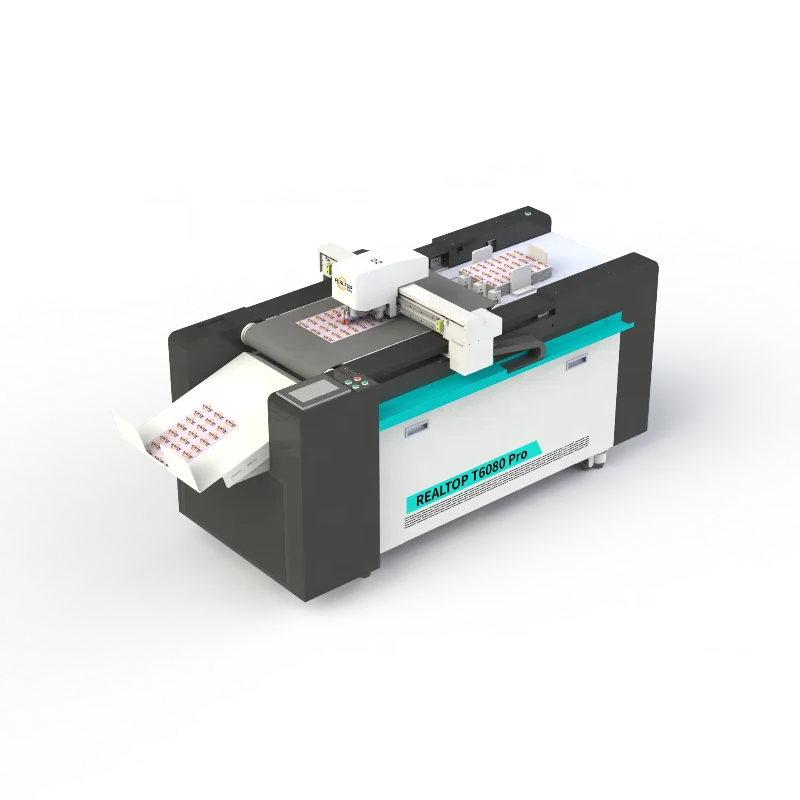
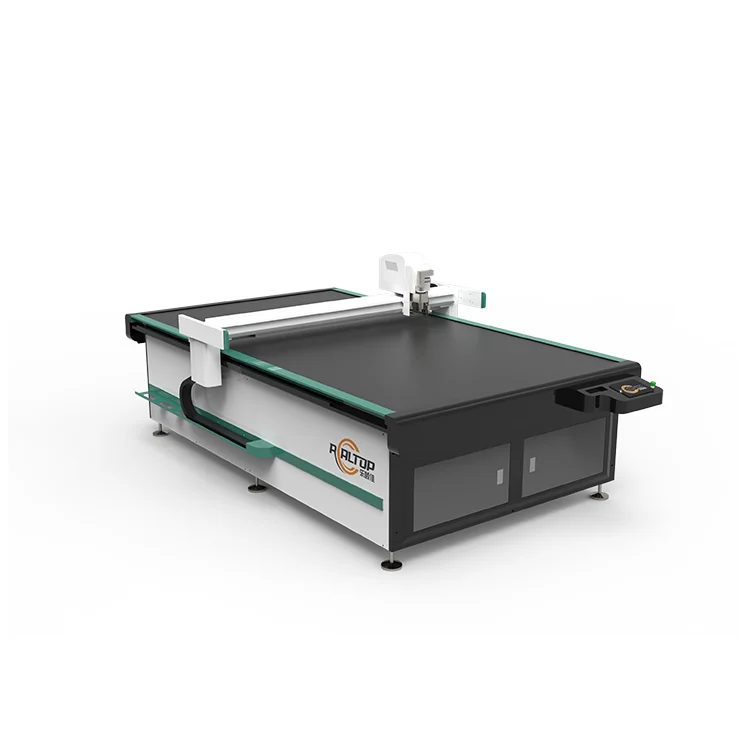
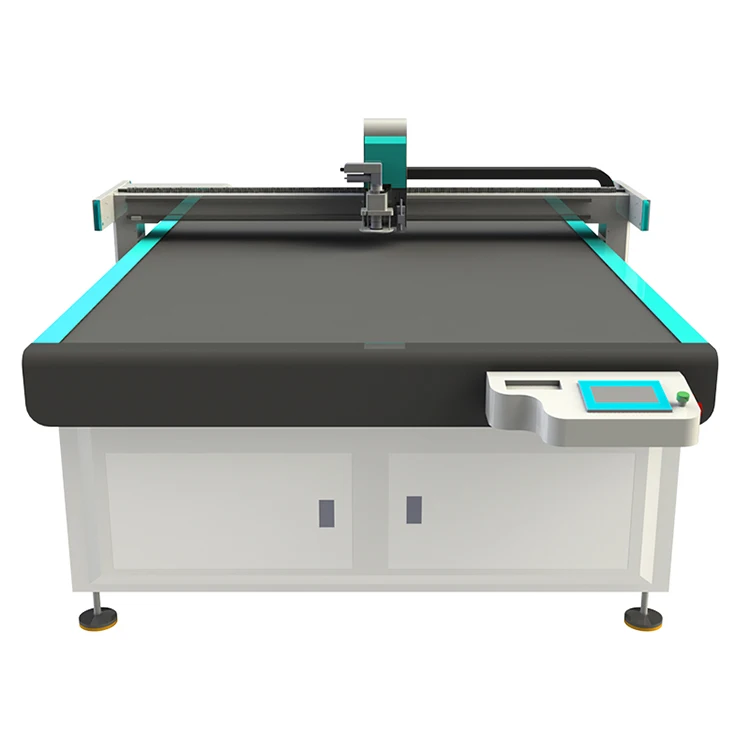
| Model | T-series (4060 / 6080 / 0912) |
| Working Area | 400×600 mm / 600×800 mm / 900×1200 mm |
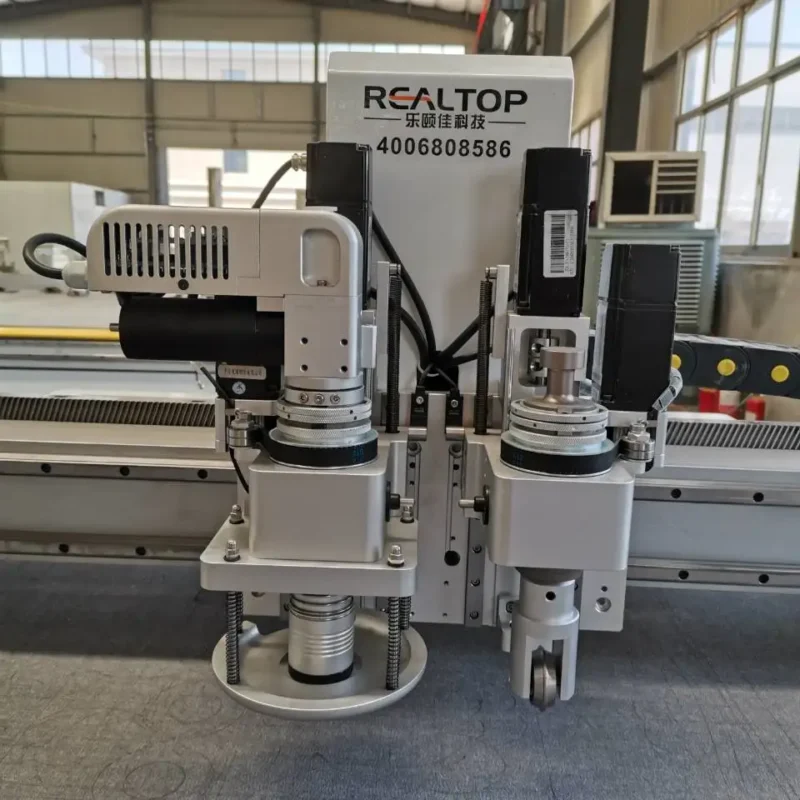
| Tool Head Options | Oscillating knife, Creasing wheel, Kiss cutting tool, CCD camera, Marking pen |
| Cutting Speed | 0–1500 mm/s |
| Maximum Cutting Thickness | ≤ 20 mm |
| Cutting Accuracy | ±0.1 mm |
| Repeat Positioning Precision | ±0.1 mm |
| Vacuum Pump | 2.5 kW / 3.2 kW |
| Voltage | 110V / 220V (configurable) |
| Compatible File Formats | PLT, DXF, AI, PDF |
| Safety Devices | Infrared sensor, Emergency stop |
| Control Language | English, Russian, Italian, Chinese (special languages customizable) |
| Certification | CE |
Application Suitability
| Application | Material or Output |
|---|---|
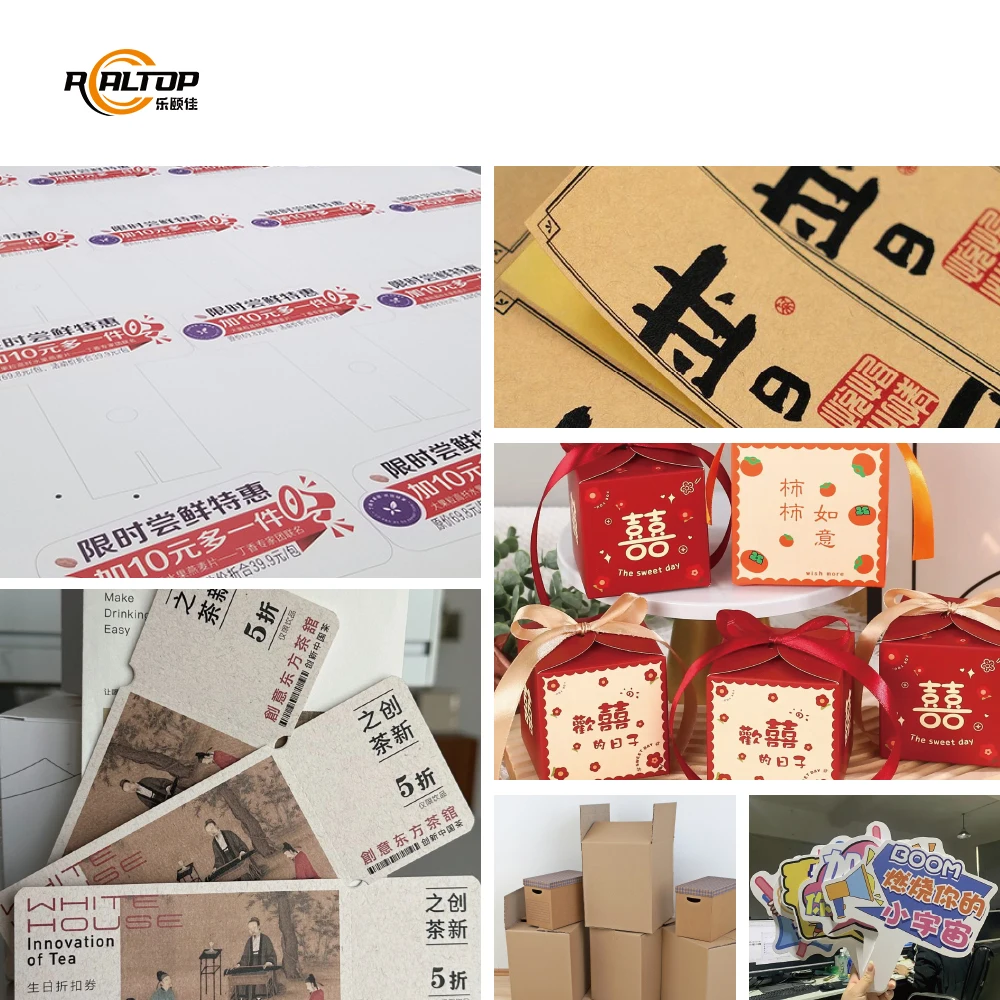
| Packaging prototype sampling | Cardboard, printed carton, corrugated board, greyboard |
| Advertising and signage production | Vinyl sticker, self-adhesive vinyl, PVC stickers, board |
| Store display and decals | Custom car decals, window clings, photo backing paper |
| Cultural and craft design | Paper-cut lamps, 3D greeting cards, leather bookmarks, keychains |
| Education and teaching aids | Puzzles, cards, science experiment templates |
| Light industry gaskets | Electronic foam gaskets, leather tags |
Why "Working Area" Alone Cannot Specify a CNC Digital Cutting Plotter Manufacturer Order
Configuration must follow material type, thickness, and daily volume — not just table size.
I once saw a buyer order a flatbed cutter based purely on a 900×1200 mm working area, then discover their greyboard was far denser than the corrugated samples used during testing. The knife stalled, edges crushed, and the vacuum table could not hold small pieces flat. Reworking the tool head and vacuum zoning after shipment costs time nobody planned for [NEED_CITE: material hardness variation across packaging board grades].
When sourcing from a CNC digital cutting plotter manufacturer, the real specification conversation starts with the stiffest material in your daily rotation, the thickest gasket foam, or the most abrasive leather you run. Working area matters for sheet handling, but it tells you nothing about whether an oscillating knife will slice cleanly through 15 mm foam or whether a creasing wheel will score without cracking coated cardstock.
Matching Tool Heads to the Material You Actually Run
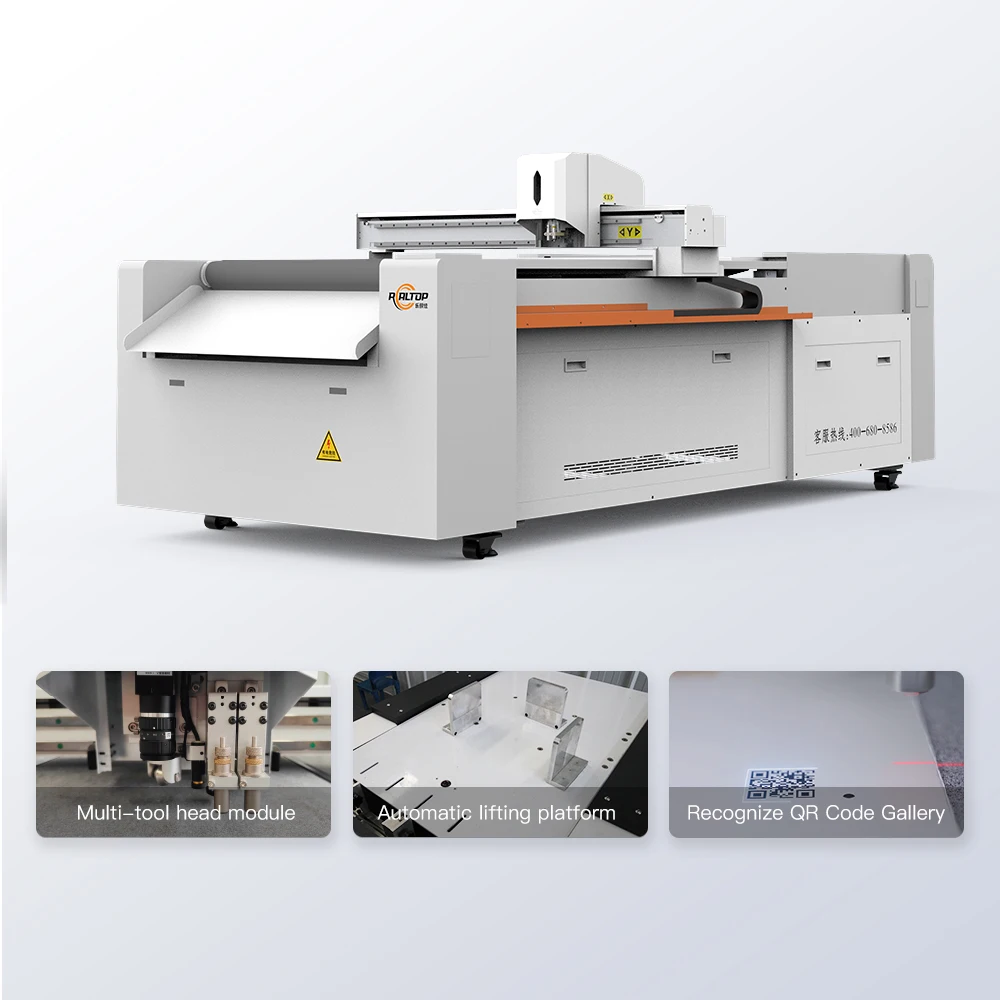
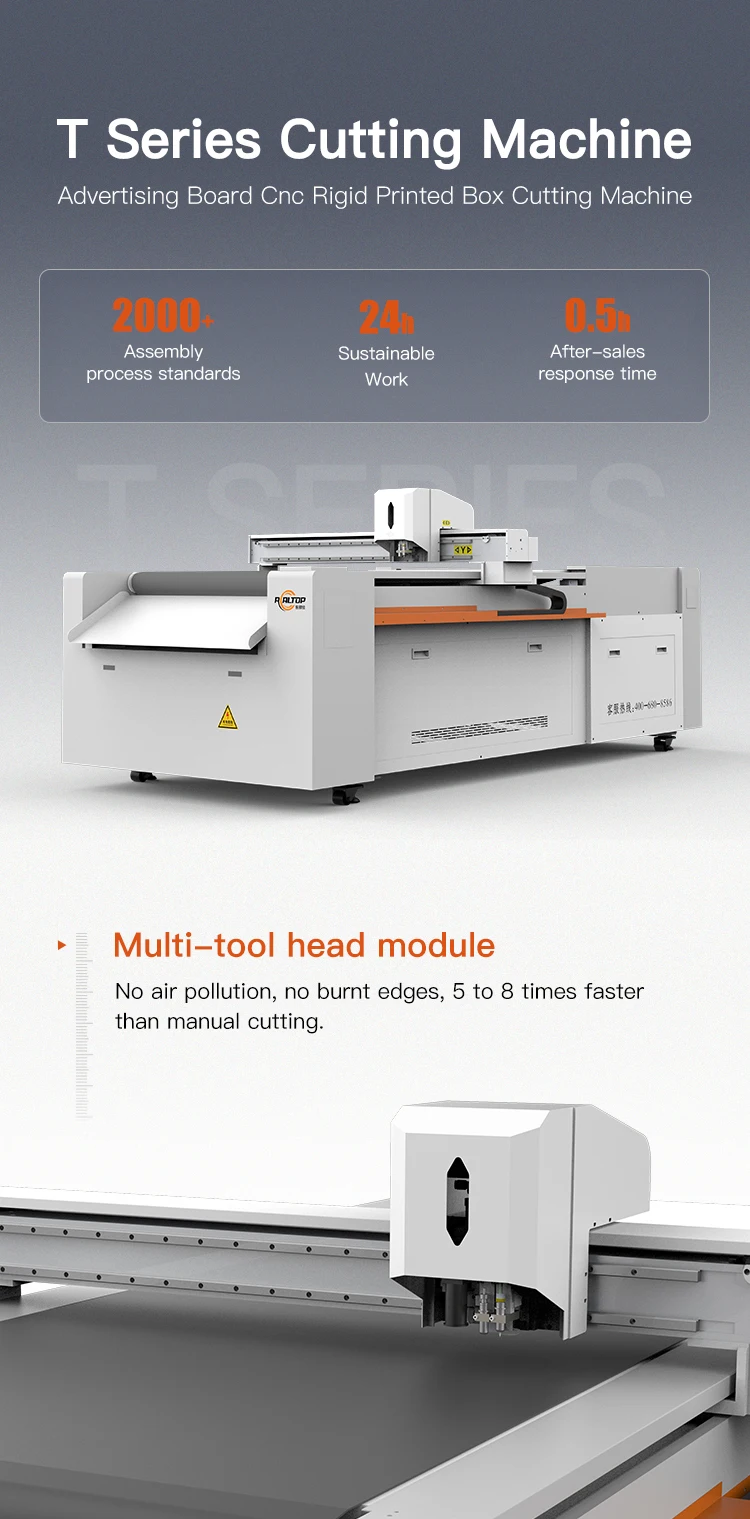
The T-series platform supports oscillating knife, creasing wheel, kiss cutting tool, CCD camera, and marking pen heads on a single gantry. An oscillating knife handles foam and thick gasket material by vibrating at high frequency to shear through compressible layers without crushing. A creasing wheel scores carton along fold lines without cutting through. Selecting the correct head is not optional — it determines whether a packaging sample folds cleanly or splinters at the crease.
CCD Camera Contour Recognition for Printed Graphics
Printed contour cutting requires the CCD camera to locate registration marks at production speed, then adjust the knife path to match any stretch or skew in the printed sheet. This is critical for signage producers running vinyl decals where the printed image never lands in exactly the same position on the cutting bed. The camera must track marks reliably at 1500 mm/s travel speed, which depends on mark contrast, size, and lighting conditions on the shop floor [NEED_CITE: optical registration accuracy in digital finishing workflows].
Reading the Specifications That Matter on the Shop Floor
Cutting accuracy of ±0.1 mm and repeat positioning precision of ±0.1 mm mean that nested parts stay within tolerance across an entire sheet, which matters when packaging samples must assemble without forcing. The 2.5 kW or 3.2 kW vacuum pump must be paired with adequate table zoning — a single large zone will lose suction on small pieces, causing lift during cutting. Maximum cutting thickness of 20 mm is a mechanical limit; actual depth depends on material density, and a CNC digital cutting plotter manufacturer should confirm real cutting depth on your specific stock before the order is finalized. Voltage configurability between 110V and 220V prevents motor burnout or breaker trips in markets where supply standards differ.
The Hidden Cost of Skipping Material Trials
When a buyer commits to a configuration without sending daily production materials for sample cutting, the machine may arrive with a tool head designed for a different density. Soft foam cuts fine with a standard oscillating blade, but high-density EVA or rubber gasket material demands a higher-frequency head. Wrong vacuum zoning causes thin vinyl to lift mid-cut, ruining registration on expensive printed sheets. These failures surface during installation, not during the quotation stage [NEED_CITE: post-delivery reconfiguration costs in CNC cutting equipment].
Why Source This Equipment From Realtop
In-house design and production covers both knife and laser cutting, so you are not forced into one method when your material demands the other. Tool head and table configuration is specified per material and production volume after reviewing your actual samples. CCD camera positioning is calibrated for your print mark format before shipment. Software compatibility with your existing AI, PLT, DXF, or PDF workflow is confirmed during the order stage. Voltage, plug type, and control language are locked in before production begins. Sample cutting on your own material runs before you commit to the final configuration.
Documentation & Verification
- Machine specification sheet listing every tool head and table zone on your ordered configuration
- Electrical schematic and voltage confirmation matched to your facility supply
- Sample cutting report produced on your material with measured edge quality
- Software licence and file format compatibility note covering AI, PLT, DXF, PDF
- Factory test record documenting accuracy and repeatability before crating
- Spare parts list with recommended consumables for your material mix
Installation, Commissioning & Support
- Verify floor levelness across the 4060, 6080, or 0912 footprint before delivery arrives
- Confirm dedicated circuit matching your confirmed 110V or 220V supply and pump rating
- Align vacuum zones to your typical sheet size during first-day commissioning
- Calibrate CCD camera sensitivity using your actual printed registration marks
- Train operators on tool head changeover between oscillating knife and creasing wheel
- Stock replacement blades and creasing wheels matched to your material hardness range
What to Include in Your Inquiry
Send the specific material types, thicknesses, and sheet dimensions you run daily, along with your target production volume and local voltage standard. If you already use nesting software, provide a sample file so format compatibility can be verified before quotation. Request sample cutting on your own stock before finalizing the tool head and vacuum configuration.
Frequently Asked Questions
Q: How do I choose the right tool head for my material?
A: The oscillating knife suits compressible materials like foam and gasket, while the creasing wheel scores carton without cutting through. Kiss cutting works for vinyl and self-adhesive films. Send your actual production materials for sample cutting so the correct head, frequency, and blade type are confirmed before the order.
Q: What does the CCD camera need from my printed sheets?
A: Registration marks must have sufficient contrast against the background and meet minimum size requirements. The camera tracks marks during cutting, but poor print quality or low-contrast marks reduce recognition reliability. Share a printed sample so CCD sensitivity can be tuned to your specific press output before shipment.
Q: How should I confirm voltage and language before shipping?
A: Provide your facility voltage and frequency during the inquiry stage. The T-series supports 110V and 220V configurations. Control language is selectable from English, Russian, Italian, Chinese, or customizable options. Confirming these details before production avoids rewiring or reprogramming on arrival.
Q: Will the software accept my existing design files?
A: The system reads PLT, DXF, AI, and PDF formats. If your workflow uses nesting software or a proprietary file type, share a sample file during the quotation stage so compatibility is verified and any required conversion steps are documented before delivery.
Q: How do I match working area to my production needs?
A: Choose based on your largest standard sheet size and available floor space. The 4060 suits small-format craft and gasket work, the 6080 covers mid-range packaging sampling, and the 0912 handles larger carton and signage sheets. Consider daily volume and how often you change materials when selecting the format.
Material-driven configuration — every T-series tool head and vacuum zone is specified only after sample cutting on the buyer’s actual stock, eliminating guesswork on thickness and edge quality.
Technical Specifications
| Parameter | Value |
|---|---|
| Product Type | CNC Flatbed Digital Cutting Plotter |
| Model | T-series (4060 / 6080 / 0912) |
| Working Area | 400×600 mm / 600×800 mm / 900×1200 mm |
| Tool Head Options | Oscillating knife, Creasing wheel, Kiss cutting tool, CCD camera, Marking pen |
| Cutting Speed | 0–1500 mm/s |
| Maximum Cutting Thickness | ≤ 20 mm |
| Cutting Accuracy | ±0.1 mm |
| Repeat Positioning Precision | ±0.1 mm |
| Vacuum Pump | 2.5 kW / 3.2 kW |
| Voltage | 110V / 220V (configurable) |
| Compatible File Formats | PLT, DXF, AI, PDF |
| Safety Devices | Infrared sensor, Emergency stop |
| Control Language | English, Russian, Italian, Chinese (special languages customizable) |
| Certification | CE |
Application Suitability
| Application | Material or Output |
|---|---|
| Packaging prototype sampling | Cardboard, printed carton, corrugated board, greyboard |
| Advertising and signage production | Vinyl sticker, self-adhesive vinyl, PVC stickers, board |
| Store display and decals | Custom car decals, window clings, photo backing paper |
| Cultural and craft design | Paper-cut lamps, 3D greeting cards, leather bookmarks, keychains |
| Education and teaching aids | Puzzles, cards, science experiment templates |
| Light industry gaskets | Electronic foam gaskets, leather tags |
Why "Working Area" Alone Cannot Specify a CNC Digital Cutting Plotter Manufacturer Order
Configuration must follow material type, thickness, and daily volume — not just table size.
I once saw a buyer order a flatbed cutter based purely on a 900×1200 mm working area, then discover their greyboard was far denser than the corrugated samples used during testing. The knife stalled, edges crushed, and the vacuum table could not hold small pieces flat. Reworking the tool head and vacuum zoning after shipment costs time nobody planned for [NEED_CITE: material hardness variation across packaging board grades].
When sourcing from a CNC digital cutting plotter manufacturer, the real specification conversation starts with the stiffest material in your daily rotation, the thickest gasket foam, or the most abrasive leather you run. Working area matters for sheet handling, but it tells you nothing about whether an oscillating knife will slice cleanly through 15 mm foam or whether a creasing wheel will score without cracking coated cardstock.
Matching Tool Heads to the Material You Actually Run
The T-series platform supports oscillating knife, creasing wheel, kiss cutting tool, CCD camera, and marking pen heads on a single gantry. An oscillating knife handles foam and thick gasket material by vibrating at high frequency to shear through compressible layers without crushing. A creasing wheel scores carton along fold lines without cutting through. Selecting the correct head is not optional — it determines whether a packaging sample folds cleanly or splinters at the crease.
CCD Camera Contour Recognition for Printed Graphics
Printed contour cutting requires the CCD camera to locate registration marks at production speed, then adjust the knife path to match any stretch or skew in the printed sheet. This is critical for signage producers running vinyl decals where the printed image never lands in exactly the same position on the cutting bed. The camera must track marks reliably at 1500 mm/s travel speed, which depends on mark contrast, size, and lighting conditions on the shop floor [NEED_CITE: optical registration accuracy in digital finishing workflows].
Reading the Specifications That Matter on the Shop Floor
Cutting accuracy of ±0.1 mm and repeat positioning precision of ±0.1 mm mean that nested parts stay within tolerance across an entire sheet, which matters when packaging samples must assemble without forcing. The 2.5 kW or 3.2 kW vacuum pump must be paired with adequate table zoning — a single large zone will lose suction on small pieces, causing lift during cutting. Maximum cutting thickness of 20 mm is a mechanical limit; actual depth depends on material density, and a CNC digital cutting plotter manufacturer should confirm real cutting depth on your specific stock before the order is finalized. Voltage configurability between 110V and 220V prevents motor burnout or breaker trips in markets where supply standards differ.
The Hidden Cost of Skipping Material Trials
When a buyer commits to a configuration without sending daily production materials for sample cutting, the machine may arrive with a tool head designed for a different density. Soft foam cuts fine with a standard oscillating blade, but high-density EVA or rubber gasket material demands a higher-frequency head. Wrong vacuum zoning causes thin vinyl to lift mid-cut, ruining registration on expensive printed sheets. These failures surface during installation, not during the quotation stage [NEED_CITE: post-delivery reconfiguration costs in CNC cutting equipment].
Why Source This Equipment From Realtop
In-house design and production covers both knife and laser cutting, so you are not forced into one method when your material demands the other. Tool head and table configuration is specified per material and production volume after reviewing your actual samples. CCD camera positioning is calibrated for your print mark format before shipment. Software compatibility with your existing AI, PLT, DXF, or PDF workflow is confirmed during the order stage. Voltage, plug type, and control language are locked in before production begins. Sample cutting on your own material runs before you commit to the final configuration.
Documentation & Verification
- Machine specification sheet listing every tool head and table zone on your ordered configuration
- Electrical schematic and voltage confirmation matched to your facility supply
- Sample cutting report produced on your material with measured edge quality
- Software licence and file format compatibility note covering AI, PLT, DXF, PDF
- Factory test record documenting accuracy and repeatability before crating
- Spare parts list with recommended consumables for your material mix
Installation, Commissioning & Support
- Verify floor levelness across the 4060, 6080, or 0912 footprint before delivery arrives
- Confirm dedicated circuit matching your confirmed 110V or 220V supply and pump rating
- Align vacuum zones to your typical sheet size during first-day commissioning
- Calibrate CCD camera sensitivity using your actual printed registration marks
- Train operators on tool head changeover between oscillating knife and creasing wheel
- Stock replacement blades and creasing wheels matched to your material hardness range
What to Include in Your Inquiry
Send the specific material types, thicknesses, and sheet dimensions you run daily, along with your target production volume and local voltage standard. If you already use nesting software, provide a sample file so format compatibility can be verified before quotation. Request sample cutting on your own stock before finalizing the tool head and vacuum configuration.
Frequently Asked Questions
Q: How do I choose the right tool head for my material?
A: The oscillating knife suits compressible materials like foam and gasket, while the creasing wheel scores carton without cutting through. Kiss cutting works for vinyl and self-adhesive films. Send your actual production materials for sample cutting so the correct head, frequency, and blade type are confirmed before the order.
Q: What does the CCD camera need from my printed sheets?
A: Registration marks must have sufficient contrast against the background and meet minimum size requirements. The camera tracks marks during cutting, but poor print quality or low-contrast marks reduce recognition reliability. Share a printed sample so CCD sensitivity can be tuned to your specific press output before shipment.
Q: How should I confirm voltage and language before shipping?
A: Provide your facility voltage and frequency during the inquiry stage. The T-series supports 110V and 220V configurations. Control language is selectable from English, Russian, Italian, Chinese, or customizable options. Confirming these details before production avoids rewiring or reprogramming on arrival.
Q: Will the software accept my existing design files?
A: The system reads PLT, DXF, AI, and PDF formats. If your workflow uses nesting software or a proprietary file type, share a sample file during the quotation stage so compatibility is verified and any required conversion steps are documented before delivery.
Q: How do I match working area to my production needs?
A: Choose based on your largest standard sheet size and available floor space. The 4060 suits small-format craft and gasket work, the 6080 covers mid-range packaging sampling, and the 0912 handles larger carton and signage sheets. Consider daily volume and how often you change materials when selecting the format.
商品评价
There are no reviews yet.