


Fast Delivery
Quick, reliable shipping to any location.

Free & easy returns
Return this item by mail or in store within 90 days for a full refund.
In-house cutting technology coverage — REALTOP designs both knife and laser systems under one roof, so fabric buyers match the process to the material rather than compromise on a single method.
Technical Specifications
| Parameter | Value |
|---|---|
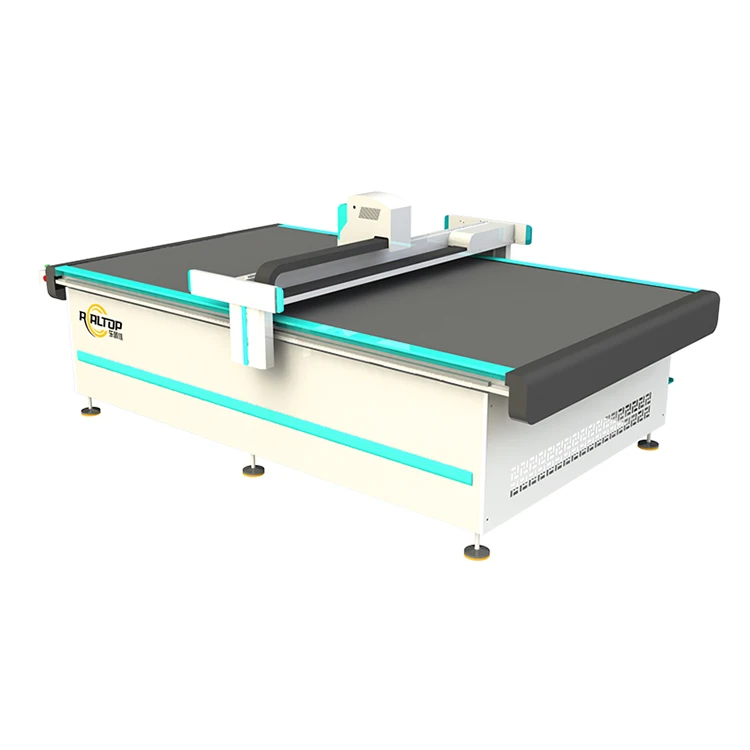
| Product Type | CNC Fabric Cutting Machine |
| Working Area Options | 1700×2000mm / 1900×2000mm / 2300×3300mm |
| Max Operating Speed | 80 m/min (basis not stated in source — confirm material / thickness / tool head) |
| Average Cutting Speed | 12 m/min (basis not stated in source — confirm material / thickness / tool head) |
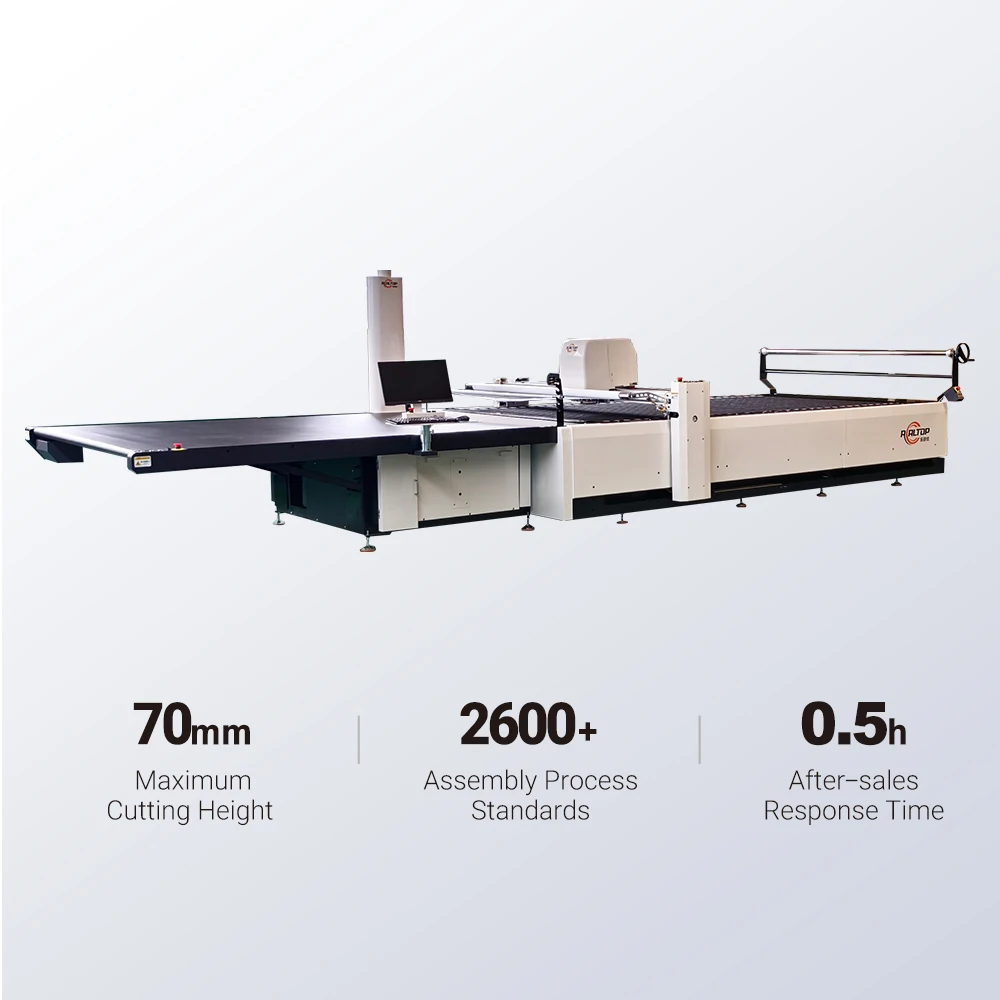
| Cutting Thickness | Up to 70 mm after adsorption (basis not stated in source — confirm material type and layer count) |
| Voltage & Frequency | 380V / 50Hz |
| Max Power | 26 kW (rated or peak not specified in source) |
| Air Flow Volume | 160 L/min |
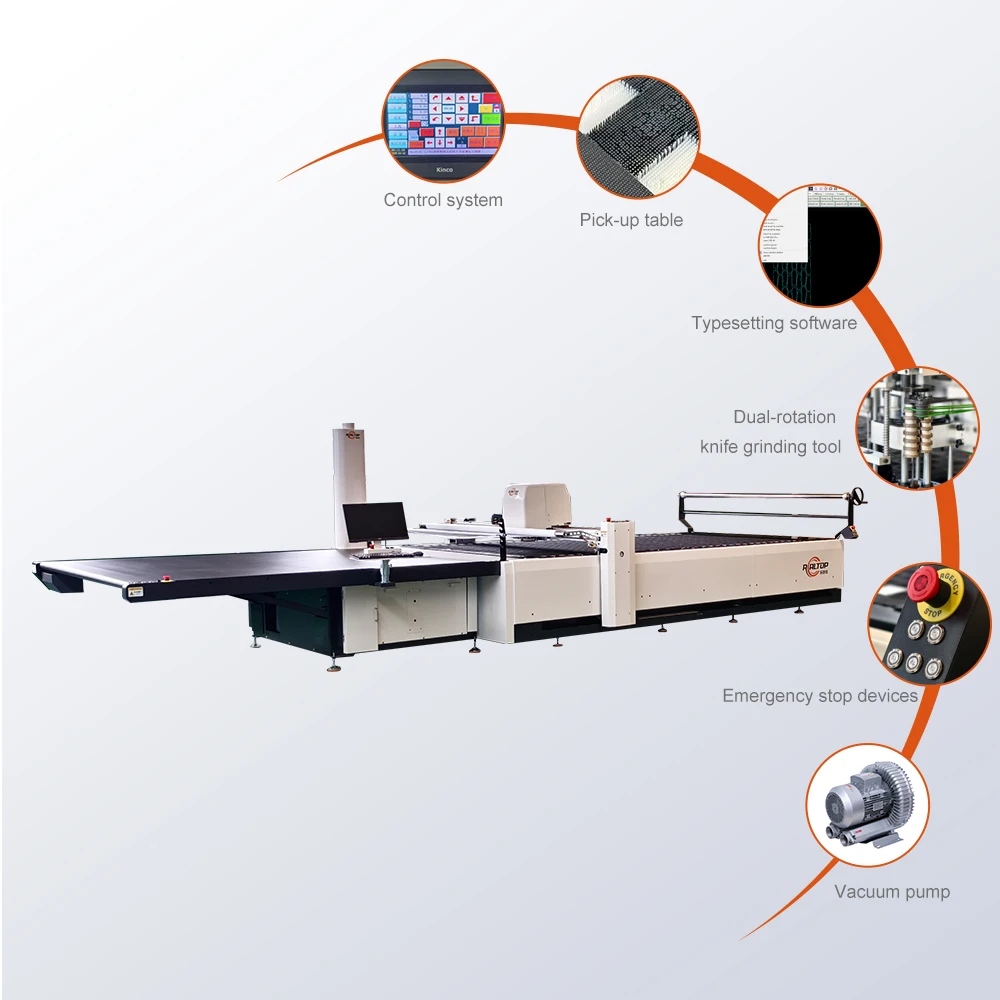
| Blade Grinding Method | Double rotary sharpener |
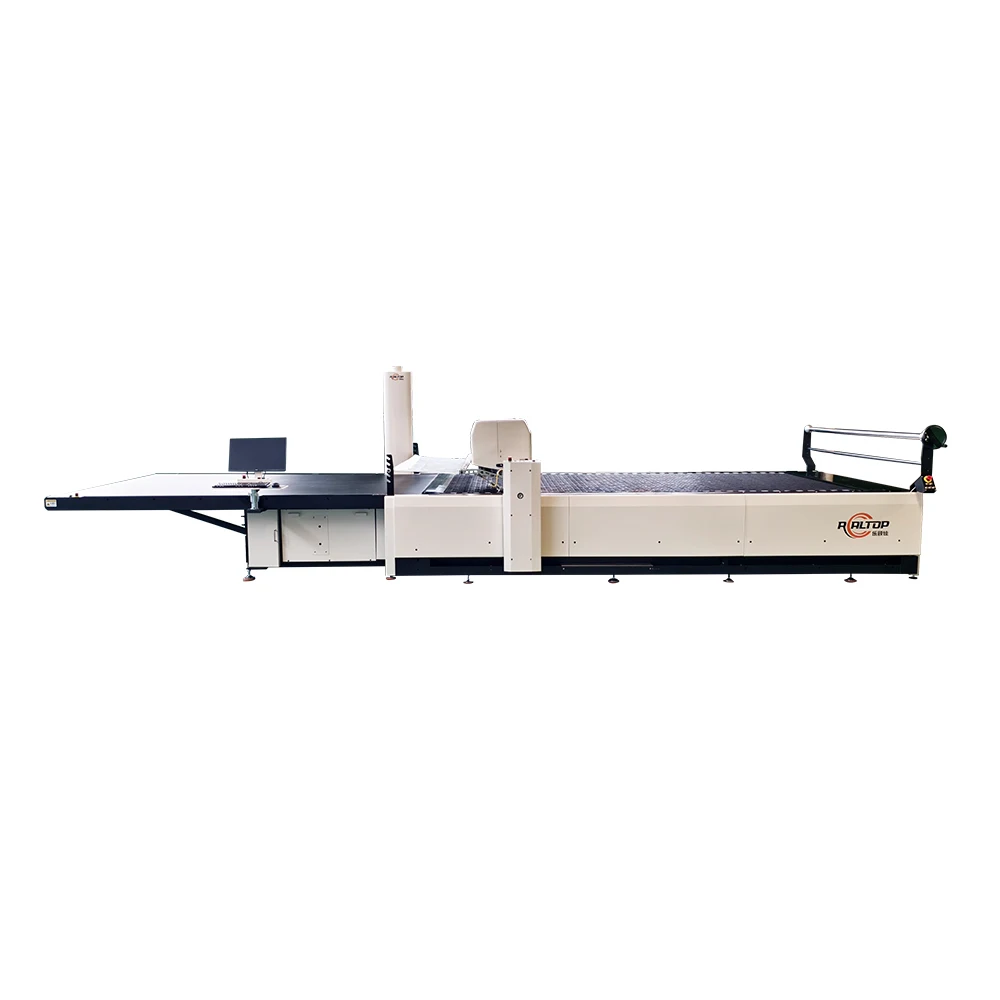
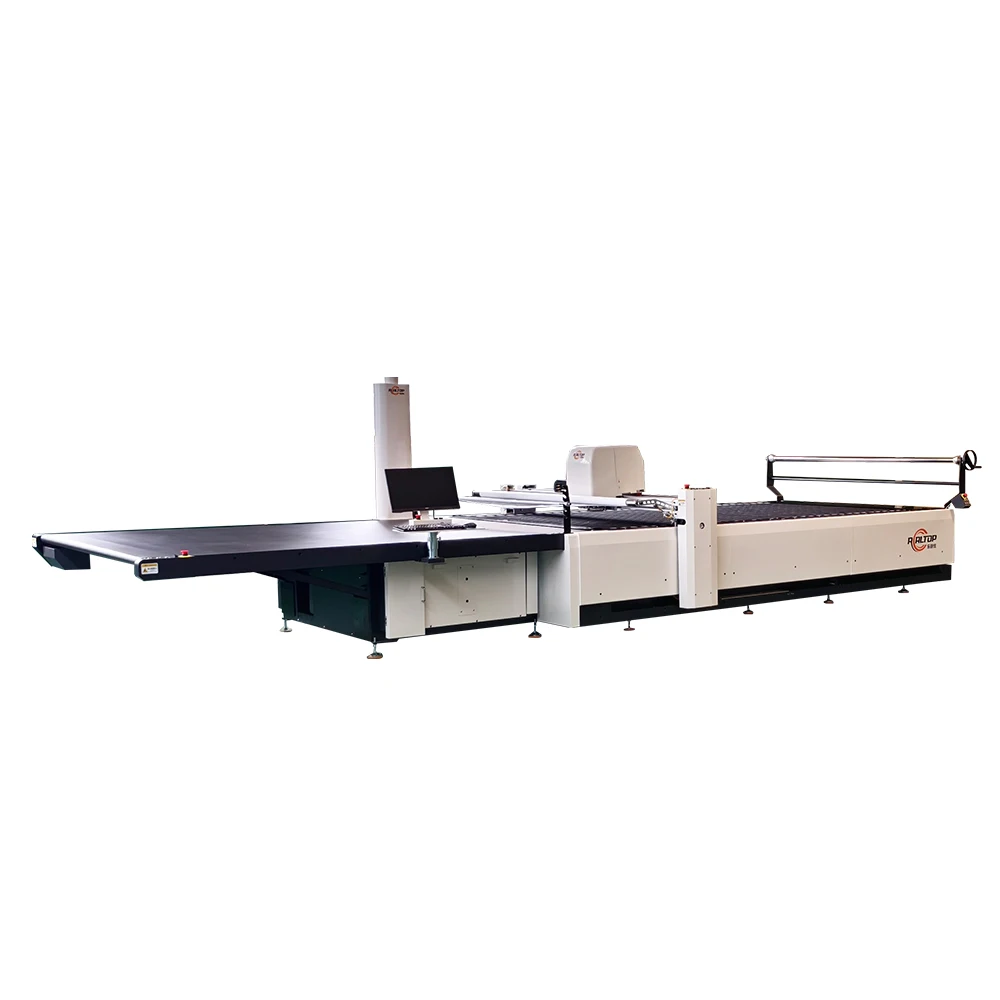
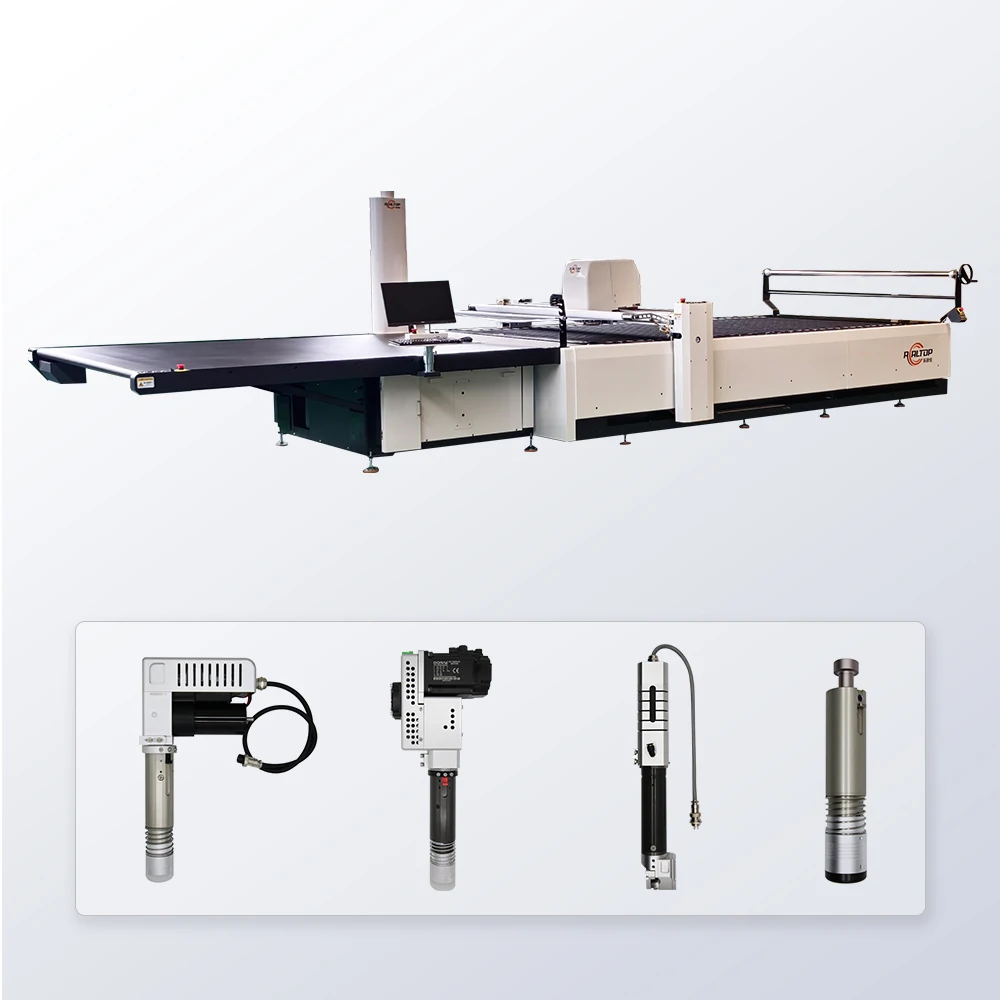
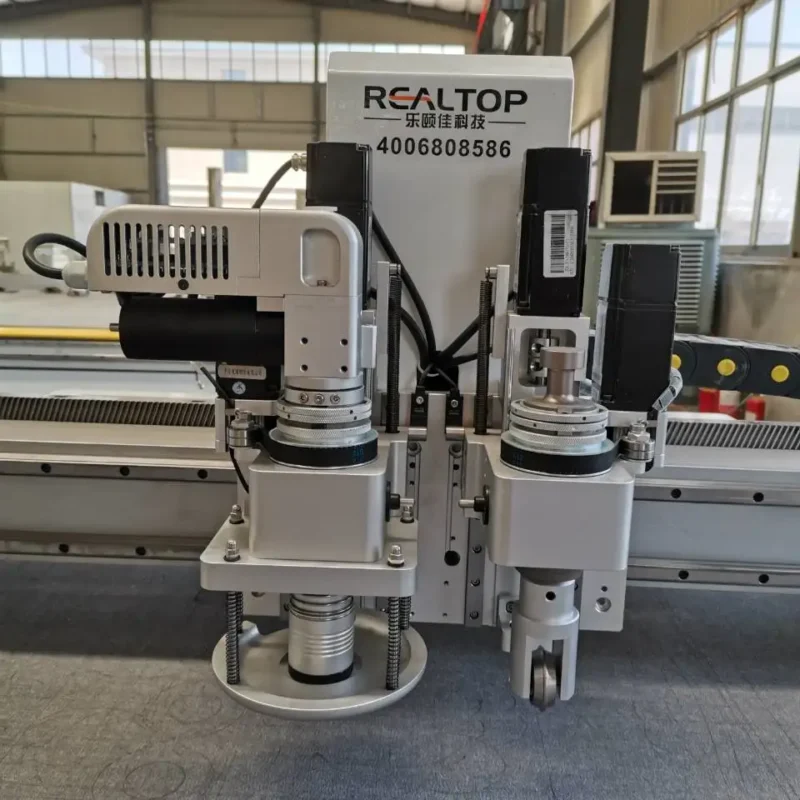
| Tool Head | Interchangeable cutting knife |
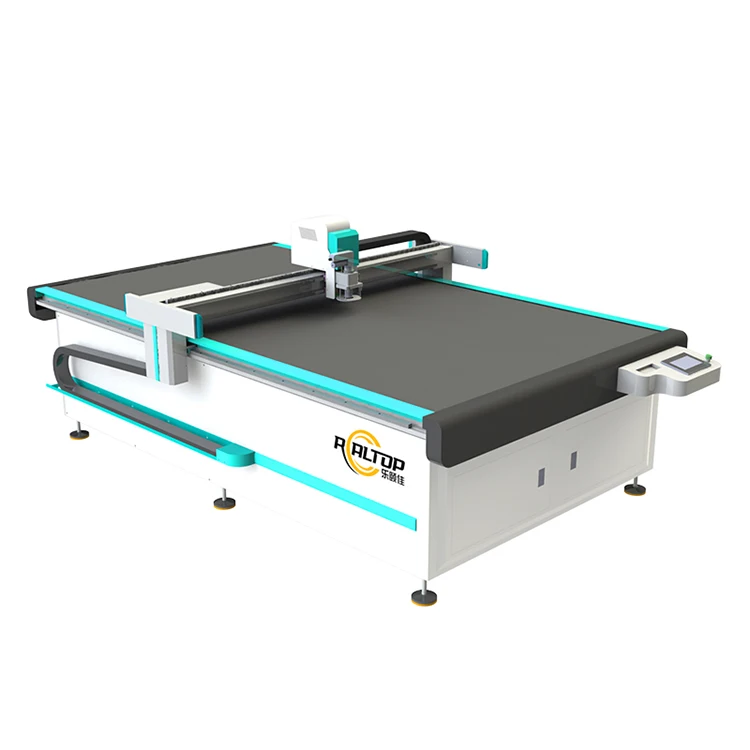
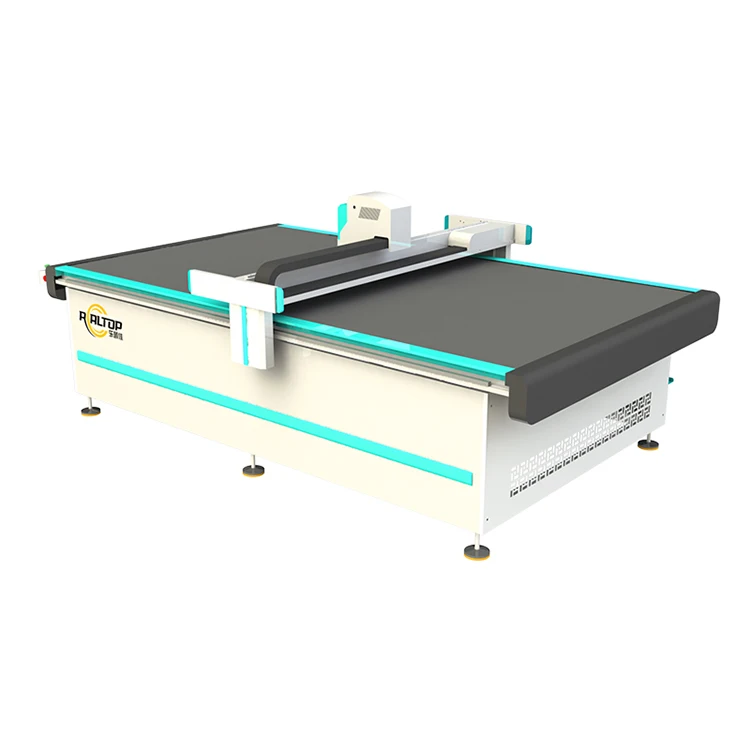
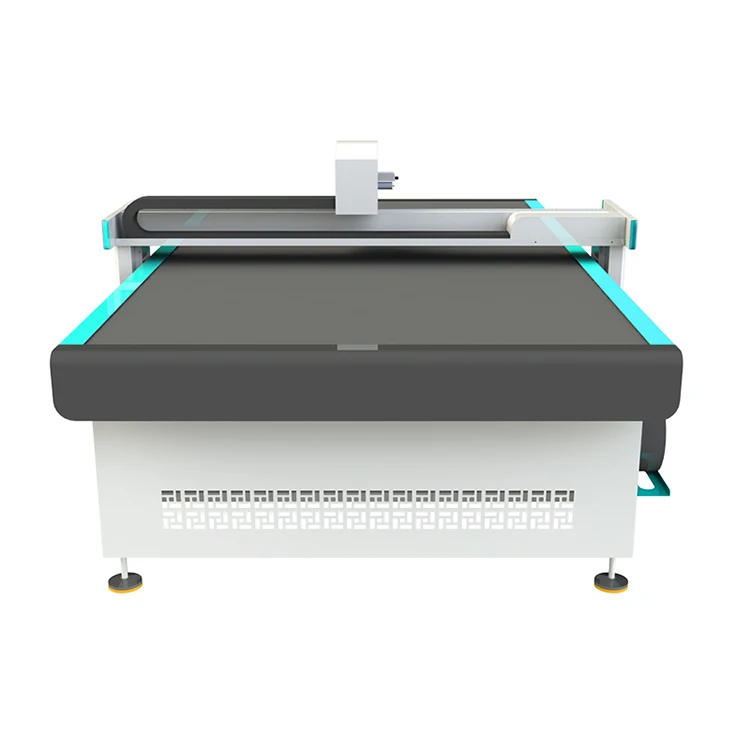
| Vacuum Table | Aluminum bellows vacuum table (full surface adsorption) |
| Vacuum Pump | Custom high-efficiency pump, aerospace-grade aluminum casting |
| Control System | PLC control panel with optional display languages |
| Servo Drive Options | Panasonic / Delta / Dorna |
| Repeat Positioning Accuracy | ±0.1 mm |
| Supported File Formats | DXF / PLT / AI / PDF |
| Language Options | English, Russian, Italian, Chinese (special languages customizable) |
| Standards | CE |
Application Suitability
| Application | Material or Output |
|---|---|
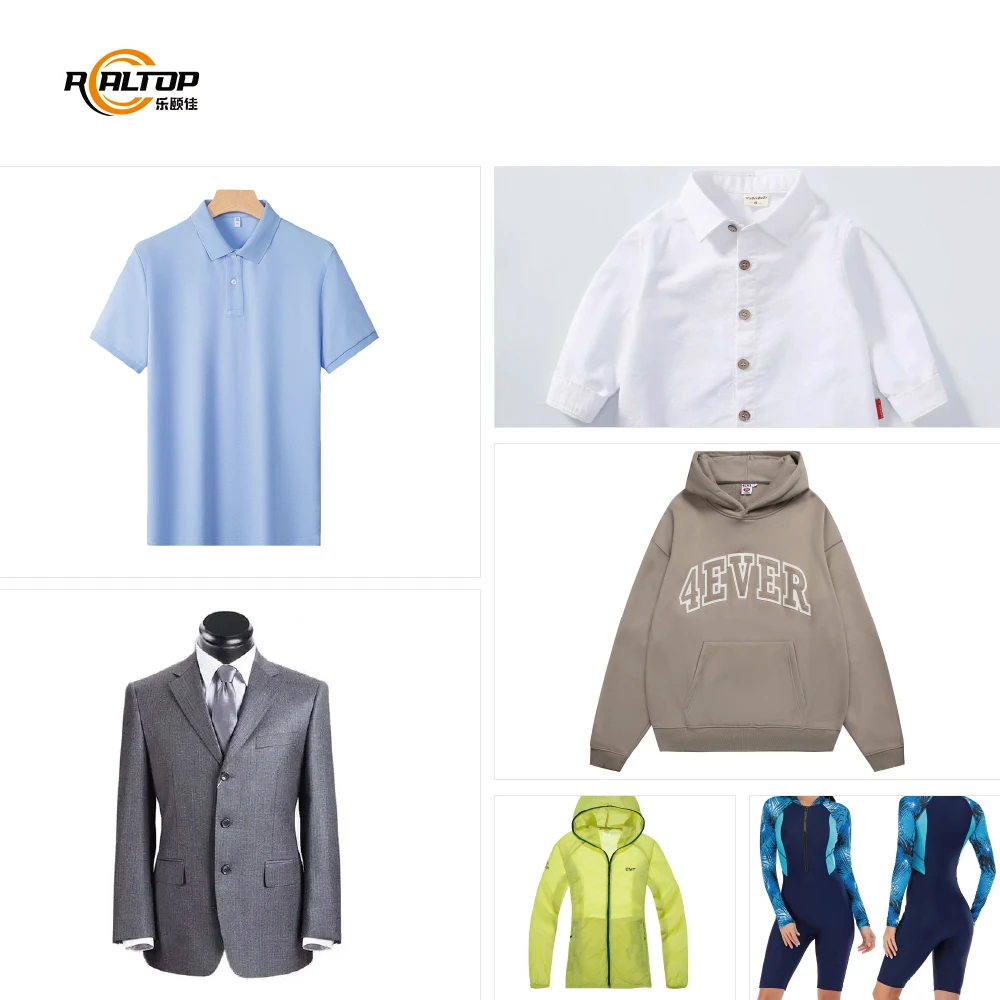
| Apparel manufacturing | Suits, knitwear, lace, complex woven and knitted fabrics with pattern-matching layouts |
| Home textiles | Sofa fabrics, curtains, rugs in single-ply or multi-layer layups secured by vacuum adsorption |
| Flexible material processing | Plush, fleece, technical textiles, and other soft materials within the 0.1–70 mm thickness range |
Why Cutting Depth Claims Fail on Real Sofa Upholstery
Specified thickness alone does not guarantee clean cuts through dense, multi-layer fabric stacks.
Many fabric producers choose a flatbed cutter based only on the maximum cutting depth listed on a brochure. Once the machine arrives, they load a dense velvet or heavy chenille layup and find the blade drags, the bottom layers shift, or the edges fuse together. The problem is rarely the blade itself — it is usually insufficient vacuum holding force or a tool head that cannot maintain stroke frequency through resistant material. A CNC fabric cutting machine manufacturer must confirm the exact fabric composition, ply count, and backing type before locking in the vacuum pump rating and knife oscillation speed [NEED_CITE: vacuum adsorption requirements for multi-layer textile cutting].
Matching the Knife Head to Fabric Behavior
Different fabrics respond to oscillating and drag knife action in opposite ways. Loose-weave materials tend to fray under a drag knife, while dense coated textiles require high-frequency oscillation to separate cleanly. The interchangeable cutting knife head on this CNC fabric cutting machine allows operators to switch tooling between jobs without changing the machine, keeping edge quality consistent across velvet, linen, and synthetic blends.
Vacuum Table Zoning and Small Part Stability
Sofa production generates many small pattern pieces — armrest panels, piping strips, cushion inserts — that can lift off the table if the vacuum zone is too large. The aluminum bellows vacuum table provides full-surface adsorption, and the aerospace-grade aluminum casting pump maintains steady suction across the bed. When cutting narrow strips or small gusset pieces, the holding force must be sufficient to prevent material drift at the maximum operating speed [NEED_CITE: flatbed vacuum table zoning standards for textile cutting].
What the Speed and Power Figures Actually Mean
The listed 80 m/min maximum operating speed reflects rapid traverse between cuts, not the cutting stroke itself. Actual cutting speed depends on fabric density, ply count, and pattern complexity — a dense sofa chenille will cut considerably slower than a single-ply curtain liner. The 26 kW maximum power rating covers the combined draw of the servo drives, vacuum pump, and control system; buyers should confirm whether this is a continuous or peak figure to size their workshop electrical supply correctly. Repeat positioning accuracy of ±0.1 mm ensures that pattern-matching layouts for striped or printed sofa fabrics register correctly across multiple plies.
The Cost of Skipping the Material Test
When a buyer orders a cutting table based on working area alone and skips the sample cutting step, the first production run often reveals problems. Small parts drift because vacuum zoning was not matched to the nesting layout. Thick upholstery foam compresses under the blade and springs back with ragged edges. The control panel arrives in a language the operators cannot read, and the first day is lost to translation. These issues are not machine defects — they are specification gaps that a pre-shipment material test would have caught [NEED_CITE: pre-shipment sample cutting protocol for industrial textile equipment].
Why Source From a Manufacturer Covering Both Knife and Laser
REALTOP builds both oscillating knife and laser cutting systems in-house, which means the recommendation is driven by the material rather than by the need to sell one technology. For natural fiber sofa fabrics where edge sealing is not required, knife cutting preserves the hand and drape of the textile. For synthetic materials where a sealed edge prevents fraying, a laser system may be more appropriate. The tool head and table configuration are specified per material and production volume, not pulled from a standard catalogue page. Software compatibility is confirmed before the order, and voltage, plug type, and control language are locked in to match the destination workshop. Buyers can request sample cutting on their own fabric before committing to a purchase order.
Documentation & Verification
- Machine specification sheet listing the confirmed working area, tool head, and vacuum table configuration
- Electrical schematic with voltage and frequency matched to your workshop supply
- Sample cutting report produced on your specific sofa fabric before shipment
- Software license and file format compatibility note covering DXF, PLT, AI, and PDF
- Factory test record documenting repeat positioning accuracy and vacuum holding performance
- Operation and maintenance manual in your selected control language
Installation, Commissioning & Support
- Floor space planning based on the selected working area (up to 2300×3300mm) plus operator clearance
- Dedicated 380V / 50Hz circuit sized for the 26 kW maximum power draw
- Machine arrives with the heavy-duty frame and vacuum table assembled; gantry and tool head require on-site mounting
- First-run parameter tuning for your specific fabric type, ply count, and nesting layout
- Operator training on the PLC control panel in the confirmed display language
- Spare blade and double rotary sharpener consumables included for initial production period
What to Share With Your Inquiry
To recommend the right working area and tool head configuration, please provide your primary fabric types, typical ply count or layup thickness, and average daily cutting volume. Include your workshop voltage and frequency, the control panel language your operators need, and whether your existing nesting software exports DXF, PLT, AI, or PDF files. If you are replacing a machine in an existing line, share the upstream and downstream equipment so we can confirm throughput compatibility.
Frequently Asked Questions
Q: How do I decide between knife cutting and laser cutting for my sofa fabrics?
A: Natural fibers like cotton, linen, and wool generally cut better with an oscillating knife because the mechanical action preserves the fabric hand without heat damage. Synthetic materials such as polyester or nylon may benefit from laser cutting, which seals the edge and prevents fraying. REALTOP builds both technologies in-house, so the recommendation is based on your actual material rather than a single-technology limitation.
Q: Which working area size matches my fabric roll width and layup?
A: The available working areas — 1700×2000mm, 1900×2000mm, and 2300×3300mm — should be matched to your widest fabric roll and the nesting layout your software generates. If you cut wide sofa upholstery fabrics or need to nest multiple garment sizes in one layup, the larger format reduces repositioning stops and improves material yield.
Q: What voltage and control language options are available before shipment?
A: The standard configuration is 380V / 50Hz, but voltage and plug type can be customized for your destination market. The PLC control panel supports English, Russian, Italian, and Chinese as standard, with special languages available on request. Confirming these details before production avoids delays and rework at your workshop.
Q: How do the catalogue models map to different daily production volumes?
A: Higher daily volumes generally require a larger working area to accommodate bigger layups and reduce loading cycles, combined with a servo drive option that sustains consistent speed under load. Sharing your target daily output and typical pattern complexity allows the configuration to be matched to your throughput requirement.
Q: What file formats and nesting software are supported?
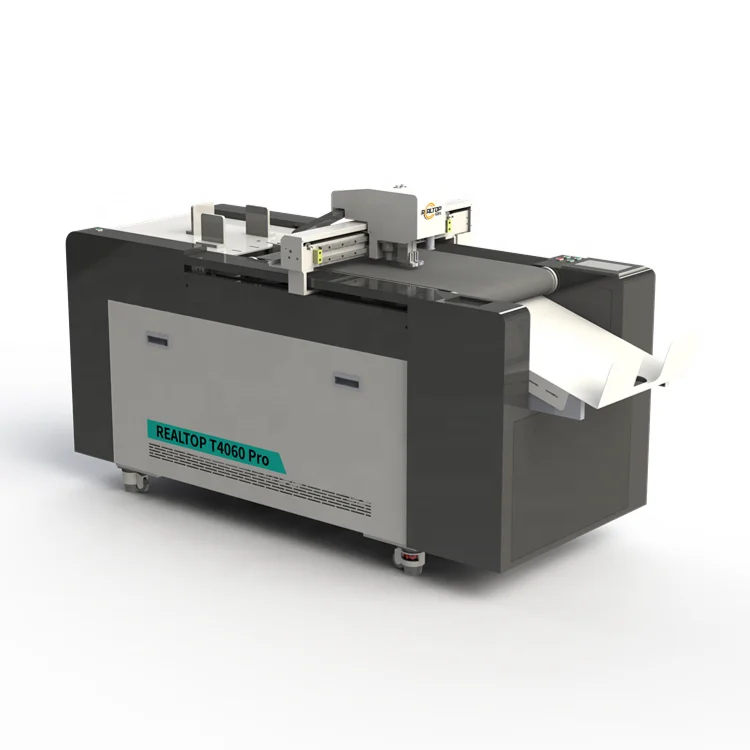
A: The system accepts DXF, PLT, AI, and PDF files directly. If your existing design or nesting software exports in one of these formats, file transfer is straightforward. Software compatibility is verified before the order is finalized, and a dedicated packaging box structure design software module is included for buyers who also need carton sample cutting capability.
In-house cutting technology coverage — REALTOP designs both knife and laser systems under one roof, so fabric buyers match the process to the material rather than compromise on a single method.
Technical Specifications
| Parameter | Value |
|---|---|
| Product Type | CNC Fabric Cutting Machine |
| Working Area Options | 1700×2000mm / 1900×2000mm / 2300×3300mm |
| Max Operating Speed | 80 m/min (basis not stated in source — confirm material / thickness / tool head) |
| Average Cutting Speed | 12 m/min (basis not stated in source — confirm material / thickness / tool head) |
| Cutting Thickness | Up to 70 mm after adsorption (basis not stated in source — confirm material type and layer count) |
| Voltage & Frequency | 380V / 50Hz |
| Max Power | 26 kW (rated or peak not specified in source) |
| Air Flow Volume | 160 L/min |
| Blade Grinding Method | Double rotary sharpener |
| Tool Head | Interchangeable cutting knife |
| Vacuum Table | Aluminum bellows vacuum table (full surface adsorption) |
| Vacuum Pump | Custom high-efficiency pump, aerospace-grade aluminum casting |
| Control System | PLC control panel with optional display languages |
| Servo Drive Options | Panasonic / Delta / Dorna |
| Repeat Positioning Accuracy | ±0.1 mm |
| Supported File Formats | DXF / PLT / AI / PDF |
| Language Options | English, Russian, Italian, Chinese (special languages customizable) |
| Standards | CE |
Application Suitability
| Application | Material or Output |
|---|---|
| Apparel manufacturing | Suits, knitwear, lace, complex woven and knitted fabrics with pattern-matching layouts |
| Home textiles | Sofa fabrics, curtains, rugs in single-ply or multi-layer layups secured by vacuum adsorption |
| Flexible material processing | Plush, fleece, technical textiles, and other soft materials within the 0.1–70 mm thickness range |
Why Cutting Depth Claims Fail on Real Sofa Upholstery
Specified thickness alone does not guarantee clean cuts through dense, multi-layer fabric stacks.
Many fabric producers choose a flatbed cutter based only on the maximum cutting depth listed on a brochure. Once the machine arrives, they load a dense velvet or heavy chenille layup and find the blade drags, the bottom layers shift, or the edges fuse together. The problem is rarely the blade itself — it is usually insufficient vacuum holding force or a tool head that cannot maintain stroke frequency through resistant material. A CNC fabric cutting machine manufacturer must confirm the exact fabric composition, ply count, and backing type before locking in the vacuum pump rating and knife oscillation speed [NEED_CITE: vacuum adsorption requirements for multi-layer textile cutting].
Matching the Knife Head to Fabric Behavior
Different fabrics respond to oscillating and drag knife action in opposite ways. Loose-weave materials tend to fray under a drag knife, while dense coated textiles require high-frequency oscillation to separate cleanly. The interchangeable cutting knife head on this CNC fabric cutting machine allows operators to switch tooling between jobs without changing the machine, keeping edge quality consistent across velvet, linen, and synthetic blends.
Vacuum Table Zoning and Small Part Stability
Sofa production generates many small pattern pieces — armrest panels, piping strips, cushion inserts — that can lift off the table if the vacuum zone is too large. The aluminum bellows vacuum table provides full-surface adsorption, and the aerospace-grade aluminum casting pump maintains steady suction across the bed. When cutting narrow strips or small gusset pieces, the holding force must be sufficient to prevent material drift at the maximum operating speed [NEED_CITE: flatbed vacuum table zoning standards for textile cutting].
What the Speed and Power Figures Actually Mean
The listed 80 m/min maximum operating speed reflects rapid traverse between cuts, not the cutting stroke itself. Actual cutting speed depends on fabric density, ply count, and pattern complexity — a dense sofa chenille will cut considerably slower than a single-ply curtain liner. The 26 kW maximum power rating covers the combined draw of the servo drives, vacuum pump, and control system; buyers should confirm whether this is a continuous or peak figure to size their workshop electrical supply correctly. Repeat positioning accuracy of ±0.1 mm ensures that pattern-matching layouts for striped or printed sofa fabrics register correctly across multiple plies.
The Cost of Skipping the Material Test
When a buyer orders a cutting table based on working area alone and skips the sample cutting step, the first production run often reveals problems. Small parts drift because vacuum zoning was not matched to the nesting layout. Thick upholstery foam compresses under the blade and springs back with ragged edges. The control panel arrives in a language the operators cannot read, and the first day is lost to translation. These issues are not machine defects — they are specification gaps that a pre-shipment material test would have caught [NEED_CITE: pre-shipment sample cutting protocol for industrial textile equipment].
Why Source From a Manufacturer Covering Both Knife and Laser
REALTOP builds both oscillating knife and laser cutting systems in-house, which means the recommendation is driven by the material rather than by the need to sell one technology. For natural fiber sofa fabrics where edge sealing is not required, knife cutting preserves the hand and drape of the textile. For synthetic materials where a sealed edge prevents fraying, a laser system may be more appropriate. The tool head and table configuration are specified per material and production volume, not pulled from a standard catalogue page. Software compatibility is confirmed before the order, and voltage, plug type, and control language are locked in to match the destination workshop. Buyers can request sample cutting on their own fabric before committing to a purchase order.
Documentation & Verification
- Machine specification sheet listing the confirmed working area, tool head, and vacuum table configuration
- Electrical schematic with voltage and frequency matched to your workshop supply
- Sample cutting report produced on your specific sofa fabric before shipment
- Software license and file format compatibility note covering DXF, PLT, AI, and PDF
- Factory test record documenting repeat positioning accuracy and vacuum holding performance
- Operation and maintenance manual in your selected control language
Installation, Commissioning & Support
- Floor space planning based on the selected working area (up to 2300×3300mm) plus operator clearance
- Dedicated 380V / 50Hz circuit sized for the 26 kW maximum power draw
- Machine arrives with the heavy-duty frame and vacuum table assembled; gantry and tool head require on-site mounting
- First-run parameter tuning for your specific fabric type, ply count, and nesting layout
- Operator training on the PLC control panel in the confirmed display language
- Spare blade and double rotary sharpener consumables included for initial production period
What to Share With Your Inquiry
To recommend the right working area and tool head configuration, please provide your primary fabric types, typical ply count or layup thickness, and average daily cutting volume. Include your workshop voltage and frequency, the control panel language your operators need, and whether your existing nesting software exports DXF, PLT, AI, or PDF files. If you are replacing a machine in an existing line, share the upstream and downstream equipment so we can confirm throughput compatibility.
Frequently Asked Questions
Q: How do I decide between knife cutting and laser cutting for my sofa fabrics?
A: Natural fibers like cotton, linen, and wool generally cut better with an oscillating knife because the mechanical action preserves the fabric hand without heat damage. Synthetic materials such as polyester or nylon may benefit from laser cutting, which seals the edge and prevents fraying. REALTOP builds both technologies in-house, so the recommendation is based on your actual material rather than a single-technology limitation.
Q: Which working area size matches my fabric roll width and layup?
A: The available working areas — 1700×2000mm, 1900×2000mm, and 2300×3300mm — should be matched to your widest fabric roll and the nesting layout your software generates. If you cut wide sofa upholstery fabrics or need to nest multiple garment sizes in one layup, the larger format reduces repositioning stops and improves material yield.
Q: What voltage and control language options are available before shipment?
A: The standard configuration is 380V / 50Hz, but voltage and plug type can be customized for your destination market. The PLC control panel supports English, Russian, Italian, and Chinese as standard, with special languages available on request. Confirming these details before production avoids delays and rework at your workshop.
Q: How do the catalogue models map to different daily production volumes?
A: Higher daily volumes generally require a larger working area to accommodate bigger layups and reduce loading cycles, combined with a servo drive option that sustains consistent speed under load. Sharing your target daily output and typical pattern complexity allows the configuration to be matched to your throughput requirement.
Q: What file formats and nesting software are supported?
A: The system accepts DXF, PLT, AI, and PDF files directly. If your existing design or nesting software exports in one of these formats, file transfer is straightforward. Software compatibility is verified before the order is finalized, and a dedicated packaging box structure design software module is included for buyers who also need carton sample cutting capability.
商品评价
There are no reviews yet.