

Fast Delivery
Quick, reliable shipping to any location.

Free & easy returns
Return this item by mail or in store within 90 days for a full refund.
Cutting Method Matched to Material — In-house knife and laser engineering lets packaging buyers select the exact cutting technology for their board grade, flute type and volume instead of forcing a single process across every job.
Technical Specifications
| Parameter | Value |
|---|---|
| Model | RT–R2513 / RT-D2516 / RT-S2516 |
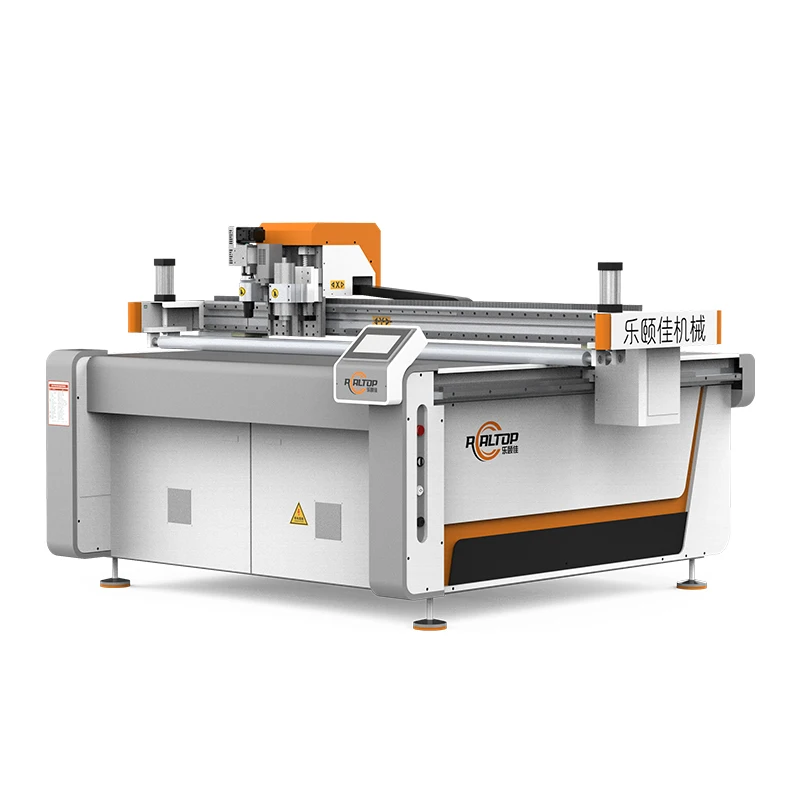
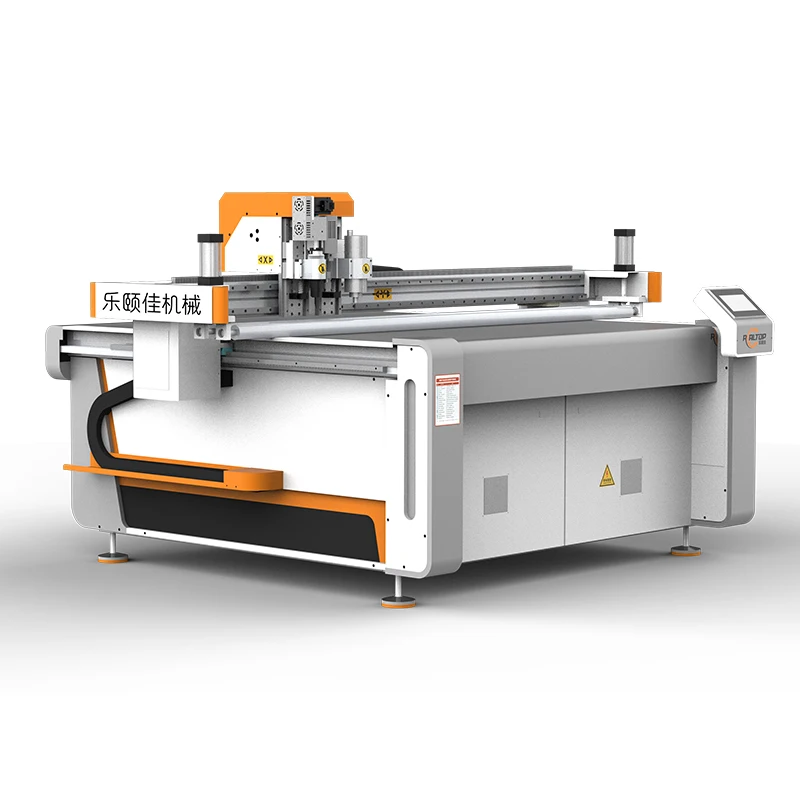
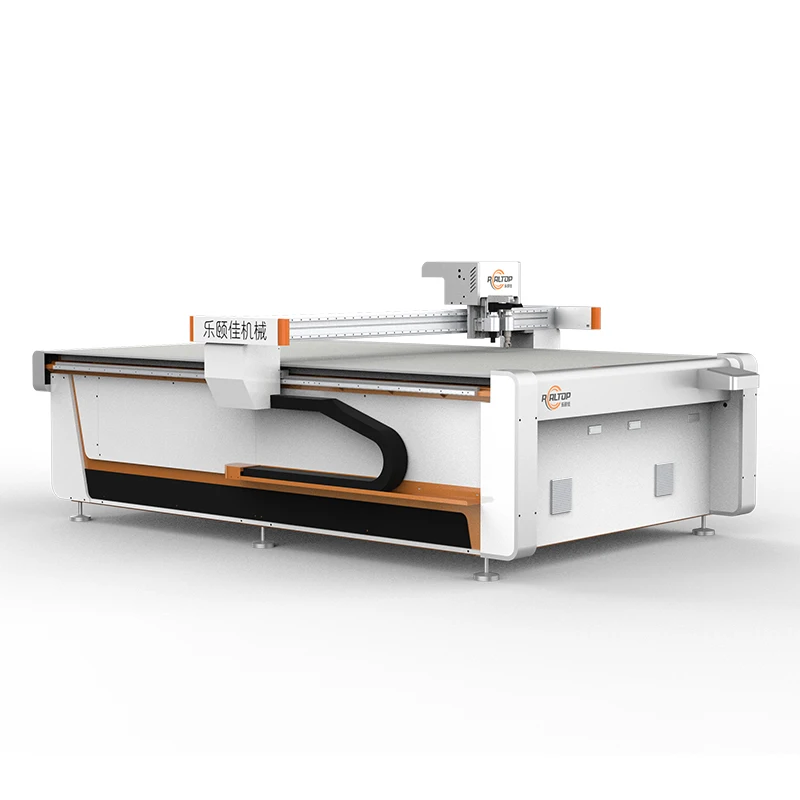
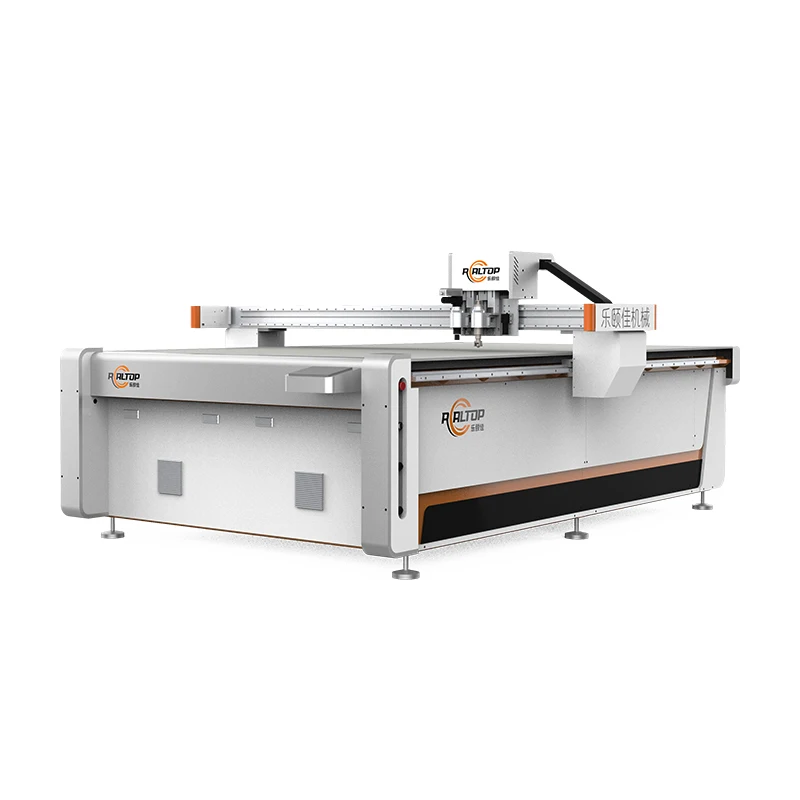
| Product Type | CNC Oscillating Knife Cutting Machine for Packaging |
| Working Area | 2500×1300 mm / 1600×2500 mm |
| Machine Size | 3550×1910×1400 mm / 3450×2300×1250 mm |
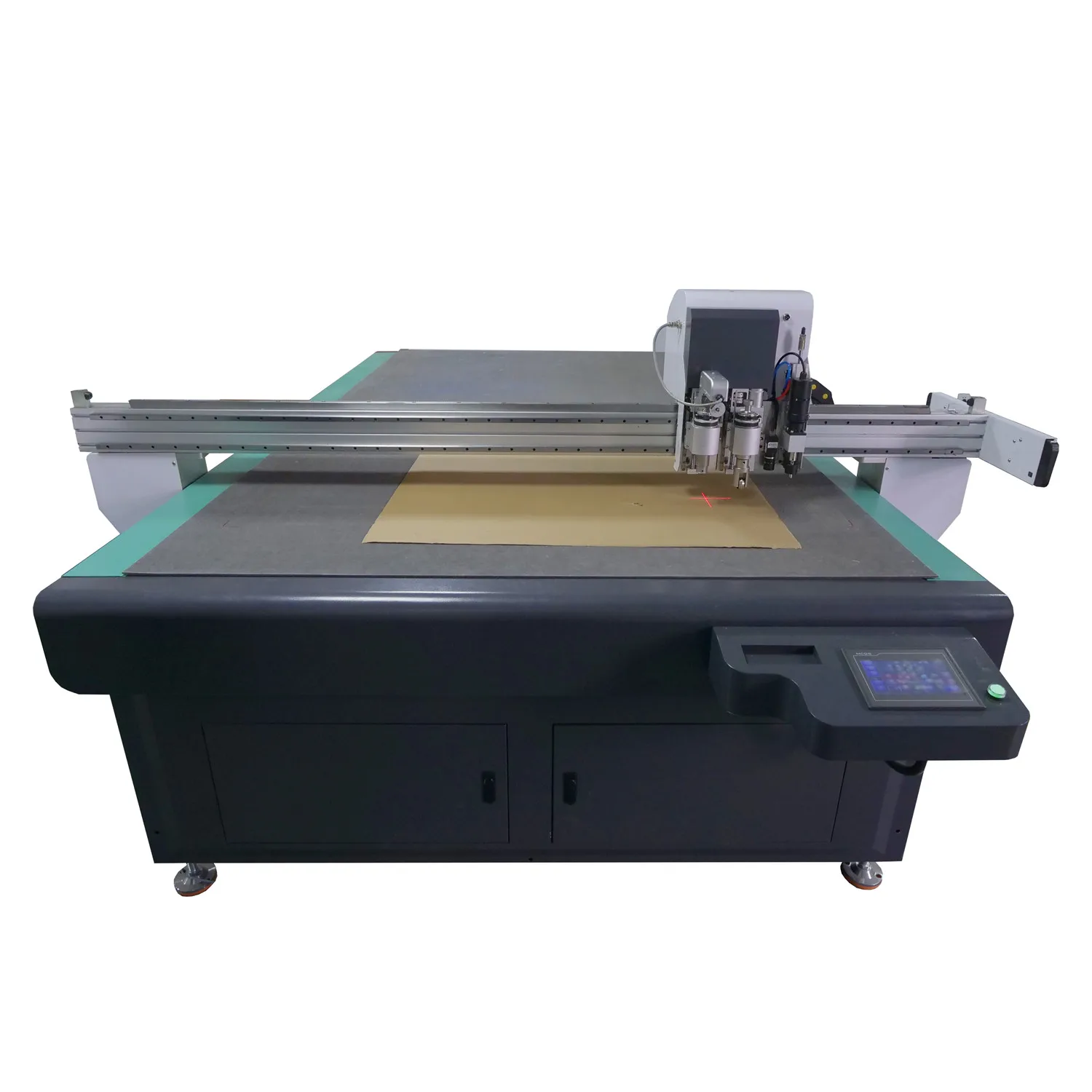
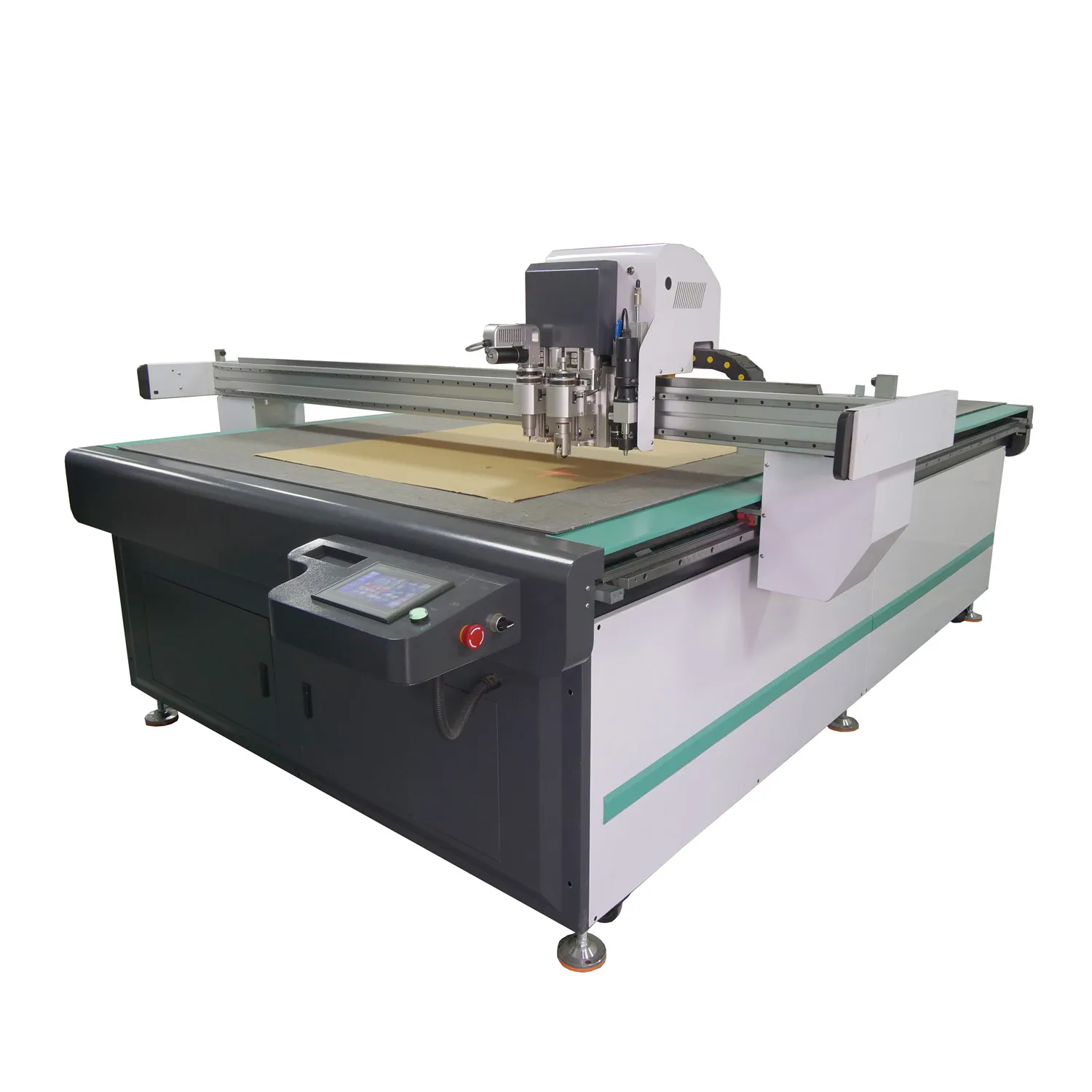
| Cutting Tools | Oscillating knife, creasing tool, kiss-cut knife, round punch |
| Cutting Thickness | Up to 18 mm (basis not stated in source — confirm material type and density) |
| Repeated Accuracy | <0.05 mm |
| Fixing Method | Vacuum table with aluminum alloy honeycomb structure and zoned adsorption |
| Rated Power | 9 kW |
| Vacuum Pump | 7.5 kW |
| Servo Motor | Dongling servo / Delta servo motor (configurable) |
| Guide Rail | Imported Hiwin straight-line square guide |
| Transmission | Rack transmission via Ethernet port |
| Conveyor Belt Felt | Wear-resistant anti-pull composite fiber felt |
| Profile Format | DXF, OLT, PDF, AI |
| Voltage | 380 V (frequency to be confirmed: 50/60 Hz) |
| Safety Device | Infrared sensors, emergency stop |
| Control Language | English, Russian, Italian, Chinese (customizable) |
| Blade Supply | 10 pieces of oscillating blades included |
| Warranty | 1 year (excludes felt and knife blades) |
| Delivery Time | <30 working days |
Application Suitability
| Application | Material or Output |
|---|---|
| Folding carton sample making | Coated and uncoated paperboard, 0.5–3 mm |
| Corrugated box prototyping and short-run production | Single-wall and double-wall corrugated board, E/B/C flute |
| Gift box and rigid box die-line cutting | Greyboard and chipboard up to medium density |
| Sticker and label contour cutting | Vinyl, PP paper, self-adhesive label stock |
| Signage and point-of-purchase display | Foam board, honeycomb paperboard, PP corrugated plastic |
Why "Cutting Thickness Up to 18 mm" Can Still Leave You Stuck
A machine quoted only by maximum thickness rarely accounts for flute crush, board density or the crease-to-cut ratio your specific corrugated grade demands.
I have seen buyers choose a packaging digital cutting table for sale based on a single thickness number, then discover on the shop floor that the creasing wheel cannot penetrate three-layer B-flute without splintering, or that the oscillating knife drags through double-wall board leaving ragged edges on the bottom ply. The real issue is not the number on the spec sheet — it is whether the tool head and vacuum zone have been matched to the board grade, flute profile and daily volume you will actually run [NEED_CITE: material-specific tooling selection for corrugated and folding carton]. A packaging CNC cutting machine that handles 3 mm greyboard effortlessly may stall on 6 mm E-flute corrugated if the wrong knife frequency and hold-down pressure are applied.
Matching the Knife Tool to Board Grade and Flute Profile
The RT–R2513, RT-D2516 and RT-S2516 models ship with interchangeable tool heads — oscillating knife, creasing tool, kiss-cut knife and round punch — each engineered for a different stage of the packaging workflow. The oscillating knife handles full-depth cuts through corrugated and solid board, the creasing tool scores fold lines without breaking the top liner, and the kiss-cut knife cuts through adhesive label stock while leaving the backing intact. Selecting the correct tool combination for your material prevents flute collapse on corrugated grades and ensures clean fold lines on folding carton. As a CNC oscillating knife cutting machine manufacturer covering both knife and laser technologies, we specify the tool head set based on your actual board samples rather than a generic catalogue entry.
Vacuum Zoning and the Small-Part Lift Problem
The aluminum alloy honeycomb vacuum table on these machines uses zoned adsorption, meaning the surface is divided into independently controlled suction areas. This matters because a full-sheet vacuum spread wastes suction power on empty zones, leaving insufficient hold-down force under small cutouts and narrow waste strips that tend to lift during the oscillating knife pass [NEED_CITE: vacuum table zoning principles for flatbed digital cutting]. When a small flap or insert lifts, the knife catches it, producing a torn edge and potentially damaging the blade. Zoned vacuum lets the operator activate only the sections under the material, concentrating suction where it is needed and keeping nested small parts flat throughout the cut cycle.
Reading the Spec Sheet with a Production Lens
The <0.05 mm repeated accuracy is driven by the Hiwin imported straight-line square guide rails and rack transmission — this tolerance level means a crease line will land in the same position across hundreds of sheets, which is essential when folding carton panels must align to within a millimeter during automated gluing. The 9 kW rated power covers the oscillating knife drive, servo motion and vacuum pump load together; the separate 7.5 kW vacuum pump ensures adequate suction even when cutting air-permeable corrugated board where leakage is higher than on solid substrates. Dongling and Delta servo motor options give buyers a choice between cost-effective standard duty and higher-torque performance for dense, thick boards. The composite fiber conveyor belt felt, rated with increased tension strength, resists the repeated pull of auto-feeding systems during continuous short-run production.
The Cost of Skipping the Sample Cut
When a buyer orders a CNC oscillating knife cutting machine for packaging without sending actual material for a test cut, the configuration is set on assumptions — board density, moisture content and flute geometry all vary by supplier and region. I once worked on a Middle East order where the standard cardstock parameters were applied to a triple-wall corrugated sample, and the creasing wheel simply could not score deep enough on site, costing two weeks of downtime while replacement tooling was shipped [NEED_CITE: on-site tooling mismatch consequences in packaging production]. A sample cutting report on your own board stock before commitment is the only way to confirm that edge quality, crease depth and cutting speed meet your production standard.
Why Buyers Source This Equipment Here
Our design team builds both knife and laser cutting platforms in the same factory, so a packaging producer evaluating a carton sample machine can compare processes on real material rather than reading two separate catalogues. Every machine configuration — tool head selection, vacuum zone layout, conveyor felt and servo specification — is documented against the buyer’s material sample, not a generic product sheet. The professional carton nesting software ships with the machine and accepts DXF, OLT, PDF and AI files, so existing artwork workflows carry over without additional licensing. Voltage, frequency, plug type and control language are confirmed before production begins, eliminating on-site electrical rework. Factory test records include cutting trials on the buyer’s submitted board samples, with photographs and parameter logs provided before dispatch.
Documentation & Verification
- Machine specification sheet listing every configured tool head and vacuum zone setting
- Electrical schematic with confirmed voltage, frequency and plug type for your facility
- Tool head and table configuration list matched to your board grade and flute type
- Sample cutting report produced on your submitted corrugated or folding carton material
- Professional carton nesting software licence and file format compatibility note
- Factory test record with photographs and parameter logs before dispatch
Installation, Commissioning & Support
- Confirm workshop floor space for the 3550×1910 mm footprint plus material staging clearance
- Provide a dedicated 380 V circuit matching the 9 kW rated power plus vacuum pump draw
- Machine ships on a welded steel frame requiring forklift unloading and leveling on site
- First-run commissioning includes vacuum zone calibration and crease depth adjustment on your board
- Operator training covers tool head changeover, nesting software and safety sensor testing
- Spare oscillating blades and felt segments stocked for routine replacement cycles
What We Need to Quote Accurately
To recommend the correct model and tool head configuration, share the material types you cut most often, the maximum board thickness and flute profile, your typical sheet size and daily volume. Let us know the local voltage and frequency at your facility and your preferred control language. If possible, send a few sample sheets of your actual board stock so we can run a cutting trial and include a sample report with the quotation.
Frequently Asked Questions
Q: Should I choose a knife cutter or a laser cutter for my packaging materials?
A: Knife cutting is preferred for corrugated board, folding carton and sticker stock because it produces clean edges without burning or discoloration. Laser cutting suits thin films, certain synthetics and engraving tasks. Because we manufacture both technologies in-house, we can test your specific material on each and recommend the process that delivers the best edge quality and throughput for your product mix.
Q: How do I match the working area and vacuum zone to my sheet sizes?
A: Choose between the 2500×1300 mm and 1600×2500 mm working areas based on your largest standard sheet. Zoned vacuum adsorption lets you activate only the sections covered by material, concentrating suction force on small parts and nested layouts. We configure the zone map after reviewing your typical sheet sizes and nesting patterns.
Q: What affects real cutting depth beyond the stated 18 mm figure?
A: Material density, flute type, moisture content and board composition all influence how cleanly the oscillating knife penetrates. A low-density E-flute board cuts differently from a high-density greyboard at the same thickness. We run a sample cutting test on your actual material to verify achievable depth, edge quality and cutting speed before finalizing the configuration.
Q: Will the included software work with my existing design files?
A: The bundled professional carton nesting software accepts DXF, OLT, PDF and AI formats. Before you place an order, we confirm file compatibility with a sample import from your workflow and verify that crease lines, cut lines and perforation layers translate correctly into machine-ready tool paths.
Q: Can the voltage, plug and control language be customized before shipment?
A: Yes. We confirm your facility voltage, frequency and plug type during the specification review and configure the electrical system accordingly. The control interface is available in English, Russian, Italian, Chinese and other languages on request, so your operators can work in a familiar language from day one.
Cutting Method Matched to Material — In-house knife and laser engineering lets packaging buyers select the exact cutting technology for their board grade, flute type and volume instead of forcing a single process across every job.
Technical Specifications
| Parameter | Value |
|---|---|
| Model | RT–R2513 / RT-D2516 / RT-S2516 |
| Product Type | CNC Oscillating Knife Cutting Machine for Packaging |
| Working Area | 2500×1300 mm / 1600×2500 mm |
| Machine Size | 3550×1910×1400 mm / 3450×2300×1250 mm |
| Cutting Tools | Oscillating knife, creasing tool, kiss-cut knife, round punch |
| Cutting Thickness | Up to 18 mm (basis not stated in source — confirm material type and density) |
| Repeated Accuracy | <0.05 mm |
| Fixing Method | Vacuum table with aluminum alloy honeycomb structure and zoned adsorption |
| Rated Power | 9 kW |
| Vacuum Pump | 7.5 kW |
| Servo Motor | Dongling servo / Delta servo motor (configurable) |
| Guide Rail | Imported Hiwin straight-line square guide |
| Transmission | Rack transmission via Ethernet port |
| Conveyor Belt Felt | Wear-resistant anti-pull composite fiber felt |
| Profile Format | DXF, OLT, PDF, AI |
| Voltage | 380 V (frequency to be confirmed: 50/60 Hz) |
| Safety Device | Infrared sensors, emergency stop |
| Control Language | English, Russian, Italian, Chinese (customizable) |
| Blade Supply | 10 pieces of oscillating blades included |
| Warranty | 1 year (excludes felt and knife blades) |
| Delivery Time | <30 working days |
Application Suitability
| Application | Material or Output |
|---|---|
| Folding carton sample making | Coated and uncoated paperboard, 0.5–3 mm |
| Corrugated box prototyping and short-run production | Single-wall and double-wall corrugated board, E/B/C flute |
| Gift box and rigid box die-line cutting | Greyboard and chipboard up to medium density |
| Sticker and label contour cutting | Vinyl, PP paper, self-adhesive label stock |
| Signage and point-of-purchase display | Foam board, honeycomb paperboard, PP corrugated plastic |
Why "Cutting Thickness Up to 18 mm" Can Still Leave You Stuck
A machine quoted only by maximum thickness rarely accounts for flute crush, board density or the crease-to-cut ratio your specific corrugated grade demands.
I have seen buyers choose a packaging digital cutting table for sale based on a single thickness number, then discover on the shop floor that the creasing wheel cannot penetrate three-layer B-flute without splintering, or that the oscillating knife drags through double-wall board leaving ragged edges on the bottom ply. The real issue is not the number on the spec sheet — it is whether the tool head and vacuum zone have been matched to the board grade, flute profile and daily volume you will actually run [NEED_CITE: material-specific tooling selection for corrugated and folding carton]. A packaging CNC cutting machine that handles 3 mm greyboard effortlessly may stall on 6 mm E-flute corrugated if the wrong knife frequency and hold-down pressure are applied.
Matching the Knife Tool to Board Grade and Flute Profile
The RT–R2513, RT-D2516 and RT-S2516 models ship with interchangeable tool heads — oscillating knife, creasing tool, kiss-cut knife and round punch — each engineered for a different stage of the packaging workflow. The oscillating knife handles full-depth cuts through corrugated and solid board, the creasing tool scores fold lines without breaking the top liner, and the kiss-cut knife cuts through adhesive label stock while leaving the backing intact. Selecting the correct tool combination for your material prevents flute collapse on corrugated grades and ensures clean fold lines on folding carton. As a CNC oscillating knife cutting machine manufacturer covering both knife and laser technologies, we specify the tool head set based on your actual board samples rather than a generic catalogue entry.
Vacuum Zoning and the Small-Part Lift Problem
The aluminum alloy honeycomb vacuum table on these machines uses zoned adsorption, meaning the surface is divided into independently controlled suction areas. This matters because a full-sheet vacuum spread wastes suction power on empty zones, leaving insufficient hold-down force under small cutouts and narrow waste strips that tend to lift during the oscillating knife pass [NEED_CITE: vacuum table zoning principles for flatbed digital cutting]. When a small flap or insert lifts, the knife catches it, producing a torn edge and potentially damaging the blade. Zoned vacuum lets the operator activate only the sections under the material, concentrating suction where it is needed and keeping nested small parts flat throughout the cut cycle.
Reading the Spec Sheet with a Production Lens
The <0.05 mm repeated accuracy is driven by the Hiwin imported straight-line square guide rails and rack transmission — this tolerance level means a crease line will land in the same position across hundreds of sheets, which is essential when folding carton panels must align to within a millimeter during automated gluing. The 9 kW rated power covers the oscillating knife drive, servo motion and vacuum pump load together; the separate 7.5 kW vacuum pump ensures adequate suction even when cutting air-permeable corrugated board where leakage is higher than on solid substrates. Dongling and Delta servo motor options give buyers a choice between cost-effective standard duty and higher-torque performance for dense, thick boards. The composite fiber conveyor belt felt, rated with increased tension strength, resists the repeated pull of auto-feeding systems during continuous short-run production.
The Cost of Skipping the Sample Cut
When a buyer orders a CNC oscillating knife cutting machine for packaging without sending actual material for a test cut, the configuration is set on assumptions — board density, moisture content and flute geometry all vary by supplier and region. I once worked on a Middle East order where the standard cardstock parameters were applied to a triple-wall corrugated sample, and the creasing wheel simply could not score deep enough on site, costing two weeks of downtime while replacement tooling was shipped [NEED_CITE: on-site tooling mismatch consequences in packaging production]. A sample cutting report on your own board stock before commitment is the only way to confirm that edge quality, crease depth and cutting speed meet your production standard.
Why Buyers Source This Equipment Here
Our design team builds both knife and laser cutting platforms in the same factory, so a packaging producer evaluating a carton sample machine can compare processes on real material rather than reading two separate catalogues. Every machine configuration — tool head selection, vacuum zone layout, conveyor felt and servo specification — is documented against the buyer’s material sample, not a generic product sheet. The professional carton nesting software ships with the machine and accepts DXF, OLT, PDF and AI files, so existing artwork workflows carry over without additional licensing. Voltage, frequency, plug type and control language are confirmed before production begins, eliminating on-site electrical rework. Factory test records include cutting trials on the buyer’s submitted board samples, with photographs and parameter logs provided before dispatch.
Documentation & Verification
- Machine specification sheet listing every configured tool head and vacuum zone setting
- Electrical schematic with confirmed voltage, frequency and plug type for your facility
- Tool head and table configuration list matched to your board grade and flute type
- Sample cutting report produced on your submitted corrugated or folding carton material
- Professional carton nesting software licence and file format compatibility note
- Factory test record with photographs and parameter logs before dispatch
Installation, Commissioning & Support
- Confirm workshop floor space for the 3550×1910 mm footprint plus material staging clearance
- Provide a dedicated 380 V circuit matching the 9 kW rated power plus vacuum pump draw
- Machine ships on a welded steel frame requiring forklift unloading and leveling on site
- First-run commissioning includes vacuum zone calibration and crease depth adjustment on your board
- Operator training covers tool head changeover, nesting software and safety sensor testing
- Spare oscillating blades and felt segments stocked for routine replacement cycles
What We Need to Quote Accurately
To recommend the correct model and tool head configuration, share the material types you cut most often, the maximum board thickness and flute profile, your typical sheet size and daily volume. Let us know the local voltage and frequency at your facility and your preferred control language. If possible, send a few sample sheets of your actual board stock so we can run a cutting trial and include a sample report with the quotation.
Frequently Asked Questions
Q: Should I choose a knife cutter or a laser cutter for my packaging materials?
A: Knife cutting is preferred for corrugated board, folding carton and sticker stock because it produces clean edges without burning or discoloration. Laser cutting suits thin films, certain synthetics and engraving tasks. Because we manufacture both technologies in-house, we can test your specific material on each and recommend the process that delivers the best edge quality and throughput for your product mix.
Q: How do I match the working area and vacuum zone to my sheet sizes?
A: Choose between the 2500×1300 mm and 1600×2500 mm working areas based on your largest standard sheet. Zoned vacuum adsorption lets you activate only the sections covered by material, concentrating suction force on small parts and nested layouts. We configure the zone map after reviewing your typical sheet sizes and nesting patterns.
Q: What affects real cutting depth beyond the stated 18 mm figure?
A: Material density, flute type, moisture content and board composition all influence how cleanly the oscillating knife penetrates. A low-density E-flute board cuts differently from a high-density greyboard at the same thickness. We run a sample cutting test on your actual material to verify achievable depth, edge quality and cutting speed before finalizing the configuration.
Q: Will the included software work with my existing design files?
A: The bundled professional carton nesting software accepts DXF, OLT, PDF and AI formats. Before you place an order, we confirm file compatibility with a sample import from your workflow and verify that crease lines, cut lines and perforation layers translate correctly into machine-ready tool paths.
Q: Can the voltage, plug and control language be customized before shipment?
A: Yes. We confirm your facility voltage, frequency and plug type during the specification review and configure the electrical system accordingly. The control interface is available in English, Russian, Italian, Chinese and other languages on request, so your operators can work in a familiar language from day one.










商品评价
There are no reviews yet.