

Fast Delivery
Quick, reliable shipping to any location.

Free & easy returns
Return this item by mail or in store within 90 days for a full refund.
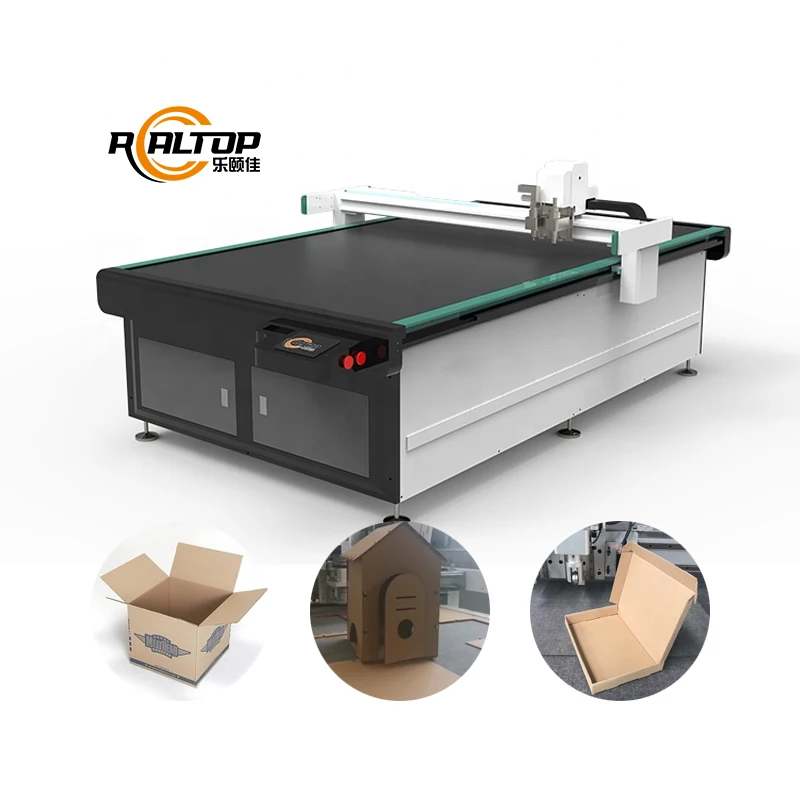
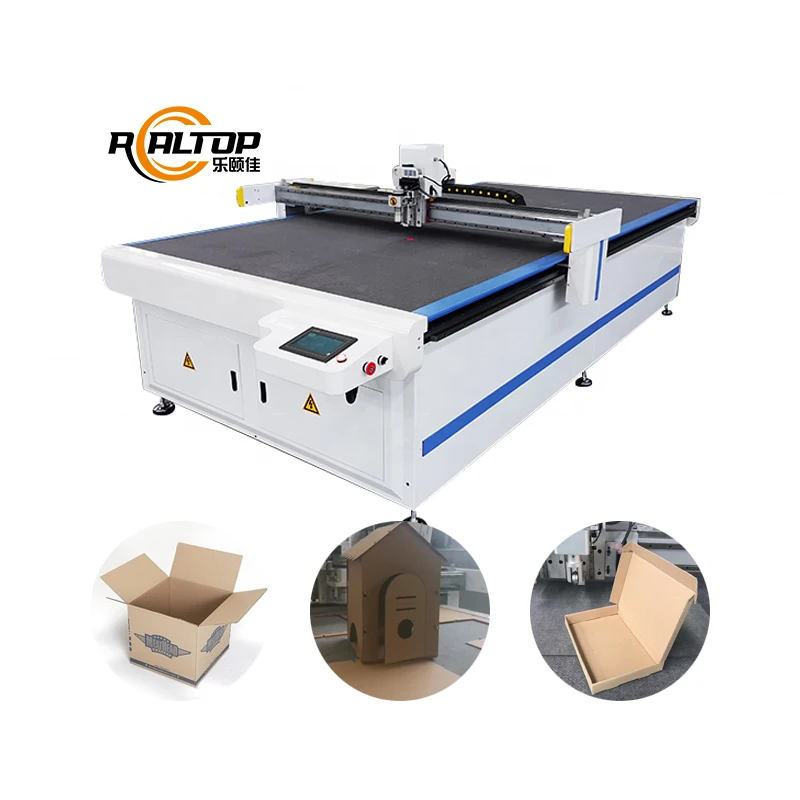
Tool head mapping by material — the RT-D2516 datasheet lists real cutting depth for each tool option, letting packaging converters match knife configuration to substrate before the machine is built.
Technical Specifications
| Parameter | Value |
|---|---|
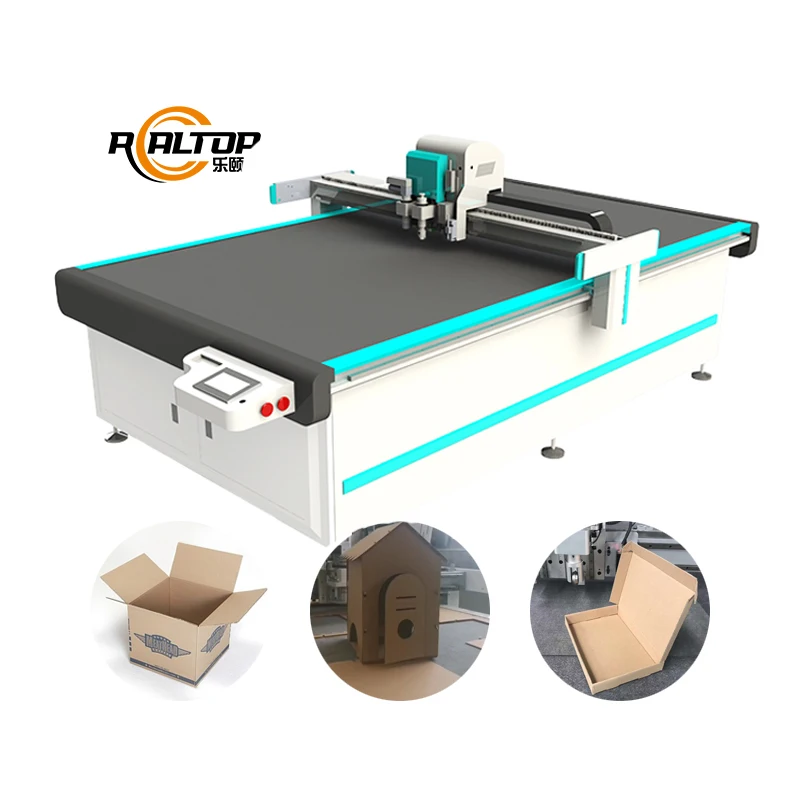
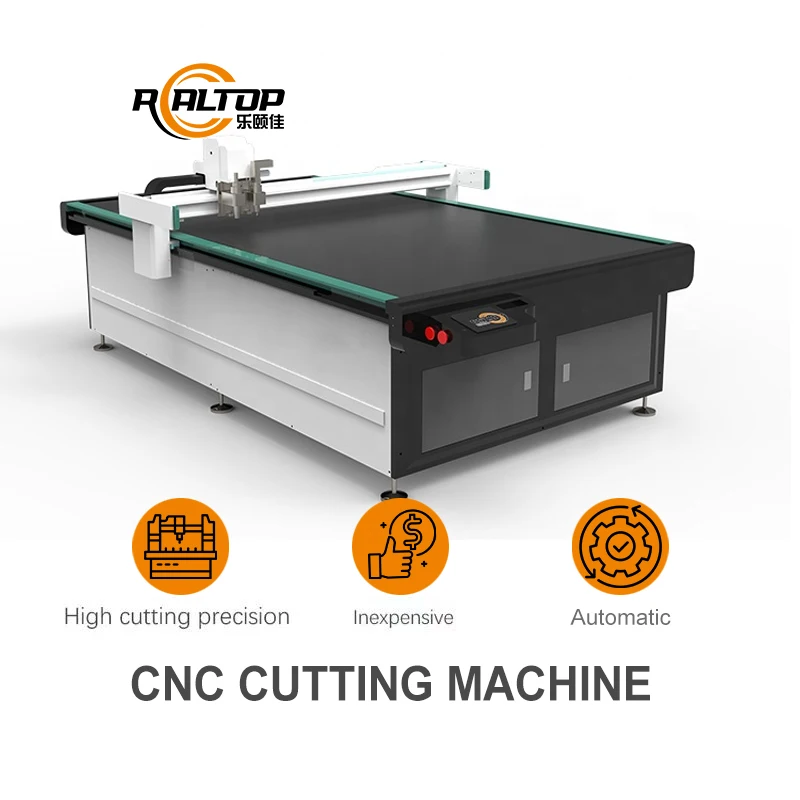
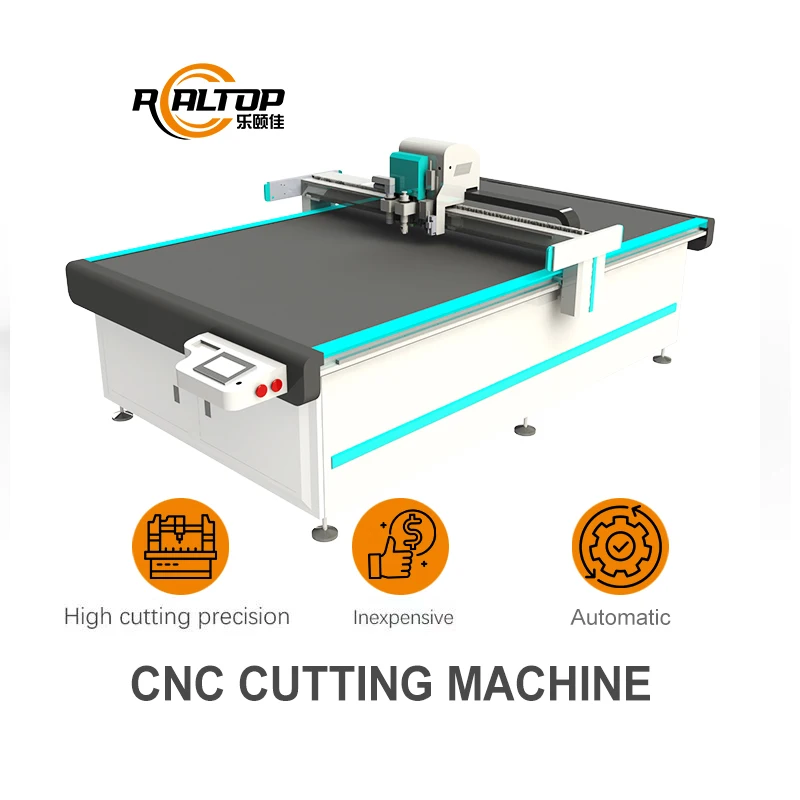
| Product Type | CNC Digital Cutting Machine for Packaging and Carton Sample Making |
| Model | RT-D2516 |
| Working Area | 1600 × 2500 mm |
| Machine Dimensions | 3450 × 2300 × 1250 mm |
| Rated Power | 9 kW |
| Table Type | Flat vacuum table with auto feeding |
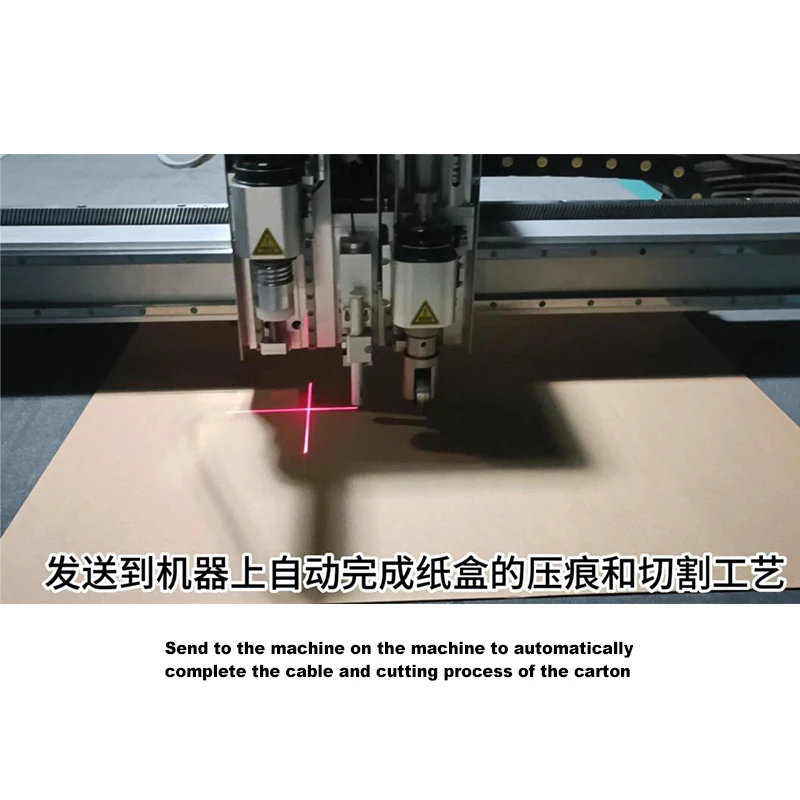
| Multifunctional Head | Swiss imported oscillating knife with vibration full cutting, half cutting and cursor location |
| Tool Head Options | Oscillating knife, pneumatic cutting tool (up to 70 mm thickness), creasing and marking |
| Translational Velocity | 800 – 1200 mm/s |
| Repeated Accuracy | ≤ 0.1 mm |
| Transmission System | Digital servo motor, linear guide, synchronous belt, imported ball screw |
| Instruction System | HP-GL compatible format |
| Voltage | 380V ± 10% |
| Key Components | Japanese Yaskawa servo motor, Taiwan Hiwin rail, Germany imported conveyor belt, 7.5 kW vacuum pump |
| Safety Device | Infrared sensors |
| Functions | Cutting, creasing, marking |
| Warranty | 12 months for whole machine, 3 months for consumables |
Application Suitability
| Application | Material or Output |
|---|---|
| Corrugated carton box making | Single, double and triple-wall corrugated board |
| Packaging sample production | Grey board, white card stock, art paper |
| Gift box and display sample cutting | Foam board, honeycomb board, magnetic closure stock |
| Sticker and label die cutting | Vinyl, adhesive film, reflective sheet |
| Flexible material converting | Leather, PVC, soft glass, silicon, rubber, sponge composite |
| Textile sample cutting | Flexible clothing materials, woven and knitted fabric |
What a Working Area Figure Hides About Cutting Depth
A machine specified on table size alone often arrives with the wrong tool head for the buyer’s actual substrate — the RT-D2516 addresses this by listing each head against its verified cutting capacity.
Match the tool to the material, not the table to the room.
I spent years on the assembly floor watching packaging CNC cutting machine orders fail not because the frame was wrong, but because a drag knife was shipped where an oscillating head was needed. A corrugated carton sample that should cut clean in one pass ends up with crushed flutes and ragged edges. The buyer blames the software, the operator blames the blade, and nobody checks whether the pneumatic tool — which handles up to 70 mm on dense board — should have been on the multifunction head from the start. This packaging CNC cutting machine for sale comes configured only after the material is known, because flute depth, board density and moisture content all change what the knife can actually do [NEED_CITE: corrugated board flute profile and crush resistance standards].
Knife Versus Laser: Where Each Sits in the Range
The RT-D2516 occupies the mid-large format flatbed position in the catalogue, bridging carton sample making and flexible material cutting in one platform. For packaging houses running short-run corrugated and grey board, the oscillating knife delivers fold-ready crease lines that a laser cannot produce without burn marks on the edge. For converters handling leather, PVC or sponge composite, the knife avoids the melt-back and discoloration that thermal processes leave on synthetics.
Tool Head Selection Across the Catalogue Lineup
Within the full equipment range, buyers comparing knife and laser systems need to see how each method handles their specific substrate. The Swiss imported oscillating head on this CNC digital cutting machine manufacturer model supports vibration full and half cutting for through-cuts and kiss-cuts on adhesive layers. The pneumatic tool extends the depth range to dense materials that a standard oscillating blade cannot penetrate. A creasing wheel runs alongside the knife on the same multifunctional head, so a carton sample moves from score to cut without repositioning [NEED_CITE: tooling compatibility on multifunction flatbed cutting heads].
How Drive Components Define Repeatability on Large Sheets
The 1600 × 2500 mm working area means the gantry travels over two and a half metres on every long-axis pass. At that span, any play in the transmission shows up as misalignment between the cut line and the crease line — a gap that makes a folded carton sit crooked on the shelf. The Yaskawa servo motors paired with Hiwin linear rails and an imported ball screw hold repeated accuracy to 0.1 mm or less across the full bed. For packaging sample makers, this means a complex nest of small boxes cuts identically in the corner and in the centre, pass after pass. The 7.5 kW vacuum pump and zoned table keep thin card and vinyl flat against the belt, preventing the material lift that turns a good sheet into scrap.
The Cost of Skipping a Material Trial
Orders that go straight from quotation to production, without a sample cut on the buyer’s own stock, carry a predictable failure pattern. The board density differs, the moisture content is higher, or the coating is more abrasive than the standard test material — and the cutting edge wears out in days instead of weeks. On a previous carton line I supported, the customer’s actual corrugated stock contained a high resin content that dulled standard blades within a single shift. Only after running their material on the machine and swapping to a reinforced oscillating blade did the edge quality hold. The same applies here: a sample cutting report on your substrate before commitment removes the guesswork from tool selection [NEED_CITE: material variability and blade wear rates in digital flatbed cutting].
Why the Wrong Voltage Reaches the Workshop Unnoticed
A 380V ± 10% supply specification looks straightforward until the machine arrives at a facility running 415V or 220V three-phase. The servo drives either fault on overvoltage or underperform on low voltage, and the vacuum pump runs hot within the first week. The electrical schematic and voltage confirmation document must be matched to the buyer’s local grid before the machine leaves the factory, not after it arrives and the electrician refuses to wire it [NEED_CITE: industrial voltage and frequency standards across export markets].
Why Source Directly From the Factory Floor
The RT-D2516 is designed and built in-house, which means the same team that specifies the Yaskawa servo and Hiwin rail combination also handles the post-delivery support calls. Packaging CNC cutting machine buyers get the tool head and vacuum table zoning configured per their material and daily volume, not a default assembly-line setup. The HP-GL instruction system is confirmed against the buyer’s existing nesting software before the order goes to production. Voltage, plug type and control panel language are locked in during the specification stage, not guessed at packing. Sample cutting on the buyer’s own corrugated, grey board or flexible stock runs before the machine ships, producing a documented report on edge quality and achievable cutting depth.
Documentation & Verification
- Machine specification sheet confirming working area, tool head options and configured voltage
- Electrical schematic matched to the buyer’s local 380V or alternate supply
- Sample cutting report on buyer-supplied corrugated or flexible material before dispatch
- Tool head and vacuum table zoning configuration list per material type
- HP-GL compatible software licence and file format integration note
- Factory test record with repeated accuracy measured across full bed travel
Installation, Commissioning & Support
- The 3450 × 2300 × 1250 mm frame requires a level concrete floor with clearance for the auto-feeding conveyor
- 9 kW rated power plus the 7.5 kW vacuum pump demands a dedicated three-phase circuit at confirmed voltage
- Machine ships as a single flat-table unit; gantry and multifunction head are calibrated at factory before crating
- First-power commissioning includes servo tuning, vacuum zone mapping and HP-GL file import verification
- Operator training covers tool head changeover between oscillating knife, pneumatic tool and creasing wheel
- Consumable blade and belt replacement schedule aligned with the three-month warranty window
What We Need to Quote Accurately
Send the material type — corrugated flute profile, grey board GSM, or flexible stock description — along with the maximum sheet size and the daily cutting volume your line runs. Confirm your facility’s three-phase voltage and frequency, the control panel language your operators need, and whether your nesting workflow outputs HP-GL or a different vector format. If your substrate is non-standard or has a coating that affects blade life, ship a sample sheet so we can run it on the RT-D2516 and return a cutting report before you commit.
Frequently Asked Questions
Q: How does the RT-D2516 compare to other models in the catalogue by working area?
A: The 1600 × 2500 mm bed places this model between compact desktop sample cutters and full production-format tables. It covers most carton and packaging sample requirements while leaving room for flexible material nests. Buyers needing higher throughput on wide-format corrugated can step up to larger models in the same range with identical tool head options.
Q: Which tool head handles corrugated board versus flexible PVC?
A: The oscillating knife cuts clean through corrugated flutes without crushing, while the pneumatic tool handles denser board up to 70 mm. For flexible PVC, silicon and rubber, the same oscillating head runs at adjusted vibration frequency to avoid material drag. The creasing wheel runs alongside for carton score lines.
Q: What voltage and language options are available before shipment?
A: The standard configuration is 380V ± 10% three-phase, but voltage and plug type are confirmed per destination market during the specification stage. Control panel language and software interface language are set before the machine enters assembly, matching the operator environment at the installation site.
Q: Can I see a sample cutting report on my own material before ordering?
A: Yes. Send a sheet of your actual corrugated stock, grey board or flexible material and we run it on the RT-D2516. The returned report documents edge quality, achievable cutting depth and recommended tool head, so you verify performance against your substrate before the purchase order is placed.
Q: Where does knife cutting sit versus laser cutting in the full product range?
A: Knife cutting on the RT-D2516 produces crease-ready edges on carton and avoids melt-back on synthetics — outcomes a CO2 or fiber laser cannot match on those materials. Laser systems in the same catalogue serve acrylic, wood and sheet metal buyers. The method is matched to the substrate, not forced one way.
Tool head mapping by material — the RT-D2516 datasheet lists real cutting depth for each tool option, letting packaging converters match knife configuration to substrate before the machine is built.
Technical Specifications
| Parameter | Value |
|---|---|
| Product Type | CNC Digital Cutting Machine for Packaging and Carton Sample Making |
| Model | RT-D2516 |
| Working Area | 1600 × 2500 mm |
| Machine Dimensions | 3450 × 2300 × 1250 mm |
| Rated Power | 9 kW |
| Table Type | Flat vacuum table with auto feeding |
| Multifunctional Head | Swiss imported oscillating knife with vibration full cutting, half cutting and cursor location |
| Tool Head Options | Oscillating knife, pneumatic cutting tool (up to 70 mm thickness), creasing and marking |
| Translational Velocity | 800 – 1200 mm/s |
| Repeated Accuracy | ≤ 0.1 mm |
| Transmission System | Digital servo motor, linear guide, synchronous belt, imported ball screw |
| Instruction System | HP-GL compatible format |
| Voltage | 380V ± 10% |
| Key Components | Japanese Yaskawa servo motor, Taiwan Hiwin rail, Germany imported conveyor belt, 7.5 kW vacuum pump |
| Safety Device | Infrared sensors |
| Functions | Cutting, creasing, marking |
| Warranty | 12 months for whole machine, 3 months for consumables |
Application Suitability
| Application | Material or Output |
|---|---|
| Corrugated carton box making | Single, double and triple-wall corrugated board |
| Packaging sample production | Grey board, white card stock, art paper |
| Gift box and display sample cutting | Foam board, honeycomb board, magnetic closure stock |
| Sticker and label die cutting | Vinyl, adhesive film, reflective sheet |
| Flexible material converting | Leather, PVC, soft glass, silicon, rubber, sponge composite |
| Textile sample cutting | Flexible clothing materials, woven and knitted fabric |
What a Working Area Figure Hides About Cutting Depth
A machine specified on table size alone often arrives with the wrong tool head for the buyer’s actual substrate — the RT-D2516 addresses this by listing each head against its verified cutting capacity.
Match the tool to the material, not the table to the room.
I spent years on the assembly floor watching packaging CNC cutting machine orders fail not because the frame was wrong, but because a drag knife was shipped where an oscillating head was needed. A corrugated carton sample that should cut clean in one pass ends up with crushed flutes and ragged edges. The buyer blames the software, the operator blames the blade, and nobody checks whether the pneumatic tool — which handles up to 70 mm on dense board — should have been on the multifunction head from the start. This packaging CNC cutting machine for sale comes configured only after the material is known, because flute depth, board density and moisture content all change what the knife can actually do [NEED_CITE: corrugated board flute profile and crush resistance standards].
Knife Versus Laser: Where Each Sits in the Range
The RT-D2516 occupies the mid-large format flatbed position in the catalogue, bridging carton sample making and flexible material cutting in one platform. For packaging houses running short-run corrugated and grey board, the oscillating knife delivers fold-ready crease lines that a laser cannot produce without burn marks on the edge. For converters handling leather, PVC or sponge composite, the knife avoids the melt-back and discoloration that thermal processes leave on synthetics.
Tool Head Selection Across the Catalogue Lineup
Within the full equipment range, buyers comparing knife and laser systems need to see how each method handles their specific substrate. The Swiss imported oscillating head on this CNC digital cutting machine manufacturer model supports vibration full and half cutting for through-cuts and kiss-cuts on adhesive layers. The pneumatic tool extends the depth range to dense materials that a standard oscillating blade cannot penetrate. A creasing wheel runs alongside the knife on the same multifunctional head, so a carton sample moves from score to cut without repositioning [NEED_CITE: tooling compatibility on multifunction flatbed cutting heads].
How Drive Components Define Repeatability on Large Sheets
The 1600 × 2500 mm working area means the gantry travels over two and a half metres on every long-axis pass. At that span, any play in the transmission shows up as misalignment between the cut line and the crease line — a gap that makes a folded carton sit crooked on the shelf. The Yaskawa servo motors paired with Hiwin linear rails and an imported ball screw hold repeated accuracy to 0.1 mm or less across the full bed. For packaging sample makers, this means a complex nest of small boxes cuts identically in the corner and in the centre, pass after pass. The 7.5 kW vacuum pump and zoned table keep thin card and vinyl flat against the belt, preventing the material lift that turns a good sheet into scrap.
The Cost of Skipping a Material Trial
Orders that go straight from quotation to production, without a sample cut on the buyer’s own stock, carry a predictable failure pattern. The board density differs, the moisture content is higher, or the coating is more abrasive than the standard test material — and the cutting edge wears out in days instead of weeks. On a previous carton line I supported, the customer’s actual corrugated stock contained a high resin content that dulled standard blades within a single shift. Only after running their material on the machine and swapping to a reinforced oscillating blade did the edge quality hold. The same applies here: a sample cutting report on your substrate before commitment removes the guesswork from tool selection [NEED_CITE: material variability and blade wear rates in digital flatbed cutting].
Why the Wrong Voltage Reaches the Workshop Unnoticed
A 380V ± 10% supply specification looks straightforward until the machine arrives at a facility running 415V or 220V three-phase. The servo drives either fault on overvoltage or underperform on low voltage, and the vacuum pump runs hot within the first week. The electrical schematic and voltage confirmation document must be matched to the buyer’s local grid before the machine leaves the factory, not after it arrives and the electrician refuses to wire it [NEED_CITE: industrial voltage and frequency standards across export markets].
Why Source Directly From the Factory Floor
The RT-D2516 is designed and built in-house, which means the same team that specifies the Yaskawa servo and Hiwin rail combination also handles the post-delivery support calls. Packaging CNC cutting machine buyers get the tool head and vacuum table zoning configured per their material and daily volume, not a default assembly-line setup. The HP-GL instruction system is confirmed against the buyer’s existing nesting software before the order goes to production. Voltage, plug type and control panel language are locked in during the specification stage, not guessed at packing. Sample cutting on the buyer’s own corrugated, grey board or flexible stock runs before the machine ships, producing a documented report on edge quality and achievable cutting depth.
Documentation & Verification
- Machine specification sheet confirming working area, tool head options and configured voltage
- Electrical schematic matched to the buyer’s local 380V or alternate supply
- Sample cutting report on buyer-supplied corrugated or flexible material before dispatch
- Tool head and vacuum table zoning configuration list per material type
- HP-GL compatible software licence and file format integration note
- Factory test record with repeated accuracy measured across full bed travel
Installation, Commissioning & Support
- The 3450 × 2300 × 1250 mm frame requires a level concrete floor with clearance for the auto-feeding conveyor
- 9 kW rated power plus the 7.5 kW vacuum pump demands a dedicated three-phase circuit at confirmed voltage
- Machine ships as a single flat-table unit; gantry and multifunction head are calibrated at factory before crating
- First-power commissioning includes servo tuning, vacuum zone mapping and HP-GL file import verification
- Operator training covers tool head changeover between oscillating knife, pneumatic tool and creasing wheel
- Consumable blade and belt replacement schedule aligned with the three-month warranty window
What We Need to Quote Accurately
Send the material type — corrugated flute profile, grey board GSM, or flexible stock description — along with the maximum sheet size and the daily cutting volume your line runs. Confirm your facility’s three-phase voltage and frequency, the control panel language your operators need, and whether your nesting workflow outputs HP-GL or a different vector format. If your substrate is non-standard or has a coating that affects blade life, ship a sample sheet so we can run it on the RT-D2516 and return a cutting report before you commit.
Frequently Asked Questions
Q: How does the RT-D2516 compare to other models in the catalogue by working area?
A: The 1600 × 2500 mm bed places this model between compact desktop sample cutters and full production-format tables. It covers most carton and packaging sample requirements while leaving room for flexible material nests. Buyers needing higher throughput on wide-format corrugated can step up to larger models in the same range with identical tool head options.
Q: Which tool head handles corrugated board versus flexible PVC?
A: The oscillating knife cuts clean through corrugated flutes without crushing, while the pneumatic tool handles denser board up to 70 mm. For flexible PVC, silicon and rubber, the same oscillating head runs at adjusted vibration frequency to avoid material drag. The creasing wheel runs alongside for carton score lines.
Q: What voltage and language options are available before shipment?
A: The standard configuration is 380V ± 10% three-phase, but voltage and plug type are confirmed per destination market during the specification stage. Control panel language and software interface language are set before the machine enters assembly, matching the operator environment at the installation site.
Q: Can I see a sample cutting report on my own material before ordering?
A: Yes. Send a sheet of your actual corrugated stock, grey board or flexible material and we run it on the RT-D2516. The returned report documents edge quality, achievable cutting depth and recommended tool head, so you verify performance against your substrate before the purchase order is placed.
Q: Where does knife cutting sit versus laser cutting in the full product range?
A: Knife cutting on the RT-D2516 produces crease-ready edges on carton and avoids melt-back on synthetics — outcomes a CO2 or fiber laser cannot match on those materials. Laser systems in the same catalogue serve acrylic, wood and sheet metal buyers. The method is matched to the substrate, not forced one way.










商品评价
There are no reviews yet.