



Fast Delivery
Quick, reliable shipping to any location.

Free & easy returns
Return this item by mail or in store within 90 days for a full refund.
Tool-matched cutting — We run your actual paper stock on the oscillating knife or drag knife head before confirming configuration, so the edge quality you see in the sample is what you get in production.
Technical Specifications
| Parameter | Value |
|---|---|
| Model | RTT6080 / RTT6080 Pro |
| Max Working Area | 600mm × 800mm |
| Tool Group | Cutting tool, kiss cutting tool, creasing tool, CCD camera; High speed oscillating knife (Pro model) |
| Max Cutting Speed | 1500 mm/s (basis not stated in source — confirm material / thickness) |
| Cutting Thickness | ≤2mm (RTT6080); ≤5mm (RTT6080 Pro) (basis not stated in source — confirm material type) |
| Positioning Accuracy | 0.05 mm |
| File Format | DXF, PLT, PDF, AI |
| Transfer Method | Ethernet port |
| Rated Power | 3.2 kW (rated or peak not specified in source) |
| Voltage & Frequency | 220V / 380V, 50Hz |
Application Suitability
| Application | Material or Output |
|---|---|
| Packaging prototype cutting | Folding carton stock, corrugated sample sheets, thin greyboard |
| Digital print finishing | A4/A3 printed sheets, contour-cut stickers, laminated card |
| Stationery and promotional products | Vinyl, magnetic sheet, thin card for kiss-cutting |
| Carton sample making | Short-run box structures, creasing and perforation on paperboard |
When "Cutting Thickness" Means Nothing Without the Material Name
We never quote a thickness number without first running your exact paper or film on the machine.
I learned this the hard way on the assembly floor in Jinan. A packaging shop asked for a vibrating knife cutter for corrugated board. We dialed in standard paper parameters, and the first sheet came off the table with fuzzy edges and crushed flutes — twenty sample sheets ruined before we stopped the job. The issue was not the machine; it was the assumption that "paper" means one thing. A CNC digital paper cutting machine manufacturer who skips the material-specific sample run is handing you a specification sheet, not a solution. Every paper weight, coating, and lamination behaves differently under the blade, and the only way to confirm clean edges is to cut the buyer’s own stock at the stated speed and thickness [NEED_CITE: material-specific cutting behavior of coated vs uncoated paper stocks].
Dual-Model Coverage From A4 to Short-Run Packaging Formats
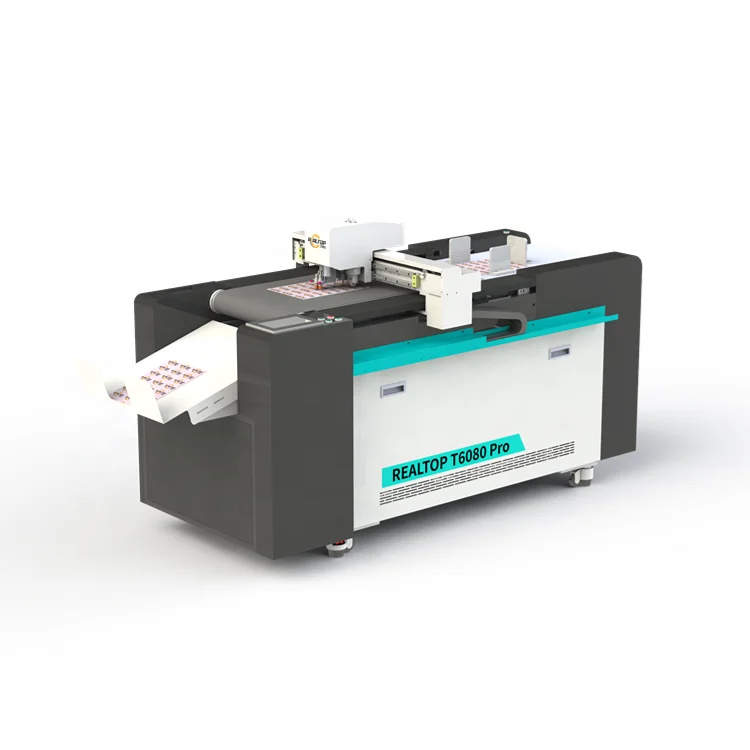
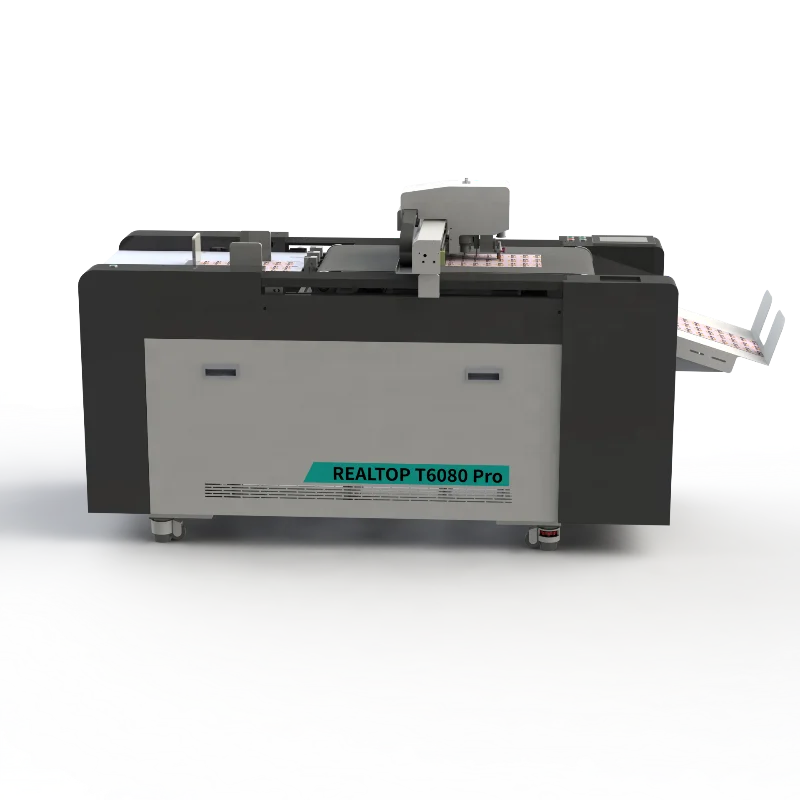
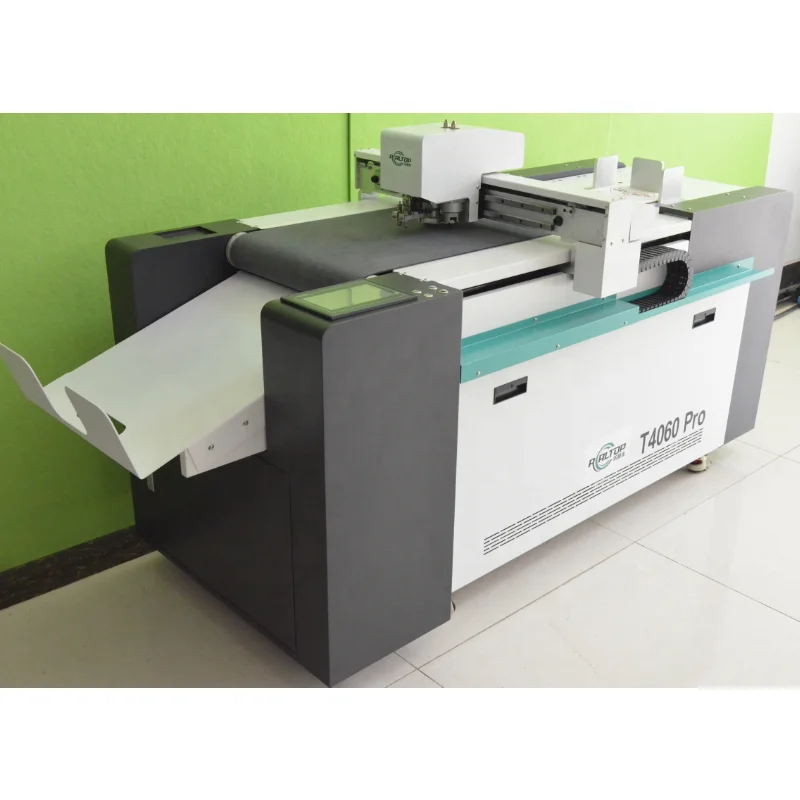
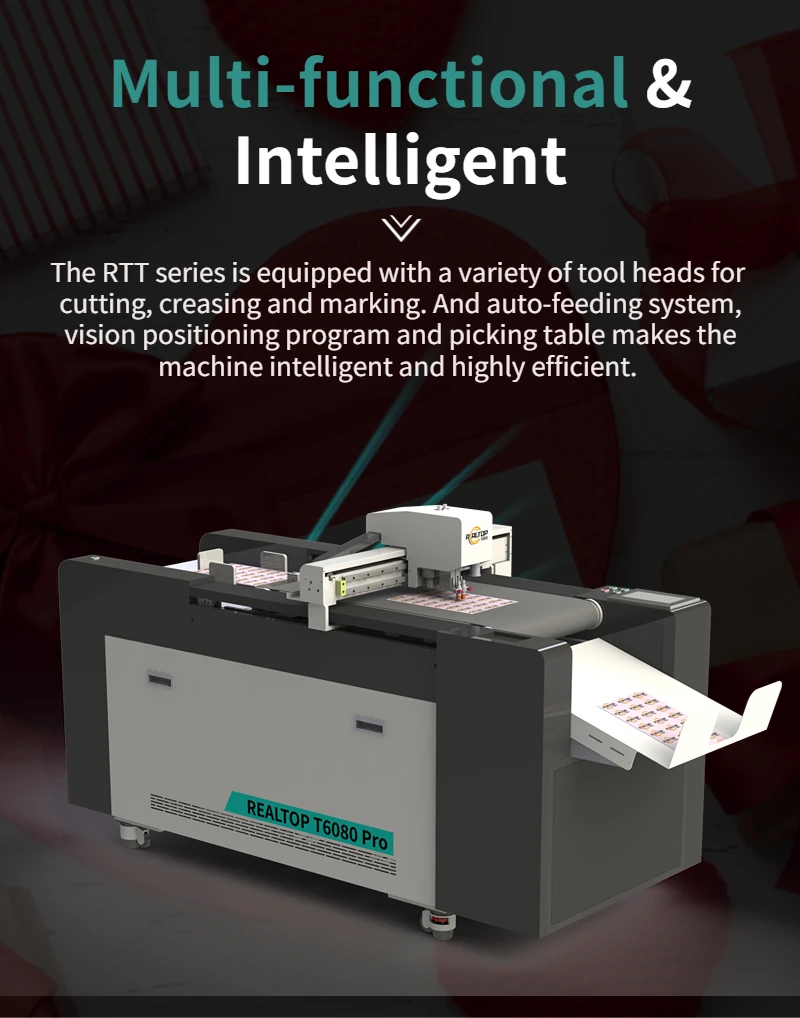
The RTT6080 handles the compact end of digital finishing — A4 sheets, sticker runs, and small-format card — while the RTT6080 Pro extends into thicker carton prototypes and short-run packaging structures. The 600×800 mm working area fits the most common sheet sizes used in print shops and sample-making studios without occupying the floor space of a full-format flatbed. This CNC digital paper cutting machine is built for operations that need a dedicated compact table alongside their large-format equipment, or for shops transitioning from manual die-cutting to digital contour cutting.
CCD Camera Contour Recognition at Production Pace
Printed contour work demands that the camera reads registration marks and adjusts the cut path in real time. The CCD camera on this CNC digital paper cutting machine tracks printed marks on stickers, labels, and short-run packaging graphics so the blade follows the actual print rather than a theoretical file position. For shops running digitally printed sheets where sheet-to-sheet registration drifts slightly, this means each piece gets its own corrected cut path. Without CCD tracking, operators waste time manually aligning sheets or accept visible cut-to-print misalignment on finished output [NEED_CITE: CCD camera positioning accuracy in digital print finishing workflows].
How Core Parameters Translate to Real Cutting Results
Positioning accuracy at 0.05 mm matters most when you are kiss-cutting stickers or creasing folding carton structures where a fraction of a millimeter determines whether the fold lands on the printed line or misses it. The tool group — cutting, kiss cutting, creasing, and CCD camera — lets you match the head to the job: oscillating knife for thicker card and corrugated samples, drag knife for thin vinyl and film, creasing wheel for folding carton scores. The RTT6080 Pro adds a high-speed oscillating knife that handles up to 5 mm material thickness, covering greyboard and multi-layer carton stock the standard model cannot process. File format support for DXF, PLT, PDF, and AI means the machine accepts output from common design and nesting software without requiring a proprietary pre-processor. Ethernet transfer keeps data throughput stable for complex nested jobs with thousands of contour points, avoiding the dropout risk of wireless transfer methods.
The Hidden Cost of Choosing the Wrong Tool Head
Selecting a tool head based on a catalog name rather than the buyer’s actual material leads to ragged edges on coated stock, crushed flutes on corrugated board, or incomplete kiss-cuts that leave sticker sheets unweeded. I have watched operators spend hours adjusting blade depth and oscillation frequency after the machine arrived with a head that was correct for the category — "paper" — but wrong for the specific 350 gsm coated card the shop runs daily. The cost is not just wasted material; it is the production time lost to trial-and-error setup on every new job [NEED_CITE: tool head selection impact on edge quality in digital paper cutting].
Why Sourcing This Machine Here Makes Sense
We design and produce both knife cutting systems under one roof in Jinan, so you can switch between oscillating and drag knife methods without buying from two different suppliers. Every configuration is specified against your stated material, thickness, and daily volume — not sold from a fixed catalog list. We confirm software compatibility with your existing DXF or AI workflow before the order goes to production, so there are no surprises when the machine arrives and your operator loads the first file. Voltage, plug type, and control language are locked in during the specification stage, not discovered at uncrating. And we cut your actual material — the exact paper stock, card weight, or film you run — and send you a sample cutting report before you commit to the order.
Documentation & Verification
- Machine specification sheet confirming working area, cutting thickness per model, and positioning accuracy
- Tool head and table configuration list matched to your stated paper weight and film type
- Sample cutting report run on your supplied paper, card, or film before order confirmation
- Software licence and file format compatibility note covering DXF, PLT, PDF, and AI workflows
- Electrical schematic and voltage confirmation for your target market’s power standard
- Operation and maintenance manual with tool head changeover and blade replacement procedures
Installation, Commissioning & Support
- Verify 220V or 380V supply with dedicated circuit matching the 3.2 kW rated power requirement
- Confirm floor leveling and table placement clearance around the 600×800 mm working envelope
- Factory technician calibrates CCD camera registration and blade depth on your material at commissioning
- Operator training covers tool head changeover between cutting, kiss cutting, and creasing heads
- Spare parts list includes oscillating knife blades, drag knife tips, and creasing wheel consumables
- Ethernet port setup and file transfer test with your existing nesting software during first-day run
Before You Request a Quote
Send us your primary material type and weight — whether that is 80 gsm offset paper, 350 gsm coated card, or 2 mm corrugated sample board — along with your typical sheet size and the cut complexity you run daily. Tell us your local voltage and frequency so we build the electrical system to match. If you are replacing a manual die-cutting process, share your current die inventory so we can confirm the machine covers your most common structures.
Frequently Asked Questions
Q: How do I verify the cutting thickness works for my exact paper weight?
A: Send us a sample of your paper stock — the actual sheets you run daily — and we cut test patterns on the RTT6080 or RTT6080 Pro before quoting. You receive a sample cutting report showing edge quality, creasing accuracy, and recommended tool head for your specific material weight and coating.
Q: Which tool head fits my material — oscillating knife or drag knife?
A: Oscillating knife suits thicker card, corrugated board, and multi-layer paper where a vibrating blade prevents dragging. Drag knife works for thin vinyl, film, and lightweight paper where a pulled blade gives a cleaner edge. We confirm the right head after cutting your supplied material samples.
Q: Can the CCD camera track my print marks at my daily production volume?
A: The CCD camera reads printed registration marks and corrects the cut path sheet by sheet. We test recognition speed and accuracy on your actual printed output during the sample phase, confirming that tracking keeps pace with your typical job run length without manual re-alignment.
Q: What voltage and control language options are available for my market?
A: The machine supports 220V and 380V at 50Hz. We confirm your local voltage, plug type, and preferred control panel language during the specification stage so the machine ships ready to connect — no transformers or interface translation needed after delivery.
Q: Will the software work with my existing design and nesting files?
A: The system accepts DXF, PLT, PDF, and AI file formats. We verify compatibility with your current design software and nesting workflow before production, and include a file format compatibility note in your documentation so your operators know which export settings to use.
Tool-matched cutting — We run your actual paper stock on the oscillating knife or drag knife head before confirming configuration, so the edge quality you see in the sample is what you get in production.
Technical Specifications
| Parameter | Value |
|---|---|
| Model | RTT6080 / RTT6080 Pro |
| Max Working Area | 600mm × 800mm |
| Tool Group | Cutting tool, kiss cutting tool, creasing tool, CCD camera; High speed oscillating knife (Pro model) |
| Max Cutting Speed | 1500 mm/s (basis not stated in source — confirm material / thickness) |
| Cutting Thickness | ≤2mm (RTT6080); ≤5mm (RTT6080 Pro) (basis not stated in source — confirm material type) |
| Positioning Accuracy | 0.05 mm |
| File Format | DXF, PLT, PDF, AI |
| Transfer Method | Ethernet port |
| Rated Power | 3.2 kW (rated or peak not specified in source) |
| Voltage & Frequency | 220V / 380V, 50Hz |
Application Suitability
| Application | Material or Output |
|---|---|
| Packaging prototype cutting | Folding carton stock, corrugated sample sheets, thin greyboard |
| Digital print finishing | A4/A3 printed sheets, contour-cut stickers, laminated card |
| Stationery and promotional products | Vinyl, magnetic sheet, thin card for kiss-cutting |
| Carton sample making | Short-run box structures, creasing and perforation on paperboard |
When "Cutting Thickness" Means Nothing Without the Material Name
We never quote a thickness number without first running your exact paper or film on the machine.
I learned this the hard way on the assembly floor in Jinan. A packaging shop asked for a vibrating knife cutter for corrugated board. We dialed in standard paper parameters, and the first sheet came off the table with fuzzy edges and crushed flutes — twenty sample sheets ruined before we stopped the job. The issue was not the machine; it was the assumption that "paper" means one thing. A CNC digital paper cutting machine manufacturer who skips the material-specific sample run is handing you a specification sheet, not a solution. Every paper weight, coating, and lamination behaves differently under the blade, and the only way to confirm clean edges is to cut the buyer’s own stock at the stated speed and thickness [NEED_CITE: material-specific cutting behavior of coated vs uncoated paper stocks].
Dual-Model Coverage From A4 to Short-Run Packaging Formats
The RTT6080 handles the compact end of digital finishing — A4 sheets, sticker runs, and small-format card — while the RTT6080 Pro extends into thicker carton prototypes and short-run packaging structures. The 600×800 mm working area fits the most common sheet sizes used in print shops and sample-making studios without occupying the floor space of a full-format flatbed. This CNC digital paper cutting machine is built for operations that need a dedicated compact table alongside their large-format equipment, or for shops transitioning from manual die-cutting to digital contour cutting.
CCD Camera Contour Recognition at Production Pace
Printed contour work demands that the camera reads registration marks and adjusts the cut path in real time. The CCD camera on this CNC digital paper cutting machine tracks printed marks on stickers, labels, and short-run packaging graphics so the blade follows the actual print rather than a theoretical file position. For shops running digitally printed sheets where sheet-to-sheet registration drifts slightly, this means each piece gets its own corrected cut path. Without CCD tracking, operators waste time manually aligning sheets or accept visible cut-to-print misalignment on finished output [NEED_CITE: CCD camera positioning accuracy in digital print finishing workflows].
How Core Parameters Translate to Real Cutting Results
Positioning accuracy at 0.05 mm matters most when you are kiss-cutting stickers or creasing folding carton structures where a fraction of a millimeter determines whether the fold lands on the printed line or misses it. The tool group — cutting, kiss cutting, creasing, and CCD camera — lets you match the head to the job: oscillating knife for thicker card and corrugated samples, drag knife for thin vinyl and film, creasing wheel for folding carton scores. The RTT6080 Pro adds a high-speed oscillating knife that handles up to 5 mm material thickness, covering greyboard and multi-layer carton stock the standard model cannot process. File format support for DXF, PLT, PDF, and AI means the machine accepts output from common design and nesting software without requiring a proprietary pre-processor. Ethernet transfer keeps data throughput stable for complex nested jobs with thousands of contour points, avoiding the dropout risk of wireless transfer methods.
The Hidden Cost of Choosing the Wrong Tool Head
Selecting a tool head based on a catalog name rather than the buyer’s actual material leads to ragged edges on coated stock, crushed flutes on corrugated board, or incomplete kiss-cuts that leave sticker sheets unweeded. I have watched operators spend hours adjusting blade depth and oscillation frequency after the machine arrived with a head that was correct for the category — "paper" — but wrong for the specific 350 gsm coated card the shop runs daily. The cost is not just wasted material; it is the production time lost to trial-and-error setup on every new job [NEED_CITE: tool head selection impact on edge quality in digital paper cutting].
Why Sourcing This Machine Here Makes Sense
We design and produce both knife cutting systems under one roof in Jinan, so you can switch between oscillating and drag knife methods without buying from two different suppliers. Every configuration is specified against your stated material, thickness, and daily volume — not sold from a fixed catalog list. We confirm software compatibility with your existing DXF or AI workflow before the order goes to production, so there are no surprises when the machine arrives and your operator loads the first file. Voltage, plug type, and control language are locked in during the specification stage, not discovered at uncrating. And we cut your actual material — the exact paper stock, card weight, or film you run — and send you a sample cutting report before you commit to the order.
Documentation & Verification
- Machine specification sheet confirming working area, cutting thickness per model, and positioning accuracy
- Tool head and table configuration list matched to your stated paper weight and film type
- Sample cutting report run on your supplied paper, card, or film before order confirmation
- Software licence and file format compatibility note covering DXF, PLT, PDF, and AI workflows
- Electrical schematic and voltage confirmation for your target market’s power standard
- Operation and maintenance manual with tool head changeover and blade replacement procedures
Installation, Commissioning & Support
- Verify 220V or 380V supply with dedicated circuit matching the 3.2 kW rated power requirement
- Confirm floor leveling and table placement clearance around the 600×800 mm working envelope
- Factory technician calibrates CCD camera registration and blade depth on your material at commissioning
- Operator training covers tool head changeover between cutting, kiss cutting, and creasing heads
- Spare parts list includes oscillating knife blades, drag knife tips, and creasing wheel consumables
- Ethernet port setup and file transfer test with your existing nesting software during first-day run
Before You Request a Quote
Send us your primary material type and weight — whether that is 80 gsm offset paper, 350 gsm coated card, or 2 mm corrugated sample board — along with your typical sheet size and the cut complexity you run daily. Tell us your local voltage and frequency so we build the electrical system to match. If you are replacing a manual die-cutting process, share your current die inventory so we can confirm the machine covers your most common structures.
Frequently Asked Questions
Q: How do I verify the cutting thickness works for my exact paper weight?
A: Send us a sample of your paper stock — the actual sheets you run daily — and we cut test patterns on the RTT6080 or RTT6080 Pro before quoting. You receive a sample cutting report showing edge quality, creasing accuracy, and recommended tool head for your specific material weight and coating.
Q: Which tool head fits my material — oscillating knife or drag knife?
A: Oscillating knife suits thicker card, corrugated board, and multi-layer paper where a vibrating blade prevents dragging. Drag knife works for thin vinyl, film, and lightweight paper where a pulled blade gives a cleaner edge. We confirm the right head after cutting your supplied material samples.
Q: Can the CCD camera track my print marks at my daily production volume?
A: The CCD camera reads printed registration marks and corrects the cut path sheet by sheet. We test recognition speed and accuracy on your actual printed output during the sample phase, confirming that tracking keeps pace with your typical job run length without manual re-alignment.
Q: What voltage and control language options are available for my market?
A: The machine supports 220V and 380V at 50Hz. We confirm your local voltage, plug type, and preferred control panel language during the specification stage so the machine ships ready to connect — no transformers or interface translation needed after delivery.
Q: Will the software work with my existing design and nesting files?
A: The system accepts DXF, PLT, PDF, and AI file formats. We verify compatibility with your current design software and nesting workflow before production, and include a file format compatibility note in your documentation so your operators know which export settings to use.










商品评价
There are no reviews yet.