

Fast Delivery
Quick, reliable shipping to any location.

Free & easy returns
Return this item by mail or in store within 90 days for a full refund.
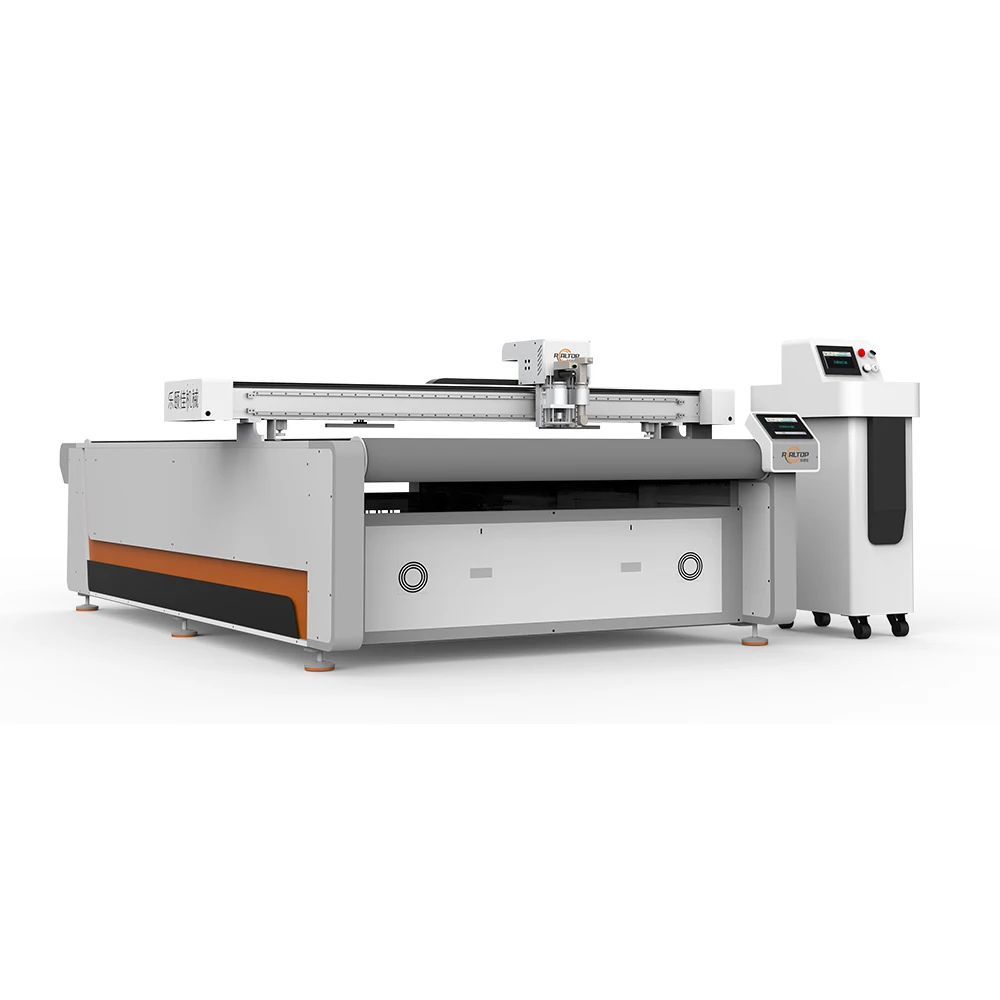
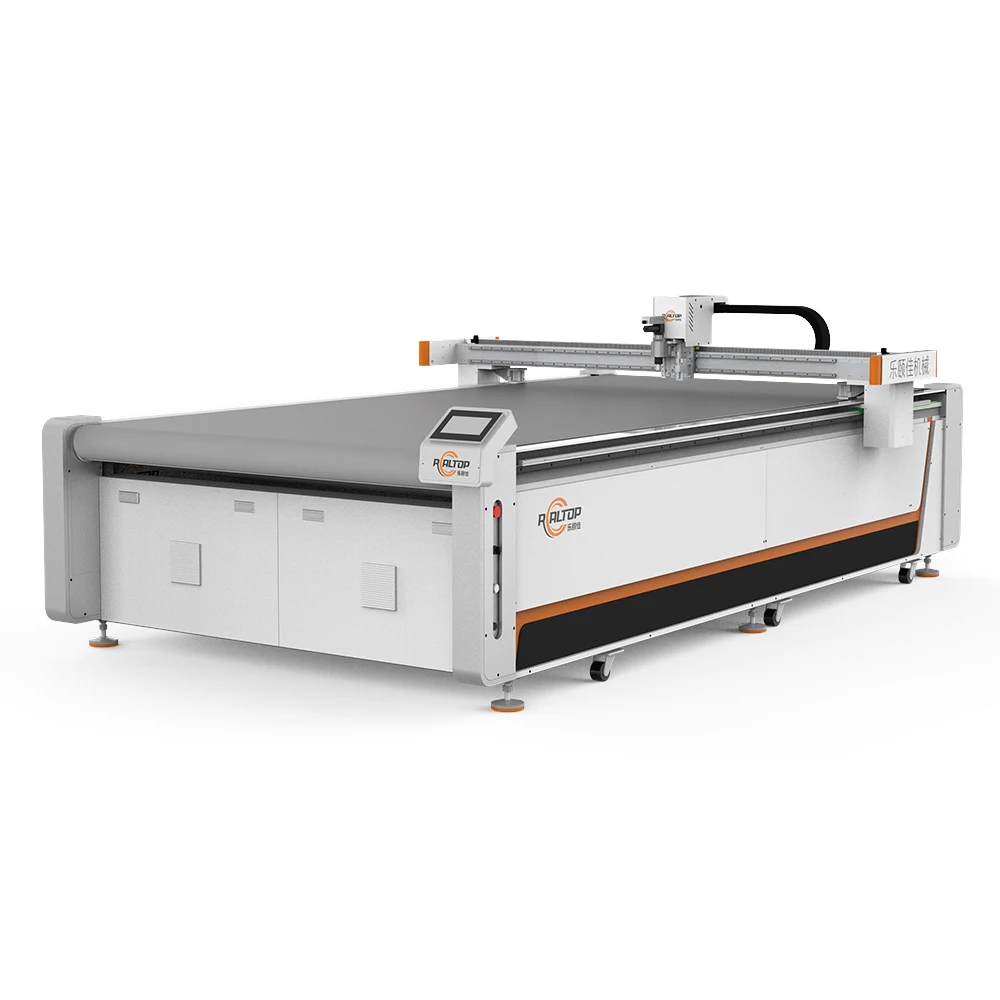
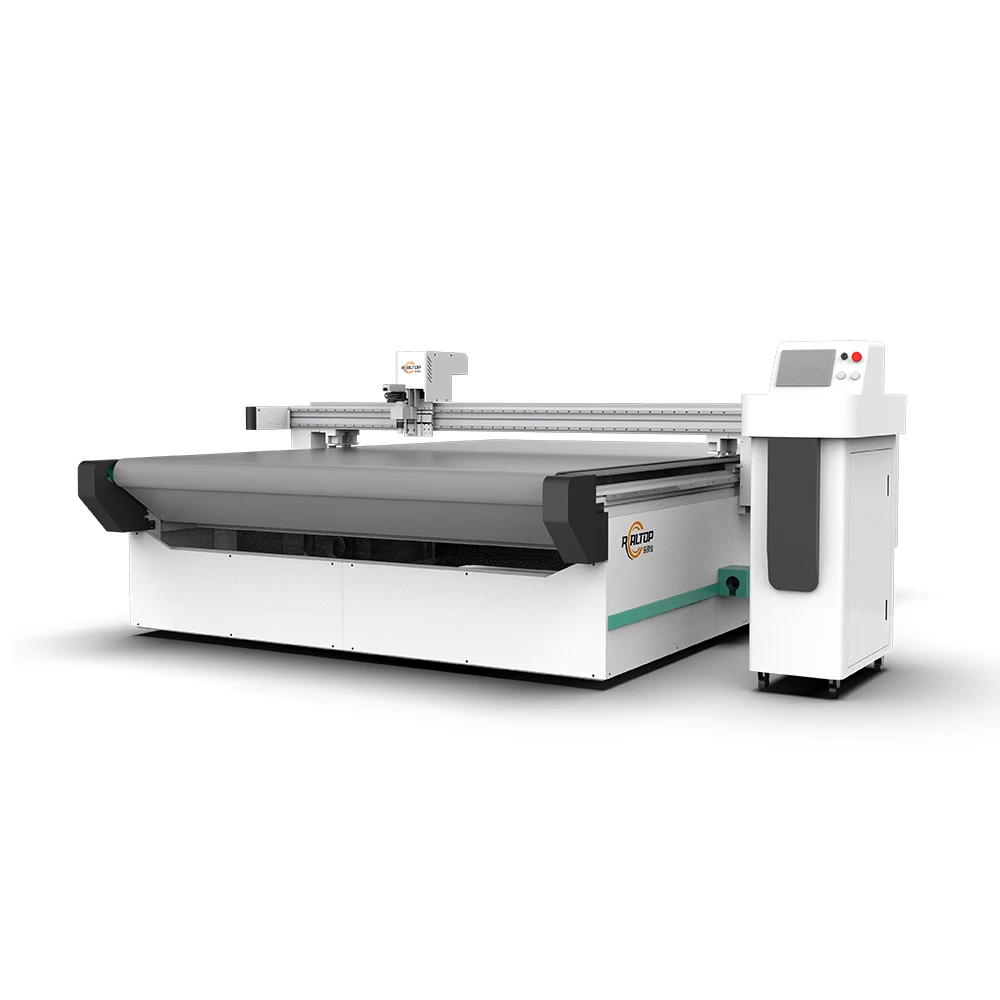
Cutting Method Matched to Material — A buyer cutting PVC coated fabric needs oscillating knife action rather than laser heat, and this 1625 configuration delivers both options from one factory so the process fits the fabric instead of the other way around.
Technical Specifications
| Parameter | Value |
|---|---|
| Model | 1625 |
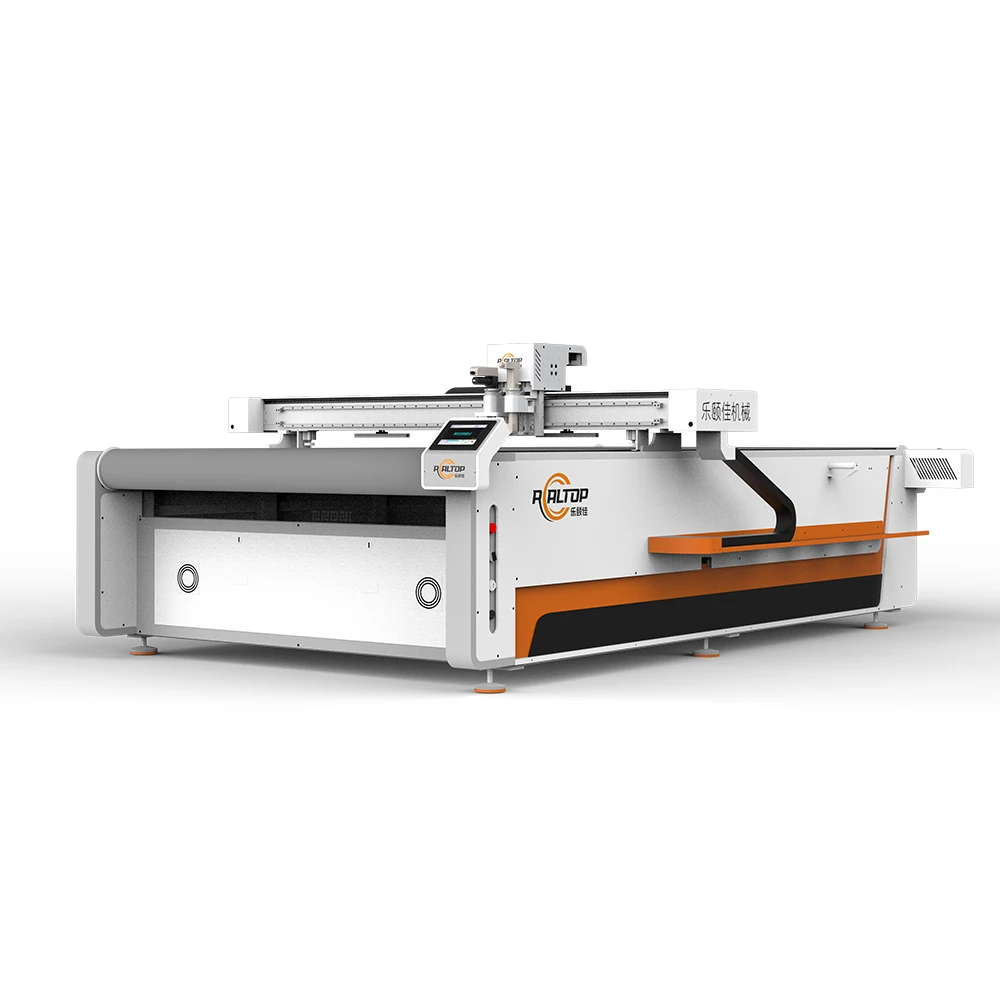
| Product Type | CNC Oscillating Knife Cutting Machine |
| Working Area | 1600×2500 mm |
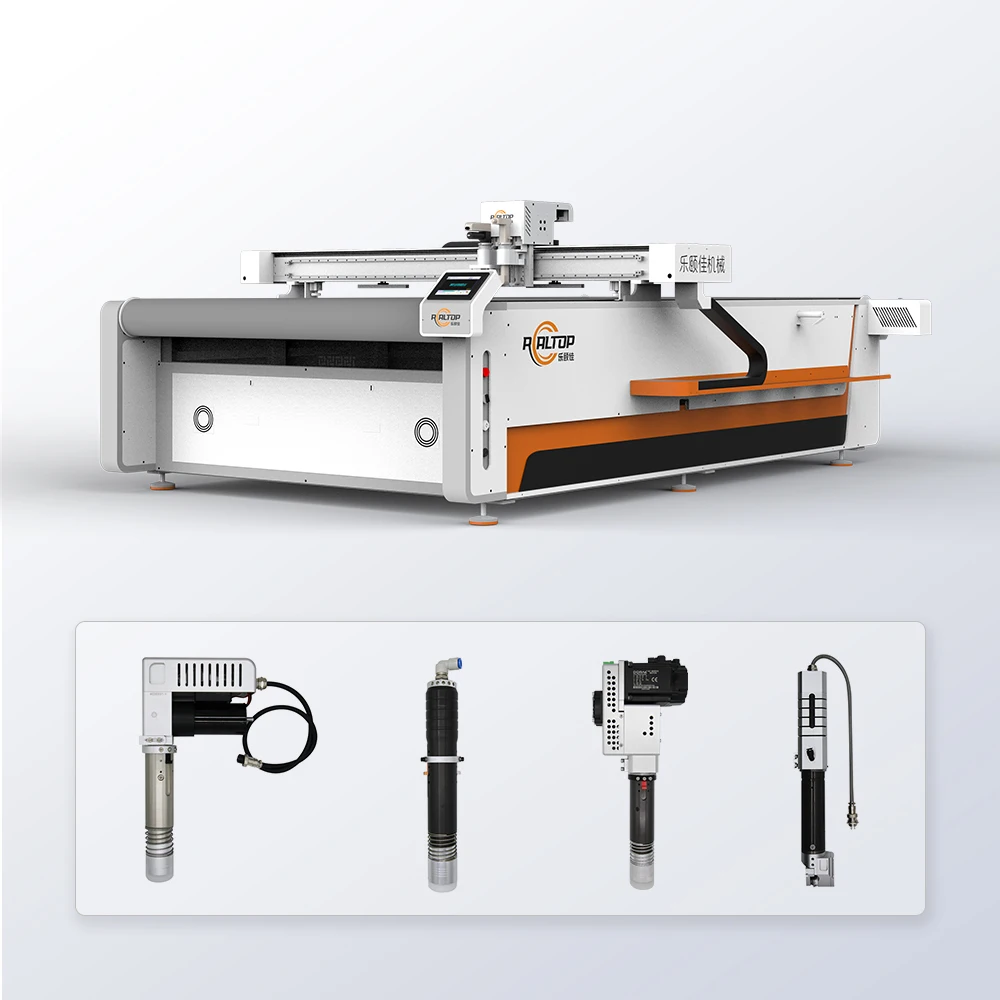
| Tool Head Options | Oscillating knife, Driven rotary knife, Creasing wheel, Kiss cutting tool, Pneumatic knife, Milling tool, V groove knife |
| Cutting Speed | 0–2000 mm/s |
| Cutting Thickness | ≤ 30 mm (basis not stated in source — confirm material and density) |
| Cutting Accuracy | ±0.1 mm |
| Vacuum Pump | 9 kW |
| Vacuum Table | Aluminum bellows vacuum table |
| Voltage Options | 110V, 220V, 380V (frequency not specified in source) |
| Control System | PLC control panel with intuitive interface |
| Safety Devices | Infrared sensor device and emergency stop device |
| Software & File Formats | PLT, DXF, AI, PDF |
| Software Language Options | English, Russian, Italian, Chinese (special languages customizable) |
| Servo Drive Options | Panasonic, Delta, Dorna |
| Machine Dimensions (L×W×H) | 3300×2100×1350 mm |
| Certification | CE (declared in source title — verify certificate scope) |
Application Suitability
| Application | Material or Output |
|---|---|
| Apparel manufacturing | Suits, knitwear, lace, complex woven and knitted fabrics |
| Automotive interiors | Seat fabrics, carpets, PVC mats, headliner textiles |
| Home textiles | Sofa fabrics, curtains, rugs, upholstery panels |
| Composite material processing | Carbon fiber prepreg, aramid weaves, specialty layered materials |
| General non-metal cutting | Cardboard, carton, EVA, leather, acrylic, foam, PTFE, rubber |
Why "Maximum Cutting Speed" Means Nothing Without the Material in Hand
A rated 2000 mm/s cutting speed on a CNC Oscillating Knife Cutting Machine for sale only matters if your PVC coated fabric stays flat, the blade holds its edge, and the vacuum table keeps small nested pieces from lifting mid-cut.
I have watched buyers commit to a flatbed cutter based on working area and speed numbers alone, then discover on the first production run that their coated fabric thickness varies across the roll. The blade either fails to*inner ones, leaving crushed edges and ragged cuts that ruin the entire batch. [NEED_CITE: material thickness variation across coated fabric rolls and its effect on oscillating knife edge quality] The solution is not a faster machine — it is testing your actual roll stock on the vacuum table before the order goes into production.
Matching the Tool Head to PVC Coated Fabric Behavior
PVC coated fabric sits in a difficult zone between flexible textile and semi-rigid sheet, which is why the oscillating knife head on this 1625 unit matters more than raw speed. The high-frequency vertical vibration of the blade slices through the coating and the base weave simultaneously, preventing the delamination that a drag knife or rotary blade would cause on layered coated material. A CNC Oscillating Knife Cutting Machine for sale with multiple tool head options lets you switch to a kiss cutting tool when the job requires scoring the PVC layer without cutting through the backing fabric — a common requirement in automotive interior panel production.
Vacuum Zoning Decides Whether Small Parts Stay or Fly
The 9 kW vacuum pump paired with the aluminum bellows vacuum table provides full-surface adsorption, but the real question for PVC coated fabric cutting is how the table zones are configured. When nesting small pattern pieces — collar shapes, pocket flaps, gusset panels — the vacuum must hold each piece independently once the surrounding material is cut away. [NEED_CITE: vacuum table zoning configuration for small nested parts on flatbed digital cutters] Without proper zoning, the released pieces lift into the oscillating blade path on the next pass, causing misalignment and wasted material that accumulates across a full production shift.
Reading the Spec Sheet Against Your Actual Roll Stock
The ±0.1 mm cutting accuracy listed for this machine is achievable under controlled conditions, but PVC coated fabric introduces variables that no specification sheet can predict. The coating thickness, the base fabric weave density, and whether the material has been stored in a humid warehouse all affect how the blade engages. The 0–2000 mm/s speed range gives the operator room to dial back when the blade encounters a denser section of the roll, and the PLC control panel allows these speed adjustments to be saved per material profile so the next operator does not start from scratch. The cutting thickness of up to 30 mm covers most single-layer coated fabrics, though the actual limit depends on the density and coating composition of your specific material.
What Happens When Configuration Is an Afterthought
The most expensive mistake in flatbed cutting is discovering a mismatch after the machine arrives. A buyer cutting PVC coated fabric for automotive seat covers specified the machine on working area alone, without confirming that the vacuum table zoning matched their nesting layout. Small pattern pieces lifted during cutting, and the resulting edge damage forced manual trimming on every piece — a bottleneck that eliminated any throughput gain the machine was supposed to deliver. [NEED_CITE: consequences of vacuum table zoning mismatch on nested fabric cutting operations] The same applies to voltage: a 380V machine shipped to a workshop running 220V single-phase will not simply underperform — it will not run, and rewinding the motor on-site voids the warranty.
Why Source the 1625 From This Factory
The tool head and table configuration on this CNC Oscillating Knife Cutting Machine for sale are specified per material and production volume, not pulled from a standard catalogue page. Sample cutting on the buyer’s own PVC coated fabric is performed before commitment, so blade selection, vacuum pressure, and feed speed are validated on actual roll stock rather than assumed from generic fabric data. The in-house design team covers both knife and laser cutting technologies, meaning a buyer processing both coated fabric and acrylic signage can match the cutting method to each material from a single manufacturer. Software compatibility is confirmed before the order — file formats like PLT, DXF, AI, and PDF are verified against the buyer’s existing nesting workflow. Voltage, plug type, and control language are documented in the electrical schematic before shipment, preventing the arrival-day surprises that delay production startup.
Documentation & Verification
- Machine specification sheet listing tool head and table configuration matched to your PVC coated fabric type
- Sample cutting report on your roll stock documenting edge quality, cutting depth, and speed settings
- Electrical schematic with voltage and frequency confirmed for your workshop supply
- Software licence and file format compatibility note covering PLT, DXF, AI, PDF integration
- Factory test record showing machine performance on your material before dispatch
- Packing photographs documenting machine condition and configuration at point of shipment
Installation, Commissioning & Support
- Floor space of approximately 3300×2100 mm footprint required with clearance for material feed and operator access
- Dedicated electrical circuit matching confirmed voltage option (110V, 220V, or 380V) with correct frequency and plug type
- Machine arrives partially assembled; vacuum table leveling and gantry alignment completed on-site during commissioning
- PLC control panel language set to operator preference during initial startup and training session
- Oscillating knife blade replacement procedure and spare blade inventory reviewed before production handover
- Vacuum pump maintenance schedule and aluminum bellows table seal inspection intervals documented in operation manual
Before You Request a Quote
Send your actual PVC coated fabric sample — not a data sheet, but a physical piece from the roll you intend to cut, including the thickness range you encounter across a full roll. Specify your local voltage and frequency, the control language your operators need, and the software you currently use for nesting and pattern layout. If you are cutting for automotive interiors or home textiles, include the smallest pattern piece in your nest so vacuum zoning can be configured around your real production geometry.
Frequently Asked Questions
Q: How do I decide between oscillating knife and laser for PVC coated fabric?
A: Oscillating knife cuts without heat, so the PVC coating does not melt, discolor, or produce fumes at the cut edge. Laser can seal synthetic edges but will burn through PVC coatings and generate hazardous chloride gas. For PVC coated fabric, oscillating knife is almost always the correct method, and testing your specific material confirms edge quality before commitment.
Q: What working area should I choose for fabric cutting production?
A: The 1600×2500 mm format on this unit handles standard fabric roll widths and allows efficient nesting of garment or automotive interior patterns. The right size depends on your daily volume and the largest single pattern piece you cut, not just the raw material width. Matching the table to your nesting layout prevents re-cutting and material waste.
Q: Can the control system and software run in my local language?
A: The PLC control panel supports English, Russian, Italian, and Chinese as standard, with special language customization available on request. Software file format compatibility covering PLT, DXF, AI, and PDF is confirmed before the order so your existing nesting workflow integrates without conversion issues or third-party software purchases.
Q: What configuration options are available across the machine range?
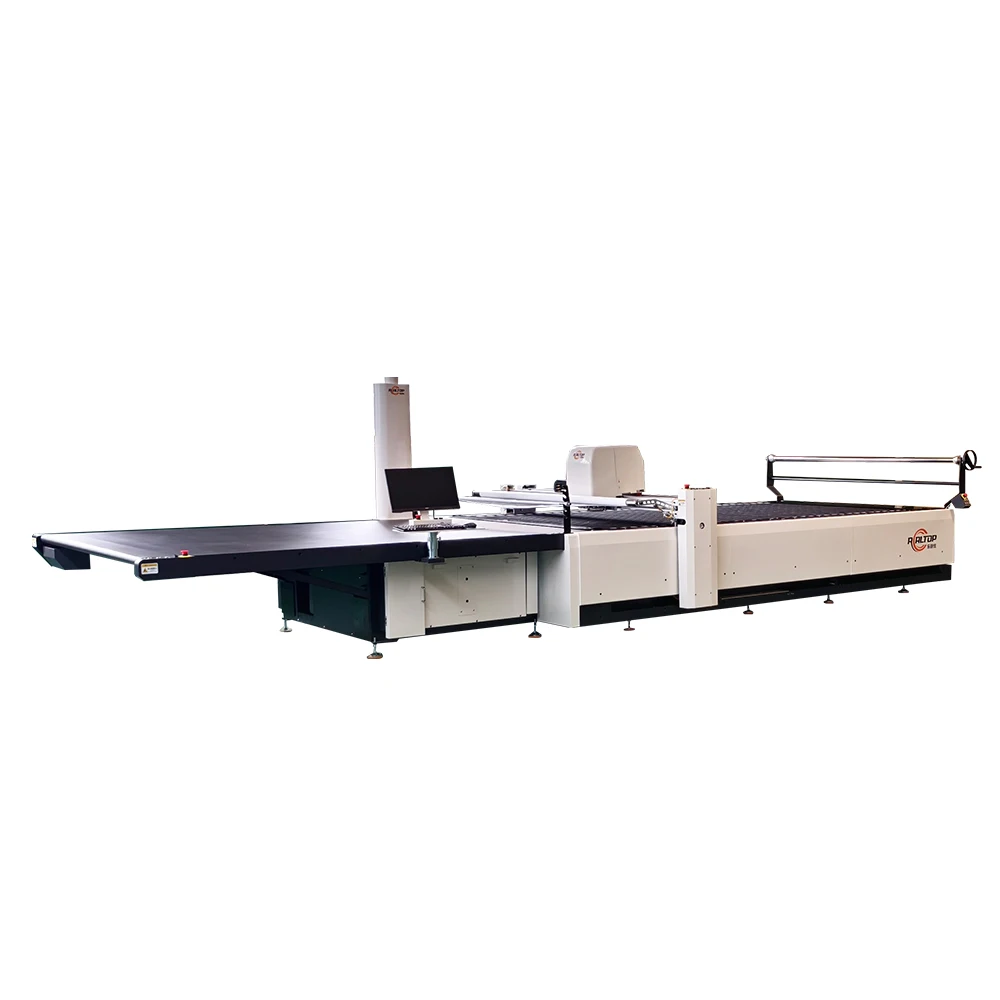
A: Beyond the tool heads listed, options include single and multi-head configurations, conveyor feeding systems for continuous roll processing, and CCD camera positioning for printed contour recognition. Each option changes the machine’s capability for specific production workflows, and the correct combination depends on your material type, daily throughput, and whether your fabric carries printed registration marks.
Cutting Method Matched to Material — A buyer cutting PVC coated fabric needs oscillating knife action rather than laser heat, and this 1625 configuration delivers both options from one factory so the process fits the fabric instead of the other way around.
Technical Specifications
| Parameter | Value |
|---|---|
| Model | 1625 |
| Product Type | CNC Oscillating Knife Cutting Machine |
| Working Area | 1600×2500 mm |
| Tool Head Options | Oscillating knife, Driven rotary knife, Creasing wheel, Kiss cutting tool, Pneumatic knife, Milling tool, V groove knife |
| Cutting Speed | 0–2000 mm/s |
| Cutting Thickness | ≤ 30 mm (basis not stated in source — confirm material and density) |
| Cutting Accuracy | ±0.1 mm |
| Vacuum Pump | 9 kW |
| Vacuum Table | Aluminum bellows vacuum table |
| Voltage Options | 110V, 220V, 380V (frequency not specified in source) |
| Control System | PLC control panel with intuitive interface |
| Safety Devices | Infrared sensor device and emergency stop device |
| Software & File Formats | PLT, DXF, AI, PDF |
| Software Language Options | English, Russian, Italian, Chinese (special languages customizable) |
| Servo Drive Options | Panasonic, Delta, Dorna |
| Machine Dimensions (L×W×H) | 3300×2100×1350 mm |
| Certification | CE (declared in source title — verify certificate scope) |
Application Suitability
| Application | Material or Output |
|---|---|
| Apparel manufacturing | Suits, knitwear, lace, complex woven and knitted fabrics |
| Automotive interiors | Seat fabrics, carpets, PVC mats, headliner textiles |
| Home textiles | Sofa fabrics, curtains, rugs, upholstery panels |
| Composite material processing | Carbon fiber prepreg, aramid weaves, specialty layered materials |
| General non-metal cutting | Cardboard, carton, EVA, leather, acrylic, foam, PTFE, rubber |
Why "Maximum Cutting Speed" Means Nothing Without the Material in Hand
A rated 2000 mm/s cutting speed on a CNC Oscillating Knife Cutting Machine for sale only matters if your PVC coated fabric stays flat, the blade holds its edge, and the vacuum table keeps small nested pieces from lifting mid-cut.
I have watched buyers commit to a flatbed cutter based on working area and speed numbers alone, then discover on the first production run that their coated fabric thickness varies across the roll. The blade either fails to*inner ones, leaving crushed edges and ragged cuts that ruin the entire batch. [NEED_CITE: material thickness variation across coated fabric rolls and its effect on oscillating knife edge quality] The solution is not a faster machine — it is testing your actual roll stock on the vacuum table before the order goes into production.
Matching the Tool Head to PVC Coated Fabric Behavior
PVC coated fabric sits in a difficult zone between flexible textile and semi-rigid sheet, which is why the oscillating knife head on this 1625 unit matters more than raw speed. The high-frequency vertical vibration of the blade slices through the coating and the base weave simultaneously, preventing the delamination that a drag knife or rotary blade would cause on layered coated material. A CNC Oscillating Knife Cutting Machine for sale with multiple tool head options lets you switch to a kiss cutting tool when the job requires scoring the PVC layer without cutting through the backing fabric — a common requirement in automotive interior panel production.
Vacuum Zoning Decides Whether Small Parts Stay or Fly
The 9 kW vacuum pump paired with the aluminum bellows vacuum table provides full-surface adsorption, but the real question for PVC coated fabric cutting is how the table zones are configured. When nesting small pattern pieces — collar shapes, pocket flaps, gusset panels — the vacuum must hold each piece independently once the surrounding material is cut away. [NEED_CITE: vacuum table zoning configuration for small nested parts on flatbed digital cutters] Without proper zoning, the released pieces lift into the oscillating blade path on the next pass, causing misalignment and wasted material that accumulates across a full production shift.
Reading the Spec Sheet Against Your Actual Roll Stock
The ±0.1 mm cutting accuracy listed for this machine is achievable under controlled conditions, but PVC coated fabric introduces variables that no specification sheet can predict. The coating thickness, the base fabric weave density, and whether the material has been stored in a humid warehouse all affect how the blade engages. The 0–2000 mm/s speed range gives the operator room to dial back when the blade encounters a denser section of the roll, and the PLC control panel allows these speed adjustments to be saved per material profile so the next operator does not start from scratch. The cutting thickness of up to 30 mm covers most single-layer coated fabrics, though the actual limit depends on the density and coating composition of your specific material.
What Happens When Configuration Is an Afterthought
The most expensive mistake in flatbed cutting is discovering a mismatch after the machine arrives. A buyer cutting PVC coated fabric for automotive seat covers specified the machine on working area alone, without confirming that the vacuum table zoning matched their nesting layout. Small pattern pieces lifted during cutting, and the resulting edge damage forced manual trimming on every piece — a bottleneck that eliminated any throughput gain the machine was supposed to deliver. [NEED_CITE: consequences of vacuum table zoning mismatch on nested fabric cutting operations] The same applies to voltage: a 380V machine shipped to a workshop running 220V single-phase will not simply underperform — it will not run, and rewinding the motor on-site voids the warranty.
Why Source the 1625 From This Factory
The tool head and table configuration on this CNC Oscillating Knife Cutting Machine for sale are specified per material and production volume, not pulled from a standard catalogue page. Sample cutting on the buyer’s own PVC coated fabric is performed before commitment, so blade selection, vacuum pressure, and feed speed are validated on actual roll stock rather than assumed from generic fabric data. The in-house design team covers both knife and laser cutting technologies, meaning a buyer processing both coated fabric and acrylic signage can match the cutting method to each material from a single manufacturer. Software compatibility is confirmed before the order — file formats like PLT, DXF, AI, and PDF are verified against the buyer’s existing nesting workflow. Voltage, plug type, and control language are documented in the electrical schematic before shipment, preventing the arrival-day surprises that delay production startup.
Documentation & Verification
- Machine specification sheet listing tool head and table configuration matched to your PVC coated fabric type
- Sample cutting report on your roll stock documenting edge quality, cutting depth, and speed settings
- Electrical schematic with voltage and frequency confirmed for your workshop supply
- Software licence and file format compatibility note covering PLT, DXF, AI, PDF integration
- Factory test record showing machine performance on your material before dispatch
- Packing photographs documenting machine condition and configuration at point of shipment
Installation, Commissioning & Support
- Floor space of approximately 3300×2100 mm footprint required with clearance for material feed and operator access
- Dedicated electrical circuit matching confirmed voltage option (110V, 220V, or 380V) with correct frequency and plug type
- Machine arrives partially assembled; vacuum table leveling and gantry alignment completed on-site during commissioning
- PLC control panel language set to operator preference during initial startup and training session
- Oscillating knife blade replacement procedure and spare blade inventory reviewed before production handover
- Vacuum pump maintenance schedule and aluminum bellows table seal inspection intervals documented in operation manual
Before You Request a Quote
Send your actual PVC coated fabric sample — not a data sheet, but a physical piece from the roll you intend to cut, including the thickness range you encounter across a full roll. Specify your local voltage and frequency, the control language your operators need, and the software you currently use for nesting and pattern layout. If you are cutting for automotive interiors or home textiles, include the smallest pattern piece in your nest so vacuum zoning can be configured around your real production geometry.
Frequently Asked Questions
Q: How do I decide between oscillating knife and laser for PVC coated fabric?
A: Oscillating knife cuts without heat, so the PVC coating does not melt, discolor, or produce fumes at the cut edge. Laser can seal synthetic edges but will burn through PVC coatings and generate hazardous chloride gas. For PVC coated fabric, oscillating knife is almost always the correct method, and testing your specific material confirms edge quality before commitment.
Q: What working area should I choose for fabric cutting production?
A: The 1600×2500 mm format on this unit handles standard fabric roll widths and allows efficient nesting of garment or automotive interior patterns. The right size depends on your daily volume and the largest single pattern piece you cut, not just the raw material width. Matching the table to your nesting layout prevents re-cutting and material waste.
Q: Can the control system and software run in my local language?
A: The PLC control panel supports English, Russian, Italian, and Chinese as standard, with special language customization available on request. Software file format compatibility covering PLT, DXF, AI, and PDF is confirmed before the order so your existing nesting workflow integrates without conversion issues or third-party software purchases.
Q: What configuration options are available across the machine range?
A: Beyond the tool heads listed, options include single and multi-head configurations, conveyor feeding systems for continuous roll processing, and CCD camera positioning for printed contour recognition. Each option changes the machine’s capability for specific production workflows, and the correct combination depends on your material type, daily throughput, and whether your fabric carries printed registration marks.










商品评价
There are no reviews yet.