


Fast Delivery
Quick, reliable shipping to any location.

Free & easy returns
Return this item by mail or in store within 90 days for a full refund.
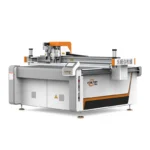
Integrated Design and Production Across Knife and Laser Cutting — RT-D2516/RT-S2516 platforms span oscillating knife, pneumatic, and visual positioning configurations so composite fabricators match the cutting method to their material rather than forcing one technology.
Technical Specifications
| Parameter | Value |
|---|---|
| Product Type | CNC Oscillating Knife Cutting Machine |
| Model | RT-D2516 / RT-S2516 |
| Working Area | 1600×2500 mm |
| Machine Size | 3450×2300×1250 mm |
| Rated Power | 9 kW |
| Voltage | 380V±10% |
| Control System | CNC (HP-GL compatible) |
| Servo Motor | Delta (optional Panasonic) |
| Transmission | Linear guide, synchronous belt, ball screw (Taiwan Hiwin rail) |
| Tool Head Options | Oscillating knife, pneumatic, high-power vibrating, circular, V-cutting, drag knife, creasing wheel, punching, brush |
| Visual Positioning | CCD camera mark point, panoramic camera recognition, projection |
| Translational Velocity | 800–2000 mm/s |
| Cutting Speed | 200–800 mm/s (varies by material and thickness) |
| Cutting Thickness | Up to 100 mm (varies by material) |
| Repeatability | ≤0.1 mm |
| Working Table | Magnesium-aluminum alloy vacuum adsorption, flat type |
| Vacuum Pump | 7.5 kW, integrated aviation aluminum shell |
| Safety | Infrared induction blocking, beam anti-collision, emergency stop with in-situ resume |
Application Suitability
| Application | Material or Output |
|---|---|
| Automotive interior trimming | Carbon fiber prepreg, fiberglass mats, composite panels |
| Gasket and seal fabrication | Non-asbestos fiber, rubber, PTFE, cork composite sheets |
| Protective packaging and foam | EVA, EPE, PU sponge, cross-linked polyethylene foam |
| Signage and display | PVC foam board, acrylic (when knife-compatible), corrugated plastic |
| Footwear and leather goods | Synthetic leather, textile composites, multi-layer laminates |
| Marine and aerospace interiors | Honeycomb core, aramid fiber, lightweight sandwich panels |
Why Specifying Only Working Area Fails Composite Shops
A 1600×2500 mm bed means nothing if the tool head cannot handle the material you actually run. The cutting method must be matched to the material before the table size is confirmed.
Too often, composite fabricators specify a machine by working area alone and discover later that the oscillating knife leaves delaminated edges on carbon fiber prepreg, or that the vacuum table zones are too large to hold small gasket blanks during high-speed contour cuts. These problems surface during production, not during the quote stage. The CNC oscillating knife cutting machine manufacturer approach here starts with your material sample, not your floor space.
[NEED_CITE: composite material cutting challenges in oscillating knife applications]
Choosing the Right Tool Head for Composites
The RT-D2516/RT-S2516 platform supports a full range of interchangeable tool heads. Oscillating knives handle foam and soft composites with clean vertical edges. Pneumatic knives cut through denser fiberglass and rubber with controlled downforce. V-cutting tools score honeycomb panels without crushing the core structure. Each head mounts to the same carriage, allowing one CNC oscillating knife cutting machine manufacturer platform to cover multiple material types across production runs.
Visual Positioning for Printed Contour Work
When cutting printed graphics on composite panels or pre-printed gasket sheets, edge detection becomes critical. The small CCD camera locks onto printed registration marks, while the panoramic camera option scans the entire sheet for contour alignment. Projection positioning overlays the cut path onto the material surface before the blade engages, giving operators a visual check before production starts. This eliminates the trial-and-error waste common in shops running printed composite laminates.
Reading the Specifications for Composite Work
The 7.5 kW vacuum pump paired with the magnesium-aluminum alloy table creates consistent hold-down pressure across the full 1600×2500 mm surface. For composite cutting, this matters because lightweight foam and honeycomb panels lift easily under high-speed knife travel. The Taiwan Hiwin linear guides and Delta servo motors maintain ≤0.1 mm repeatability, which prevents tool path drift during long contour cuts on large automotive interior panels. Cutting speed ranges from 200 to 800 mm/s depending on material density and thickness — carbon fiber prepreg requires slower travel than cross-linked PE foam to avoid fraying.
[NEED_CITE: linear guide precision standards in CNC cutting equipment]
The Cost of Wrong Configuration Choices
Shops that skip material testing before ordering typically discover configuration mismatches weeks into production. A vacuum table with insufficient zoning causes small composite blanks to shift during cutting, producing scrapped parts. An oscillating knife used on abrasive fiberglass wears through blades at a rate that halts production for constant changes. Wrong voltage specifications discovered at the dock mean rewiring the entire electrical cabinet before the machine can power on. These are avoidable delays that consume project timelines.
[NEED_CITE: common configuration errors in CNC cutting machine procurement]
Why Fabricators Source This Range Here
In-house design covers both knife and laser cutting technologies under one production roof, so a composite shop can evaluate both methods against their actual material stack before committing. Tool head and vacuum table configurations are specified per material type and production volume, not selected from a fixed catalog page. Sample cutting on your own composite material runs before the order is finalized, producing a physical report showing edge quality and achievable cutting speed. Voltage, control language, and electrical plug type are confirmed against your facility requirements before the machine enters production. Every RT-D2516/RT-S2516 unit ships with a complete factory test record documenting performance on your specified material.
Documentation & Verification
- Machine specification sheet listing tool head and table configuration matched to your composite material
- Electrical schematic with voltage and frequency confirmed for your facility before production
- Sample cutting report on your material showing edge quality and achievable speed
- Software licence with file format compatibility note for your existing nesting workflow
- Spare parts list identifying consumable blades and wear items specific to your tool head selection
Installation, Commissioning & Support
- Requires level concrete floor with clearance for 3450×2300×1250 mm machine footprint
- Dedicated 380V±10% circuit rated for 9 kW continuous load plus vacuum pump draw
- Ships fully assembled; requires utility connection and table leveling on arrival
- First-run parameter tuning on your composite material with operator present for training
- Tool head changeover procedures covered during on-site commissioning session
- Replacement blade inventory and vacuum pump filter schedule documented at handover
What We Need to Quote Your Configuration
To recommend the correct tool head, table zoning, and visual positioning setup, provide the composite material type, thickness range, and maximum sheet dimensions you run. Include your daily cutting volume and whether your files originate from CAD nesting software or printed contour workflows. Confirm your facility voltage, frequency, and preferred control language. If possible, send a material sample so we can run a cutting test and return a physical report before any commitment.
Frequently Asked Questions
Q: Knife versus laser — which method fits my composite material?
A: Oscillating and drag knife cutting works well for foam, honeycomb, fiberglass mats, and prepreg laminates where edge sealing is not required. CO₂ laser suits thinner textile composites and acrylic-based panels where a sealed edge prevents fraying. Material samples determine which method produces acceptable edge quality and throughput for your specific composite stack.
Q: How are vacuum table zones configured for different composite parts?
A: The magnesium-aluminum alloy table supports multi-zone vacuum adsorption. Zones are sized to match your typical blank dimensions so small gasket or seal blanks remain flat during high-speed contour cutting without requiring a full-table vacuum draw across the entire 1600×2500 mm surface.
Q: Is the control software compatible with my existing nesting workflow?
A: The CNC system accepts HP-GL compatible formats. Before order confirmation, we verify file format compatibility with your specific nesting software and provide a written note documenting supported import paths and any required file conversion steps.
Q: Can voltage and control language be customized before shipment?
A: Voltage, plug type, and control interface language are confirmed during the specification stage, before production begins. The electrical schematic reflects your facility requirements, and the factory test runs on the confirmed voltage configuration.
Q: How do you confirm cutting performance before I commit?
A: Send your composite material sample to our facility. We run cutting tests using the recommended tool head and vacuum configuration, then return a sample cutting report showing edge quality, cutting speed achieved, and blade wear observations on your specific material.










商品评价
There are no reviews yet.