

Fast Delivery
Quick, reliable shipping to any location.

Free & easy returns
Return this item by mail or in store within 90 days for a full refund.
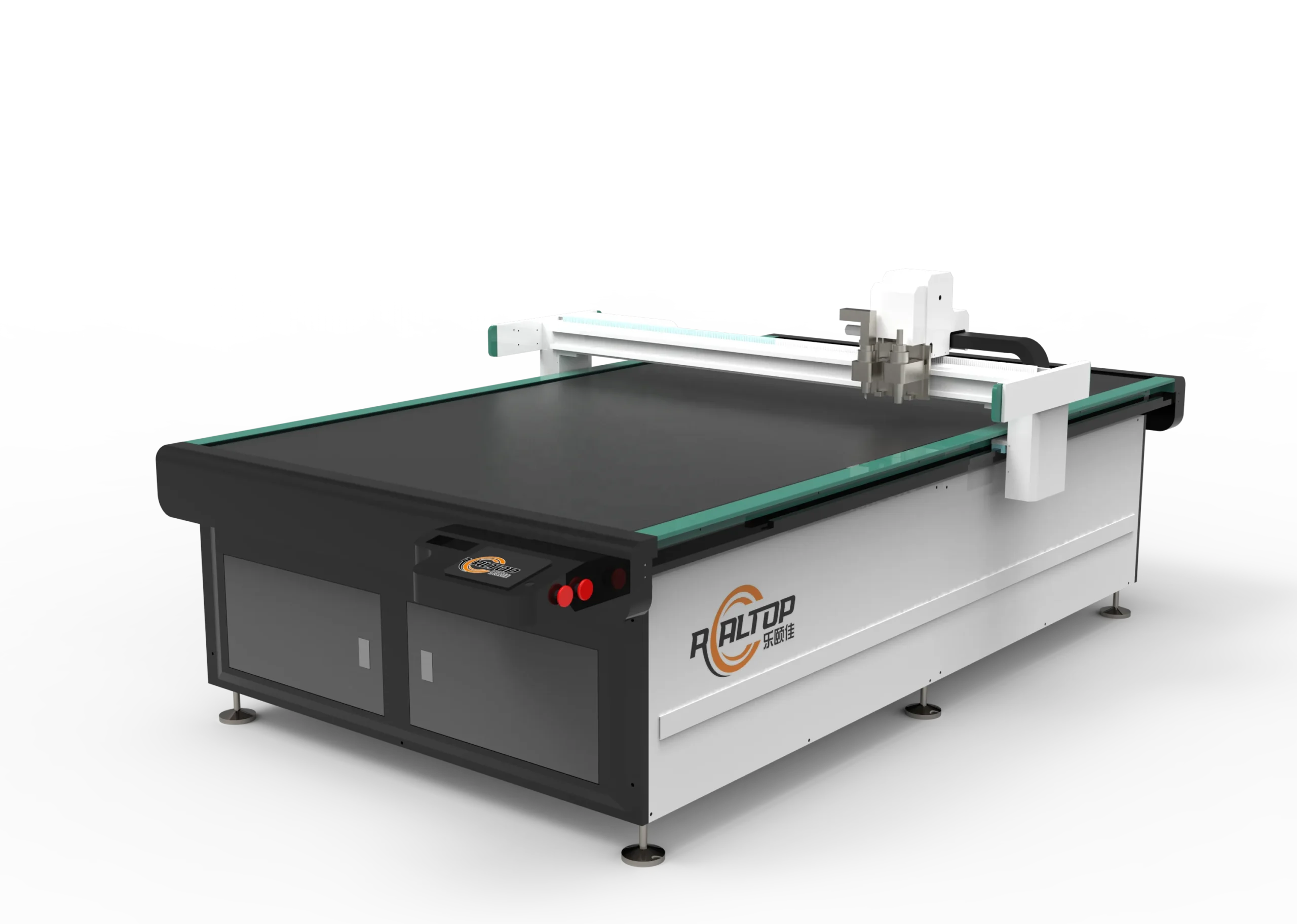
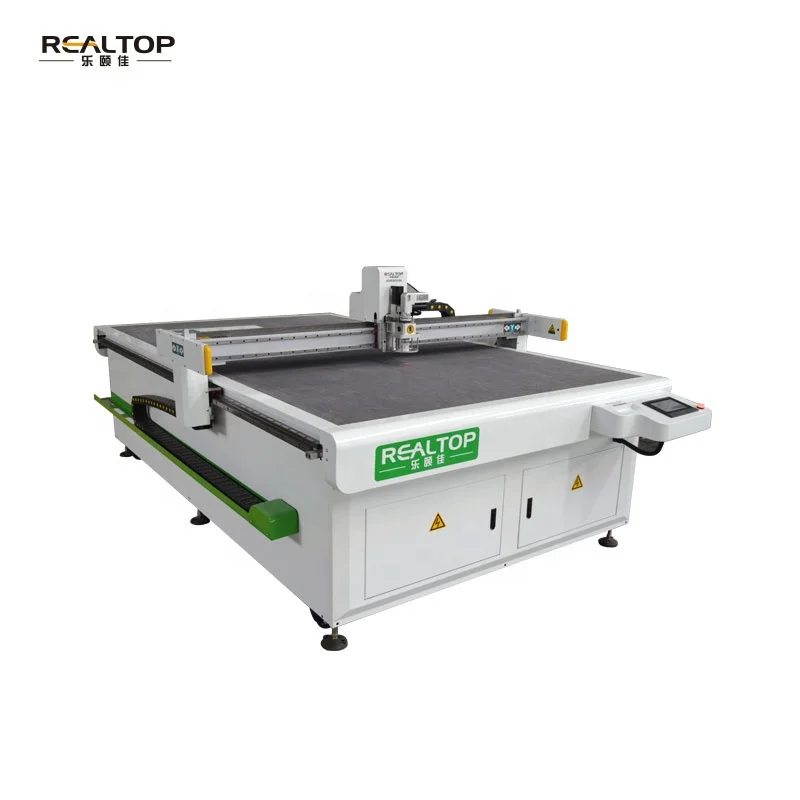
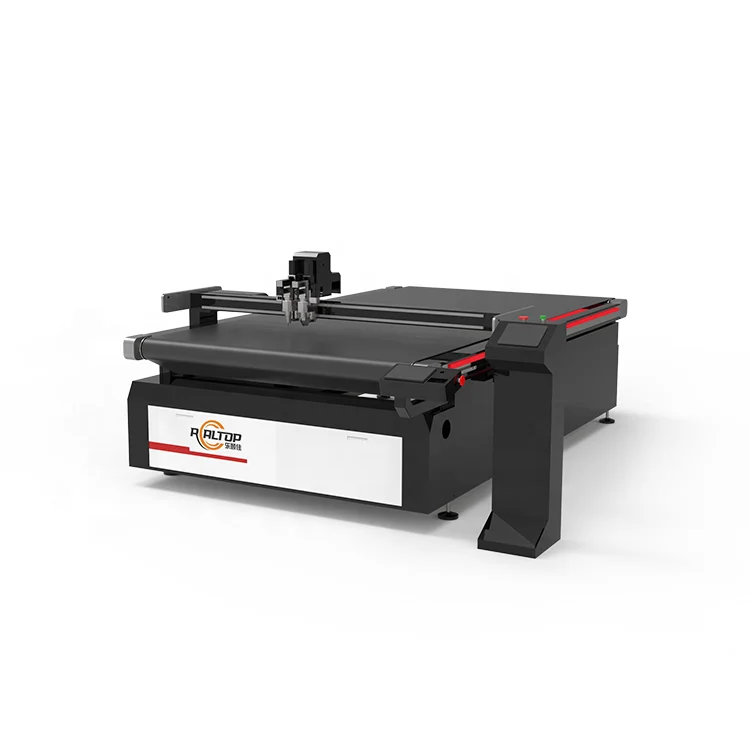
In-house design covering both knife and laser methods — the RT-D2516 and RT-S2516 are configured per material and volume, so you match the cutting process to the job rather than forcing a single technology across every substrate.
Technical Specifications
| Parameter | Value |
|---|---|
| Model | RT-D2516 / RT-S2516 |
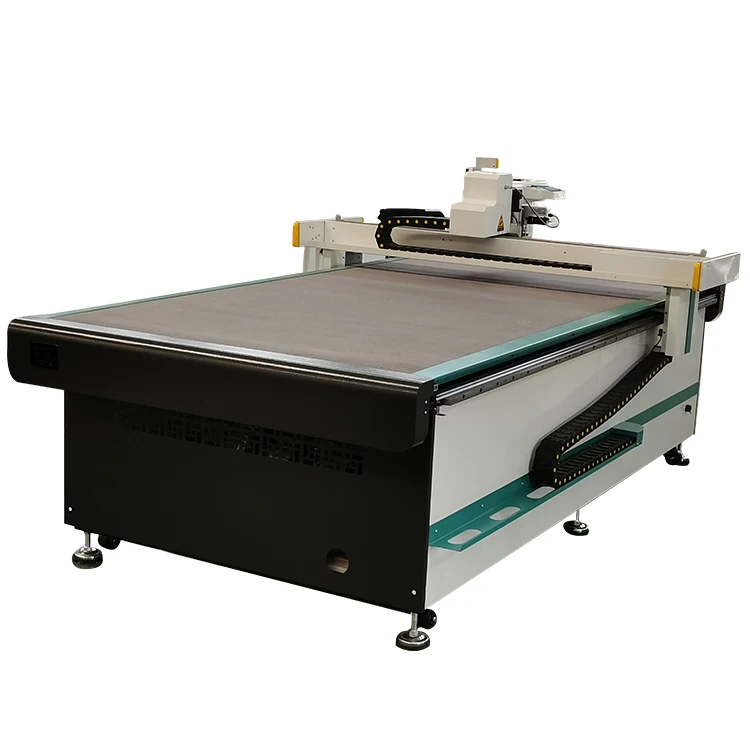
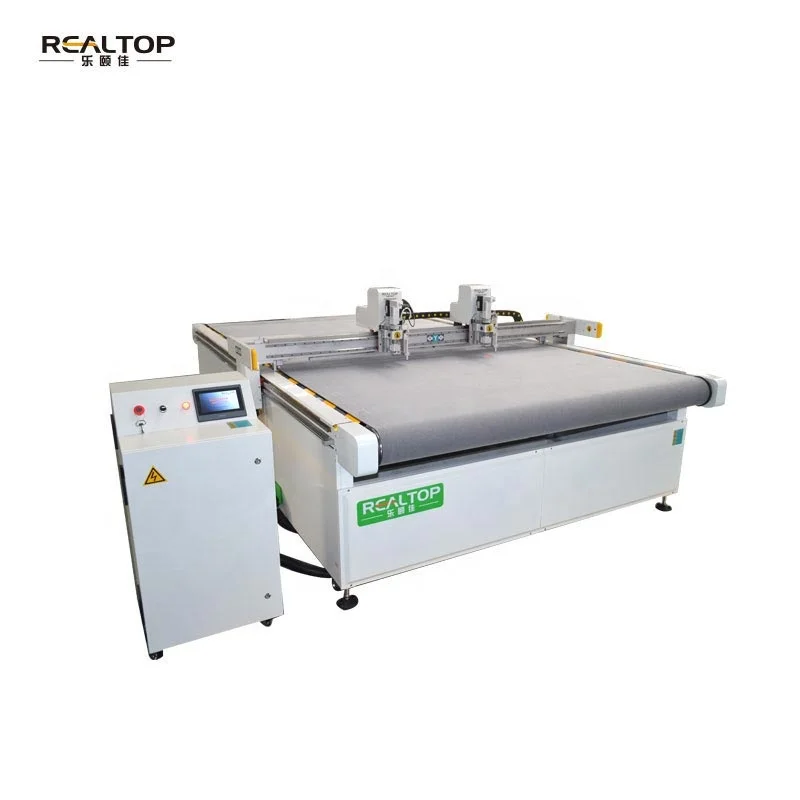
| Product Type | CNC Oscillating Knife Cutting Machine |
| Working Area | 1600 × 2500 mm |
| Machine Size | 3450 × 2300 × 1250 mm |
| Rated Power | 9 kW |
| Working Table | Flat table with auto-feeding conveyor belt |
| Tool Head | Swiss-imported oscillating knife (full cut, half cut, cursor location) |
| Vacuum System | 7.5 kW vacuum pump with flat vacuum table |
| Translational Velocity | 800 – 1200 mm/s |
| Cutting Speed | 200 – 800 mm/s (basis not stated in source — confirm by material and thickness) |
| Repeatability | ≤ 0.1 mm |
| Transmission | Yaskawa digital servo motor, Taiwan Hiwin linear guide, synchronous belt, ball screw |
| Safety Device | Infrared sensors |
| Instruction Format | HP-GL compatible |
| Voltage | 380V ±10% |
| Pneumatic Cutting Tool (optional) | Up to 70 mm thickness (basis not stated in source — confirm material and density) |
| Multifunctional Capability | Cutting, creasing, marking |
| Standards | CE (full declaration to be confirmed) |
Application Suitability
| Application | Material or Output |
|---|---|
| Footwear and garment uppers | Canvas, casual shoe uppers, flexible clothing textiles |
| Leather goods and composites | Genuine leather, sponge composite leather, synthetic hides |
| Soft industrial materials | PVC sheet, soft glass, silicone, rubber gaskets |
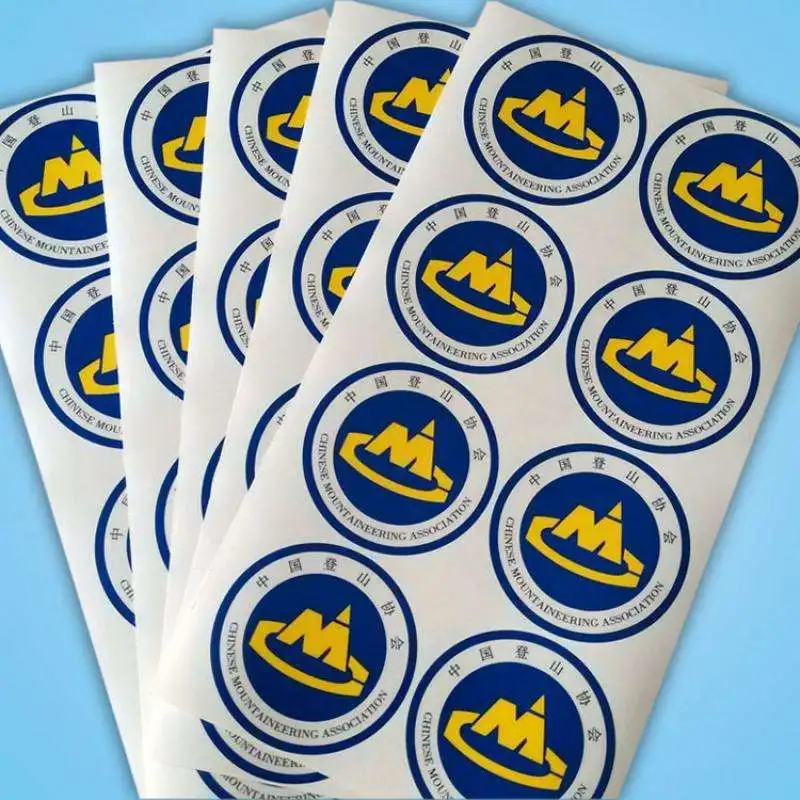
| Packaging and carton sampling | Cardboard, grey board, stickers, gift box prototypes |
| Signage and display | Flexible vinyl, soft sheet stock, banner material |
What "Cutting Speed 200–800 mm/s" Actually Means on the Shop Floor
The number on the spec sheet only matters once your exact material, coating and thickness are factored in.
A cutting speed range this wide tells you the machine can handle everything from thin sticker vinyl to dense composite leather — but the real throughput you will see depends entirely on what you are feeding it. I have watched a line go down for two full shifts because the test cuts ran on uncoated canvas while the production floor was running PVC-coated fabric, and every edge came out frayed [NEED_CITE: material coating effect on oscillating knife edge quality]. That gap between brochure speed and actual output is where most buyer disappointment starts.
Matching the Knife Head to Your Material Stack
The Swiss-imported oscillating knife on the RT-D2516 and RT-S2516 supports full cutting, half cutting and cursor location in a single head. This matters because flexible materials behave differently under vibration frequency and blade angle. A canvas shoe upper needs a different stroke profile than a 3 mm grey board carton sample, and having all three modes available means one machine covers the range without a head swap mid-job. When you evaluate a CNC oscillating knife cutting machine for sale, confirm which tool modes your daily mix actually requires before you lock in the configuration.
Conveyor Feed and Vacuum Hold-Down Working Together
The auto-feeding conveyor belt paired with the 7.5 kW vacuum pump solves a specific problem: flexible sheets that shift or lift during high-speed cutting. On a static table, small parts in a nested layout tend to drift once the surrounding material is cut away. The vacuum table pulls the substrate flat while the conveyor advances the next sheet, keeping registration tight across long production runs. This combination is especially relevant for sticker and label producers running intricate contours on thin vinyl [NEED_CITE: vacuum hold-down requirements for flexible sheet cutting].
Reading the Specs That Affect Your Daily Output
The 1600 × 2500 mm working area fits standard full-size sheets used in packaging prototyping and garment nesting, reducing the need to pre-cut stock before loading. Yaskawa servo motors and Taiwan Hiwin linear guides hold repeatability to ≤ 0.1 mm, which keeps crease lines aligned with cut paths on carton samples — a misaligned crease means the folded box will not close square. The HP-GL compatible instruction format integrates with most mainstream nesting software, but you still need to verify that your existing DXF or PLT files import cleanly before the machine ships. The optional pneumatic cutting tool extends capability to thicker stock rated up to 70 mm, though the actual limit depends on material density and must be confirmed with a sample cut on your specific substrate.
The Hidden Cost of Specifying on Working Area Alone
Buyers often start with table size and assume everything else follows. But a 1600 × 2500 mm bed does not tell you whether the vacuum zoning will hold small gasket pieces flat, or whether the oscillating knife frequency suits coated fabric at production speed. I have seen orders where the only confirmed spec was the working area, and the machine arrived unable to handle the buyer’s material thickness without excessive blade wear [NEED_CITE: CNC cutting machine specification gaps leading to material incompatibility]. The result is a line that runs but produces scrap at a rate that erodes any throughput advantage.
Why Source This Configuration Here
Realtop designs and builds both knife and laser cutting systems under one roof, so the recommendation starts with your material rather than pushing a single technology. The tool head and table layout are specified per substrate and production volume, not pulled from a standard list. Sample cutting runs on your own material before you commit, giving you a physical reference for edge quality and cycle time. Voltage, plug type and control language are confirmed before the machine enters production, reducing the chance of a mismatch at commissioning. Software compatibility is documented so your nesting workflow transfers without rework.
Documentation & Verification
- Machine specification sheet listing confirmed tool head and table configuration per material
- Sample cutting report produced on your own fabric, leather or board stock before order
- Electrical schematic and voltage confirmation matching your local supply standard
- Software licence and file format compatibility note covering HP-GL, DXF and PLT import
- Factory test record documenting repeatability and cut quality before dispatch
- Packing photographs showing machine condition and crate preparation at shipment
Installation, Commissioning & Support
- Requires a level concrete floor with clearance for the 3450 × 2300 × 1250 mm machine footprint plus material staging space
- Dedicated 380V ±10% circuit rated for the 9 kW total draw including the 7.5 kW vacuum pump
- Arrives fully assembled; reconnect conveyor belt, vacuum hoses and power at site
- First-run parameter tuning on your material to set oscillating knife frequency and cutting speed
- Operator training covering tool head changes, nesting import and vacuum zone adjustment
- Spare blade and conveyor belt wear parts list provided with recommended reorder intervals
What to Prepare Before You Request a Quote
Send your material type, coating status, thickness and maximum sheet size so the tool head and vacuum zoning can be specified correctly. Include your daily volume target and the file formats your design team currently uses for nesting. Confirm your local voltage, frequency and plug standard along with the preferred control panel language.
Frequently Asked Questions
Q: What is the maximum cutting thickness per material for the oscillating knife and optional pneumatic tool?
A: The oscillating knife handles flexible materials across a range of thicknesses, while the optional pneumatic tool is rated for stock up to 70 mm. Actual limits depend on material density and composition. We run a sample cut on your exact substrate to confirm achievable thickness and edge quality before you place the order.
Q: Does the vacuum table zoning hold small parts flat during high-speed cutting?
A: The 7.5 kW vacuum system provides hold-down across the 1600 × 2500 mm bed. Zoning effectiveness for small nested parts depends on part size, material porosity and cutting speed. We verify hold-down performance during the sample cutting stage using your actual material and nesting layout.
Q: Can the software import my existing DXF, PLT or AI nesting workflow files?
A: The control system supports HP-GL compatible instructions. Most DXF and PLT files import directly, while AI files may require conversion. We confirm file format compatibility and nesting workflow integration before the machine ships so your existing design pipeline transfers without interruption.
Q: What voltage, plug and control language options are available before shipment?
A: The standard supply is 380V ±10%, but voltage and plug configuration can be adjusted to match your local standard. Control panel language is set before production. All electrical specifications are confirmed in writing before the machine enters the build stage to avoid commissioning delays.
Q: How do I choose between the RT-D2516 and RT-S2516 configurations for my daily volume?
A: The choice depends on your material mix, sheet size and throughput target. Both share the same working area, but the configuration of tool heads, conveyor feed and vacuum zoning is tailored to your production profile. We review your daily volume and material list to recommend the setup that matches your output requirement.
In-house design covering both knife and laser methods — the RT-D2516 and RT-S2516 are configured per material and volume, so you match the cutting process to the job rather than forcing a single technology across every substrate.
Technical Specifications
| Parameter | Value |
|---|---|
| Model | RT-D2516 / RT-S2516 |
| Product Type | CNC Oscillating Knife Cutting Machine |
| Working Area | 1600 × 2500 mm |
| Machine Size | 3450 × 2300 × 1250 mm |
| Rated Power | 9 kW |
| Working Table | Flat table with auto-feeding conveyor belt |
| Tool Head | Swiss-imported oscillating knife (full cut, half cut, cursor location) |
| Vacuum System | 7.5 kW vacuum pump with flat vacuum table |
| Translational Velocity | 800 – 1200 mm/s |
| Cutting Speed | 200 – 800 mm/s (basis not stated in source — confirm by material and thickness) |
| Repeatability | ≤ 0.1 mm |
| Transmission | Yaskawa digital servo motor, Taiwan Hiwin linear guide, synchronous belt, ball screw |
| Safety Device | Infrared sensors |
| Instruction Format | HP-GL compatible |
| Voltage | 380V ±10% |
| Pneumatic Cutting Tool (optional) | Up to 70 mm thickness (basis not stated in source — confirm material and density) |
| Multifunctional Capability | Cutting, creasing, marking |
| Standards | CE (full declaration to be confirmed) |
Application Suitability
| Application | Material or Output |
|---|---|
| Footwear and garment uppers | Canvas, casual shoe uppers, flexible clothing textiles |
| Leather goods and composites | Genuine leather, sponge composite leather, synthetic hides |
| Soft industrial materials | PVC sheet, soft glass, silicone, rubber gaskets |
| Packaging and carton sampling | Cardboard, grey board, stickers, gift box prototypes |
| Signage and display | Flexible vinyl, soft sheet stock, banner material |
What "Cutting Speed 200–800 mm/s" Actually Means on the Shop Floor
The number on the spec sheet only matters once your exact material, coating and thickness are factored in.
A cutting speed range this wide tells you the machine can handle everything from thin sticker vinyl to dense composite leather — but the real throughput you will see depends entirely on what you are feeding it. I have watched a line go down for two full shifts because the test cuts ran on uncoated canvas while the production floor was running PVC-coated fabric, and every edge came out frayed [NEED_CITE: material coating effect on oscillating knife edge quality]. That gap between brochure speed and actual output is where most buyer disappointment starts.
Matching the Knife Head to Your Material Stack
The Swiss-imported oscillating knife on the RT-D2516 and RT-S2516 supports full cutting, half cutting and cursor location in a single head. This matters because flexible materials behave differently under vibration frequency and blade angle. A canvas shoe upper needs a different stroke profile than a 3 mm grey board carton sample, and having all three modes available means one machine covers the range without a head swap mid-job. When you evaluate a CNC oscillating knife cutting machine for sale, confirm which tool modes your daily mix actually requires before you lock in the configuration.
Conveyor Feed and Vacuum Hold-Down Working Together
The auto-feeding conveyor belt paired with the 7.5 kW vacuum pump solves a specific problem: flexible sheets that shift or lift during high-speed cutting. On a static table, small parts in a nested layout tend to drift once the surrounding material is cut away. The vacuum table pulls the substrate flat while the conveyor advances the next sheet, keeping registration tight across long production runs. This combination is especially relevant for sticker and label producers running intricate contours on thin vinyl [NEED_CITE: vacuum hold-down requirements for flexible sheet cutting].
Reading the Specs That Affect Your Daily Output
The 1600 × 2500 mm working area fits standard full-size sheets used in packaging prototyping and garment nesting, reducing the need to pre-cut stock before loading. Yaskawa servo motors and Taiwan Hiwin linear guides hold repeatability to ≤ 0.1 mm, which keeps crease lines aligned with cut paths on carton samples — a misaligned crease means the folded box will not close square. The HP-GL compatible instruction format integrates with most mainstream nesting software, but you still need to verify that your existing DXF or PLT files import cleanly before the machine ships. The optional pneumatic cutting tool extends capability to thicker stock rated up to 70 mm, though the actual limit depends on material density and must be confirmed with a sample cut on your specific substrate.
The Hidden Cost of Specifying on Working Area Alone
Buyers often start with table size and assume everything else follows. But a 1600 × 2500 mm bed does not tell you whether the vacuum zoning will hold small gasket pieces flat, or whether the oscillating knife frequency suits coated fabric at production speed. I have seen orders where the only confirmed spec was the working area, and the machine arrived unable to handle the buyer’s material thickness without excessive blade wear [NEED_CITE: CNC cutting machine specification gaps leading to material incompatibility]. The result is a line that runs but produces scrap at a rate that erodes any throughput advantage.
Why Source This Configuration Here
Realtop designs and builds both knife and laser cutting systems under one roof, so the recommendation starts with your material rather than pushing a single technology. The tool head and table layout are specified per substrate and production volume, not pulled from a standard list. Sample cutting runs on your own material before you commit, giving you a physical reference for edge quality and cycle time. Voltage, plug type and control language are confirmed before the machine enters production, reducing the chance of a mismatch at commissioning. Software compatibility is documented so your nesting workflow transfers without rework.
Documentation & Verification
- Machine specification sheet listing confirmed tool head and table configuration per material
- Sample cutting report produced on your own fabric, leather or board stock before order
- Electrical schematic and voltage confirmation matching your local supply standard
- Software licence and file format compatibility note covering HP-GL, DXF and PLT import
- Factory test record documenting repeatability and cut quality before dispatch
- Packing photographs showing machine condition and crate preparation at shipment
Installation, Commissioning & Support
- Requires a level concrete floor with clearance for the 3450 × 2300 × 1250 mm machine footprint plus material staging space
- Dedicated 380V ±10% circuit rated for the 9 kW total draw including the 7.5 kW vacuum pump
- Arrives fully assembled; reconnect conveyor belt, vacuum hoses and power at site
- First-run parameter tuning on your material to set oscillating knife frequency and cutting speed
- Operator training covering tool head changes, nesting import and vacuum zone adjustment
- Spare blade and conveyor belt wear parts list provided with recommended reorder intervals
What to Prepare Before You Request a Quote
Send your material type, coating status, thickness and maximum sheet size so the tool head and vacuum zoning can be specified correctly. Include your daily volume target and the file formats your design team currently uses for nesting. Confirm your local voltage, frequency and plug standard along with the preferred control panel language.
Frequently Asked Questions
Q: What is the maximum cutting thickness per material for the oscillating knife and optional pneumatic tool?
A: The oscillating knife handles flexible materials across a range of thicknesses, while the optional pneumatic tool is rated for stock up to 70 mm. Actual limits depend on material density and composition. We run a sample cut on your exact substrate to confirm achievable thickness and edge quality before you place the order.
Q: Does the vacuum table zoning hold small parts flat during high-speed cutting?
A: The 7.5 kW vacuum system provides hold-down across the 1600 × 2500 mm bed. Zoning effectiveness for small nested parts depends on part size, material porosity and cutting speed. We verify hold-down performance during the sample cutting stage using your actual material and nesting layout.
Q: Can the software import my existing DXF, PLT or AI nesting workflow files?
A: The control system supports HP-GL compatible instructions. Most DXF and PLT files import directly, while AI files may require conversion. We confirm file format compatibility and nesting workflow integration before the machine ships so your existing design pipeline transfers without interruption.
Q: What voltage, plug and control language options are available before shipment?
A: The standard supply is 380V ±10%, but voltage and plug configuration can be adjusted to match your local standard. Control panel language is set before production. All electrical specifications are confirmed in writing before the machine enters the build stage to avoid commissioning delays.
Q: How do I choose between the RT-D2516 and RT-S2516 configurations for my daily volume?
A: The choice depends on your material mix, sheet size and throughput target. Both share the same working area, but the configuration of tool heads, conveyor feed and vacuum zoning is tailored to your production profile. We review your daily volume and material list to recommend the setup that matches your output requirement.










商品评价
There are no reviews yet.