

Fast Delivery
Quick, reliable shipping to any location.

Free & easy returns
Return this item by mail or in store within 90 days for a full refund.
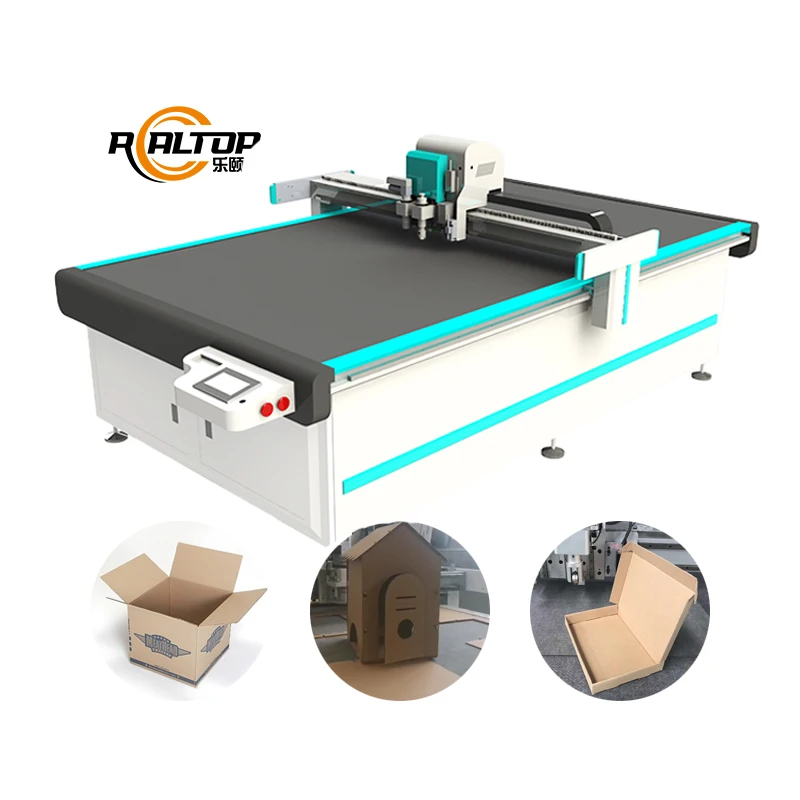
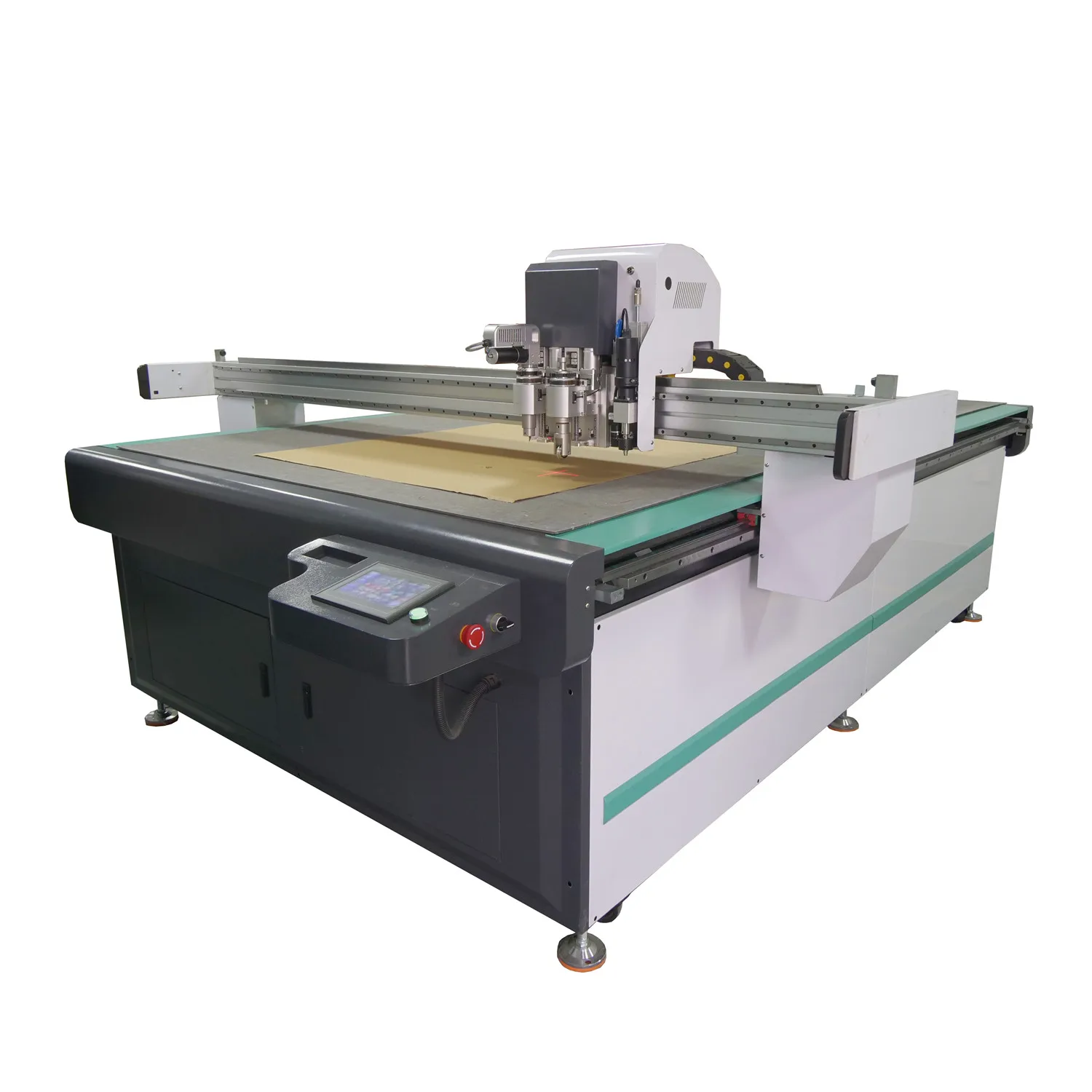
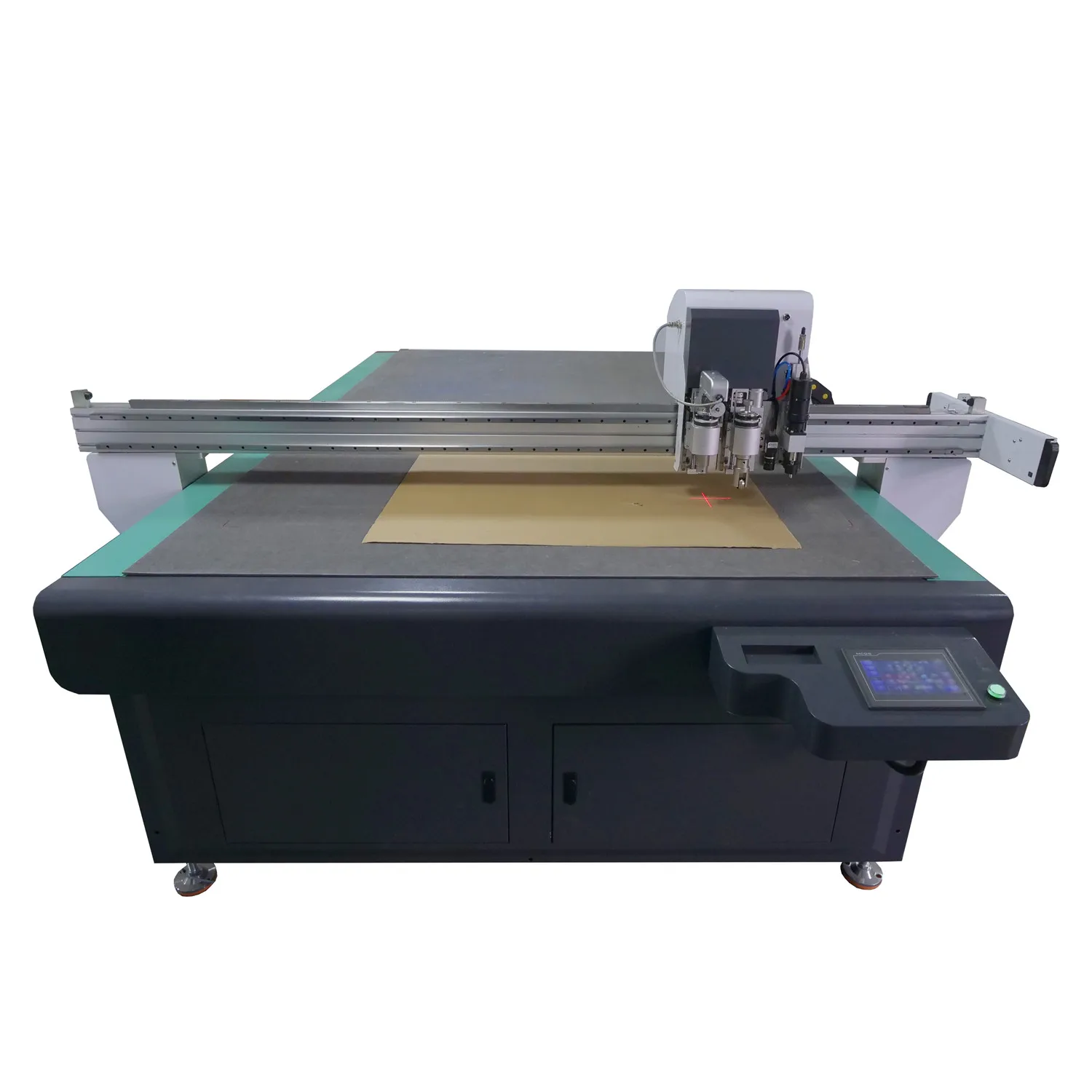
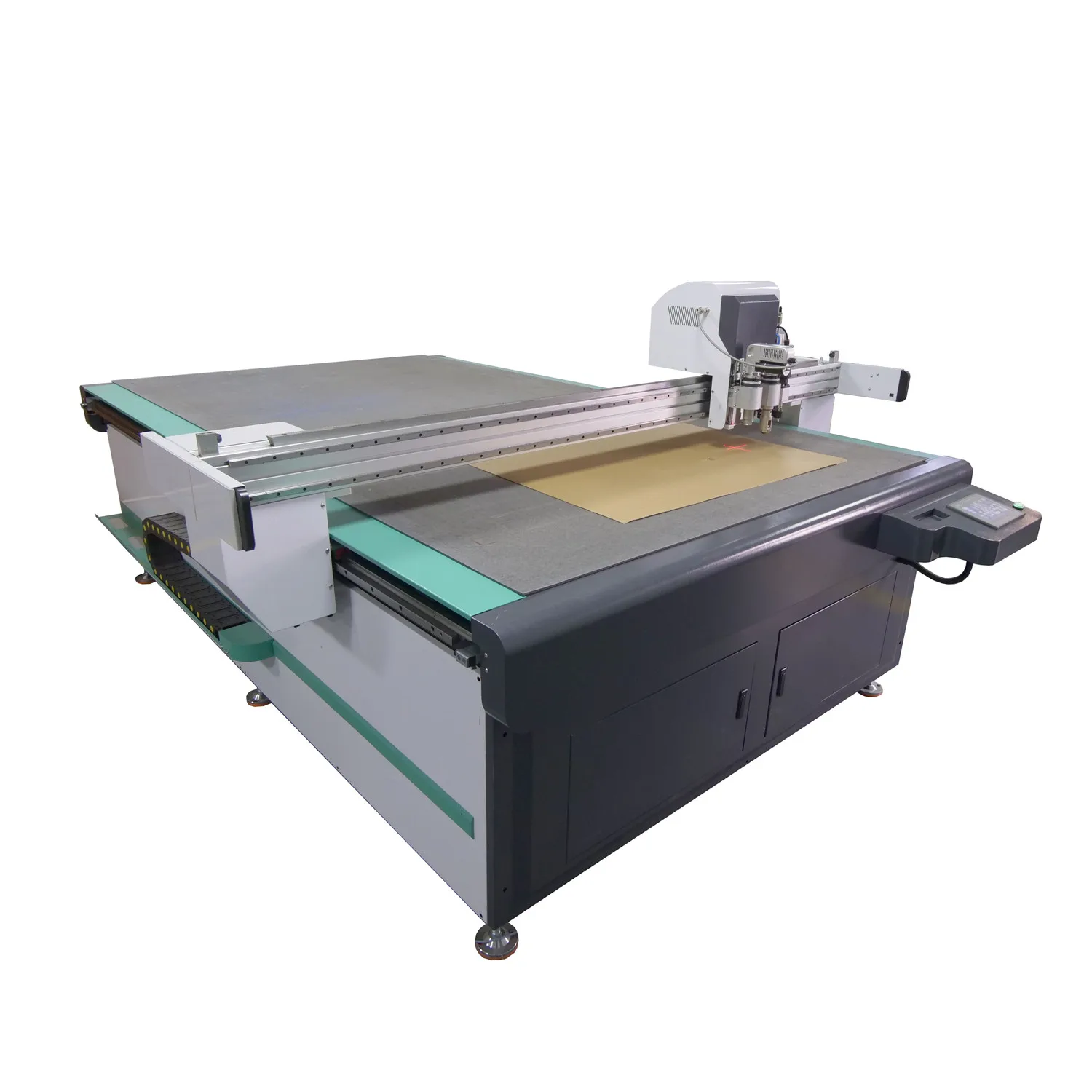
Tool Head Configuration Mapping — We match oscillating knife, drag knife, or creasing wheel to your specific material thickness and edge quality requirement before quoting, preventing the wrong tooling from reaching your production floor.
Technical Specifications
| Parameter | Value |
|---|---|
| Model | RT-D2516/RT-S2516 |
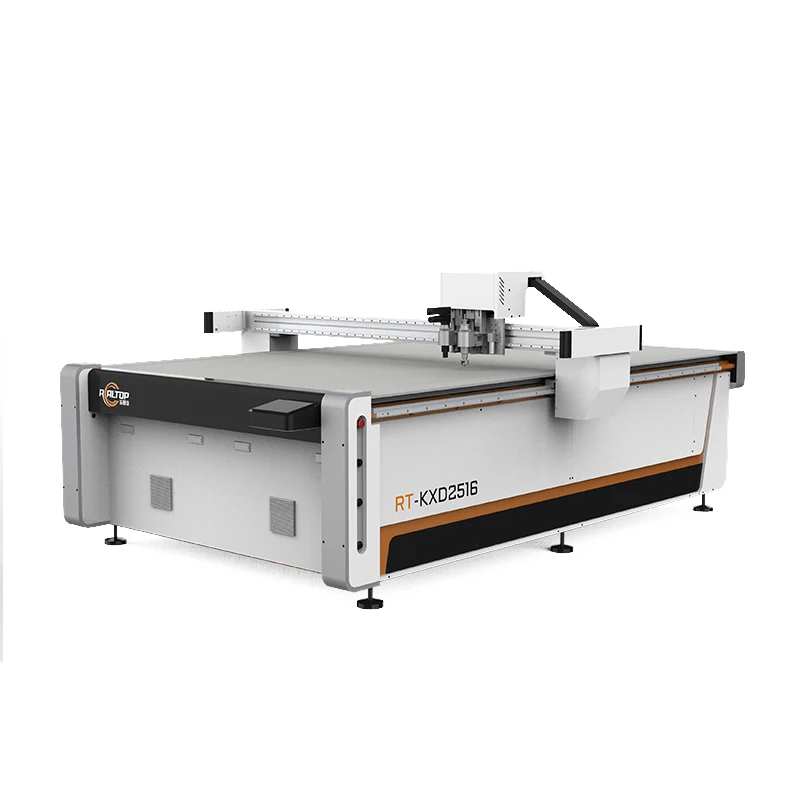
| Product Type | CNC Oscillating Knife Cutting Machine |
| Working Area | 1600×2500 mm |
| Machine Size | 3450×2300×1250 mm |
| Rated Power | 9 kW |
| Translational Velocity | 800–2000 mm/s |
| Cutting Speed | 200–800 mm/s (according to different cutting materials) |
| Repeated Accuracy | ≤0.1 mm |
| Voltage | 380V±10% |
| Instruction System | HP-GL compatible format |
| Tool Head Options | Oscillating knife, pneumatic knife, high-power vibrating knife, circular knife, V-cutting knife, drag knife, creasing wheel, dotted line knife, punching, brush |
| Visual Positioning | Small CCD camera mark point positioning, panoramic camera recognition positioning, projection positioning |
| Transmission System | Digital servo motor (Delta), linear guide (Taiwan Hiwin rail), synchronous belt, ball screw |
| Fixed Model | Flatbed working table, auto-feeding table |
| Vacuum Pump | 7.5 kW |
| Conveyor Belt | Germany imported |
| Safety Device | Infrared sensors, anti-collision, emergency stop devices |
| Control Panel | Touch screen, multiple language supported |
| Software | Auto typesetting software, supports PLT, DXF, AI file formats |
Application Suitability
| Application | Material or Output |
|---|---|
| Packaging and carton sample making | Cardboard, honeycomb cardboard, corrugated cardboard, white card with lamination |
| Signage and graphics production | Sticker film, vinyl, plastic box material, adhesive board |
| Garment and footwear manufacturing | Leather, fabric, textile, clothing cloth, shoe material, luggage material, non-woven fabric |
| Automotive interior and gasket fabrication | Sponge, foam board, PU, EVA, XPE, PVC, rubber, gasket material |
| Composite and industrial material processing | PTFE, ETFE, fiberglass, PP, PE, sealing pads, composite panels |
Why Specified Working Area Alone Cannot Guarantee a Clean Cake Box Die Cut
A 1600×2500 mm table only solves the size problem; the tool head and vacuum zoning determine whether your laminated board actually holds flat and cuts clean.
A packaging buyer once sent me a white card sample, and we dialed in the oscillating knife parameters perfectly. When the machine arrived, they were actually running film-laminated grey board three times thicker. The drag knife they had not specified would have crushed the edges. That mismatch is the reason a CNC oscillating knife cutting machine manufacturer must verify actual production material before finalizing the configuration [NEED_CITE: material thickness variance in packaging sample making].
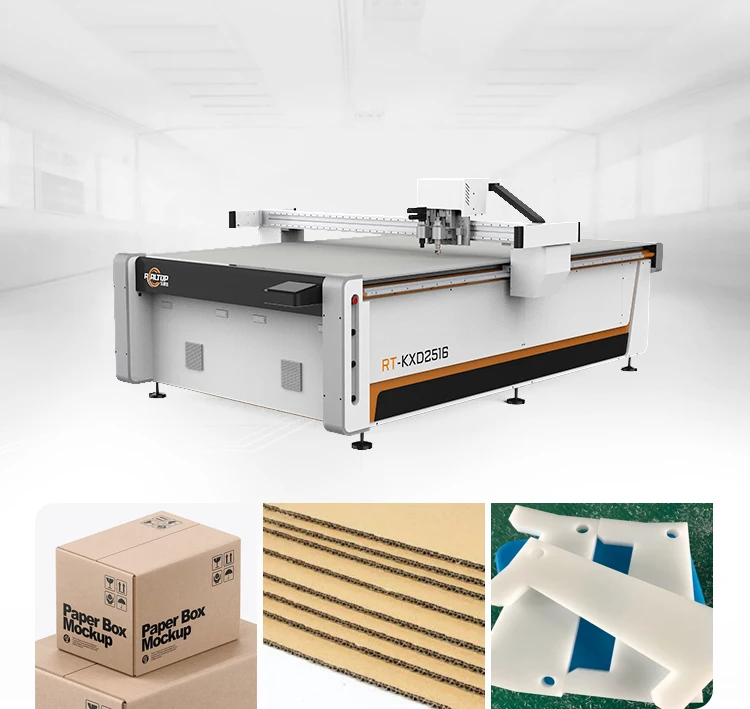
The RT-D2516/RT-S2516 addresses this by offering ten distinct tool head options — from a creasing wheel for fold lines on corrugated board to a high-power vibrating knife for dense grey board — rather than forcing one blade through every substrate.
Mapping the Full Knife and Laser Equipment Range
Our catalogue covers both CNC knife cutting tables and laser cutting systems under one roof. This means a packaging operation cutting laminated board can stay on oscillating knife, while a textile shop needing sealed edges on synthetic fabric can move to CO2 laser — without sourcing from two separate builders.
Configuration Logic Across Material Families
The RT-D2516/RT-S2516 sits within a broader machine family where each configuration is built around the material it processes. Fabric producers running high daily volumes typically pair the auto-feeding table with the round knife or oscillating knife head. Foam and gasket fabricators working thick, low-density sheets rely on the high-power vibrating knife and deep vacuum zoning. A complete range approach ensures the buyer selects the platform that matches the substrate, not the other way around [NEED_CITE: vacuum zoning requirements for porous versus non-porous cutting materials].
Reading the Specs That Actually Matter on the Production Floor
The 7.5 kW vacuum pump paired with a magnesium-aluminum alloy adsorption table is engineered to hold small die-cut shapes — like individual cake box blanks — flat against the surface. Without zoned suction, thin laminated card lifts at the edges during high-speed passes, producing ragged corners. The repeated accuracy of ≤0.1 mm keeps fold lines aligned with cut lines, which is critical when a packaging sample must assemble without gaps. Translational velocity reaches 800–2000 mm/s, but actual cutting speed drops to 200–800 mm/s depending on material density; a 2 mm corrugated sheet cuts faster than a 5 mm honeycomb board. The Delta servo motors and Taiwan Hiwin linear guides maintain positioning under continuous load rather than drifting over a long shift.
The Hidden Cost of Skipping the Sample Cut Step
When a buyer commits to a configuration without seeing their own material cut, three things tend to go wrong. The vacuum table zoning may be too coarse for small packaging blanks, letting pieces shift mid-cut. The chosen tool head may leave crushed edges on foam or frayed edges on woven fabric. Software file import may fail because the nesting workflow uses a format the machine controller does not recognize. Every one of these issues surfaces during a sample cutting report, which costs nothing to request but takes weeks to fix after shipment [NEED_CITE: post-shipment configuration change frequency in CNC cutting equipment].
Why Source This Range from a Single Builder
The design team engineers both knife and laser platforms in-house, so switching a buyer from knife to laser when the material demands it does not mean switching suppliers. The RT-D2516/RT-S2516 configuration is locked in only after sample cutting on the buyer’s own stock, covering edge quality, depth, and cycle time. Voltage, plug type, and control panel language are confirmed on the specification sheet before production begins. The factory test record documents actual performance on the agreed material, not a generic demo sheet. Software compatibility with PLT, DXF, and AI formats is verified against the buyer’s existing nesting files before the machine leaves Jinan.
Documentation & Verification
- Machine specification sheet with confirmed voltage, plug type, and control language for the RT-D2516/RT-S2516
- Tool head and vacuum table configuration list matched to your material thickness and sheet size
- Sample cutting report on your actual packaging board, including edge quality photos and cycle time
- Software licence and file format compatibility note covering PLT, DXF, and AI nesting workflows
- Factory test record documenting repeated accuracy and cutting speed on agreed material before dispatch
- CE declaration documentation where applicable for the destination market
Installation, Commissioning & Support
- 3450×2300 mm footprint requires level concrete floor with clearance for auto-feeding conveyor if selected
- 9 kW rated power plus 7.5 kW vacuum pump needs dedicated 380V±10% three-phase circuit at the installation point
- Machine ships with touch screen control panel pre-loaded in confirmed language, reducing first-day setup time
- Initial commissioning includes vacuum zoning calibration for your smallest packaging die-cut blank size
- Oscillating knife and creasing wheel tool heads calibrated to your material during on-site or remote training session
- Spare parts list covers Swiss-imported knife blades, conveyor belt segments, and vacuum table seals
What We Need to Configure Your Machine Correctly
Send us the actual material you will run — not just the category, but the specific grade, thickness, and whether it carries lamination or coating. Tell us your largest sheet size and your daily volume so we can recommend flatbed or auto-feeding table format. Confirm your local voltage, frequency, and preferred control panel language so the electrical schematic matches your workshop before the machine enters production.
Frequently Asked Questions
Q: How do I decide between oscillating knife and laser cutting for my packaging material?
A: Knife cutting handles thicker board, corrugated, and honeycomb without burning edges, making it suitable for cake box dies and carton samples. Laser cutting seals edges on thin film and sticker material but can char heavier board. We recommend the method based on a sample cut of your actual stock, comparing edge quality and cycle time side by side.
Q: Which tool head should I use for laminated grey board versus plain corrugated?
A: Laminated grey board typically requires a high-power vibrating knife to push through the dense layers without crushing. Plain corrugated cuts cleanly with a standard oscillating knife, and fold lines are added with the creasing wheel. We specify the tool head after cutting your sample material and documenting the edge finish.
Q: Will the CCD camera track printed registration marks on glossy laminated board?
A: The small CCD camera handles mark point positioning, while the panoramic camera covers full-sheet recognition on printed substrates. Glossy lamination can cause reflection issues, so we test your actual printed sheet at production speed and adjust the lighting and camera angle before confirming the visual positioning configuration.
Q: Should I choose the flatbed or auto-feeding table for my daily volume?
A: Flatbed suits sample making and short runs where sheet sizes vary. Auto-feeding with the Germany-imported conveyor belt is built for continuous high-volume cutting of fabric or roll-fed packaging material. We match the table format to your daily output and material feed format during the configuration stage.
Q: Can the control panel and software run in my local language and voltage standard?
A: The touch screen supports multiple languages, confirmed before production. The 380V±10 electrical system is documented in the specification sheet along with plug type. The auto typesetting software supports PLT, DXF, and AI files, and we verify compatibility with your existing nesting workflow before shipment.
Tool Head Configuration Mapping — We match oscillating knife, drag knife, or creasing wheel to your specific material thickness and edge quality requirement before quoting, preventing the wrong tooling from reaching your production floor.
Technical Specifications
| Parameter | Value |
|---|---|
| Model | RT-D2516/RT-S2516 |
| Product Type | CNC Oscillating Knife Cutting Machine |
| Working Area | 1600×2500 mm |
| Machine Size | 3450×2300×1250 mm |
| Rated Power | 9 kW |
| Translational Velocity | 800–2000 mm/s |
| Cutting Speed | 200–800 mm/s (according to different cutting materials) |
| Repeated Accuracy | ≤0.1 mm |
| Voltage | 380V±10% |
| Instruction System | HP-GL compatible format |
| Tool Head Options | Oscillating knife, pneumatic knife, high-power vibrating knife, circular knife, V-cutting knife, drag knife, creasing wheel, dotted line knife, punching, brush |
| Visual Positioning | Small CCD camera mark point positioning, panoramic camera recognition positioning, projection positioning |
| Transmission System | Digital servo motor (Delta), linear guide (Taiwan Hiwin rail), synchronous belt, ball screw |
| Fixed Model | Flatbed working table, auto-feeding table |
| Vacuum Pump | 7.5 kW |
| Conveyor Belt | Germany imported |
| Safety Device | Infrared sensors, anti-collision, emergency stop devices |
| Control Panel | Touch screen, multiple language supported |
| Software | Auto typesetting software, supports PLT, DXF, AI file formats |
Application Suitability
| Application | Material or Output |
|---|---|
| Packaging and carton sample making | Cardboard, honeycomb cardboard, corrugated cardboard, white card with lamination |
| Signage and graphics production | Sticker film, vinyl, plastic box material, adhesive board |
| Garment and footwear manufacturing | Leather, fabric, textile, clothing cloth, shoe material, luggage material, non-woven fabric |
| Automotive interior and gasket fabrication | Sponge, foam board, PU, EVA, XPE, PVC, rubber, gasket material |
| Composite and industrial material processing | PTFE, ETFE, fiberglass, PP, PE, sealing pads, composite panels |
Why Specified Working Area Alone Cannot Guarantee a Clean Cake Box Die Cut
A 1600×2500 mm table only solves the size problem; the tool head and vacuum zoning determine whether your laminated board actually holds flat and cuts clean.
A packaging buyer once sent me a white card sample, and we dialed in the oscillating knife parameters perfectly. When the machine arrived, they were actually running film-laminated grey board three times thicker. The drag knife they had not specified would have crushed the edges. That mismatch is the reason a CNC oscillating knife cutting machine manufacturer must verify actual production material before finalizing the configuration [NEED_CITE: material thickness variance in packaging sample making].
The RT-D2516/RT-S2516 addresses this by offering ten distinct tool head options — from a creasing wheel for fold lines on corrugated board to a high-power vibrating knife for dense grey board — rather than forcing one blade through every substrate.
Mapping the Full Knife and Laser Equipment Range
Our catalogue covers both CNC knife cutting tables and laser cutting systems under one roof. This means a packaging operation cutting laminated board can stay on oscillating knife, while a textile shop needing sealed edges on synthetic fabric can move to CO2 laser — without sourcing from two separate builders.
Configuration Logic Across Material Families
The RT-D2516/RT-S2516 sits within a broader machine family where each configuration is built around the material it processes. Fabric producers running high daily volumes typically pair the auto-feeding table with the round knife or oscillating knife head. Foam and gasket fabricators working thick, low-density sheets rely on the high-power vibrating knife and deep vacuum zoning. A complete range approach ensures the buyer selects the platform that matches the substrate, not the other way around [NEED_CITE: vacuum zoning requirements for porous versus non-porous cutting materials].
Reading the Specs That Actually Matter on the Production Floor
The 7.5 kW vacuum pump paired with a magnesium-aluminum alloy adsorption table is engineered to hold small die-cut shapes — like individual cake box blanks — flat against the surface. Without zoned suction, thin laminated card lifts at the edges during high-speed passes, producing ragged corners. The repeated accuracy of ≤0.1 mm keeps fold lines aligned with cut lines, which is critical when a packaging sample must assemble without gaps. Translational velocity reaches 800–2000 mm/s, but actual cutting speed drops to 200–800 mm/s depending on material density; a 2 mm corrugated sheet cuts faster than a 5 mm honeycomb board. The Delta servo motors and Taiwan Hiwin linear guides maintain positioning under continuous load rather than drifting over a long shift.
The Hidden Cost of Skipping the Sample Cut Step
When a buyer commits to a configuration without seeing their own material cut, three things tend to go wrong. The vacuum table zoning may be too coarse for small packaging blanks, letting pieces shift mid-cut. The chosen tool head may leave crushed edges on foam or frayed edges on woven fabric. Software file import may fail because the nesting workflow uses a format the machine controller does not recognize. Every one of these issues surfaces during a sample cutting report, which costs nothing to request but takes weeks to fix after shipment [NEED_CITE: post-shipment configuration change frequency in CNC cutting equipment].
Why Source This Range from a Single Builder
The design team engineers both knife and laser platforms in-house, so switching a buyer from knife to laser when the material demands it does not mean switching suppliers. The RT-D2516/RT-S2516 configuration is locked in only after sample cutting on the buyer’s own stock, covering edge quality, depth, and cycle time. Voltage, plug type, and control panel language are confirmed on the specification sheet before production begins. The factory test record documents actual performance on the agreed material, not a generic demo sheet. Software compatibility with PLT, DXF, and AI formats is verified against the buyer’s existing nesting files before the machine leaves Jinan.
Documentation & Verification
- Machine specification sheet with confirmed voltage, plug type, and control language for the RT-D2516/RT-S2516
- Tool head and vacuum table configuration list matched to your material thickness and sheet size
- Sample cutting report on your actual packaging board, including edge quality photos and cycle time
- Software licence and file format compatibility note covering PLT, DXF, and AI nesting workflows
- Factory test record documenting repeated accuracy and cutting speed on agreed material before dispatch
- CE declaration documentation where applicable for the destination market
Installation, Commissioning & Support
- 3450×2300 mm footprint requires level concrete floor with clearance for auto-feeding conveyor if selected
- 9 kW rated power plus 7.5 kW vacuum pump needs dedicated 380V±10% three-phase circuit at the installation point
- Machine ships with touch screen control panel pre-loaded in confirmed language, reducing first-day setup time
- Initial commissioning includes vacuum zoning calibration for your smallest packaging die-cut blank size
- Oscillating knife and creasing wheel tool heads calibrated to your material during on-site or remote training session
- Spare parts list covers Swiss-imported knife blades, conveyor belt segments, and vacuum table seals
What We Need to Configure Your Machine Correctly
Send us the actual material you will run — not just the category, but the specific grade, thickness, and whether it carries lamination or coating. Tell us your largest sheet size and your daily volume so we can recommend flatbed or auto-feeding table format. Confirm your local voltage, frequency, and preferred control panel language so the electrical schematic matches your workshop before the machine enters production.
Frequently Asked Questions
Q: How do I decide between oscillating knife and laser cutting for my packaging material?
A: Knife cutting handles thicker board, corrugated, and honeycomb without burning edges, making it suitable for cake box dies and carton samples. Laser cutting seals edges on thin film and sticker material but can char heavier board. We recommend the method based on a sample cut of your actual stock, comparing edge quality and cycle time side by side.
Q: Which tool head should I use for laminated grey board versus plain corrugated?
A: Laminated grey board typically requires a high-power vibrating knife to push through the dense layers without crushing. Plain corrugated cuts cleanly with a standard oscillating knife, and fold lines are added with the creasing wheel. We specify the tool head after cutting your sample material and documenting the edge finish.
Q: Will the CCD camera track printed registration marks on glossy laminated board?
A: The small CCD camera handles mark point positioning, while the panoramic camera covers full-sheet recognition on printed substrates. Glossy lamination can cause reflection issues, so we test your actual printed sheet at production speed and adjust the lighting and camera angle before confirming the visual positioning configuration.
Q: Should I choose the flatbed or auto-feeding table for my daily volume?
A: Flatbed suits sample making and short runs where sheet sizes vary. Auto-feeding with the Germany-imported conveyor belt is built for continuous high-volume cutting of fabric or roll-fed packaging material. We match the table format to your daily output and material feed format during the configuration stage.
Q: Can the control panel and software run in my local language and voltage standard?
A: The touch screen supports multiple languages, confirmed before production. The 380V±10 electrical system is documented in the specification sheet along with plug type. The auto typesetting software supports PLT, DXF, and AI files, and we verify compatibility with your existing nesting workflow before shipment.










商品评价
There are no reviews yet.