



Fast Delivery
Quick, reliable shipping to any location.

Free & easy returns
Return this item by mail or in store within 90 days for a full refund.
In-house tooling and table matching — every oscillating knife head and vacuum zone layout is specified against your actual material sample before the order is confirmed, not after.
Technical Specifications
| Parameter | Value |
|---|---|
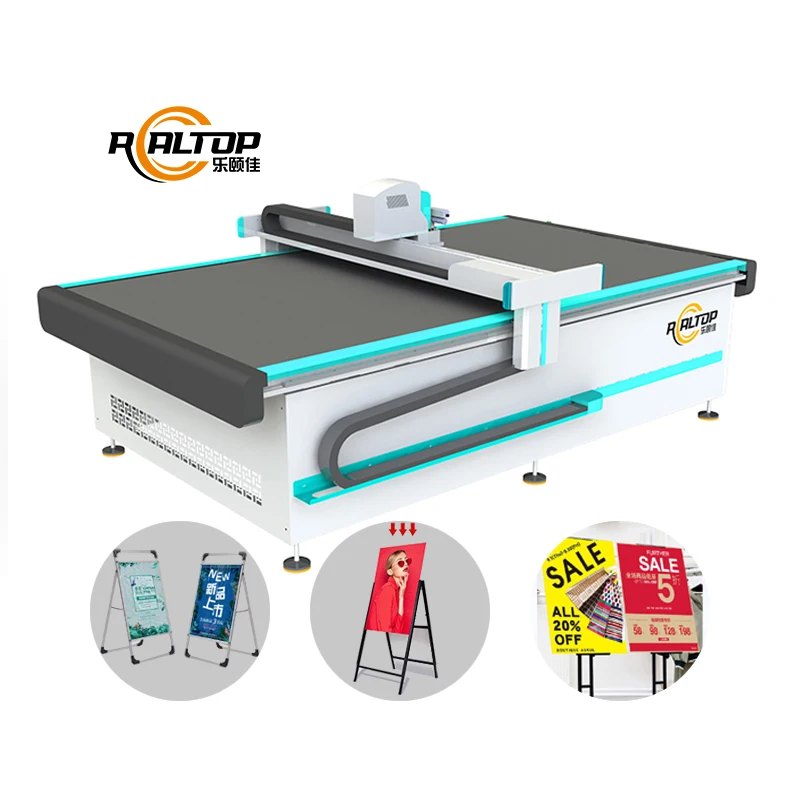
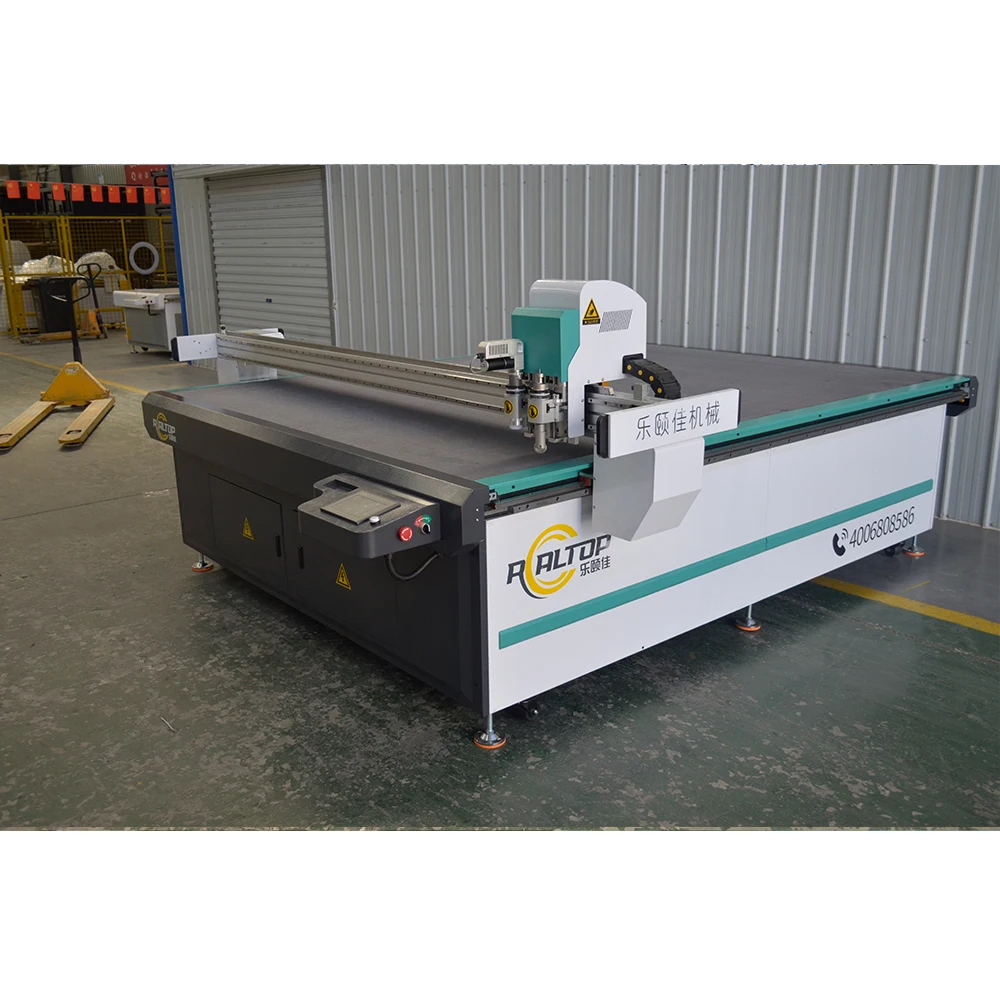
| Product Type | CNC Oscillating Knife Cutting Machine |
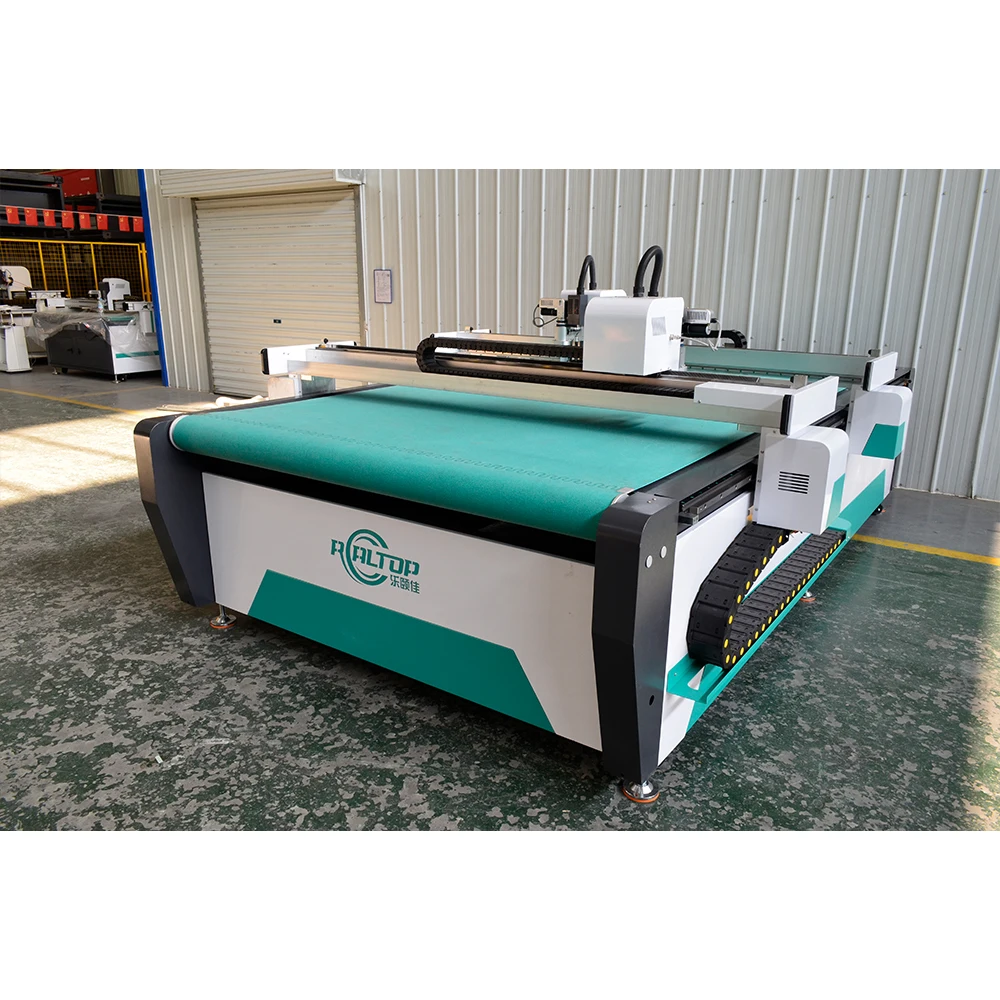
| Working Area | 1600 × 2500 mm |
| Machine Size | 3450 × 2300 × 1250 mm |
| Rated Power | 9 kW |
| Voltage | 380V ±10% |
| Table Type | Flat working table with vacuum adsorption |
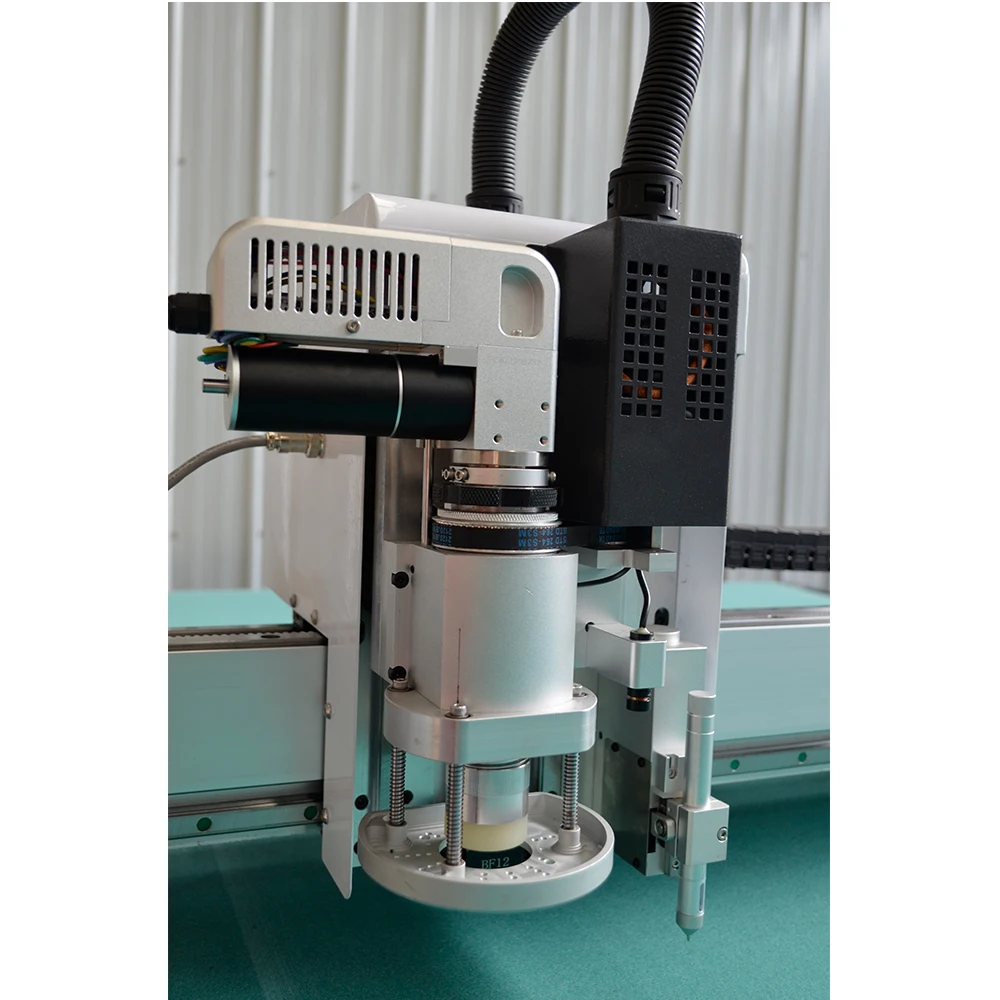
| Multifunctional Head | Swiss-imported knife: vibration full cutting, vibration half cutting, cursor location |
| Safety Device | Infrared sensors, responsive and reliable |
| Translational Velocity | 800–1200 mm/s |
| Cutting Thickness | 20–80 mm depending on material (basis to be confirmed) |
| Repeated Accuracy | ≤0.1 mm |
| Transmission System | Digital servo motor, linear guide, synchronous belt, ball screw |
| Instruction System | HP-GL compatible format |
| Vacuum Pump | 7.5 kW |
| Rail | Taiwan Hiwin linear rail |
| Feeding | Auto feeding with Germany-imported conveyor belt |
| Servo Motor | Delta servo motor |
Application Suitability
| Application | Material or Output |
|---|---|
| Automotive interior trim and acoustic insulation | High-density EVA, XPE foam, sponge composite, PU sound-deadening panels |
| Footwear and leather goods production | Natural and synthetic leather, shoe upper fabric, luggage material |
| Soft furnishings and carpet fabrication | Non-woven fabric, carpet, textile rolls, sponge padding |
| Gasket and sealing pad manufacturing | Rubber, PTFE, ETFE, silicone, composite gasket sheets |
| Packaging sample making and graphic printing | Corrugated cardboard, PVC soft glass, film, sticker, PP/PE board |
| Advertising signage contour cutting | Vinyl, foam board, fiberglass-reinforced sheet, printed plastic box |
Why Material Thickness Alone Never Tells the Full Story
Specifying a CNC oscillating knife cutting machine manufacturer on working area and thickness rating alone leaves the buyer exposed when the tool head, vacuum zoning, and blade frequency are not matched to the actual material behaviour.
The cut quality you see on the sample is the cut quality you will get in production — only if every variable was tested on your own stock.
I once watched a line of acoustic foam panels come off a flatbed cutter with torn edges and crushed cores because the oscillation frequency was set for standard packaging foam, not the high-density sound-deadening material the customer actually ran. The machine was technically within its thickness rating. The tool head was simply the wrong one for the job. That mismatch is far more common than outright machine failure, and it only surfaces when you run the buyer’s own material at production speed rather than a convenient demo sheet [NEED_CITE: material-specific tooling selection for oscillating knife systems].
Matching the Tool Head to the Material Response
Different flexible materials respond to blade oscillation in completely different ways. Leather needs a clean shear with minimal vibration to avoid surface marking, while closed-cell foam requires aggressive oscillation to prevent the blade from dragging and compressing the core. The Swiss-imported multifunctional head on this CNC oscillating knife cutting machine supports full cutting, half cutting, and cursor location, allowing the operator to switch between dense gasket rubber and thin film on the same table without changing the entire tool assembly. Selecting the right oscillation amplitude and blade profile for each material is what separates a clean edge from a crushed one.
Vacuum Zoning and Small-Part Stability
A 7.5 kW vacuum pump delivers strong hold-down across the full 1600 × 2500 mm table, but suction alone does not solve the small-part lift problem. When cutting automotive gaskets or shoe components, the parts near the knife path often break free from vacuum once the surrounding skeleton is removed. Zoned vacuum control lets the operator isolate suction to the area directly under the cutting head, keeping small profiles flat even after the waste material is stripped away [NEED_CITE: vacuum table zoning for small-part retention in digital cutting]. This is particularly important on sponge and composite materials where the surface texture reduces effective suction area.
Reading the Specifications Beyond the Brochure Numbers
The ≤0.1 mm repeated accuracy figure matters most on long production runs where a drift of even a few tenths of a millimetre accumulates across hundreds of nested parts. Delta servo motors paired with Taiwan Hiwin linear rails maintain positional consistency because the closed-loop feedback corrects micro-deviations before they compound. The 800–1200 mm/s translational velocity range gives the operator room to slow down for tight-radius contours in thick EVA foam while opening up for straight-line cuts on thin vinyl. A 9 kW rated power envelope covers the oscillation motor, vacuum pump load, and servo drives simultaneously without tripping the breaker during peak acceleration — something that only becomes apparent when all axes move at once under full vacuum [NEED_CITE: servo and drive power calculation for CNC flatbed cutters]. The HP-GL compatible instruction system accepts nested files from most commercial nesting software, but format compatibility should always be confirmed with the buyer’s existing workflow before the machine ships.
What Happens When Configuration Is Skipped
When a buyer accepts a standard tool head without testing it on their specific foam density, the result is ragged edges that require secondary trimming or, worse, an entire batch of acoustic panels scrapped because the crushed surface no longer meets the OEM’s visual standard. Incorrect vacuum zoning on small gasket profiles causes the part to lift mid-cut, producing an oversized piece that fails the go/no-go gauge at assembly. These are not machine defects — they are specification gaps that could have been caught with a sample cutting report on the buyer’s own material before the order was placed [NEED_CITE: cost of material mismatch in digital knife cutting].
What Makes This Source Different for Knife Cutting Buyers
Realtop designs and builds both knife and laser cutting systems in-house, which means the cutting method is chosen based on the material, not forced into whichever technology the factory happens to specialise in. Tool head and table configurations are specified per material type and daily production volume rather than offered as a single standard package. CCD camera positioning is available for printed contour work where the cutting path must follow registration marks at production speed. Voltage, control language, and plug type are confirmed against the destination country’s standards before production begins. Every machine is sample-cut on the buyer’s own material, and the cutting report accompanies the quotation so there is no guesswork about edge quality or achievable thickness.
Documentation & Verification
- Machine specification sheet listing configured tool head, vacuum zone count, and blade type
- Electrical schematic with voltage and frequency confirmed for destination country
- Sample cutting report produced on buyer’s own material before order confirmation
- Tool head and table configuration list matched to stated material and daily volume
- Software licence and file format compatibility note for nesting workflow integration
- Factory test record documenting positional accuracy and cut quality before dispatch
Installation, Commissioning & Support
- 3450 × 2300 mm footprint requires level concrete floor with clearance for auto-feeding conveyor
- 380V ±10% supply with dedicated 9 kW circuit and correct plug configuration for local standard
- Machine ships assembled; vacuum table and conveyor belt require on-site alignment and tension check
- First-run parameter setting for oscillation frequency, vacuum zone mapping, and servo tuning
- Operator training on HP-GL file import, tool head changeover, and CCD mark recognition where fitted
- Spare parts list covering Swiss blades, vacuum seals, and Hiwin rail carriages for local stocking
Before You Request a Quote
Send the material type, maximum thickness, and sheet or roll dimensions you plan to run, along with your typical daily volume and nesting file format. Confirm the local voltage, frequency, and preferred control language so the electrical cabinet and HMI are configured before assembly begins. If you have an existing upstream printer or downstream assembly line, share the conveyor height and feed direction so the auto-feeding system can be matched.
Frequently Asked Questions
Q: How do I choose the right tool head for foam versus leather?
A: Foam density determines oscillation amplitude and blade profile — low-density sponge needs less aggressive vibration to avoid crushing, while high-density EVA requires a stiffer blade and higher frequency. Leather demands a sharp shear cut with minimal vibration to prevent surface scarring. A sample cut on your actual material confirms the correct head before the order is finalised.
Q: What print mark quality does CCD contour recognition require?
A: The CCD camera reads contrast between the registration mark and the substrate. Marks should be solid black, at least 5 mm in diameter, and placed outside the cut path. Low-contrast prints on dark or patterned backgrounds may require mark enhancement or repositioning, which is verified during the sample cutting stage.
Q: How many vacuum zones do I need for small gasket parts?
A: Small parts lose vacuum hold once the surrounding skeleton is removed, so more zones allow isolation of suction directly under the cutting head. A four-zone table handles most gasket work, while high-mix small-part production benefits from additional zones mapped to the nesting layout.
Q: What voltage and plug details should I confirm before shipment?
A: Confirm your facility’s supply voltage, frequency, and phase configuration, as well as the local plug standard. The electrical cabinet, transformer taps, and power cable are configured during production, so late changes require rewiring and delay dispatch.
Q: Will my existing nesting software files load without conversion?
A: The HP-GL compatible instruction system accepts output from most nesting platforms, but some proprietary formats require a post-processor or DXF export. File format compatibility is tested with a sample file from your workflow and documented before the machine is released for production.
In-house tooling and table matching — every oscillating knife head and vacuum zone layout is specified against your actual material sample before the order is confirmed, not after.
Technical Specifications
| Parameter | Value |
|---|---|
| Product Type | CNC Oscillating Knife Cutting Machine |
| Working Area | 1600 × 2500 mm |
| Machine Size | 3450 × 2300 × 1250 mm |
| Rated Power | 9 kW |
| Voltage | 380V ±10% |
| Table Type | Flat working table with vacuum adsorption |
| Multifunctional Head | Swiss-imported knife: vibration full cutting, vibration half cutting, cursor location |
| Safety Device | Infrared sensors, responsive and reliable |
| Translational Velocity | 800–1200 mm/s |
| Cutting Thickness | 20–80 mm depending on material (basis to be confirmed) |
| Repeated Accuracy | ≤0.1 mm |
| Transmission System | Digital servo motor, linear guide, synchronous belt, ball screw |
| Instruction System | HP-GL compatible format |
| Vacuum Pump | 7.5 kW |
| Rail | Taiwan Hiwin linear rail |
| Feeding | Auto feeding with Germany-imported conveyor belt |
| Servo Motor | Delta servo motor |
Application Suitability
| Application | Material or Output |
|---|---|
| Automotive interior trim and acoustic insulation | High-density EVA, XPE foam, sponge composite, PU sound-deadening panels |
| Footwear and leather goods production | Natural and synthetic leather, shoe upper fabric, luggage material |
| Soft furnishings and carpet fabrication | Non-woven fabric, carpet, textile rolls, sponge padding |
| Gasket and sealing pad manufacturing | Rubber, PTFE, ETFE, silicone, composite gasket sheets |
| Packaging sample making and graphic printing | Corrugated cardboard, PVC soft glass, film, sticker, PP/PE board |
| Advertising signage contour cutting | Vinyl, foam board, fiberglass-reinforced sheet, printed plastic box |
Why Material Thickness Alone Never Tells the Full Story
Specifying a CNC oscillating knife cutting machine manufacturer on working area and thickness rating alone leaves the buyer exposed when the tool head, vacuum zoning, and blade frequency are not matched to the actual material behaviour.
The cut quality you see on the sample is the cut quality you will get in production — only if every variable was tested on your own stock.
I once watched a line of acoustic foam panels come off a flatbed cutter with torn edges and crushed cores because the oscillation frequency was set for standard packaging foam, not the high-density sound-deadening material the customer actually ran. The machine was technically within its thickness rating. The tool head was simply the wrong one for the job. That mismatch is far more common than outright machine failure, and it only surfaces when you run the buyer’s own material at production speed rather than a convenient demo sheet [NEED_CITE: material-specific tooling selection for oscillating knife systems].
Matching the Tool Head to the Material Response
Different flexible materials respond to blade oscillation in completely different ways. Leather needs a clean shear with minimal vibration to avoid surface marking, while closed-cell foam requires aggressive oscillation to prevent the blade from dragging and compressing the core. The Swiss-imported multifunctional head on this CNC oscillating knife cutting machine supports full cutting, half cutting, and cursor location, allowing the operator to switch between dense gasket rubber and thin film on the same table without changing the entire tool assembly. Selecting the right oscillation amplitude and blade profile for each material is what separates a clean edge from a crushed one.
Vacuum Zoning and Small-Part Stability
A 7.5 kW vacuum pump delivers strong hold-down across the full 1600 × 2500 mm table, but suction alone does not solve the small-part lift problem. When cutting automotive gaskets or shoe components, the parts near the knife path often break free from vacuum once the surrounding skeleton is removed. Zoned vacuum control lets the operator isolate suction to the area directly under the cutting head, keeping small profiles flat even after the waste material is stripped away [NEED_CITE: vacuum table zoning for small-part retention in digital cutting]. This is particularly important on sponge and composite materials where the surface texture reduces effective suction area.
Reading the Specifications Beyond the Brochure Numbers
The ≤0.1 mm repeated accuracy figure matters most on long production runs where a drift of even a few tenths of a millimetre accumulates across hundreds of nested parts. Delta servo motors paired with Taiwan Hiwin linear rails maintain positional consistency because the closed-loop feedback corrects micro-deviations before they compound. The 800–1200 mm/s translational velocity range gives the operator room to slow down for tight-radius contours in thick EVA foam while opening up for straight-line cuts on thin vinyl. A 9 kW rated power envelope covers the oscillation motor, vacuum pump load, and servo drives simultaneously without tripping the breaker during peak acceleration — something that only becomes apparent when all axes move at once under full vacuum [NEED_CITE: servo and drive power calculation for CNC flatbed cutters]. The HP-GL compatible instruction system accepts nested files from most commercial nesting software, but format compatibility should always be confirmed with the buyer’s existing workflow before the machine ships.
What Happens When Configuration Is Skipped
When a buyer accepts a standard tool head without testing it on their specific foam density, the result is ragged edges that require secondary trimming or, worse, an entire batch of acoustic panels scrapped because the crushed surface no longer meets the OEM’s visual standard. Incorrect vacuum zoning on small gasket profiles causes the part to lift mid-cut, producing an oversized piece that fails the go/no-go gauge at assembly. These are not machine defects — they are specification gaps that could have been caught with a sample cutting report on the buyer’s own material before the order was placed [NEED_CITE: cost of material mismatch in digital knife cutting].
What Makes This Source Different for Knife Cutting Buyers
Realtop designs and builds both knife and laser cutting systems in-house, which means the cutting method is chosen based on the material, not forced into whichever technology the factory happens to specialise in. Tool head and table configurations are specified per material type and daily production volume rather than offered as a single standard package. CCD camera positioning is available for printed contour work where the cutting path must follow registration marks at production speed. Voltage, control language, and plug type are confirmed against the destination country’s standards before production begins. Every machine is sample-cut on the buyer’s own material, and the cutting report accompanies the quotation so there is no guesswork about edge quality or achievable thickness.
Documentation & Verification
- Machine specification sheet listing configured tool head, vacuum zone count, and blade type
- Electrical schematic with voltage and frequency confirmed for destination country
- Sample cutting report produced on buyer’s own material before order confirmation
- Tool head and table configuration list matched to stated material and daily volume
- Software licence and file format compatibility note for nesting workflow integration
- Factory test record documenting positional accuracy and cut quality before dispatch
Installation, Commissioning & Support
- 3450 × 2300 mm footprint requires level concrete floor with clearance for auto-feeding conveyor
- 380V ±10% supply with dedicated 9 kW circuit and correct plug configuration for local standard
- Machine ships assembled; vacuum table and conveyor belt require on-site alignment and tension check
- First-run parameter setting for oscillation frequency, vacuum zone mapping, and servo tuning
- Operator training on HP-GL file import, tool head changeover, and CCD mark recognition where fitted
- Spare parts list covering Swiss blades, vacuum seals, and Hiwin rail carriages for local stocking
Before You Request a Quote
Send the material type, maximum thickness, and sheet or roll dimensions you plan to run, along with your typical daily volume and nesting file format. Confirm the local voltage, frequency, and preferred control language so the electrical cabinet and HMI are configured before assembly begins. If you have an existing upstream printer or downstream assembly line, share the conveyor height and feed direction so the auto-feeding system can be matched.
Frequently Asked Questions
Q: How do I choose the right tool head for foam versus leather?
A: Foam density determines oscillation amplitude and blade profile — low-density sponge needs less aggressive vibration to avoid crushing, while high-density EVA requires a stiffer blade and higher frequency. Leather demands a sharp shear cut with minimal vibration to prevent surface scarring. A sample cut on your actual material confirms the correct head before the order is finalised.
Q: What print mark quality does CCD contour recognition require?
A: The CCD camera reads contrast between the registration mark and the substrate. Marks should be solid black, at least 5 mm in diameter, and placed outside the cut path. Low-contrast prints on dark or patterned backgrounds may require mark enhancement or repositioning, which is verified during the sample cutting stage.
Q: How many vacuum zones do I need for small gasket parts?
A: Small parts lose vacuum hold once the surrounding skeleton is removed, so more zones allow isolation of suction directly under the cutting head. A four-zone table handles most gasket work, while high-mix small-part production benefits from additional zones mapped to the nesting layout.
Q: What voltage and plug details should I confirm before shipment?
A: Confirm your facility’s supply voltage, frequency, and phase configuration, as well as the local plug standard. The electrical cabinet, transformer taps, and power cable are configured during production, so late changes require rewiring and delay dispatch.
Q: Will my existing nesting software files load without conversion?
A: The HP-GL compatible instruction system accepts output from most nesting platforms, but some proprietary formats require a post-processor or DXF export. File format compatibility is tested with a sample file from your workflow and documented before the machine is released for production.










商品评价
There are no reviews yet.