


Fast Delivery
Quick, reliable shipping to any location.

Free & easy returns
Return this item by mail or in store within 90 days for a full refund.
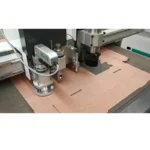
Swiss Knife Versatility — oscillating knife cutting technology paired with a 1600×2500mm flatbed table gives packaging converters one setup for both creasing and through-cutting cardboard, corrugated board, and flexible materials up to 80mm thick.
Technical Specifications
| Parameter | Value |
|---|---|
| Product Type | CNC Oscillating Knife Cutting Machine |
| Model | CLD2516 |
| Working Area | 1600mm × 2500mm |
| Machine Dimensions (L×W×H) | 3450 × 2300 × 1250 mm |
| Rated Power | 6.6 kW |
| Voltage | 380V ±10% |
| Tool Head | Swiss imported oscillating knife (full cut, half cut, cursor location) |
| Translational Velocity | 800–1200 mm/s |
| Cutting Thickness | 20–80 mm (basis not stated in source — confirm material type and density) |
| Repeatability | ≤0.1 mm |
| Transmission System | Digital servo motor, linear guide, synchronous belt, ball screw |
| Servo Motor | Taiwan Delta |
| Linear Guide | Taiwan Hiwin |
| Vacuum Table | Aluminum alloy honeycomb structure, partition adsorption |
| Vacuum Pump | 7.5 kW |
| Conveyor Belt | Germany imported |
| Safety Devices | Infrared sensors, emergency stop |
| Supported File Formats | PLT, DXF |
| Instruction System | HP-GL compatible |
| Nesting Software | Professional carton nesting software (included, language customizable) |
| Auto Feeding | Yes |
| Language Options | English, Russian, Italian, Chinese (customizable) |
| Standards | CE declaration where applicable |
Application Suitability
| Application | Material or Output |
|---|---|
| Carton box sample making and short-run production | Corrugated board, grey board, white card stock |
| Paper sticker and label contour cutting | Adhesive-backed paper, vinyl sheet |
| Corrugated packaging prototyping without die | Single-wall and double-wall corrugated |
| Express box and snack food packaging | Folding carton board, coated kraft |
| High-end gift box packaging | Rigid board, laminated card stock |
| Flexible material cutting | Leather, fabric, sponge composite, PVC, soft glass, silicone, rubber |
What "Cutting Thickness 20–80mm" Actually Means for Your Material
Thickness ratings only hold when the material density and tool head configuration match the test conditions — confirm your specific board grade before committing to an order.
A CNC knife cutting machine manufacturer will often quote maximum cutting depth as a headline figure. I once watched a carton shop discover the hard way that their 2mm grey board cut cleanly, but switching to a denser 3mm laminated board caused the knife to drag and leave ragged edges halfway through the run. The oscillating frequency that slices through corrugated air gaps behaves differently against solid fibre stock. Before we ship any CLD2516, we ask buyers to send actual production material so we can validate the knife stroke and vacuum hold-down against real conditions [NEED_CITE: material density and knife oscillation interaction in flatbed cutting].
Matching Knife Motion to Cardboard, Corrugated and Flexible Stock
The Swiss imported oscillating knife on the CLD2516 vibrates at high frequency to slice through material rather than dragging through it. For corrugated board, this vibration clears the flute channels without crushing them, preserving the structural rigidity that packaging engineers specify. When the job switches to leather or sponge composite, the same CNC oscillating knife cutting machine for sale configuration adjusts stroke amplitude to avoid fraying fabric edges or tearing soft foam layers.
Why Vacuum Zoning Decides Small-Part Cutting Success
Partition adsorption on the aluminum honeycomb table means you can activate only the zones under the material sheet. Small carton components and intricate sticker contours need concentrated hold-down force in a localized area rather than spreading suction across the entire 1600×2500mm bed. Without zoning, lightweight card lifts during the knife pass and shifts the cut line by fractions of a millimetre — enough to fail a packaging fit test [NEED_CITE: vacuum hold-down requirements for small-format flatbed cutting].
Reading the Specs That Matter for Packaging Accuracy
The Taiwan Delta servo motors driving Hiwin linear guides deliver ≤0.1mm repeatability across the full travel range. In carton sample making, that tolerance controls where a crease line meets a cut edge — if the crease lands even 0.3mm off, the folded box will not close square. The 7.5kW vacuum pump generates the suction reserve needed when cutting dense board that tends to resist the knife blade, ensuring the sheet stays pinned through the entire cutting cycle. A 380V ±10% supply with digital servo control keeps motor torque consistent even in workshops where other heavy machinery causes momentary voltage dips.
The Cost of Ignoring Software Compatibility Before Shipment
Buying a machine and then discovering it cannot import your existing PLT or DXF files means re-drawing every packaging dieline from scratch. I have seen buyers spend days converting artwork only to find nesting algorithms handle material yield differently than their current workflow. The CLD2516 ships with professional carton nesting software and an HP-GL compatible instruction system, but file compatibility should be confirmed with sample files exchanged before the production order is placed [NEED_CITE: CAD file format interoperability in CNC cutting equipment].
Why Source This CNC Knife Cutting Machine Manufacturer
In-house design covers both knife and laser cutting platforms, so if your material portfolio shifts from cardboard to acrylic, the cutting method can change without changing suppliers. Tool head and table configuration are specified against your actual material samples rather than a generic catalogue recommendation. CCD camera positioning is available for printed contour work where registration marks must be tracked on the fly. Voltage, control language and plug type are confirmed per destination market before the machine enters assembly. Sample cutting on your own material is completed and documented before shipment leaves the factory.
Documentation & Verification
- Machine specification sheet listing working area, tool head type and vacuum zoning layout
- Sample cutting report on buyer’s own cardboard at specified thickness and grade
- Electrical schematic with 380V ±10% voltage confirmation and plug type for destination
- Software licence with PLT/DXF/HP-GL file format compatibility note
- Factory test record documenting repeatability and cut-edge quality before dispatch
Installation, Commissioning & Support
- Foundation must support 3450×2300mm footprint with level tolerance for the honeycomb table
- Dedicated 380V circuit rated for the combined 6.6kW machine and 7.5kW vacuum pump load
- Machine ships fully assembled — crane access required for placement at final position
- First-run calibration of knife stroke depth and oscillation frequency against your material
- Operator training covers nesting software workflow and vacuum zone configuration
- Spare knife blades and conveyor belt segments included in initial delivery package
How to Prepare Your Enquiry
Send us the specific material type, board grade, thickness and maximum sheet size you run daily. Include your current CAD file format and any nesting software you already use so we can confirm import compatibility. State your workshop voltage and frequency so the electrical system is built for your market. If your production involves printed contours, let us know whether registration marks are already part of your artwork template.
Frequently Asked Questions
Q: Should I choose a knife or laser for cardboard and packaging work?
A: Knife cutting is preferred for corrugated and thick board because it cuts without burning edges or releasing fumes, keeping crease lines intact. Laser works well for thin card and intricate sticker contours where edge sealing matters. If your product mix spans both, sourcing from a manufacturer covering both technologies lets you match the method to each material rather than forcing one approach.
Q: How is working area matched to my packaging output?
A: The 1600×2500mm bed on the CLD2516 accommodates standard packaging sheet sizes with margin for nesting multiple carton designs per cycle. We review your typical sheet dimensions, daily volume and part geometry to confirm whether a flatbed of this size handles throughput or if a conveyor-fed system suits continuous production better.
Q: Can the CCD camera track printed marks at full production speed?
A: CCD contour recognition is available and works well when printed registration marks meet minimum contrast and size requirements. However, camera tracking speed depends on mark clarity and material surface reflectivity. We validate CCD performance on your printed sheets during the sample cutting stage so limitations surface before the machine ships.
Q: Will my existing CAD files import into the nesting software?
A: The included software reads PLT and DXF formats through an HP-GL compatible instruction system. Before order confirmation, send us sample files from your current design workflow so we can test import fidelity, check layer mapping and confirm that crease and cut lines are interpreted correctly without manual redrawing.
Q: What voltage and language options are confirmed before shipment?
A: The CLD2516 is configurable for 380V ±10% with plug type matched to the destination market. Control software language options include English, Russian, Italian and Chinese, with other languages available on request. We confirm voltage, frequency, plug standard and interface language in writing before the machine enters final assembly.










商品评价
There are no reviews yet.