




Fast Delivery
Quick, reliable shipping to any location.

Free & easy returns
Return this item by mail or in store within 90 days for a full refund.
Cutting Method Matched To Material — knife versus laser and every tool head option configured per your composite, gasket or signage stock, not forced into one platform.
Technical Specifications
| Parameter | Value |
|---|---|
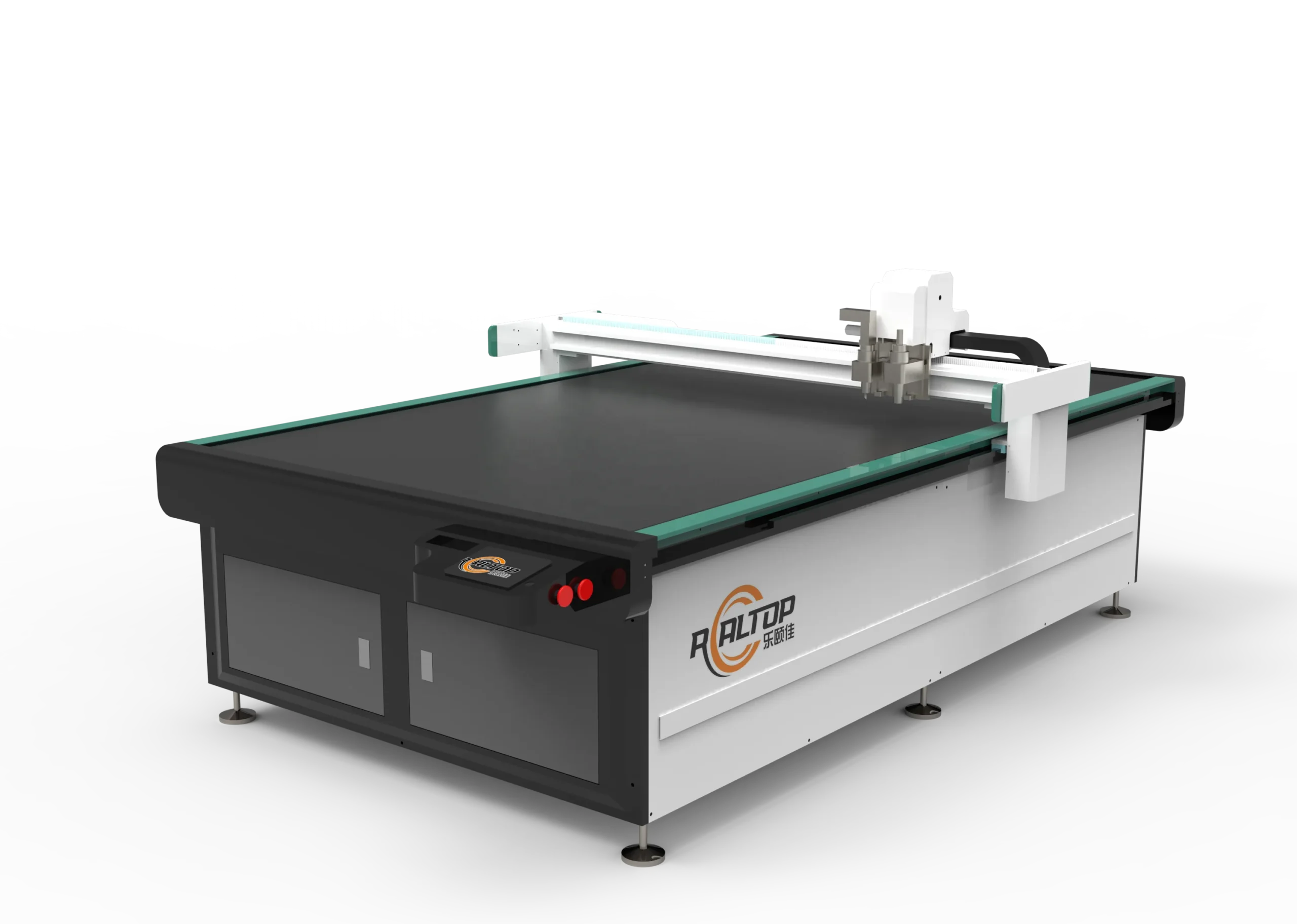
| Product Type | CNC Oscillating Knife Cutting Machine |
| Model | 1625 |
| Working Area | 1600×2500 mm |
| Available Tool Heads | Oscillating knife, Driven rotary knife, Creasing wheel, Kiss cutting tool, Pneumatic knife, Milling tool, V groove knife |
| Cutting Speed | 0-2000 mm/s |
| Cutting Thickness | ≤ 30mm |
| Cutting Accuracy | ±0.1 mm |
| Vacuum Pump | 9KW |
| Voltage Options | 110V, 220V, 380V |
| Compatible File Formats | PLT, DXF, AI, PDF |
| Safety Devices | Infrared sensor device and emergency stop device |
| Machine Dimensions | 3300×2100×1350 mm |
| Control System | PLC control panel (source value — verify against manufacturer catalog) |
| Vacuum Table | Aluminum bellows vacuum table (zoning details not stated in source — confirm zone count / configuration) |
| Software Language Options | English, Russian, Italian, Chinese (customizable) |
| Servo Motor Options | Panasonic, Delta, Dorna (source value — verify against manufacturer catalog) |
| Standards | CE (declared in source — verify certificate availability) |
Application Suitability
| Application | Material or Output |
|---|---|
| Aerospace composite layup | Carbon fiber prepreg, aramid honeycomb, fiberglass cloth, thermal and acoustic insulation foam |
| Automotive interior and rail transit | Headliners, floor carpets, sound and thermal insulation, seat foam, battery insulation pads |
| Wind power and new energy components | Fiberglass and carbon fiber cloth, infusion mesh, foam core, battery insulation sheets |
| Gasket and sealing fabrication | PTFE, rubber, non-asbestos sheets, graphite composites |
| Advertising and signage production | Corrugated board, foam board, PVC sheets, vinyl, acrylic (non-metal) |
| Sporting goods and leisure equipment | Bicycle frame prepreg, helmet liners, surfboards, kayak components, ski cores |
Why Your File Format Matters Before the Machine Arrives
When a shop buys a CNC Oscillating Knife Cutting Machine manufacturer unit based solely on bed size and price, the first real test comes when the operator tries to load a nested DXF or AI file from their existing workflow. If the software cannot parse the vector paths or recognize the layer structure, the machine sits idle while programmers manually redraw every profile. Software compatibility confirmed before shipment prevents this expensive standstill.
I have walked into workshops where a brand-new cutter sat quiet for days because the nesting software license was not activated, or the post-processor did not match the controller dialect. In signage shops running short-run jobs with frequent artwork changes, this friction multiplies across every shift. Buyers evaluating a cutting table for mixed-material production need to verify that PLT, DXF, AI, and PDF imports all translate correctly, including curve resolution and tool path assignment. [NEED_CITE: vector file format interoperability in CNC cutting workflows]
Seven Tool Heads for Seven Different Edge Requirements
An oscillating knife handles dense rubber and PTFE with a vibrating stroke that shears rather than drags, leaving a square edge without the burn marks a thermal process would leave. Switch to a driven rotary knife for continuous textile cuts where the blade must follow long contours without lifting the fabric. A creasing wheel scores cardboard and carton stock without penetrating through, while the kiss cutting tool removes only the top layer of self-adhesive vinyl — essential for signage producers cutting decals that stay on the backing until installation.
Working Area Envelope Mapped Against Real Stock Sizes
The 1600×2500 mm bed accommodates standard full-size composite prepreg rolls and automotive headliner blanks that typically run between 1500 mm and 2400 mm in length. Gasket fabricators cutting PTFE sheets from 1200×1200 mm stock can nest multiple part geometries across the bed, reducing remnant waste on high-value material. For advertising shops running foam board and PVC in standard 1220×2440 mm sheets, the table length provides margin for clamping and tool clearance without forcing the operator to trim sheets before loading. [NEED_CITE: standard sheet dimensions in composite and signage industries]
Reading the Specs That Actually Affect Your Cut Quality
The ±0.1 mm cutting accuracy depends on servo motor performance under load; Panasonic and Delta servo options are listed, each with different torque curves that matter when the oscillating knife pushes through dense rubber at high frequency. The 9KW vacuum pump must generate sufficient hold-down across the full aluminum bellows table — small gasket parts with limited surface area will lift if vacuum zoning is insufficient, so confirming zone count and independent valve control before order prevents this. Cutting speed ranges from 0 to 2000 mm/s, but actual achievable speed on 30mm PTFE is far lower than on thin vinyl; the control panel must allow per-material speed profiling. The PLC control panel processes the tool path, and its language setting — English, Russian, Italian, or Chinese — should match the operator environment to avoid setup errors on the shop floor.
The Cost of Picking the Wrong Knife for the Job
Specifying an oscillating knife for thin vinyl film produces jagged perforations where a kiss cutting tool would leave the backing intact; the operator then spends hours reworking every decal by hand. Running a drag knife through 25mm EVA foam collapses the cell structure instead of shearing it cleanly, producing a crushed edge that fails seal tests in automotive interior assemblies. I have seen a graphite gasket job scrapped because pneumatic knife pressure was set for standard rubber — the blade chipped on the first pass, ruining the entire sample batch. These failures do not appear in a brochure comparison; they surface only when real material meets the wrong tool head. [NEED_CITE: material-specific tool head selection in digital flatbed cutting]
Why Source the Complete Range from One Factory
Realtop builds both knife and laser platforms in-house, so when your production spans PTFE gaskets that need cold cutting and acrylic letters that need edge sealing, the same engineering team specifies both machines without forcing one technology to handle both jobs. Tool head and vacuum table configurations are matched to your material sample before the order is locked — not assumed from a catalog page. The CCD camera positioning option is available for printed contour work where registration marks must be tracked at production speed. Software licenses and file format compatibility are documented before shipment, and voltage and plug type are confirmed for your local electrical standard. Sample cutting runs on your actual stock generate a report that becomes part of your documentation package.
Documentation & Verification
- Factory test record cut on your PTFE or rubber thickness before dispatch
- Tool head and vacuum table configuration list matched to your material sample
- Electrical schematic with voltage and plug type confirmed for your market
- Software license certificate with PLT, DXF, AI, and PDF compatibility note
- Machine specification sheet with servo motor and control language selection recorded
- Spare parts list covering oscillating knife blades and vacuum table seals
Installation, Commissioning & Support
- 3300×2100 mm footprint requires level concrete floor with clearance for sheet loading on both long sides
- 9KW vacuum pump plus servo drives require dedicated three-phase circuit matching confirmed voltage option
- Complete unit arrives assembled; verify door and ceiling clearance at receiving point before scheduling delivery
- First-run commissioning includes vacuum zone calibration and tool pressure tuning on your supplied material
- Operator training covers tool head changeover procedure and PLC language navigation in selected interface language
- Blade and creasing wheel consumables listed in spare parts document with reorder specifications
What to Include in Your Enquiry
Send a material sample or at minimum specify the exact material type, thickness range, and standard sheet dimensions you run most often. Confirm your local voltage and frequency, and state whether you need English or another control language on the PLC panel. If your existing workflow relies on specific nesting software or file formats, share a sample file so compatibility can be verified before quotation.
Frequently Asked Questions
Q: How do I decide between oscillating knife and laser for PTFE gasket material?
A: PTFE releases toxic fumes when cut with a CO2 laser, so oscillating knife is the standard method for gasket-grade PTFE and filled PTFE compounds. The cold-cutting process avoids thermal degradation and leaves a square edge suitable for sealing surfaces. For thin PTFE film under 1mm, a pneumatic knife option may produce a cleaner edge than oscillating stroke.
Q: Which tool head gives the cleanest edge on automotive headliner foam?
A: Seat foam and acoustic insulation foam between 10mm and 30mm respond best to the oscillating knife with a long-stroke blade, which shears the open-cell structure without crushing it. A drag knife will compress the foam ahead of the blade, leaving a deformed edge that may not fit the mold cavity. Cutting speed must be reduced on thicker foam to maintain edge squareness.
Q: What vacuum table setup holds small gasket parts without lifting?
A: Small parts under 100mm across have limited surface area for vacuum adhesion, so the aluminum bellows table should be configured with independent zone valves that allow the operator to activate only the zone under the active cut area. Without zone control, vacuum leaks across the uncovered bed reduce hold-down force. Zone count and valve type should be confirmed before order.
Q: Can the machine process my existing DXF nesting files without conversion?
A: The control software accepts PLT, DXF, AI, and PDF formats, but curve resolution and layer naming conventions vary between CAD packages. A sample file exchange before order confirms that your nesting output translates correctly into tool paths with the right tool head assignment per layer. Any required post-processing steps are documented in the compatibility note delivered with the machine.
Q: How is voltage and plug type confirmed for my country’s electrical standard?
A: The machine is available in 110V, 220V, and 380V configurations. Your enquiry should state the exact voltage, frequency, and plug standard at your facility. The electrical schematic and factory test record then reflect your confirmed specification, and the machine is wired accordingly before the pre-shipment inspection and packing photographs are taken.










商品评价
There are no reviews yet.