

Fast Delivery
Quick, reliable shipping to any location.

Free & easy returns
Return this item by mail or in store within 90 days for a full refund.
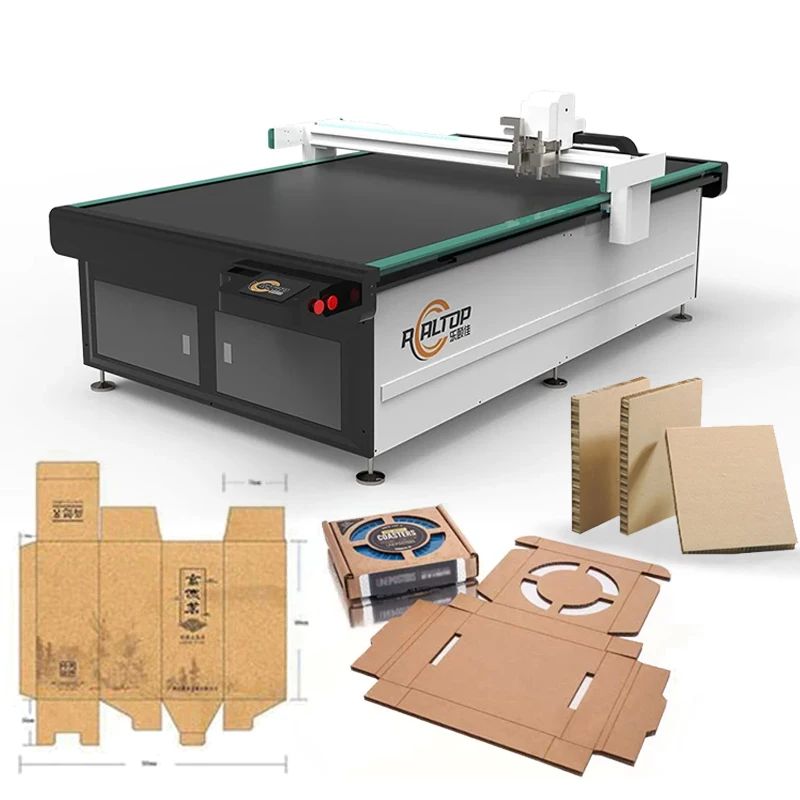
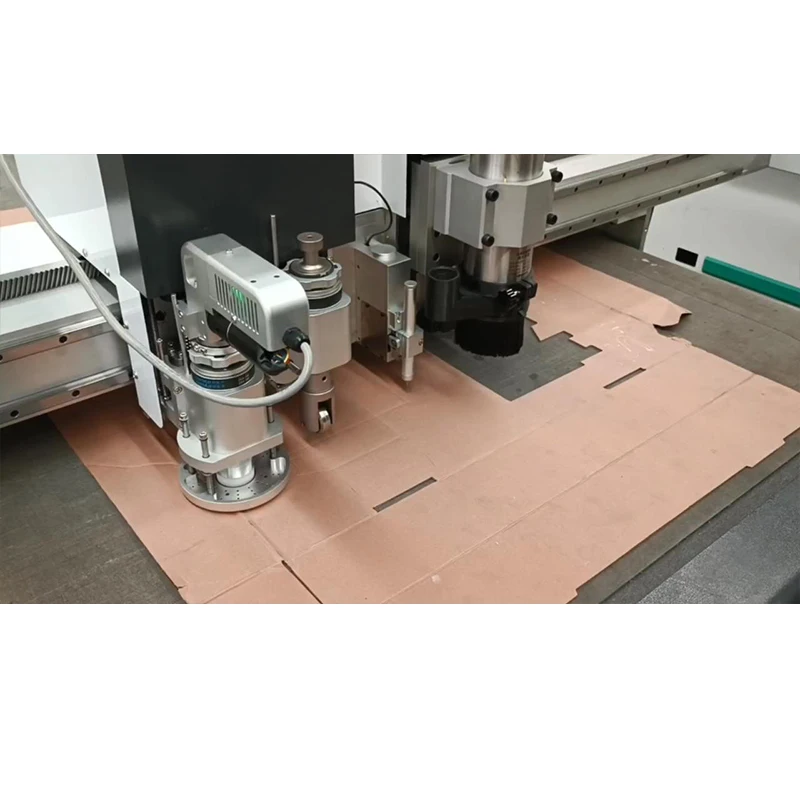
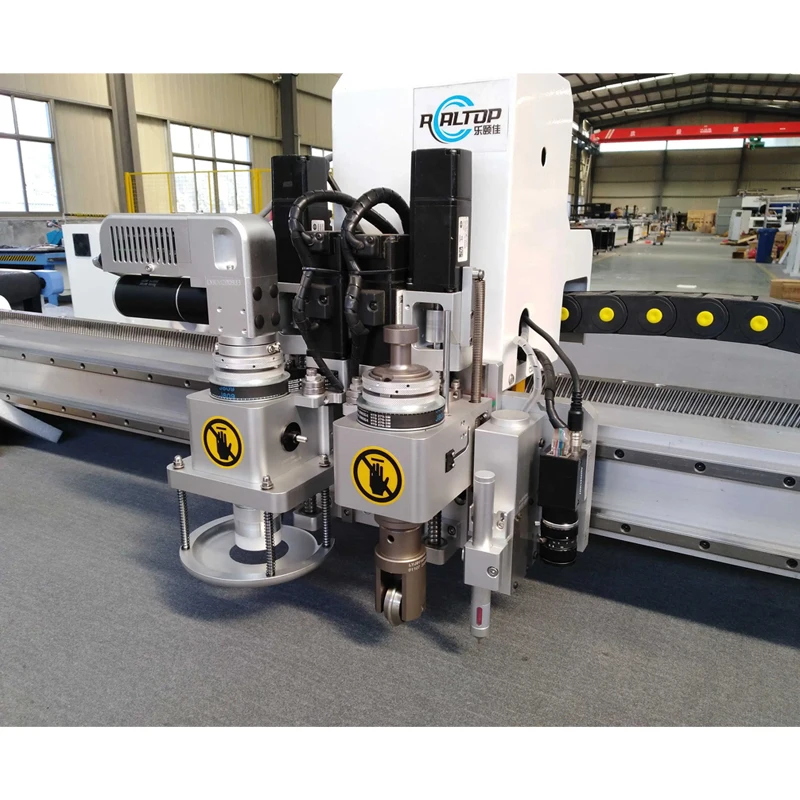
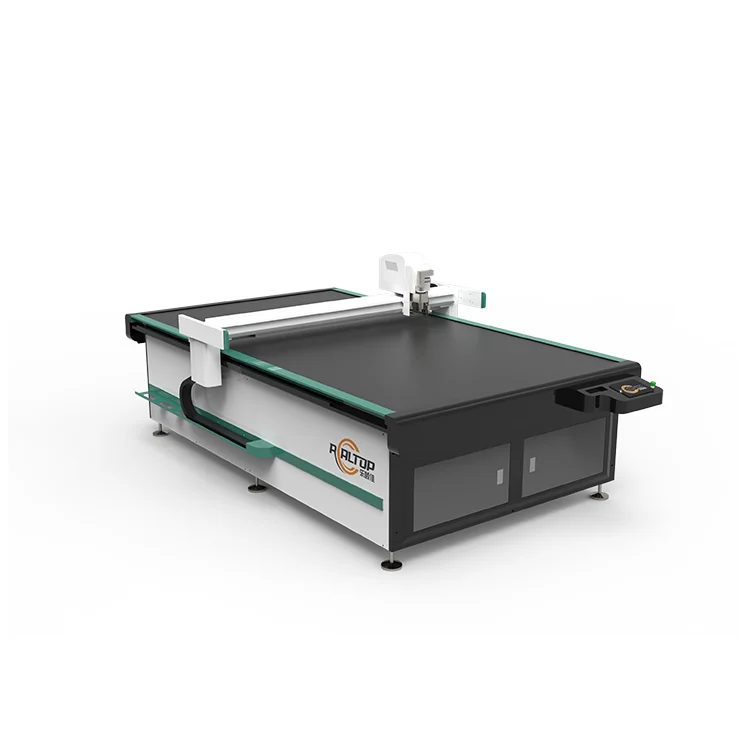
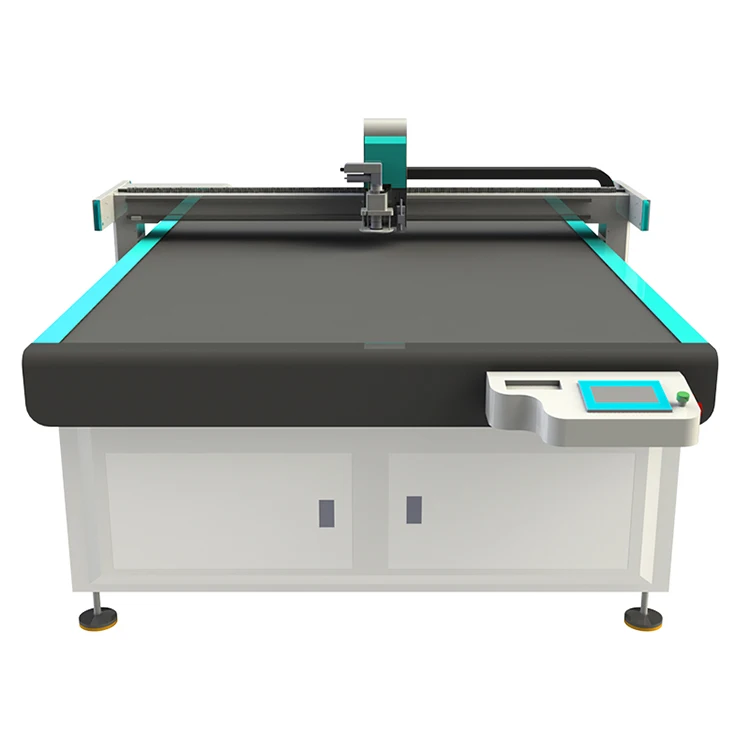
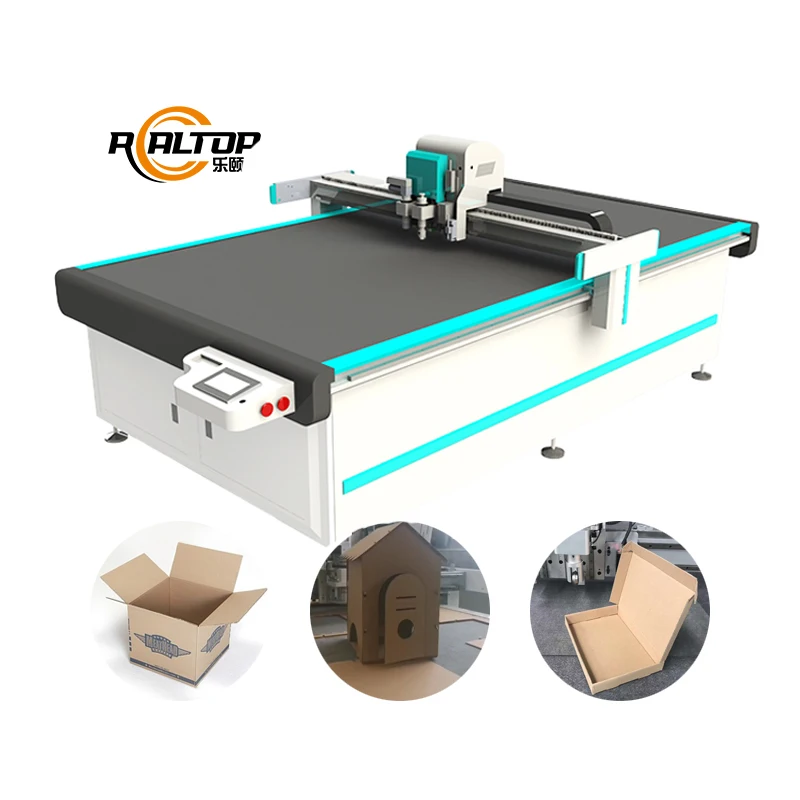
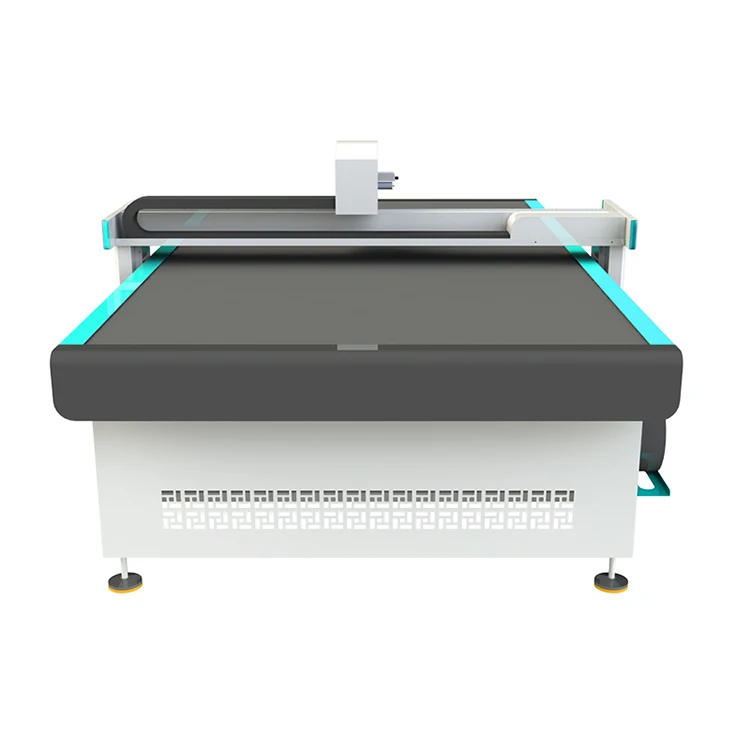
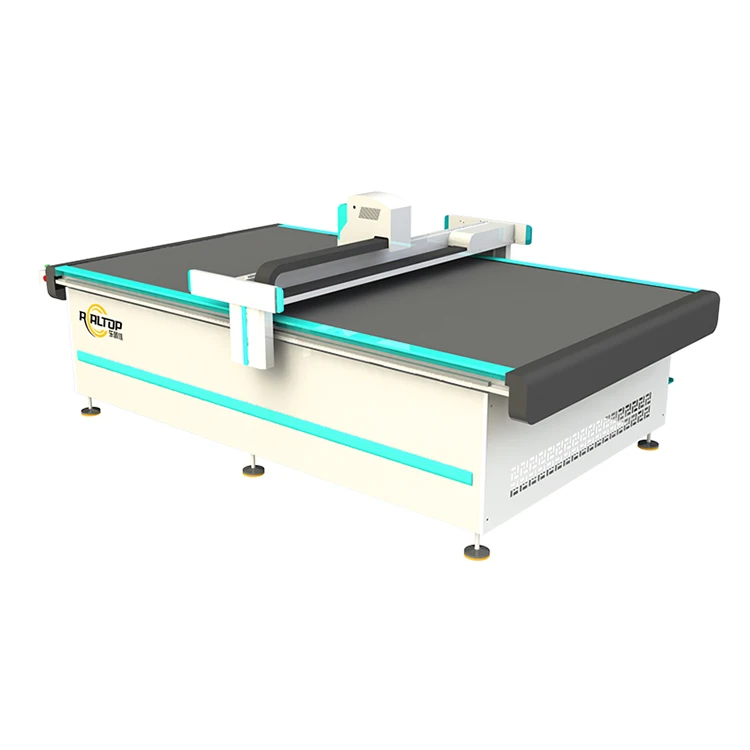
Tool Head Versatility — the RT–R2513 platform supports oscillating knife, creasing, kiss-cut, and round punch tool heads on a single flatbed, letting packaging and flexible material producers evaluate cutting methods against their actual material stack before committing.
Technical Specifications
| Parameter | Value |
|---|---|
| Model | RT–R2513 |
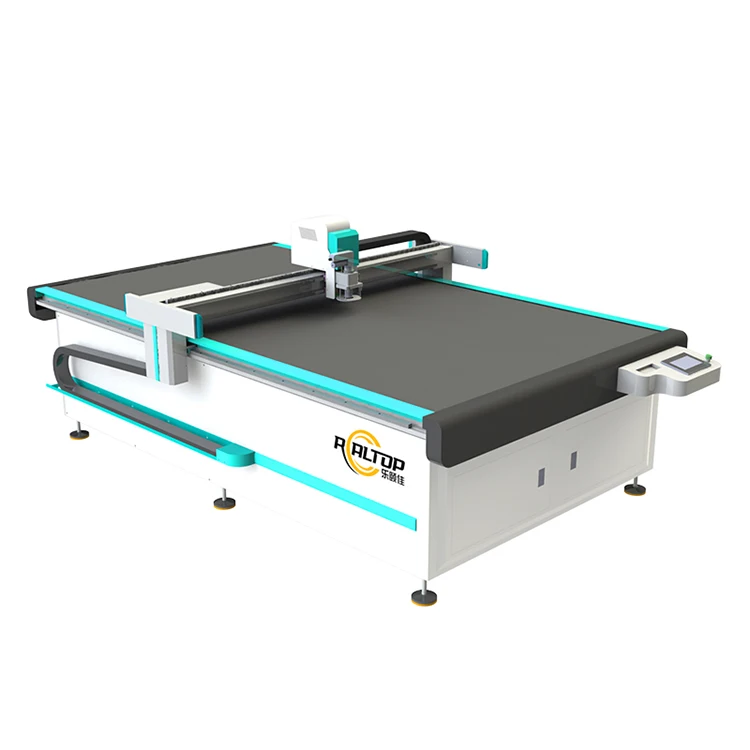
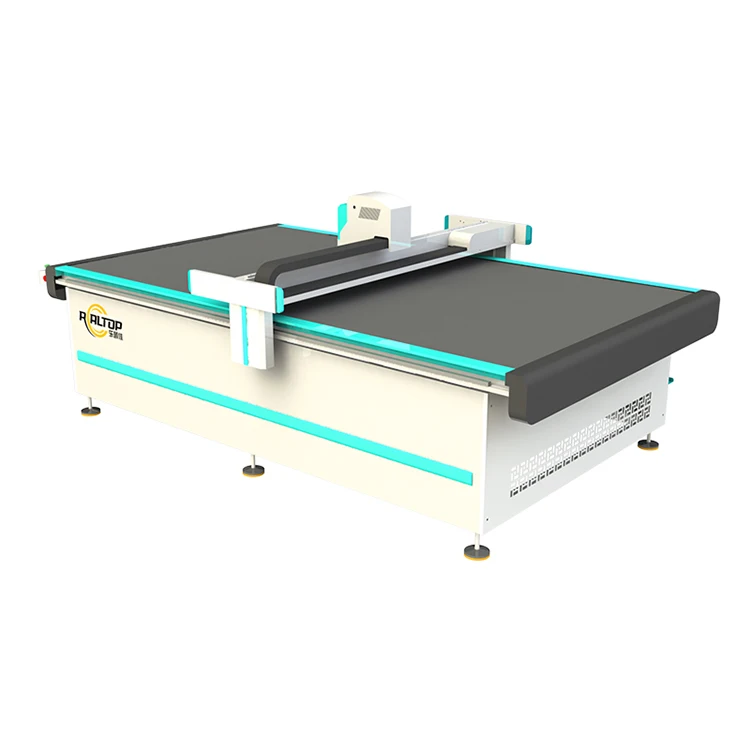
| Product Type | CNC Oscillating Knife Cutting Machine for Carton and Packaging |
| Working Area | 2500 × 1300 mm |
| Machine Dimensions (L × W × H) | 3550 × 1910 × 1400 mm |
| Cutting Tools | Oscillating knife, creasing tool, kiss-cut knife tool, round punch |
| Cutting Thickness | ≤18 mm (basis not stated in source — confirm material type and flute profile) |
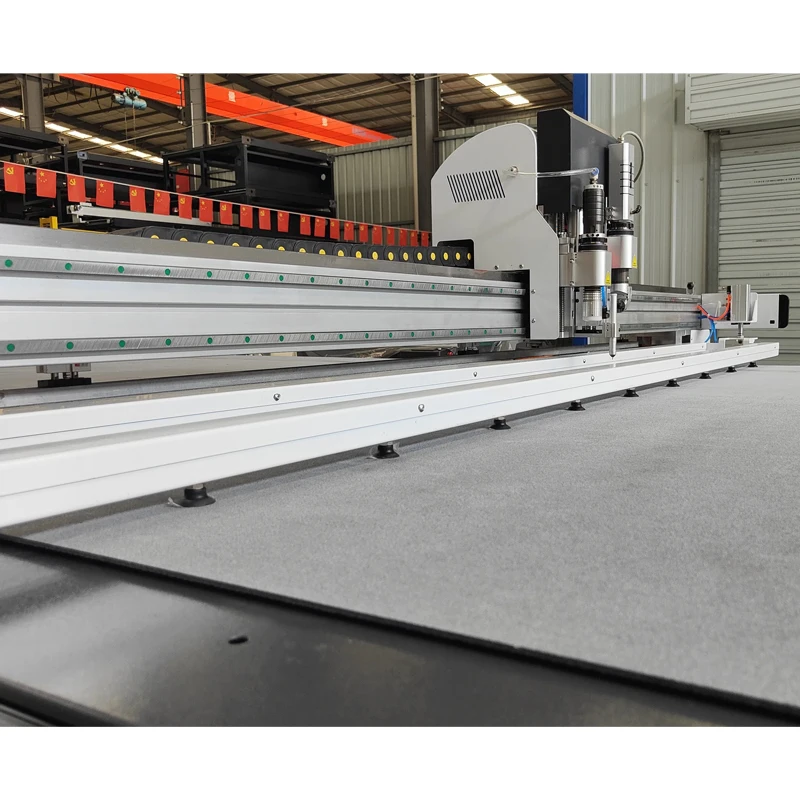
| Fixing Method | Vacuum system with aluminum alloy honeycomb platform |
| Rated Power | 9 kW |
| Voltage | 380 V |
| Servo Motor | Dongling servo (Delta servo available as alternate configuration) |
| Transmission Method | Ethernet port |
| Supported File Formats | DXF, OLT, PDF, AI |
| Repeatability | <0.05 mm |
| Vacuum Pump | 7.5 kW |
| Guide Rail | Taiwan Hiwin rail |
| Felt Belt | Wear-resistant anti-pull composite fiber, tension strength increased by 35% (source value — verify against manufacturer catalog) |
| Safety Devices | Infrared sensors, emergency stop |
| Software | Professional carton nesting software (free license, customizable language, lifelong technical support) |
| Blade Supply | 10 pieces of oscillating blades included |
| Warranty | 1 year (excludes felt belt and knife blades) |
| Language Options | English, Russian, Italian, Chinese (special languages customizable) |
| Standard | CE (verify per shipment) |
| Delivery Time | <30 working days |
Application Suitability
| Application | Material or Output |
|---|---|
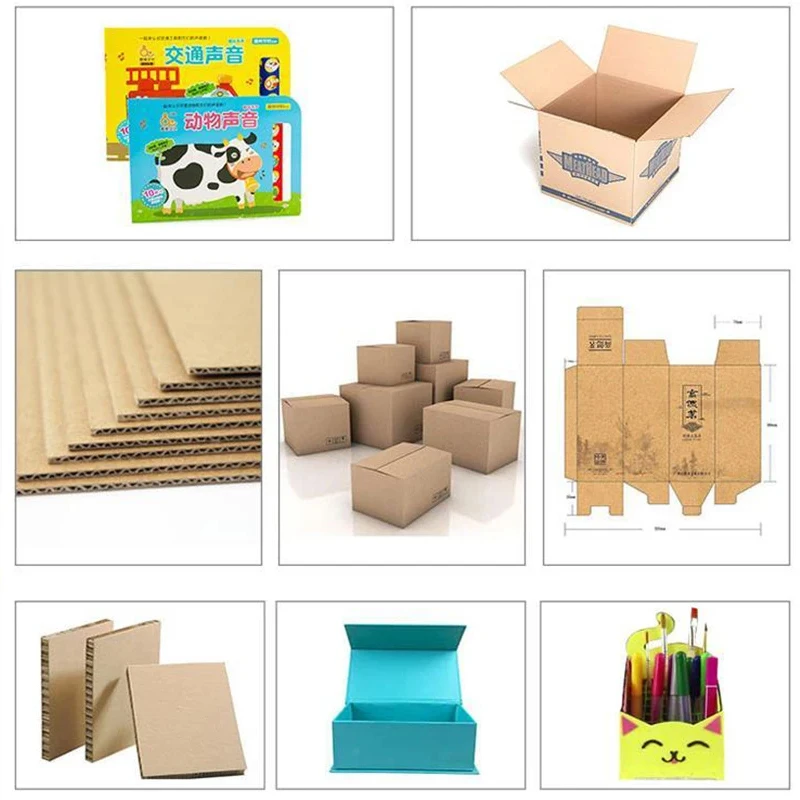
| Carton and corrugated packaging sample making | Single, double, and triple-wall corrugated board, gray board |
| Short-run die cutting | Cardboard, folding carton stock, micro-flute board |
| Sticker and label contour cutting | Self-adhesive vinyl, sticker sheets, label rolls |
| Paper-based display and card production | Display board, business card stock, tag material |
| Express and food packaging | Express paper box, snack food packaging board |
| High-end gift box prototyping | Rigid box board, specialty paper, laminated stock |
| Flexible material flatbed cutting | Leather, PP paper, composite flexible sheets |
Why Working Area Alone Does Not Guarantee a Good Cut
The assumption that any 2500 × 1300 mm flatbed will handle your corrugated board at any flute profile leads to ragged edges and crushed cores when the oscillating knife frequency is not matched to the material density. A CNC oscillating knife cutting machine manufacturer must confirm cutting depth against your actual flute profile, not a generic thickness ceiling.
I have watched packaging producers receive machines rated at a maximum thickness, only to discover that triple-wall corrugated compressed under the knife at production speed while the spec sheet assumed single-face board [NEED_CITE: corrugated flute profile classifications and compressive behavior under oscillating knife cutting]. The vacuum hold-down zones matter just as much — a board smaller than the active vacuum zone lifts at the trailing edge, and the kiss-cut tool skips instead of scoring cleanly.
Matching Tool Heads to the Material Stack You Actually Run
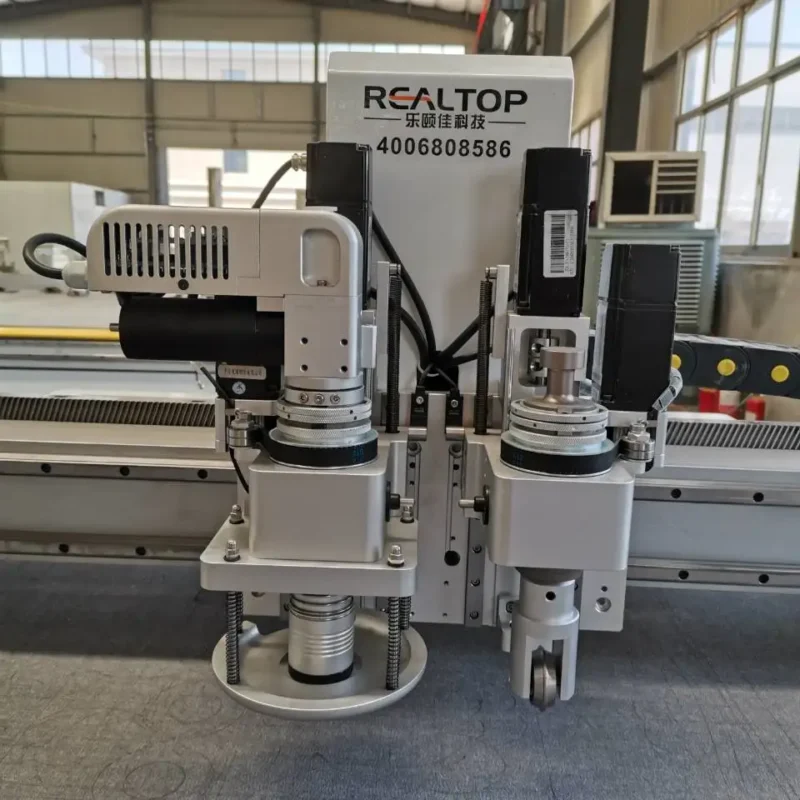
The RT–R2513 carries four tool heads on a single gantry, which matters when a packaging house runs corrugated sample cutting in the morning and switches to sticker contour work by afternoon. The oscillating knife handles the through-cut on flute board while the creasing tool scores fold lines without crushing the corrugation structure. For kiss-cut applications on self-adhesive labels, the dedicated kiss-cut knife tool controls depth so the liner remains intact.
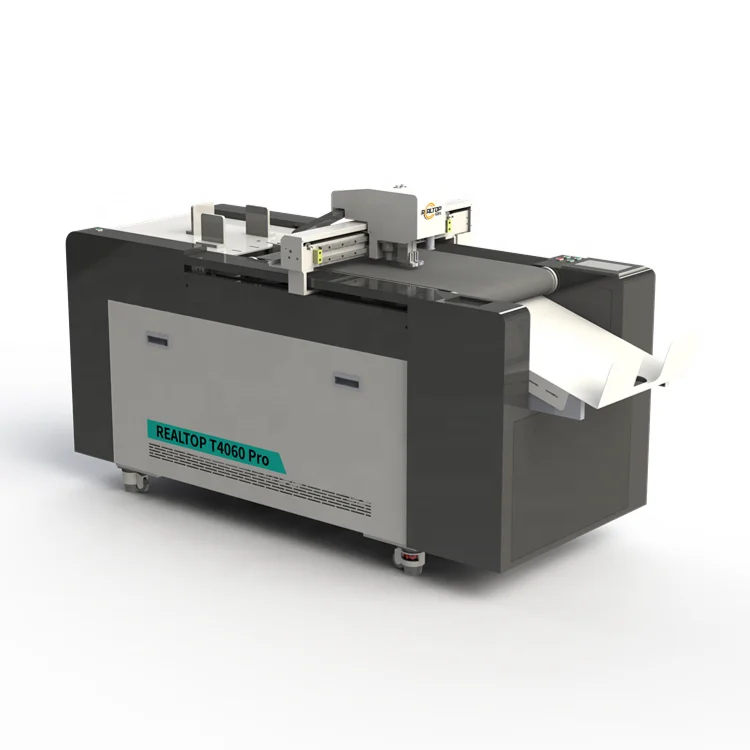
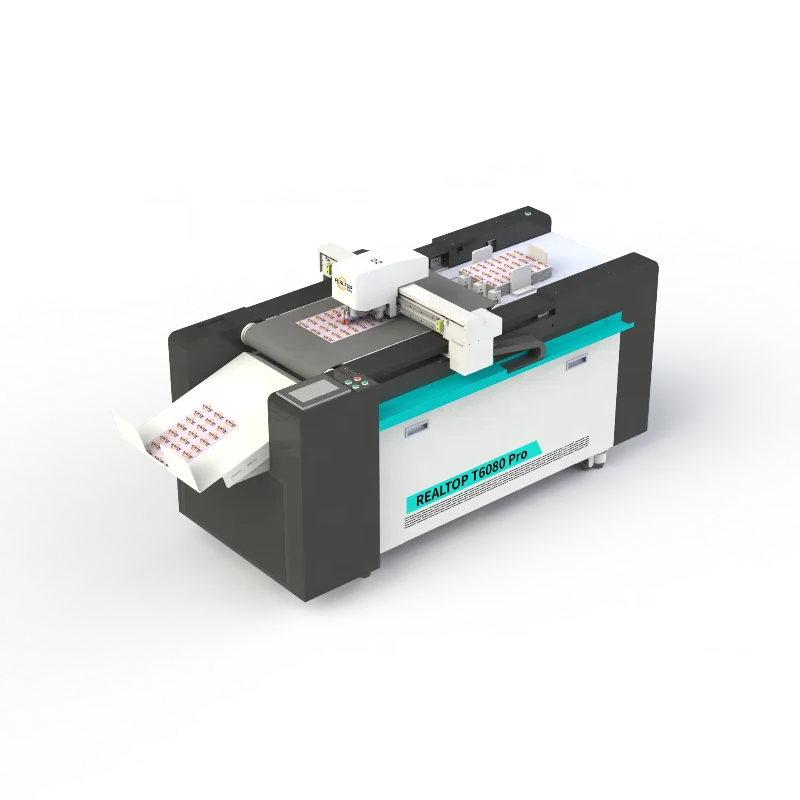
This is where the full catalogue view becomes useful. A buyer surveying the complete Realtop knife-versus-laser range can see exactly where oscillating knife cutting sits relative to CO2 laser for edge sealing on synthetic materials, and decide which method earns its place on the shop floor based on material type rather than sales pressure.
Vacuum Zoning and Small-Part Behavior on the Honeycomb Platform
The aluminum alloy honeycomb vacuum platform distributes suction across the full 2500 × 1300 mm area, but uniform suction does not automatically mean uniform hold-down for every part size. When a carton sample maker cuts small tuck-end boxes from a large sheet, the offcuts between boxes can break vacuum continuity if the zoning does not account for the smallest piece in the nest [NEED_CITE: vacuum table zoning requirements for small-part digital cutting].
This is a specification that must be confirmed before production, not after. The 7.5 kW vacuum pump provides ample suction, but the zoning layout determines whether a 40 × 40 mm tag stays flat or lifts and catches the oscillating knife mid-pass.
Reading the Specs That Actually Affect Your Cut Quality
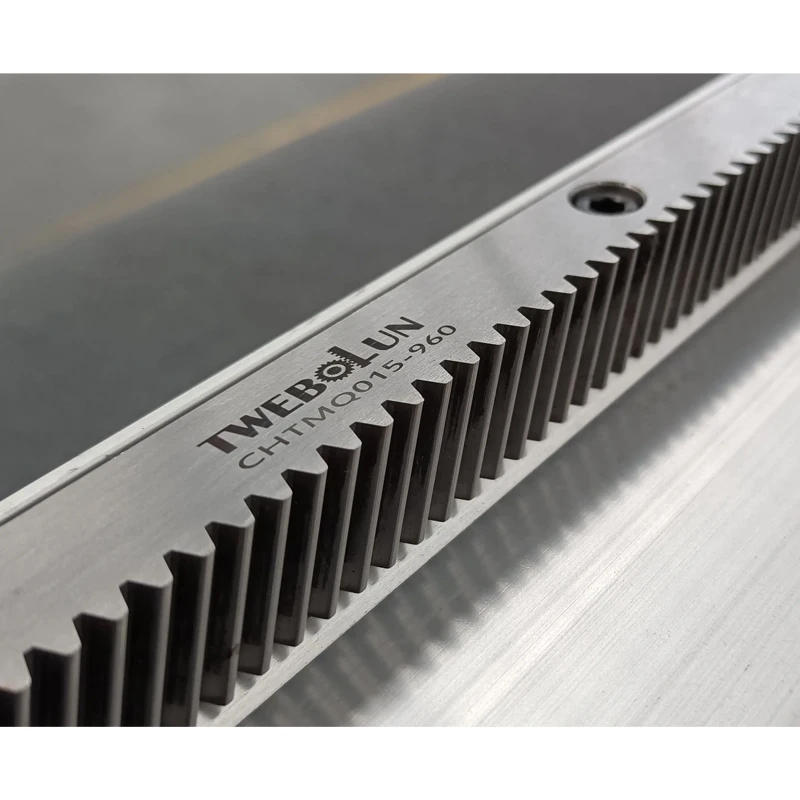
Repeatability below 0.05 mm depends on the Taiwan Hiwin linear guide and rack transmission working together under continuous reciprocating load. On a 2500 mm travel axis, thermal expansion across a long production run can shift registration if the guide system is not preloaded correctly — this machine addresses that through the rail specification rather than software compensation alone.
The Ethernet transmission port for data transfer means file delivery from the nesting software to the motion controller does not bottleneck on older serial protocols, which matters when a packaging sample house processes dozens of unique DXF and AI files per shift. The professional carton nesting software imports DXF, OLT, PDF, and AI natively, so the operator does not need to flatten or re-export files through an intermediate CAD step before sending them to the machine.
The 9 kW rated power covers the oscillating knife motor, vacuum pump load during cutting, and servo drive simultaneously. Confirming voltage and frequency at 380 V for the destination market prevents motor winding mismatches that surface only after the first week of continuous operation.
The Cost of Skipping the Material Conversation Before Order
Specifying a flatbed cutting machine on table size and maximum thickness without discussing the actual flute profiles, board densities, and smallest cut-piece dimensions leads to problems that only appear once the machine is running production jobs. I once had a corrugated packaging line in Mexico stop for two days because the vacuum zoning was set for full-sheet hold-down while the customer was cutting small-format inserts that lifted under the knife head [NEED_CITE: vacuum hold-down failure modes in small-part corrugated cutting].
The fix required flying out to reconfigure the vacuum zones and re-test with the customer’s actual smallest board format. That kind of post-installation correction costs far more than sending the material samples and board specifications during the inquiry stage.
What Buying From the Builder Directly Changes
The RT–R2513 is designed and produced in-house, covering both knife and laser cutting technologies under one engineering team, so a buyer comparing cutting methods gets a recommendation based on material behavior rather than product availability. Tool head and table configuration is specified per material and production volume, not sold as a fixed package.
CCD camera positioning is available for printed contour work when the application requires it, and software compatibility with the buyer’s existing file workflow is confirmed before the order goes into production. Voltage, plug type, and control language are locked in during the specification stage, not assumed from a default setting. Sample cutting on the buyer’s own material runs before commitment, producing a physical report that documents edge quality and cutting depth on the actual stock.
Documentation & Verification
- Machine specification sheet with voltage and frequency confirmed for destination market
- Electrical schematic matching the confirmed servo package configuration
- Tool head and vacuum zone layout mapped to your material list
- Sample cutting report on your corrugated board at target flute profile
- Software license and file format compatibility note before order placement
- Operation manual in your confirmed control language
Installation, Commissioning & Support
- Foundation must support the 3550 × 1910 mm footprint with level tolerance for the honeycomb platform
- Dedicated 380 V circuit rated above 9 kW with correct frequency for the servo and vacuum pump
- Machine ships in transport configuration requiring gantry re-alignment and felt belt tensioning on site
- First-run commissioning includes vacuum zone mapping against your smallest cut-piece dimensions
- Operator training covers tool head changeover between oscillating knife, creasing, and kiss-cut tools
- Spare oscillating blades and felt belt wear schedule documented at handover
What to Include in Your Inquiry
Send your most common board types with flute profiles, the smallest cut-piece dimensions in your typical nest, and your daily volume range so the tool head and vacuum configuration can be specified correctly. Confirm your facility voltage, frequency, and preferred control language to avoid motor and interface mismatches. If you have an existing nesting workflow, share a sample file so format compatibility is verified before the order is placed.
Frequently Asked Questions
Q: How is the ≤18 mm cutting thickness verified for corrugated board?
A: The thickness ceiling depends on the flute profile and board density, not a single measurement. Request a sample cutting report on your specific corrugated stock — single-face, double-wall, or triple-wall — at your target production speed to confirm the oscillating knife handles the material without crushing the flute structure or leaving ragged edges.
Q: Which servo package ships as standard — Dongling or Delta?
A: The Dongling servo is listed as standard, with Delta available as an alternate configuration. Both options support the stated repeatability specification, but confirming which package will ship with your order avoids surprises during commissioning when tuning motion parameters to your material.
Q: What voltage, plug, and control language are confirmed before shipment?
A: Voltage, plug type, and control interface language must all be locked in during the specification stage. The machine supports 380 V as standard and multiple UI languages including English, Russian, Italian, and Chinese, with special languages customizable upon request before production begins.
Q: How does the RT–R2513 compare to other Realtop knife-cutting models?
A: The RT–R2513 sits in the mid-range of the full knife-cutting catalogue by working area, suited to packaging sample houses and short-run producers. Buyers evaluating larger formats or multi-head configurations for higher volume should compare across the complete range to match table size and tool head count to their specific output requirements.
Q: Can the carton nesting software import my existing DXF and AI files?
A: The professional carton nesting software supports DXF, OLT, PDF, and AI import natively. Share a sample file from your current workflow during the inquiry stage so format compatibility and nesting behavior are verified before the machine enters production, rather than discovering translation issues on the first day of operation.
Tool Head Versatility — the RT–R2513 platform supports oscillating knife, creasing, kiss-cut, and round punch tool heads on a single flatbed, letting packaging and flexible material producers evaluate cutting methods against their actual material stack before committing.
Technical Specifications
| Parameter | Value |
|---|---|
| Model | RT–R2513 |
| Product Type | CNC Oscillating Knife Cutting Machine for Carton and Packaging |
| Working Area | 2500 × 1300 mm |
| Machine Dimensions (L × W × H) | 3550 × 1910 × 1400 mm |
| Cutting Tools | Oscillating knife, creasing tool, kiss-cut knife tool, round punch |
| Cutting Thickness | ≤18 mm (basis not stated in source — confirm material type and flute profile) |
| Fixing Method | Vacuum system with aluminum alloy honeycomb platform |
| Rated Power | 9 kW |
| Voltage | 380 V |
| Servo Motor | Dongling servo (Delta servo available as alternate configuration) |
| Transmission Method | Ethernet port |
| Supported File Formats | DXF, OLT, PDF, AI |
| Repeatability | <0.05 mm |
| Vacuum Pump | 7.5 kW |
| Guide Rail | Taiwan Hiwin rail |
| Felt Belt | Wear-resistant anti-pull composite fiber, tension strength increased by 35% (source value — verify against manufacturer catalog) |
| Safety Devices | Infrared sensors, emergency stop |
| Software | Professional carton nesting software (free license, customizable language, lifelong technical support) |
| Blade Supply | 10 pieces of oscillating blades included |
| Warranty | 1 year (excludes felt belt and knife blades) |
| Language Options | English, Russian, Italian, Chinese (special languages customizable) |
| Standard | CE (verify per shipment) |
| Delivery Time | <30 working days |
Application Suitability
| Application | Material or Output |
|---|---|
| Carton and corrugated packaging sample making | Single, double, and triple-wall corrugated board, gray board |
| Short-run die cutting | Cardboard, folding carton stock, micro-flute board |
| Sticker and label contour cutting | Self-adhesive vinyl, sticker sheets, label rolls |
| Paper-based display and card production | Display board, business card stock, tag material |
| Express and food packaging | Express paper box, snack food packaging board |
| High-end gift box prototyping | Rigid box board, specialty paper, laminated stock |
| Flexible material flatbed cutting | Leather, PP paper, composite flexible sheets |
Why Working Area Alone Does Not Guarantee a Good Cut
The assumption that any 2500 × 1300 mm flatbed will handle your corrugated board at any flute profile leads to ragged edges and crushed cores when the oscillating knife frequency is not matched to the material density. A CNC oscillating knife cutting machine manufacturer must confirm cutting depth against your actual flute profile, not a generic thickness ceiling.
I have watched packaging producers receive machines rated at a maximum thickness, only to discover that triple-wall corrugated compressed under the knife at production speed while the spec sheet assumed single-face board [NEED_CITE: corrugated flute profile classifications and compressive behavior under oscillating knife cutting]. The vacuum hold-down zones matter just as much — a board smaller than the active vacuum zone lifts at the trailing edge, and the kiss-cut tool skips instead of scoring cleanly.
Matching Tool Heads to the Material Stack You Actually Run
The RT–R2513 carries four tool heads on a single gantry, which matters when a packaging house runs corrugated sample cutting in the morning and switches to sticker contour work by afternoon. The oscillating knife handles the through-cut on flute board while the creasing tool scores fold lines without crushing the corrugation structure. For kiss-cut applications on self-adhesive labels, the dedicated kiss-cut knife tool controls depth so the liner remains intact.
This is where the full catalogue view becomes useful. A buyer surveying the complete Realtop knife-versus-laser range can see exactly where oscillating knife cutting sits relative to CO2 laser for edge sealing on synthetic materials, and decide which method earns its place on the shop floor based on material type rather than sales pressure.
Vacuum Zoning and Small-Part Behavior on the Honeycomb Platform
The aluminum alloy honeycomb vacuum platform distributes suction across the full 2500 × 1300 mm area, but uniform suction does not automatically mean uniform hold-down for every part size. When a carton sample maker cuts small tuck-end boxes from a large sheet, the offcuts between boxes can break vacuum continuity if the zoning does not account for the smallest piece in the nest [NEED_CITE: vacuum table zoning requirements for small-part digital cutting].
This is a specification that must be confirmed before production, not after. The 7.5 kW vacuum pump provides ample suction, but the zoning layout determines whether a 40 × 40 mm tag stays flat or lifts and catches the oscillating knife mid-pass.
Reading the Specs That Actually Affect Your Cut Quality
Repeatability below 0.05 mm depends on the Taiwan Hiwin linear guide and rack transmission working together under continuous reciprocating load. On a 2500 mm travel axis, thermal expansion across a long production run can shift registration if the guide system is not preloaded correctly — this machine addresses that through the rail specification rather than software compensation alone.
The Ethernet transmission port for data transfer means file delivery from the nesting software to the motion controller does not bottleneck on older serial protocols, which matters when a packaging sample house processes dozens of unique DXF and AI files per shift. The professional carton nesting software imports DXF, OLT, PDF, and AI natively, so the operator does not need to flatten or re-export files through an intermediate CAD step before sending them to the machine.
The 9 kW rated power covers the oscillating knife motor, vacuum pump load during cutting, and servo drive simultaneously. Confirming voltage and frequency at 380 V for the destination market prevents motor winding mismatches that surface only after the first week of continuous operation.
The Cost of Skipping the Material Conversation Before Order
Specifying a flatbed cutting machine on table size and maximum thickness without discussing the actual flute profiles, board densities, and smallest cut-piece dimensions leads to problems that only appear once the machine is running production jobs. I once had a corrugated packaging line in Mexico stop for two days because the vacuum zoning was set for full-sheet hold-down while the customer was cutting small-format inserts that lifted under the knife head [NEED_CITE: vacuum hold-down failure modes in small-part corrugated cutting].
The fix required flying out to reconfigure the vacuum zones and re-test with the customer’s actual smallest board format. That kind of post-installation correction costs far more than sending the material samples and board specifications during the inquiry stage.
What Buying From the Builder Directly Changes
The RT–R2513 is designed and produced in-house, covering both knife and laser cutting technologies under one engineering team, so a buyer comparing cutting methods gets a recommendation based on material behavior rather than product availability. Tool head and table configuration is specified per material and production volume, not sold as a fixed package.
CCD camera positioning is available for printed contour work when the application requires it, and software compatibility with the buyer’s existing file workflow is confirmed before the order goes into production. Voltage, plug type, and control language are locked in during the specification stage, not assumed from a default setting. Sample cutting on the buyer’s own material runs before commitment, producing a physical report that documents edge quality and cutting depth on the actual stock.
Documentation & Verification
- Machine specification sheet with voltage and frequency confirmed for destination market
- Electrical schematic matching the confirmed servo package configuration
- Tool head and vacuum zone layout mapped to your material list
- Sample cutting report on your corrugated board at target flute profile
- Software license and file format compatibility note before order placement
- Operation manual in your confirmed control language
Installation, Commissioning & Support
- Foundation must support the 3550 × 1910 mm footprint with level tolerance for the honeycomb platform
- Dedicated 380 V circuit rated above 9 kW with correct frequency for the servo and vacuum pump
- Machine ships in transport configuration requiring gantry re-alignment and felt belt tensioning on site
- First-run commissioning includes vacuum zone mapping against your smallest cut-piece dimensions
- Operator training covers tool head changeover between oscillating knife, creasing, and kiss-cut tools
- Spare oscillating blades and felt belt wear schedule documented at handover
What to Include in Your Inquiry
Send your most common board types with flute profiles, the smallest cut-piece dimensions in your typical nest, and your daily volume range so the tool head and vacuum configuration can be specified correctly. Confirm your facility voltage, frequency, and preferred control language to avoid motor and interface mismatches. If you have an existing nesting workflow, share a sample file so format compatibility is verified before the order is placed.
Frequently Asked Questions
Q: How is the ≤18 mm cutting thickness verified for corrugated board?
A: The thickness ceiling depends on the flute profile and board density, not a single measurement. Request a sample cutting report on your specific corrugated stock — single-face, double-wall, or triple-wall — at your target production speed to confirm the oscillating knife handles the material without crushing the flute structure or leaving ragged edges.
Q: Which servo package ships as standard — Dongling or Delta?
A: The Dongling servo is listed as standard, with Delta available as an alternate configuration. Both options support the stated repeatability specification, but confirming which package will ship with your order avoids surprises during commissioning when tuning motion parameters to your material.
Q: What voltage, plug, and control language are confirmed before shipment?
A: Voltage, plug type, and control interface language must all be locked in during the specification stage. The machine supports 380 V as standard and multiple UI languages including English, Russian, Italian, and Chinese, with special languages customizable upon request before production begins.
Q: How does the RT–R2513 compare to other Realtop knife-cutting models?
A: The RT–R2513 sits in the mid-range of the full knife-cutting catalogue by working area, suited to packaging sample houses and short-run producers. Buyers evaluating larger formats or multi-head configurations for higher volume should compare across the complete range to match table size and tool head count to their specific output requirements.
Q: Can the carton nesting software import my existing DXF and AI files?
A: The professional carton nesting software supports DXF, OLT, PDF, and AI import natively. Share a sample file from your current workflow during the inquiry stage so format compatibility and nesting behavior are verified before the machine enters production, rather than discovering translation issues on the first day of operation.
商品评价
There are no reviews yet.