


Fast Delivery
Quick, reliable shipping to any location.

Free & easy returns
Return this item by mail or in store within 90 days for a full refund.
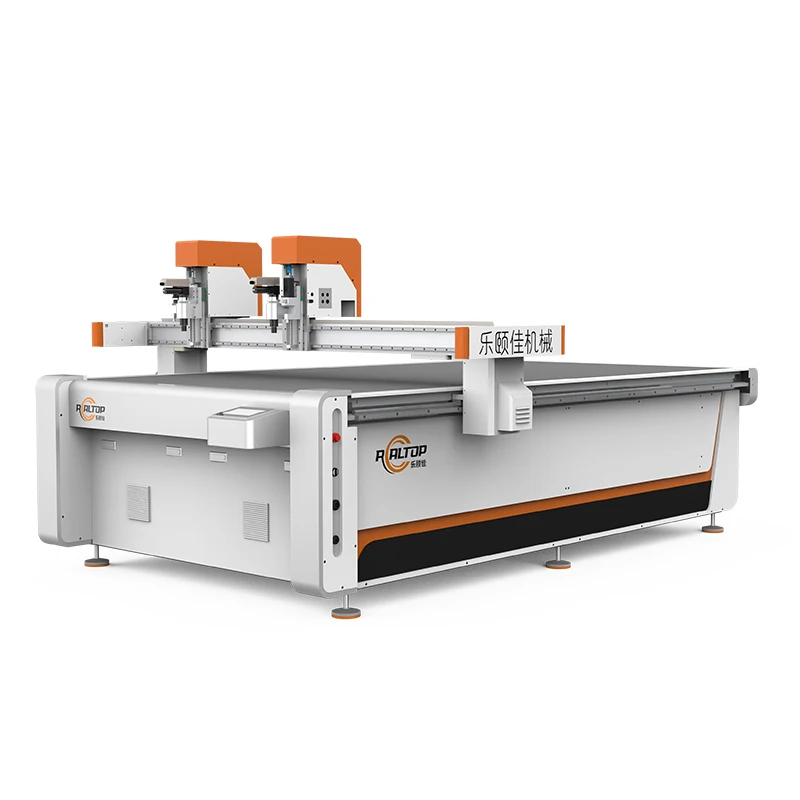
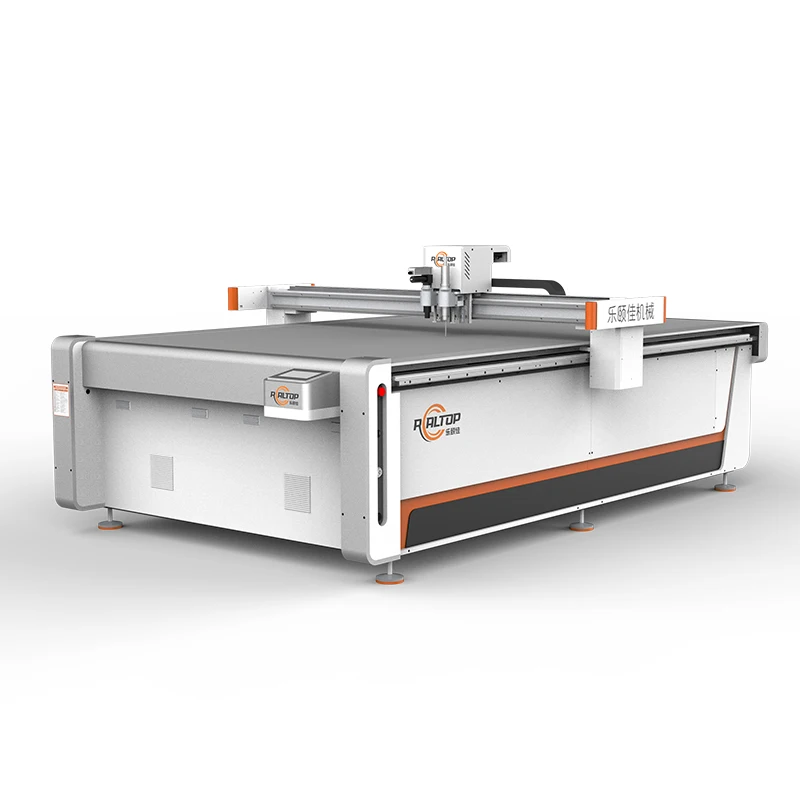
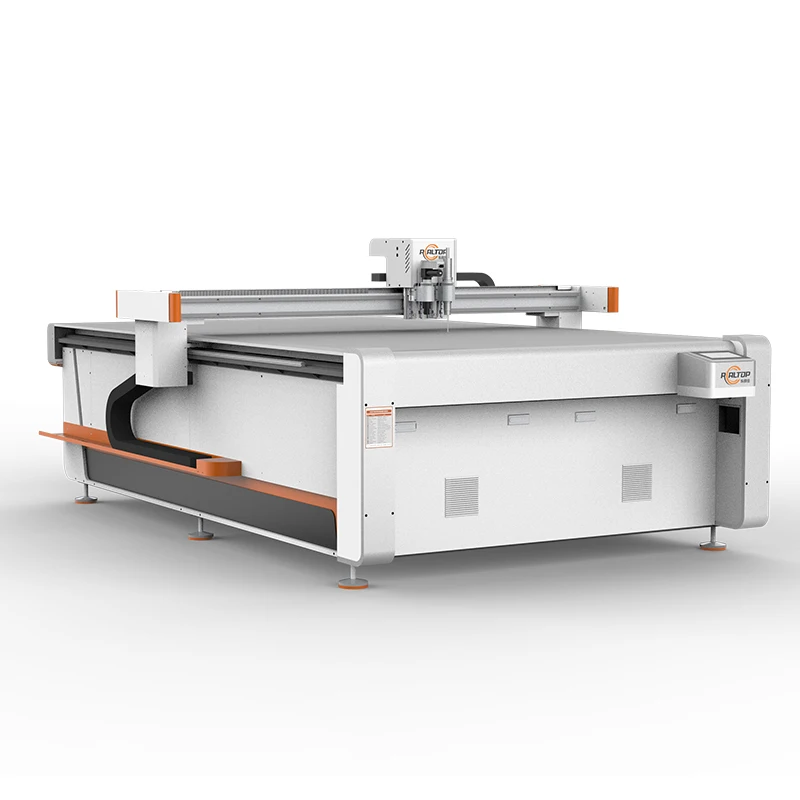
Material-first configuration — each RT-D2516/RT-S2516 is set up with tool head, vacuum zoning and CCD option matched to your actual foam density and sheet format, not picked from a fixed list.
Technical Specifications
| Parameter | Value |
|---|---|
| Model | RT-D2516 / RT-S2516 |
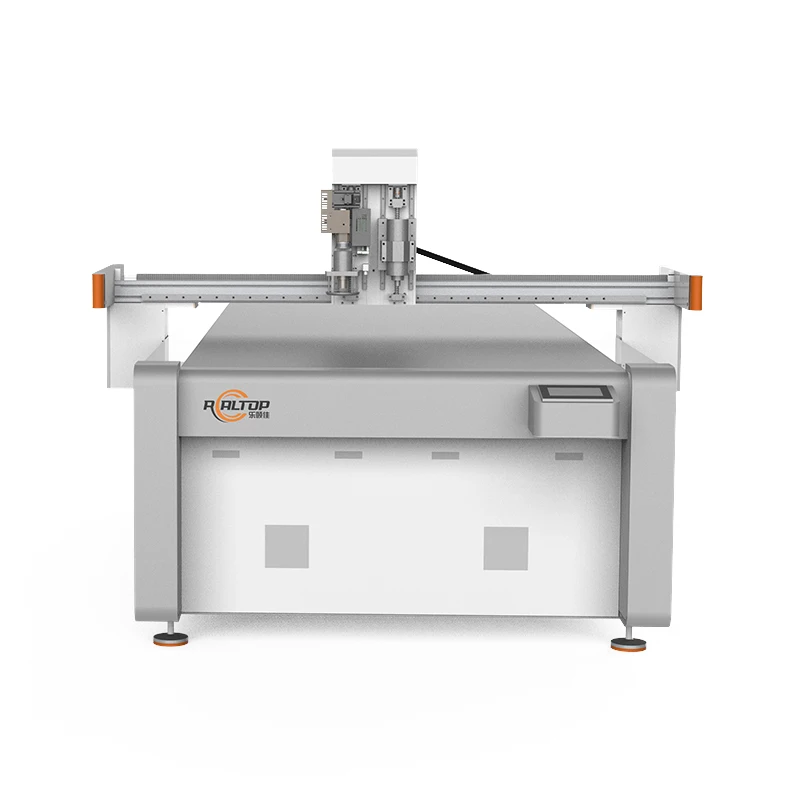
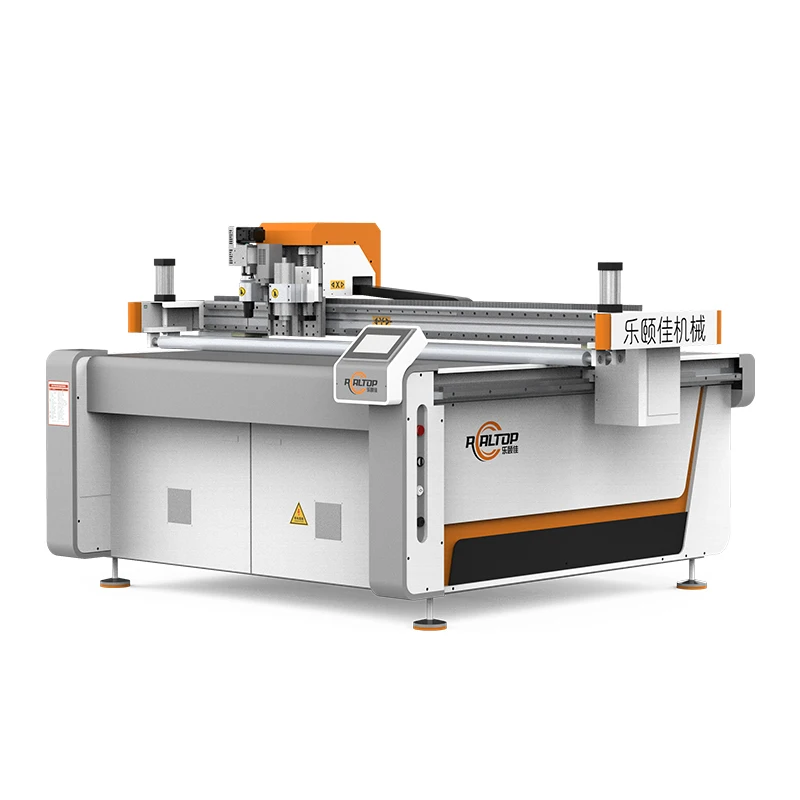
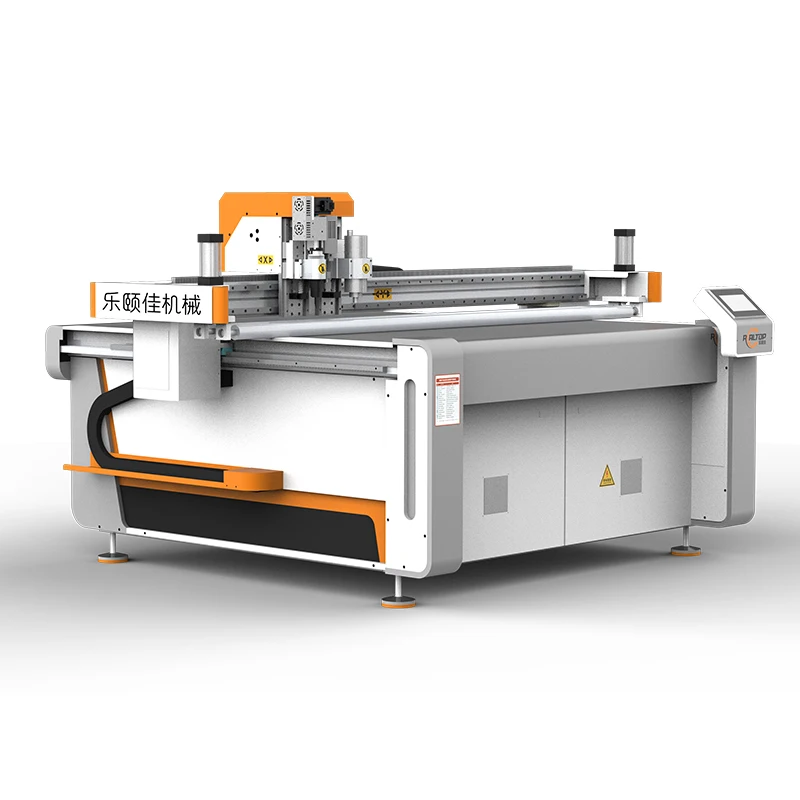
| Product Type | CNC Oscillating Knife Cutting Machine |
| Working Area | 1600 × 2500 mm |
| Machine Size | 3450 × 2300 × 1250 mm |
| Rated Power | 9 kW |
| Cutting Thickness | 20–80 mm depending on material density (basis to be confirmed per foam type) |
| Max Cutting Thickness | ≤ 100 mm varies with the material |
| Translational Velocity | 800–1200 mm/s |
| Repeated Accuracy | ≤ 0.1 mm |
| Working Table | Magnesium-aluminum alloy vacuum adsorption table, PVDF powder spraying, anodic and hard oxidation |
| Vacuum Pump | 7.5 kW |
| Multifunctional Head | Swiss imported knife with vibration full cutting, half cutting and cursor location |
| Tool Head Options | Oscillating knife, pneumatic knife, high-power vibrating knife, circular knife, V-cutting knife, drag knife, creasing wheel, dotted line knife, punching, brush |
| CCD Camera | Small CCD mark point, panoramic recognition, projection positioning (configurable) |
| Transmission System | Digital servo motor, linear guide, synchronous belt, ball screw |
| Servo Motor | Delta servo motor |
| Guide Rail | Taiwan Hiwin rail |
| Conveyor Belt | Germany imported conveyor belt |
| Auto Feeding | Equipped |
| Instruction System | HP-GL compatible format |
| Voltage | 380V ± 10% (customizable) |
| Safety Device | Infrared sensors |
| Language Options | English, Russian, Italian, Chinese (special languages customizable) |
Application Suitability
| Application | Material or Output |
|---|---|
| Packaging insert and protective foam fabrication | EPE foam, EVA sheets, XPE rolls, sponge composite panels |
| Automotive interior trim and gasket production | PU foam, EVA, rubber, composite gasket materials |
| Soft furnishings and carpet cutting | Sponge, fabric, non-woven fabric, carpet rolls |
| Advertising signage and display boards | Foam board, PVC, corrugated cardboard, sticker film |
| Footwear and luggage component blanking | Leather, PU, shoe material, luggage material |
When a Cutting Depth Spec Fails on the First Sheet
A CNC oscillating knife cutting machine full catalogue lists thickness ranges, but those numbers shift the moment your foam density moves outside the test sample. Specifying cutting depth without material density is a guess, not an engineering value.
I learned this the hard way on a Middle East shipment. The trial ran on standard-density EPE and the edges were clean. Once the customer loaded their higher-density boards, the blade could not bite through, and every edge came out with burrs. Two weeks of parameter rewriting followed. That sample-first discipline now drives every configuration we send out [NEED_CITE: industrial foam density variation and its effect on oscillating knife cutting performance].
Where the 1600 × 2500 Format Sits in the Range
The 1600 × 2500 mm bed covers most standard foam sheet sizes used in packaging and automotive interiors, sitting between the compact tables built for small-format gasket work and the large-format systems that handle full-width textile rolls. Buyers who outgrow a smaller table but do not need a full production line usually land on this format. It is the volume point where auto-feeding and conveyor integration begin to matter.
Matching the Tool Head to the Foam Cell Structure
Oscillating knife heads handle closed-cell foams like EPE and XPE by vibrating through the material at high frequency, keeping the edge clean without crushing the cell walls. Pneumatic knives work better on open-cell sponge where downward pressure must be modulated. Drag knives serve thin PVC or sticker films layered on foam board. Selecting the wrong head for the cell structure is what produces the crushed edges and ragged profiles that force operators into secondary trimming [NEED_CITE: oscillating knife versus pneumatic knife behavior on closed-cell and open-cell foam structures].
What the Vacuum Table and Rail Specs Mean at the Bed
The magnesium-aluminum alloy vacuum table with PVDF coating holds flatness across the 1600 × 2500 mm area, and the 7.5 kW pump provides the suction to keep thin foam sheets from lifting during high-speed passes. The Taiwan Hiwin rails and Delta servo motors maintain the ≤ 0.1 mm repeated accuracy — important when nesting small gasket parts where a fraction of a millimeter drift compounds across dozens of pieces. The thick-walled seamless steel frame with high-temperature tempering absorbs the vibration from the oscillating head, so the motion system stays stable during extended production runs.
The Cost of Skipping the Sample Cut
When a machine ships without a trial on the buyer’s actual stock, the first week on the floor becomes a parameter experiment. Blade life drops because the oscillation frequency was set for a softer material. Vacuum zones pull too hard on thin sheets, leaving marks, or too weak on thicker boards, letting them shift mid-cut. Software nesting files fail to import because the HP-GL dialect was never tested against the buyer’s existing workflow. All of these surface as downtime, not as line items on a quotation [NEED_CITE: common causes of CNC cutting machine commissioning delays in export markets].
Why Source This Configuration Here
In-house design covers both knife and laser cutting, so the recommendation starts with your material rather than pushing one technology. The tool head, table zoning and CCD type are specified per your foam density and print-contour workflow. Software compatibility is confirmed before the order, so your nesting files load without conversion work. Voltage, plug type and control language are locked down before shipment. A sample cutting report on your own material accompanies every quotation, so the cutting depth and edge quality are verified before you commit.
Documentation & Verification
- Machine specification sheet confirming working area, tool head list and vacuum table zoning for your sheet format
- Sample cutting report on your EPE or PU foam stock before order confirmation
- Electrical schematic with 380V ± 10% or custom voltage and frequency noted
- HP-GL file format compatibility note matched to your nesting software
- Tool head and table configuration list signed off before production starts
- Packing photographs showing frame, motion components and control cabinet before crating
Installation, Commissioning & Support
- Floor space of 3450 × 2300 mm with clearance for the 7.5 kW vacuum pump and auto-feeding conveyor
- Dedicated 380V ± 10% circuit rated for the 9 kW total machine load
- Frame arrives assembled; motion system and tool head calibrated on-site after leveling
- First-run parameter tuning on your foam density and thickness, not generic test stock
- Operator training covers tool head changeover, vacuum zone control and CCD mark-point setup
- Spare blade and belt list provided with recommended change intervals based on your material
Before You Request a Quote
Send the foam type, density and sheet dimensions along with your daily volume target. Confirm the local voltage and frequency at your facility so the electrical cabinet is built to match. Let us know which nesting software you currently run so we verify HP-GL compatibility before the order goes to production.
Frequently Asked Questions
Q: How do I pick the right working area from the full catalogue for my foam sheets?
A: Measure your largest standard sheet and add a margin for clamping and tool clearance. The 1600 × 2500 mm format handles most packaging and automotive interior blanks. If your sheets exceed this in one axis, the range extends to larger tables. Daily volume and nesting efficiency determine whether a single-head or multi-head layout is the better fit.
Q: Which tool head cuts my foam thickness cleanly — oscillating or pneumatic?
A: Closed-cell foams like EPE and XPE up to 80 mm typically run on an oscillating knife for clean edges. Open-cell sponge and softer composites respond better to a pneumatic head with adjustable downward pressure. A sample cut on your actual stock confirms the choice before the machine is configured.
Q: What CCD positioning type fits printed contour cutting on foam board?
A: Small CCD mark-point positioning works when your print carries registration marks at known intervals. Panoramic recognition suits full-sheet printed graphics where the camera must locate contours across the entire bed. Projection positioning helps operators align sheets manually before the cut begins.
Q: Can voltage, plug and control language be customized before shipment?
A: Yes. The standard 380V ± 10% supply is configurable for markets running different voltages or frequencies. Plug type matches your local standard. The control interface ships in English, Russian, Italian or Chinese by default, with other languages available on request before the electrical cabinet is wired.
Q: How does this knife cutting series relate to the laser range?
A: Knife cutting handles foam, fabric and composite materials where a blade produces a clean mechanical edge. Laser cutting suits acrylic, wood and textiles where the beam seals edges or engraves surfaces. The manufacturer builds both, so the recommendation starts with your material rather than defaulting to one technology.










商品评价
There are no reviews yet.