


Fast Delivery
Quick, reliable shipping to any location.

Free & easy returns
Return this item by mail or in store within 90 days for a full refund.
Integrated Knife and Laser Platforms — one design team builds both the oscillating-knife and laser systems, so buyers compare the actual cutting method against their material rather than forcing a single technology.
Technical Specifications
| Parameter | Value |
|---|---|
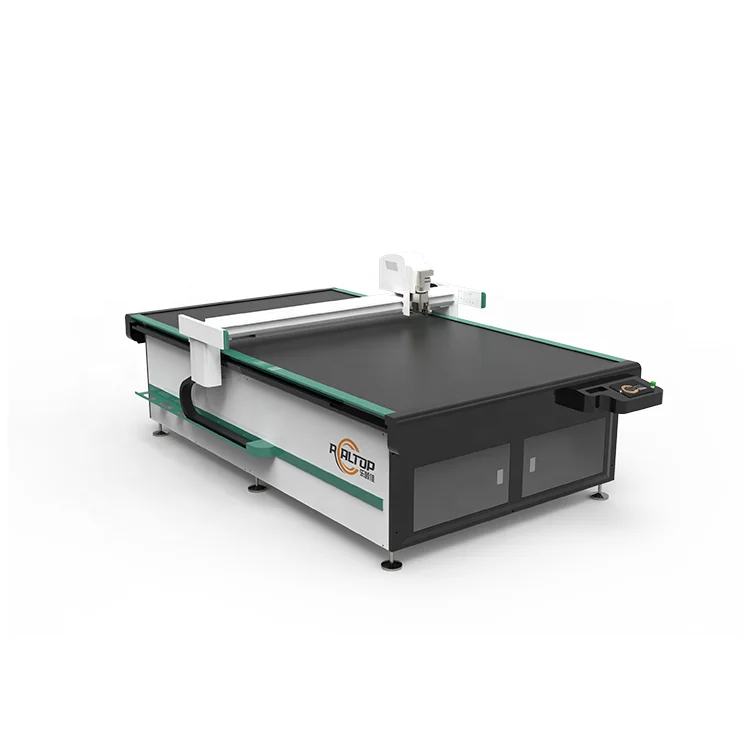
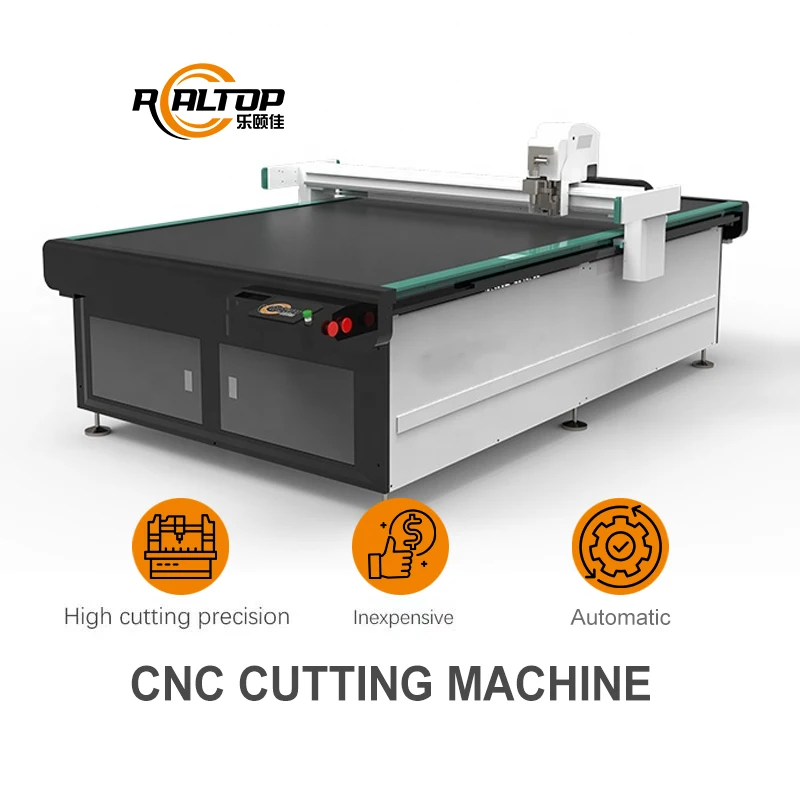
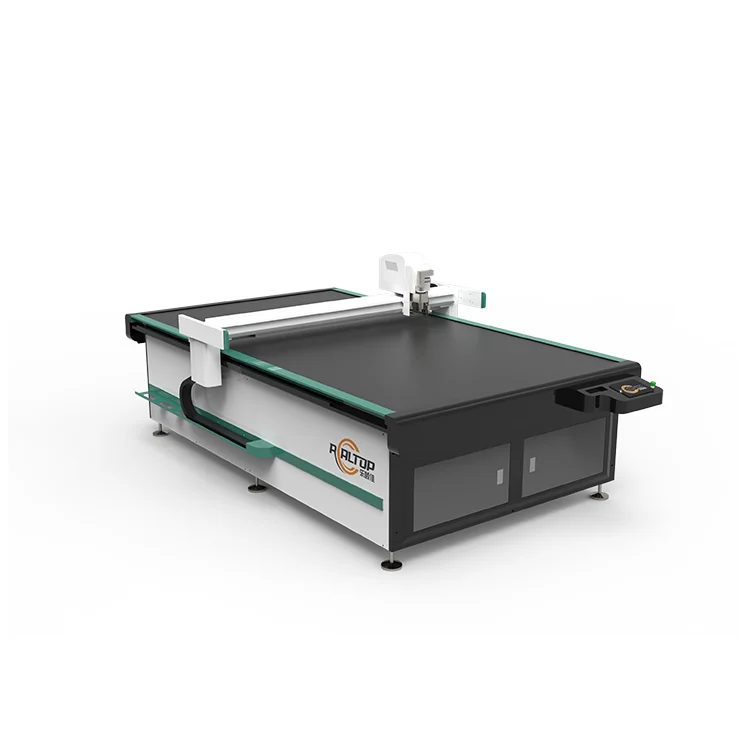
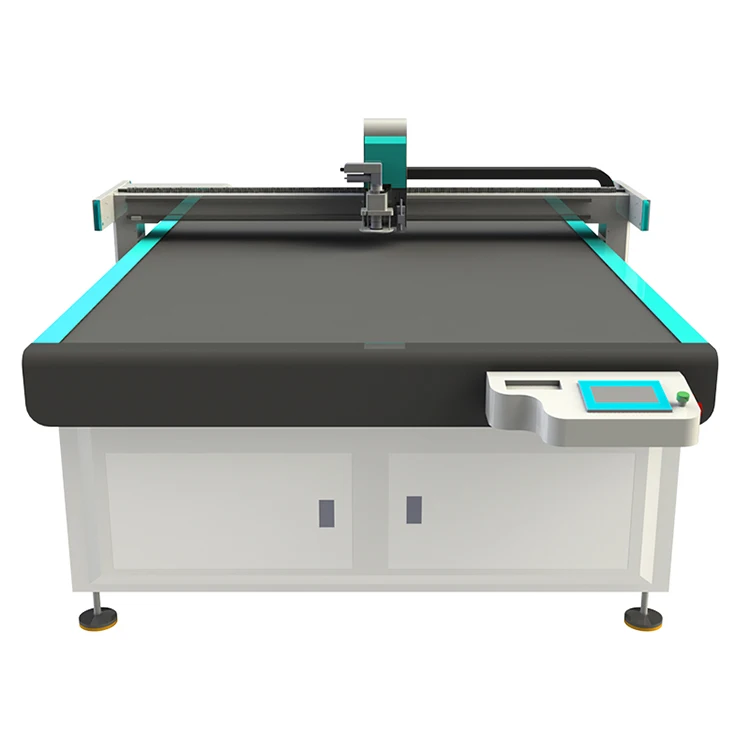
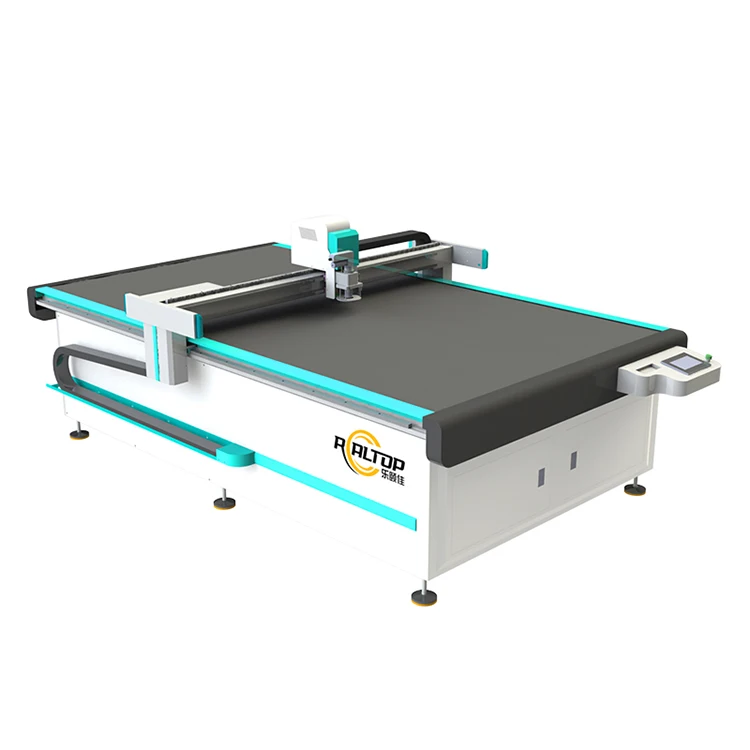
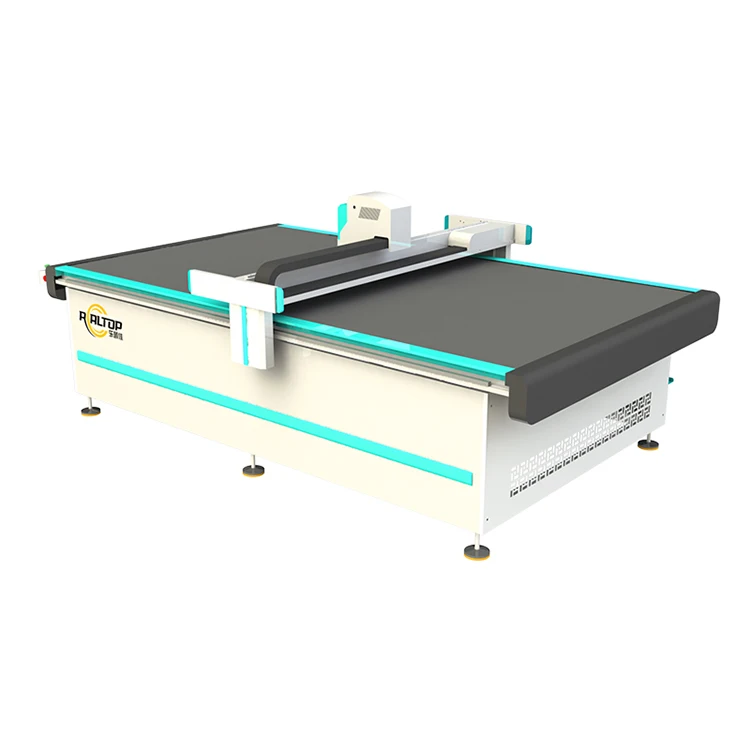
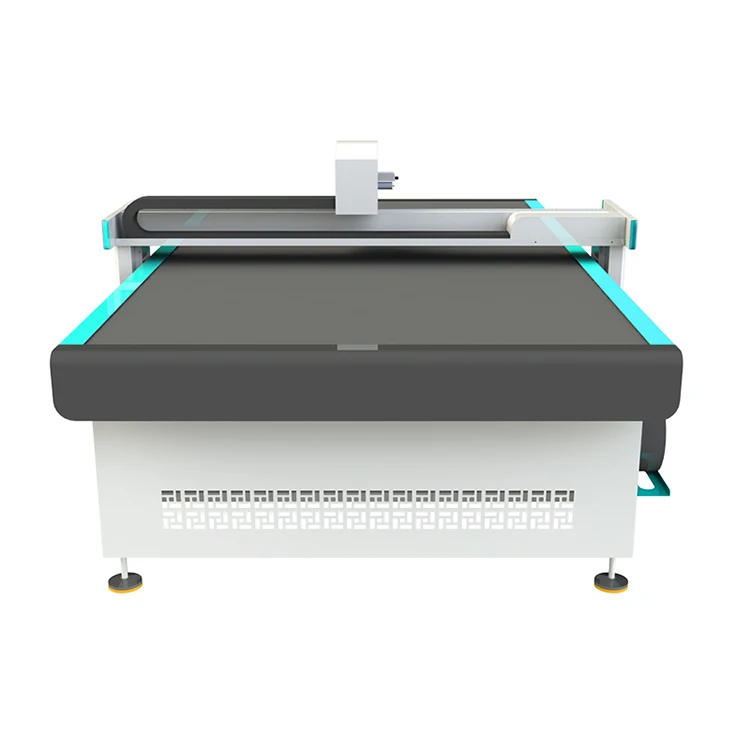
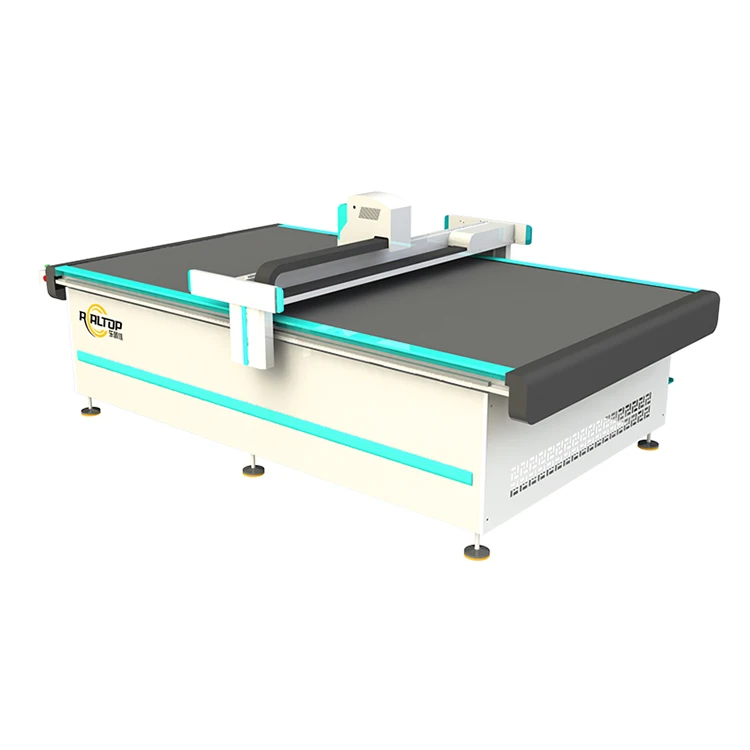
| Product Type | CNC Flatbed Digital Cutting Machine with Conveyor and Auto-Feeding |
| Working Area | 1600 × 2500 mm |
| Machine Footprint | 3450 × 2300 × 1250 mm |
| Rated Power | 9 kW |
| Voltage | 380V ±10% |
| Table Type | Flat working table with conveyor and auto-feeding |
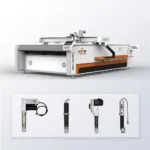
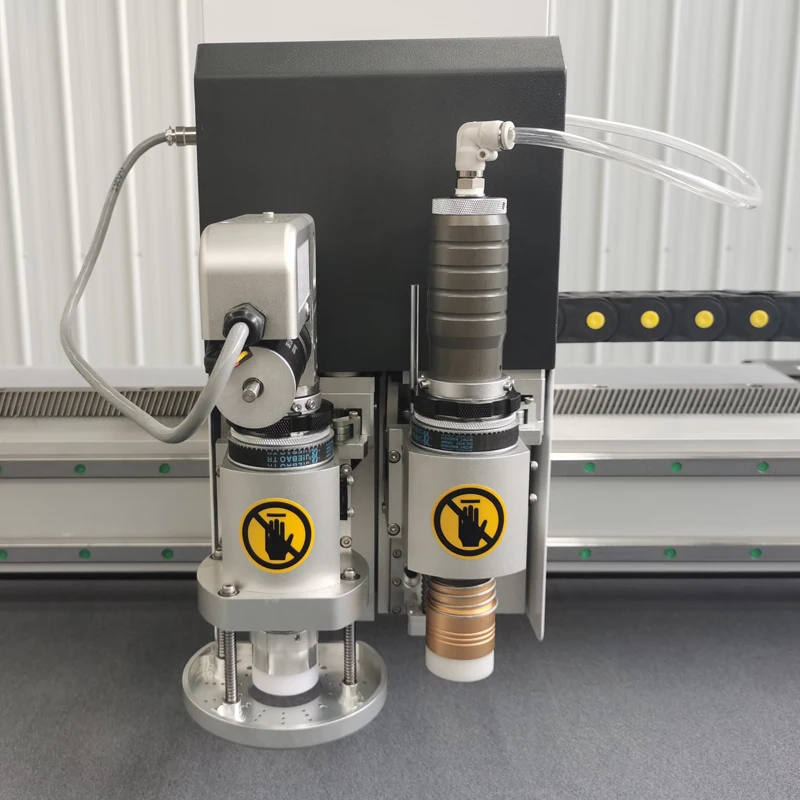
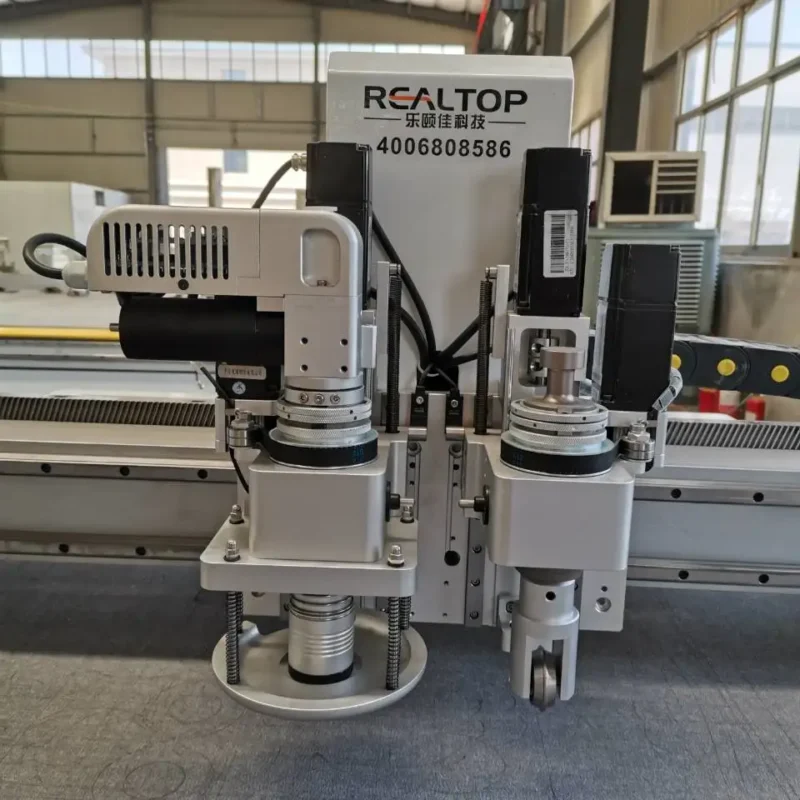
| Tool Head Options | Swiss imported oscillating knife (full/half-cut), pneumatic knife, high-power vibrating knife, circular knife, V-cutting knife, drag knife, creasing wheel, dotted line knife, punching, brush |
| Visual Positioning | CCD camera mark-point positioning, panoramic camera recognition, projection positioning |
| Translational Velocity | 800–1200 mm/s |
| Cutting Speed | 200–800 mm/s (varies by material and tool head selection) |
| Maximum Cutting Thickness | ≤100 mm (depends on material and tool head) |
| Repeated Accuracy | ≤0.1 mm |
| Drive System | Digital servo motor (Delta or Panasonic, IP67), Taiwan Hiwin linear guide, synchronous belt, ball screw |
| Instruction Format | HP-GL compatible |
| Vacuum Table | Magnesium-aluminum alloy, fluorocarbon PVDF powder-sprayed, anodized; 7.5 kW pump with aviation aluminum shell and silencer sponge |
| Safety Devices | Infrared induction blocking, anti-collision beam sensors, emergency stop |
| Language Options | English, Russian, Italian, Chinese; custom languages available |
| Certification | CE declaration where applicable |
Application Suitability
| Application | Material or Output |
|---|---|
| Garment and footwear production | Multi-layer knit fabric, woven textile, shoe uppers, lining materials |
| Automotive interior trimming | Leather, PU, EVA foam, composite panels for seats and door cards |
| Carpet and floor mat fabrication | Tufted carpet, non-woven underlay, rubber-backed mat rolls |
| Bags and luggage manufacturing | Nylon, canvas, luggage fabric, foam inserts |
| Soft home furnishings | Upholstery textile, curtain fabric, cushion foam layers |
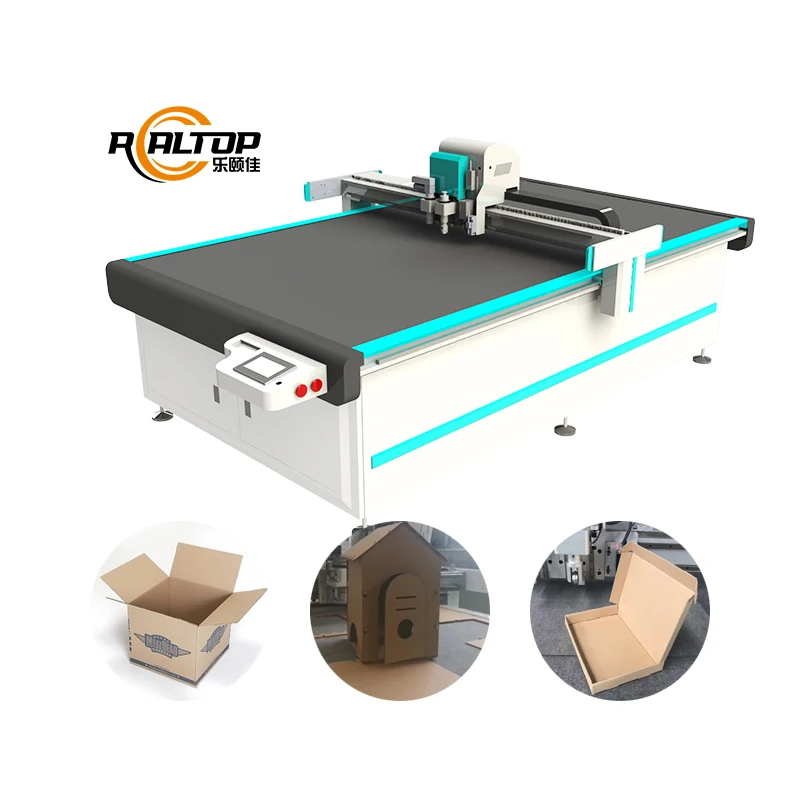
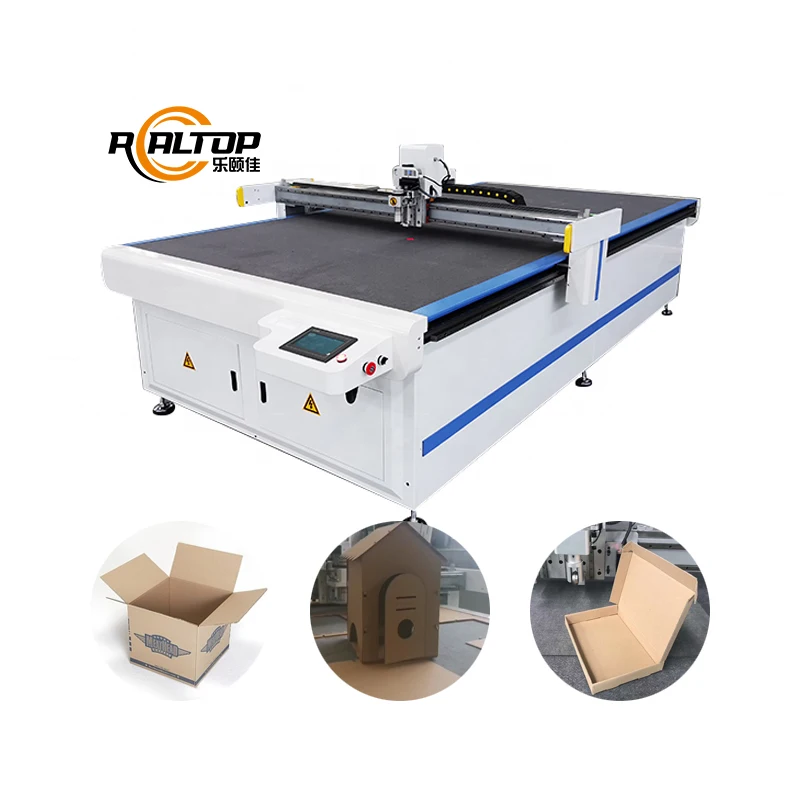
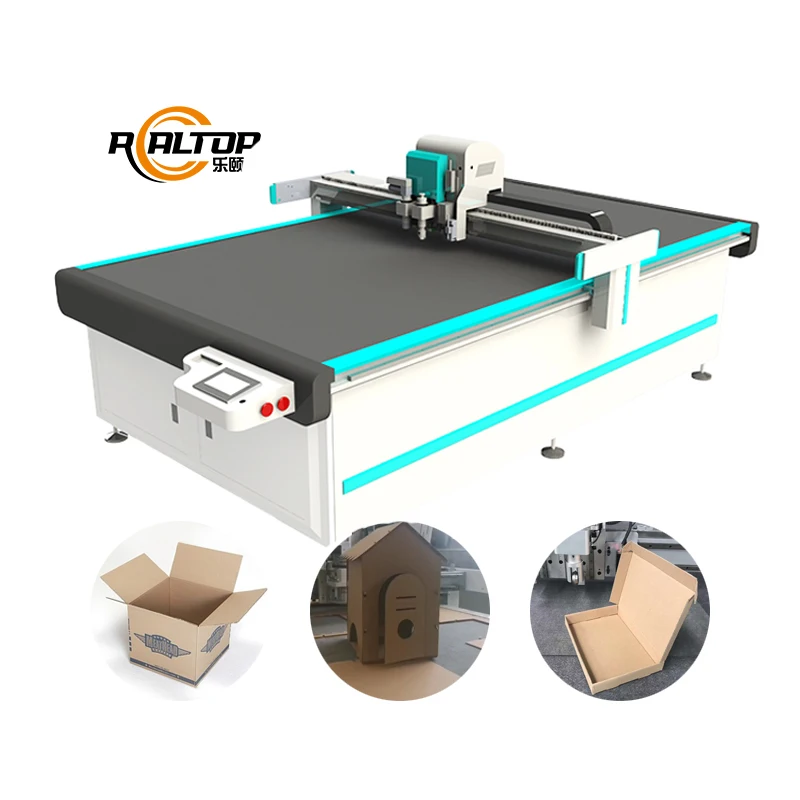
| Packaging and sample making | Corrugated cardboard, sticker film, corrugated board prototypes |
| Sports and outdoor gear | Neoprene, technical fabric, protective padding foam |
Why a Machine Rated Only by Working Area Falls Short
Cutting depth, edge quality, and production speed are set by the tool head and material interaction, not by table dimensions.
I have seen buyers compare machines purely on bed size, sign the order, then discover the oscillating knife specified cannot shear through their denser foam or multi-layer knit stack at a useful rate. When the tool head is wrong for the material, the fabric frays, the foam compresses rather than cuts, and the line stalls while operators adjust feed rates. That gap between a spec sheet and a shop floor only closes when someone tests the exact material on the exact configuration before the machine ships [NEED_CITE: common misconfiguration causes in flatbed cutting adoption]. Choosing a CNC digital cutting machine manufacturer that runs sample cuts on the buyer’s own roll goods prevents this mismatch entirely.
Matching the Knife Family to the Textile Stack
A flatbed platform of this size handles everything from a single ply of woven lining to a compressed stack of knit fabric, but only if the tool head is chosen deliberately. The Swiss imported oscillating knife suits tightly woven and coated textiles, while the high-power vibrating knife takes over on thicker sponge and foam layers where a standard blade would deflect. For crease lines on corrugated board prototypes or dotted perforations on packaging inserts, the creasing wheel and dotted line knife mount onto the same multifunctional head without a tool change. This range lets one CNC digital cutting machine manufacturer supply the same chassis across garment, automotive, and packaging applications.
Vacuum Zoning and Continuous Roll Feeding
When a conveyor feeds knit fabric from a roll onto the cutting bed, the vacuum must hold the leading edge flat while the trailing portion still feeds. The 7.5 kW pump with its silencer-equipped aviation aluminum shell delivers suction across the magnesium-aluminum table, and the fluorocarbon PVDF coating resists abrasion from repeated material loading. If the cutting job involves small pattern pieces — shoe uppers, gasket shapes, or collar panels — the table zoning matters because a single large zone loses grip on parts smaller than the vacuum port spacing. Confirming the zone layout against the buyer’s nesting file prevents lift and drift during high-speed passes [NEED_CITE: vacuum table zoning impact on small-part cutting accuracy].
Reading the Specs That Actually Govern Cut Quality
The repeated accuracy of ≤0.1 mm is maintained by Taiwan Hiwin linear guides paired with IP67-rated servo motors — sealed against the fabric dust and lint that accumulate in textile workshops. At translational velocities up to 1200 mm/s, any play in the rail or belt would show as a visible step on a long straight cut, so the ball screw and synchronous belt combination is specified for rigidity rather than cost. The CCD camera mark-point positioning and panoramic camera recognition work together when the job involves printed contours: the camera locates fiducial marks on the fabric, and the software adjusts the cut path to compensate for stretch or skew introduced during weaving or printing. For buyers importing nesting files from existing CAD systems, HP-GL instruction format compatibility avoids the need to redraw patterns in unfamiliar software.
The Hidden Cost of Skipping the Material Trial
When a buyer orders based on a working area and a price, the tool head and vacuum configuration are often left to the seller’s default. In practice, that default may be a single oscillating knife suited to one material thickness, leaving the buyer unable to cut their denser EVA foam or stretch knit without ragged edges or incomplete cuts. I flew to a customer site once because the knit fabric they actually ran had a higher elastane content than the sample they initially quoted — the edge frayed, the speed dropped, and the line stopped. Every CNC digital cutting machine manufacturer should run the buyer’s own material on the proposed tool head and document the result before the order is finalised [NEED_CITE: sample-based validation in cutting equipment procurement].
Why Buyers Source the Platform from One Builder
In-house design covers both the knife cutting table and the laser cutting systems, so the buyer can compare the two methods on the same material without coordinating between separate vendors. Tool head and table configuration are specified per material type and production volume, not left as a generic default. CCD camera positioning is integrated into the motion system rather than bolted on as an aftermarket accessory. Voltage, plug type, and control panel language are confirmed against the buyer’s local standards before the wiring is done, not discovered at unpacking. Software compatibility and file format handling are verified against the buyer’s nesting workflow during the pre-order sample stage.
Documentation & Verification
- Factory test record capturing cut quality on buyer-supplied knit fabric and foam samples
- Machine specification sheet listing every tool head and vacuum zone included in the build
- Electrical schematic with confirmed voltage, phase, and plug type for the destination market
- Software licence documentation noting HP-GL compatibility and supported nesting file formats
- Packing photographs showing table protection, tool head crating, and conveyor securing method
Installation, Commissioning & Support
- Floor space of at least 4000 × 3000 mm required to accommodate the 3450 × 2300 mm machine footprint and operator access
- Dedicated 380V three-phase circuit rated for the 9 kW machine load plus the 7.5 kW vacuum pump
- Machine ships with table and frame bolted; on-site assembly covers gantry alignment and belt tensioning
- First-run commissioning includes CCD camera calibration and vacuum zone mapping against the buyer’s nesting pattern
- Operator training covers tool head changes, file import workflow, and conveyor auto-feeding setup
- Spare parts list identifies oscillating knife blades, vacuum table seals, and synchronous belt as primary consumables
Before You Request a Quote
To narrow the configuration to the right tool head and table setup, share the material type, thickness range, and whether the stock arrives in rolls or sheets. Note the daily cutting volume and the nesting software currently in use, so file format compatibility can be confirmed before the sample stage. Specify the local voltage, frequency, and preferred control panel language to avoid rewiring or menu reconfiguration after delivery.
Frequently Asked Questions
Q: How do I decide between knife and laser cutting for my textile products?
A: Knife cutting handles multi-layer stacks, thicker foams, and materials where a sealed edge is not required. Laser cutting seals synthetic edges and suits intricate single-layer contours but is slower on thick stacks. A CNC digital cutting machine manufacturer offering both methods can cut the same sample with each technology so the buyer compares edge quality, speed, and material response directly.
Q: What determines the working area and conveyor setup I actually need?
A: The answer depends on whether the material arrives in rolls or sheets, the maximum single-piece pattern length, and the daily volume. A 1600 × 2500 mm bed accommodates most garment panels and automotive interior shapes. The conveyor and auto-feeding system adds value when cutting continuous roll stock at production volumes, eliminating manual lay-up between sheets.
Q: How should I choose the right tool head for my material range?
A: Each material responds differently: oscillating knives suit woven and coated textiles, vibrating knives handle thick foam, and circular knives cut through flexible knit layers at speed. If the production mix includes creasing, perforating, or punching, those tools mount on the same multifunctional head. Confirm the full material list with the CNC digital cutting machine manufacturer before the head is configured.
Q: Can the voltage and control language be matched to my local market?
A: The platform is built for 380V ±10% three-phase supply, and alternative voltage configurations can be specified at order. Control panel language options include English, Russian, Italian, and Chinese, with custom language files available. Confirming the exact voltage, plug type, and frequency before wiring prevents costly rework after the machine arrives at the destination facility.
Q: Will this machine work with my existing nesting and design software?
A: The control system accepts HP-GL compatible instruction formats, which covers most industry-standard nesting and CAD outputs. Before the order, the buyer should share a sample nesting file so the CNC digital cutting machine manufacturer can verify import, run a tool-path simulation, and confirm that cut sequence, layer handling, and conveyor feed commands translate correctly into the machine’s workflow.
Integrated Knife and Laser Platforms — one design team builds both the oscillating-knife and laser systems, so buyers compare the actual cutting method against their material rather than forcing a single technology.
Technical Specifications
| Parameter | Value |
|---|---|
| Product Type | CNC Flatbed Digital Cutting Machine with Conveyor and Auto-Feeding |
| Working Area | 1600 × 2500 mm |
| Machine Footprint | 3450 × 2300 × 1250 mm |
| Rated Power | 9 kW |
| Voltage | 380V ±10% |
| Table Type | Flat working table with conveyor and auto-feeding |
| Tool Head Options | Swiss imported oscillating knife (full/half-cut), pneumatic knife, high-power vibrating knife, circular knife, V-cutting knife, drag knife, creasing wheel, dotted line knife, punching, brush |
| Visual Positioning | CCD camera mark-point positioning, panoramic camera recognition, projection positioning |
| Translational Velocity | 800–1200 mm/s |
| Cutting Speed | 200–800 mm/s (varies by material and tool head selection) |
| Maximum Cutting Thickness | ≤100 mm (depends on material and tool head) |
| Repeated Accuracy | ≤0.1 mm |
| Drive System | Digital servo motor (Delta or Panasonic, IP67), Taiwan Hiwin linear guide, synchronous belt, ball screw |
| Instruction Format | HP-GL compatible |
| Vacuum Table | Magnesium-aluminum alloy, fluorocarbon PVDF powder-sprayed, anodized; 7.5 kW pump with aviation aluminum shell and silencer sponge |
| Safety Devices | Infrared induction blocking, anti-collision beam sensors, emergency stop |
| Language Options | English, Russian, Italian, Chinese; custom languages available |
| Certification | CE declaration where applicable |
Application Suitability
| Application | Material or Output |
|---|---|
| Garment and footwear production | Multi-layer knit fabric, woven textile, shoe uppers, lining materials |
| Automotive interior trimming | Leather, PU, EVA foam, composite panels for seats and door cards |
| Carpet and floor mat fabrication | Tufted carpet, non-woven underlay, rubber-backed mat rolls |
| Bags and luggage manufacturing | Nylon, canvas, luggage fabric, foam inserts |
| Soft home furnishings | Upholstery textile, curtain fabric, cushion foam layers |
| Packaging and sample making | Corrugated cardboard, sticker film, corrugated board prototypes |
| Sports and outdoor gear | Neoprene, technical fabric, protective padding foam |
Why a Machine Rated Only by Working Area Falls Short
Cutting depth, edge quality, and production speed are set by the tool head and material interaction, not by table dimensions.
I have seen buyers compare machines purely on bed size, sign the order, then discover the oscillating knife specified cannot shear through their denser foam or multi-layer knit stack at a useful rate. When the tool head is wrong for the material, the fabric frays, the foam compresses rather than cuts, and the line stalls while operators adjust feed rates. That gap between a spec sheet and a shop floor only closes when someone tests the exact material on the exact configuration before the machine ships [NEED_CITE: common misconfiguration causes in flatbed cutting adoption]. Choosing a CNC digital cutting machine manufacturer that runs sample cuts on the buyer’s own roll goods prevents this mismatch entirely.
Matching the Knife Family to the Textile Stack
A flatbed platform of this size handles everything from a single ply of woven lining to a compressed stack of knit fabric, but only if the tool head is chosen deliberately. The Swiss imported oscillating knife suits tightly woven and coated textiles, while the high-power vibrating knife takes over on thicker sponge and foam layers where a standard blade would deflect. For crease lines on corrugated board prototypes or dotted perforations on packaging inserts, the creasing wheel and dotted line knife mount onto the same multifunctional head without a tool change. This range lets one CNC digital cutting machine manufacturer supply the same chassis across garment, automotive, and packaging applications.
Vacuum Zoning and Continuous Roll Feeding
When a conveyor feeds knit fabric from a roll onto the cutting bed, the vacuum must hold the leading edge flat while the trailing portion still feeds. The 7.5 kW pump with its silencer-equipped aviation aluminum shell delivers suction across the magnesium-aluminum table, and the fluorocarbon PVDF coating resists abrasion from repeated material loading. If the cutting job involves small pattern pieces — shoe uppers, gasket shapes, or collar panels — the table zoning matters because a single large zone loses grip on parts smaller than the vacuum port spacing. Confirming the zone layout against the buyer’s nesting file prevents lift and drift during high-speed passes [NEED_CITE: vacuum table zoning impact on small-part cutting accuracy].
Reading the Specs That Actually Govern Cut Quality
The repeated accuracy of ≤0.1 mm is maintained by Taiwan Hiwin linear guides paired with IP67-rated servo motors — sealed against the fabric dust and lint that accumulate in textile workshops. At translational velocities up to 1200 mm/s, any play in the rail or belt would show as a visible step on a long straight cut, so the ball screw and synchronous belt combination is specified for rigidity rather than cost. The CCD camera mark-point positioning and panoramic camera recognition work together when the job involves printed contours: the camera locates fiducial marks on the fabric, and the software adjusts the cut path to compensate for stretch or skew introduced during weaving or printing. For buyers importing nesting files from existing CAD systems, HP-GL instruction format compatibility avoids the need to redraw patterns in unfamiliar software.
The Hidden Cost of Skipping the Material Trial
When a buyer orders based on a working area and a price, the tool head and vacuum configuration are often left to the seller’s default. In practice, that default may be a single oscillating knife suited to one material thickness, leaving the buyer unable to cut their denser EVA foam or stretch knit without ragged edges or incomplete cuts. I flew to a customer site once because the knit fabric they actually ran had a higher elastane content than the sample they initially quoted — the edge frayed, the speed dropped, and the line stopped. Every CNC digital cutting machine manufacturer should run the buyer’s own material on the proposed tool head and document the result before the order is finalised [NEED_CITE: sample-based validation in cutting equipment procurement].
Why Buyers Source the Platform from One Builder
In-house design covers both the knife cutting table and the laser cutting systems, so the buyer can compare the two methods on the same material without coordinating between separate vendors. Tool head and table configuration are specified per material type and production volume, not left as a generic default. CCD camera positioning is integrated into the motion system rather than bolted on as an aftermarket accessory. Voltage, plug type, and control panel language are confirmed against the buyer’s local standards before the wiring is done, not discovered at unpacking. Software compatibility and file format handling are verified against the buyer’s nesting workflow during the pre-order sample stage.
Documentation & Verification
- Factory test record capturing cut quality on buyer-supplied knit fabric and foam samples
- Machine specification sheet listing every tool head and vacuum zone included in the build
- Electrical schematic with confirmed voltage, phase, and plug type for the destination market
- Software licence documentation noting HP-GL compatibility and supported nesting file formats
- Packing photographs showing table protection, tool head crating, and conveyor securing method
Installation, Commissioning & Support
- Floor space of at least 4000 × 3000 mm required to accommodate the 3450 × 2300 mm machine footprint and operator access
- Dedicated 380V three-phase circuit rated for the 9 kW machine load plus the 7.5 kW vacuum pump
- Machine ships with table and frame bolted; on-site assembly covers gantry alignment and belt tensioning
- First-run commissioning includes CCD camera calibration and vacuum zone mapping against the buyer’s nesting pattern
- Operator training covers tool head changes, file import workflow, and conveyor auto-feeding setup
- Spare parts list identifies oscillating knife blades, vacuum table seals, and synchronous belt as primary consumables
Before You Request a Quote
To narrow the configuration to the right tool head and table setup, share the material type, thickness range, and whether the stock arrives in rolls or sheets. Note the daily cutting volume and the nesting software currently in use, so file format compatibility can be confirmed before the sample stage. Specify the local voltage, frequency, and preferred control panel language to avoid rewiring or menu reconfiguration after delivery.
Frequently Asked Questions
Q: How do I decide between knife and laser cutting for my textile products?
A: Knife cutting handles multi-layer stacks, thicker foams, and materials where a sealed edge is not required. Laser cutting seals synthetic edges and suits intricate single-layer contours but is slower on thick stacks. A CNC digital cutting machine manufacturer offering both methods can cut the same sample with each technology so the buyer compares edge quality, speed, and material response directly.
Q: What determines the working area and conveyor setup I actually need?
A: The answer depends on whether the material arrives in rolls or sheets, the maximum single-piece pattern length, and the daily volume. A 1600 × 2500 mm bed accommodates most garment panels and automotive interior shapes. The conveyor and auto-feeding system adds value when cutting continuous roll stock at production volumes, eliminating manual lay-up between sheets.
Q: How should I choose the right tool head for my material range?
A: Each material responds differently: oscillating knives suit woven and coated textiles, vibrating knives handle thick foam, and circular knives cut through flexible knit layers at speed. If the production mix includes creasing, perforating, or punching, those tools mount on the same multifunctional head. Confirm the full material list with the CNC digital cutting machine manufacturer before the head is configured.
Q: Can the voltage and control language be matched to my local market?
A: The platform is built for 380V ±10% three-phase supply, and alternative voltage configurations can be specified at order. Control panel language options include English, Russian, Italian, and Chinese, with custom language files available. Confirming the exact voltage, plug type, and frequency before wiring prevents costly rework after the machine arrives at the destination facility.
Q: Will this machine work with my existing nesting and design software?
A: The control system accepts HP-GL compatible instruction formats, which covers most industry-standard nesting and CAD outputs. Before the order, the buyer should share a sample nesting file so the CNC digital cutting machine manufacturer can verify import, run a tool-path simulation, and confirm that cut sequence, layer handling, and conveyor feed commands translate correctly into the machine’s workflow.
商品评价
There are no reviews yet.